Maui Sunscreen Rules: What’s Legal, What’s Banned, and How to Read a Label

Maui has the strictest sunscreen rules in the United States. If you are visiting the island, the bottle in your beach bag matters, because Maui County allows only mineral sunscreens. Bring the wrong kind and you are technically breaking the law the moment you apply it on a Maui beach. This guide explains exactly what is allowed, what is banned, how to read a label in ten seconds, and where to find compliant sunscreen once you land.
The Short Answer: Only Mineral Sunscreen on Maui
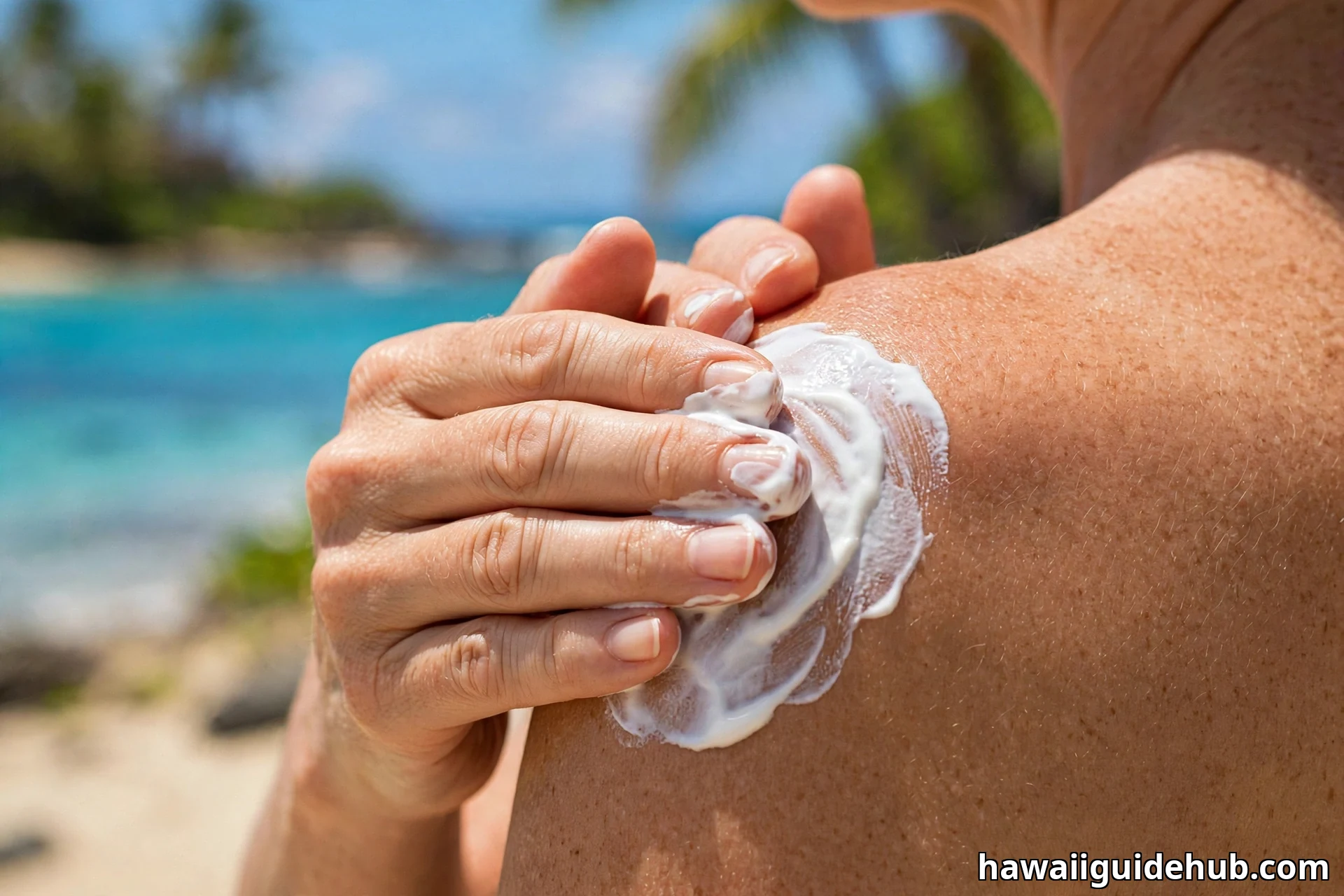
On Maui, your sunscreen is legal only if its active ingredients are zinc oxide, titanium dioxide, or both. These are the mineral UV filters. Every other active ingredient is banned for sale, distribution, and use across Maui County unless a licensed healthcare provider prescribed it for you. This rule has been in force since October 1, 2022, and it covers all of Maui County: Maui, Lānaʻi, and Molokaʻi.
That is stricter than the rest of Hawaiʻi. Statewide, the law bans only two ingredients, oxybenzone and octinoxate. On Maui, the list of banned actives is effectively everything that is not mineral. If you are used to shopping by brand, forget brands. Shop by the Drug Facts panel instead.
Why Maui Banned Chemical Sunscreens
Maui’s reefs were the driving force. Scientific studies have shown that several common chemical UV filters harm coral: they contribute to bleaching, damage coral larvae, and act as endocrine disruptors in marine life. The National Park Service has estimated that thousands of tons of sunscreen wash off swimmers into ocean waters each year, and in a place where coral reefs protect shorelines, support fisheries, and anchor the tourism economy, that runoff adds up.
The county council heard from marine scientists, the state Department of Land and Natural Resources, and local students before passing the law. Council members framed it as removing one stressor they could actually control, alongside bigger threats like warming oceans and runoff that are harder to fix. Whether or not sunscreen is the largest threat to reefs, it is one visitors can do something about, and Maui decided to make that choice mandatory.
The State Law: Hawaiʻi’s Oxybenzone and Octinoxate Ban
Before Maui acted, the state moved first. In 2018, Governor David Ige signed Senate Bill 2571, known as Act 104, making Hawaiʻi the first state in the nation to ban sunscreen ingredients for environmental reasons. Starting January 1, 2021, it became unlawful to sell, offer for sale, or distribute in the state any sunscreen containing oxybenzone or octinoxate without a prescription.
Oxybenzone and octinoxate were the two most common chemical UV filters in American sunscreens, so the law forced major reformulations. Studies cited by lawmakers showed the chemicals induce coral bleaching, kill developing coral, and disrupt hormones in marine organisms. The law excludes products marketed as cosmetics for the face, and it allows the banned ingredients with a prescription from a licensed healthcare provider.
So on Oʻahu and Kauaʻi, the rule is the narrower state ban: no oxybenzone, no octinoxate. On Maui, in Maui County, the county ordinance goes much further.
Maui County Ordinance 5306: The Mineral-Only Rule
Maui County’s law is Ordinance 5306. Council Member Tamara Paltin introduced it as Bill 135, and Mayor Michael Victorino signed it into law on December 6, 2021. It took effect on October 1, 2022.
The ordinance bans the sale, offer for sale, distribution, and use of any non-mineral sunscreen without a prescription from a licensed healthcare provider. “Non-mineral sunscreen” means any sunscreen whose active ingredients include anything other than zinc oxide or titanium dioxide. That single definition sweeps in every chemical filter on the market: avobenzone, octocrylene, homosalate, octisalate, and the rest, along with the two the state already banned.
A few details worth knowing:
It covers use, not just sales
Unlike the state law, which targets sales, Maui County’s ordinance also prohibits applying a non-mineral sunscreen. In practice, enforcement focuses on retailers, hotels, tour operators, and county facilities rather than stopping individual beachgoers, but the law as written covers personal use too.
The prescription exception
If a licensed healthcare provider prescribes a non-mineral sunscreen for a medical reason, it is allowed. This is a narrow exception, not a loophole for preference.
It applies across the county
The rule covers Maui, Lānaʻi, and Molokaʻi. If your trip includes multiple islands, note that the Big Island has adopted a similar mineral-only approach, while Oʻahu and Kauaʻi follow the narrower state ban.
Even the newest FDA-approved ingredient is banned
In June 2026, the FDA approved bemotrizinol, the first new sunscreen active ingredient in the United States since the late 1990s. It is marketed internationally as a modern, photostable filter. It is still not allowed on Maui, because it is not a mineral ingredient. Federal approval and Maui County permission are two different things, and the county rule has not changed.
What “Mineral-Only” Actually Means on the Label
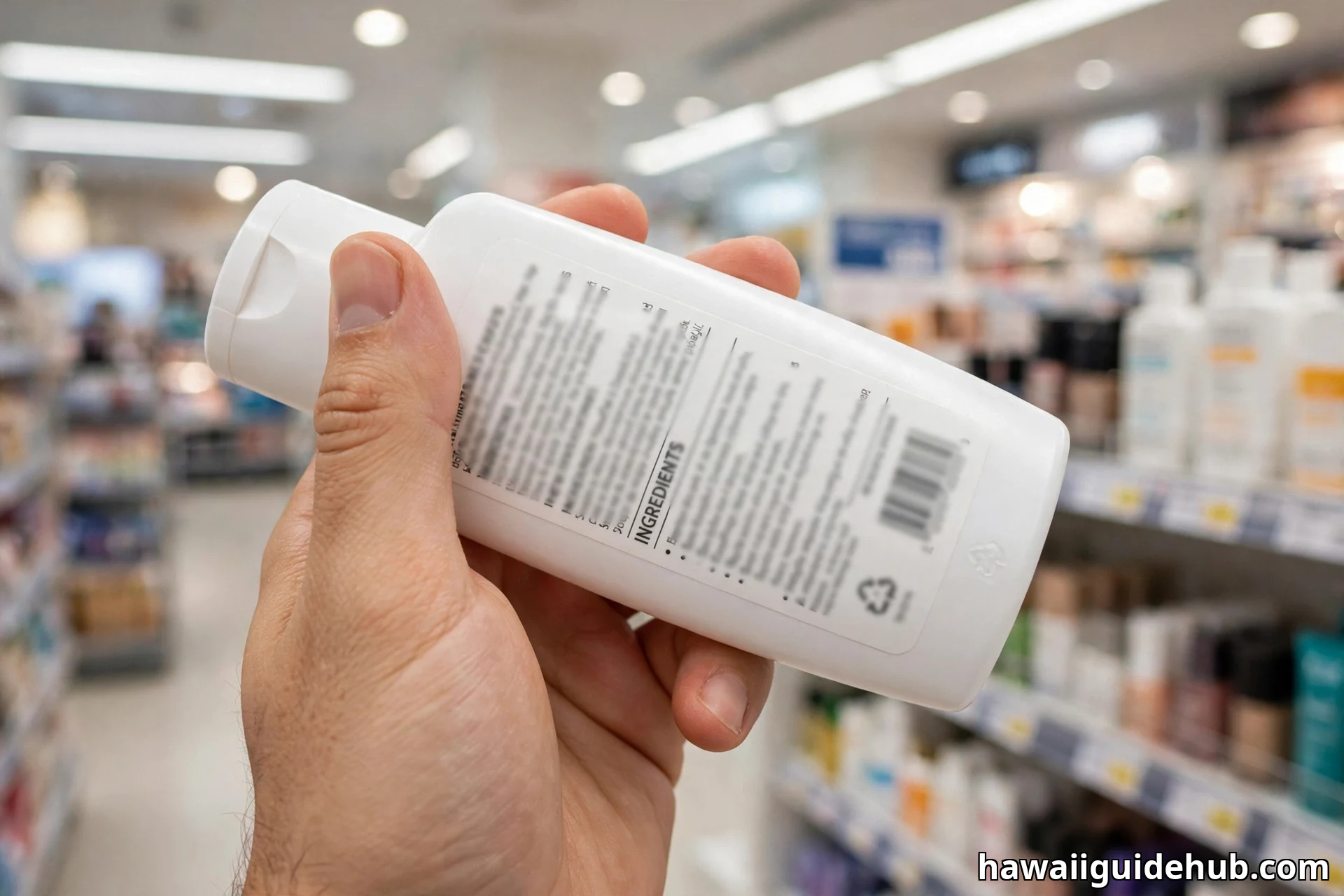
Here is the ten-second label test. Turn the bottle around and find the Drug Facts panel. Read the “Active ingredients” section. If it lists only zinc oxide, only titanium dioxide, or the two together, and nothing else, the product is legal on Maui. If you see any other active ingredient, put it back.
Ignore the front of the bottle. Terms like “reef-safe,” “reef-friendly,” and “ocean-friendly” have no regulated definition. A bottle can say “reef-safe” on the front and still contain avobenzone or octocrylene in the active ingredients. Marketing language is not the law; the Drug Facts panel is.
Maui County’s public guidance also recommends choosing non-nano (non-nanotized) zinc oxide or titanium dioxide when possible. Nano-sized mineral particles are small enough to be ingested by coral polyps, so the county prefers larger particle sizes. Not every label states particle size, so treat “non-nano” as a bonus, not a requirement. The legal test remains the active ingredients list.
Common Sunscreens That Are Not Allowed on Maui
To make this concrete, here are ingredient red flags. If the active ingredients include any of these, the product is not legal for use on Maui without a prescription:
- Oxybenzone (banned statewide too)
- Octinoxate, also called ethylhexyl methoxycinnamate (banned statewide too)
- Avobenzone
- Octocrylene
- Homosalate
- Octisalate
- Bemotrizinol, the newly FDA-approved filter
Many mainstream sport and “ultra” formulas rely on these filters, including some that market themselves as oxybenzone-free. “Oxybenzone-free” means one ingredient is absent; Maui’s law cares about all of them. Check every bottle, even ones you bought specifically for a Hawaiʻi trip, because a formula that clears the state ban can still fail the county rule.
Where to Buy Compliant Sunscreen on Maui
You do not need to panic if you arrive with the wrong bottle. Compliant mineral sunscreens are widely sold on Maui now, and the island has had years to adjust since the ordinance took effect.
Buy before you fly
The simplest move is to buy mineral sunscreen at home, where selection and prices are better. Look for zinc oxide or titanium dioxide as the only active ingredients. Mineral formulas have improved a lot; modern versions are far less chalky than the thick white pastes of the past, though they still tend to leave more of a cast than chemical formulas, especially on deeper skin tones. Tinted mineral sunscreens can help.
Buy on arrival
Maui grocery stores, pharmacies, surf shops, and hotel shops stock compliant options. Prices run higher than on the mainland, as with most things on the island, so buying ahead saves money. If you forget, ask for “mineral sunscreen” or “zinc sunscreen” and still check the Drug Facts panel yourself.
Free dispensers at beach parks
Maui County, the DLNR, and local partners including Raw Elements and the Maui Nui Marine Resource Council have installed free mineral sunscreen dispensers at several beach parks. They are a backup, not a plan: dispensers can run empty, and you should not count on one being stocked when you arrive. Bring your own.

How to Use Mineral Sunscreen Properly
Mineral sunscreen works differently from chemical sunscreen, and a lot of complaints about it come from using it the wrong way.
First, mineral sunscreen works immediately. Chemical filters need about 15 minutes to absorb and activate; zinc oxide and titanium dioxide sit on top of the skin and start reflecting UV the moment they are applied. You can apply and go straight into the water. This is a real convenience on a beach day, when the gap between the parking lot and the shoreline is often measured in minutes.
It also helps to know what the SPF number means with mineral formulas. SPF 30 blocks about 97 percent of UVB rays when applied at the tested thickness, and higher numbers add only small gains. No sunscreen blocks everything, which is why reapplication and clothing matter as much as the number on the bottle. For children, mineral sunscreen is the default recommendation from most pediatric dermatologists, since the active ingredients are not absorbed into the bloodstream the way some chemical filters are.
Second, apply more than you think you need. Most people use far less sunscreen than the tested amount, and mineral formulas punish under-application more visibly because the protection is physical. A shot-glass-sized amount for the full body is the standard guidance.
Third, reapply on schedule. Reapply every two hours, and immediately after swimming, sweating heavily, or toweling off. “Water-resistant” does not mean waterproof; the rating (40 or 80 minutes) tells you how long the protection holds during water exposure under test conditions.
Fourth, rub it in fully. The white cast fades as you work the product into the skin. Applying in sections and blending each one beats smearing a thin layer everywhere.
Sun Protection Beyond Sunscreen
The county’s own guidance puts clothing first: cover up with sun-protective clothing whenever possible, and use sunscreen for what clothing does not cover. That is good advice for your skin regardless of the law.
A UPF 50 rash guard or swim shirt protects your torso through an entire snorkel session with no reapplication and no reef impact at all. A wide-brim hat, sunglasses, and seeking shade in the middle of the day do the rest. Maui’s UV index is extreme year-round, and sunburns happen fast even on cloudy days, so layering protection is not overkill. For more ideas on planning active days in the sun, see our guide to outdoor adventures across Hawaii.
See the Sunscreen Rules Explained on Video
Maui Sunscreen Rules FAQ
Can I bring my regular sunscreen to Maui?
You can bring it in your luggage; the law restricts sale, distribution, and use, not possession. But you should not apply a non-mineral sunscreen on Maui. Buy a mineral formula before you fly or after you land.
Does the ban apply to Lānaʻi and Molokaʻi?
Yes. Maui County includes Maui, Lānaʻi, and Molokaʻi, and Ordinance 5306 applies across the county.
What about sunscreen I already applied before arriving?
The ordinance covers use within the county. Once you are on Maui, switch to a mineral formula for the rest of your trip.
Are there really free sunscreen dispensers?
Yes, mineral sunscreen dispensers have been installed at several Maui County beach parks through a partnership between the county, the DLNR, and local organizations. Treat them as a backup; bring your own supply.
Is “reef-safe” on the label enough?
No. “Reef-safe” is not a regulated term, and products using it can still contain ingredients Maui bans. Always check the Drug Facts active ingredients panel: zinc oxide, titanium dioxide, or both, and nothing else.
What if I need a specific chemical sunscreen for medical reasons?
Both the state and county laws allow non-mineral sunscreens with a prescription from a licensed healthcare provider. Talk to your doctor before your trip if this applies to you.
Planning the Rest of Your Maui Trip
Sunscreen is one small piece of a Maui vacation. If this is your first visit, our guide for first-time visitors helps you pick the right island and plan around it, and our reasons to visit Maui cover what makes the island worth the trip. Once you are there, our Oʻahu island guide is useful if you are island-hopping, since the sunscreen rules there follow the narrower state ban.
Maui’s mineral-only rule is simple once you know the label test. Check the active ingredients, choose zinc oxide or titanium dioxide, cover up with clothing when you can, and you will protect both your skin and the reefs that make Maui’s coastline worth visiting.