Manapua: Hawaii’s Beloved Pork Bun, Recipe and Where to Find It

If you have ever wandered through a farmers market, a beach park, or an after-school crowd in Hawaiʻi, you have probably seen one: a big, soft, snow-white bun cradled in someone’s hand, steam still rising from its pillowy top. That is a manapua (pronounced mah-nah-poo-ah), and it might be the single most beloved handheld snack in the islands. Part bun, part meal, and entirely local, the manapua is Hawaiʻi’s answer to the Chinese char siu bao, reshaped over more than a century into something bigger, sweeter, and unmistakably its own.
For visitors, the manapua is one of the tastiest ways to taste the story of Hawaiʻi itself. Chinese immigrants brought the original steamed pork bun to the islands in the 1800s, and local kitchens spent the next hundred years making it larger, sweeter, and more island-style. Today you will find manapua at bakeries, convenience stores, food trucks, and school fundraisers on every island. This guide covers what manapua is, where the name comes from, how it became a local icon, and a complete recipe so you can make it at home.
What Is Manapua, Exactly?
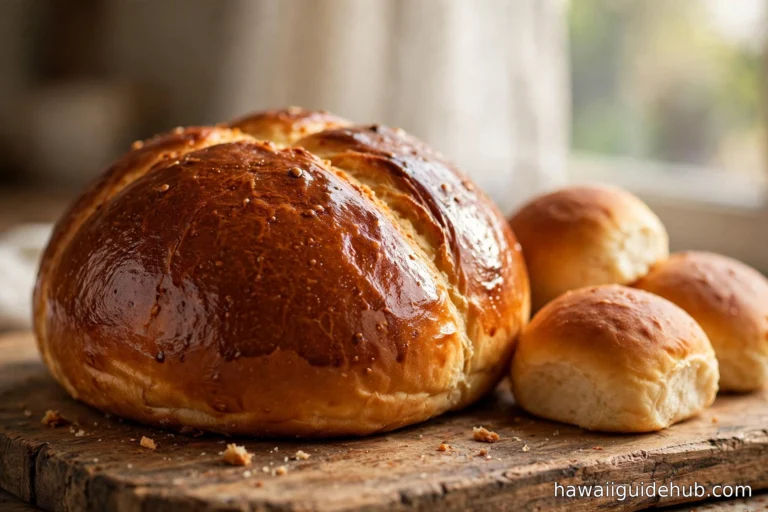
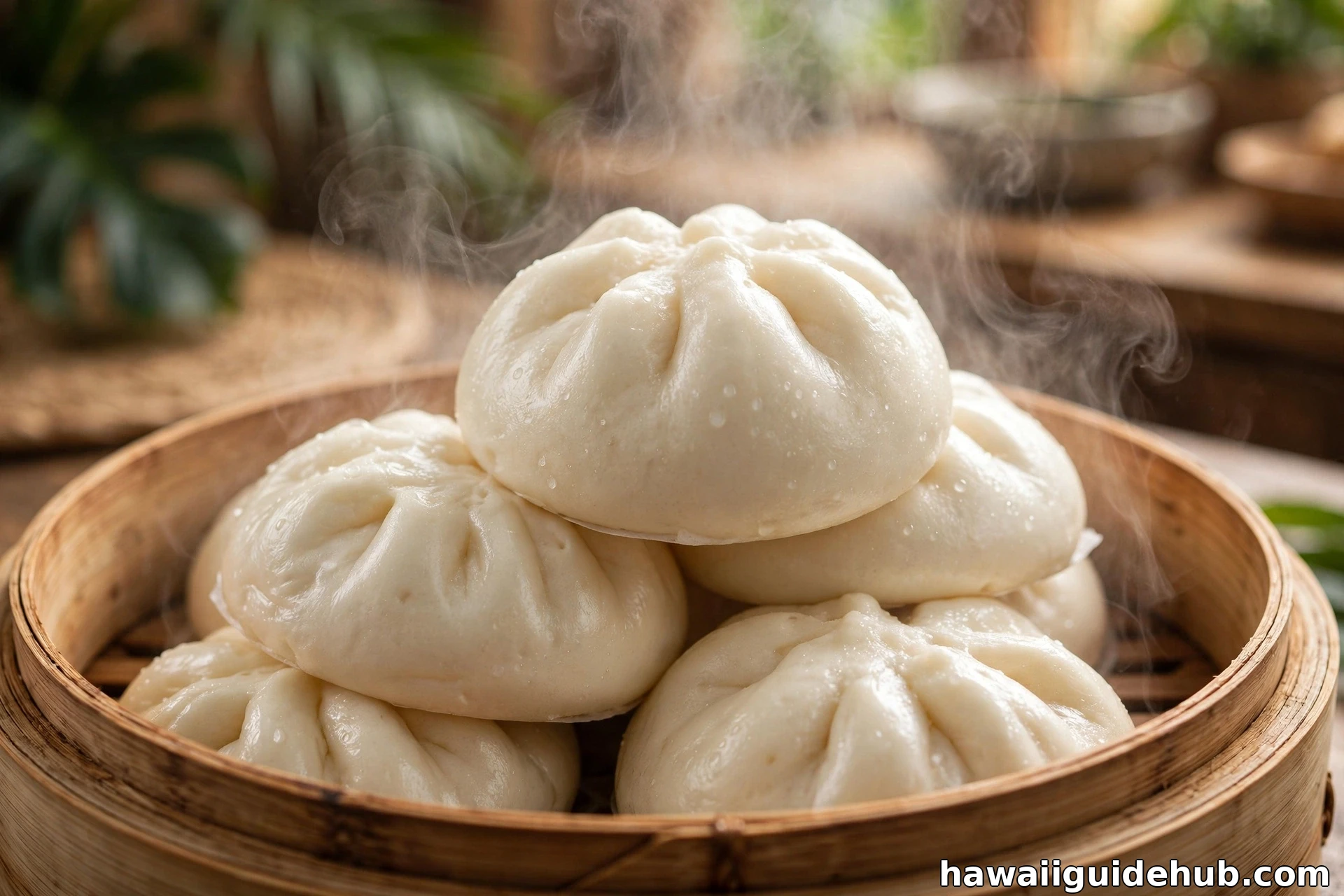
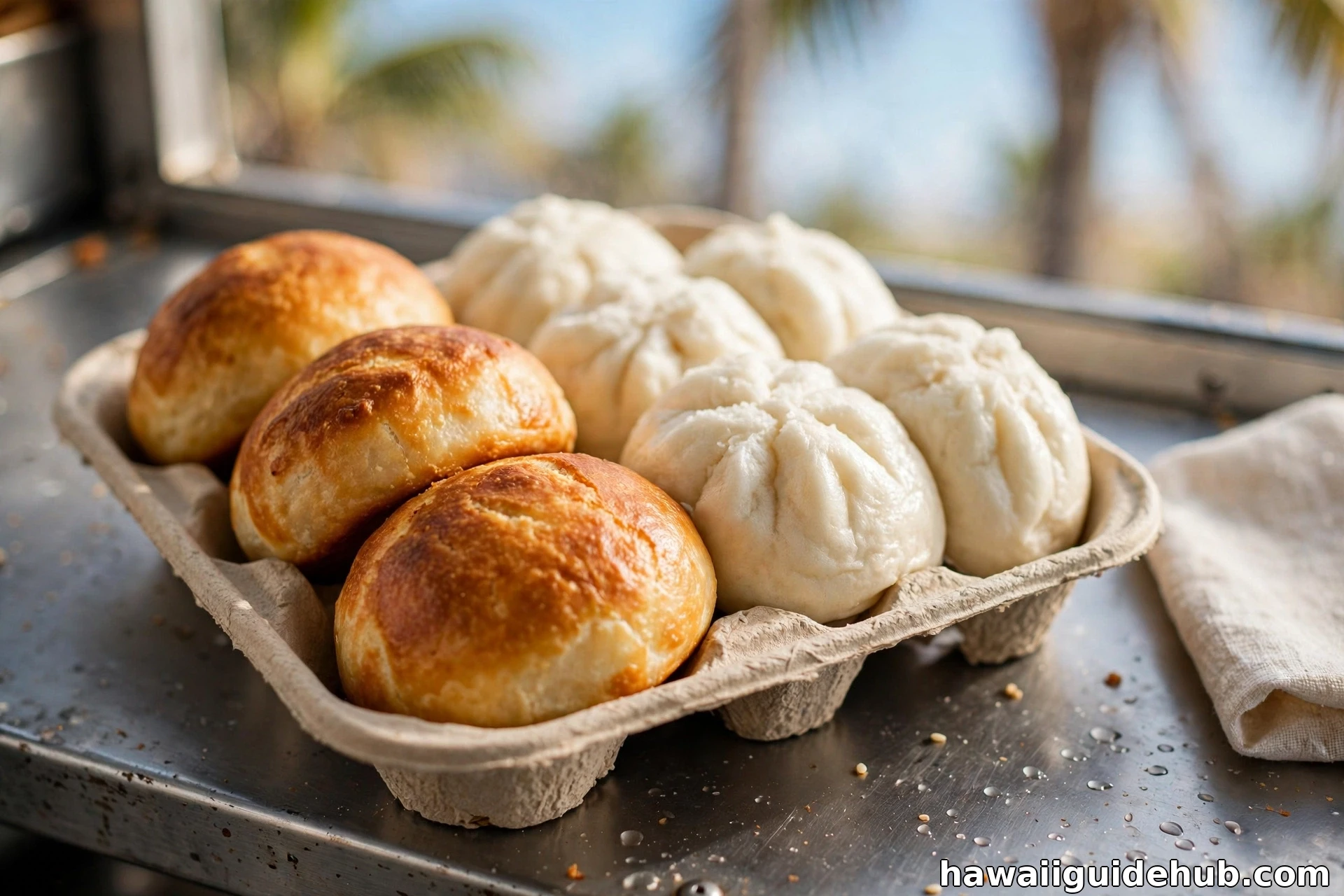
Manapua is a large, soft, yeasted bun filled with a savory (and sometimes sweet) filling. The classic version is stuffed with char siu, the Cantonese-style barbecue pork with its signature sweet and tangy red glaze. The bun itself is slightly sweet, fluffy, and tender, with a smooth, glossy surface when steamed or a golden top when baked.
Compared with the dim sum char siu bao you might know from Chinese restaurants, the local manapua is noticeably larger, often about four inches across, and the dough is a touch sweeter. It is sold individually and meant to be eaten with your hands, usually hot. One manapua makes a satisfying snack, and two can carry you through lunch. That grab-and-go convenience is a big part of why the manapua became such a fixture of daily life in Hawaiʻi.
What Does “Manapua” Mean?
The exact origin of the word manapua is not completely settled, but two Hawaiian phrases are commonly offered as the source. One is mea ʻono puaʻa, which means roughly a delicious pork pastry or tasty pork thing. The other is mauna puaʻa, meaning a mountain of pork, a playful nod to the generous mound of filling inside the bun. Over time, the local name shortened and smoothed into manapua.
Rather than declaring one explanation the winner, it is more accurate to say both have been linked to the term for generations. What is much clearer is the food’s history: Chinese steamed pork buns arrived with immigrants, and the name became a local word for a local food, the same way the bun itself did. For many longtime residents, manapua is tied to childhood memories of beach days and after-school snacks.
From Char Siu Bao to Manapua: The History
The story starts in the 1800s, when Chinese plantation workers arrived in Hawaiʻi. Long field days demanded portable, filling food, and southern China’s steamed pork buns fit perfectly, later moving into town life as workers opened small shops.
Over the decades, the buns changed. Island bakers made them larger, roughly the size of a small plate instead of the two-bite dim sum portion. The dough grew sweeter, matching local tastes, and new fillings appeared that reflected the islands’ mix of cultures: curry chicken with Japanese roots, kalua pig from the Hawaiian imu, Portuguese sausage, and later even hot dogs and vegetarian mixes. Steaming remained the classic method, but baked manapua, golden and slightly chewy, became just as popular.
One name appears often in the story of the modern manapua. Bat Moi Kam Mau opened the Char Hung Sut dim sum restaurant in 1946 and is widely credited with developing the larger-sized manapua that became the island standard. From there, the big bun spread to bakeries, lunch wagons, and convenience stores across the islands, and it has never left.
The Manapua Men
For much of the twentieth century, the manapua had its own street-level legend: the manapua man. These vendors walked the neighborhoods with stacked steamers or insulated boxes, selling hot manapua at beaches, parks, and schools at dismissal time. For generations of kids, the sound of the manapua man was the sound of the best part of the day.
The roaming vendors are mostly a memory now, replaced by bakeries and stores, but the spirit survives. On weekends you will still find steamer trays of manapua at swap meets, school fundraisers, and church fairs, and many local families have strong opinions about whose manapua is best on their island. Ask around and you will get an earful, in the best way.
Steamed or Baked: Know the Difference
When you order manapua, the first question is usually steamed or baked, and the two are genuinely different. Steamed manapua is soft, pillowy, and white, with a glossy skin and a tender crumb. The steam keeps the filling juicy and the bun light. Baked manapua comes out golden brown with a slightly sweet crust and a chewier bite, and it holds up better in a lunch bag, which is one reason it became the after-school favorite.
There is no wrong answer, and most serious manapua fans refuse to choose. If it is your first time, order one of each. The steamed bun shows off the classic dim sum heritage, and the baked bun shows the local evolution.
What Is Inside a Manapua?
The classic filling is char siu pork: roasted pork shoulder glazed with the sweet, savory Cantonese barbecue sauce that gives it a deep red color and a caramelized edge. For manapua, the pork is diced and tossed in a glossy sauce made with oyster sauce, sugar, soy sauce, and a touch of cornstarch, so every bite carries that sweet and savory balance. The filling is generous but not stuffed to bursting, a modest mound at the center of the bun.
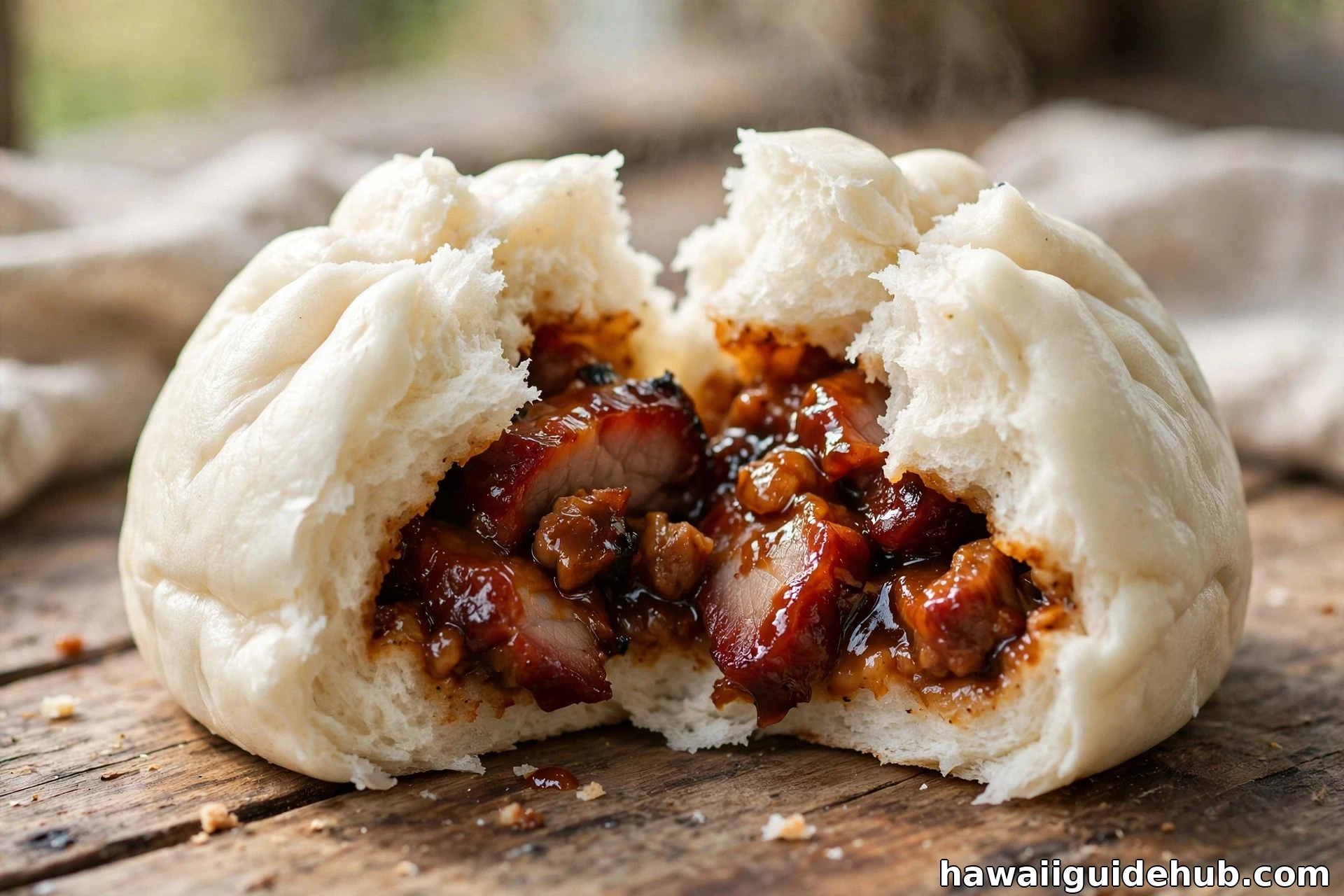
Beyond char siu, the fillings read like a map of Hawaiʻi’s food cultures. Curry chicken brings a Japanese-inspired warmth. Kalua pig folds smoky Hawaiian flavor into the Chinese bun. Portuguese sausage, lup cheong (Chinese sausage), and hot dog versions all have their loyal fans. Vegetarian manapua often mixes long rice, shredded cabbage, carrots, and mushrooms. On the sweet side, you will find black sugar, coconut, red bean, taro, and Okinawan sweet potato, and a black sugar manapua with a cup of coffee is a legitimate island breakfast.
How Manapua Is Made: The Classic Recipe
Making manapua at home is a weekend project, not a weeknight sprint, but it is deeply satisfying, and the results beat anything from a freezer aisle. The process has four parts: the dough, the filling, the shaping, and the steaming. Here is how it comes together.
The Dough
The dough is a soft, slightly sweet yeasted dough. Combine 2 cups of bread flour with 1 tablespoon of sugar, 1 teaspoon of instant yeast, and half a teaspoon of baking powder. Add 1 tablespoon of oil and about three quarters of a cup of warm water, then knead 8 to 10 minutes until smooth and elastic. Cover and let rise about 1 hour, until doubled. Some local recipes add a little sesame oil for flavor, a small touch that sets manapua apart from plain bao dough.
The Char Siu Filling
Start with 1 pound of cooked char siu pork, diced small. Toss the diced pork with 2 tablespoons of oyster sauce, 1 tablespoon of sugar, 1 teaspoon of soy sauce, and 1 teaspoon of cornstarch. Add 2 tablespoons of water and warm the mixture in a pan until it turns glossy and thick enough to coat the pork. Let it cool before filling the buns, since hot filling will melt the dough.
Shaping the Buns
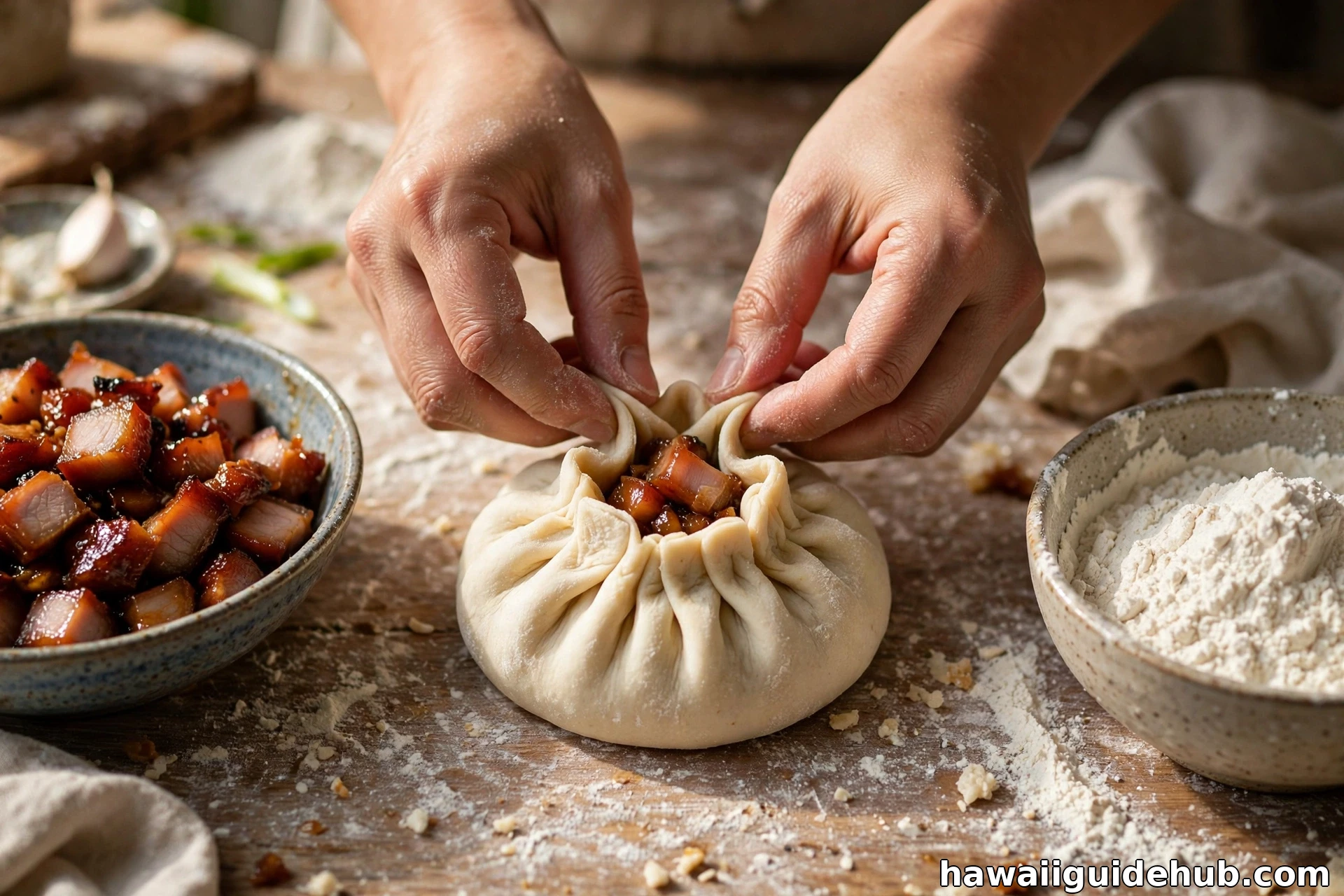
Divide the risen dough into 8 equal balls. Roll each into a round about 5 inches across, keeping the center slightly thicker than the edges. Spoon 2 to 3 tablespoons of the cooled filling into the center. Gather the edges up and around the filling, pleating as you go, then pinch firmly to seal. Flip the bun over so the sealed side faces down, the traditional manapua way. (Classic Chinese bao is often served seam side up; manapua goes seam side down.) Set each bun on a small square of parchment paper.
Resting and Steaming
Cover the shaped buns and let them rest for 20 minutes. They will puff slightly, and this rest is what keeps the finished buns light instead of dense. Bring a large steamer to a full, rolling boil. Working in batches so the buns do not crowd, steam for 12 to 15 minutes. Do not lift the lid during the first 8 minutes, because the sudden drop in temperature can collapse the buns. When they are done, the buns will be puffed, glossy, and firm to a gentle touch.
Pro Tips for Better Manapua
A few details separate good manapua from great manapua. First, make the char siu a day ahead. Day-old char siu dices more neatly, and the flavors deepen overnight. Second, do not overfill. Two to three tablespoons of filling per bun is the sweet spot; overfilled buns burst in the steamer. Third, keep the filling cool before shaping, and keep the steamer at a strong, steady boil the whole time.
If your buns come out wrinkled or collapsed, the usual culprits are lifting the lid too early or letting the shaped buns overproof before steaming. Twenty minutes of rest is enough; an hour will make them fragile. And if the dough feels sticky while kneading, resist the urge to add a lot of extra flour. A slightly tacky dough steams up softer than a stiff one.
Variations Worth Trying
Once you have the classic char siu version down, the filling is only limited by your imagination, and island bakers have imagined a lot. Curry chicken manapua borrows from Japanese curry buns. Kalua pig manapua is pure local fusion, smoky shredded pork from the imu tucked into a Chinese-style bun. Portuguese sausage, lup cheong, and the humble hot dog manapua all have devoted followings.
Vegetarian versions deserve attention too. A good vegetarian manapua mixes long rice noodles, shredded cabbage, carrots, and mushrooms with savory seasoning. On the sweet side, black sugar manapua is the one to try first, with a deep molasses-like sweetness. Coconut, red bean, taro, and Okinawan sweet potato round out the lineup. Many visitors plan bakery stops around one sweet and one savory, a simple and excellent strategy.
Where to Find the Best Manapua in Hawaiʻi
You do not have to look hard. Manapua is sold at Chinese bakeries and dim sum shops on every island, and it is a standard item at convenience stores, where a hot manapua from the warmer case is a classic road-trip move. Farmers markets, swap meets, and school fundraisers often sell them fresh from steamers.
For a reliable baseline, Golden Coin frozen manapua is the grocery store standby statewide; the char siu version is the original island favorite, and it steams up well at home. But the real joy is in the hunt. Ask a local coworker, a hotel concierge, or the person in line at the bakery which shop they swear by, and follow their advice. Manapua opinions run deep, and every island has its champions. Pair your tasting tour with other must-try local dishes in Hawaii for a full day of eating like a local.
Serving and Storing Manapua
Manapua is best eaten hot, straight from the steamer, when the bun is at its softest and the filling is steaming. It needs no condiments, though some people like a dab of hot mustard or a splash of shoyu on the side. As a meal, pair it the local way: one savory and one sweet manapua, maybe with a side from the bakery case. It travels well for beach days and hikes, since the bun protects the filling and it keeps for a few hours at room temperature.
Leftovers keep for about 3 days in the refrigerator. Reheat by steaming for about 5 minutes, which restores the soft, pillowy texture better than any other method. In a hurry, 30 seconds in the microwave under a damp paper towel works too. Baked manapua can be warmed in a 350 degree oven for a few minutes to re-crisp the crust. Manapua also freezes well; steam from frozen for about 10 minutes.
The Story Behind the Name
The name carries as much history as the bun. Watch this short video on how manapua got its name and why it stuck:
Manapua FAQs
Is manapua the same as char siu bao?
Manapua evolved from char siu bao, but they are not identical. Manapua is larger, the dough is slightly sweeter, and the range of fillings is wider, reflecting Hawaiʻi’s mix of food cultures. It is served seam side down, while traditional bao is often served seam side up.
What is the most popular manapua filling?
Char siu pork, without question. It is the original filling, the one the name most likely refers to, and still the best seller at bakeries statewide. If you are trying manapua for the first time, start with char siu, then branch out to curry chicken, kalua pig, or a sweet black sugar bun.
Are manapua steamed or baked?
Both. Steamed manapua is the traditional style: soft, white, and pillowy. Baked manapua is a later local favorite: golden, slightly sweet, and chewier. Most bakeries sell both. Try one of each and decide for yourself.
How do you pronounce manapua?
Mah-nah-poo-ah, with even emphasis across the syllables. Getting the pronunciation right earns you a small nod of respect at any bakery counter.
Can you freeze manapua?
Yes. Cool the buns completely, wrap them individually, and freeze up to 2 months. Steam from frozen about 10 minutes, or thaw overnight and steam 5 minutes. The texture comes back beautifully.
What should I eat with manapua?
Manapua is a complete snack on its own, but it pairs naturally with the rest of the local bakery case. Try it alongside malasadas for a sweet counterpoint, or make it part of a plate lunch style spread with huli huli chicken and fresh fruit from our guide to native Hawaiian fruits.
A Bun Worth the Story
The manapua is more than a snack. It is a record of how Hawaiʻi eats: Chinese technique, local ingredients, plantation history, and a century of island bakers making something foreign into something unmistakably their own. Whether you buy one hot from a bakery warmer, steam a tray from the freezer aisle, or pleat your first batch at home, you are taking part in a tradition that fed field workers, school kids, beachgoers, and generations of families in between.