Mauka to Makai Meaning: Hawaii’s Mountain-to-Sea Direction System Explained

Ask a local in Hawaii for directions and you might hear something that stops you cold. Go mauka on this street, then turn makai at the light. Park on the mauka side of the building. The beach is just makai of the hotel. If you grew up with north, south, east and west, these words can feel like a secret code. They are not. Mauka and makai are simply how Hawaii points you in the right direction, and once you learn them, getting around the islands gets a whole lot easier.
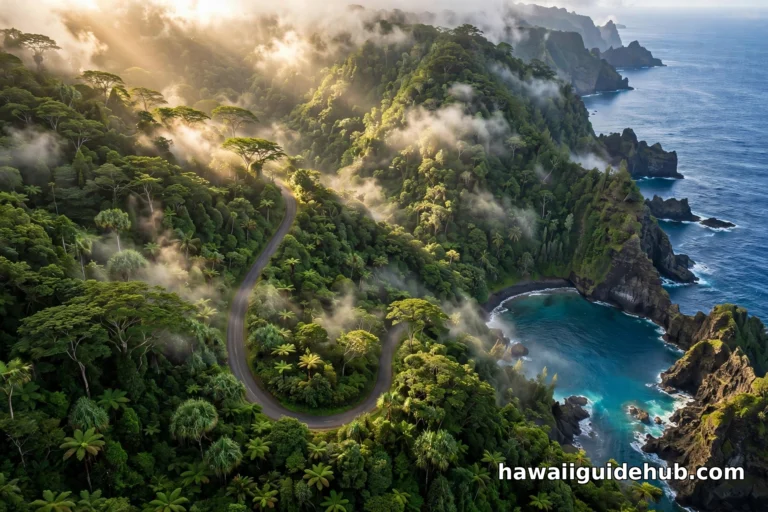
Mauka means toward the mountains, inland, away from the sea. Makai means toward the sea, oceanward, downhill toward the water. Say them together, mauka to makai, and you have described the entire sweep of an island, from its forested peaks down through its valleys and farms to the shoreline and the reef beyond. It is one of the most useful things a visitor can learn, because these two words show up everywhere: in conversation, in street directions, in place names, and in the deeper story of how Hawaiians understood their land.
What Mauka Means
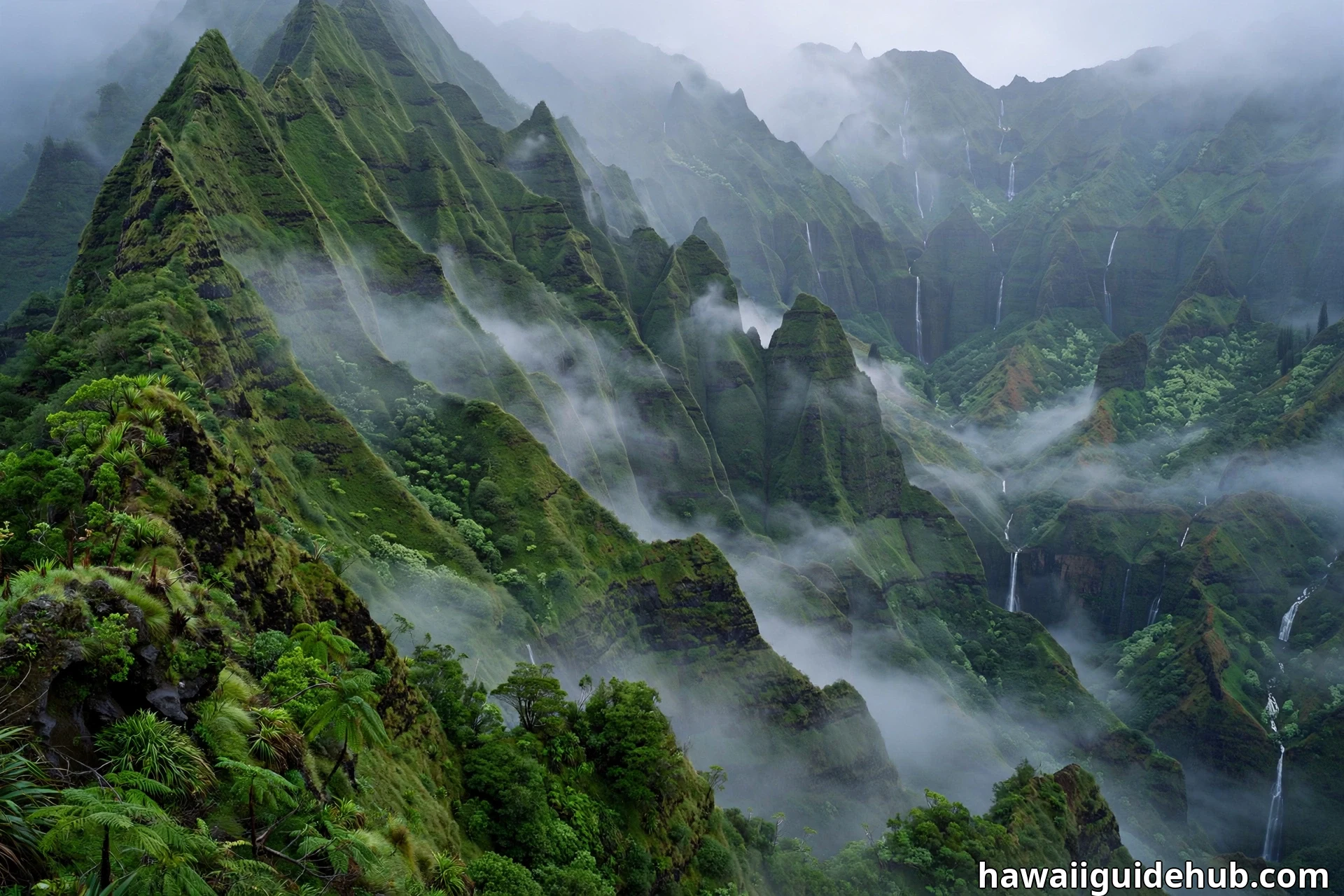
Mauka (pronounced mow-kah) is the Hawaiian word for inland, upland, or toward the mountain. Stand on any beach in Hawaii, turn your back to the ocean, and face the green peaks rising behind you. You are now looking mauka. The word does the job that north or south might do on the mainland, but it is anchored to the landscape itself rather than to a compass.
The reason mauka works so well is simple geography. Every Hawaiian island is a volcanic mountain, or a cluster of them, rising out of the Pacific. The high ground is always inland. The ocean always rings the edge. So no matter where you stand, mauka reliably points you away from the water and toward higher ground. You do not need to know which way is north. You just need to see the mountains, and in Hawaii, you almost always can.
In everyday speech, mauka shows up constantly. A local might tell you the trailhead is mauka of the highway, meaning on the inland side. A shop might be on the mauka side of the street. If someone says drive mauka, they mean head inland, away from the coast. It is a living, working word, not a museum piece.
What Makai Means
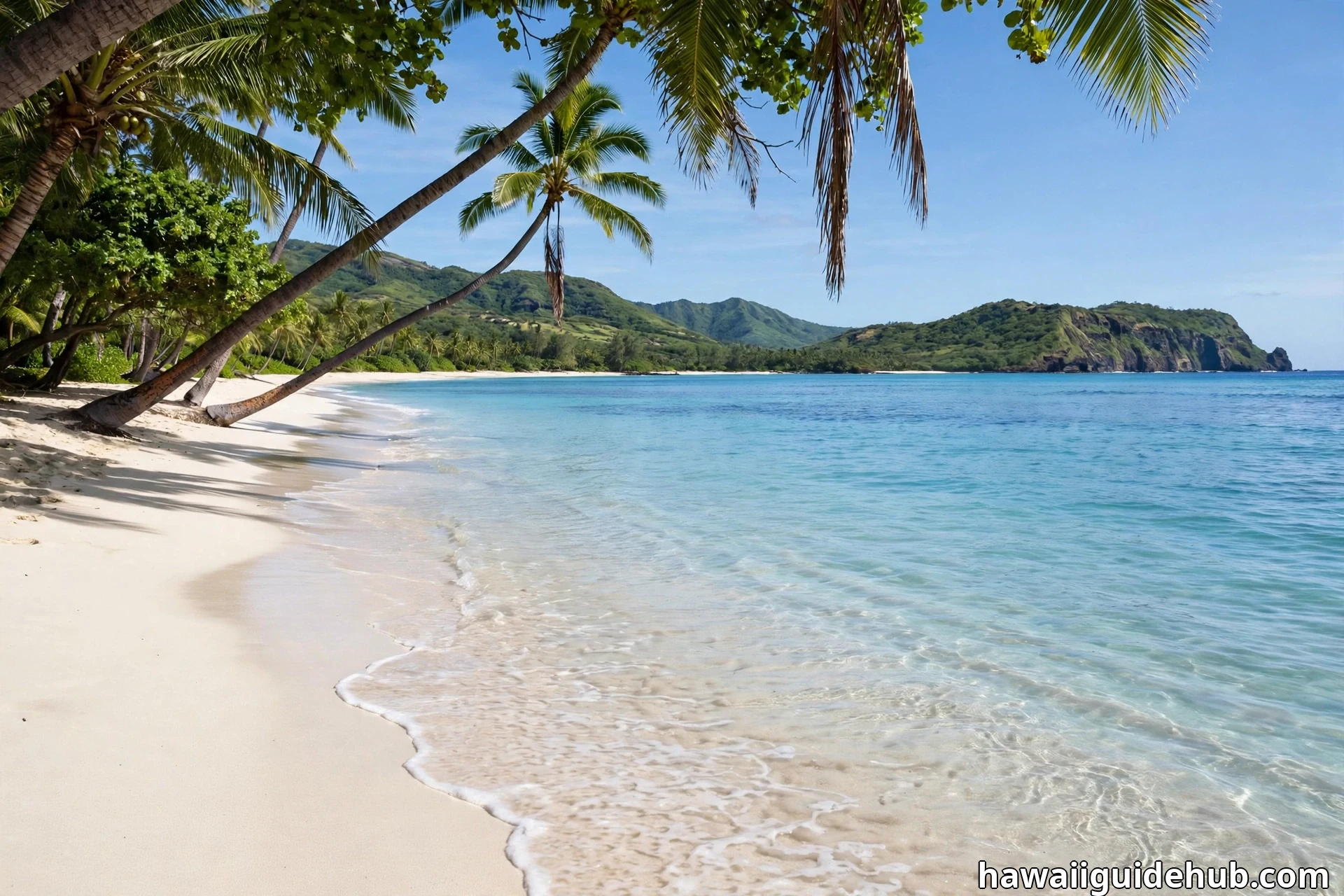
Makai (pronounced mah-kigh, rhyming with high) is the mirror image: toward the sea, oceanward, downhill toward the water. If mauka pulls your eyes to the peaks, makai pulls them to the surf. From a mountain trail, the ocean glittering below you is makai. From a hotel lobby, the beach entrance is on the makai side of the building.
Together, the pair forms a complete directional system. Mauka and makai handle the inland-seaward axis, which is the axis that matters most in daily island life. Are you heading up toward the hills or down toward the water? That is the question these words answer, and it is the question locals ask most often when giving directions.
For visitors, makai is the word you will probably use first, because so much of a Hawaii trip happens makai: the beaches, the snorkeling, the sunset sails, the beachfront restaurants. But you will hear mauka just as often, because the mountains are always there, looming green and close, orienting everything. Our best island for first-time visitors guide is a good starting point if you are still deciding which island’s mauka-makai landscape to explore first.
Why Hawaii Does Not Rely on North and South
On the mainland, north, south, east and west are second nature. In Hawaii, they are surprisingly unhelpful. Picture Oahu: an island with a mountain range running down its middle, ringed by ocean on all sides. Tell a visitor to head north and they might drive in a circle trying to figure out which way that is. Tell them to head mauka and they simply look for the mountains.
Compass directions do get used for the big-picture stuff. People talk about the North Shore, the South Shore, the east side or west side of an island. But for getting from point A to point B on the ground, mauka and makai win because they are always visible and always correct. The mountains do not move. The ocean does not move. A compass needle can feel abstract; a green ridge on the horizon does not.
This is also why visitors sometimes feel briefly lost when a local gives directions. Your brain is waiting for left, right, north, south. Instead you get mauka, makai, and maybe a landmark. The trick is to stop translating and start looking. Find the mountains. Find the ocean. The directions will click into place.
The Honolulu Bonus Round: Diamond Head and Ewa
On Oahu, locals add two more directional words to the mix, and they confuse visitors more than anything else in this article. In Honolulu and Waikiki, you will hear Diamond Head and Ewa (pronounced eh-vah) used as directions.
Diamond Head means toward Diamond Head crater, the famous landmark at the east end of Waikiki. Ewa means the opposite direction, away from the crater toward the Ewa plain on the west side of the island. So a complete Honolulu direction might be: go two blocks Diamond Head, then turn mauka. Translation: walk two blocks toward the crater, then turn inland toward the mountains.
This only works in Honolulu because Diamond Head is a shared, visible landmark there. Do not expect it to help you in Hilo or Lihue. Think of it as a local shorthand for one city, while mauka and makai are the statewide system. Our Oahu island guide covers more of these local navigation quirks if you are headed there.
How Locals Actually Use These Words
The fastest way to get comfortable with mauka and makai is to hear them in real sentences. Here is how they sound in daily island life.
A friend giving you a ride might say, I live mauka of the highway, which means their house sits on the inland side of the road. A surf report might note that the wind is blowing from the mauka side, meaning offshore, from the mountains toward the sea. A parking attendant could wave you toward the makai lot, the one closer to the ocean.
In stores and restaurants, the words mark position. The restrooms are on the makai side of the lobby. Seating is available mauka of the bar. None of this requires a compass. It only requires knowing which way the water is, and on an island, you can usually see it, hear it, or smell the salt in the air.
Hikers use the pair constantly, because trails in Hawaii run mauka-makai all the time. A ridge trail climbs mauka into the mountains; a coastal trail runs along the makai edge. If you are planning to hit the trails, our guide to outdoor adventures in Hawaii will help you pick routes on any island, and you will notice how often the descriptions lean on these two words.
Mauka to Makai: More Than Directions
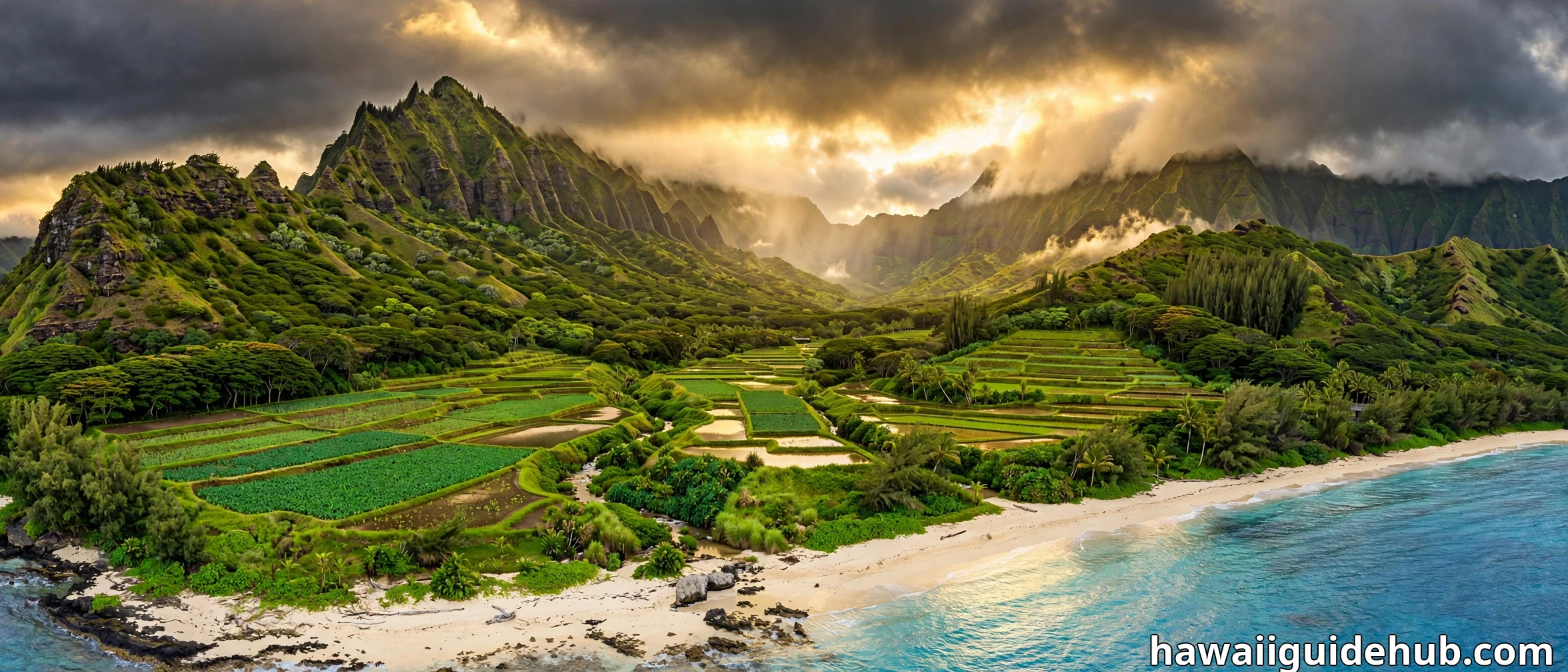
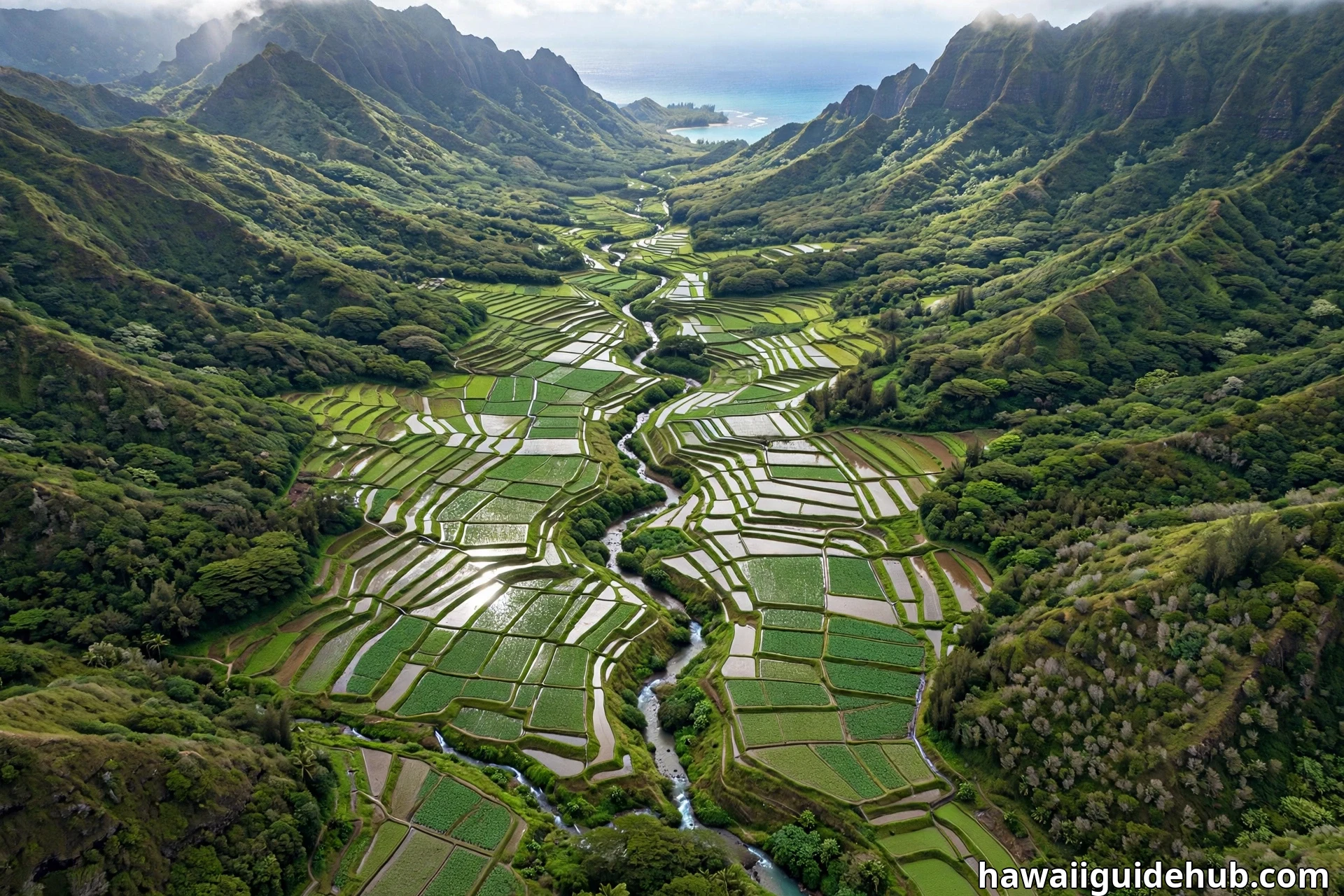
Say the two words as a pair, mauka to makai, and they stop being just directions and become a way of seeing the islands. The phrase means from the mountains to the sea, and it captures the whole connected system of Hawaiian land: the misty forests where the rain falls, the streams that carry the water down, the valleys where taro grows in flooded terraces, the fishponds along the shore, and the reef and open ocean beyond.
This was not just poetry. Ancient Hawaii organized its land around exactly this idea. The islands were divided into ahupuaa, wedge-shaped districts that stretched from the mountain summits all the way to the outer reef. Each wedge gave its community access to everything: timber and birds from the upland forest, crops from the valley farms, fish from the ponds and the sea. The mauka-to-makai wedge was a complete, self-sufficient world.
You can still see the logic of it today. Drive from the summit of Haleakala down to the shore, or from the Kohala mountains to the Kona coast, and you pass through half a dozen climate zones in under an hour. The Hawaiians who named the directions mauka and makai were describing a landscape they managed as one connected whole, not as separate pieces.
The Ahupuaa: Land Measured Mountain to Sea
The ahupuaa deserves a closer look, because it is the deepest expression of the mauka-to-makai idea. Each district was shaped like a slice of pie, narrow at the mountain top and widening toward the sea, so that every community held a little of each elevation and each resource.
At the top, in the uka (upland) zone, protected forests supplied koa wood for canoes, ohia wood for houses, and feathers for cloaks. Strict kapu rules guarded the watershed, because Hawaiians understood that the forests made the rain that fed the streams below. In the middle kula zone, farmers grew sweet potato on the dry slopes and engineered valley floors into loi kalo, flooded taro terraces fed by irrigation ditches. Near the shore, the kahakai zone held fishponds with massive stone walls, salt pans, and villages. Beyond the reef lay the kai, the deep-sea fishing grounds.
A chief who controlled an ahupuaa could feed his people from forest to ocean without asking anything of his neighbors. Modern conservation in Hawaii still thinks this way. Watershed partnerships that protect native forest and fishpond restoration projects that rebuild ancient loko ia both organize their work mauka to makai, because water, soil, and reef health are one connected story. When Hawaiians speak of malama aina, caring for the land, they mean the whole slope from peak to reef.
Mauka and Makai in Place Names
Once you know the words, you will start spotting them everywhere. They are baked into the names of streets, neighborhoods, businesses, and landmarks across the islands. A Mauka Street runs inland. A Makai Bar sits by the water. It is a small thrill the first time you decode one on your own.
The words also show up in the names of natural features. Mauka rain is the rain that falls on the mountains and feeds the streams. Makai winds blow from the sea toward the land. Even the names of some plants and fish reference their mauka or makai homes. The language keeps pointing back to the same mountain-sea axis, because that axis organized everything.
For visitors interested in the deeper cultural layer, food is a great way in. Many of the ingredients in traditional Hawaiian cooking come straight from the ahupuaa zones: taro from the valley terraces, sweet potato from the kula slopes, fish from the makai waters. Our guide to native Hawaiian fruits traces where island foods grow along that same mauka-to-makai slope.
How to Pronounce Them Right
Pronunciation matters in Hawaii, and these two words are worth getting right. Mauka is mow-kah, with the stress on the first syllable, like mow the lawn plus kah. Makai is mah-kigh, with the stress on the second syllable, rhyming with high. Say them confidently and locals will notice the effort.
A few related words round out the set. Uka means upland or inland, the high country. Kai means the sea or seawater. Kahakai is the shoreline or coast. You will not need these for directions, but you will see them on signs and in place names, and recognizing them adds another layer to your reading of the landscape.
The ocean itself deserves respect in this language lesson. The makai side is beautiful, but it demands care: reefs, currents, and surf conditions change fast. If you are heading makai to snorkel, our sea turtle etiquette guide covers how to enjoy the water while giving marine life its space.
See Mauka and Makai Explained on Video
Frequently Asked Questions
What does mauka mean in Hawaiian?
Mauka means toward the mountains, inland, or upland. It is pronounced mow-kah. If you are at the beach and someone says go mauka, turn away from the ocean and head toward the peaks.
What does makai mean in Hawaiian?
Makai means toward the sea or oceanward. It is pronounced mah-kigh, rhyming with high. From anywhere inland, makai points you downhill toward the water.
What does mauka to makai mean?
As a phrase, mauka to makai means from the mountains to the sea. It describes the full sweep of the island landscape and the traditional Hawaiian understanding of land as one connected system from peak to reef.
Why do Hawaiians say mauka instead of north?
On a small island with mountains in the middle and ocean all around, compass directions are often unhelpful. Mauka and makai always work because the mountains are always inland and the sea always surrounds you. They are visible, intuitive, and reliable.
What do Diamond Head and Ewa mean as directions?
In Honolulu, Diamond Head means toward Diamond Head crater and Ewa (eh-vah) means the opposite direction, toward the west side. They are local shorthand for Oahu’s south shore and do not apply on other islands.
Is it rude to mispronounce mauka and makai?
Not rude, but getting them right is appreciated. Mauka is mow-kah, makai is mah-kigh. Locals notice the effort, and it is a small way to show respect for the language and culture.
A Small Vocabulary That Opens Up the Islands
Two words. Toward the mountains, toward the sea. That is all mauka and makai are, and yet they unlock a surprising amount of Hawaii. They decode the directions locals give, they explain the logic of ancient land divisions, and they point to a way of thinking about the islands as one connected place rather than a collection of separate sights.
Learn them before you go, use them while you are there, and pay attention to how naturally they fit the landscape. By the end of your trip, you may find yourself giving directions the local way too. And when someone asks where the beach is, you will just smile and point makai.