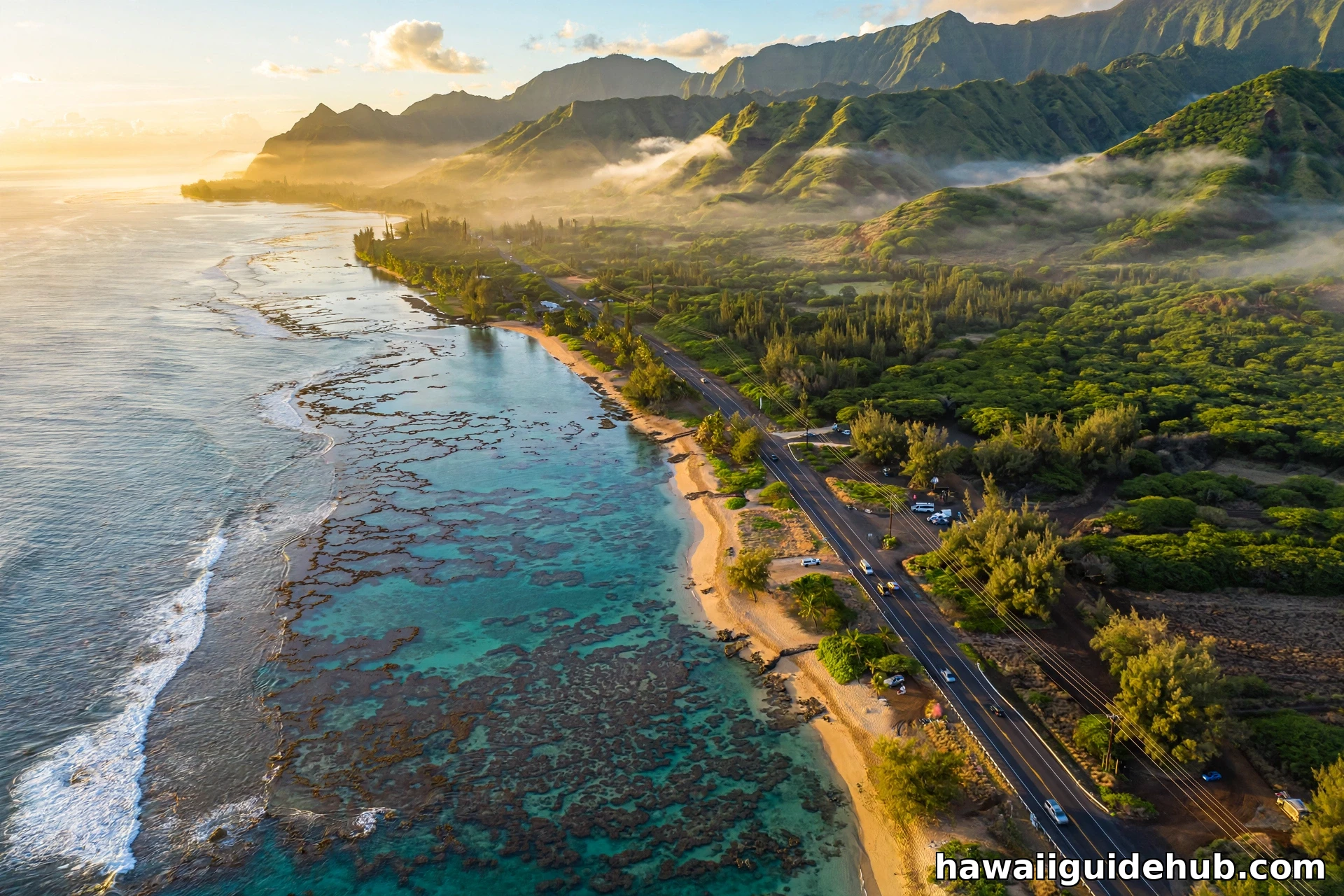
Olowalu Beach: Snorkeling Maui’s Mother Reef at Mile Marker 14

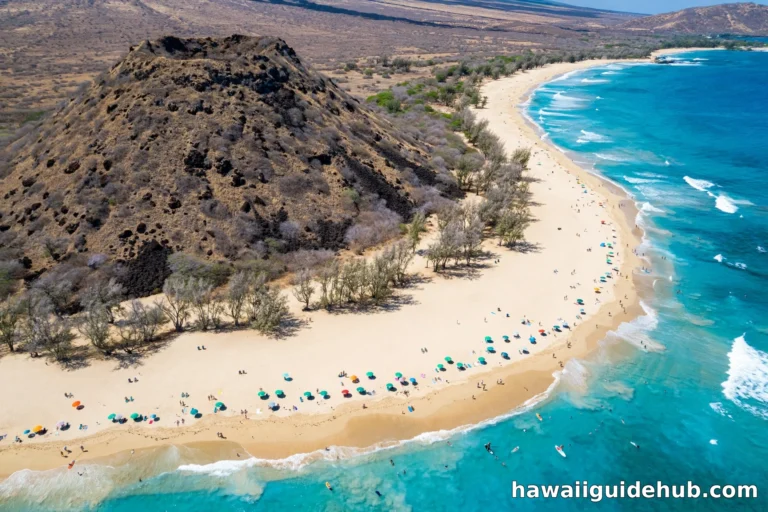
Olowalu Beach is one of those Maui places that visitors drive right past without realizing what sits under the water. From the highway it looks like a thin ribbon of golden sand with a row of leaning kiawe trees. Slip on a mask and swim out past the shallows, though, and you drop into a different world: one of the oldest and healthiest coral reef systems in the main Hawaiian Islands, a place scientists call Maui’s Mother Reef.
Locals know this spot as Mile Marker 14. The beach runs along the Honoapiʻilani Highway between Lahaina and Maʻalaea, and the snorkeling here is among the best on the island for beginners. The water is calm most mornings, the reef starts almost at the shoreline, and the wildlife is remarkable. Green sea turtles gather at a cleaning station out on the reef. Manta rays cruise the deeper channels. Some of the coral heads have been growing for a thousand years.
This guide covers everything you need to know: how to find Olowalu, where to park, how to snorkel the reef without damaging it, what you will see underwater, and the rules that keep this ancient ecosystem alive.
What Makes Olowalu Beach Special
Olowalu is not a wide, resort-style beach. The sand strip is narrow in places, there are no facilities, and the beach itself will not win awards for beauty. What makes it special is entirely underwater.
The Olowalu Reef spans about 939 acres along the coast, stretching from the end of the Pali to just past Olowalu Point. In 2017, the Sylvia Earle Alliance declared it a Mission Blue Hope Spot, a designation given to ocean areas critical to the health of the planet. Olowalu was the first Hope Spot in the Hawaiian Islands. According to The Nature Conservancy, the reef harbors the largest known manta ray population in the United States and holds some of the oldest coral in the main Hawaiian Islands, with certain coral formations estimated at more than a thousand years old.
The reef also does invisible work. It reduces wave energy along the coast, protecting homes, the highway, and two beach parks from erosion and flooding. And research has shown that Olowalu acts as a larval source for other reefs, meaning the coral babies produced here help replenish reefs around West Maui, Lānaʻi, and Molokaʻi. That is a big part of why it is called the Mother Reef.
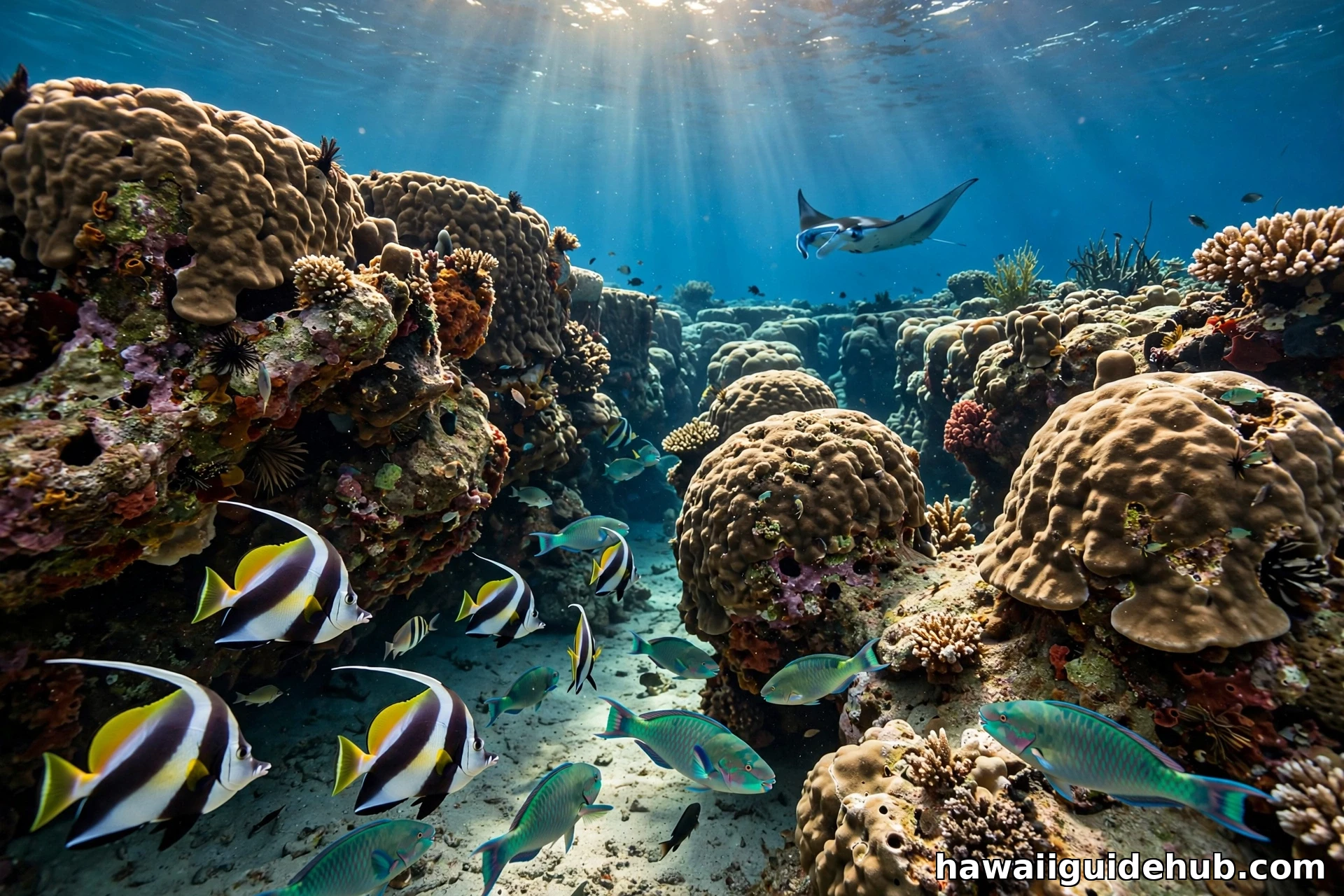
For snorkelers, all of this translates into an unusually rich underwater landscape: maze-like coral corridors, huge ancient coral heads, clouds of tropical fish, and regular visits from turtles, reef sharks, and manta rays.
Where Olowalu Beach Is and How to Get There
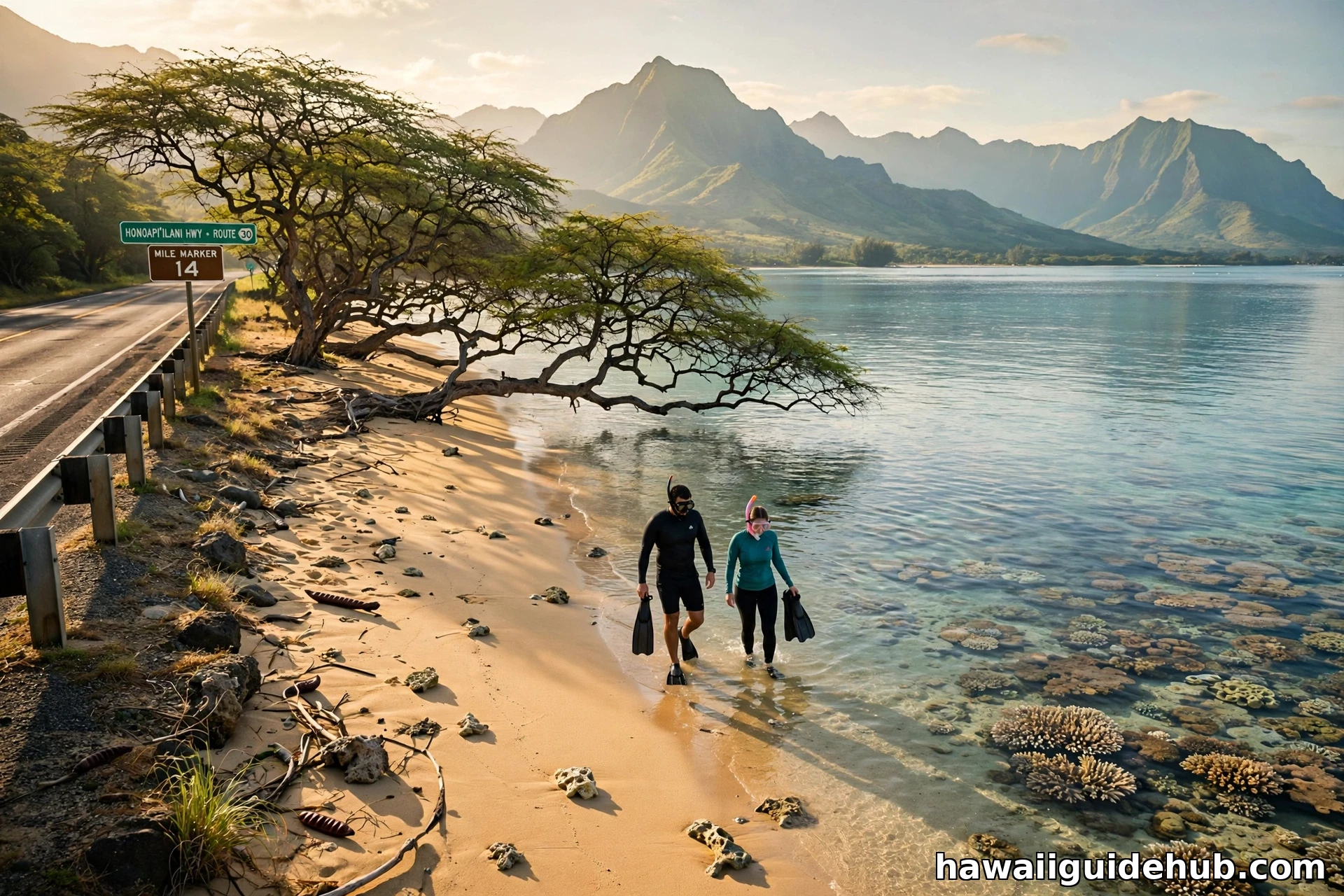
Olowalu Beach sits on the Honoapiʻilani Highway (Route 30) on Maui’s west side, roughly halfway between Lahaina and Maʻalaea. From Lahaina, drive south about 6.5 miles. From Maʻalaea, drive north about 7 miles. The spot most snorkelers use is near Mile Marker 14, and you will see the green mile marker signs on the makai (ocean) side of the highway.
The access is as simple as it gets. There is no turn lane, no parking lot, and no entrance gate. You pull off the highway onto the hard-packed sand on the ocean side of the road, park clear of the pavement, and you are on the beach. The whole thing is free, with no entrance fee, no reservations, and no closing hours. Visiting during daylight hours is the sensible choice.
One landmark worth knowing: Leoda’s Kitchen and Pie Shop sits just off the highway on the mauka (mountain) side a short drive away. It is the go-to stop for food before or after your snorkel. The Olowalu General Store area nearby has a few local vendors as well.
Snorkeling at Olowalu: The Reef, the Channels, and How to Do It Right
Snorkeling is the reason people come to Olowalu, and the reef delivers. The coral system is massive and shallow, with depth ranging from knee-deep near shore to about 20 to 30 feet as you swim farther out. The trick is knowing how to navigate it.
The sand channel entry
At mile marker 14 there is a sandy channel that cuts through the reef. This is the best entry point. Wade in through the sand channel and swim out along it, which lets you reach deeper water without crossing over shallow coral heads. The lighter blue areas of water you see from shore are sand. The darker areas are coral. Reading that color difference from the beach is a useful skill everywhere you snorkel in Hawaii.
Olowalu is often called one of the best places on Maui for first-time snorkelers. The water near shore is shallow, the waves are gentle most mornings, and the reef starts close to the beach, so you see plenty of marine life without swimming far. Kids can paddle happily in the shallows while stronger swimmers head out.
Time it with the tide
This is the single most important planning tip for Olowalu. The reef is shallow enough that on the lowest tides of the year, some coral heads sit close to the surface. Snorkeling at low tide, especially during a new or full moon, can mean bumping into coral no matter how careful you are. Check a local tide chart and aim for a high tide visit, and go in the morning, when the water is calmest and clearest before the afternoon trade winds pick up.
What you will see
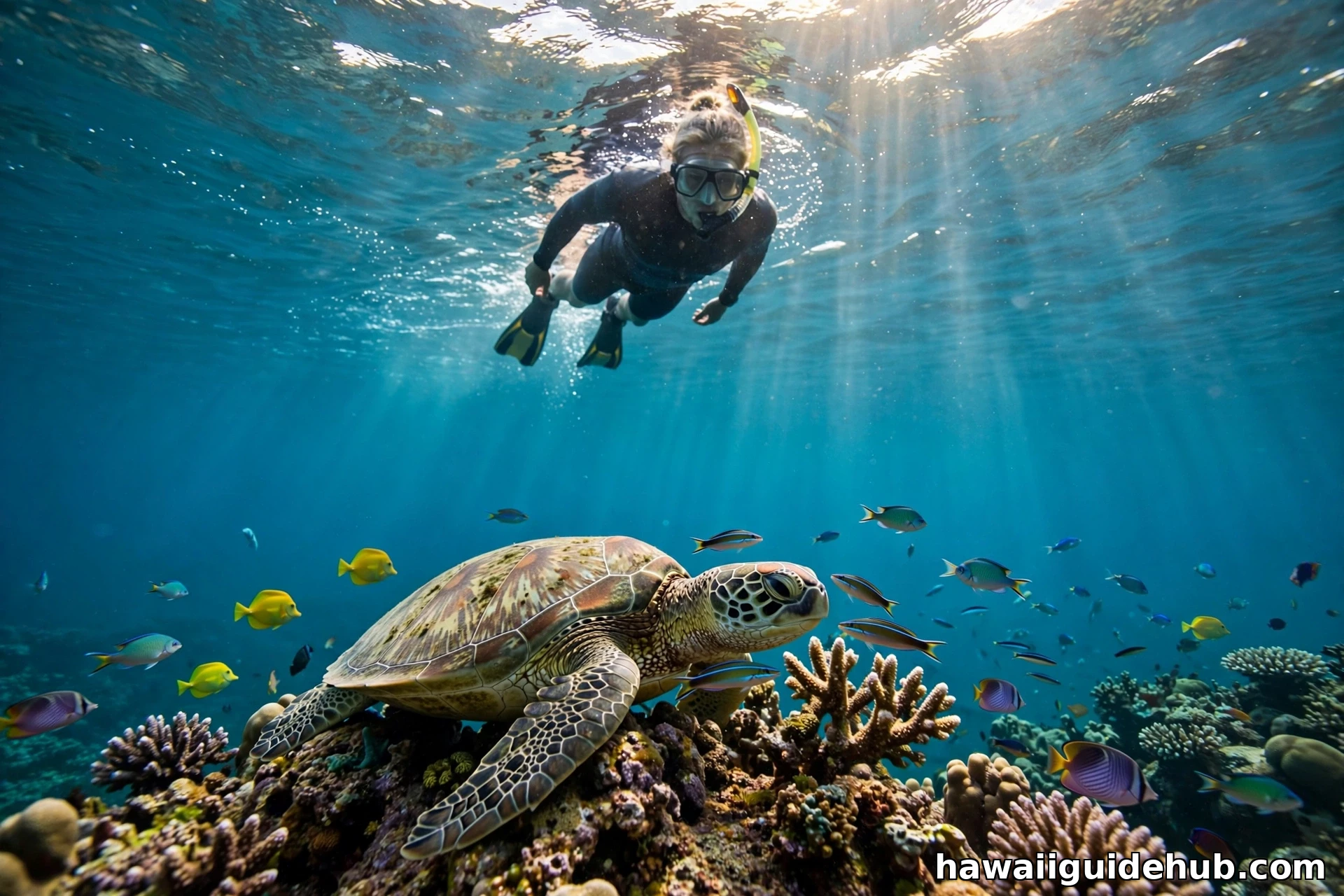
Under the surface, Olowalu is a tapestry of marine life. The shallow corridors hold sea turtles, eels, octopus, and tropical fish like Moorish idols, parrotfish, and humuhumunukunukuāpuaʻa, the state fish. Larger animals cruise the deeper water: manta rays, blacktip reef sharks, and occasionally Hawaiian monk seals. You are never guaranteed a wildlife encounter, the ocean does what it wants, but Olowalu gives you some of the best odds on Maui.
To see more of the wildlife that shares these waters, read our guide to Hawaii’s iconic marine species for snorkelers and divers.
The Turtle Cleaning Station
Olowalu’s most famous underwater attraction is its turtle cleaning station, a section of reef where Hawaiian green sea turtles (honu) gather so that cleaner fish can eat the algae and parasites growing on their shells. It is a symbiotic relationship: the turtles get groomed and the fish get fed.
The cleaning station sits roughly a half mile offshore, which is a long swim for a casual snorkeler. That is one reason many people explore it with a guided kayak or boat trip, whose guides know the exact spot. If you swim out on your own, you need to be a strong, confident swimmer, and you should never snorkel alone.
When you find turtles, the rules are simple and they are the law. Watch from at least 10 feet away. Never chase, touch, or try to ride a turtle. Do not block a turtle’s path to the surface. Our sea turtle etiquette guide explains the full set of guidelines and why each one matters for the animals.
Parking, Facilities, and What to Bring
Let us be direct: Olowalu has no facilities. There are no restrooms, no showers, no drinking water, and no trash cans. That is the trade-off for a free, uncrowded, natural beach.
Parking is free roadside parking on the ocean side of the highway near mile marker 14. Arrive before 9 AM, especially on weekends, to get a good spot. Be careful where you pull off: there are patches of soft, loose sand where rental cars get stuck regularly. Park on the hard-packed sand closer to the road rather than under the trees, and make sure you are fully clear of the highway and not blocking anyone. Do not leave valuables visible in the car.
Bring everything you need: reef-safe sunscreen, water, snacks, a towel, and your snorkel gear if you have it. Watch for kiawe thorns in the sand if you walk barefoot. And follow the pack-it-in, pack-it-out rule. There are no trash cans, so every wrapper, bottle, and piece of gear leaves with you. Many regulars pick up any opala (trash) they see on the way out, which is a nice habit to copy.
Best Time to Visit Olowalu Beach
Mornings are best. The water is calmest and clearest before the afternoon trade winds build, and the light on the reef is at its prettiest. As noted above, plan around high tide rather than low tide for the most comfortable snorkel.
Olowalu works year round, but winter brings a bonus. From December through April, humpback whales pass through the waters offshore. You might hear their songs while you snorkel, which is one of the great underwater experiences in Hawaii. Never chase or approach whales in the water; federal guidelines require keeping your distance.
South swells can occasionally push water up onto the road near the beach, and on those days the surf entry gets choppy. Check the surf and wind forecast before you go, and if the water looks rough, pick another day. For more ideas on when to plan your Maui days, see our list of reasons to visit Maui.
Safety at Olowalu
Olowalu is a calm, beginner-friendly spot, but it is still the open ocean. A few rules keep your visit safe.
First, know your limits. The cleaning station and the best outer reef are a half mile or more offshore. Only strong swimmers should head that far, and weak swimmers should wear a float vest or stay in the shallows. Never snorkel alone.
Second, protect the reef. Never stand, walk, or grab coral. It kills the living polyps that took centuries to grow. Stay horizontal when floating over shallow reef, keep your fins up, and enter and exit through the sand channel.
Third, use reef-safe sunscreen only. Chemical sunscreens damage coral, and at a reef this old and this important, every visitor’s choice matters. A rash guard is even better than sunscreen and keeps you warmer in the water.
Finally, respect the wildlife. Turtles, monk seals, manta rays, and sharks all live here. Watch from a distance, never feed or touch marine animals, and give every creature the right of way.
Kayak and Boat Options
Many visitors experience Olowalu from a kayak or a small boat rather than from shore. Kayak trips launch from the beach and paddle out to the healthier outer reefs and the turtle cleaning station, areas most shore snorkelers cannot comfortably reach. These trips typically include gear, flotation vests, and guides who can point out marine life and explain the reef’s ecology.
If you go with a guided option, pick one that emphasizes reef protection: small groups, no touching the coral, reef-safe sunscreen requirements, and guides with real marine knowledge. The best experiences at Olowalu are the ones that leave the reef exactly as they found it.
Protecting Maui’s Mother Reef
Olowalu’s reef faces the same threats as coral reefs everywhere: warming water and coral bleaching, runoff and sediment from land, sunscreen chemicals, and physical damage from visitors. What makes Olowalu different is how hard the local community is working to save it.
The Olowalu Community Managed Makai Area, a community group, has been pushing for stronger local management of the reef for years. The Nature Conservancy and partners like the Maui Nui Marine Resource Council are running restoration projects, water quality monitoring, and ridge-to-reef efforts to reduce land-based pollution reaching the coral. The 2017 Hope Spot designation was, in part, a recognition of that community effort and a way to support it.
As a visitor, your part is simple: use reef-safe sunscreen, never touch or stand on coral, pack out all your trash, keep your distance from turtles and other wildlife, and enter through the sand channel. A reef that has survived a thousand years deserves a thousand more. If you want more ways to enjoy the island responsibly, browse our guide to outdoor adventures in Hawaii.
Olowalu Beyond the Reef
The reef gets the attention, but the Olowalu area has a few more layers. Across the highway, a short hike leads to a site with ancient petroglyphs carved into the rock, a reminder that this coast has been inhabited and used for a very long time. In Hawaiian history, Olowalu was known as a puʻuhonua, a place of refuge where people could take time to reflect and heal.
You will also notice remnants of the old sugar era near the beach, including old mill structures in the area. Olowalu was once a sugar plantation town, and the landscape still carries that history alongside the natural beauty.
See Olowalu Beach on Video
Olowalu Beach FAQ
Is Olowalu Beach good for beginners?
Yes. The shallow water near shore, gentle morning conditions, and reef that starts close to the beach make Olowalu one of the best beginner snorkeling spots on Maui. Just go at high tide and stay within your comfort zone.
Is there an entrance fee or parking fee at Olowalu?
No. Access and roadside parking are completely free. There are no tickets, no reservations, and no facilities.
Where do I park for Olowalu Beach?
Pull off the Honoapiʻilani Highway onto the hard-packed sand on the ocean side near Mile Marker 14. Park clear of the road and avoid soft sand patches. Arrive before 9 AM for the best spots.
Can I see sea turtles at Olowalu?
Very likely. Olowalu is known as Turtle Reef, and green sea turtles gather at a cleaning station about a half mile offshore. Watch from at least 10 feet away and never touch them.
Are there restrooms or showers at Olowalu?
No. There are no restrooms, showers, drinking water, or trash cans. Plan accordingly and pack everything out.
When is the best time to snorkel at Olowalu?
Mornings before 10 AM, at high tide. Winter (December to March) adds the chance of hearing humpback whales while you snorkel.
The Bottom Line on Olowalu Beach
Olowalu will not impress anyone looking for a postcard-perfect stretch of sand with umbrella service. That is not what it is for. It is a working, living, thousand-year-old reef that happens to have a beach attached, and it rewards visitors who come prepared: reef-safe sunscreen, a plan for the tide, respect for the coral, and patience for the turtles.
Swim the sand channel at Mile Marker 14 on a calm morning, float over the coral gardens, and listen for whale song in the winter. Few places on Maui connect you to the ocean’s deep history as directly as Olowalu does.