Furikake Salmon: Hawaii’s Crispy Crusted Salmon Recipe (Easy Weeknight Favorite)

If you have spent any time in a Hawaii kitchen, you have seen the little shaker jar sitting next to the rice cooker. Furikake. It goes on rice, on poke bowls, on Spam musubi, and, in one of the islands’ favorite weeknight dinners, on top of salmon. Furikake salmon is baked salmon coated in a creamy mayo layer and crusted with crisp, savory furikake seasoning. It takes about 25 minutes from fridge to table, uses pantry staples, and tastes like something far fancier than it is.
This guide covers everything you need to know: what furikake is and where the dish comes from, the classic Hawaii recipe with exact measurements, pro tips that make the crust extra crispy, easy variations, and where to find furikake salmon on restaurant and deli counters around the islands.
What Is Furikake Salmon?
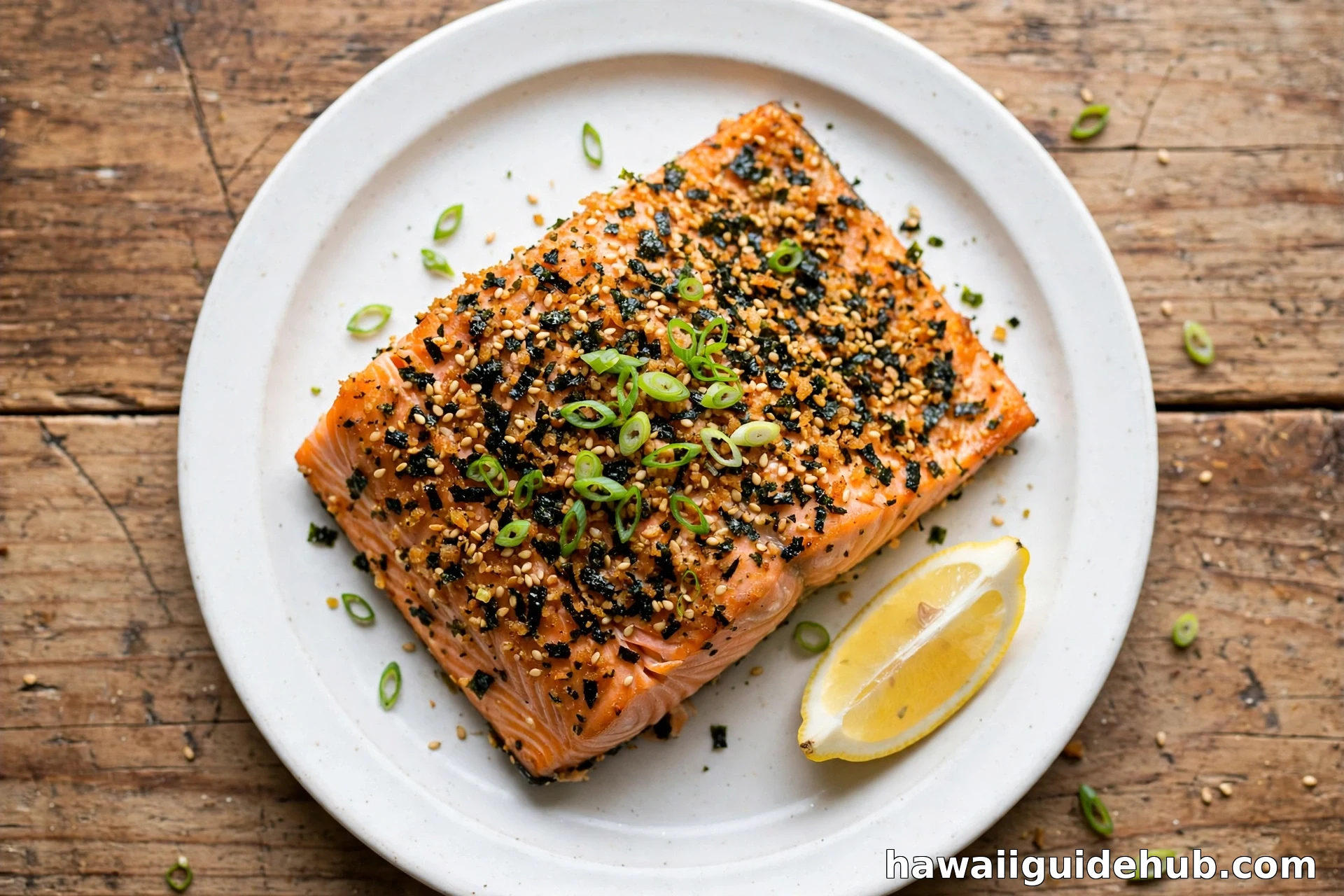
Furikake salmon is exactly what it sounds like: a salmon fillet topped with furikake, the Japanese rice seasoning. The classic Hawaii version adds one crucial step. Before the furikake goes on, the salmon gets a thin spread of mayonnaise mixed with shoyu and a dab of wasabi. The mayo acts as glue for the seasoning, and it bastes the fish from above as it bakes, keeping it moist. In a hot oven, the furikake toasts into a golden, crunchy crust while the salmon underneath stays silky.
The flavor is hard to beat. The furikake brings salt, toasted sesame, and the deep ocean savor of dried seaweed. The mayo spread adds richness and a whisper of shoyu. The salmon itself is rich and buttery. Each bite has a crisp top, a creamy middle layer, and flaky fish. Served over hot rice, it is the kind of meal that disappears fast and gets requested again by the weekend.
What Is Furikake?
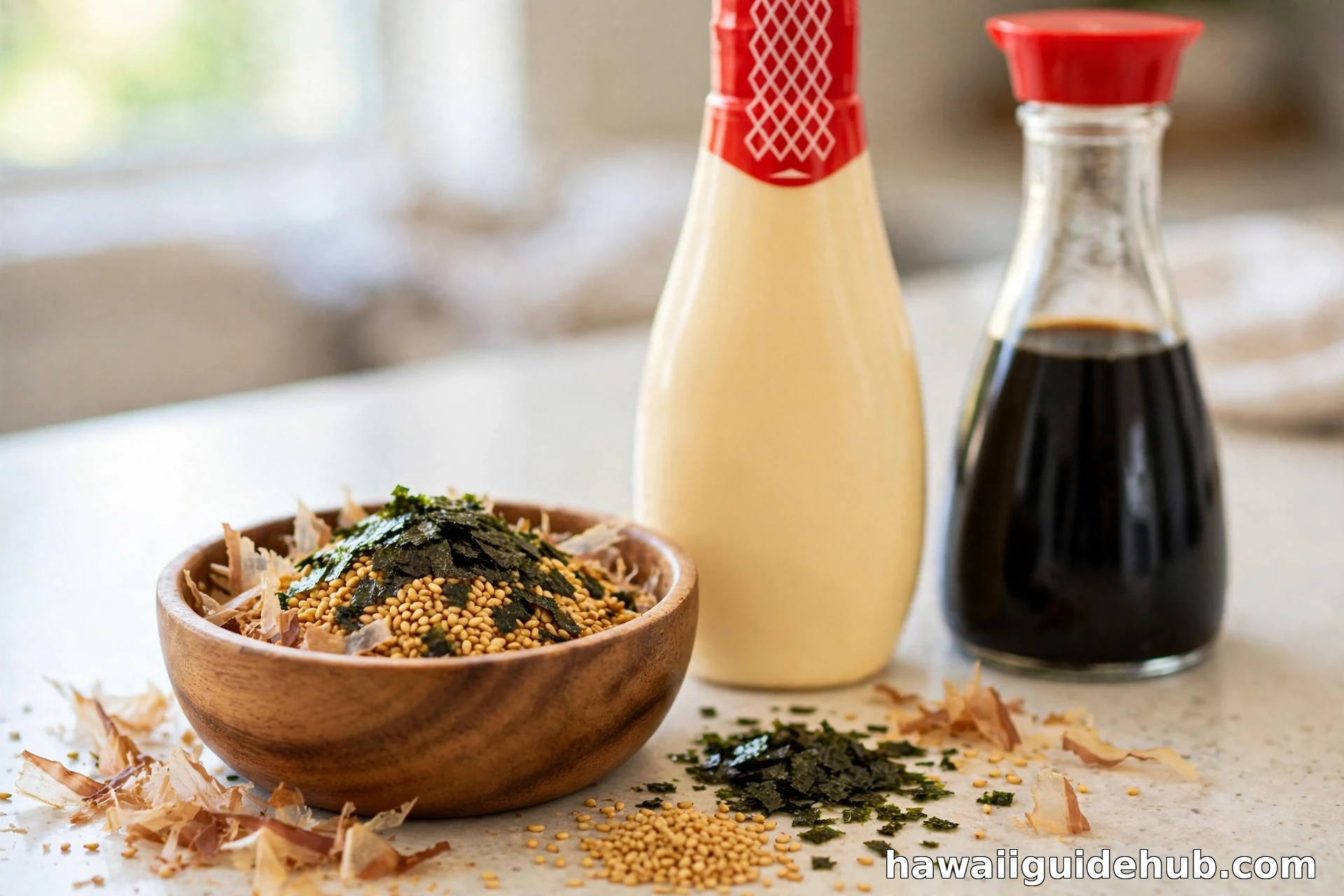
Furikake is a dry Japanese seasoning whose name means “to sprinkle over,” because it was originally meant to be shaken onto hot rice. The most common variety, nori komi furikake, is a simple mix of toasted sesame seeds, shredded nori seaweed, salt, and a touch of sugar. Some blends add dried bonito flakes, dried salmon, or dried egg for extra savor.
The seasoning was created in Japan in the early 20th century as a way to add nutrients and flavor to plain rice. Japanese immigrants brought it to Hawaii, where it quickly escaped the rice bowl. In Hawaii kitchens today, furikake lands on everything from popcorn to poke, and the islands’ love affair with it made furikake salmon an instant local classic. It is now a genuine Hawaii staple, the kind of dish that shows up at potlucks, plate lunch counters, and deli cases across the state.
You can find furikake in the Asian foods aisle of most grocery stores. Any variety works in this recipe. Nori komi is the standard, but a salmon furikake or wasabi furikake makes a fun twist. Check the label if you avoid fish products, since some blends contain bonito flakes.
Why This Recipe Works So Well
Three things make furikake salmon special. First, the texture contrast. Baked salmon is soft and flaky; the toasted furikake crust adds crunch that plain baked salmon never has. Second, the mayo layer. It sounds unusual, but a thin coat of mayonnaise is the secret behind some of the moistest baked fish you will ever eat. It melts into the fillet, protects it from the oven heat, and carries the shoyu and wasabi flavors into every bite. Third, the simplicity. Five main ingredients, one pan, 25 minutes. It is faster than most takeout orders.
It is also forgiving. Thick or thin fillets, fresh or thawed frozen salmon, regular mayo or Kewpie all work. The recipe adapts to what you have, which is exactly why it became a weeknight staple in Hawaii homes.
Classic Hawaii Furikake Salmon Recipe
This is the traditional home-style version, the way it is made in Hawaii kitchens. It serves four as a main dish.
Ingredients
- 1 and 1/2 lbs salmon fillet, skin on, cut into 4 portions
- 1/3 cup Kewpie mayonnaise (regular mayonnaise works too)
- 1 tablespoon shoyu (soy sauce)
- 1 teaspoon wasabi paste (optional, for a gentle kick)
- 1/3 to 1/2 cup nori komi furikake
- 2 green onions, thinly sliced
- Lemon wedges, for serving
Step by Step
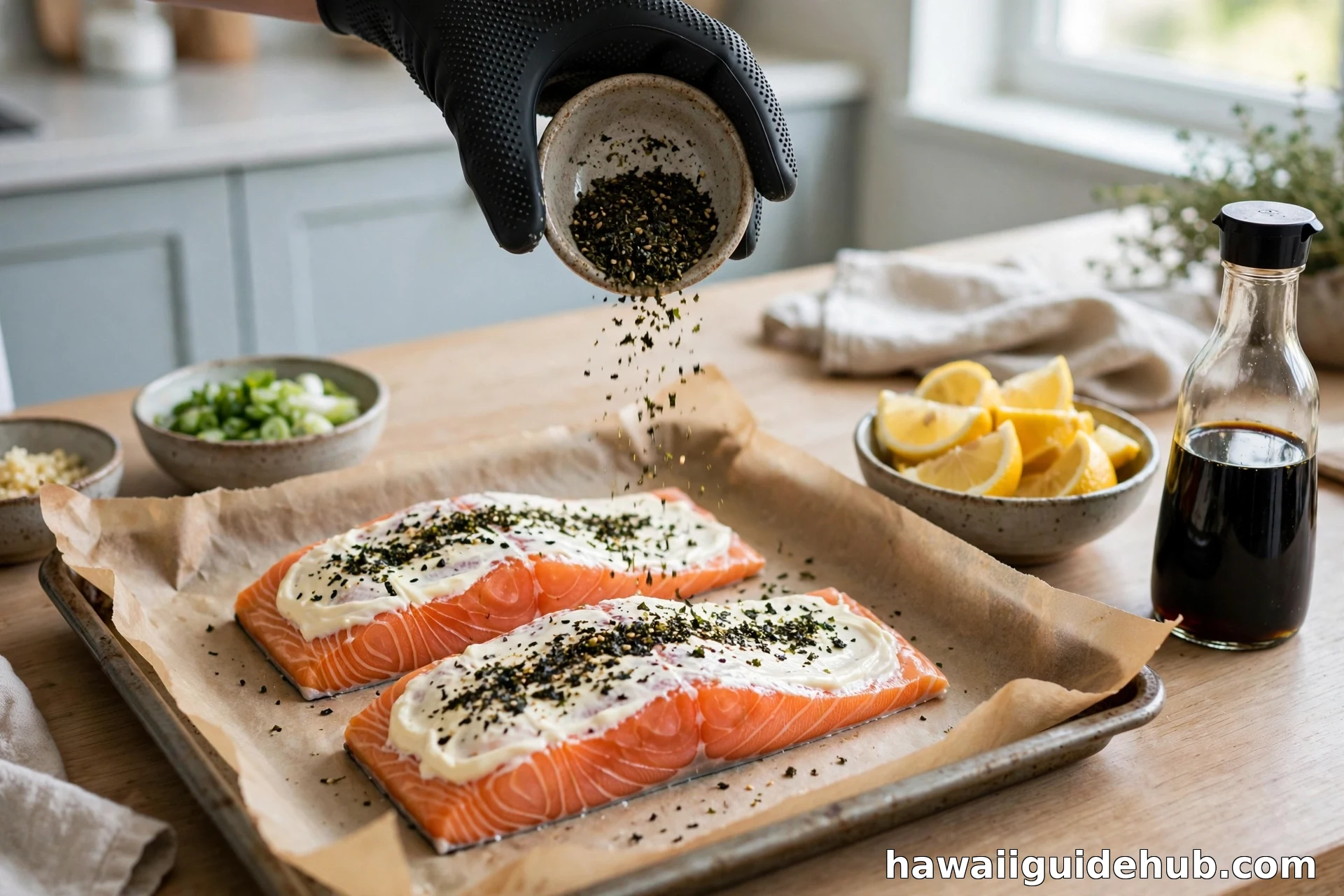
- Preheat and prep. Heat the oven to 400 F. Line a baking sheet with foil and lightly oil it so the skin does not stick.
- Dry the salmon. Pat each fillet completely dry with paper towels and place it skin side down on the sheet. Let the fillets sit at room temperature for 15 minutes for even cooking.
- Mix the spread. In a small bowl, whisk the mayonnaise, shoyu, and wasabi until smooth.
- Coat the fish. Spread an even layer of the mayo mixture over the top and sides of each fillet. It does not need to be thick; a smooth, full coat is perfect.
- Add the furikake. Sprinkle the furikake generously over the mayo, covering it completely. Be generous here. Some seasoning will fall off in the oven, so add a little more than looks right.
- Bake. Bake for 12 to 15 minutes. The crust should look golden and set. The salmon is done when it reaches 145 F inside and flakes easily with a fork.
- Rest and serve. Let the salmon rest for 3 minutes, then garnish with green onions and serve with lemon wedges and hot steamed rice.
Pro Tips for the Best Furikake Salmon
A few small habits separate good furikake salmon from great furikake salmon. First, always pat the fish dry. Wet salmon makes the mayo slide off and the crust steam instead of crisp. Second, keep the skin on and cook skin side down. The skin is a natural shield that protects the flesh from direct heat and keeps the fillet from drying out.
Third, do not overcook. Salmon keeps cooking after it leaves the oven, so pull it when the center still looks juicy and flakes with gentle pressure. An instant-read thermometer is the most reliable tool here: 145 F is the target, and many home cooks pull it a few degrees early and let carryover heat finish the job.
If you own an air fryer, this recipe adapts beautifully. Cook at 375 F for 8 to 10 minutes, checking at 8. The circulating hot air makes the furikake crust even crispier. Just make sure the fillets fit in a single layer with a little space between them.
Easy Variations
Once you have the basic method down, the recipe is easy to riff on. For a spicier version, stir a teaspoon of sriracha or extra wasabi into the mayo. For a sweeter glaze, some Hawaii cooks whisk a tablespoon of honey into the mayo and shoyu, then broil for the last minute to caramelize the top. A drizzle of teriyaki sauce over the finished fish is another popular local touch.
You can also change the crust. Wasabi furikake adds heat, salmon furikake doubles down on fish flavor, and a mix of furikake and panko breadcrumbs gives an even crunchier coating. The method also works on other firm fish. Ono, mahi mahi, and even ahi steaks all take well to the mayo and furikake treatment, though baking times will vary with thickness.
For a lighter version, swap the mayonnaise for Greek yogurt mixed with a little olive oil. The crust will not be quite as rich, but the flavor still shines. And if you are cooking for kids who shy away from wasabi, simply leave it out. The dish loses none of its appeal.
What to Serve With Furikake Salmon
Hot steamed rice is the classic partner, and for good reason. The rice soaks up any flakes of crust that fall off and balances the salty, savory fish. In true local style, serve it as a plate lunch with two scoops of rice and a scoop of mac salad. It is also excellent flaked over a poke-style rice bowl, tucked into onigiri for lunch the next day, or served simply with a green salad and sesame dressing.
Furikake salmon pairs naturally with other island favorites. Round out a Hawaii-themed dinner with huli huli chicken for the grill, lomi lomi salmon as a cool starter, and malasadas for dessert. If you are planning a full spread, our guide to must-try local dishes in Hawaii has plenty more ideas.
Where to Find Furikake Salmon in Hawaii
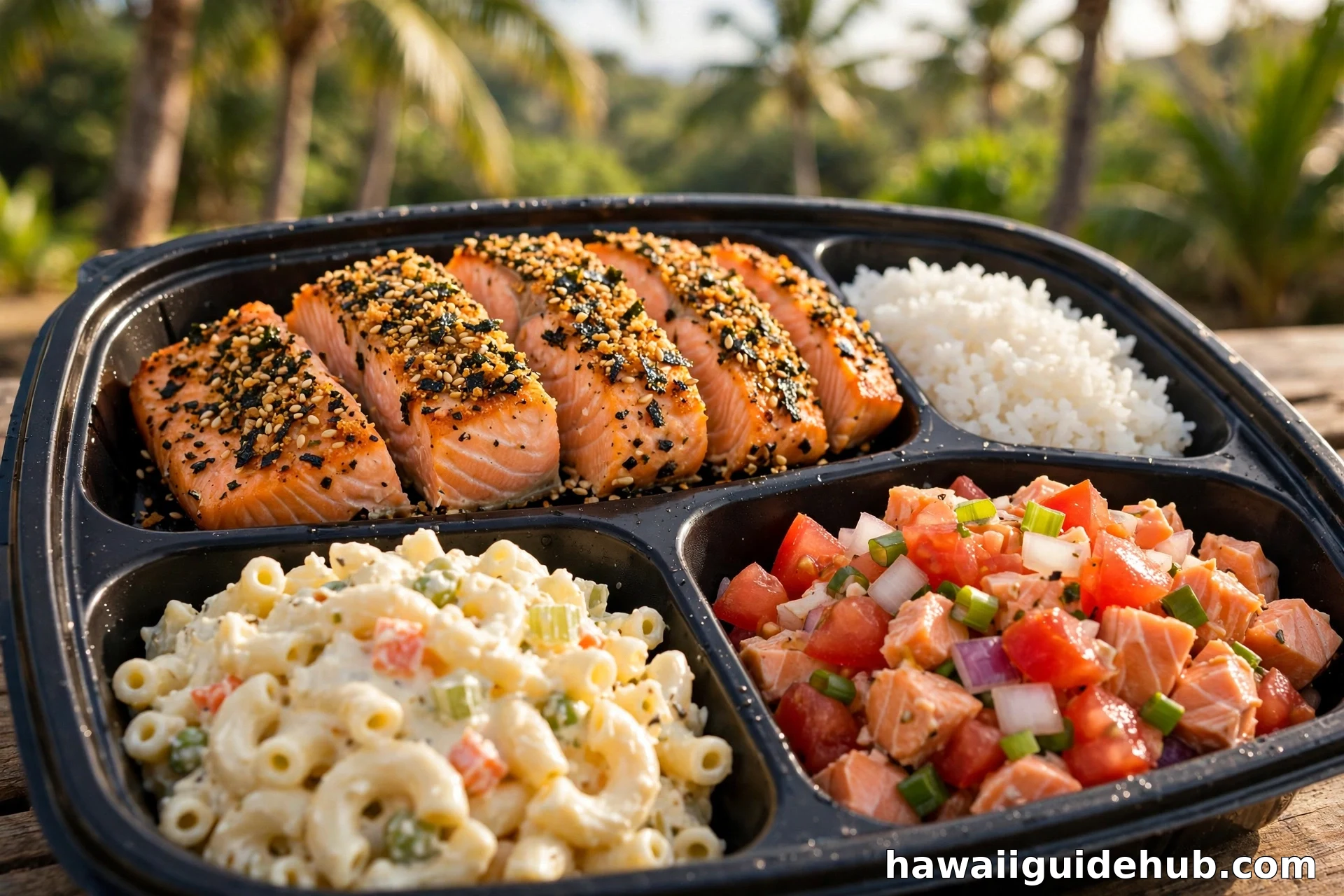
You do not have to cook to enjoy this dish in Hawaii. Furikake salmon is a fixture on the islands. Look for it in the hot deli cases at Foodland supermarkets, where it often appears alongside other local ready-to-eat favorites. Poke shops and plate lunch counters across Oahu, Maui, Kauai, and the Big Island frequently feature it as a special or a regular menu item. Many local caterers include it in party platters too, since it holds up well at room temperature and always disappears first.
If you are visiting and want to taste the real thing before cooking it at home, grab a plate from a local lunch spot and pay attention to the crust. The best versions have a thick, even layer of furikake that crackles when you cut into it. Then pick up a jar of furikake and a bottle of Kewpie mayo on your way home. You will be making it yourself within the week.
Storage and Leftovers
Leftover furikake salmon keeps well in the refrigerator for 2 to 3 days in an airtight container. Reheat it gently in a 300 F oven for about 10 minutes so the crust warms without burning; the microwave will soften the crust, so use the oven when you can. Cold leftovers are excellent too. Flake the fish into fried rice, fold it into a breakfast omelet, or press it into onigiri with a little extra furikake on the outside.
See It Made
Watch a Hawaii home cook walk through the method, including the secrets to a perfect crust:
Frequently Asked Questions
What does furikake salmon taste like?
Salty, savory, and rich with umami. The furikake crust tastes toasty and oceanic from the sesame and nori, the mayo layer adds creaminess, and the salmon itself is buttery and mild. It is a crowd-pleasing flavor combination, not an adventurous one.
Can I use regular mayonnaise instead of Kewpie?
Yes. Kewpie is the Hawaii standard because it is richer and slightly sweeter, made with egg yolks instead of whole eggs, but regular mayonnaise works fine. If you use regular mayo, you can add a tiny squeeze of lemon juice to mimic Kewpie’s tang.
What kind of furikake is best for salmon?
Nori komi furikake, the classic green and black blend, is the standard and the easiest to find. Wasabi furikake adds heat, and salmon furikake adds extra fish savor. Any variety will work, so use what you like.
Can I make furikake salmon without mayonnaise?
You can, but the mayo does real work: it keeps the fish moist and glues the crust on. If you skip it, brush the fillets with olive oil and press the furikake on firmly, or use Greek yogurt thinned with a little olive oil as a substitute.
How do I know when the salmon is done?
The crust should look golden and set, and the fish should flake easily when pressed gently with a fork. An instant-read thermometer is the most reliable check: 145 F at the thickest part means it is done.
Is furikake salmon healthy?
Salmon itself is rich in omega-3 fatty acids and protein. The furikake adds mostly flavor with modest sodium, and the mayo adds fat. It is a balanced, satisfying meal when served with rice and vegetables, though the mayo makes it richer than plain baked salmon.
A Hawaii Classic Worth Adding to Your Rotation
Furikake salmon earns its place as a Hawaii staple because it asks so little and gives so much. A jar of furikake, a squeeze bottle of Kewpie, and a salmon fillet turn into a dinner with real crunch, real umami, and real island character in under half an hour. Keep the ingredients on hand and it becomes one of those recipes you cook without thinking, the kind that tastes like home whether home is Honolulu or a thousand miles from the nearest palm tree.