Mahukona Beach Park: Snorkeling, History, and the Old Sugar Harbor

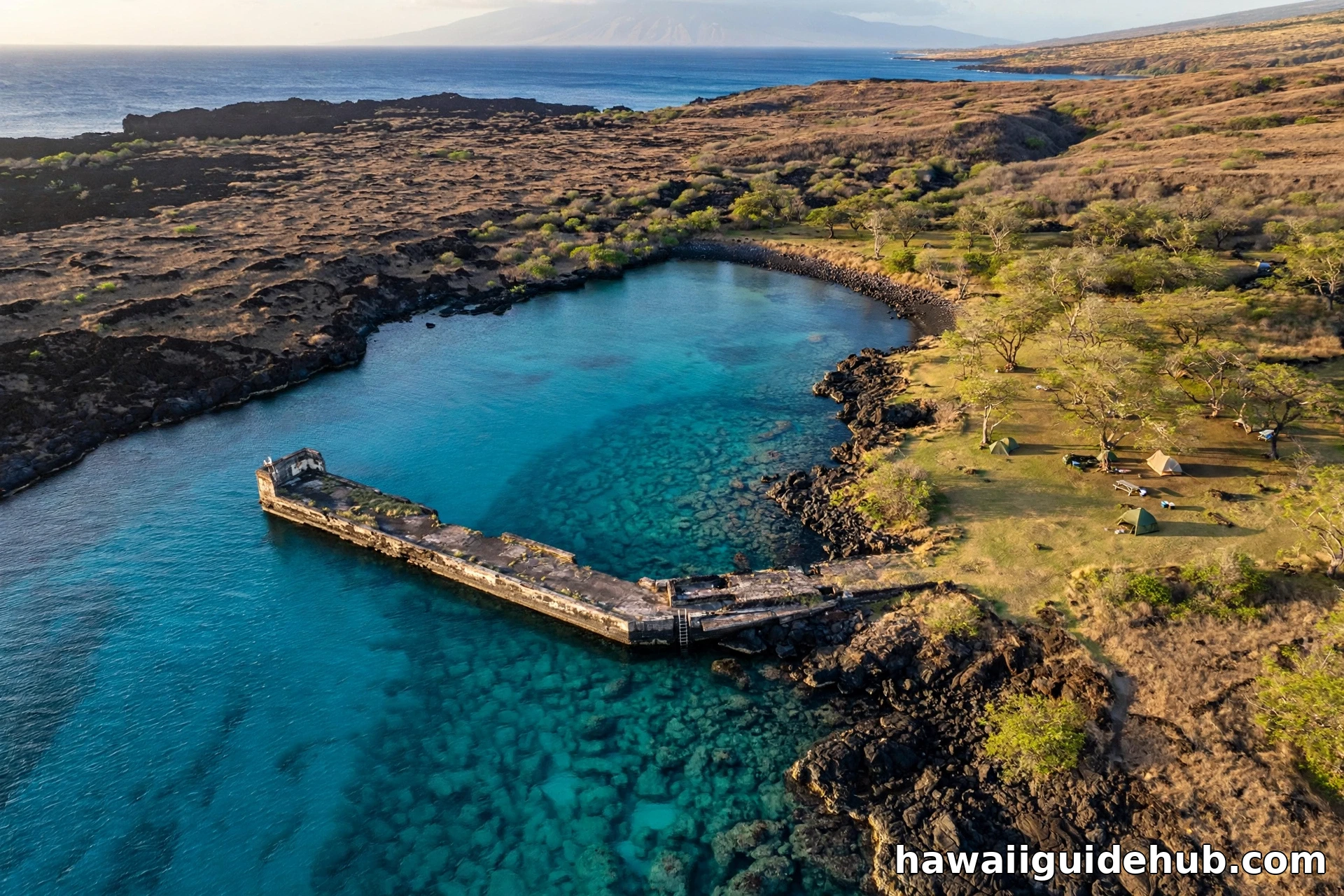
There is a corner of the Big Island where the word beach is almost a misnomer, and that is exactly why people love it. Mahukona Beach Park has no sand. What it has instead is an old concrete harbor pier, a rusted sugar mill left behind by an industry that left decades ago, and some of the clearest snorkeling water on the west side of the island. On a calm morning you can climb down a metal ladder straight into a world of coral heads and bright reef fish, then dry off on black lava rock while Maui sits on the horizon like a painting.
This is not the kind of place you stumble onto. Mahukona sits at the end of a side road off Highway 270 in North Kohala, far from the resort coast and the crowds that come with it. This guide covers everything you need to know before you go: how to get there, the story of the old sugar harbor, where to snorkel, what the facilities look like, camping rules, safety, and the best time to visit.
What Makes Mahukona Beach Park Different
Most Hawaii beaches sell you on sand. Mahukona sells you on something else: history you can touch and water you can see straight through. The park sits on the site of an abandoned sugar company harbor, and the old wharf still juts into the bay. The shoreline is volcanic rock, not sand, which means you will not be spreading a towel out here. You come to Mahukona to get in the water, to explore the ruins on shore, and to watch the sun go down behind the Kohala hills.
The mood is quiet. This is a locals and in-the-know visitors spot, never packed the way Hapuna or Waikoloa get. The park is managed by Hawaii County and stays open from 7 AM to 8 PM daily, and camping is allowed with a permit. If you want a beach day that feels like an adventure instead of a resort brochure, Mahukona delivers.
Here is the essential information at a glance:
| The fact | What it means for your trip |
|---|---|
| Location: end of Mahukona Beach Road off Highway 270, about 14 miles north of Kawaihae | A destination drive, not a roadside pullout; allow real travel time |
| Hours: 7 AM to 8 PM daily | Time a sunset visit to finish before the gate closes |
| Entry and parking: free | One of the Big Island’s cheapest half-day outings |
| Shoreline: volcanic lava rock, no sandy beach | Bring reef shoes and snorkel gear, not a beach umbrella |
| Best for: snorkeling, shore diving, history, winter whale watching, sunset | Pick your reason before you go; pure swimmers should look elsewhere |
| Lifeguard: none on duty | Stay conservative in the water; nobody is watching |
| Camping: by permit only, booked online through Hawaii County | Reserve ahead; you cannot just show up with a tent |
| Dogs: not allowed in county beach parks | Leave them at your lodging |
Getting There and Parking
Mahukona rewards drivers who read the mile markers. From the port town of Kawaihae, take Highway 270, the Akoni Pule Highway, north toward Hawi. Between mile markers 14 and 15, watch for the signed turnoff to Mahukona on your left, the ocean side of the road. Turn onto Mahukona Beach Road and follow it about half a mile downhill. A hairpin turn brings the old sugar mill into view. Bear right at the mill to reach the parking lot by the harbor, where the snorkeling ladder and the pier are. Stay left to reach the campground.
Parking is free and sits close to the water, which matters when you are hauling snorkel gear and coolers across lava rock. Cell service is spotty through North Kohala, so download your map before you leave Kawaihae. The drive from Kawaihae takes roughly half an hour.
The Story of Mahukona: Sugar Port to Beach Park
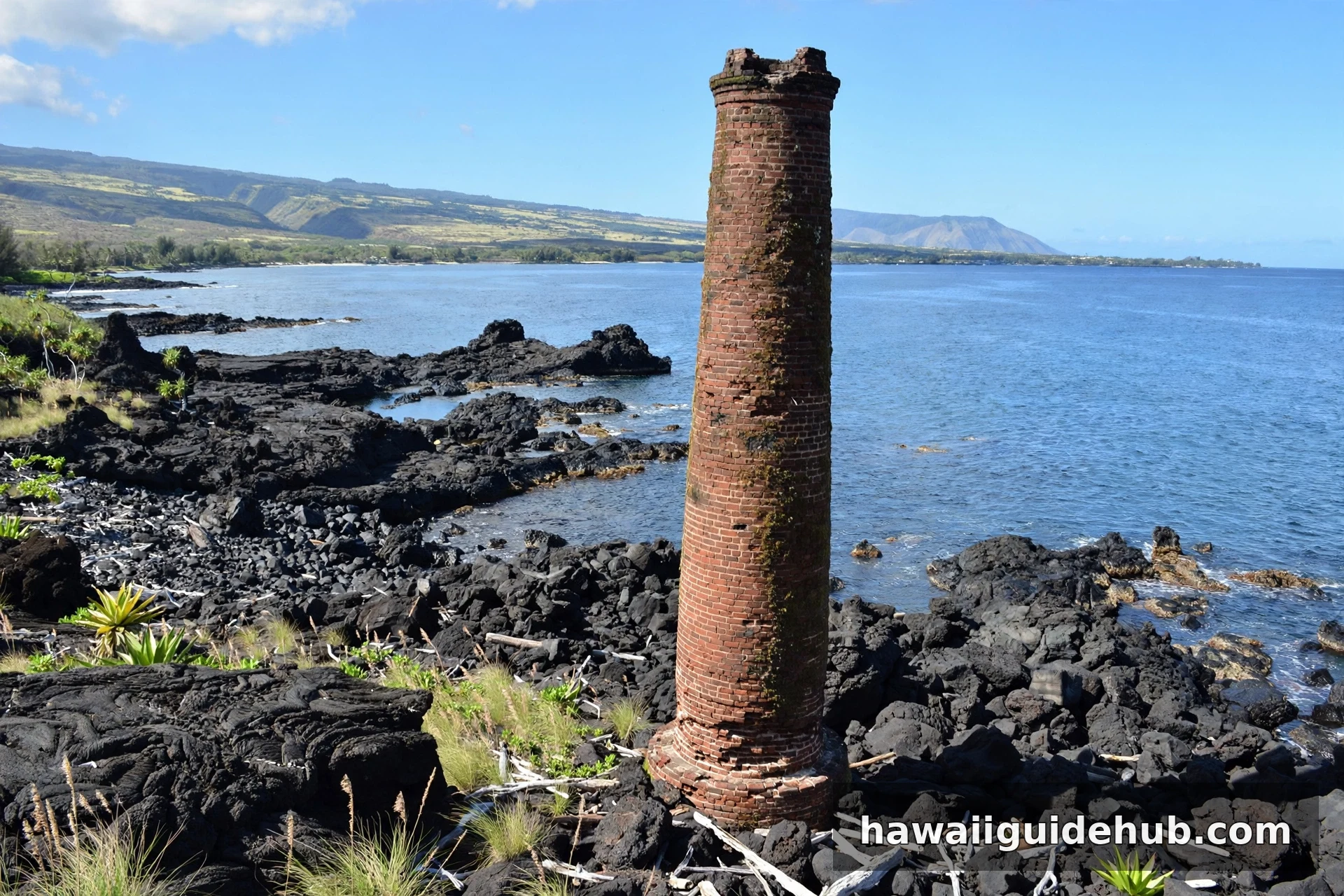
The smokestack on the shore is the first clue that Mahukona was a working harbor long before it was a park. In 1863, the Reverend Elias Bond founded the Kohala Sugar Company, the missionary plantation that would shape this coast for more than a century. Mahukona became its shipping port, and a sugar mill rose on the north side of the bay. Its remains still stand, and you can walk right up to them.
In the 1880s, the Kohala plantations joined forces to build the Hawaiian Railroad to Mahukona Harbor so their raw sugar could reach the ships waiting offshore. The railroad was reincorporated as the Hawaii Railway Company in 1897 and bought by the sugar companies two years later. The port grew fast. In 1911 the Territory of Hawaii built a larger wharf, which a storm promptly destroyed and which was then rebuilt. By 1913 Mahukona was the fourth busiest port in the islands. A lighthouse guided vessels in, the first built in 1889 just south of the bay and replaced in 1915 by a 22-foot concrete pyramid.
The name itself carries the story. Māhukona was the subject of an old Hawaiian song whose title translates as sugar boiler. In 1937 the Kohala Sugar Company consolidated its operations into the mill at Mahukona, which became Mahukona Terminals Ltd. The port closed during World War II, the railroad shut down on October 29, 1945, and the harbor itself closed in 1956. The company town of about 40 families emptied out in the 1950s, ending 110 years of sugar history on this coast.
Today the ruins are the attraction. Walk the shoreline and you will find the brick smokestack, mill foundations, the concrete wharf with its rusting fittings, and the old light tower standing guard at the point. Look closely and the industrial bones of the harbor are everywhere, even below the surface, where divers sometimes spot rusted chains and fittings from the shipping era.
Snorkeling and Diving at Mahukona Bay
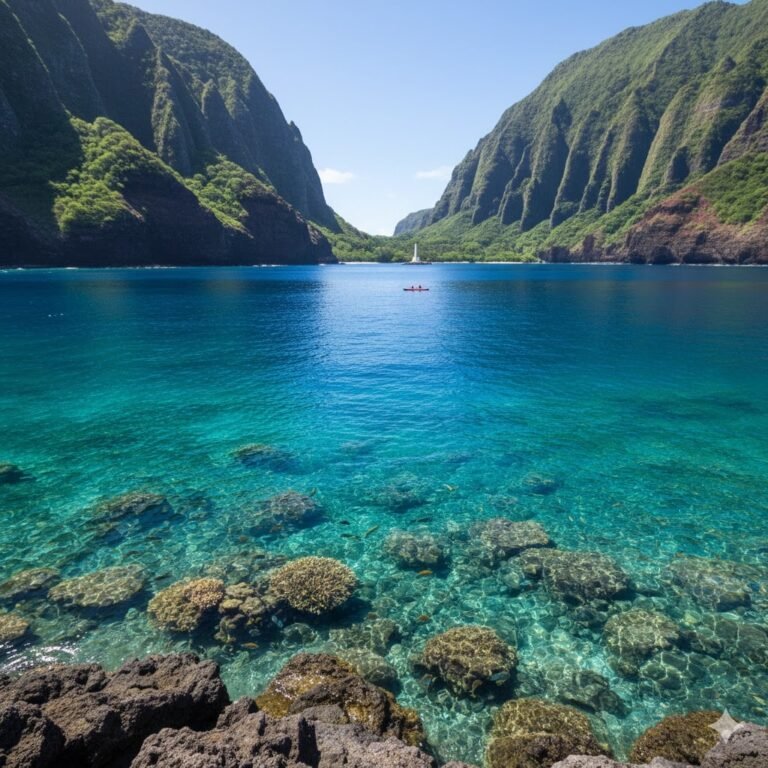
Mahukona Bay is the reason most people make the drive, and the water rarely disappoints. Entry is easiest off the metal ladder on the old concrete pier, which drops you straight into deep, clear water over the reef. On a calm morning the visibility can feel endless, with coral heads below and schools of reef fish moving through the old harbor basin.
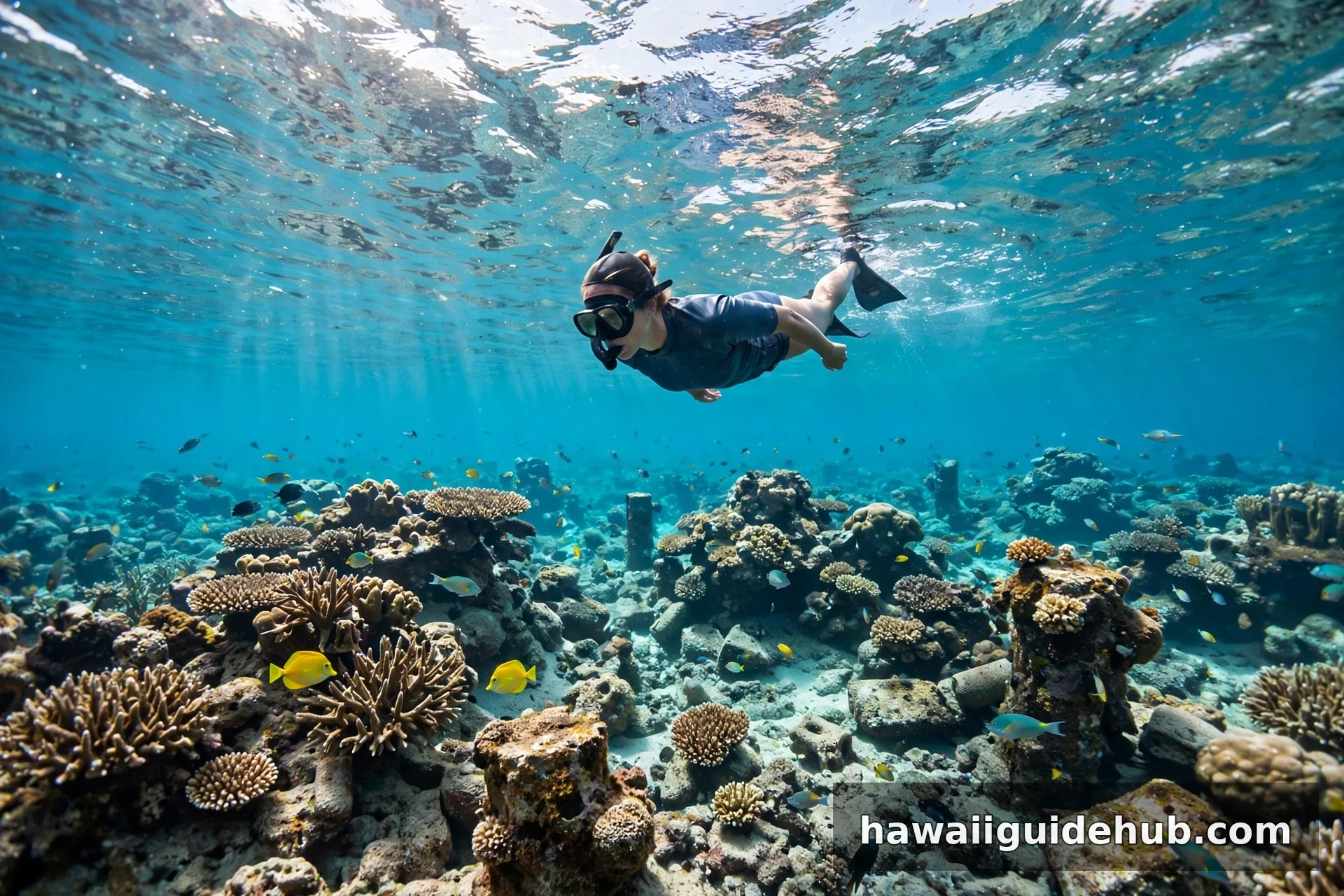
Work the water in layers. The shallow reef near the pier is perfect for a relaxed float, while stronger swimmers can follow the rocky shoreline north, where the coral grows thicker and the fish get bigger. Snorkelers sometimes spot rusted relics of the harbor era on the bottom, old chains and fittings slowly turning into reef. Green sea turtles cruise through regularly, so give them space and never chase them.
Mahukona is also a well known shore diving spot. Divers enter from the same protected harbor and follow the sloping reef out past the old wharf structure, where the bottom drops away and the coral formations get dramatic. Local dive boats use the harbor too, so watch for boat traffic near the entrance.
Conditions rule everything here. Summer brings the calmest ocean overall, and mornings are reliably glassier than afternoons. Winter can serve up bigger swells, and when the surf is up the ladder entry turns tricky fast, so check the surf forecast and sit the day out if it looks rough. As always at an unguarded spot, never snorkel alone.
Camping at Mahukona Beach Park
Mahukona is one of the few Kohala coast spots where you can camp right by the water. Hawaii County allows tent camping here with a permit, which you arrange through the county camping office. The campground sits on the grassy shore under shade trees, where you fall asleep to the surf. Fees are modest: $6 per adult per night for residents, $21 for non-residents, with lower junior and child rates, and every permit must be booked and paid for online before you arrive. You cannot buy a permit at the park.
This is rustic camping, not glamping. Facilities are basic: restrooms, a few picnic tables, and barbecue pits. Bring everything you need, including drinking water, because the park’s water supply is not always reliable. The payoff is a night sky full of stars, a sunrise over the channel, and a private morning snorkel before the day visitors arrive. Permits are required, so sort that out before you load the car.
Facilities and What to Bring
Set your expectations for rustic. The park has restrooms, but they are not always open, and the showers and drinking water can be intermittent. There are picnic tables, barbecue pits, and a covered pavilion, plus parking near the water. There are no food stands, no gear rentals, and no lifeguard on duty.
Come prepared: bring all your drinking water, your own snorkel gear, reef-safe sunscreen, food and snacks, a shade umbrella or tent, reef shoes, and a first aid kit. There is almost no natural shade on the lava rock, and the North Kohala sun is strong. Pack out all your trash, because this is a carry-in, carry-out kind of place.
Whale Watching in Winter
From roughly December through April, humpback whales migrate through the channel between the Big Island and Maui, and Mahukona is a fine place to watch them. The elevated lava coast gives you a wide view, and the whales come surprisingly close to shore. Bring binoculars, settle in on the rocks, and watch for spouts, tail slaps, and full breaches. Some winter days you will see several whales in an hour.
Safety at Mahukona
Mahukona rewards respect. There is no lifeguard, so you are on your own in the water. The lava rock is sharp and slippery, so wear hard-soled shoes on shore and never turn your back on the ocean. Do not snorkel alone, and stay out of the water when the surf is up. The underwater terrain around the pier and reef edges can be rough, so watch where you put your hands and feet.
On land, the sun and heat are the main hazards. There is little shade, so bring more water than you think you need and reapply reef-safe sunscreen often. If you are camping, store food securely and keep the site clean. Cell service is spotty in North Kohala, so download your maps before you drive out.
Best Time to Visit
Mahukona is good year round, but mornings are best. The trade winds usually stay calm until late morning, which means glassy water and the clearest visibility for snorkeling. Summer months tend to bring the calmest ocean conditions overall. Winter brings the chance of humpback whales but also bigger swells, so check the surf forecast before you go. Weekdays are quieter than weekends, though Mahukona rarely feels crowded.
If you are exploring the best things to do on the Big Island, Mahukona pairs well with a North Kohala day trip. Stop at the park in the morning for snorkeling, then head to Hawi town for lunch and the outdoor adventures of the Kohala coast in the afternoon. It also makes a natural stop on the drive to Pololu Valley.
Nearby Places Worth the Drive
Mahukona makes a fine anchor for a North Kohala day, and a few good stops sit within a short drive.
Lapakahi State Historical Park lies just south of Mahukona on Highway 270. It preserves the excavated and partially reconstructed ruins of Koaiʻe, an ancient Hawaiian fishing village whose remains date back to the 1300s. The name Lapakahi means single ridge, and the site was added to the National Register of Historic Places in 1973. A short self-guided trail leads through the ruins with the ocean beside you the whole way. One caution: the park was temporarily closed after the 2026 hurricanes because of fallen trees, so check the current DLNR park notices before you drive there.
Kapaʻa Beach Park is the next Hawaii County park north along the coast, a quiet rocky shoreline the locals use for picnics, fishing, and sunset. It has the same lava rock character as Mahukona, with camping by county permit if you want to keep the quiet going.
Or keep driving north to Hawi, the plantation era town turned lunch stop a short drive up the highway. It pairs naturally with a morning at Mahukona: snorkel early, eat in town, and you have the whole afternoon.
See Mahukona on Video
This video gives you a feel for the bay, the old pier, and what the snorkeling looks like on a calm day.
Frequently Asked Questions
Is there a sandy beach at Mahukona Beach Park?
No. The shoreline at Mahukona is volcanic lava rock, not sand. The park is named a beach park, but you come here for the snorkeling, the history, and the scenery, not for lounging on sand.
Is Mahukona good for beginner snorkelers?
On calm days, yes. The ladder entry off the pier is simple, the water is clear and sheltered, and you can stay in shallow water near the pier. Go in the morning when conditions are calmest, and do not go in if the surf is up.
Do you need a permit to camp at Mahukona?
Yes. Hawaii County requires a camping permit for overnight stays at Mahukona Beach Park. Arrange the permit through the county camping office before your trip.
Are there restrooms and water at the park?
The park has restrooms, showers, picnic tables, and barbecue pits, but they are not always open or operational. Bring your own drinking water and supplies, and be ready for rustic conditions.
Can you see Maui from Mahukona?
Yes. On clear days the island of Maui sits about 30 miles across the channel, with Haleakala volcano clearly visible. Sunset is the best time for the view.
How do you get to Mahukona Beach Park?
Drive Highway 270, the Akoni Pule Highway, north from Kawaihae toward Hawi. Between mile markers 14 and 15, turn left toward the ocean onto Mahukona Beach Road and follow it about half a mile to the shore. Bear right at the old sugar mill for the harbor parking lot, or left for the campground.
Is Lapakahi State Historical Park open?
It was temporarily closed as of the latest DLNR notice because of fallen trees from the 2026 hurricanes, with no reopening date announced. Check the DLNR Division of State Parks notices before you drive to the North Kohala coast.
A Quiet Corner Worth the Drive
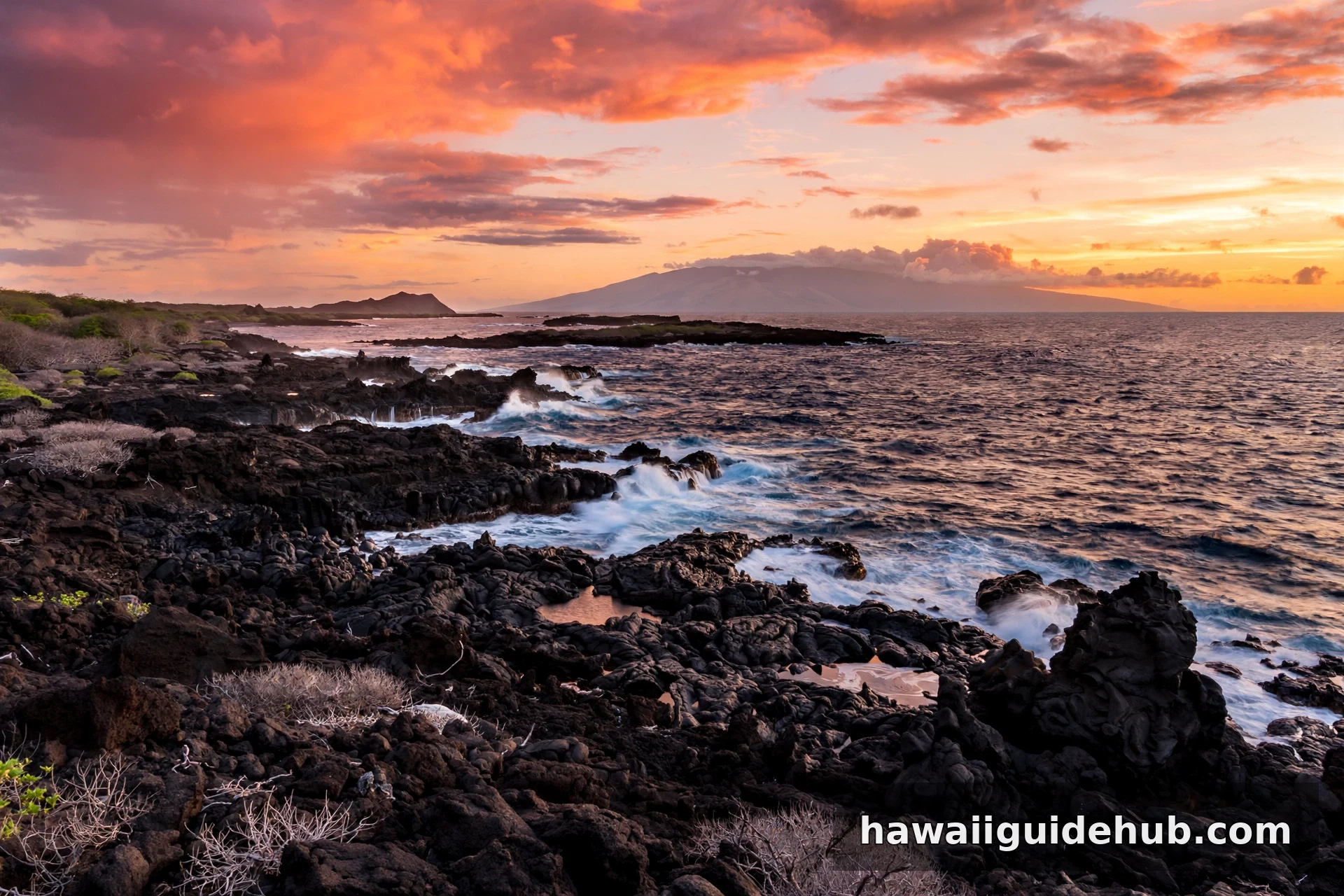
Mahukona Beach Park is what the Big Island does best when nobody is looking. An abandoned harbor, a ladder into clear water, rusted machinery slowly becoming part of the landscape, and a view across the channel that stops you mid-step. It asks a little more of you than a resort beach: you bring your own water, your own gear, and your own shade. In return you get one of the most interesting shorelines in Hawaii, almost entirely to yourself. Check the sea turtle snorkeling etiquette before you swim, pack out everything you pack in, and enjoy the quiet.