Maunawili Falls: Oahu’s Muddiest Hike and Its Honest Trail Status

Few hikes on Oʻahu have earned a reputation quite like Maunawili Falls. For years it was the island’s beloved muddy secret: a short rainforest trail through the windward Koʻolau mountains that ended at a swimmable waterfall, the kind of place locals brought visiting friends and weekend warriors ticked off their lists. The trail was famous for two things in equal measure: the waterfall pool at the end, and the calf-deep mud you had to wade through to get there.
Then, in July 2021, the gates went up. The Department of Land and Natural Resources closed the original neighborhood access for a long-term improvement project, and as of this writing the trail has not officially reopened. That is the honest starting point for any guide to Maunawili Falls: this is a hike in transition, and anyone planning around it needs to understand the current reality before lacing up their boots.
This guide covers everything about Maunawili Falls: what the hike was like when it was open, why it closed, the conservation story unfolding in Maunawili Valley, the alternate routes that exist today, and exactly how to check the current status before you go.
What Maunawili Falls Is
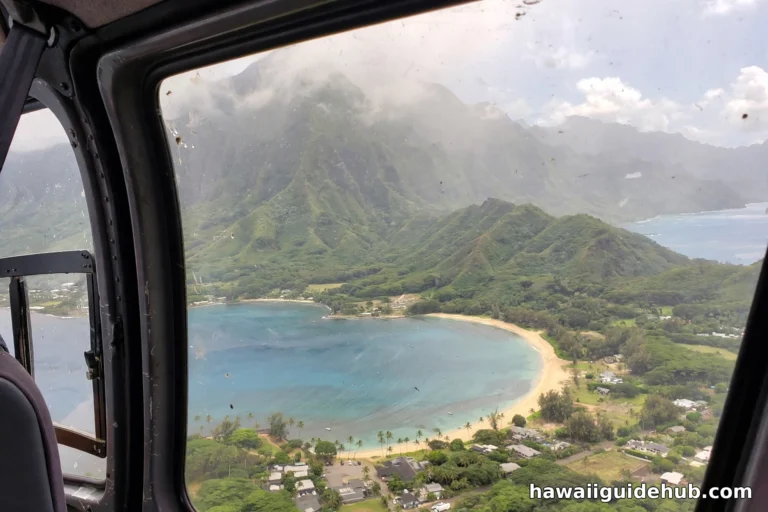
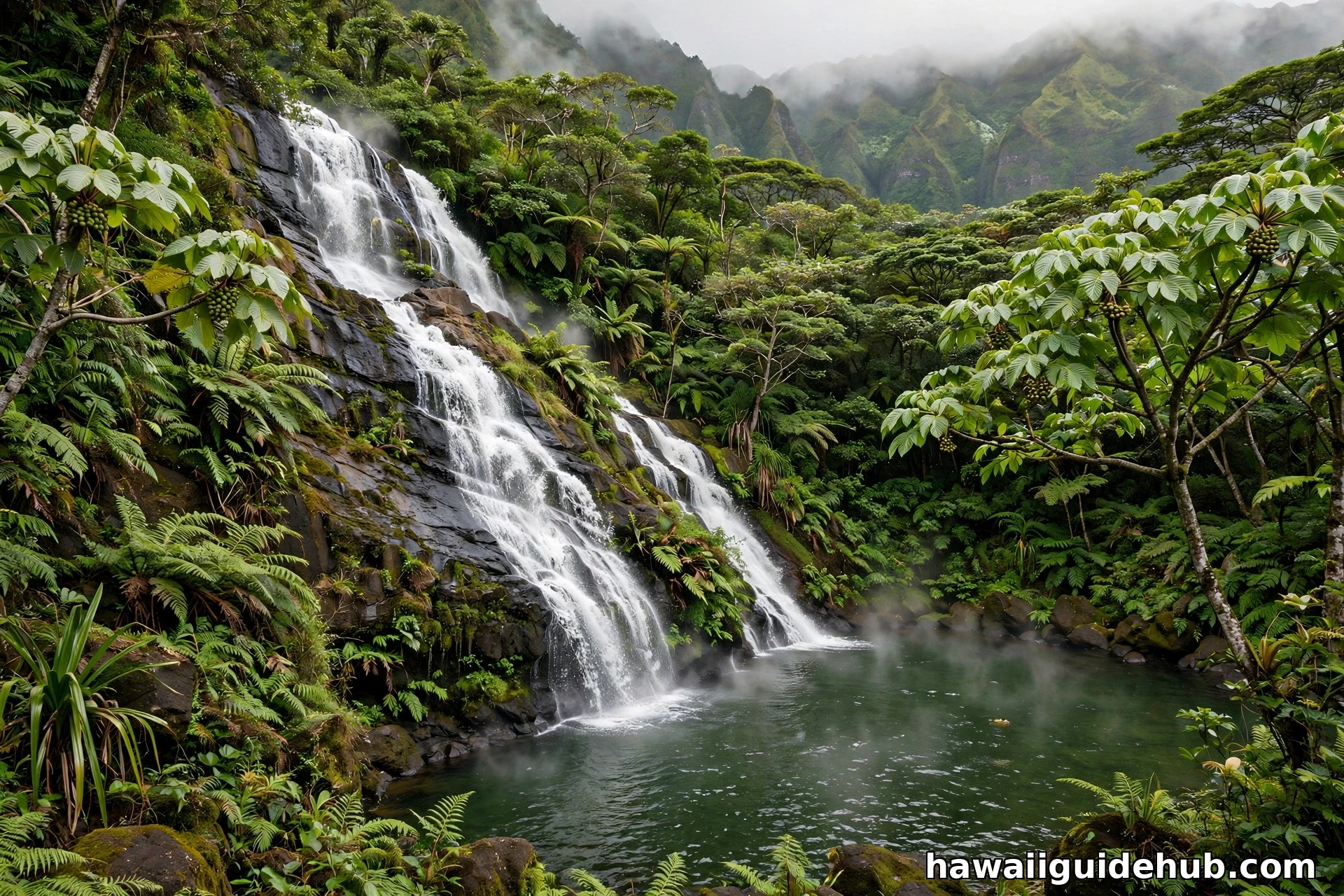
Maunawili Falls is a roughly 20 to 25 foot waterfall tucked into the windward slopes of the Koʻolau mountain range, above the town of Kailua on Oʻahu’s east side. The falls pour into a deep natural pool, about 10 to 15 feet deep in places, which for years made it one of the few Oʻahu waterfalls where swimming was part of the experience rather than a bonus. The pool sits in a rainforest bowl of kukui trees, hau, mountain apple, uluhe ferns, and ti plants, with the green wall of the Koʻolaus rising behind it.
The waterfall runs year round. Maunawili Valley sits in one of the wettest parts of Oʻahu, with the surrounding slopes collecting abundant rainfall that keeps Maunawili Stream flowing even in the drier summer months. That constant water is both the attraction and the warning: the same rain that feeds the falls turns the trail into one of the muddiest on the island.
The Hike as It Was: 3.2 Miles of Glorious Mud
When the original trail was open, the Maunawili Falls Trail was a moderate 3.2 mile round trip with roughly 420 feet of elevation gain, typically taking two to three hours at a relaxed pace with time at the falls. The trailhead sat behind a yellow gate at the back of the Maunawili neighborhood, off Maunawili Road near Kelewina Street, and the route began in a quiet residential area, which is part of what eventually forced its closure.
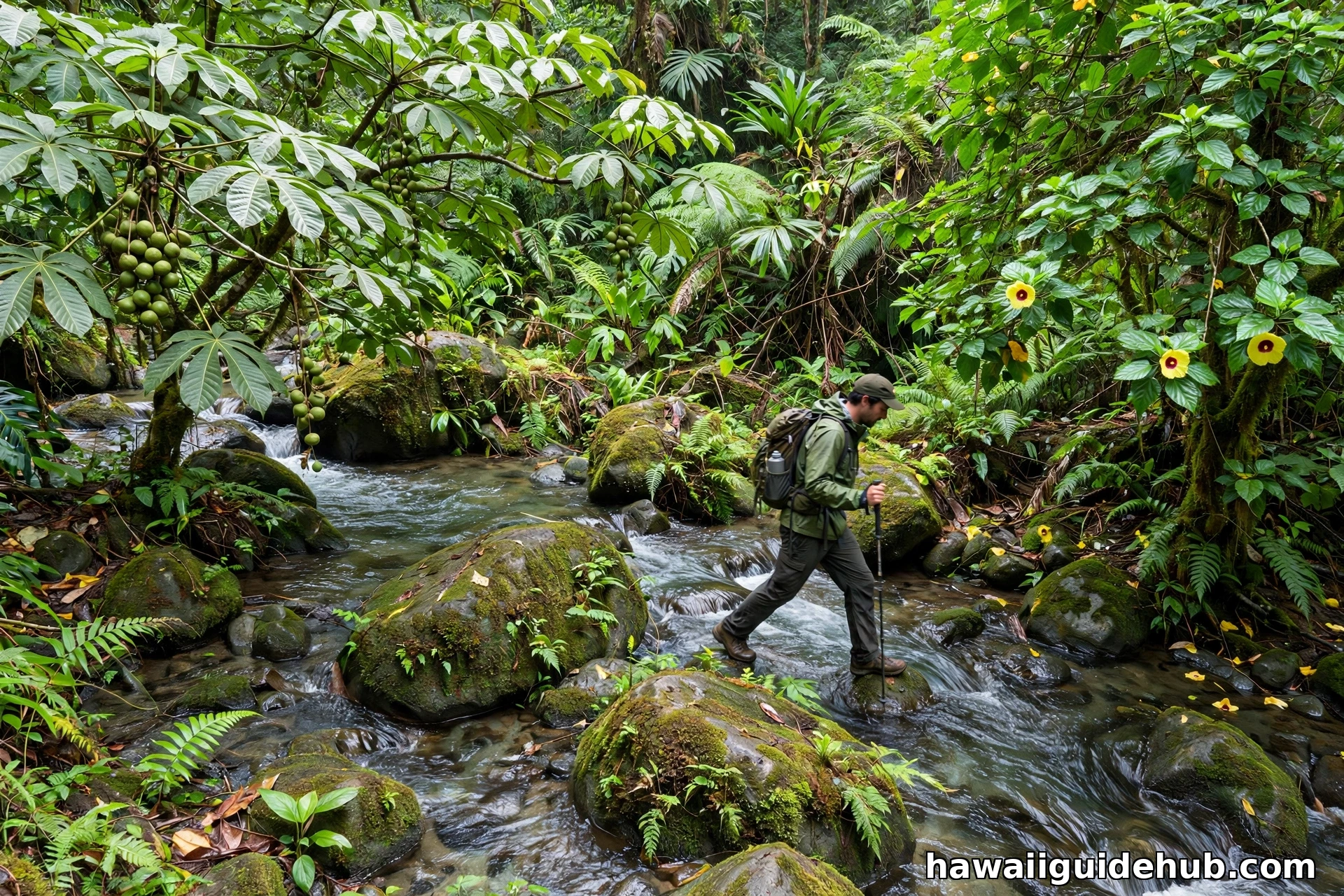
The first stretch followed an old service road before veering onto a dirt trail marked by pink ribbons tied to trees. From there the route climbed gently through dense rainforest, crossed Maunawili Stream two or three times over mossy rocks, and wound past the kind of lush scenery that makes windward Oʻahu feel like another country. Hikers regularly described the mud in vivid terms: calf-deep, shoe-swallowing, red-brown, and relentless after rain. Broken flip-flops and abandoned sandals became unofficial trail markers, and regulars left collections of walking sticks at the trailhead for newcomers who had arrived underprepared.
The final approach was the most memorable part. The trail descended a steep set of steps to the stream below the falls, and the last stretch was often walked directly in the water, wading upstream 200 to 300 yards through the rocky streambed to reach the waterfall pool. It was not a polished experience. It was a jungle adventure, and that was the point.
The Waterfall and the Pool
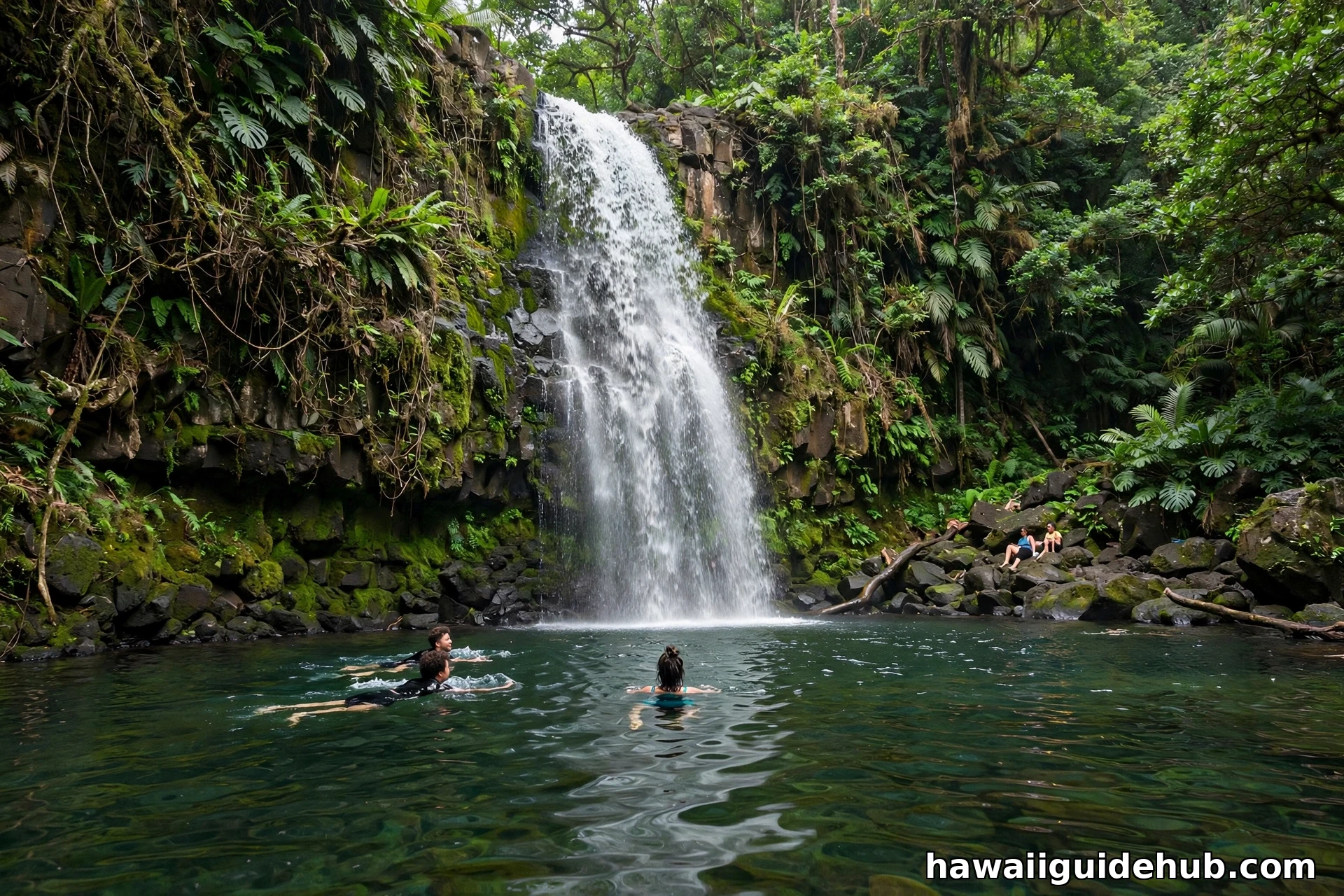
The waterfall itself is not Oʻahu’s tallest or most dramatic, and that was never the selling point. At 20 to 25 feet, it runs down an angled rock face into a wide, deep pool that stays cool and refreshing on muggy windward afternoons. Under normal conditions the water runs clear enough to see the rocks below, though after heavy rain it can turn brown and turbid.
The pool became famous as a swimming and cliff jumping spot. The lower rocks to the left of the falls offered modest jumps, and a higher ledge on the right, roughly 30 to 40 feet up, drew the boldest jumpers. Cliff jumping was never officially encouraged, and the usual warnings applied: the rocks are slippery, the pool is deep enough to jump but shallow enough that diving headfirst is dangerous, and every jump is at your own risk. The waterfall sits on state land managed for conservation and recreation, not as a supervised swimming facility, so there are no lifeguards and no one to check the depth for you.
The Honest Truth About Trail Status: Closed Since 2021
Here is what every visitor needs to know before planning around Maunawili Falls. In July 2021, the DLNR closed the original trail access through the Maunawili neighborhood for a long-term improvement and realignment project. The closure was driven by years of mounting pressure: hundreds of hikers on peak weekends overwhelming a quiet residential street, illegal parking, trespassing on neighboring properties, and visible damage to the trail and the surrounding watershed.
As of mid 2025, the trail had not officially reopened, and no firm reopening date had been announced. The project involves more than patching a muddy path. The state is planning a realigned trail corridor, new parking arrangements, and a management framework built around the conservation of the valley, which was the subject of a landmark 1,084 acre land purchase in 2023. Until the DLNR makes an official announcement, the original neighborhood route should be treated as closed. Hiking a closed trail in Hawaiʻi is not just disrespectful to the community and the land, it can carry legal consequences.
The practical takeaway: do not drive to Maunawili Road expecting to hike. Check the DLNR Division of Forestry and Wildlife trail pages or the Nā Ala Hele program site for the current official status before you go. If the status says closed, it is closed.
The Alternate Route: Maunawili Demonstration Trail
There is a longer, much more demanding way to reach the falls that does not use the closed neighborhood access. The Maunawili Demonstration Trail connects from the Nuʻuanu Pali Lookout area on the Pali Highway, running along the ridge above the valley before descending toward the falls area. This is a fundamentally different hike from the original: roughly 5 miles round trip from the Pali side with about 1,350 feet of elevation gain, taking five to six hours, and it requires solid navigation skills and preparation.
The demonstration trail route is not a casual substitute. It involves ridge walking, a steep descent into the valley, and stream travel to reach the falls. Parking at the Pali Lookout is limited, and the area is known for vehicle break-ins, so leave nothing visible in the car. This option suits experienced hikers who are comfortable with route finding and long days. Casual hikers should treat the closure as a full stop and choose another waterfall hike instead.
The Conservation Story: 1,084 Acres Protected
The closure is not the whole story of Maunawili Valley. In 2023, the Trust for Public Land completed the purchase of approximately 1,084 acres of the valley for around 20 million dollars, in one of the most significant conservation acquisitions on Oʻahu in recent years. The funding came from the State of Hawaiʻi Legacy Land Conservation Fund, federal conservation programs, private philanthropy, and community fundraising.
The protected lands will be managed by the DLNR for the upper forest and a realigned trail corridor, with local nonprofits including Hoʻokuaʻāina and Kauluakalana stewarding the agricultural and cultural lands, all under permanent conservation easements that prevent development. The valley feeds Kawainui Marsh, Hawaiʻi’s largest wetland, and its streams flow into Kailua and Kāneʻohe bays, so protecting the watershed protects the nearshore marine ecosystems as well. When the trail eventually reopens, it will do so inside a landscape that is being actively restored with native plantings, invasive species removal, and stream bank stabilization.
Mud: The Legend Is Real
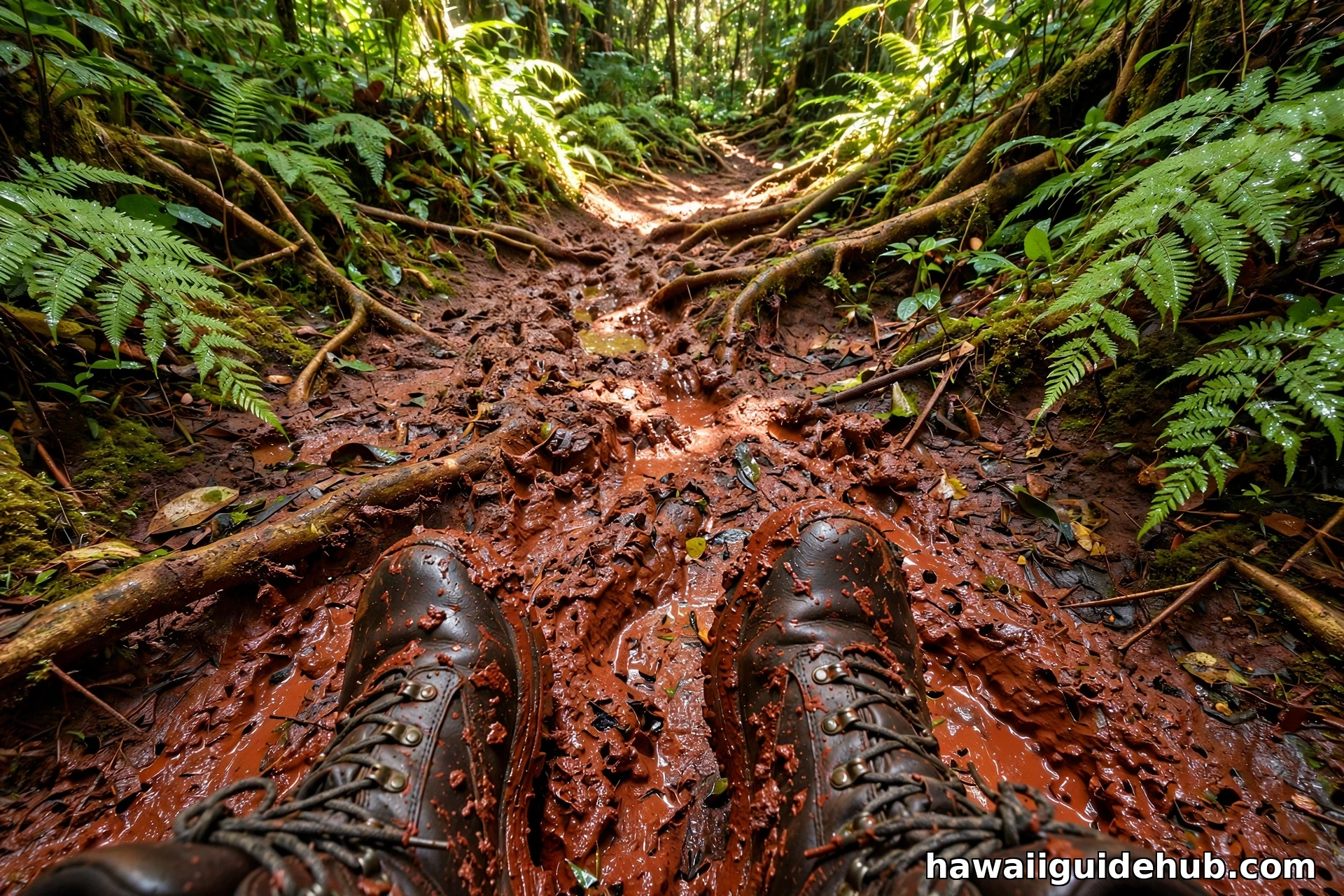
No guide to Maunawili Falls is complete without an honest accounting of the mud. The valley’s rainfall keeps the packed earth trail wet for most of the year, and the trail’s fame for mud is well earned. Hikers have described sinking to the calf in red-brown muck, sliding down eroded sections on their backsides, and washing off in the stream at every crossing. Exposed tree roots turn treacherous when wet, and the rope-assisted sections near the end demand slow, deliberate movement.
The gear advice from regulars is consistent and worth following whenever the trail reopens. Wear trail running shoes or hiking boots with real traction, and accept that they will get filthy. Quick-dry clothing beats cotton every time. Bring a change of clothes for the drive home, sealed in a waterproof bag. Insect repellent helps with the mosquitoes that thrive in the wet forest. And grab one of the walking sticks if they are available at the trailhead, it makes the slick descents dramatically easier.
Safety: Leptospirosis, Flash Floods, and Common Sense
The two serious hazards at Maunawili Falls are both water related, and both deserve direct treatment.
Leptospirosis
Leptospirosis bacteria are present in freshwater streams and waterfall pools across Hawaiʻi, and Maunawili Stream is one of the well documented locations. The bacteria enter through open cuts, scratches, eyes, and the mouth. The Hawaiʻi Department of Health’s guidance is straightforward: never drink stream water, keep water out of open wounds including small scratches, cover any cuts with waterproof bandages, avoid submerging your head, and see a doctor if flu-like symptoms develop in the days after hiking. This applies at every waterfall pool on the island, not just this one.
Flash floods
The narrow valley can funnel water quickly when rain falls upstream, even when the sky above the trailhead looks clear. If the stream turns brown or starts flowing fast, if heavy rain begins, or if water rises past your knees, turn around immediately and get to high ground. Water levels in island streams can change in minutes.
General trail sense
Start early enough to finish in daylight, carry one to two liters of water per person, and let someone know your plan. Cell coverage is unreliable in the valley. The rocks around the falls and along the stream are extremely slippery, the cliff jumping ledges are unmaintained and uninspected, and dogs are not recommended in the water due to the same leptospirosis risk.
Getting There and Practical Tips
When the trail is open, access has historically been through the Maunawili neighborhood off the Pali Highway, parking on Kelewina Street near the yellow gate trailhead. There has never been a dedicated parking lot, which is one reason the neighborhood pushed back. If and when the trail reopens with a new trailhead, expect the access point and parking rules to be different from the old arrangement, and follow the posted signs rather than old blog directions.
There are no restrooms at the trailhead and no trash bins along the route, so plan accordingly and pack out everything you carry in. Weekday mornings are the quietest time; weekends were historically the most crowded, with the trail feeling more like a queue than a wilderness at peak times. Fees have not historically applied, but a reopened trail under active management could reasonably introduce parking or access controls similar to other popular Oʻahu trails, so check the official pages for the latest.
What to Do Instead: Other Oʻahu Waterfall Hikes
While Maunawili Falls remains closed, Oʻahu has other waterfall hikes that are open and worth the trip. Each has its own character, and linking them into a trip gives a fuller picture of the island’s waterfall country than any single trail.
For a classic rainforest waterfall walk, the island’s guided waterfall experiences and state trails offer options with maintained paths and clearer access. For hikers who want a longer challenge, the island’s outdoor adventures in Hawaii include ridge and valley trails that reward the effort with views the short waterfall trails cannot match. And for swimmers, the North Shore‘s waterfall pools offer supervised swimming that the unsupervised backcountry pools cannot. Check the island’s lesser-known spots and the full Oahu island guide for the best hiking and outdoor options while Maunawili remains closed.
Watch: The Falls on Video
Maunawili Falls earned its place in Oʻahu hiking lore the hard way: through mud, stream crossings, and a waterfall pool that made every slippery step worth it. The closure that began in 2021 is not an ending but a reset, and the valley emerging from it is better protected than it has been in decades. The smartest thing a visitor can do is check the official trail status, respect whatever it says, and let the valley finish healing. The falls are not going anywhere. When the trail reopens, the mud will be waiting.