
Molokaʻi Transportation
On This Page
Getting Around Molokaʻi: The Overview
Transportation on Molokaʻi is simple to understand but requires planning, because the island gives you very few options and very little margin for improvisation. Molokaʻi is the fifth largest Hawaiian island at about 260 square miles, home to roughly 7,300 residents, and it has deliberately resisted the kind of tourism infrastructure that makes getting around easy on Oʻahu or Maui. There are no stoplights anywhere on the island. There is no ferry. There is no meaningful public transit for visitors. There is essentially no rideshare coverage you can count on. For nearly every traveler, the transportation plan is one sentence long: fly in, pick up a rental car, and drive yourself everywhere.
That reality shapes everything about how you should approach a Molokaʻi trip. The island is about 38 miles long and 10 miles wide, and its attractions are spread along a road network that follows the coasts and the central plateau. Kaunakakai, the main town, sits roughly in the middle of the south shore. Papohaku Beach and the west end lie about 30 minutes west of town. Hālawa Valley at the eastern tip is roughly an hour and fifteen minutes east. The Kalaupapa overlook at Palaʻau State Park is about 25 minutes north, up on the central plateau. Everything is reachable by road, but nothing is reachable without a car, and the distances add up quickly when you are driving between regions each day.
The most important transportation decision you will make for Molokaʻi happens weeks before you travel, and it is this: reserve your rental car the moment you book your flights. Molokaʻi’s rental fleet is tiny compared to the big islands, and during busy periods it sells out completely. Travelers who arrive at MKK airport without a reservation have been known to find no cars available at any company, which on an island with no backup options means a ruined trip. Book early, confirm before you fly, and treat the rental car as the single most essential part of your Molokaʻi logistics.
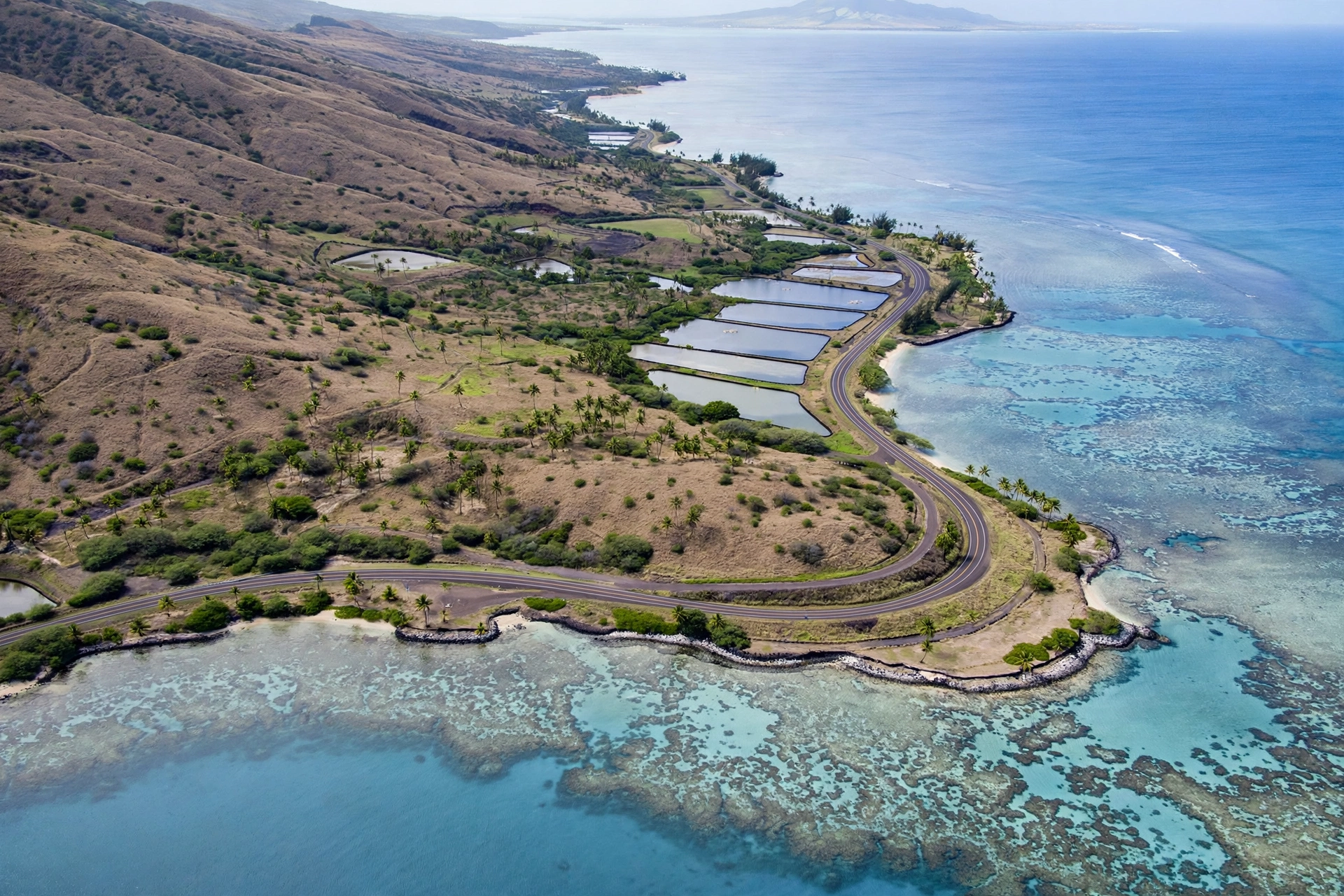
The good news is that driving Molokaʻi is genuinely pleasant. Traffic is negligible by any mainland standard. The main highways are well maintained two-lane roads. Parking is free almost everywhere, and you will rarely have trouble finding a space. If you are comfortable driving on rural two-lane roads, you are fully prepared for Molokaʻi. The sections below cover every option in detail, starting with the one that matters most.
Rental Cars on Molokaʻi
A rental car is not a recommendation on Molokaʻi. It is a requirement. Unlike Oʻahu, where TheBus covers the island, or Maui, where shuttles and tour pickups fill the gaps, Molokaʻi has no transportation network that a visitor can fall back on. The limited bus service described below exists mainly for residents, not tourists. Taxis are scarce and expensive for island-scale distances. Walking between sights is not realistic, because attractions are miles apart and many stretches of road have no sidewalks. If you do not have a rental car, you will see Kaunakakai and very little else.
Booking Early Is Essential
Molokaʻi’s rental car supply is small, and demand regularly outstrips it. The rental counters at Molokai Airport (MKK) in Hoʻolehua keep a modest fleet, and during holidays, whale season, and summer months, every car can be reserved. Unlike the big islands, there is no overflow market of off-airport agencies to absorb the excess. Travelers who assumed they could arrange something after landing have found themselves stranded, and the island’s visitor industry is blunt about this: book your car when you book your flights, and reconfirm a few days before departure.
Several national rental companies operate at or near MKK airport. Availability and company lineups can change, so check the current operators when you reserve, but expect a smaller selection and higher prices than you would find at Honolulu International Airport. Economy and midsize cars are the standard choice. There is no need for a sport utility vehicle or four-wheel drive for any legal, public road on Molokaʻi, including the drive to the Kamakou Preserve trailhead area and the winding east end highway. The one famous 4WD road on the island, the Kalaupapa Trail descent, is closed to hikers and off limits to visitors regardless of vehicle, so it does not factor into your rental decision.
Fuel Planning
Fuel is straightforward but deserves attention because stations are few. Kaunakakai has the island’s main gas stations, and Maunaloa on the west end has fuel as well. East of Kaunakakai, along the entire 28-mile stretch of the Kamehameha V Highway to Hālawa Valley, there are no gas stations. A full tank before an east end day trip is not a suggestion; it is the plan. The round trip from Kaunakakai to Hālawa Valley and back is well within the range of any rental car on a full tank, but leaving town on a quarter tank is asking for trouble. Refuel in Kaunakakai whenever you are passing through, the way residents do.
Rental Practicalities
Pick up your car at the airport and inspect it before driving off, noting any existing damage on the rental agreement as you would anywhere. Molokaʻi’s roads are paved and well kept, so a standard sedan handles everything comfortably. Parking is free and plentiful at beaches, trailheads, overlooks, and in Kaunakakai. Lock your car and keep valuables out of sight at beach parking areas, the same common-sense practice that applies across Hawaiʻi. When you return the car, allow extra time before your interisland flight, because MKK is small and commuter flight schedules are tight, and you do not want to be rushed.
One final note on rentals: Molokaʻi’s slow pace extends to the rental counters. Staffing is minimal, hours can be limited, and after-hours returns need to be arranged in advance. Confirm pickup and return procedures when you book, especially if your flights arrive late in the day or depart early in the morning. A quick confirmation call or email before you fly is cheap insurance against a closed counter.
Getting to Molokaʻi
Every visitor to Molokaʻi arrives by air. There is no ferry service to the island, and there has not been since the Molokai Princess passenger ferry ended operations in 2016. Day trips from Maui or Oʻahu by boat do not exist, and cruise ships do not call at Molokaʻi. Your transportation story begins at Honolulu International Airport (HNL), because virtually all flights to Molokaʻi connect through Honolulu.
Molokai Airport (MKK)
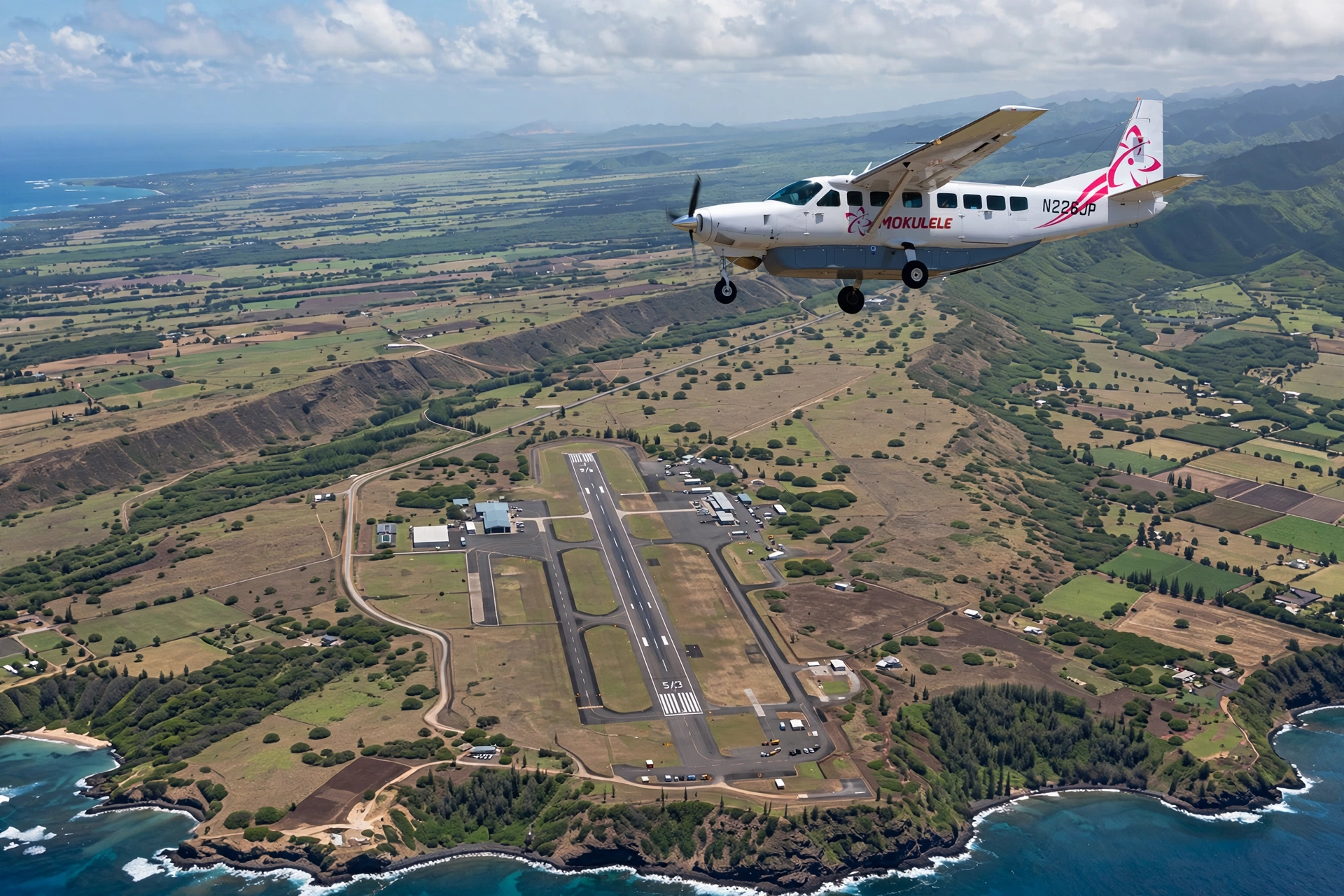
Molokai Airport, with the airport code MKK, sits on the central plateau at Hoʻolehua, about 7 miles northwest of Kaunakakai. It is a small regional airport served by commuter airlines operating small propeller aircraft, typically 9-seat or similar planes, on the roughly 25 to 30 minute flight from Honolulu or Kahului (Maui). The flight itself is one of the great short hops in Hawaiʻi, with views of the Kaiwi Channel, the north shore sea cliffs, and on clear days the other islands. Check-in is quick, the terminal is tiny, and rental car counters are steps from the arrivals area.
Flights run multiple times daily from Honolulu, but schedules are thinner than interisland service between the big islands. Early morning and late afternoon departures are the most useful for connections, and the last flight of the day can be quite early, so plan your HNL connection with care. If you are arriving on an international or mainland flight into Honolulu, leave generous connection time, because a missed commuter flight can mean an overnight in Honolulu. Baggage allowances on small commuter aircraft can be tighter than on large jets, so check your airline’s limits if you are traveling with oversized gear like bicycles or surfboards.
No Ferry, No Cruise Ships
It is worth stating plainly, because many visitors assume otherwise: you cannot take a ferry to Molokaʻi. The last passenger ferry stopped running in 2016, and no replacement service exists. Private boat charters from Maui occasionally operate, but they are expensive, weather-dependent, and not a practical transportation option for planning purposes. Treat the commuter flight from Honolulu as the only way in and out, and build your itinerary around its schedule.
Public Transit
Honesty first: public transit on Molokaʻi is not a visitor transportation option in any practical sense. The island’s bus service, operated through Maui Economic Opportunity (MEO), exists primarily to serve residents, including kupuna (elders) and riders traveling to medical appointments, work, and shopping. Routes are limited, frequencies are low, and the schedule is built around community needs rather than sightseeing. A visitor trying to tour the island by bus would find the service unable to reach beaches, trailheads, overlooks, or the east end in any workable way.
The MEO bus does connect Kaunakakai with some communities, and fares are very low, but service is infrequent, does not run on a tourist-friendly schedule, and covers only a fraction of the island’s road network. There is no route to Papohaku Beach, Hālawa Valley, the Kalaupapa overlook, or the Kamakou Preserve. Weekend and holiday service is minimal or nonexistent. If you are traveling without a car and hoping the bus will fill the gap, it will not, and you should revise your plan rather than rely on it.
This is not a criticism of the service, which does valuable work for the community it serves. It is simply a statement of fact for trip planning: do not include the bus in your transportation strategy as a visitor. The rental car section above is where your planning energy belongs.
Taxis and Rideshares
Taxi and rideshare service on Molokaʻi is extremely limited, and neither can be counted on as a transportation plan. A small number of taxi operators serve the island, mainly for airport transfers and local trips around Kaunakakai, but availability is inconsistent, advance booking is essential, and fares for longer distances, such as the airport to the west end, are high relative to the short distances involved. There is no taxi stand culture and no guarantee a cab will be available when you need one.
Rideshare apps like Uber and Lyft have effectively no reliable presence on Molokaʻi. You may occasionally see a driver online near Kaunakakai, but coverage is sporadic, wait times are long, and service to the west end, east end, or north shore is essentially nonexistent. Do not plan any part of your trip around the assumption that you can summon a ride. If you need a taxi for a specific transfer, such as an early airport departure, arrange it well in advance through your accommodation, which will know the current operators and their reliability.
Some accommodations, particularly vacation rentals and small inns, can help arrange transportation for guests, and a few tour operators include pickup in their services. These are useful supplements, not substitutes, for a rental car. If you are staying on the west end and want a guided Hālawa Valley hike, for example, you will still need your own car to reach the meeting point unless the operator explicitly offers pickup.
Walking and Biking
Within Kaunakakai, walking is the natural way to get around. The town is compact, flat, and genuinely walkable: Ala Malama Avenue, the main street, holds the shops, restaurants, bakery, and Saturday market within a short stroll, and the harbor and Kapuāiwa Coconut Grove are easy walks from the town center. Many visitors park the rental car at their accommodation and explore town on foot, which suits both the scale of the place and its unhurried rhythm. Sidewalks exist in the town core, traffic is light, and crossing streets is stress-free.
Outside of town, walking becomes a recreational activity rather than transportation. Distances between sights are measured in miles, road shoulders are narrow or nonexistent, and the sun is strong. Walking the highways between towns is not advisable and not enjoyable. Treat your feet as your transport within Kaunakakai and within beach parks, and your car as your transport everywhere else.
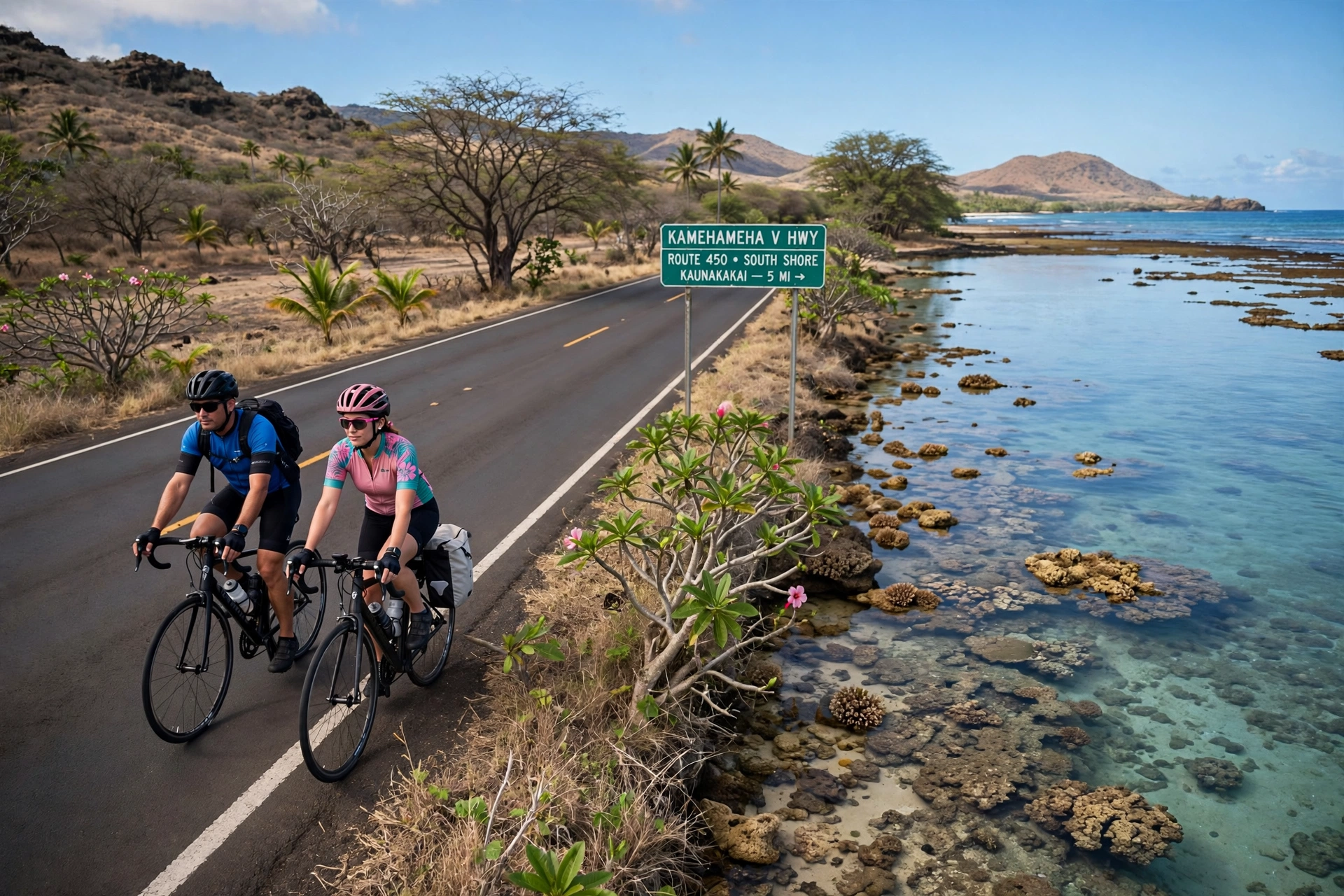
Cycling is a niche but real option for the athletically inclined. The Kamehameha V Highway along the south shore offers long, relatively flat stretches with ocean views, and early mornings bring the calmest conditions before the trade winds build. However, there are no dedicated bike lanes, shoulders are inconsistent, and rental bike availability on the island is limited, so most cyclists bring their own bikes or arrange them in advance. The east end highway’s narrow, winding sections and the climbs up to the central plateau are for experienced riders only. E-bikes, where available, make the island’s distances far more approachable. If you cycle, ride defensively, use lights, and avoid the highways after dark.
Driving Tips for Molokaʻi
Driving on Molokaʻi is easy by any standard, but the island has a few quirks worth knowing before you set out. The road network is small and logical. Three highways do most of the work: the Kamehameha V Highway (Route 450) runs east from Kaunakakai along the south shore to Hālawa Valley; the Maunaloa Highway (Route 460) runs west from Kaunakakai to Maunaloa and the west end beaches; and the Kalae Highway (Route 470) climbs north from the central plateau to Palaʻau State Park and the Kalaupapa overlook. Learn these three routes and you can navigate the entire island.
Road Conditions and Etiquette
All three main highways are paved two-lane roads in generally good condition. There are no stoplights, no roundabouts, and almost no traffic. Speed limits are low, typically 35 to 45 miles per hour on the highways and slower through towns, and they are enforced. Drive the posted speed, not the speed you think the empty road allows, because the limits reflect narrow shoulders, hidden driveways, and pedestrian areas rather than traffic volume.
The east end section of Route 450 deserves special respect. Past the 15-mile mark or so, the road narrows, winds, and hugs the coastline with blind curves and sections where two cars barely fit. Drive slowly, honk gently before blind curves the way local drivers do, and pull over to let faster local traffic pass. The road ends at Hālawa Valley, where it simply stops; there is no through route to the north shore. Allow about an hour and fifteen minutes from Kaunakakai to the valley, and do not attempt the drive in the dark if you can avoid it.
The Kalae Highway (Route 470) climbs from the plateau to the Palaʻau overlook through cool, green upland country. It is well paved but steep in sections, with sharp curves near the top. The Maunaloa Highway (Route 460) is the straightest and fastest of the three, crossing open ranch country to the west end. All are fine in a standard rental car in any weather short of a major storm.
Fuel, Cell Service, and Night Driving
As noted in the rental car section, there are no gas stations east of Kaunakakai, so start east end day trips with a full tank. Cell service is reliable in Kaunakakai and along much of the south shore but drops out in Hālawa Valley, parts of the east end, and the north shore uplands. Download offline maps before you leave town, and tell someone your plans if you are heading into areas without coverage. Night driving on the east end highway and the upland roads is best avoided; the roads are dark, animals including axis deer cross at dawn and dusk, and there are no streetlights. Plan to be back in familiar territory before sunset.
Parking and Local Courtesy
Parking is free nearly everywhere on Molokaʻi, including beach parks, trailheads, overlooks, and town streets. Do not park on private land, do not block driveways or gates, and respect any kapu (prohibited) signs, which mark private property and culturally sensitive areas. At beach parks, use the designated lots rather than pulling onto vegetation. Molokaʻi’s residents are notably protective of their island, and driving and parking with obvious respect goes a long way. Keep music low in residential areas, do not idle loudly, and remember that the slow pace you came to enjoy applies to the roads too.
Accessibility
Travelers with mobility needs should plan Molokaʻi carefully, because the island’s accessibility infrastructure is limited. The small commuter aircraft serving MKK have narrow doors and limited assistance compared to large jets, so contact your airline in advance to arrange boarding help. Rental cars with hand controls are generally not available on the island, so travelers who need adapted vehicles should arrange alternatives before booking flights.
On the ground, Kaunakakai’s town core is flat and navigable, and several beach parks have accessible restrooms and paved areas near the parking lots, though beach access itself over sand is difficult without specialized equipment. The Palaʻau State Park overlook, the island’s premier viewpoint, is reachable by car with a short, relatively level path to the viewing area. Many of the island’s signature experiences, including the Hālawa Valley hike, the Kamakou Preserve trails, and unimproved beach access points, are not wheelchair accessible. Travelers with significant mobility needs will find Kaunakakai, the west end beaches with firm parking areas, and scenic drives the most workable experiences, and should contact accommodations directly to confirm accessibility features before booking.
Frequently Asked Questions
Do I need a rental car on Molokaʻi?
Yes, for all practical purposes. Public transit is extremely limited and resident-oriented, rideshares are unreliable, and taxis are scarce. Without a rental car you will be confined to Kaunakakai. Reserve your car when you book your flights, because the island’s small fleet sells out.
How do I get to Molokaʻi?
By commuter flight from Honolulu International Airport to Molokai Airport (MKK) in Hoʻolehua. The flight takes about 25 to 30 minutes and runs multiple times daily. There is no ferry to Molokaʻi; passenger ferry service ended in 2016.
Is there a ferry from Maui to Molokaʻi?
No. The Molokai Princess ferry stopped operating in 2016, and no replacement service exists. The only practical way to reach Molokaʻi is by air from Honolulu.
Is there Uber or Lyft on Molokaʻi?
Not reliably. Rideshare coverage is sporadic at best and nonexistent outside Kaunakakai. Do not plan any part of your trip around rideshare availability.
Do I need a 4WD vehicle on Molokaʻi?
No. Every legal public road on the island, including the east end highway and the upland roads, is paved and fine in a standard sedan. The famous 4WD descent to Kalaupapa is closed to visitors regardless of vehicle.
Where can I get gas on Molokaʻi?
Kaunakakai has the island’s main gas stations, and Maunaloa on the west end has fuel as well. There are no gas stations east of Kaunakakai, so fill up in town before driving to Hālawa Valley or exploring the east end.
Is it easy to drive on Molokaʻi?
Very. Traffic is negligible, the three main highways are well maintained, and parking is free everywhere. The east end highway is narrow and winding with blind curves, so drive slowly there and avoid it after dark. There are no stoplights anywhere on the island.
Can I get around Molokaʻi without driving?
Not realistically as a visitor. You can walk within Kaunakakai, and cycling suits athletic riders on the south shore highway, but reaching beaches, trailheads, overlooks, and the east end requires a car. Budget for a rental car as a core trip cost, not an optional extra.
Related Guides
- Molokaʻi Travel Guide: the complete island overview, where to stay, and top things to do
- Molokaʻi Map: regions, towns, roads, and drive times across the island
- Molokaʻi Beaches: the best beaches by coast, with honest ocean safety notes
- Molokaʻi Hikes: trails, permits, and respectful hiking access
- Hawaiʻi Map: the full island chain and interisland orientation
A Final Note
Transportation on Molokaʻi asks one thing of you and gives a great deal in return. The ask is planning: book the rental car early, respect the flight schedules, fill the tank before the east end, and accept that this island will not improvise for you. The return is some of the most relaxed driving in Hawaiʻi, empty roads through ranch country and along reef-lined shores, free parking at every beach, and the particular pleasure of an island where the journey between places is as unhurried as the places themselves. Handle the logistics in advance, and Molokaʻi takes care of the rest.