
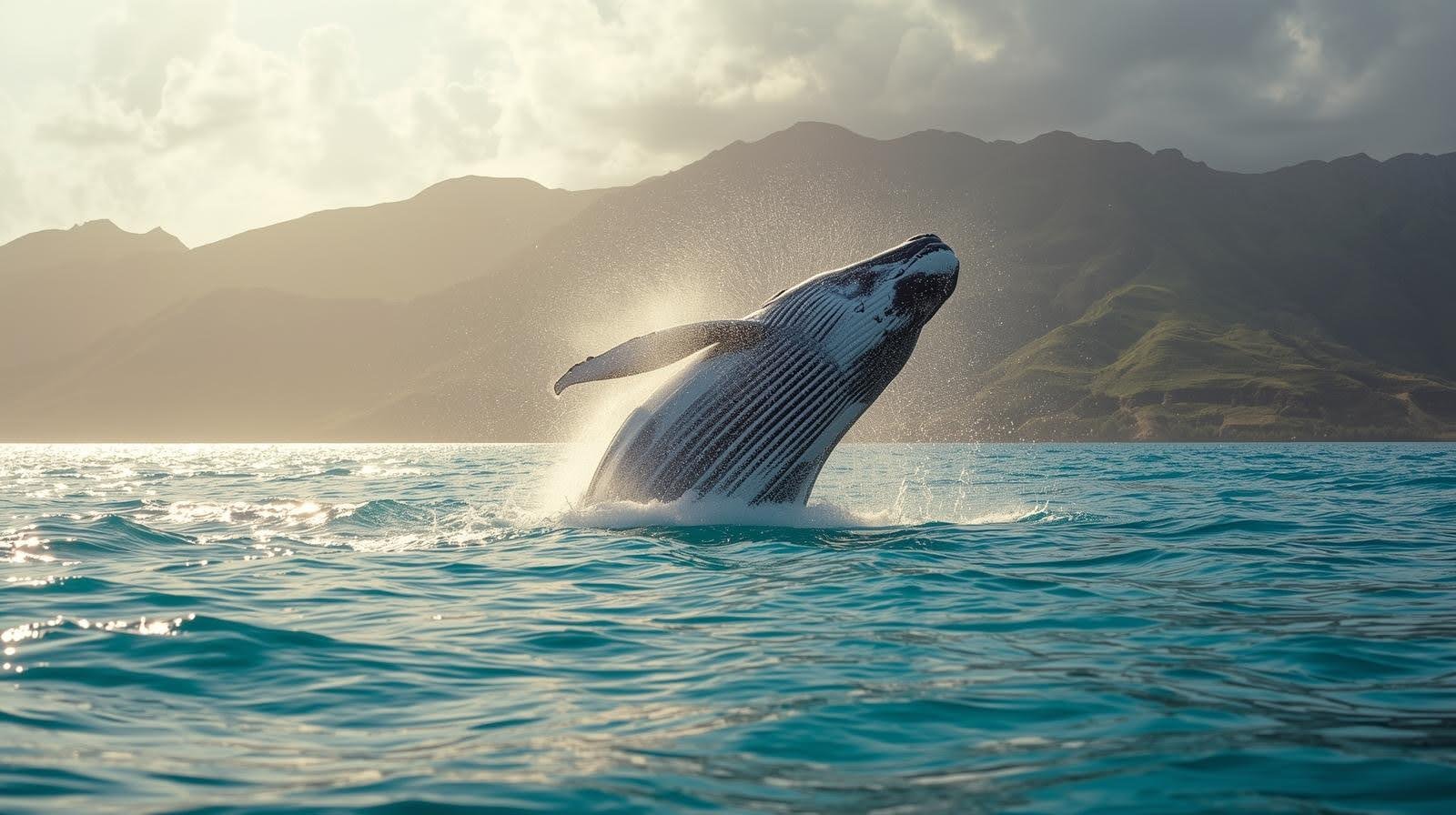
Whale Watching: Learning About Breaching and Feeding Habits Hawaii

Every year, the calm blue waters around the Hawaiian Islands become a stage for one of nature’s most amazing shows. The annual return of humpback whales is a sight that fascinates both locals and tourists. They can be seen from the gentle spray of a blowhole to the loud crash of a full-body breach. This is more than just a wildlife sighting; it’s a profound connection with some of the planet’s most magnificent creatures.
This guide will help you learn all about the humpback whales that live in Hawaii. We’ll look at their amazing behaviors, like the strong breaches that send them flying out of the water and the smart ways they eat. You’ll find out the best times and places to see these gentle giants, learn about the conservation efforts that are keeping them safe, and find out how to make your whale-watching trip a fun and responsible experience. Get ready to be amazed by how Hawaii’s beloved humpback whales breach and eat.
The Best Time for Whale Watching in Hawaii
When it comes to whale watching, timing is everything. Humpback whales make one of the longest migrations of any mammal. They travel thousands of miles from their summer feeding grounds in Alaska to the warm, safe waters of Hawaii. This trip happens every year for mating, giving birth, and taking care of their young.
From November to May, Hawaii has an official whale season. The best time to see whales is usually between January and March. During these months, there are more whales than at any other time of year, which greatly increases your chances of seeing more than one whale on a single trip. There is a lot going on in the water, like males fighting for mates, mothers teaching their calves how to survive, and, of course, the amazing breaches that everyone wants to see.
What makes this time so great? The shallow, warm waters around the islands are a safe place for newborn calves to grow up. They don’t have the thick blubber they need to live in the colder Alaskan seas. It is also a safe place for them to grow and get stronger before making the long trip back north because there aren’t any big predators there.
Best Places to See Whales
You can see whales from any of the Hawaiian Islands, but some places are better for seeing them because of the way the ocean floor is shaped.
Maui
Most people think that Maui is the best place in Hawaii to see whales. The Auʻau Channel is a shallow, protected area between Maui, Molokaʻi, and Lānaʻi that is home to a lot of humpback whales. The warm, calm waters are perfect for mothers and their babies.
- Lahaina and Ma’alaea Harbors: Most whale-watching tours leave from these harbors, which are close to where the action is.
- Viewing from the Shore: You can often see whales breaching right from the shore on the western and southern coasts, especially from beautiful spots along the Honoapiʻilani Highway.
Hawaiʻi Island, the Big Island
Another great place to see whales is the Kohala Coast on the Big Island. Whales seem to love the deep waters just off the coast.
- Safe Waters: The waters on the leeward side of the island are calm and clear, which makes it easy to see.
- Year-Round Residents: Humpbacks are only around for a few months at a time, but pilot whales and dolphins can be seen all year.
Oʻahu
Oʻahu is better known for its busy city life, but it also has great places to see whales, especially on its southeastern and northern shores.
- Makapu’u Point Lighthouse Trail: This well-known hiking trail has a great view of the ocean from a high point where you can often see whales spouting and breaching in the distance.
- North Shore: The waters off the famous North Shore are a common route for migrating whales during the busiest time of year.
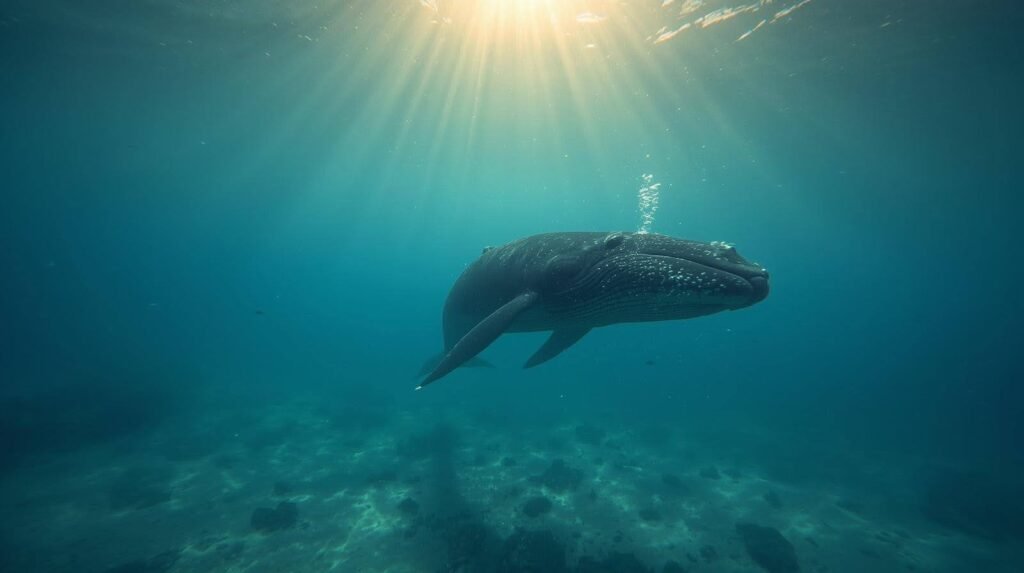
Understanding How Whales Breach
A 40-ton humpback whale jumping out of the water with its whole body is one of the most amazing things to see in the animal kingdom. Scientists and people who watch have been interested in this powerful behavior, called breaching, for hundreds of years. But what makes whales breach? There is still some disagreement about the exact reasons, but researchers have come up with a number of strong theories.
What does it mean to breach a whale?
When a whale breaches, it pushes itself out of the water and often twists in the air before crashing back down with a huge splash. A whale’s breach can be heard more than half a mile underwater, making it a strong way to communicate without speaking.
- Theories About Breaching Communication: Breaching may be a way for whales to communicate with each other over long distances. The splash makes a loud noise that travels a long way. It could be a way for them to announce their presence, warn others of danger, or show that they are in charge during mating season. You might be wondering why whales jump out of the water near boats. It’s likely not about the boat itself, but rather that the area is simply where they are active. It could be that they breach to talk to other whales nearby.
- A Show of Fitness: Male humpbacks might do a powerful breach to show off their strength and fitness to attract mates or scare off rivals. It’s a way to say, “Look how healthy and strong I am.”
- Taking Off Parasites: Barnacles and skin parasites build up on whales over time. The sheer force of slapping their huge bodies against the water’s surface could be a good way to get rid of these unwanted hitchhikers.
- Just for Fun: Is it possible that whales breach just for fun? Calves often breach more than adults, which suggests that it might be a way for them to have fun. People often wonder if whales breach for fun. It’s a reasonable theory because play is a common behavior in smart mammals that helps young animals learn how to coordinate their movements and interact with others.
The Fascinating Feeding Habits of Whales
It’s interesting that the humpback whales you see in Hawaii aren’t there to eat. They are not eating anything right now, but they are using the fat they stored up during their summer feast in Alaska’s nutrient-rich waters. They spend all of their time in Hawaii breeding and taking care of their young.
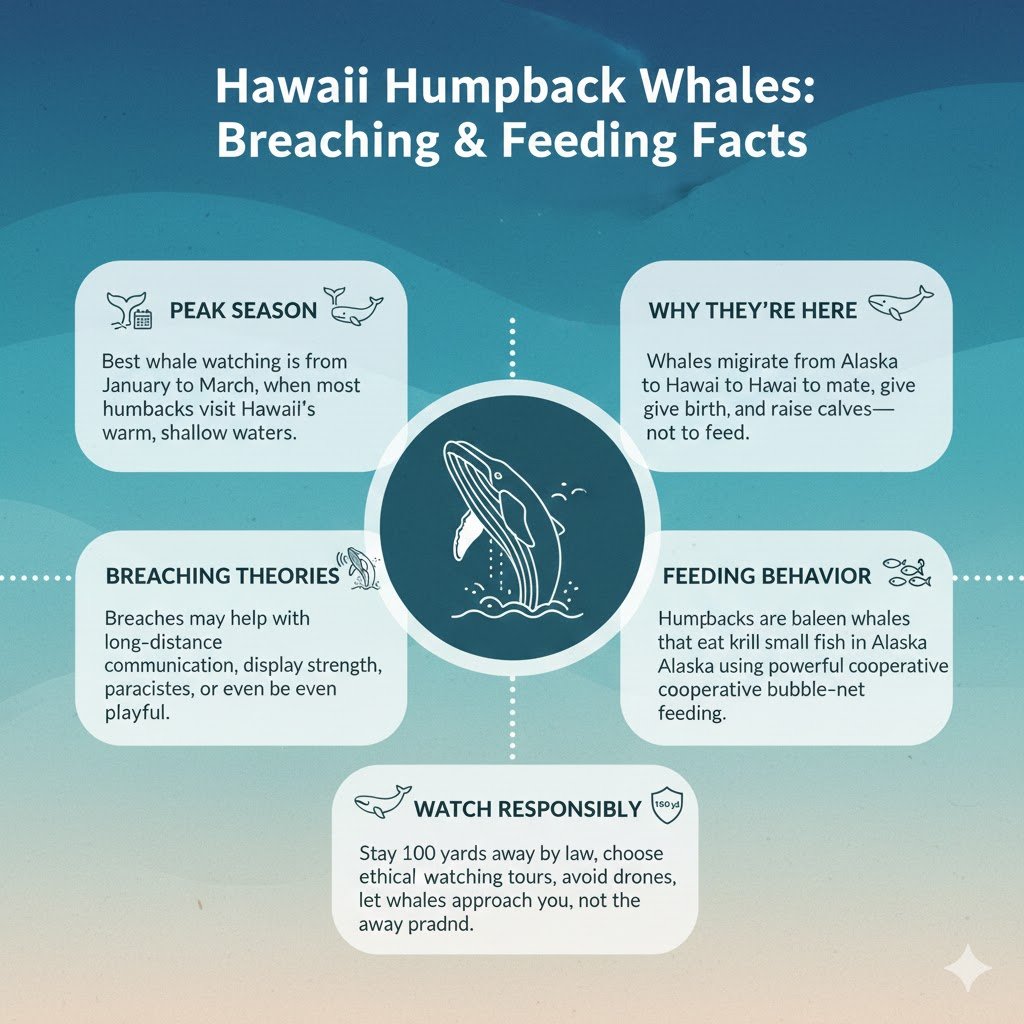
But to really understand their life cycle, you need to know how they eat.
Humpback whales are baleen whales, which means they have plates of baleen instead of teeth in their mouths. They mostly eat krill, plankton, and small fish. A single adult humpback can consume up to 3,000 pounds of food per day during the feeding season.
Feeding with Bubble Nets
Bubble-net feeding is one of the most clever ways that animals hunt. This method of cooperation involves a group of whales working together to catch their food.
This is how it works:
- One whale dives deep and starts to let out a stream of bubbles while swimming around a school of fish or krill.
- Other whales might join in, making a “net” of bubbles that surrounds the prey and pushes it into a tight ball.
- Once the prey is contained, the whales swim upward through the center of the bubble net, mouths wide open, engulfing thousands of small fish in a single gulp.
This complex behavior, which is common in Alaska, shows how smart and cooperative they are with other people.
Responsible whale watching and conservation
People used to hunt humpback whales to the point of extinction. Because of international protections put in place in the 1960s and the creation of marine sanctuaries, their numbers have grown back very quickly. The Hawaiian Islands Humpback Whale National Marine Sanctuary was set up to keep these whales and their homes safe.
Watching whales responsibly is very important for their safety. It is against the law for boats and people to get closer than 100 yards to humpback whales.
How to Watch Responsibly:
- Pick a Tour Company You Can Trust: Choose companies that put the whales’ health first and follow all the rules for viewing them.
- Keep Your Distance: Don’t ever get close to a whale. If one comes up near you, turn off your engine and let it go by.
- No Drones: You can’t fly drones near whales because it can make them stressed.
- Listen to Your Guide: Tour guides are trained to read whale behavior and ensure a safe and respectful interaction.
Advice for a Memorable Time
A little planning ahead will help you get the most out of your whale-watching trip.
- Necessary Gear: Bring binoculars to see things up close, a camera with a good zoom lens, polarized sunglasses to cut down on glare, and sunscreen that won’t harm the reef.
- Wear layers: It can be cooler on the water, so a light jacket is a good idea.
- Preventing Seasickness: If you get sick when you move, think about taking medicine before your tour. Be Patient: Whales do things when they want to. Be patient, watch the ocean, and take in the beautiful views.
Join Us in Experiencing the Wonder
Seeing a humpback whale in its natural habitat is a very humbling experience. These moments, from the loud crash of a breach to the soft bond between a mother and her calf, connect us to the ocean’s wild heart. Hawaii gives us a front-row seat to this amazing show, which reminds us of how important it is to protect the ocean and our role as its caretakers.
Are you ready to see these big, gentle creatures in person? We work with the most responsible and knowledgeable tour companies at Hawaii Guide Hub to give you an unforgettable whale-watching experience. When you book a tour with us, you’ll make memories that will last a lifetime and help protect Hawaii’s beautiful humpback whales.


