The Complete Guide to Global Whale Populations

Whale populations serve as vital indicators of ocean health, representing some of the most magnificent and intelligent creatures on our planet. These huge sea creatures are very important for keeping ocean ecosystems healthy, but many species are still facing big problems that could kill them. As we work to protect these amazing animals for future generations, it is important to know about current whale population trends, conservation efforts, and future outlooks.
This in-depth guide looks at whale populations by species, reviews current population data, looks at major threats, and highlights successful conservation efforts. Whether you love marine biology, want to protect the environment, or just want to know more about these huge ocean animals, you’ll learn a lot about whale conservation and how we can all help.
The story of whale populations shows both sad truths and hopeful success stories that show how strong global conservation efforts can be when they work together.
The current state of whale populations around the world
Blue Whale Population: The Biggest Comeback Story in the Ocean
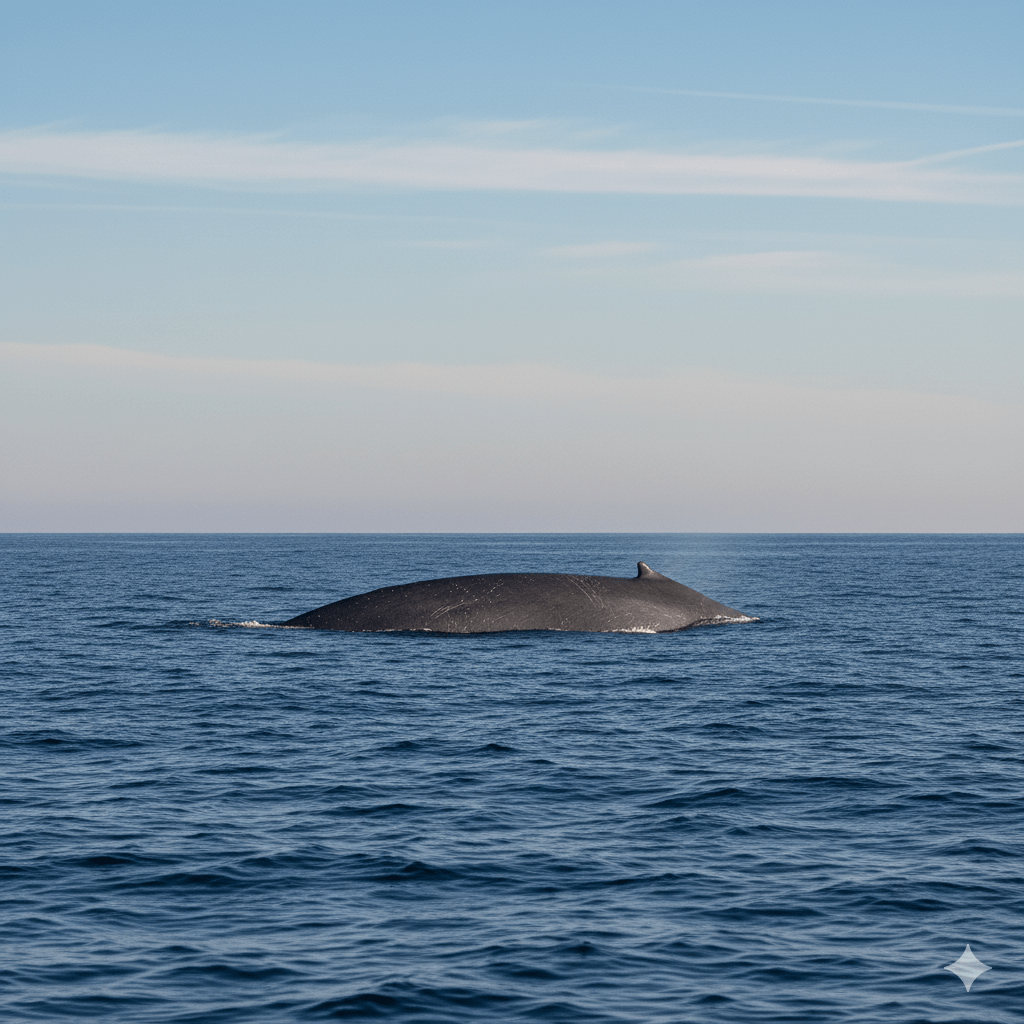
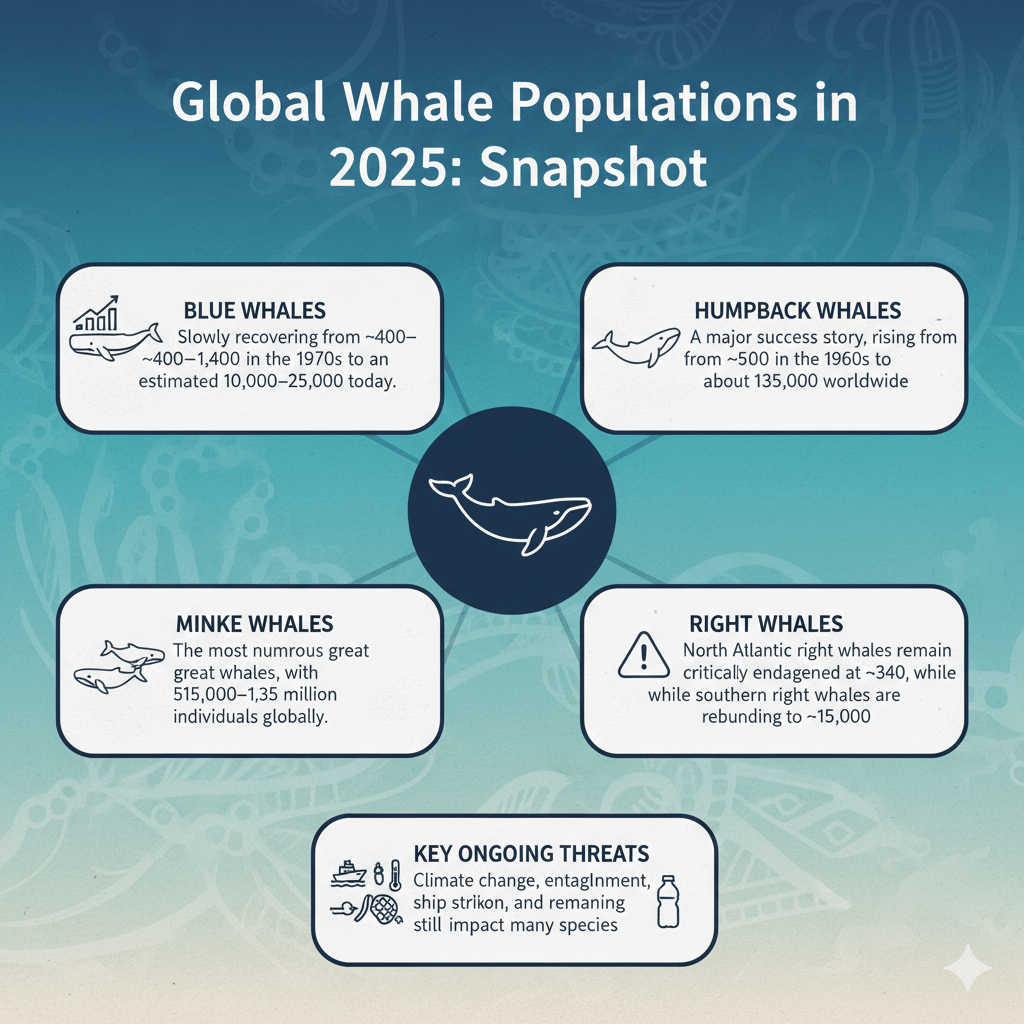
Before commercial whaling started, there were about 350,000 blue whales, the biggest animals ever to live on Earth. There are now about 10,000 to 25,000 blue whales in the world. This is a slow recovery from the 1970s, when there were only 400 to 1,400 whales left.
The Antarctic blue whale population, once the most abundant subspecies, remains critically endangered with fewer than 3,000 individuals. But recent studies show that in some areas, especially off the coast of California, populations are growing at a rate of 7–8% per year, which is a good sign.
A success in conservation: the population of humpback whales
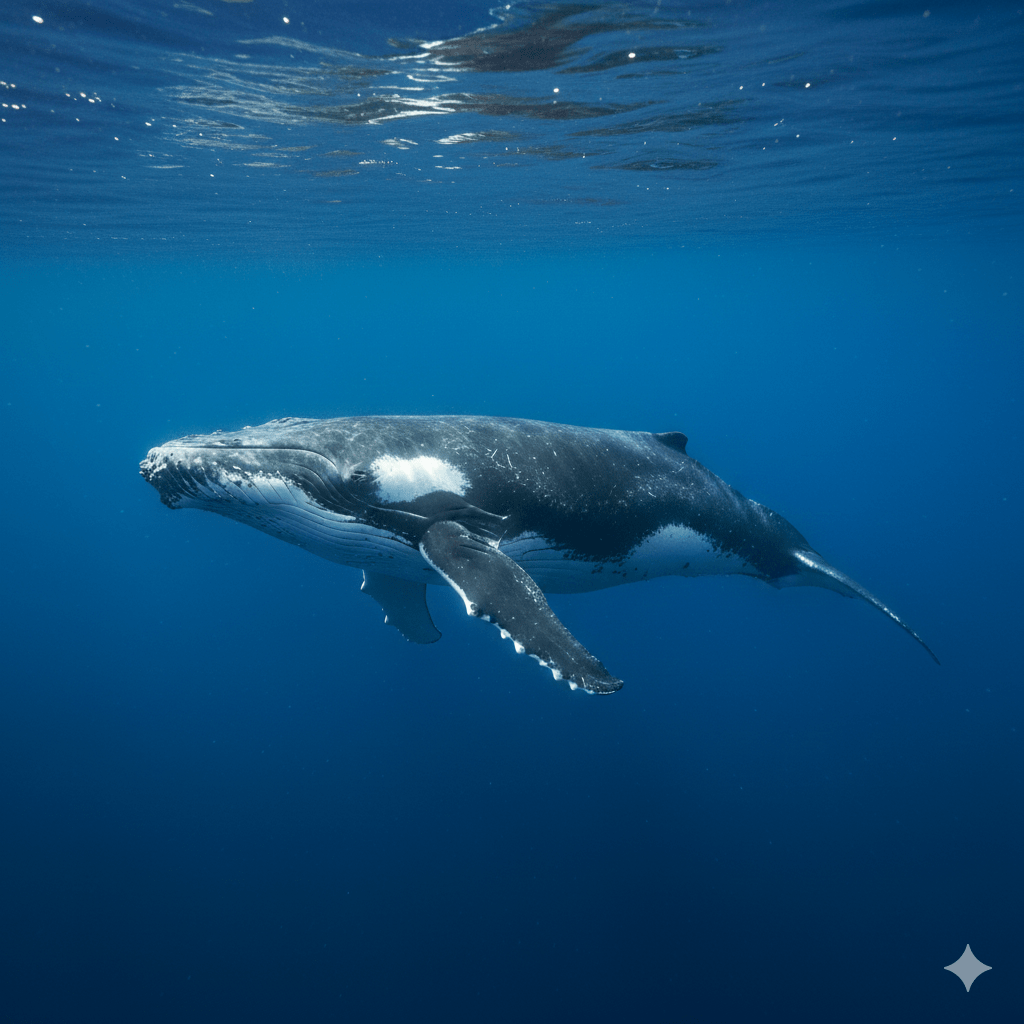
One of the best success stories in marine conservation is the recovery of humpback whale populations. The population of humpback whales around the world has grown from a terrible low of about 5,000 in the 1960s to an estimated 135,000 today.
The North Pacific humpback whale population has grown from about 1,200 to more than 25,000, which is why it was taken off the endangered species list in 2016. Australian humpback populations have shown similarly remarkable recovery, increasing by 10-11% annually over recent decades.
The Minke Whale Population: The Most Common Baleen Whale
There are between 515,000 and 1.35 million minke whales in the world, making them the most stable of all the large whale species. There are about 174,000 common minke whales in the North Atlantic. The Antarctic minke whale population is the largest, with about 515,000 individuals.
Compared to larger whale species, these populations are under different kinds of stress. For example, commercial whaling is still going on in some areas, and ocean noise pollution is making it harder for them to communicate.
Right Whale Populations: A Very Important Conservation Goal
There are only about 340 North Atlantic right whales left, making them one of the most endangered large whale populations. This group has gotten much smaller since 2010, mostly because they get caught in fishing gear and hit by boats.
The number of southern right whales is on the rise, with current estimates of around 15,000 individuals. This is a steady recovery from historical lows of just 300 individuals in the early 1900s.
Big Problems for Whale Populations
Changes in the climate and warming of the oceans
Climate change fundamentally alters whale habitats through rising ocean temperatures, changing current patterns, and shifting prey distributions. Bowhead whales and other Arctic whale species have a hard time because the patterns of sea ice are changing, which affects where they eat and migrate.
Krill, which are a main food source for many baleen whales, are becoming less common in some important areas because of changes in temperature and acidity in the ocean. This food web disruption forces whales to travel greater distances to find adequate nutrition, impacting reproduction and survival rates.
Marine Debris and Pollution
Bioaccumulation causes chemical pollution to build up in whale tissues, which harms reproduction, immune function, and overall health. Persistent organic pollutants (POPs) and heavy metals concentrate in whale blubber, passing from mother to calf through milk.
Plastic pollution poses both direct ingestion risks and habitat degradation. Large whales accidentally consume microplastics while filter feeding, potentially causing internal injuries and reducing digestive efficiency.
Commercial Fishing and Entanglement
Fishing gear getting stuck in whales and dolphins is still one of the main causes of whale deaths, with an estimated 300,000 whales and dolphins dying from this threat each year. Ghost nets abandoned fishing gear continue killing marine life for years after being discarded.
Rope and net entanglement can cause severe injuries, infection, and death. Even whales that survive initial entanglement often suffer long-term health impacts that reduce reproductive success and lifespan.
Ship Strikes and Ocean Noise
Increased shipping traffic creates collision risks, particularly for slow-moving species like right whales. Ship strikes cause significant mortality in heavily trafficked areas along migration corridors and feeding grounds.
Underwater noise from shipping, seismic surveys, and military sonar interferes with whale communication, navigation, and feeding behavior. This acoustic pollution can disrupt mating calls, mask important environmental sounds, and cause stress-related health impacts.
Whaling in the past and now
Commercial whaling reduced many whale populations by 90% or more between the 1600s and 1970s. The International Whaling Commission’s ban on commercial whaling in 1986 was very important for protecting whales, but some countries still hunt whales with scientific permits or for cultural reasons.
Right now, whaling kills about 1,000 to 2,000 whales a year, mostly minke whales, pilot whales, and gray whales. These numbers, while significantly lower than historical levels, still impact recovering populations.
Global Conservation Efforts and Initiatives
International Whaling Commission (IWC)
The IWC is the main international group in charge of protecting whales. It puts a stop to commercial whaling and sets up whale sanctuaries. The Southern Ocean Whale Sanctuary, which was set up in 1994, protects important breeding and feeding grounds for many species.
The IWC’s most recent efforts have been to find ways to do research without killing whales, reduce ship strikes, and stop whales from getting caught in nets. The Scientific Committee of the commission keeps an eye on population trends and figures out what conservation needs are for all whale species.
Marine Protected Areas (MPAs)
Marine protected areas that are in the right places protect important whale habitats, such as feeding grounds, breeding areas, and migration routes. The Papahānaumokuākea Marine National Monument in Hawaii protects 583,000 square miles of breeding grounds for humpback whales.
During peak migration times, seasonal closures and speed limits in shipping lanes lower the risk of ships hitting whales. Dynamic management approaches change protection measures based on data that shows where whales are in real time.
Changes to Fishing Gear
Innovative fishing technologies reduce entanglement risks through breakaway gear, alternative rope materials, and ropeless fishing system These changes keep the fishing industry productive while making whales much safer.
Working together, fishing communities and conservation groups have come up with practical solutions that help both marine life and fishing operations. Financial incentives and technical support encourage widespread adoption of whale-safe fishing practices.
Programs for Research and Monitoring
Advanced tracking technologies, including satellite tags, underwater hydrophones, and aerial surveys, provide unprecedented insights into whale behavior, migration patterns, and population dynamics. This information helps make decisions about policies and conservation strategies that are more focused.
Genetic research aids in the identification of unique populations, breeding behaviors, and evolutionary connections, facilitating more accurate conservation planning. Photo-identification databases keep track of individual whales over many years, showing long-term trends in populations and survival rates.
What Will Happen to Whale Populations in the Future
Predictions for Population Recovery
Population models indicate ongoing growth for numerous species given the existing conservation strategies. Humpback whale populations may reach pre-whaling levels within 30-50 years if current recovery rates continue. The number of blue whales is slowly but steadily going up. It could take more than 100 years for them to fully recover.
But these projections are very uncertain because of the effects of climate change. Changes in the ocean may make it harder for all whale species to survive and change the paths they take to recovery.
New Technologies and Answers
AI and machine learning improve whale monitoring by using automated acoustic detection, satellite image analysis, and predictive modeling. These tools enable more efficient and comprehensive population assessments.
New technologies that can help reduce human-caused deaths include whale-warning systems for ships and smart fishing gear that lets go of whales when they get close.
Changes in policy and rules
Better international cooperation and enforcement mechanisms make conservation work better across borders. Regional agreements deal with certain threats and help manage migration routes by coordinating actions.
Ecosystem-based management looks at whale conservation in the context of the whole marine ecosystem. It deals with many threats at once and helps the ocean stay healthy as a whole.
Taking Action: How You Can Support Whale Conservation
Responsible Tourism and Whale Watching
Choose whale watching operators that follow responsible guidelines, maintain appropriate distances, and contribute to research and conservation efforts. Good operators teach people while causing as little harm as possible to whale populations.
Support businesses that show they really care about protecting the ocean by how they do business, who they work with, and how much they give to research groups.
Cutting Down on Plastic Use
Minimize single-use plastics and properly dispose of all plastic waste to prevent ocean pollution. Help clean up the beach and support laws that cut down on sources of plastic pollution.
Pick products that come in as little plastic as possible and back businesses that are working on alternatives to plastic and ways to cut down on waste.
Helping groups that protect the environment
Give money to well-known marine conservation groups that study whales, protect their habitats, and fight for better laws. Many groups have programs for adoption, citizen science, and learning materials.
Stay informed about whale conservation issues and support evidence-based policy decisions at local, national, and international levels.
See Whale Conservation in Action
Whale populations continue their remarkable recovery journey thanks to dedicated conservation efforts, innovative research, and international cooperation. While significant challenges remain, success stories like humpback whale recovery demonstrate what’s possible through sustained commitment to protection and restoration.
To make sure that these amazing animals live on for future generations, we need to learn about whale population dynamics, support conservation efforts, and make smart choices in our daily lives. The ocean’s health depends on healthy whale populations, making their conservation essential for marine ecosystem stability.
Hawaii Guide Hub offers guided whale watching trips that support research and education efforts for people who want to see whale conservation in action. Our knowledgeable guides share the latest conservation insights while ensuring respectful wildlife encounters that contribute to ongoing protection efforts. Book your educational whale watching trip with us to see these amazing animals and help protect them at the same time.
Questions People Ask About Whale Populations
Do whales live for more than 200 years?
Yes, bowhead whales can live over 200 years, making them among the longest-lived mammals on Earth. Scientists have discovered bowhead whales with ages exceeding 200 years through analysis of eye lens proteins and discovery of 19th-century harpoon fragments in living whales. Most other types of whales don’t live as long. Blue whales live 80 to 90 years, and humpback whales live 45 to 50 years.
How many whales are there in the world?
Current estimates say that there are about 1.3 to 1.5 million large whales of all species in the world. This number shows a big increase from the lowest points after commercial whaling, but it is still well below the estimated 4–5 million people who lived before whaling. Different species and regions have very different estimates of their populations, and research is still going on to make these numbers more accurate.
What Is a Group of 100 Whales Called?
No matter how big they are, a group of whales is called a pod. Large groups of 100 or more whales are not common for most species, but they do happen during feeding or breeding times. Humpback whales sometimes gather in groups of 20 to 200 in feeding areas, and some groups of pilot whales travel in pods with more than 100 members.
Are the number of whales in the world going up?
Many whale populations are getting bigger, but the rates at which they do so differ greatly from species to species. In most areas, the populations of humpback, gray, and blue whales are growing. Some populations, like North Atlantic right whales, are still getting smaller, though. Overall, global whale populations have increased substantially since the 1986 commercial whaling moratorium, though most species remain below historical levels.
How Many Whales Are Killed Every Year Right Now?
Approximately 1,000-2,000 whales are killed annually through current whaling activities, primarily by Norway, Japan, and Iceland under various permits and exemptions. This is a 95% drop from the peak commercial whaling years, when 30,000 to 40,000 whales were killed every year. Whales die in other ways as well, such as when ships hit them, when they get caught in fishing gear, and when people do other things.