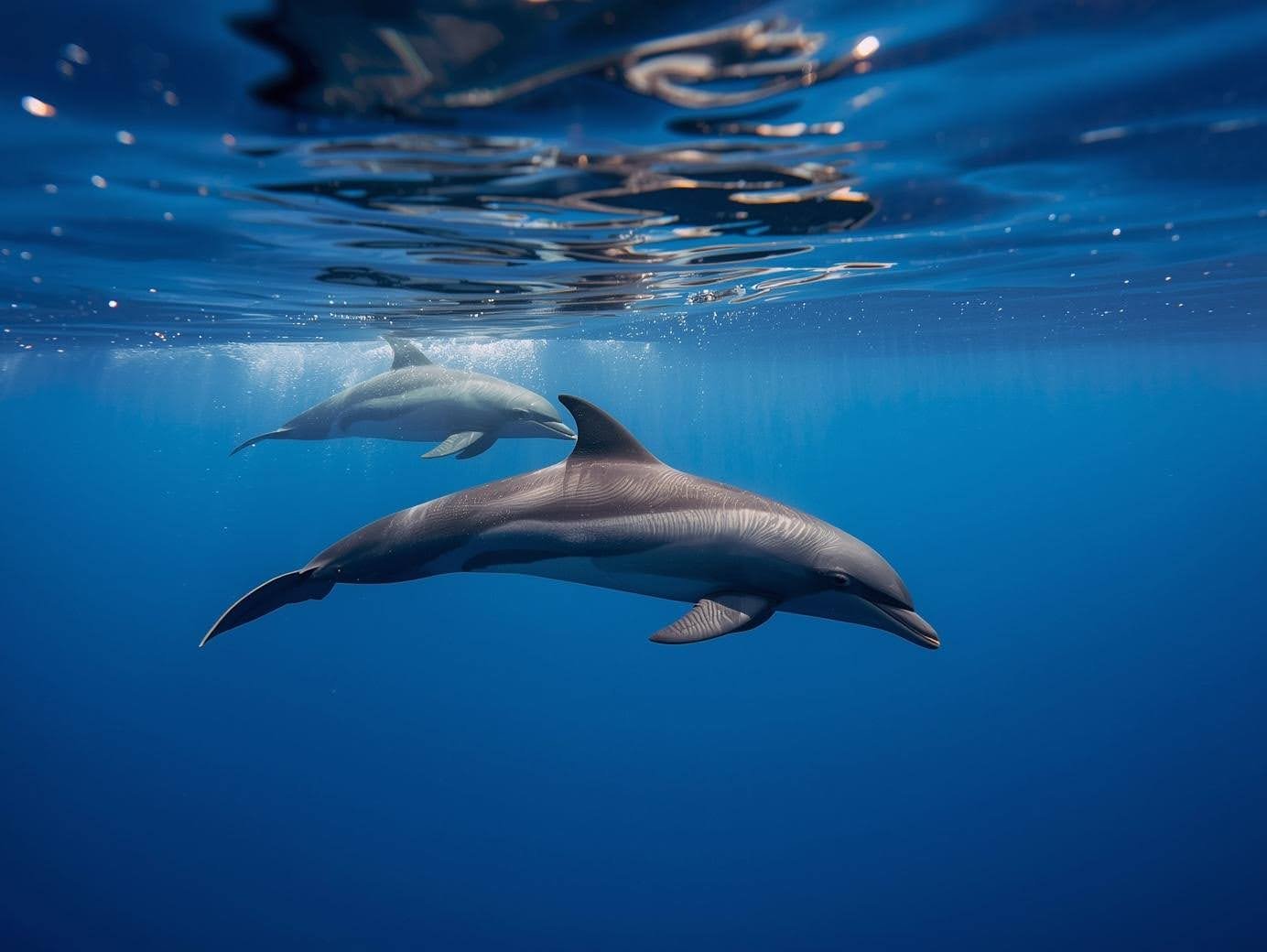
Responsible Dolphin Viewing on Oahu: Rules and Preparation

Watching wild dolphins around Oahu should begin with one decision: observe from a distance rather than enter the water to meet them. This guide covers preparation, viewing expectations and the rules that matter before you head to the coast. It does not recommend dolphin-swimming trips or compare operators.
This guide covers viewing wild dolphins only — approaching or swimming with spinner dolphins is restricted.
Hawaiian spinner dolphins are protected by a specific swim-with and approach rule. Their presence near a beach is not an invitation to swim toward them. A distant sighting, or a day without dolphins, is a normal outcome of watching free-ranging wildlife.
Know the spinner dolphin rule before you go
NOAA prohibits swimming with, approaching or remaining within 50 yards of Hawaiian spinner dolphins in the waters covered by the rule: within two nautical miles of the main Hawaiian Islands and in designated waters between Maui, Lanai and Kahoolawe. Intercepting their path is also prohibited. Read NOAA’s spinner dolphin information for the scope of the protection.
Do not treat a recommended distance for another species as permission to disturb it. NOAA recommends staying at least 50 yards from dolphins and small whales generally; the spinner dolphin requirement is a species-specific legal restriction. All marine mammals are protected from harassment. If you cannot confidently identify the species, keep your distance instead of using uncertainty to justify getting closer.
Choose a viewing position, not an encounter
A shore-based visit lets you watch without deliberately entering the animals’ habitat. Choose a lawful public viewpoint with secure footing, room to stand back from the edge and a clear route back. Do not cross barriers, enter private property or climb onto exposed rocks for a better view. A coastal location mentioned in a travel article is not confirmation of public access or safe conditions.
If dolphins are visible in the distance, use binoculars or a camera’s zoom. Avoid walking along an unsafe shoreline to keep pace with a pod. For broader ideas that do not depend on seeing wildlife, use our Oahu activity overview and keep an alternative plan.
Why daytime rest matters
Spinner dolphins feed at night and use sheltered coastal areas during the day for rest and other essential activities. Repeated close approaches can interrupt that rest. An animal swimming away does not make an encounter harmless: moving away itself can cost energy and disrupt behavior. NOAA explains this concern in its questions and answers about the spinner dolphin rule.
Movement, a jump or a dolphin facing a person should not be interpreted as an invitation. A casual observer cannot reliably judge the animal’s condition or the cumulative disturbance it has already experienced. For the biological context, read our guide to dolphin behavior; this page stays focused on your viewing decisions.
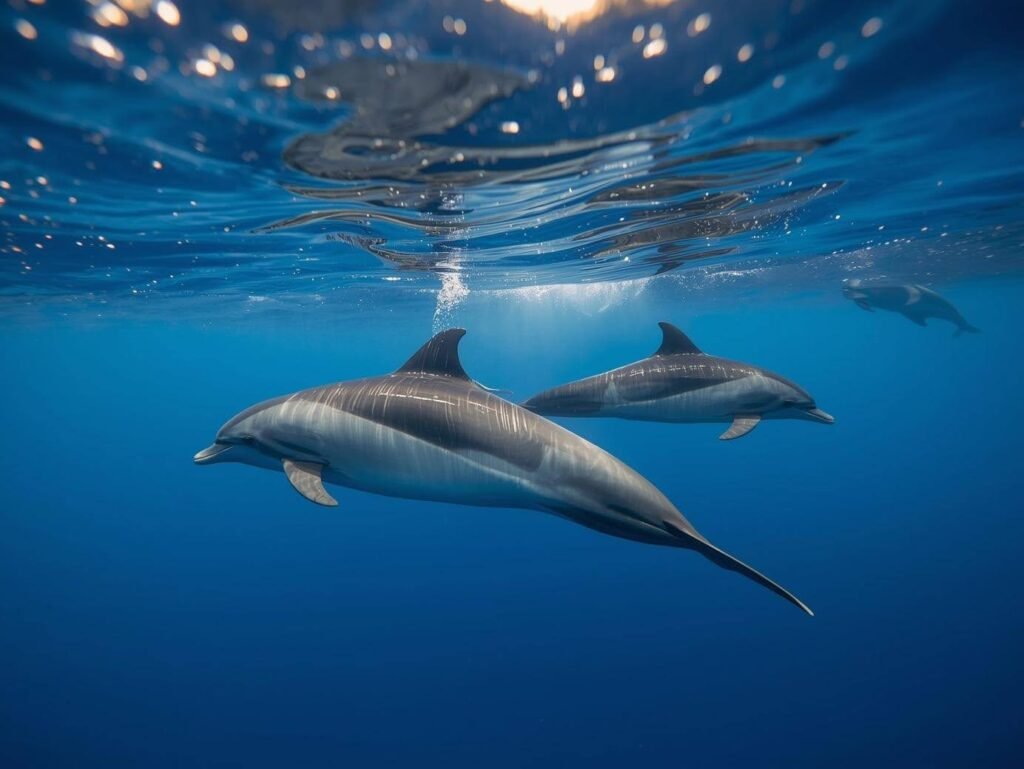
What to do if a dolphin comes close
Do not pursue, touch, feed or try to attract a dolphin. NOAA states that a person inadvertently within 50 yards of a spinner dolphin must make no effort to engage or pursue it and must take immediate steps to move away. Vessel situations have specific exceptions, including normal navigation and anchored vessels; read the official rule rather than applying swimmer instructions to every situation.
Do not enter the water ahead of a pod, wait in its route or use fins to keep up. Equipment does not turn a close approach into responsible observation. Photographs and videos should document a distant sighting, not become a reason to crowd the animals.
Prepare for the coast and the weather
Check the National Weather Service Honolulu forecasts and advisories for the area you intend to visit. Wind, waves, rain and visibility may change your plans. On arrival, follow signs and local instructions, and leave an exposed viewing spot if conditions worsen. A calm-looking patch of water is not an assessment of the whole shoreline.
Take drinking water, sun protection and footwear appropriate to the access route. A hat, protective clothing, binoculars and a charged phone are more useful for shore observation than snorkeling gear. Keep bags and loose items secure so they cannot blow into the sea. Use the packing list generator as a starting checklist, then adapt it to the actual location and forecast.
For children, agree on a viewing boundary before arriving and choose a place where an adult can supervise comfortably. Explain that wildlife may not appear and that getting closer is not the goal. If access or conditions do not suit someone in your group, choose another activity rather than trying to make the viewpoint work.
Set realistic expectations
There is no reliable appointment time for wild dolphins. This guide does not promise a particular bay, hour or season will produce a sighting. Plan your day around an accessible coastal visit that you would enjoy even without dolphins, and avoid repeatedly moving between sensitive places in pursuit of an encounter.
A photograph taken by somebody else does not establish where you may stand, whether access remains open or how close they were allowed to get. Use current official information and on-site notices for those decisions. A marketing description or an old travel video cannot override wildlife protections.
Photography without approaching
Prepare your camera settings before you begin watching so you can remain aware of your footing and surroundings. Use optical zoom if available; accept a wider photograph when distance makes a close-up impossible. Do not lean over cliffs, climb barriers or move toward the water while looking through a viewfinder.
Keep the viewing session brief and avoid drawing a crowd around a resting group. NOAA’s Hawaii wildlife-viewing guidance recommends distance, limited viewing time and no touching, chasing or feeding. These principles apply even when you are excited about a rare sighting.
Before leaving for a dolphin-viewing visit
Confirm the viewing area is publicly accessible, check local conditions, pack what you need for the coast and agree on an alternative activity. At the location, stay behind warnings and barriers, observe at a distance and avoid interfering with the animals’ route. Leave if the conditions or crowding make responsible observation impractical.
For the wider environmental question, continue to our discussion of dolphin disturbance and conservation. Keeping preparation, behavior and environmental impact in separate guides makes it easier to find the information you need without repeating the same advice.