What Does Kona Mean in Hawaiʻi?

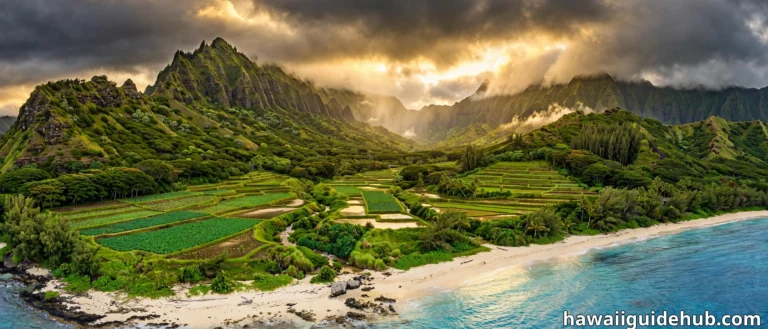
Ask a room of visitors what Kona means and most will answer with a place: the sunny town on the west coast of Hawaiʻi Island, the coffee, the Ironman finish line. All of that is true, but it is only the surface. Kona is first a Hawaiian word, and its meaning explains the place better than any map can. In Hawaiian, kona means the leeward side of an island, the side sheltered from the prevailing trade winds. Once you understand that one word, the dry golden coast, the calm morning ocean, the coffee farms in the afternoon cloud, and even the winter storms that share its name all fall into place.
This guide covers the dictionary definition, the word’s Polynesian roots, the Kona districts, what a Kona wind and a Kona low are, and respectful usage.
The Short Answer: Kona Means Leeward
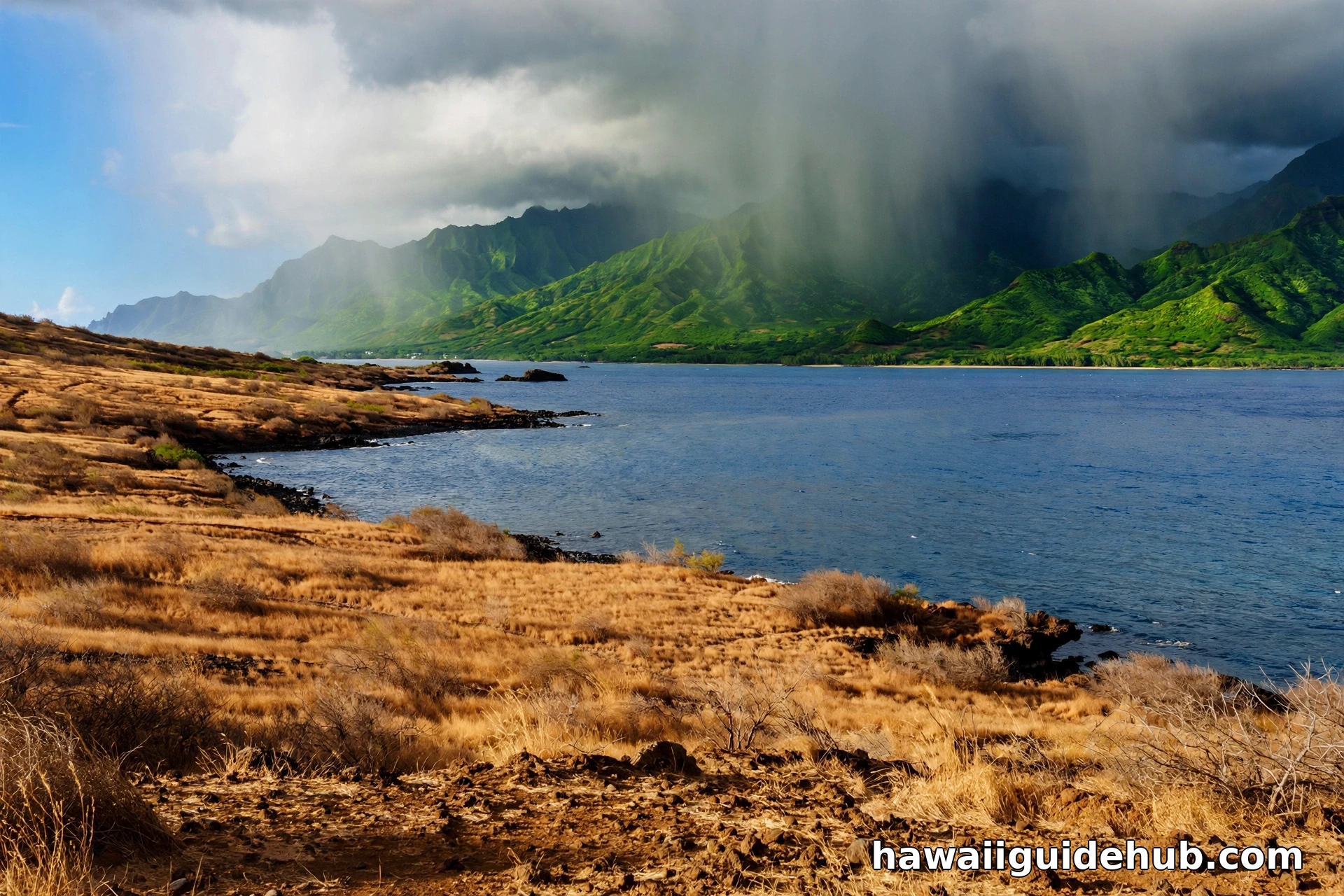
The Hawaiian Dictionary by Mary Kawena Pukui and Samuel Elbert, the standard reference for the language, defines kona first as the leeward sides of the Hawaiian Islands. Leeward is a sailor’s word. It means the side facing away from the wind, the sheltered side. In Hawaiʻi the prevailing winds, the trades, blow steadily from the northeast. The mountains of each island force that moist air upward, the air cools, and most of the rain falls on the north and east coasts. By the time the same air crosses the ridgelines and descends on the south and west coasts, it has been wrung dry and warmed. That sheltered, sunnier side is kona.
The opposite word matters just as much. Koʻolau means windward, the wet side that faces the trades directly. Kona and koʻolau are a pair, and traditional Hawaiian geography is built on the pair. Every major island was divided into districts, called moku, and on island after island the leeward district carried the name Kona while the windward district carried a koʻolau name. There was a Kona district on Oʻahu, where Honolulu now sits, a Kona on Molokaʻi, and a Kona on Kauaʻi as well. When people today say Kona and mean the Big Island town, they are using the most famous survivor of a naming system that once covered the whole chain.
| The word | Kona (pronounced KOH-nah) |
| Core meaning | Leeward: the side of an island sheltered from the trade winds |
| The opposite | Koʻolau: windward, the wet side facing the trades |
| Why it is dry | Mountains wring moisture from trade wind air before it reaches the lee side |
| The famous Kona | The North and South Kona districts on the west coast of Hawaiʻi Island |
| The main town | Kailua-Kona, often shortened to Kona in everyday speech |
| Other Kona meanings | A southerly wind, and the stormy weather pattern named for it |
Where the Word Comes From
Kona is an old word, older than the Hawaiian language itself. Linguists trace it to the Proto-Polynesian word tonga, meaning south or the southerly direction. As Polynesian voyagers settled new islands, the old t sound softened to k in Hawaiian, and tonga became kona. The country of Tonga, far to the south in Polynesia, carries the same root in its name. In Hawaiian the word kept both layers of meaning: south, and the leeward side, which on most Hawaiian islands is also the southern and western side, the side turned away from the northeastern trades.
That double meaning explains a small puzzle in older Hawaiian texts and place names. Kona can describe a direction, a wind, a district, or a quality of weather, and the right translation depends on context. Parker Dictionary, another early reference, lists kona as the south, the southwest wind, the heavy rain that can accompany that wind, and the south or southwest sides of the islands. Modern speakers mostly use it in the geographic sense, but the weather sense never disappeared, which is why forecasters still talk about Kona winds.
Kona the District: North Kona and South Kona
On Hawaiʻi Island, the Kona moku runs along the western coast in the lee of two enormous volcanoes, Hualālai and Mauna Loa. Hawaiʻi County now administers it as two districts, North Kona (Kona ʻAkau) and South Kona (Kona Hema). Together they stretch for roughly sixty miles of coastline, from north of Kailua-Kona down past Kealakekua Bay to the rural communities of Hōnaunau and Miloliʻi. The largest town is Kailua-Kona, and in daily speech the whole region, the town, and even the airport twenty minutes north are all simply called Kona.
Strictly speaking, that shorthand is imprecise, and residents will gently correct it. There are two towns named Kailua in Hawaiʻi, one on Oʻahu and one on the Big Island, so the Big Island town is called Kailua-Kona to tell them apart. Kona itself is the district, not the town. Saying you are driving to Kona when you mean the waterfront of Kailua-Kona is like saying you are driving to the county. Everyone understands you, but the word is doing more work than the town alone deserves.
Why the Leeward Side Shaped Kona’s History
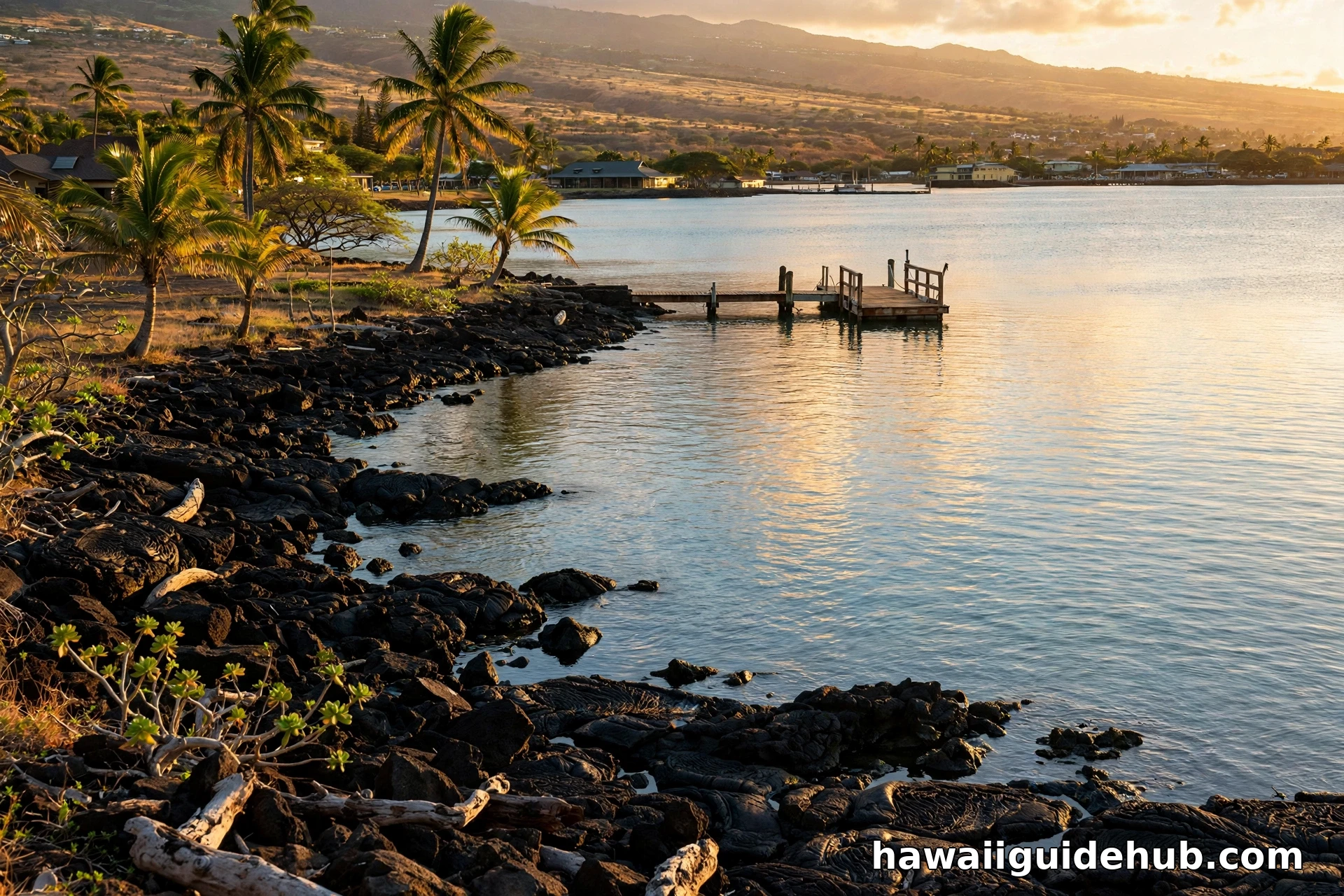
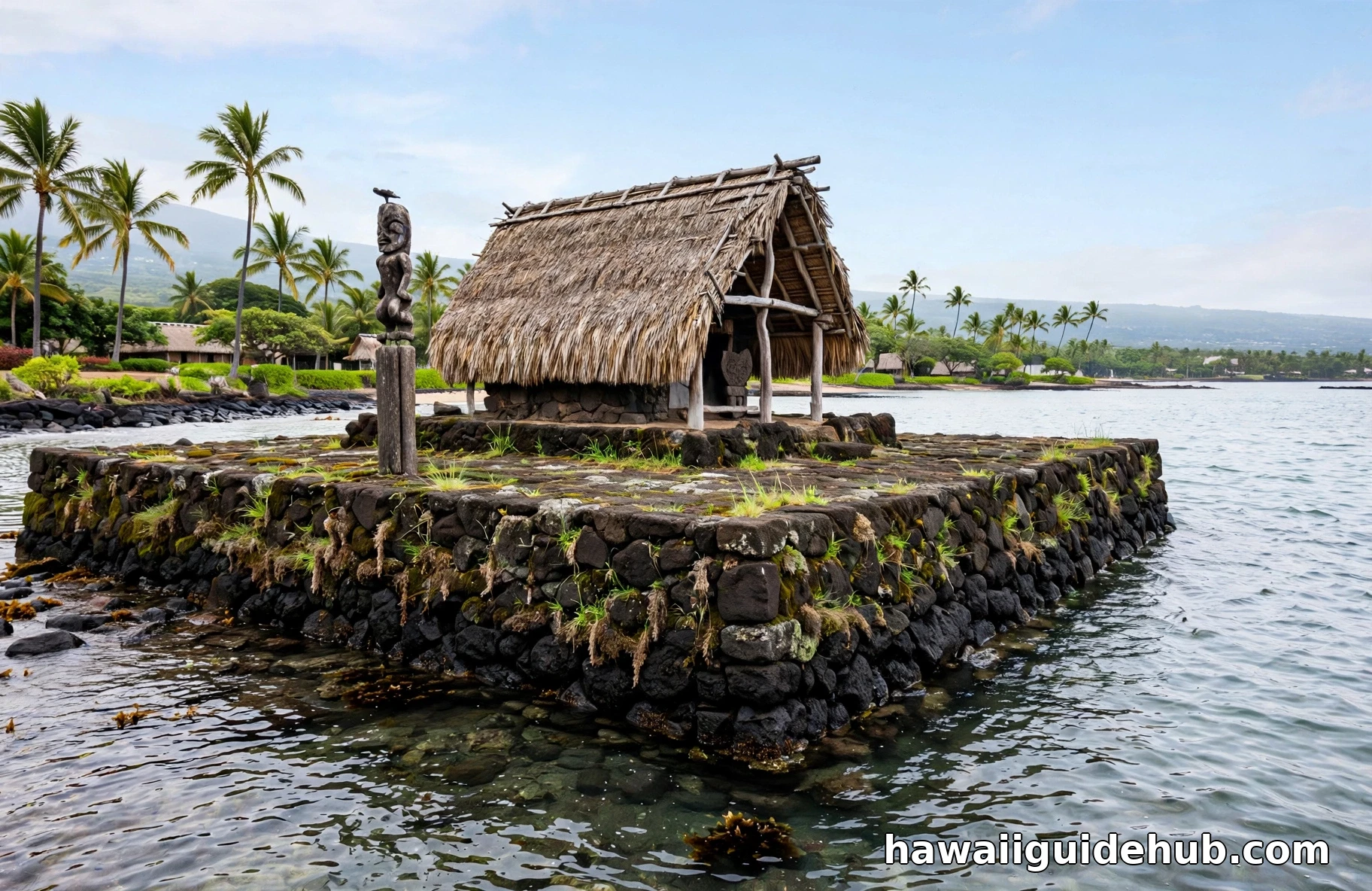
The leeward climate was not just weather. It was strategy. Calm morning seas, reliable sunshine, and protected anchorages made the Kona coast a natural seat of power. Kamehameha I, who united the Hawaiian Islands, spent his final years at Kamakahonu in what is now Kailua-Kona. The National Park Service notes that he moved his capital and residence there in 1813, restored ʻAhuʻena Heiau at the north end of Kailua Bay, and died at Kamakahonu in 1819. The site, with its reconstructed structures beside the modern pier, is a National Historic Landmark, and it exists where it does because the kona side offered shelter, food from the reefs and upland farms, and safe landing for canoes in almost any season.
The same shelter shaped what came later. Captain Cook was killed at Kealakekua Bay in South Kona in 1779. The first American Protestant missionaries landed at Kailua Bay in 1820. Mokuʻaikaua Church, its stone building completed in the 1830s, still stands in Kailua-Kona as the oldest Christian church congregation in Hawaiʻi, and Huliheʻe Palace, built in 1838, became a vacation residence for Hawaiian royalty. Again and again, history chose the leeward coast, because the leeward coast was the workable coast: dry enough to build on, calm enough to land on, and sunny enough to farm in ways the wet windward side could not match.
Kona Coffee: The Meaning in a Cup
No product carries the word further around the world than Kona coffee, and the coffee is a direct expression of the word’s meaning. On the leeward slopes of Hualālai and Mauna Loa, the Kona coffee belt occupies a narrow band of elevation where the leeward pattern produces a daily rhythm growers prize: sunny mornings, then cloud cover building over the slopes in the afternoon, shading the trees and often bringing light rain. Volcanic soil, mild temperatures that rarely swing far from the 70s and low 80s Fahrenheit, and that dependable afternoon cloud are the leeward climate at work. Coffee elsewhere on the island grows under different rules. Only coffee grown in the North and South Kona districts can legally be labeled Kona coffee, so the word on a coffee bag is a geographic claim, not a flavor note.
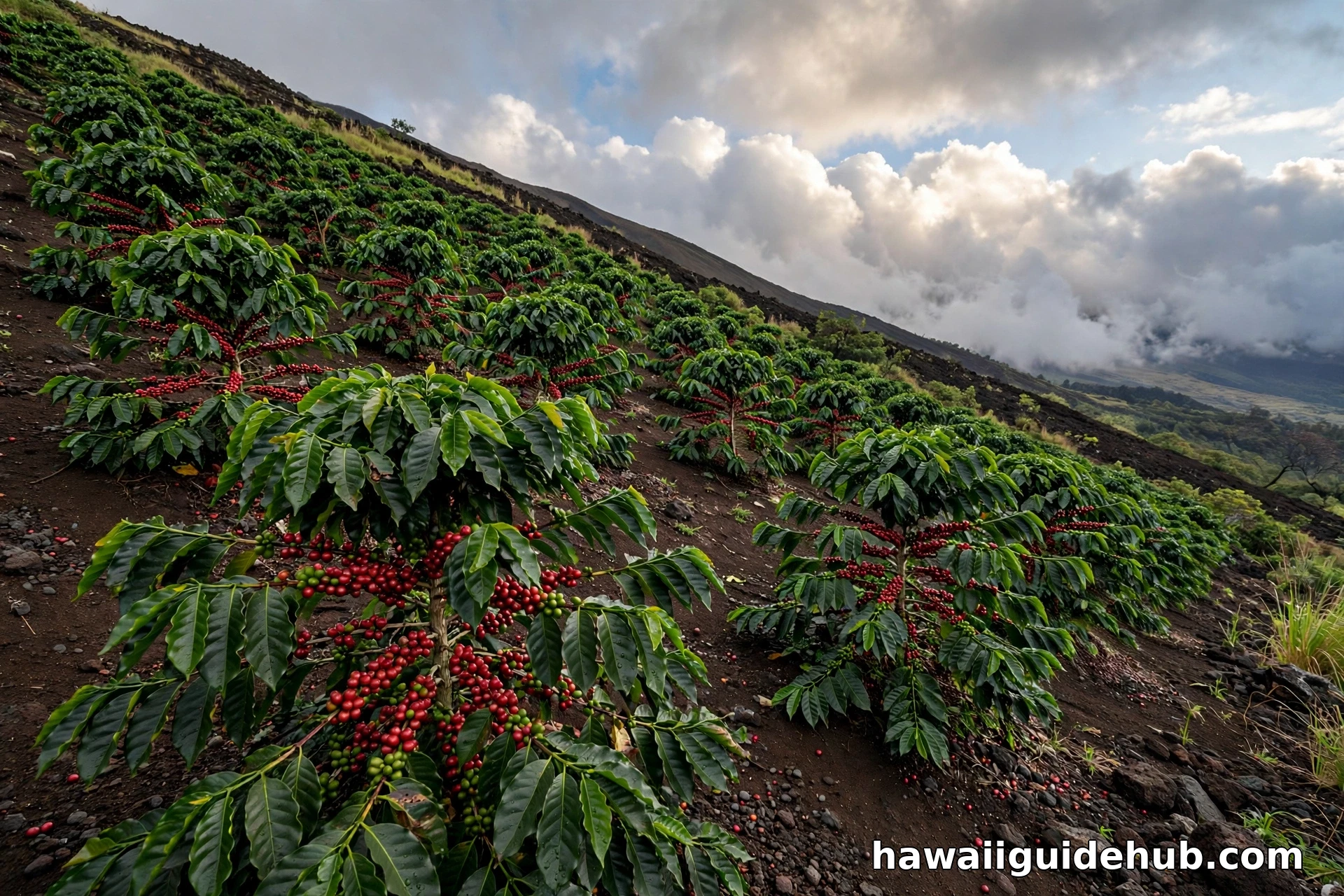
If you drive the belt through Holualoa, Honalo, and Kealakekua, you will see how completely the landscape follows the definition. Below the farms, the coast is dry and bright. In the belt itself, everything is green. A few miles east, over the ridge, Hilo side rain takes over entirely. For a deeper look at the region beyond the word, our guide to things to do in Kona covers the coast in detail, and the Kohala Coast just north shows the same leeward pattern in a drier register.
Kona Winds and the Kona Low: When the Meaning Flips
Here is where visitors get confused, because the word that means the dry, sheltered side also names Hawaiʻi’s wettest storm pattern. A Kona wind is a wind from the south or southwest, the direction that gave the word its oldest meaning. When the trades collapse and the wind swings around to blow from kona, the leeward side stops being sheltered. Moist southern air now hits the Kona slopes head on, and the sunny coast can receive heavy rain, humidity, and muggy, still air. The American Meteorological Society’s Glossary of Meteorology defines a kona as a stormy, rain-bringing wind from the southwest in Hawaiʻi, blowing in the lee of the usual trades, and notes that the word itself is the Polynesian word for leeward.
A Kona low is the larger system behind the worst of these episodes. It is a slow-moving, cut-off low pressure system that typically forms in the cooler months, roughly October through April, and stalls near the islands. Its counterclockwise flow drags deep tropical moisture over the state on southerly winds for days at a time. Kona lows bring the flooding rains, thunderstorms, and occasional hail and waterspouts that Hawaiʻi residents associate with winter, and they can even drop snow on the summits of Mauna Kea and Mauna Loa. The naming is logical once you know the root: the storm is defined by wind arriving from the kona direction, and it makes its worst mischief on the kona side that is normally dry. Everyday speech adds one more layer: Kona weather can simply mean a hot, humid, voggy day when the trades have died and the leeward air sits still, with volcanic haze from Kīlauea drifting over the Kona coast instead of being blown out to sea.
Common Misconceptions About the Word Kona
Kona is not just a town
The most common mistake is treating Kona as the name of a single town. The town is Kailua-Kona. Kona is the district and the coast, a region sixty miles long containing many communities, from Keauhou and Kahaluʻu in the north district to Captain Cook and Hōnaunau in the south. Using the full town name is more accurate and quietly appreciated by residents.
Kona does not mean coffee, beach, or sunshine
Kona is not a brand invented for visitors. Coffee, resorts, and the Ironman all borrowed a word that already carried a precise geographic meaning. When a menu or a label says Kona, it is claiming origin on the leeward coast of Hawaiʻi Island, nothing more and nothing less.
Every island has a Kona side
Visitors sometimes ask which side of Maui or Oʻahu is the Kona side, expecting a town. The honest answer is that kona describes their leeward coasts too: the sunny west and south shores sheltered from the trades. Lahaina and Kīhei sit on Maui’s kona side in the old sense, and Honolulu occupies the old Kona district of Oʻahu. The Big Island’s Kona simply kept the name in everyday use while the others faded into history and street names.
How to Use the Word with Respect
Hawaiian is a living language, and place names are part of how that language survives. A few habits go a long way. Pronounce it KOH-nah, with two even syllables, and use the ʻokina where it belongs in names like Hawaiʻi, Oʻahu, and Kealakekua, since that small mark is a true consonant in Hawaiian, not decoration. Use Kailua-Kona for the town and Kona for the district and coast. If you want a graceful place to practice, the historic sites along the Kailua-Kona waterfront reward slow attention, and learning the stories at places like Kamakahonu is exactly the kind of context our Hawaii facts guide and our explainer on the meaning of mahalo are built to support.
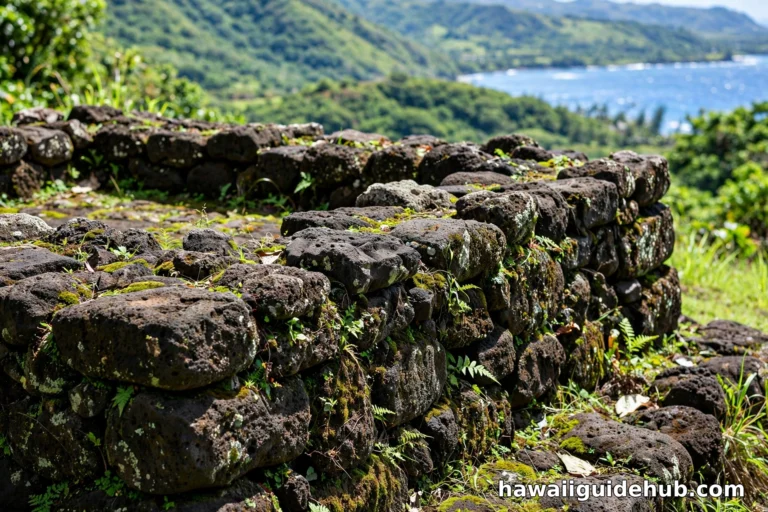
There is also etiquette in the landscape itself. The Kona coast is dense with cultural sites: heiau, royal compounds, fishponds, and burial areas, many of them unmarked to an untrained eye. Stay on paths, never move or stack rocks, and treat any stone structure as significant whether or not there is a sign. The word kona survived because the culture that named the land survived. Treating the named places carefully is part of using the word correctly.
Video: Why One Island Has Two Climates
This teaching breakdown walks through the trade winds, the mountain barrier, and the rain shadow that create the leeward Kona side, using satellite imagery and rainfall maps.
Frequently Asked Questions
What does Kona mean in Hawaiian?
Kona means leeward, the side of an island sheltered from the prevailing trade winds. Because the trades blow from the northeast, the kona side of each Hawaiian island is generally its south and west coast: drier, sunnier, and calmer than the windward koʻolau side.
Is Kona a town or a region?
Both, in everyday speech, but precisely it is a region. The Kona districts, North Kona and South Kona, cover about sixty miles of the Big Island’s west coast. The main town within them is Kailua-Kona. When someone says they are flying into Kona, they usually mean the airport near Kailua-Kona.
Why is Kona so sunny and dry?
The island’s volcanoes block the trade winds. Moist air rises on the windward side, drops its rain there, and descends dry on the leeward side. Kailua-Kona receives only a fraction of the rainfall that falls on Hilo, on the windward coast of the same island, which is one of the wettest cities in the United States.
What is a Kona low?
A Kona low is a slow-moving low pressure system, most common from October through April, that reverses the usual winds. Air flows from the south, the kona direction, bringing heavy rain, humidity, and thunderstorms, especially to the normally dry leeward coasts.
Did every Hawaiian island have a Kona district?
Yes. Traditional district divisions named the leeward district Kona on the major islands, including Oʻahu, Molokaʻi, and Kauaʻi. The Big Island’s Kona is the one that stayed in daily use, helped by the fame of its coffee and its main town.
How do you pronounce Kona?
KOH-nah, with equal weight on both syllables and a clean o sound. It comes from the older Polynesian word tonga, which is also the root of the name of the nation of Tonga.
A single Hawaiian word, properly understood, turns out to be a weather forecast, a map, a history lesson, and a coffee label at once. Kona names the sheltered side of the island, and everything famous about the place, the calm bays where kings lived, the farms in the afternoon cloud, the sunny coast that storms occasionally reclaim, grows directly out of that sheltering. Learn the word and the coast stops being a backdrop. It becomes a sentence you can read.