Hawaiian Hospitality: Traditions of Aloha and the Guest

In Hawaii, hospitality is not an industry: it’s a sacred duty. Ho’okipa, the Hawaiian tradition of hospitality, means feeding, housing, and entertaining guests as family, with no expectation of return. This guide explains Hawaiian hospitality traditions: what ho’okipa means, the aloha spirit behind it, how guests were traditionally received, and what it asks of visitors today.
This is the single complete guide to Hawaiian hospitality and ho’okipa. It covers the meaning of ho’okipa, the aloha spirit, traditional guest reception, feeding guests, the guest’s reciprocal duty, hospitality in modern Hawaii, and FAQs. Everything about Hawaiian hospitality traditions lives on this one page.
Ho’okipa: The Sacred Art of Hospitality
Ho’okipa means to host or entertain, and in Hawaiian culture it’s a kuleana, a responsibility, taken as seriously as any art form. The word carries a beautiful duality: drop the “ho’o” prefix and you get “kipa,” to visit. Hospitality, the language says, has two sides: the duty to be a generous host and the duty to be a gracious guest. It’s not transactional: there is no expectation of repayment, no hidden agenda. When Hawaiians practice ho’okipa, they do it with open hearts, expecting nothing in return.
The Aloha Spirit Behind It
Ho’okipa flows from the aloha spirit: the values Aunty Pilahi Paki articulated as akahai (kindness), lokahi (unity), ‘olu’olu (agreeableness), ha’aha’a (humility), and ahonui (patience). These aren’t slogans but practices: kindness expressed with tenderness, unity with harmony, patience with perseverance. Hawaii even wrote the aloha spirit into law (HRS 5-7.5), reminding public officials to consider it. Hospitality is what the aloha spirit does: love made practical, generosity made habitual.
How Guests Were Traditionally Received
In old Hawaii, travelers were fed and housed as a matter of course: a stranger arriving at a village would be given food, shelter, and entertainment, because tomorrow you might be the traveler. The host’s honor depended on generosity; the guest’s honor depended on graciousness. Feasts were prepared, stories exchanged, and the guest left as family. This wasn’t charity but reciprocity across time: the system worked because everyone played both roles.
The Hospitality Code: Five Principles
| Principle | What it means | How visitors experience it |
| Feed the guest | No one leaves hungry | Plate lunches, shared food, “eat!” |
| House the stranger | Shelter is a duty | Warm welcomes, genuine help |
| Entertain with spirit | Share joy, music, story | Talk story, mele, laughter |
| Expect nothing back | Giving without transaction | Kindness that surprises you |
| Guest reciprocates | Graciousness in return | Respect, gratitude, humility |
Feeding Guests: The First Duty
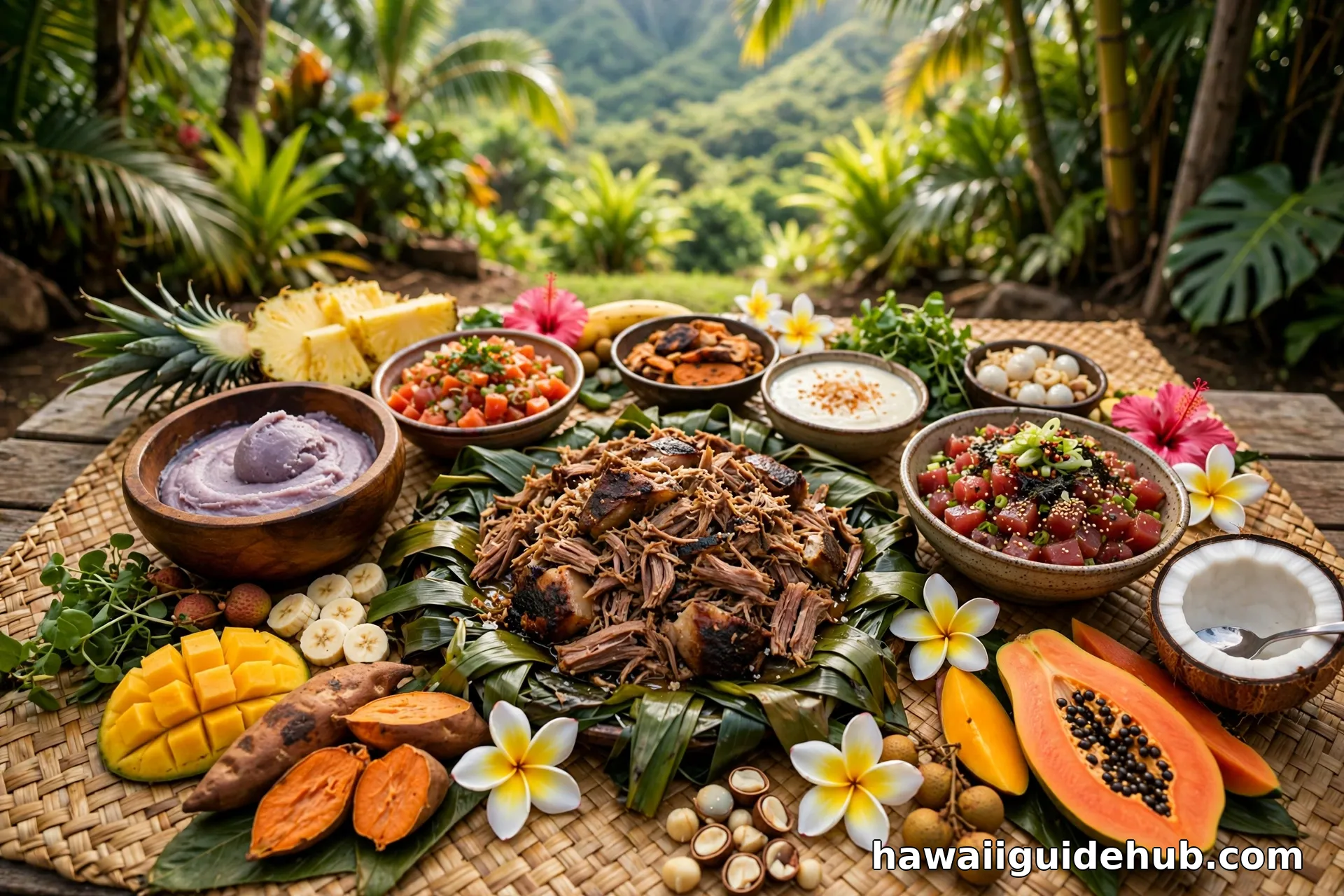
Food is the first language of ho’okipa: a guest is fed, immediately, abundantly, without being asked if they’re hungry. The auntie with the extra plate, the uncle firing up the grill, the neighbor with the mango bag: feeding is how Hawaii says you belong here. Visitors experience it at luaus, at family gatherings they’re adopted into, at the poke counter where the server adds a little extra. Never refuse food rudely; accept graciously, eat heartily, and praise the cook.
The Guest’s Duty: Kipa
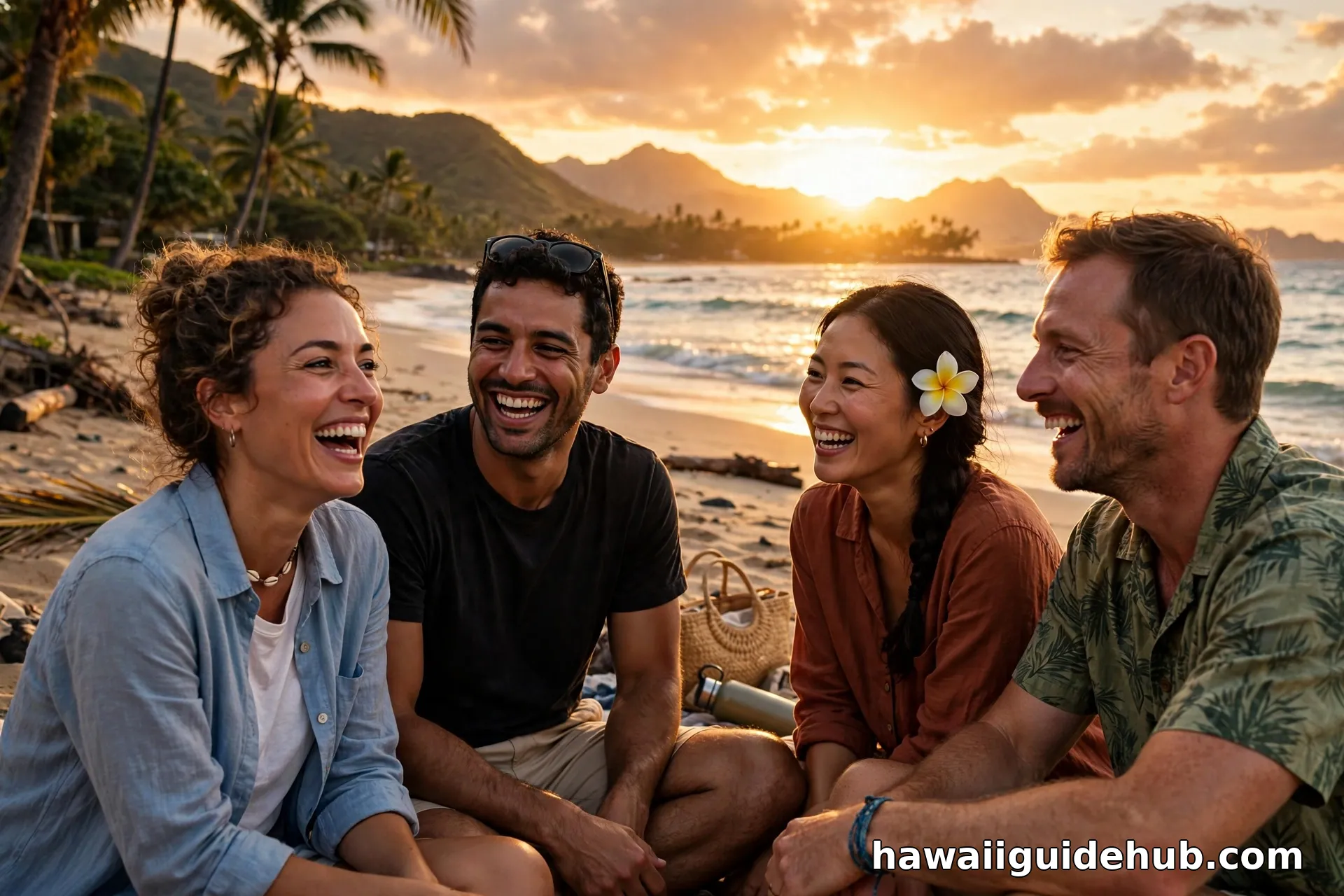
Remember the duality: kipa, to visit, carries its own kuleana. The gracious guest listens more than talks, accepts with gratitude, respects the home, and never treats hospitality as a service owed. Don’t demand, don’t complain, don’t act entitled: the hospitality is a gift, not a product. The best guests become family; the worst become stories. Choose which one you’ll be.
Hospitality in Modern Hawaii
Modern Hawaii sells hospitality by the billion: hotels, resorts, luaus, tour operators. But the real ho’okipa lives outside the industry: in the homes, the beach parks, the churches, the workplaces. The hotel lei greeting is a commercial echo of the real thing; the real thing is the stranger who helps you, feeds you, talks story with no motive. Visitors who look beyond the resort find it everywhere: Hawaii’s hospitality was never for sale, which is why it’s priceless.
The Lei: Hospitality You Can Wear
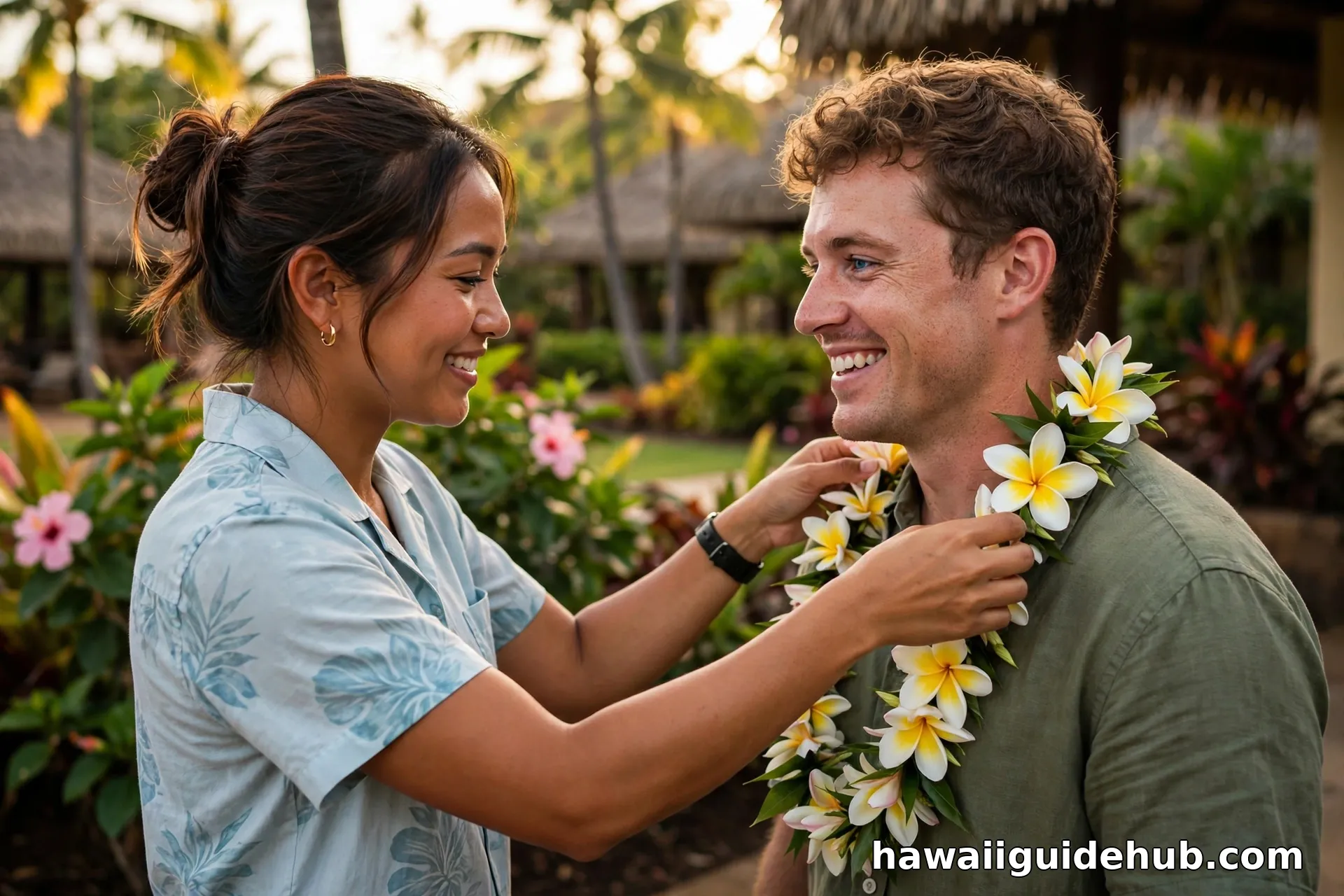
The lei is ho’okipa made visible: a circle of flowers with no beginning and no end, given to welcome, honor, and say you matter. Traditionally made by hand from plumeria, orchids, maile, or kukui nuts, the lei carries the giver’s mana and aloha. Receiving one is an honor: accept graciously, wear it proudly, and never discard it carelessly. The airport lei greeting may be commercial now, but the gesture’s roots are deep: welcome, stranger, you are family now.
Talk Story: The Art of Conversation
Talk story is ho’okipa’s entertainment arm: the unhurried, meandering conversation that is Hawaii’s favorite pastime. It’s not small talk but real talk: stories, jokes, memories, shared over hours with no agenda. The host’s job is to make the guest comfortable enough to open up; the guest’s job is to be worth the time. Visitors who learn to talk story, to slow down and share, unlock a Hawaii that hurried tourists never see.
The Luau: Hospitality as Celebration
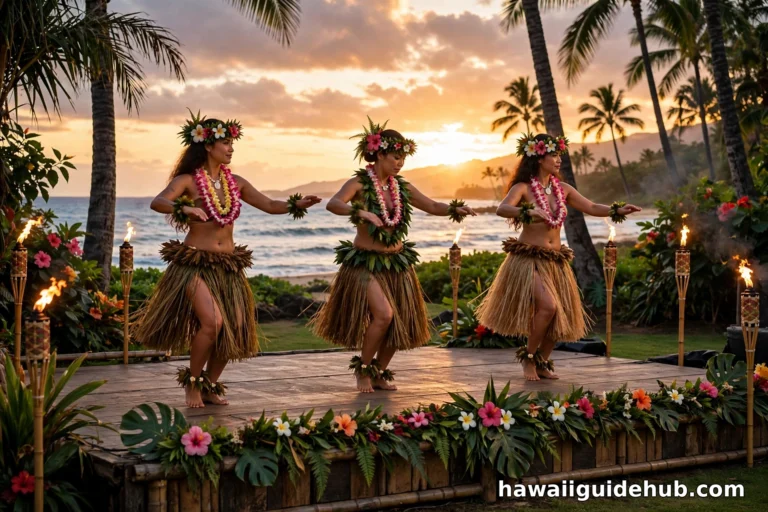
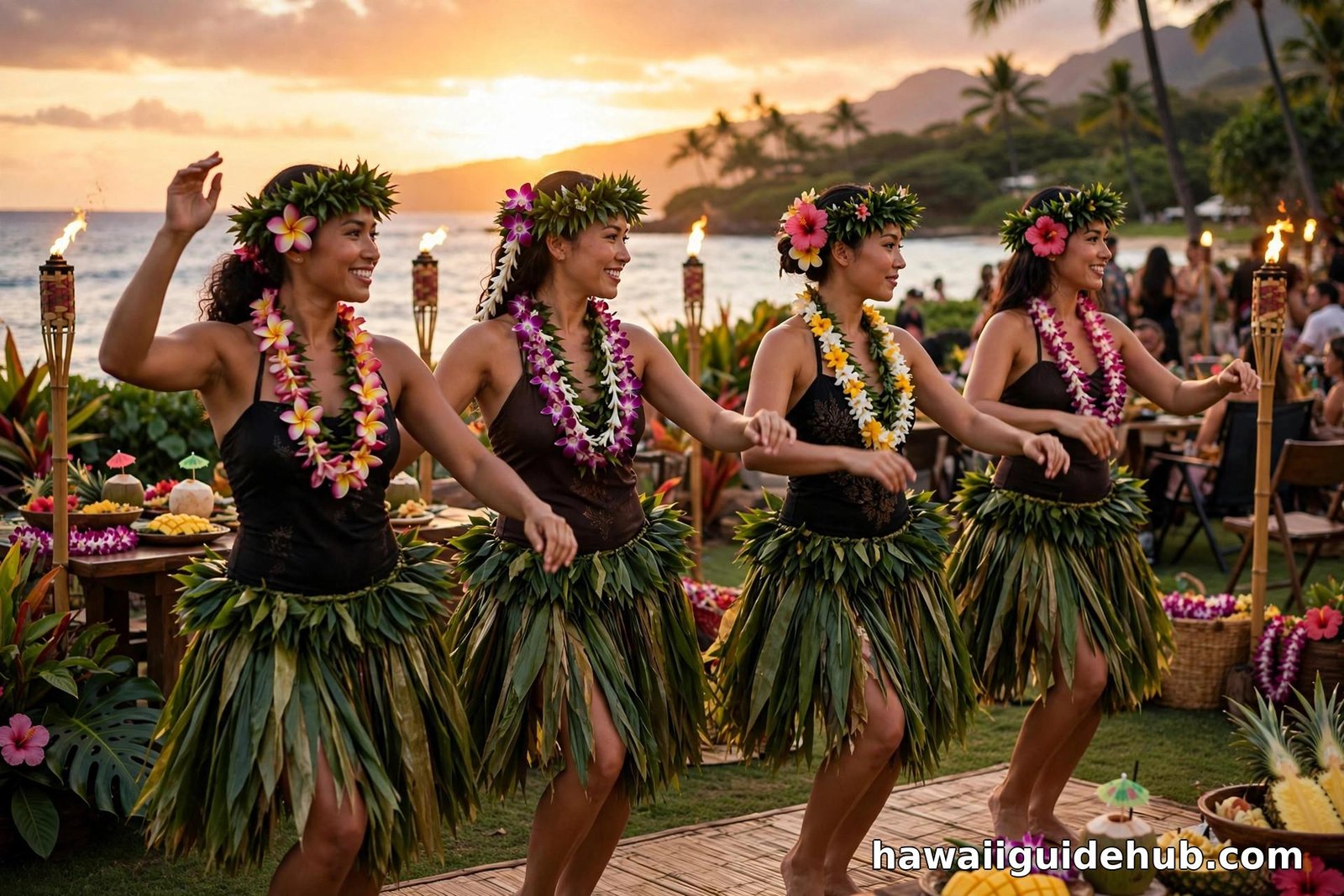
The luau is ho’okipa at scale: the traditional feast celebrating milestones, honoring guests, and binding community. The ‘aha’aina (gathering for food) centers on kalua pig from the imu, poi, lomi salmon, haupia: foods prepared with labor and love. The commercial luau gives visitors a taste; the family luau is the real thing. If you’re ever invited to one, go: it’s the highest honor local hospitality offers, and the food is just the beginning.
Music and Mele: The Soundtrack
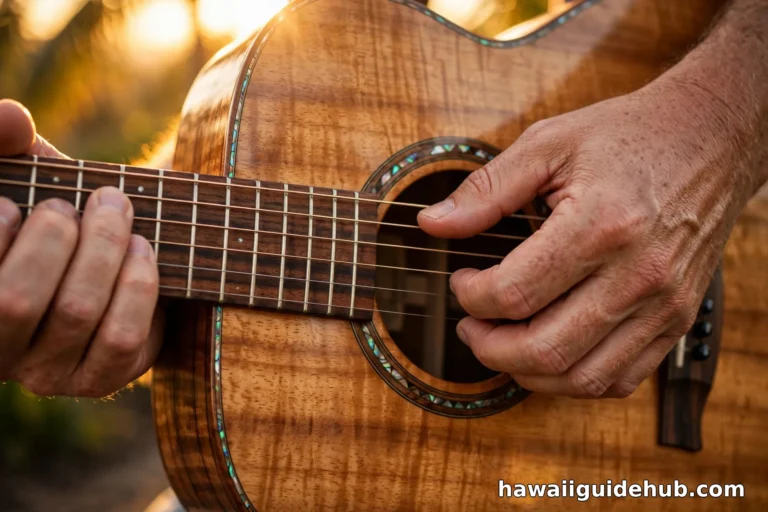
Hospitality in Hawaii has a soundtrack: the ‘ukulele, the slack-key guitar, the voices raised in mele. Music is how hosts entertain, how joy is shared, how the evening stretches past midnight. The kanikapila (impromptu jam session) is ho’okipa’s purest musical form: instruments appear, everyone plays or sings, and the night takes care of itself. You don’t need to perform: listening with evident pleasure is participation enough.
Ho’okipa in Business
Hawaii’s businesses run on ho’okipa too: the shopkeeper who talks story instead of rushing the sale, the restaurant that treats regulars like ‘ohana, the hotel worker whose warmth isn’t in the training manual. The best local businesses understand that hospitality is the product: the shave ice is good, but the smile is why you come back. Visitors should reward it: tip well, return often, and spread the word. Good ho’okipa deserves good business.
When Hospitality Is Tested
Ho’okipa is easy with gracious guests; it’s tested by the other kind. Overtourism, entitled behavior, and cultural disrespect strain the tradition: some locals have grown weary, and who can blame them? But the tradition endures because it’s not conditional: true ho’okipa doesn’t depend on the guest deserving it. The test is the point: hospitality that only works for perfect guests isn’t hospitality, it’s customer service. Hawaii keeps giving; the hope is that guests learn to receive.
Practicing Ho’okipa at Home
Take it with you: feed your guests abundantly, welcome strangers warmly, expect nothing back, and be a gracious guest in turn. Ho’okipa travels: it’s a practice, not a place. The visitors who learn it become its carriers, spreading a little Hawaii wherever they go. That’s the tradition’s genius: every guest is a future host. The circle continues, one act of generosity at a time.
The Economics of Generosity
Ho’okipa looks economically irrational: give freely, expect nothing. But it worked as social insurance: today’s host is tomorrow’s guest, and generosity circulated like currency. In a subsistence economy, sharing surplus was survival strategy: the village that fed travelers maintained the networks that fed it in famine. Modern economists would call it reciprocal altruism; Hawaiians called it Tuesday. The tradition’s durability proves its wisdom: generosity, practiced consistently, is the safest investment there is.
Ho’okipa and the Land
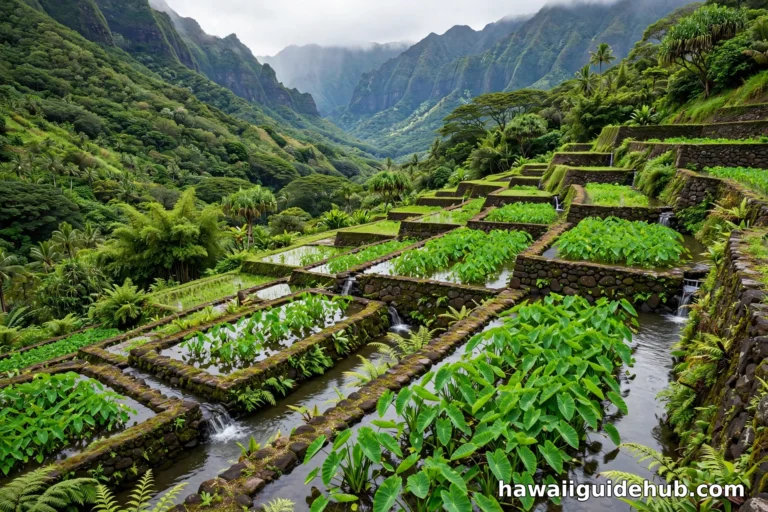
Hospitality extends to the ‘aina: the land itself is a host, and malama ‘aina (caring for the land) is ho’okipa’s ecological twin. The traditional host fed guests from the ahupua’a’s abundance: fish from the sea, taro from the lo’i, fruit from the uplands. The system worked because the land was cared for; the land was cared for because it fed everyone. Modern ho’okipa keeps the link: the farm-to-table meal, the beach cleanup, the reef-safe choices. Hosting well means hosting sustainably.
Stories of Legendary Hospitality
Every local family has the story: the uncle who fed the whole beach, the tutu who took in the stranded traveler, the neighbor who showed up with the truck before being asked. These stories are ho’okipa’s scripture: told and retold, they teach the next generation what generosity looks like. Visitors collect their own: the directions that became a tour, the breakdown that became a dinner invitation. The stories are the tradition’s memory, and they keep it alive better than any law.
Watch: Aloha Spirit
Hawaiian Hospitality FAQs
What is ho’okipa?
The Hawaiian tradition of hospitality: the sacred responsibility to host visitors by feeding, housing, and entertaining them as family, with no expectation of return. It also implies the guest’s duty to be gracious.
What is the aloha spirit?
A way of life built on kindness (akahai), unity (lokahi), agreeableness (‘olu’olu), humility (ha’aha’a), and patience (ahonui). It’s written into Hawaii state law as the state’s ethos.
How should guests behave in Hawaii?
With gratitude and humility: accept hospitality graciously, respect homes and customs, listen more than you talk, and never treat kindness as something owed.
Is Hawaiian hospitality just for tourists?
No: ho’okipa is for everyone, stranger or friend. It’s a general ethic of generosity, not a tourism product. The commercial version exists, but the real tradition is universal.
What does it mean to be treated as ‘ohana?
To be welcomed as family: fed, included, and cared for without transaction. It’s the highest form of ho’okipa, and the greatest compliment a visitor can receive.
The Gift and the Duty
Hawaiian hospitality is a circle: the host gives, the guest receives graciously, and someday the guest becomes the host. Ho’okipa asks everything and charges nothing: feed the stranger, house the traveler, share the joy, expect nothing back. Visitors who understand this don’t just have a better vacation: they participate in one of humanity’s oldest and most beautiful systems. Come as a guest, leave as ‘ohana. That’s the tradition; that’s the invitation. And here’s what the invitation really asks: to receive as generously as you are given. The auntie who presses the extra container on you isn’t being polite: she’s practicing a thousand-year-old art, and your job is to accept with both hands and a full heart. Don’t wave it off, don’t insist on paying, don’t treat it as a transaction. Just say mahalo, mean it, and remember. Then, when you’re the host, when the stranger appears at your door or the traveler looks lost on your street, you’ll know what to do. Feed them. House them. Talk story. Expect nothing. That’s ho’okipa, and it’s the most beautiful thing Hawaii ever made. Think of it the next time someone does you a kindness in the islands: the server who remembers your order, the stranger who gives you the beach shortcut, the family that waves you over to the grill. That’s not customer service. That’s not a tourism strategy. That’s ho’okipa, a thousand years old, offered to you for free. The only payment accepted is gratitude, and the only change expected is that you pass it on. The circle is unbroken; you’re in it now. So eat when you’re fed, listen when stories are told, give when it’s your turn, and never forget the taste of being welcomed like family by strangers. That’s the whole curriculum, and it takes a lifetime to graduate. The islands will be patient; ho’okipa always is. Mahalo for reading, traveler: now go and be the guest the tradition deserves, and someday, the host it remembers with genuine fondness and full plates. Aloha is a practice, not a postcard: live it every single day, everywhere you go, starting right now with the very next person you meet, no exceptions and no delay whatsoever, ever at all, period, full stop, amen, pau. For more island culture, see our volcanoes guide and Kauai guide.