Hawaii Immigration History: How the Islands Became the World’s Melting Pot

Hawaii is the most racially diverse state in America, and no accident made it so: wave after wave of immigrants, from Polynesian voyagers to missionaries, whalers, plantation laborers, soldiers, and modern migrants, built the islands’ people layer by layer. This guide traces Hawaii’s full immigration history: who came, when, why, and what they made of the islands.
This is the single complete guide to Hawaii immigration history. It covers the Polynesian settlement, European contact, the missionary era, the whaling years, the plantation labor waves, annexation and territory, statehood, the military influx, modern immigration, and FAQs. Everything about Hawaii’s immigration history lives on this one page.
The First Immigrants: Polynesian Voyagers
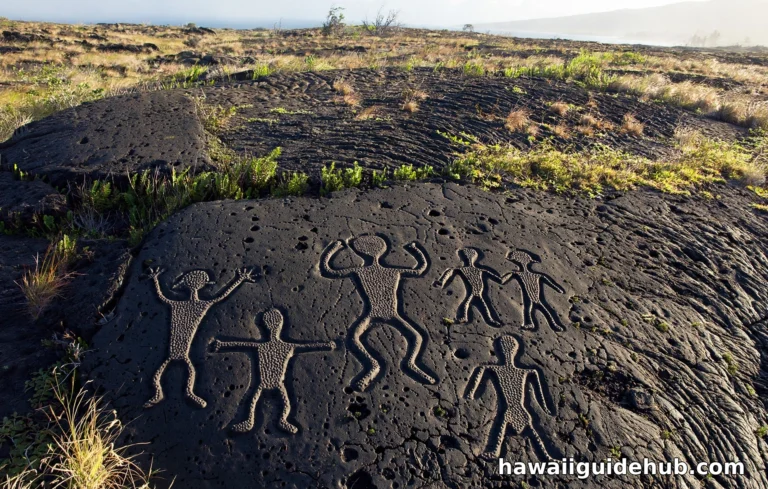
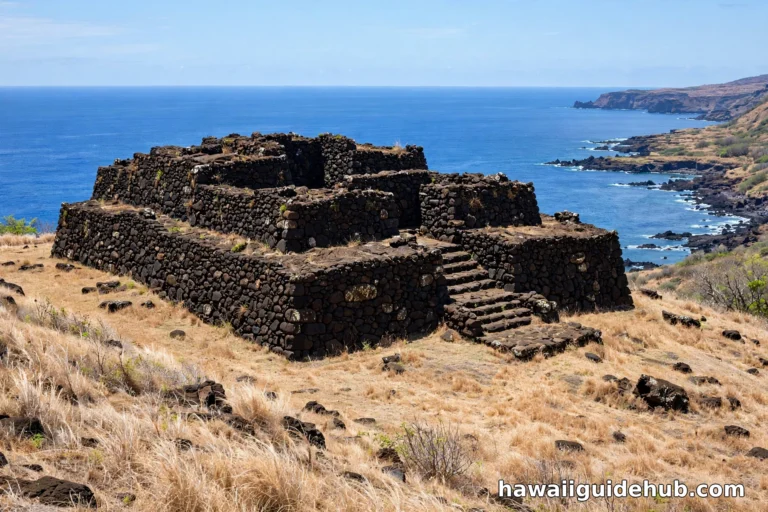
Hawaii’s first immigrants arrived by canoe: Polynesian voyagers who settled the islands around 1000 to 1200 CE, sailing north from central Polynesia with crops, animals, and families. They were not just migrants but founders: their descendants built the Hawaiian civilization, the language, the ahupuaa system, the fishponds. Every later wave arrived in a place these first immigrants had made: Hawaii’s immigration story begins with the greatest navigators in human history.
Hawaii’s Immigration Eras: Five Waves
| Era | Period | Who came | Why they came |
| Polynesian settlement | ~1000-1200 CE | Voyagers from central Polynesia | Deliberate colonization |
| Traders and whalers | 1778-1860s | Europeans, Americans, beachcombers | Sandalwood, whaling, trade |
| Missionaries | 1820 onward | American Protestants, then others | Evangelism; became planters |
| Plantation labor | 1852-1946 | Chinese, Japanese, Portuguese, Korean, Filipino | Sugar and pineapple work |
| American century | 1898-present | Mainland Americans, military, modern migrants | Annexation, war, tourism, opportunity |
Contact and Collapse: 1778
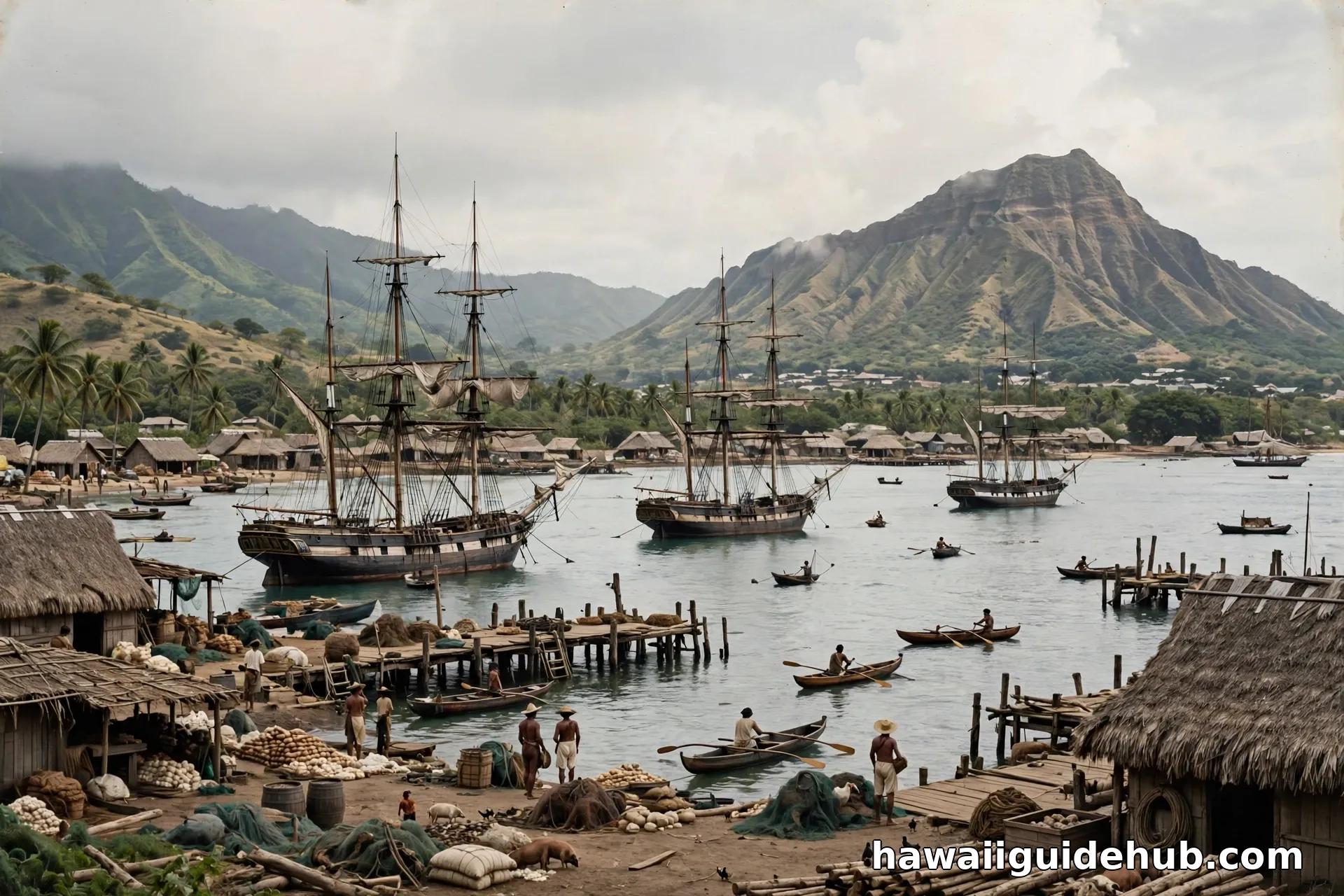
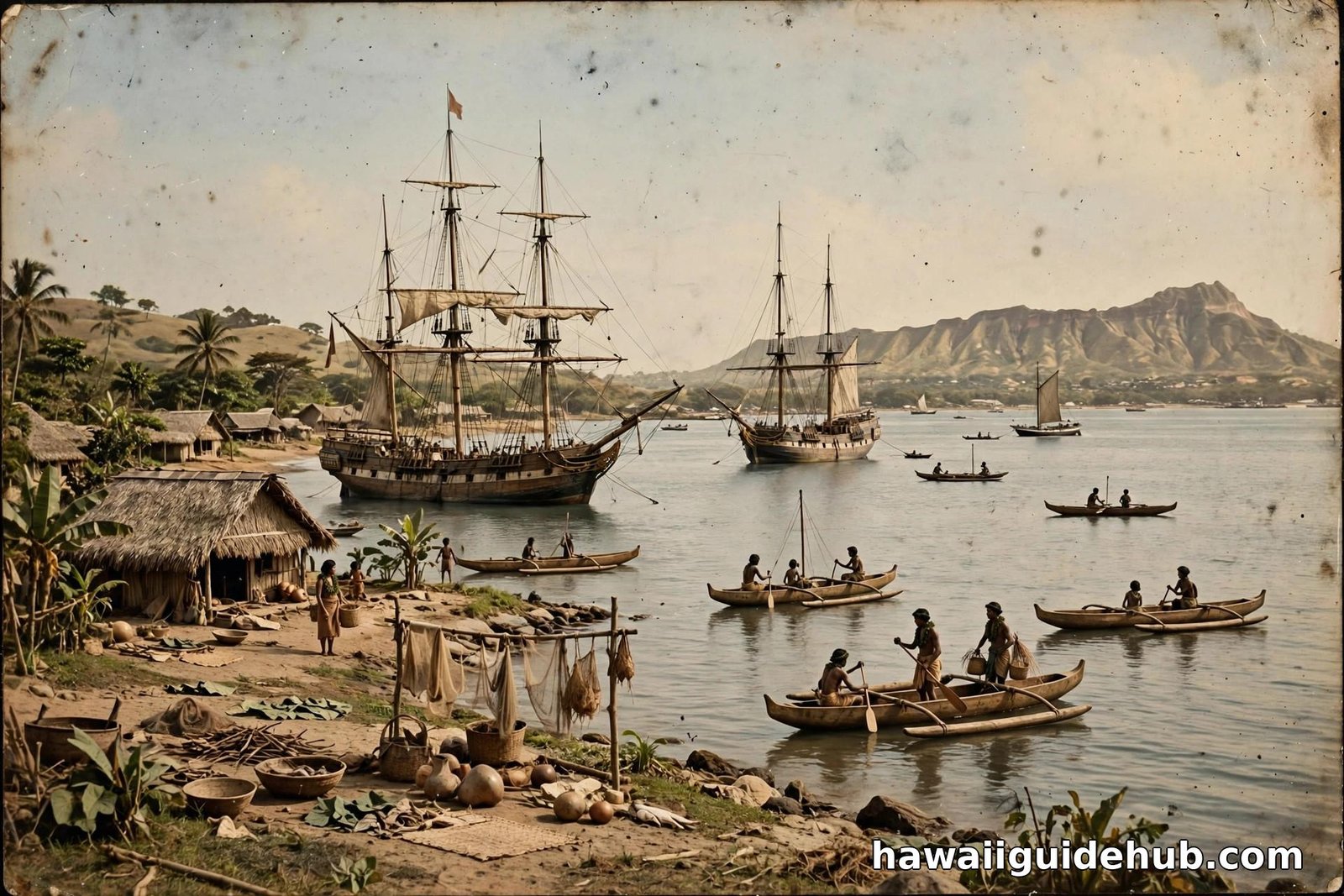
Captain Cook’s arrival in 1778 opened the floodgate: sandalwood traders, then whalers, then merchants. The ships brought goods, guns, and ideas: and diseases that devastated the Native Hawaiian population, which fell catastrophically through the 19th century. The demographic collapse is the dark foundation of everything that followed: the labor shortage that drove plantation immigration, the land alienation, the kingdom’s vulnerability. Hawaii’s modern diversity was built on a tragedy: the near-destruction of its first people.
The Missionaries: 1820
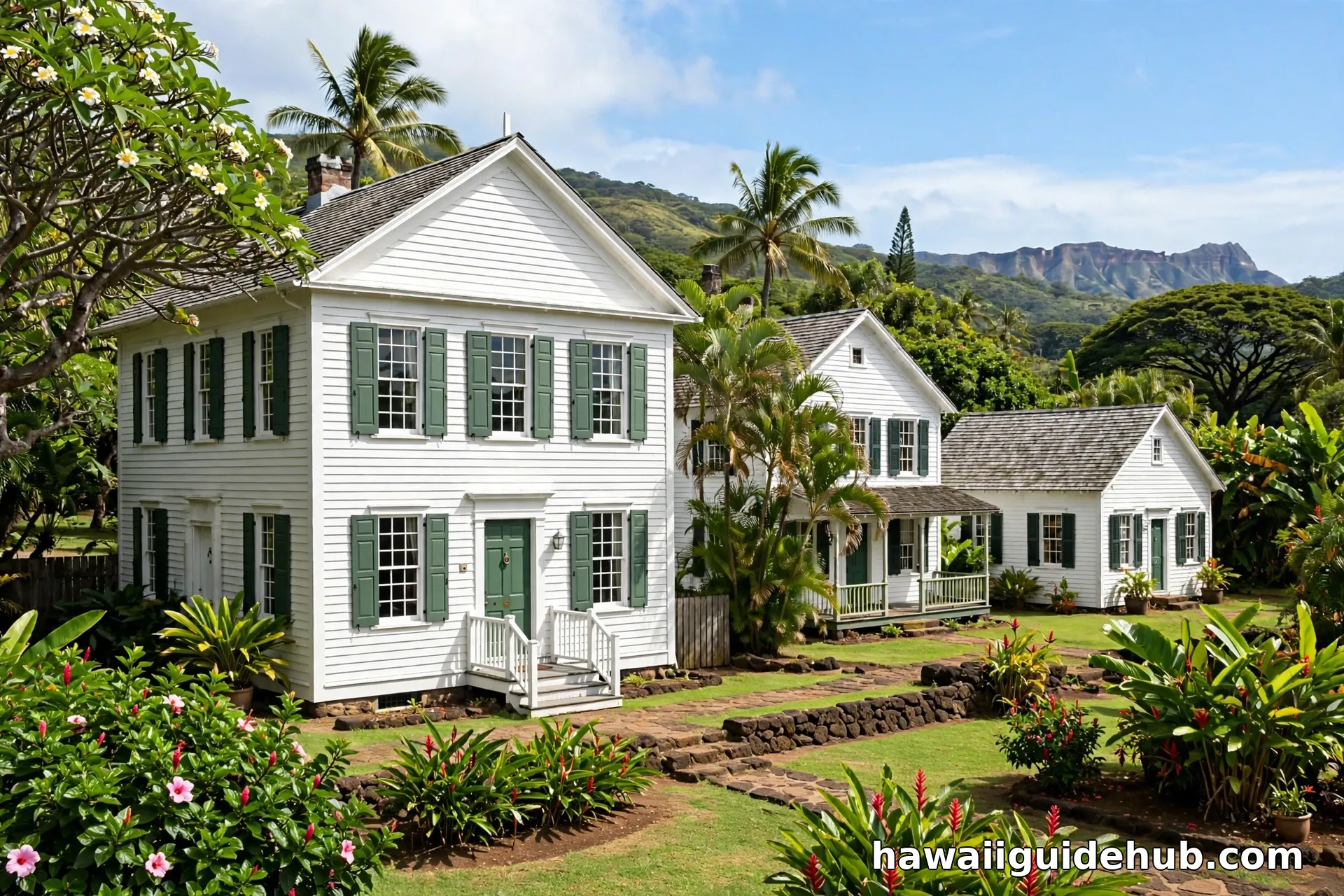
In 1820, the first American Protestant missionaries arrived, intending to save souls. They created the written Hawaiian language, founded schools, and advised the chiefs: and their children became something else entirely. The missionary sons and grandsons left the pulpit for the counting house: they became the sugar planters, the Big Five founders, the men who overthrew the queen in 1893. The missionary legacy is double: literacy and schools on one hand, land alienation and the overthrow on the other. Honolulu’s Mission Houses Museum tells the story from the families’ own walls.
The Whaling Years
From the 1820s to the 1860s, Hawaii was the whaling capital of the Pacific: hundreds of ships a year anchored at Lahaina and Honolulu, and the towns grew wild around them. Whalers brought sailors from everywhere: Americans, Europeans, Pacific Islanders, Cape Verdeans, who jumped ship and stayed. Lahaina’s whaling history is still visible in its historic district. The whaling boom was Hawaii’s first mass encounter with the world’s variety: a preview of the plantation diversity to come.
The Plantation Waves
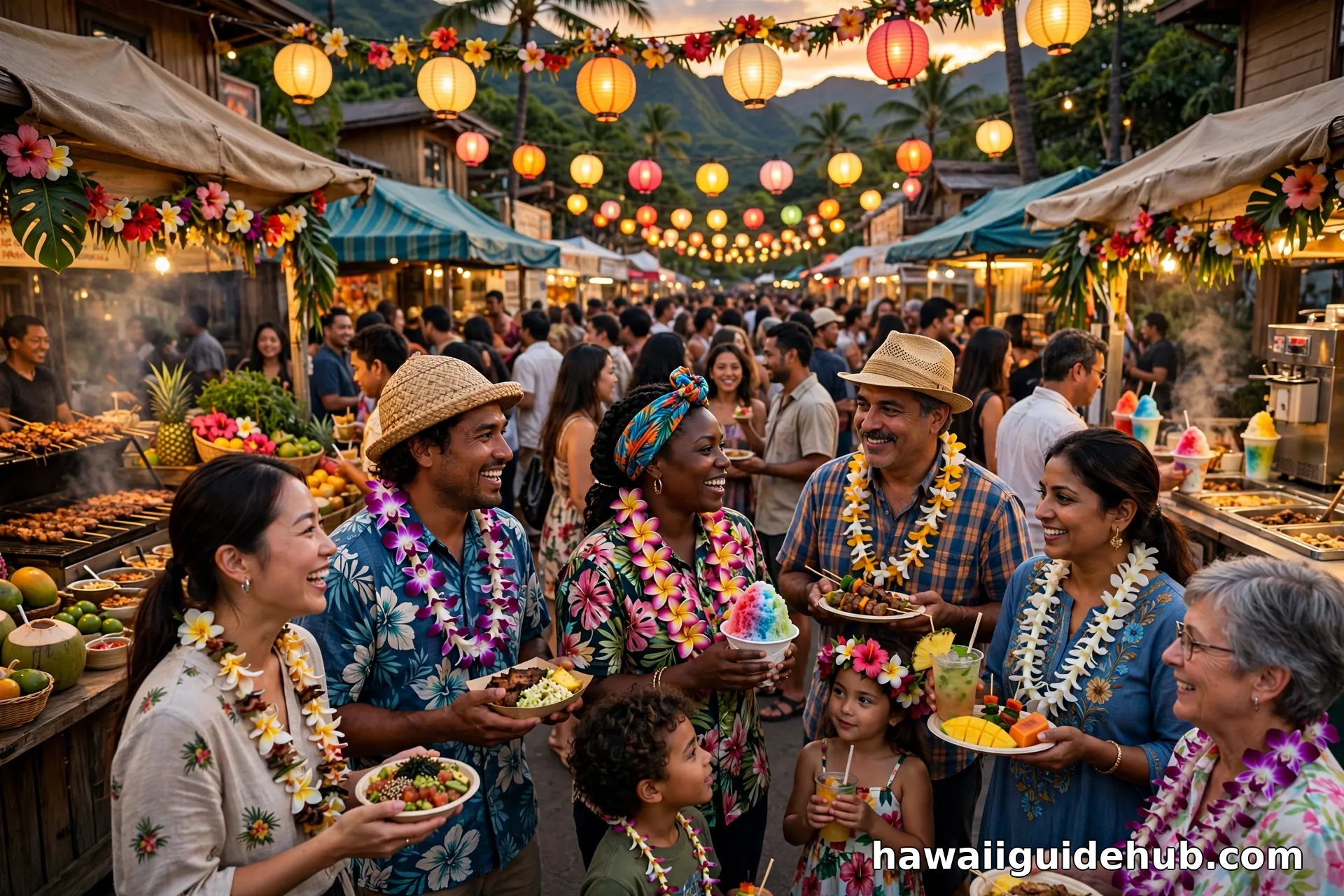
The sugar plantations’ hunger for labor drove the great immigration: Chinese from 1852, Japanese from 1868 and 1885, Portuguese from 1878, Koreans from 1903, Filipinos from 1906, over 100,000 sakadas alone. Each wave was recruited, exploited, and then rooted: the workers built temples, churches, schools, and businesses, and their children became Hawaii’s middle class. The plantation era’s full story, the camps, the strikes, the 1946 turning point, deserves its own telling: it is the engine room of Hawaii’s diversity.
Annexation, Territory, Statehood
The overthrow of 1893 and annexation of 1898 made Hawaii American, and American rule brought new migrants: mainland administrators, teachers, and businessmen. The territory years (1900-1959) saw the plantation system peak and the labor movement rise. World War II brought the military influx: hundreds of thousands of servicemen passed through, and many stayed. Statehood in 1959 confirmed the transformation: Hawaii entered the Union as its most diverse state, a fact its boosters celebrated and its native people mourned in complex measure.
The Military and Tourism Eras
Pearl Harbor made Hawaii a military hub: generations of servicemen and their families cycled through, many settling permanently. The tourism boom from the 1960s brought hospitality workers from the mainland and abroad. More recently, COFA migrants from Micronesia, Marshall Islands, and Palau have come for healthcare and work, adding new Pacific layers to the mix. Each era’s arrivals become the next era’s locals: Hawaii’s definition of “local” keeps expanding, as it always has.
Sandalwood: The First Boom and Bust
Before sugar, there was sandalwood: the fragrant heartwood that China craved for incense and furniture. From the 1790s to the 1830s, the chiefs ordered commoners into the mountains to cut iliahi, trading it for ships, guns, and luxury goods. The trade enriched the alii and indebted them; it stripped the forests and broke the kapu-era labor rhythms. By the 1830s, the sandalwood was gone: Hawaii’s first resource boom and bust, a preview of the plantation cycle. The bare mountainsides were a warning the islands would not heed for another century.
The Chinese Merchants of Chinatown
Not all Chinese immigrants stayed in the fields: many became merchants, building Honolulu’s Chinatown into a commercial and cultural center. The 1900 Chinatown fire, a controlled burn against bubonic plague that escaped and destroyed 38 acres, is a landmark of the era’s racial politics. Chinatown rebuilt and endures: its markets, temples, and restaurants are among Honolulu’s treasures. The Chinese-Hawaiian story is one of rapid mobility: from contract labor to commercial leadership in a generation.
The Bayonet Constitution and the Overthrow
Immigration and politics collided in the 1880s and 1890s. The Bayonet Constitution of 1887, forced on King Kalakaua by the missionary-descended planters, stripped the monarchy of power and restricted voting. When Queen Liliuokalani tried to restore the constitution, the planters overthrew her in 1893: the Committee of Safety, backed by U.S. Marines, ended the Hawaiian Kingdom. Annexation followed in 1898. The overthrow was an immigration story in reverse: the descendants of immigrants seizing the state from its native rulers. The Apology Resolution of 1993 acknowledged the wrong; the wound remains.
The Territory Years: 1900-1959
As a U.S. territory, Hawaii lived under plantation rule: the Big Five’s Republican machine controlled politics, labor was suppressed, and the islands’ diversity was managed, not celebrated. But the territory years also built the foundations of modern Hawaii: the public schools that educated the immigrants’ children, the unions that organized them, the 442nd that proved their loyalty. The territory was a cocoon: inside it, the plantation workers’ children were becoming the people who would transform the islands.
Pearl Harbor: December 7, 1941
The attack on Pearl Harbor was an immigration story’s darkest chapter: Japanese Americans, many the children of plantation workers, suddenly suspect in their own home. Unlike the West Coast, Hawaii did not mass-incarcerate its Japanese population: the islands’ economy depended on them, and martial law governed instead. The 442nd’s heroism answered the suspicion with blood. Pearl Harbor also cemented the military’s permanent presence: the bases, the personnel, the families, a new and continuing wave of arrivals.
The 1978 Constitution and the Renaissance
The 1978 state constitutional convention was the immigrants’ children’s constitutional moment: it established Hawaiian as an official language, created the Office of Hawaiian Affairs, and protected traditional rights. The Hawaiian renaissance, language, voyaging, hula, coincided with the political maturation of the plantation descendants. The convention wrote the new Hawaii into law: multicultural, labor-strong, and reckoning with its native roots. The waves had built something none of them had planned: a society negotiating its past honestly.
The Portuguese: From Fields to Ranching
The Portuguese, some 16,000 from Madeira and the Azores between 1878 and 1913, brought more than labor: they brought the braguinha, the small guitar that became the ukulele, and malasadas, the fried dough now synonymous with Hawaii. Many left the fields for ranching, becoming paniolo and dairy farmers. The Portuguese-Hawaiian identity is a case study in assimilation’s complexity: the language faded, but the food, music, and festivals remain. The ukulele, Hawaii’s global symbol, is a Portuguese immigrant.
Korean Independence Fighters
The Korean wave, beginning in 1903, was smaller but politically charged: many immigrants were Christians fleeing Japanese colonization, and Hawaii became a base for the Korean independence movement. Syngman Rhee, South Korea’s first president, organized among Honolulu’s Koreans. The community built churches that doubled as political halls. The Korean-Hawaiian story shows immigration’s political dimension: the islands as refuge and staging ground for struggles half a world away.
What “Local” Means
In Hawaii, “local” does not mean Native Hawaiian: it means of the islands, shaped by the plantation-era mixing, speaking pidgin, eating plate lunch, belonging to the multicultural working-class culture the immigrants built. Haole means foreigner, often white newcomer; local is the identity the waves forged together. The distinction matters: it marks the difference between arriving and belonging. Every wave’s children become local; the newest arrivals are still earning it. The definition keeps expanding, as it has for two centuries. Visitors should understand the distinction: it is not about race but about belonging, about whether the islands have shaped you or you are still just passing through. Respect it: the local identity was built by people who suffered for it, in the canefields and the camps, and it is not a costume for tourists to try on. The kindest thing a visitor can do is listen: to the stories, the accents, the pride underneath. The waves built this place; the least the rest of us can do is hear them out, and the most we can do is honor what they built, every single blessed day.
Watch: The Impossible Rise of Honolulu
Hawaii Immigration History FAQs
Who were Hawaii’s first immigrants?
Polynesian voyagers who settled the islands around 1000 to 1200 CE, sailing from central Polynesia. Their descendants built Hawaiian civilization.
When did the missionaries arrive?
1820: the first American Protestant missionaries. They created written Hawaiian and founded schools; their descendants became the sugar planters who overthrew the monarchy.
Why is Hawaii so ethnically diverse?
Successive immigration waves: Polynesian settlers, European and American traders and whalers, missionaries, then over 300,000 plantation laborers from China, Japan, Portugal, Korea, and the Philippines, plus military and modern migrants.
What is the largest ethnic group in Hawaii?
No group holds a majority: Hawaii is a true plurality society, with large Asian, Native Hawaiian and Pacific Islander, white, and mixed-race populations. It is the most diverse state in the U.S.
Who are the COFA migrants?
Migrants from the Federated States of Micronesia, Marshall Islands, and Palau, who may live and work in the U.S. under the Compacts of Free Association. Many have settled in Hawaii for healthcare, education, and work.
The World’s Melting Pot
Hawaii’s immigration history is the story of waves: each one arriving with nothing, each one remaking the islands. The voyagers, the whalers, the missionaries, the cane cutters, the soldiers, the newcomers: they built, layer by layer, the most successfully multicultural society in America. It was not peaceful and not just: the diversity was built on conquest, exploitation, and loss. But it was built, and it endures: in the food, the language, the faces, the easy mixing that visitors notice immediately. Hawaii is what happens when the whole world washes up on the same shore, and stays. Walk through Honolulu and read the waves in the streets: the temples and churches, the saimin shops and malasada bakeries, the family names telling five immigrations at once. Talk story with a kupuna and hear the plantation in the voice; eat a plate lunch and taste the camps; listen to the ukulele and hear Madeira. The waves never really stop: the families arriving now are writing the next chapter, and their children will be local, as every wave’s children have become. For more island history, see our volcanoes guide and Kauai guide.