Lihue Meaning

It is printed on your boarding pass, announced over the airplane speaker, and spelled without its marks on half the signs in town. Līhuʻe is the first Hawaiian word most visitors to Kauaʻi ever meet, and almost nobody knows what it means, how to say it, or why the little marks above and inside the word matter. This is the single complete guide to the Līhuʻe meaning: the translation, the pronunciation, the history of the town behind the name, and how to use the word respectfully.
Līhuʻe Meaning at a Glance
| Word | Detail | Say it right |
|---|---|---|
| Word | Līhuʻe | Three syllables, one glottal stop |
| Meaning | “Cold chill” in ʻōlelo Hawaiʻi (the Hawaiian language) | A name that describes the upland air |
| Pronunciation | LEE-hu-ay, with the stress on the first syllable | Stress LEE, then glide through who-ay |
| Correct spelling | Kahakō (macron) over the ī, ʻokina (glottal stop) before the e | The ʻokina is a consonant, not decoration |
| The town | County seat of Kauaʻi, second-largest town on the island | More civic center than resort town |
| Where you meet it | Kauaʻi’s main airport (LIH), the harbor district, and the civic center | You’ll say it the moment you land |
What Does Līhuʻe Mean?
Līhuʻe means “cold chill” in the Hawaiian language. That is the standard translation given by Hawaiian language references and confirmed by the Kauaʻi Historical Society and the University of Hawaiʻi at Hilo’s Hawaiian Language Center. In a place famous for warmth, the name stands out, and that contrast is exactly why visitors remember it.
The name most likely describes the feel of the place rather than the weather report. Līhuʻe sits on Kauaʻi’s eastern shore where trade-wind moisture gathers, and the early mornings can carry a cool, damp air off the mountains behind town. Hawaiian place names are famously descriptive, recording what a place looks like, feels like, or is known for, and “cold chill” fits that tradition: a name that tells you how the air feels when you arrive.
This descriptive habit runs through the whole map. Waimea means “reddish water,” Honolulu means “sheltered bay,” and Hanalei means “lei-shaped bay,” each one a small observation frozen into a name. Līhuʻe belongs to the same family: not a person’s name, not a random label, but a note about the place itself. When you understand that, the Hawaiian map starts reading like a field guide, and Līhuʻe’s “cold chill” becomes one of its more evocative entries.
How to Pronounce Līhuʻe
Say it LEE-hu-ay, with the stress on the first syllable. The “hu” is soft, and the ʻokina before the final e is a real glottal stop, the same catch in the throat you hear in the English “oh-oh.” The kahakō (the long mark) over the ī stretches that first vowel and puts the stress on it, which is why “LEE-hu-ay” is correct and “lee-HU-ay” is not.
What you will actually hear varies. Television weather presenters in Hawaiʻi have historically said “lay-hue,” while the pronunciation confirmed by the Kauaʻi Historical Society and UH-Hilo’s Hale Kuamoʻo Hawaiian Language Center is “lee-hu-ay.” When in doubt, follow the language center, not the weatherman. Locals will understand either way, but the correct version earns a small nod of respect.
| Syllable | Written | Sounds like |
| 1 (stressed) | Lī | “lee” with a long vowel |
| 2 | hu | “who” without rounding the lips |
| 3 | ʻe | “ay” as in “hay,” after a glottal stop |
Practice it slowly, LEE, then hu, then a tiny catch in the throat before ay, and speed up until it flows. Three syllables, stress on the first, and you are saying it the way Kauaʻi says it.
How to Spell It (and Why the Marks Matter)
The correct spelling is Līhuʻe, with two diacritical marks: a kahakō (macron) over the i, making it ī, and an ʻokina (glottal stop) between the hu and the e. In ʻōlelo Hawaiʻi, these marks are not decoration. The kahakō changes the vowel length and the stress of the word, and the ʻokina is a full consonant, as meaningful as any letter. Drop them and you have a different word, or no word at all.
You will still see “Lihue” without marks on airport codes (LIH), older signage, and many websites. That is a practical shorthand, not the correct spelling. Hawaiian became an official language of the State of Hawaiʻi, and modern usage increasingly restores the marks. When you write the name, write Līhuʻe. It costs you two keystrokes and it is the respectful choice.
The History Behind the Name
In ancient times, Līhuʻe was a small village in the district of Puna on Kauaʻi’s southeastern coast, in the land division (ahupuaʻa) of Kalapaki. The name was not originally from Kauaʻi at all: in 1837, Royal Governor Kaikioʻewa made the village his governing seat, moving it from Waimea, and named the town after land he owned on Oʻahu that carried the same name. According to the County of Kauaʻi’s own planning documents, the area’s older name was Kalaiamea, meaning “calm reddish brown place.”
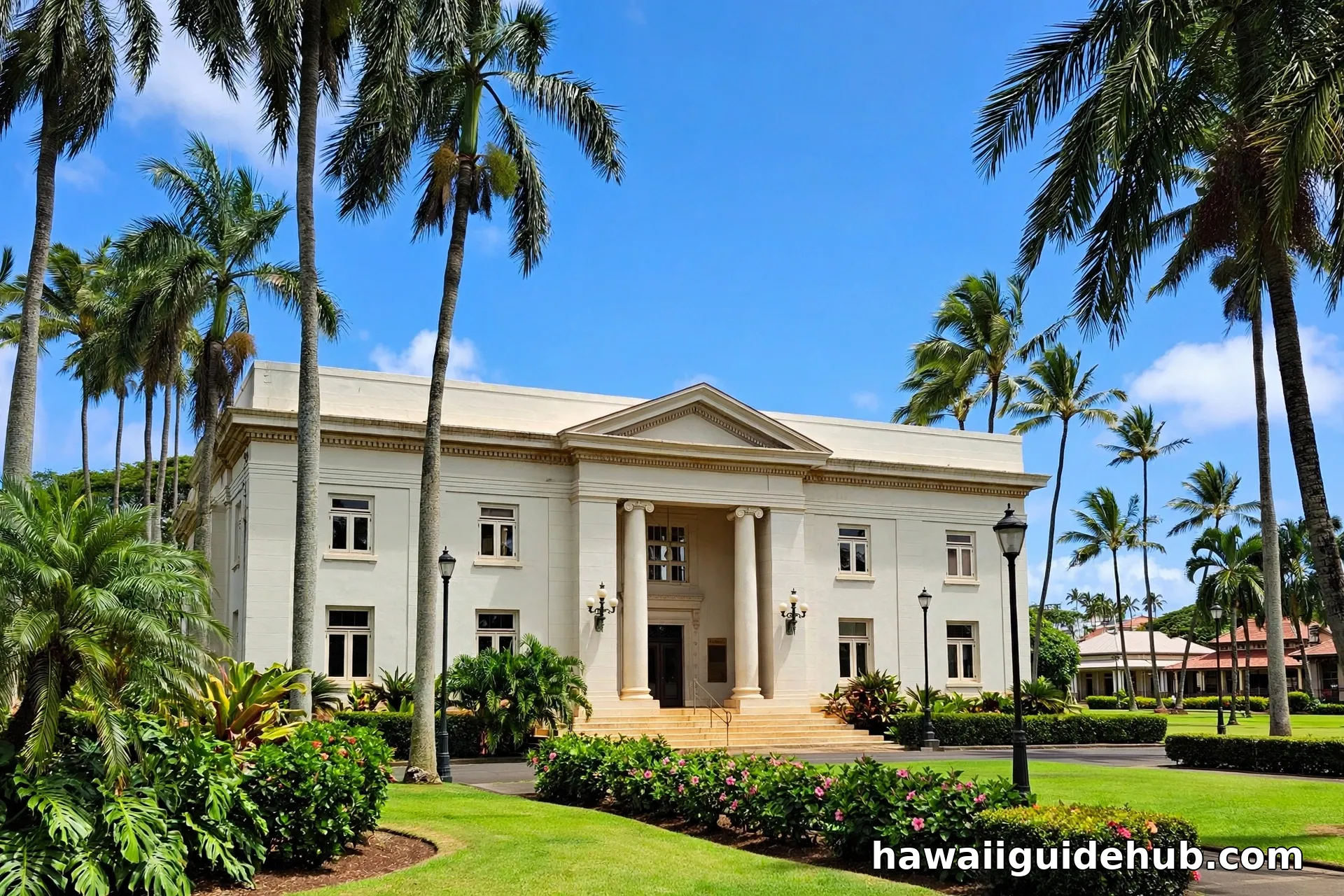
Sugar changed everything. Lihue Plantation was founded in 1849 by Henry A. Peirce, Charles Reed Bishop, and William Little Lee, and the town grew around its mill and store into the island’s commercial center. William Harrison Rice built the island’s first irrigation system in 1856, and the Lihue Sugar Mill went on to operate from 1849 until 2000, one of the longest-running mills in the islands. When the Territory created county governments in 1905, Līhuʻe became the county seat of Kauaʻi, and the historic County Building on Rice Street remains the longest-serving county building in the state.
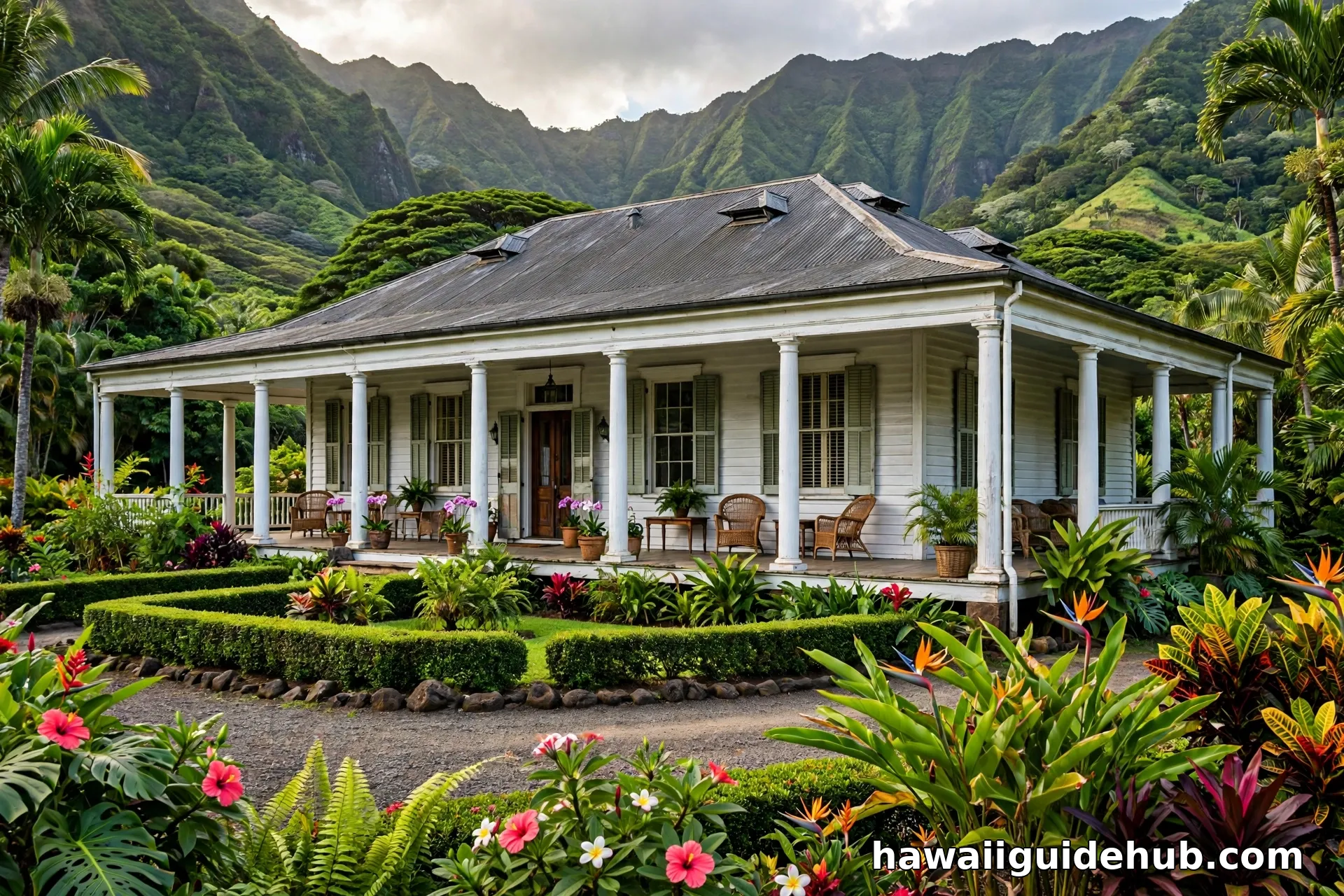
The plantation era also gave Līhuʻe an unusual cultural layer. Plantation owner Paul Isenberg helped German immigrants settle in Līhuʻe starting in 1881, and the town’s Lutheran church, founded in 1883, held services in German well into the 1960s. Meanwhile the Rice family and later George Norton Wilcox built neighboring Grove Farm into one of the island’s great plantations, and the Wilcox family home, Kilohana, still stands above town as a reminder of the era. The sugar is gone, the mill closed in 2000, but the street grid, the civic buildings, and the plantation-era neighborhoods are still the Līhuʻe you drive through today.
Līhuʻe Today: More Than an Airport
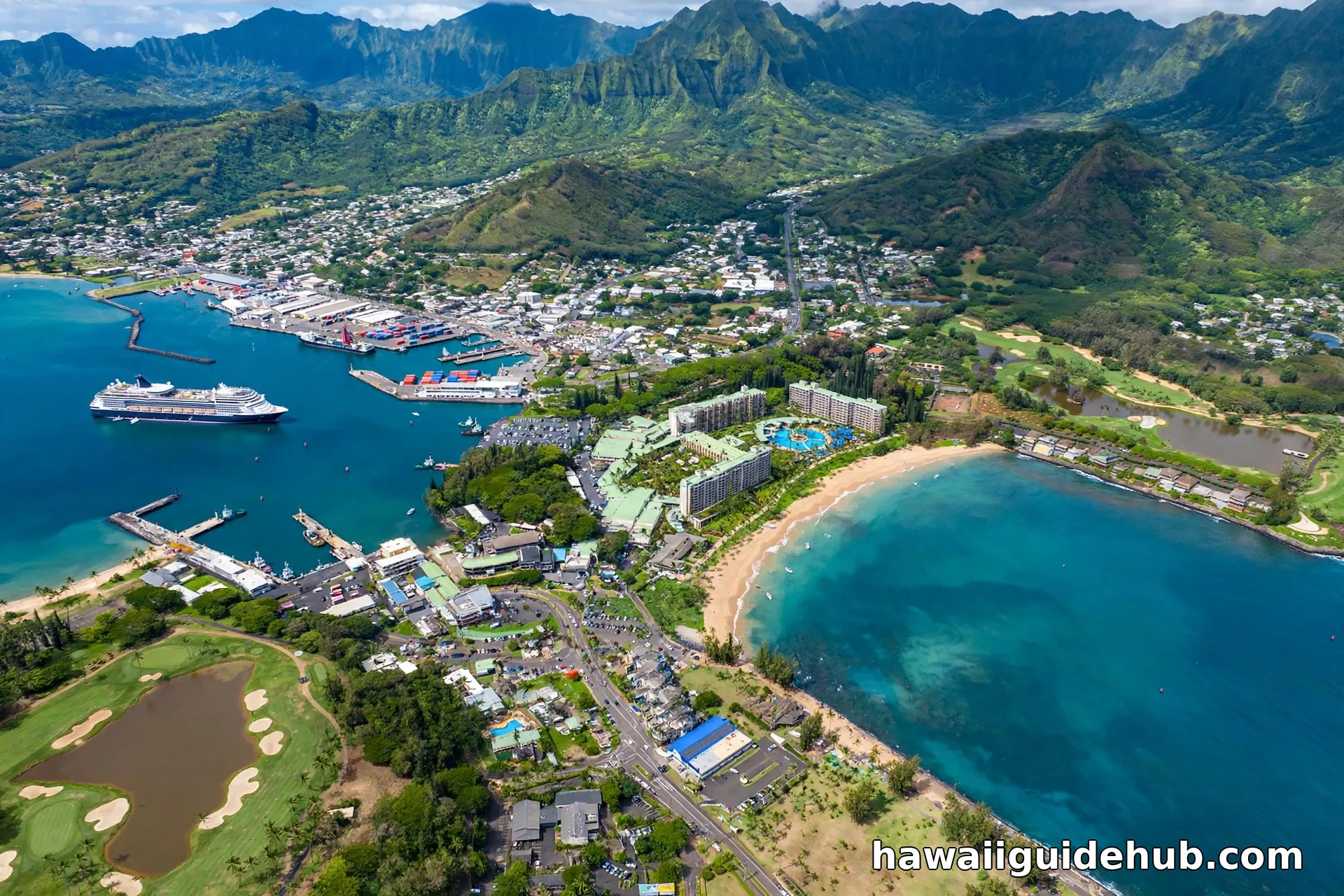
Modern Līhuʻe is Kauaʻi’s gateway and its working center. The island’s main airport sits here, Nāwiliwili Harbor, completed as a deep-water harbor in 1930, handles the cruise ships and cargo, and the civic center around Rice Street still houses the county government. It is the second-largest town on Kauaʻi after Kapaʻa, and most visitors pass through it without stopping, which is their loss.
Worth a stop: the Kauaʻi Museum downtown, which tells the island’s story from before Western contact through the plantation era; Kilohana, the former Wilcox family plantation estate turned shops and restaurant; and Kalapaki Beach at Nāwiliwili Bay, a gentle crescent where the cruise ships anchor offshore. If you are mapping out the island beyond the airport, our Poipu guide and Hanalei guide cover where to go next.
Arriving in Līhuʻe: What to Expect
For most visitors, Līhuʻe is the front door of Kauaʻi. Lihue Airport (LIH) is a small, open-air airport where you walk across the tarmac breathing plumeria-scented air, and the rental car lots sit steps from the terminal. Give yourself an hour in town before heading out: Rice Street has local lunch spots, the Kauaʻi Museum offers the island’s history in a single visit, and Kalapaki Beach at Nāwiliwili Bay is a calm crescent for a first swim. Cruise passengers arrive at Nāwiliwili Harbor instead, right at the foot of town, with the same beach a short walk away.
The town itself is easy to navigate. Rice Street runs through the civic center past the County Building and the museum, then drops toward the harbor and Kalapaki Beach. Most of what a visitor wants sits within a few blocks of that corridor, which means an hour or two on foot covers the historic core. From there, the island’s main highway, Kaumualiʻi Highway west and Kūhiō Highway north, puts the whole of Kauaʻi within an hour’s drive.
Common Mistakes Visitors Make
The most common error is the spelling: “Lihue” without the kahakō and ʻokina. The second is the pronunciation, usually “lay-hue” or “lee-HOO-ee” with the stress on the wrong syllable. A third is assuming Līhuʻe is Kauaʻi’s biggest town; that title belongs to Kapaʻa, up the east coast. And a surprising number of visitors never learn the name means anything at all, treating it as an arbitrary label rather than a descriptive Hawaiian word. Now you know better.
Using the Name Respectfully
Hawaiian place names carry history, and using them correctly is a basic courtesy. Write Līhuʻe with its marks when you can, pronounce it LEE-hu-ay, and remember that ʻōlelo Hawaiʻi is a living official language of the state, not a decorative flourish. The same care applies to every Hawaiian word you meet on the island, from Kauaʻi itself to the beaches and valleys you will visit. Small effort, real respect.
If you want one habit that upgrades every Hawaiian word you say, learn the ʻokina. It is the backward-facing mark you see in Hawaiʻi, Oʻahu, Kauaʻi, and Līhuʻe, and it represents a glottal stop, a genuine consonant in the Hawaiian alphabet. English speakers make the same sound in the middle of “uh-oh.” Once you hear it, you will start noticing it everywhere, and words you used to blur together will suddenly have their proper shape. Līhuʻe is an ideal place to start, because you will say it a dozen times before you even leave the airport.

Video: Visiting Līhuʻe and Kauaʻi
Seven days across Kauaʻi, including Līhuʻe, Princeville, Waimea, and Poipu.
Frequently Asked Questions
What does Līhuʻe mean in Hawaiian?
Līhuʻe means “cold chill” in ʻōlelo Hawaiʻi, the Hawaiian language. It is a descriptive place name, likely referring to the cool, damp air of the area.
How do you pronounce Līhuʻe?
LEE-hu-ay, with the stress on the first syllable and a glottal stop (ʻokina) before the final “ay” sound. The pronunciation was confirmed by the Kauaʻi Historical Society and UH-Hilo’s Hawaiian Language Center.
Is it spelled Lihue or Līhuʻe?
Līhuʻe is the correct spelling, with a kahakō (macron) over the ī and an ʻokina before the e. “Lihue” without marks is a common shorthand seen on signs and airport codes, but the marked spelling is correct and respectful.
Is Līhuʻe the biggest town on Kauaʻi?
No. Līhuʻe is the county seat and the second-largest town on Kauaʻi after Kapaʻa. It is the island’s center for government, business, and transportation, with the main airport and harbor.
What island is Līhuʻe on?
Līhuʻe is on Kauaʻi, the northernmost of the main Hawaiian Islands. It sits on the island’s southeastern coast, roughly a 25-minute drive from Poipu and about 40 minutes from the North Shore.
What does the airport code LIH stand for?
LIH is the code for Lihue Airport, Kauaʻi’s main airport, named for the town it serves. Airport codes use the unmarked spelling, which is why the code does not show the kahakō or ʻokina.
Is Līhuʻe worth visiting, or just the airport?
It is worth at least half a day. The Kauaʻi Museum, Kilohana estate, the historic Rice Street civic center, and Kalapaki Beach give you the island’s history and a calm first swim in one compact area, before you head on to Poipu or Hanalei.
Why is the airport called Lihue Airport (LIH)?
Kauaʻi’s main airport sits in Līhuʻe town, so it takes the town’s name. The three-letter code LIH comes from the unmarked spelling “Lihue,” which is standard for airport codes. If you are visiting Hawaii for the first time, Līhuʻe Airport is likely where your Kauaʻi trip begins.
Līhuʻe means “cold chill,” it is said LEE-hu-ay, and it is written with a kahakō and an ʻokina. Behind those two syllables sits nearly two centuries of Kauaʻi history, from a governor’s seat in 1837 to a sugar town to the county seat it remains today. The next time the name comes over the airplane speaker, you will know exactly what you are hearing.