How Old Is the Big Island of Hawaii? (Geology & Island Ages)

How old is the Big Island of Hawaii? About 400,000 to 500,000 years: a geological newborn. The Big Island is the youngest of the main Hawaiian islands and the only one still growing, with active volcanoes adding new land today. This guide covers the island’s age, how geologists know, the five volcanoes that built it, how it compares to the older islands, and what its youth means for your visit.
The Short Answer: Around 400,000 Years Old
Radiometric dating of the oldest exposed lava puts the Big Island’s emergence above sea level at roughly 430,000 years ago. The island’s submarine building phase began over a million years earlier, as the Kohala volcano grew from the seafloor. Some popular sources round to 400,000 years; a few cite 700,000. The honest range: the Big Island broke the ocean surface about 400,000-500,000 years ago, making it the baby of the Hawaiian chain. Kauaʻi, the oldest main island, is around 5 million years old: more than ten times older.
The Main Islands: Oldest to Youngest
| Island | Approx. age | Volcano status | What the age means for visitors |
| Kauaʻi | ~5.1 million years | Extinct, deeply eroded | Dramatic canyons, Nā Pali cliffs, lush valleys |
| Oʻahu | ~3 million years | Extinct, eroded | Jagged Koʻolau cliffs, Diamond Head tuff cone |
| Maui | ~1.3 million years | Dormant (Haleakalā) | Huge crater, Road to Hana valleys |
| Big Island | ~0.4 million years | Active | Fresh lava fields, live eruptions, new land |
Ages are approximate and sourced from USGS and university geology references; exact figures vary by dating method and which lava flows were sampled. The pattern is what matters: a clean age progression from northwest (oldest) to southeast (youngest), tracking the Pacific Plate’s drift over the Hawaiian hotspot.
The Five Volcanoes That Built the Island
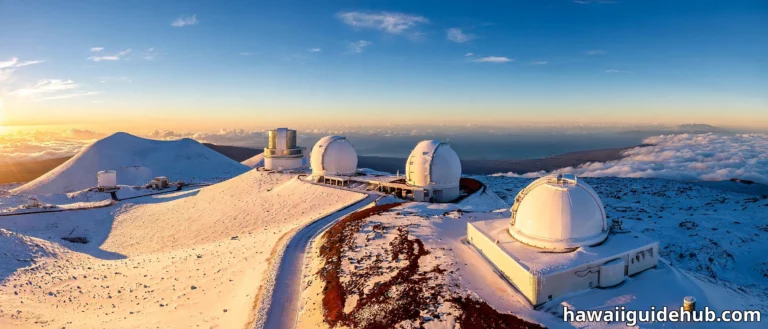
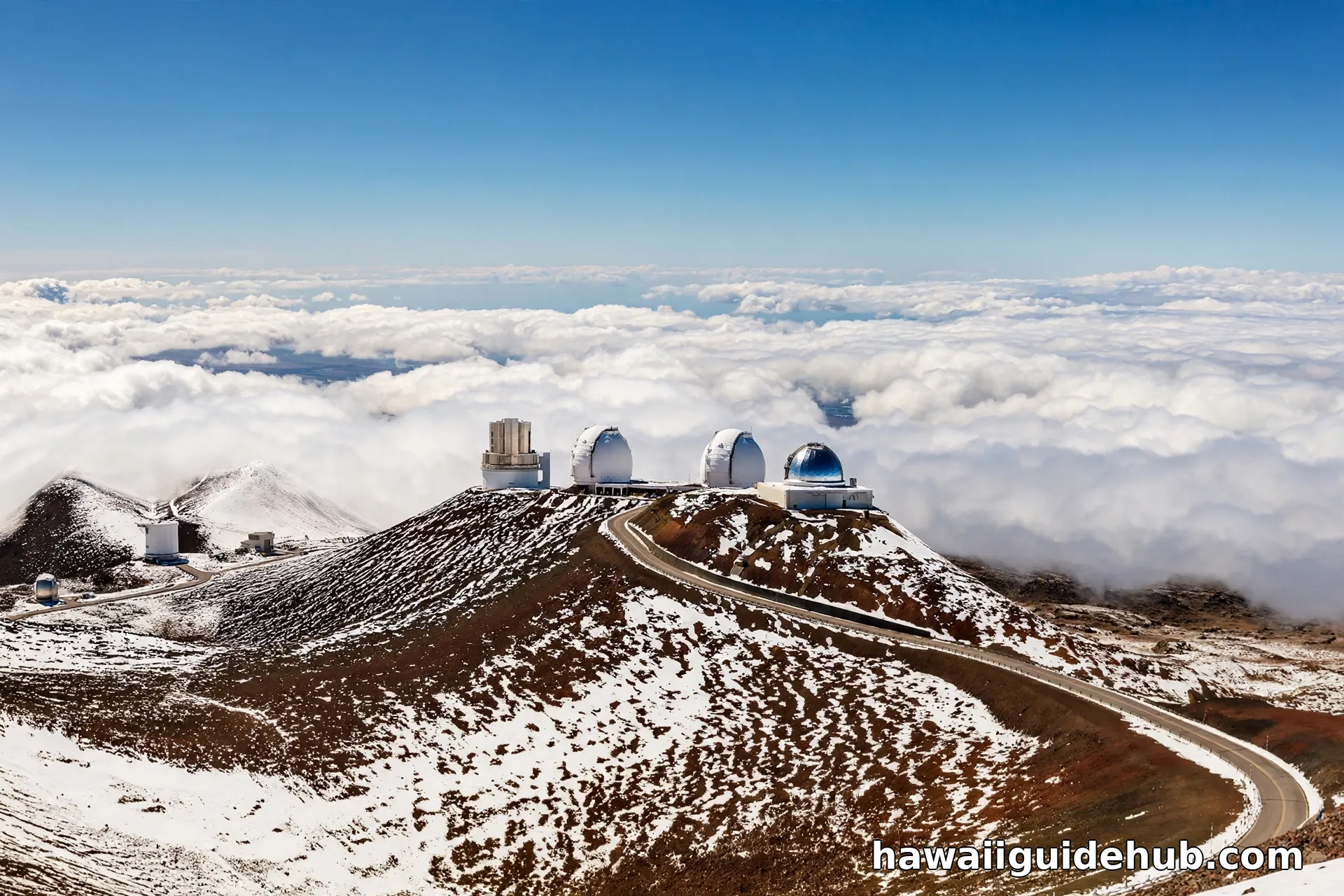
The Big Island is five shield volcanoes merged into one. Kohala, in the northwest, is the oldest (around a million years) and extinct: its eroded valleys are the island’s most dramatic scenery. Mauna Kea, the tallest, is dormant: its last eruption was about 4,500 years ago, and its summit holds world-class observatories. Hualālai, above Kona, is active: it last erupted in 1801. Mauna Loa, the world’s largest active volcano by volume, erupts every few years on average. Kīlauea, the youngest and most active, has been erupting frequently for decades: it is the star of Hawaiʻi Volcanoes National Park.
How Geologists Know the Age
Potassium-argon and argon-argon radiometric dating of lava flows gives the ages: each flow’s minerals act as a clock starting when the lava cools. The oldest subaerial (above-water) lavas on Kohala date to roughly 430,000 years. Drill cores and submarine samples show the island building underwater for a million years before that. The hotspot model, proposed by geologist J. Tuzo Wilson, explains the whole chain: the Pacific Plate drifts northwest over a fixed mantle plume, so each island is born over the hotspot, then carried away to age and erode.
The Hotspot in Plain English
Picture a blowtorch fixed under a conveyor belt. The blowtorch is the Hawaiian hotspot: a plume of super-hot rock rising from deep in the Earth. The conveyor belt is the Pacific Plate, drifting northwest a few inches per year. Where the plate sits over the plume, magma punches through and builds a volcano. As the plate carries the volcano away, the eruptions stop, and erosion takes over. The result: a chain of islands in age order, like footprints. The Big Island sits over the blowtorch right now: that is why it is young and active, and why Kauaʻi, far down the belt, is old and green.
What Youth Looks Like: Raw Landscapes
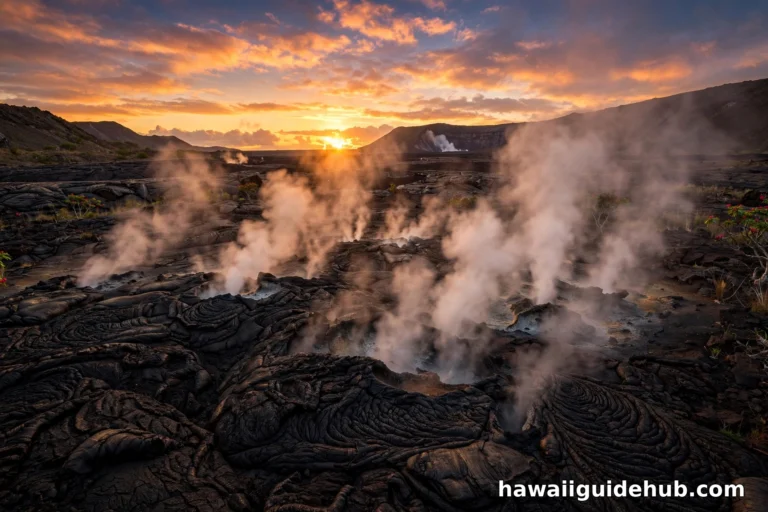
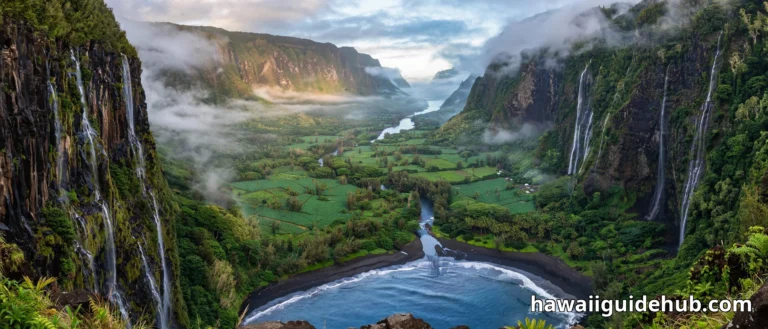
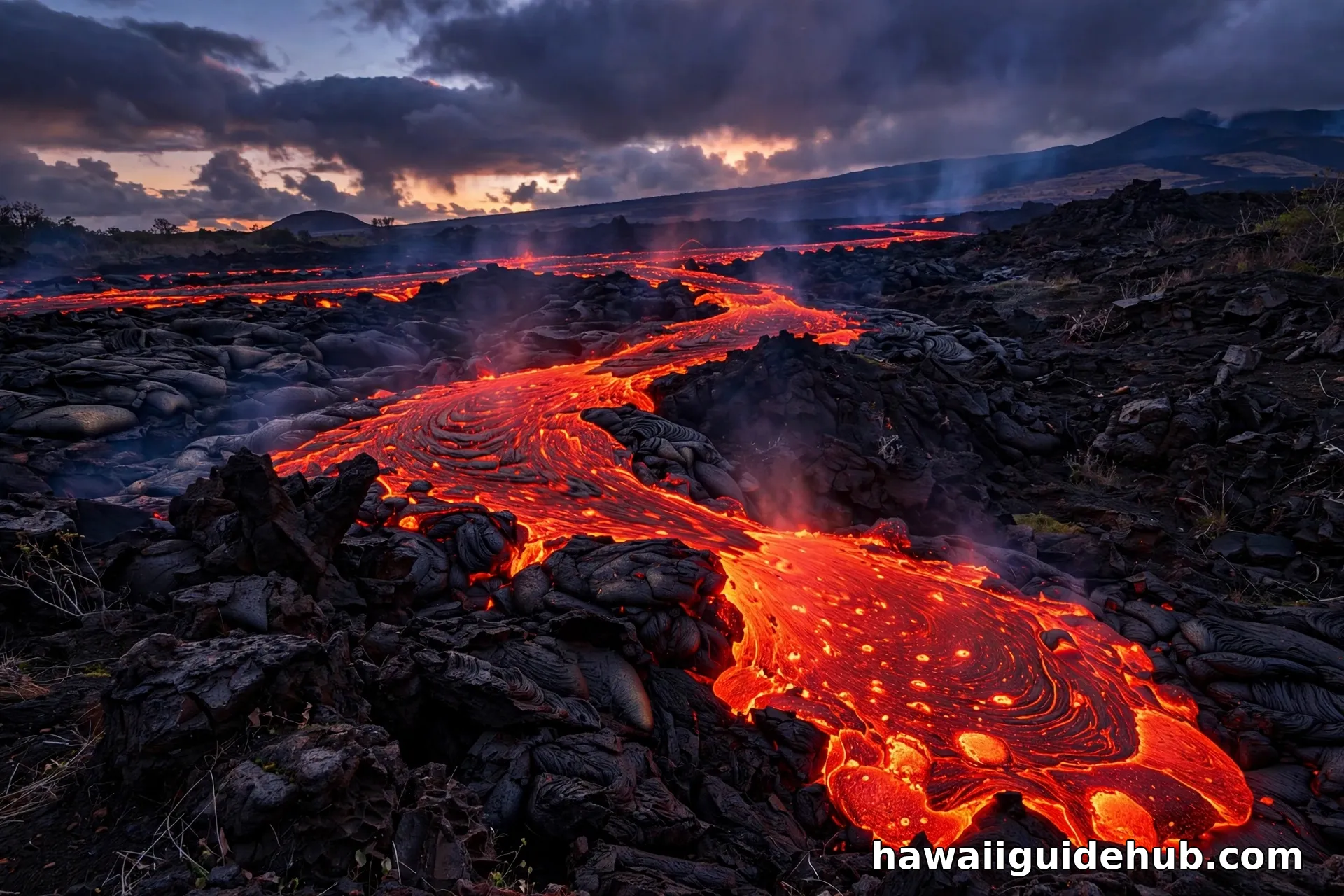
Young islands look unfinished, because they are. The Big Island’s southeast is black lava desert: flows from the 1980s-2010s with almost no soil, no plants, just ropey pāhoehoe and jagged ʻaʻā. Contrast the Hamakua coast’s deep valleys or Kohala’s cliffs: those took hundreds of thousands of years of rain to carve. Visitors can read the island’s age like tree rings: fresh black flows are decades old; gray, lichen-covered flows are centuries; red-soiled, forested slopes are hundreds of millennia. Nowhere else in America offers this visible a timeline.
Erosion: The Other Half of the Story
Every Hawaiian island is simultaneously being built and destroyed. Rain, waves, and landslides tear down what volcanoes raise. Giant landslides have repeatedly collapsed island flanks: the Nuʻuanu slide off Oʻahu scattered debris 140 miles across the seafloor. Kauaʻi’s Nā Pali cliffs are what remains after millions of years of this sculpting. The Big Island’s turn will come: in a few million years it will look like Kauaʻi does now, and Kauaʻi will be an atoll, then a seamount. The chain’s oldest members, the Emperor Seamounts near Alaska, are already underwater: 70-million-year-old ghosts of islands.
Video: Life of a Hotspot Volcanic Island
How a hotspot builds an island, then lets it erode away: the full life cycle.
Frequently Asked Questions
How old is the Big Island of Hawaii?
About 400,000-500,000 years since it emerged above sea level: the youngest of the main Hawaiian islands.
Is the Big Island still growing?
Yes. Kīlauea and Mauna Loa eruptions add new land regularly; the island grows measurably each decade.
Which Hawaiian island is the oldest?
Kauaʻi, at about 5.1 million years. Niʻihau is similarly ancient.
Will there be a new Hawaiian island?
Yes, eventually: the submarine volcano Kamaʻehuakanaloa (Lōʻihi) is growing southeast of the Big Island and could break the surface in tens of thousands of years.
How was the Big Island formed?
By a stationary mantle hotspot punching through the drifting Pacific Plate: five shield volcanoes built the island layer by layer.
Kamaʻehuakanaloa: The Next Island
Southeast of the Big Island, 3,000 feet underwater, the next Hawaiian island is already growing. Kamaʻehuakanaloa (formerly Lōʻihi) is an active submarine volcano that erupted as recently as 1996. Scientists estimate it will break the surface in 10,000 to 100,000 years: a blink in geological time. It will join the chain as the new youngest island, and the Big Island will begin its long drift into middle age. You cannot visit it yet: but its hydrothermal vents host unique deep-sea life that researchers study by submersible.
Visiting the Ages: A Geology Road Trip
You can tour the island’s lifespan in a day. Start at Hawaiʻi Volcanoes National Park: newborn land, steam vents, lava fields from recent decades. Drive the Chain of Craters Road: flows from the 1970s-2000s. Head to Waimea and Kohala: green, eroded, centuries-old landscapes. Finish at Pololū Valley lookout: cathedral valleys carved over hundreds of thousands of years. In 100 miles you travel 400,000 years. Bring the park’s geology guide; the volcanoes park guide covers the practical side.
Why the Age Matters for Travelers
Youth shapes everything about a Big Island trip. Beaches are fewer and younger: black sand instead of white, because there has been less time to grind coral into sand. Hiking means lava fields, not forest trails, in the south. The weather is extreme in miniature: desert and rainforest an hour apart, because the young mountains wring moisture from the trades. And the headline: you might witness an eruption. Check the USGS volcano updates before and during your trip: Kīlauea’s activity changes month to month, and the park adjusts access accordingly.
How old is Kilauea volcano?
Kīlauea is the youngest of the Big Island’s five volcanoes: roughly 300,000-600,000 years old, with most of its growth in the last 100,000 years. It is also the most active.
How old is Mauna Kea?
Mauna Kea began growing about 800,000 years ago and last erupted around 4,500 years ago. It is considered dormant, not extinct.
Mauna Loa: The Heavyweight
Mauna Loa is the largest active volcano on Earth by volume: about 18,000 cubic miles, rising 30,000 feet from the seafloor (13,681 feet above sea level). It has erupted 33 times since 1843, most recently in 2022, when lava fountains lit up the night sky visible from Kona. Its eruptions are typically effusive rather than explosive: rivers of lava rather than ash columns. The Mauna Loa Observatory on its flank is famous for the Keeling Curve: the continuous record of atmospheric CO₂ that documented climate change. Visitors see it from the park and from Saddle Road: a broad, gentle giant that does not look like a volcano until it reminds you.
Hualālai: The Overlooked Active One
Everyone knows Kīlauea; few visitors notice Hualālai looming over Kona. It is active, last erupting in 1800-1801, when lava flows reached the ocean near today’s airport. The USGS considers it potentially dangerous precisely because it is quiet: its flanks host resorts and subdivisions built on young flows. Geologists estimate Hualālai erupts every few hundred years. It is a reminder that on the Big Island, “dormant” is a schedule, not a promise.
The Island Is Still Rising
The Big Island grows in two ways: lava adds land at the surface, and the whole island slowly subsides under its own weight. GPS measurements show the island sinking a few millimeters per year even as eruptions build it up. Net growth wins for now: Kīlauea’s 2018 eruption alone added hundreds of acres of new land. In deep time, subsidence wins: that is why Kauaʻi’s oldest rocks now sit below sea level offshore. The island you visit is a snapshot in a 5-million-year movie.
What 5 Million Years Does: Kauaʻi as the Future
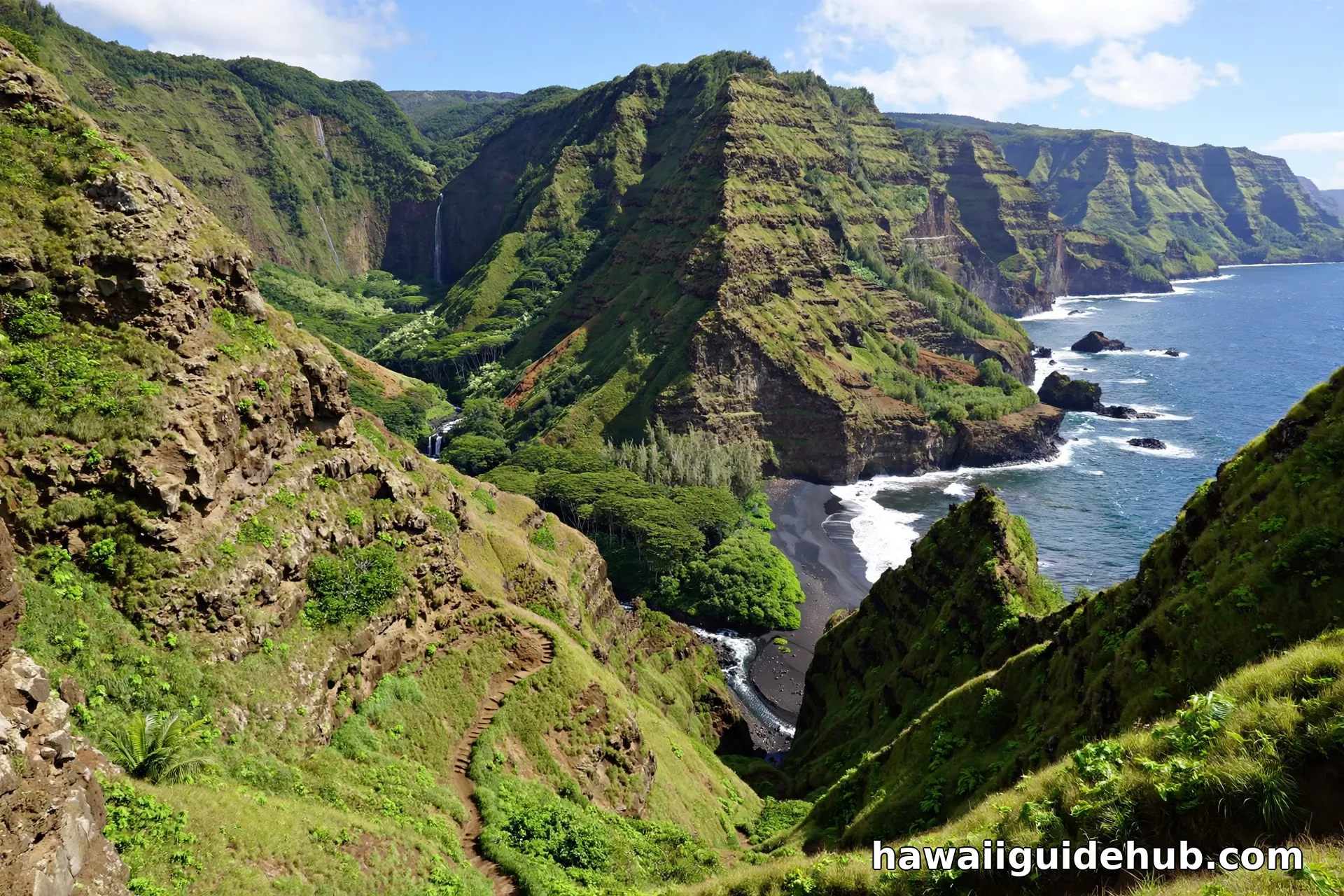
Want to see the Big Island’s future? Visit Kauaʻi. Five million years of rain carved Waimea Canyon 3,000 feet deep; waves sculpted the Nā Pali cliffs; the volcano collapsed and eroded into the lush island you see. The Big Island’s Kohala volcano is already on that path: extinct for 120,000 years, its flanks collapsing into the great valleys of the north coast. Geology does not repeat exactly, but it rhymes: every island gets its green old age. For the Kona side of today’s young island, see the best things to do in Kona.
Five Volcanoes, Five Life Stages
The Big Island is a time machine with five stops. Kohala: old age, extinct, collapsing into valleys. Mauna Kea: retirement, dormant, crowned with snow and telescopes. Hualālai: middle age, restless, overdue. Mauna Loa: prime, erupting every few years. Kīlauea: infancy, erupting almost continuously. Walk from Pololū Valley to the Kīlauea caldera and you traverse the full volcanic life cycle, from death to birth, in a single afternoon’s drive. Few places on Earth compress this much geological time into this little space.
Dating Disputes: Why Sources Differ
You may see the Big Island’s age quoted as 400,000, 430,000, or 700,000 years. All three come from real measurements answering slightly different questions. The 430,000-year figure dates the oldest lava exposed above sea level on Kohala: the island’s confirmed birthday. The 400,000-year figure is the same number rounded for popular audiences. The 700,000-year figure estimates when the island’s bulk began assembling underwater, before it broke the surface. None is wrong: they measure different milestones. When a guide says “the island is 400,000 years old,” it means 400,000 years since it became an island.
The Human Timeline vs. The Island Timeline
For perspective: the Big Island emerged around the time Neanderthals were evolving in Europe. The first Polynesian voyagers arrived roughly 1,500 years ago: the island was already 400,000 years old and looked essentially as it does now. Kamehameha the Great was born on Kohala’s slopes around 1758, on the island’s oldest volcano. Every human event in Hawaii, from the first canoe landing to your flight, fits inside the last 0.4% of the island’s life. The volcanoes were here first, and they will be here long after.
The Big Island is the rare place where geology is not history: it is news. Walk on lava that cooled last year, watch an island grow, and stand on land younger than the human species’ oldest fossils. For the full visitor guide, see the best things to do on the Big Island.