
Where Is Haʻikū in Hawaiʻi
Where Is Haʻikū, Hawaiʻi?
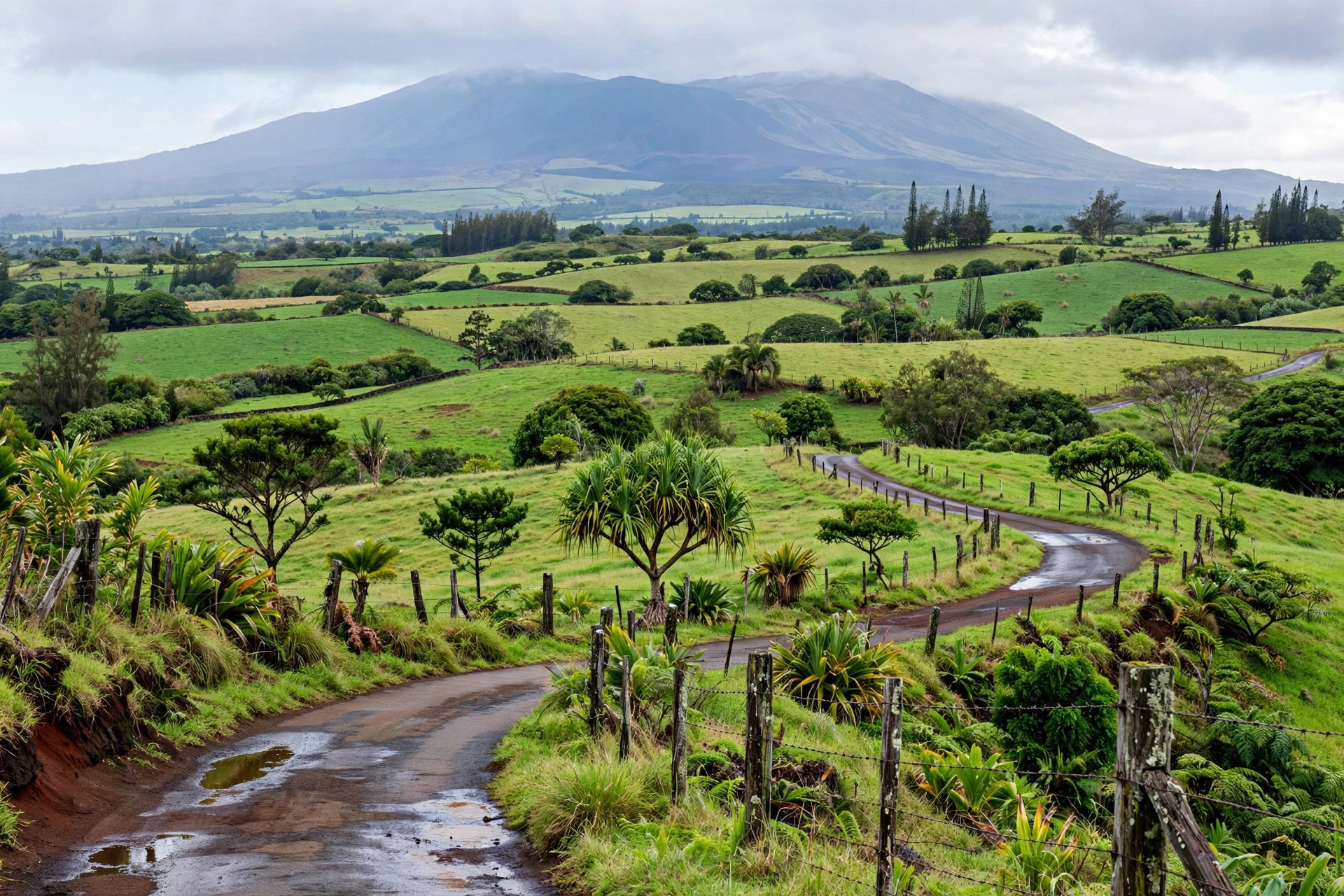
Haʻikū is a small rural community on Maui’s North Shore, on the windward side of the island. It sits along Hāna Highway (Highway 36), roughly 14 miles east of Kahului and just a few miles inland and east of Pāʻia. Most visitors pass through Haʻikū on their way to the Road to Hāna, since the town straddles the beginning of that famous coastal drive.
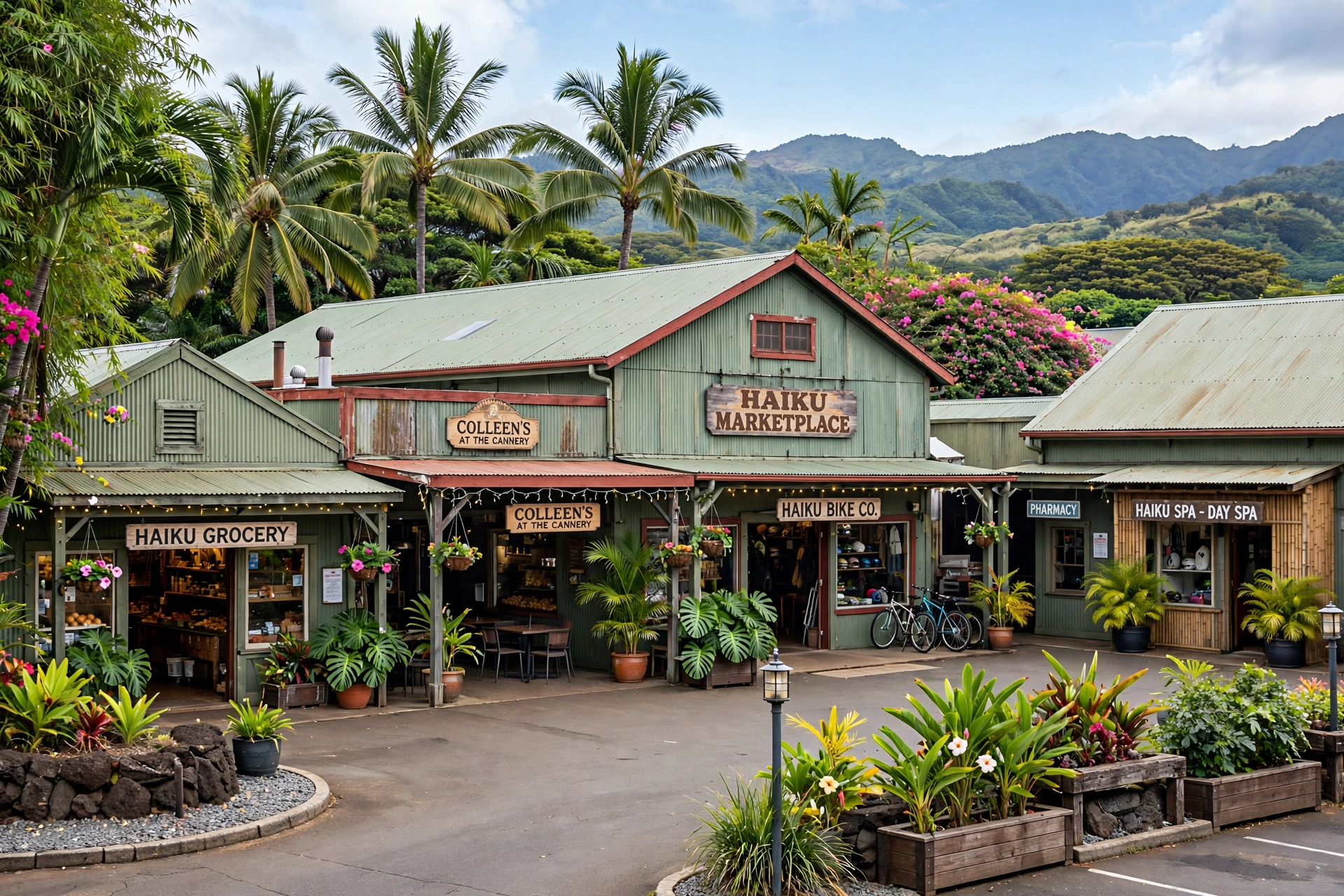
Unlike a traditional town with a compact downtown, Haʻikū is spread out across rolling agricultural land. The community’s commercial heart clusters around the intersection of Hāna Highway with Haʻikū Road and Kokomo Road, where the Haiku Marketplace at the old Haiku Cannery serves as the town center. Around it lie small farms, plant nurseries, orchid growers, fruit orchards, and pasture land for cattle and horses. The ocean sits a short drive to the north, with Maui’s rugged windward coastline and views toward Molokaʻi on clear days.
The ZIP code is 96708, and the community’s population is roughly 8,800 to 9,000 people. Haʻikū is part of the larger Haʻikū-Pauwela census area, and it functions as a quiet residential and agricultural zone rather than a resort destination. There are no large hotels or shopping malls here. What visitors find instead is a laid back country atmosphere, farm stands, small eateries, and easy access to some of Maui’s best waterfalls, surf lookouts, and hiking trails.
For travelers, the practical takeaway is simple. Haʻikū is the first real community you reach after Pāʻia when heading toward Hāna, and it makes a natural first stop on the Hāna Highway. It is close enough to the North Shore beaches for a morning surf check at Hoʻokipa and far enough inland to feel like genuine countryside.
Several smaller neighborhoods make up greater Haʻikū. Pauwela lies to the north toward the coast, a quiet residential area near the old cannery buildings. Ulumalu sits farther east along Hāna Highway, closer to the Jaws Country Store and the turnoffs toward the island’s interior. Kokomo Road and Haʻikū Road branch south from the highway into the agricultural subdivisions where most residents live. None of these areas has a formal boundary that visitors need to know. What matters is the general shape of the place, a broad band of green country between Pāʻia and the wilder windward coast, threaded by the highway that carries nearly every Hāna bound traveler through it.
Haʻikū is sometimes grouped with Maui’s upcountry, but geographically it belongs to the windward North Shore. The distinction matters for weather. Trade winds push moist ocean air against the slopes of Haleakalā, so Haʻikū runs cooler and rainier than the sunny resort coasts to the south and west. Morning showers are common, afternoons often clear, and rainbows appear with satisfying regularity. Pack a light rain jacket even on sunny days, and plan waterfall visits for the morning when the light is soft and the parking areas are emptiest.
The Haʻikū Community
Haʻikū grew out of plantation-era Hawaiʻi. The Haiku Sugar Company began processing sugar here in 1858, and the community developed around the mill and the surrounding cane fields. After the sugar era ended, pineapple took over for a time, and the former pineapple cannery was later converted into the Haiku Marketplace, the mixed commercial center that anchors the town today.
Modern Haʻikū is defined by agriculture and a free spirited local culture. Small farms grow bananas, papaya, citrus, tropical flowers, and orchids. Nursery operations sell palms and landscaping plants. Back roads wind past horse pastures, fruit orchards, and homes tucked into tropical foliage. The community attracts artists, surfers, windsurfers, and people who prefer country living to resort life, and that mix gives Haʻikū a creative, easygoing character.
The Haiku Marketplace at the old cannery is the hub of daily life. It holds a grocery store, the local post office, a hardware store, a fitness center, and a collection of restaurants, general stores, and food trucks. Locals run errands here, grab coffee, and catch up with neighbors. The nearby Pauwela Cannery area, another former cannery building, now houses surfboard shapers, art studios, and small workshops, continuing the pattern of plantation buildings finding new life.
Haʻikū’s community institutions include Haʻikū Elementary School, the Boys and Girls Club, and Haʻikū Community Park with its ball fields and open green space. Farmers markets and small community events give the town a village feel. Because it is primarily residential, visitors should treat Haʻikū the way locals do, as a living community rather than an attraction, and keep to public roads, signed trailheads, and businesses that welcome the public.
One more thing worth knowing is that Haʻikū has no beach of its own in the town center. The coastline nearest Haʻikū is rugged, with the closest ocean access at spots like Maliko Bay and, a short drive away, the famous beaches of the North Shore. That is part of why the town stays quiet while the surf breaks nearby draw the crowds.
The plantation legacy runs deeper than the buildings. Workers came to Haʻikū’s fields and mills from China, Japan, Portugal, the Philippines, Korea, and Puerto Rico, and their descendants shaped the food, festivals, and family stories of the North Shore. The Alexander and Baldwin Sugar Museum in nearby Puʻunēnē tells the broader story of the company that grew out of this era, and it makes a worthwhile pairing with a drive through Haʻikū for visitors interested in how plantation Hawaiʻi became modern Hawaiʻi. In town, the multicultural roots show up in small ways, in the plate lunch counters, the manju and malasadas at local bakeries, and the mix of surnames on the mailboxes along the country roads.
Haʻikū also sits at an interesting cultural crossroads. It is close enough to Pāʻia’s surf tourism to feel the visitor economy, yet residential enough that most streets see more farm trucks than rental cars. Longtime residents value the quiet, and the community has worked to keep large scale development out. Visitors contribute best by spending money at local businesses, driving considerately on the narrow back roads, and remembering that the waterfall trailheads and farm stands they enjoy exist within a living neighborhood.
What to See and Do in Haʻikū
Twin Falls
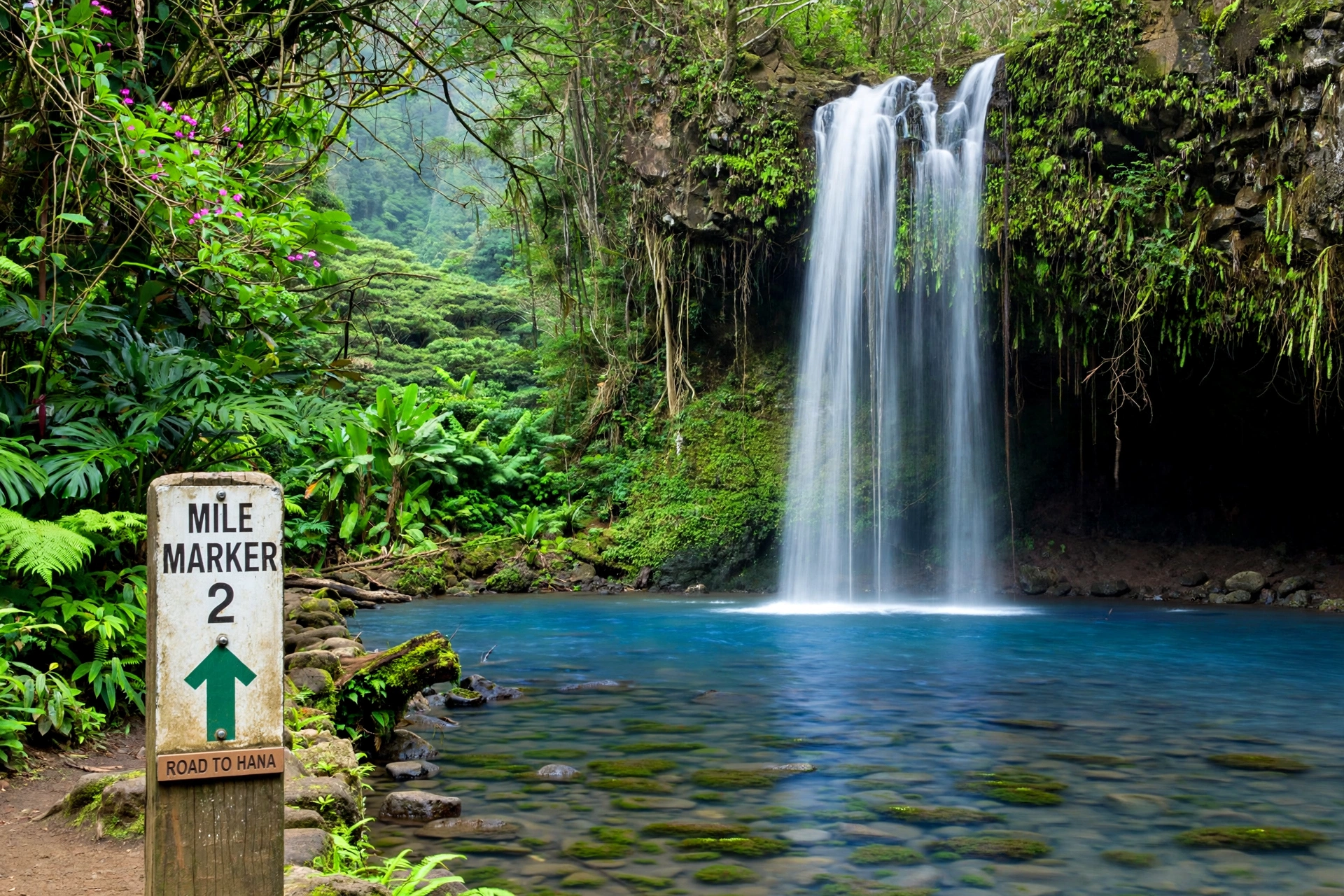
The single most visited attraction in Haʻikū is Twin Falls, located at Mile Marker 2 on Hāna Highway. A short, easy trail leads through tropical jungle to a series of waterfalls and swimming pools. The first falls are an easy walk from the parking area, making this one of the most accessible waterfall stops on the entire Road to Hāna. A fruit stand near the trailhead sells fresh smoothies and local fruit. Go early in the day to find parking and enjoy the falls before the Hāna Highway traffic builds.
Jaws Country Store
Farther along Hāna Highway at 4320 Hana Highway, the Jaws Country Store is a real landmark of the area. It is a small family run country store named for Peʻahi, the big wave surf break offshore known worldwide as Jaws. The store sells groceries and essentials alongside sandwiches, salads, smoothies, poke bowls, and espresso drinks, plus Jaws themed apparel and locally made goods. The wraparound deck and garden setting make it a pleasant stop for breakfast or lunch on the way toward Hāna.
Haiku Marketplace and Town Center
The Haiku Marketplace at the old cannery is worth a stop even if you are just passing through. Browse the grocery store for picnic supplies, check out the small shops and food trucks, and get a feel for everyday life on Maui’s North Shore. The center also hosts a mix of restaurants and casual eateries that locals frequent.
Farms and Nurseries
Haʻikū’s agricultural character is one of its main draws. Depending on the season, roadside stands sell fresh fruit, and some farms welcome visitors. Plant nurseries in the area are popular stops for gardeners. If a farm offers tours or a stand, follow posted hours and signs, and respect private property along the country roads.
Historic Haiku Mill
The ruins of the old Haiku Mill, which processed sugar beginning in 1858, stand as a reminder of the town’s plantation roots. The site is on private property and is generally visited by appointment or as part of arranged visits rather than as a walk in attraction. Do not trespass. If you are interested in plantation history, check ahead for any scheduled access or view the site from public roads.
Pauwela and the Cannery Workshops
Near the coast in the Pauwela area, the old cannery buildings have found new life as workshops and studios. Surfboard shapers, woodworkers, and artists work in spaces that once processed pineapple, and small galleries and craft shops open their doors to the public. The area also holds a small country store stocking groceries, prepared foods, and picnic supplies, a handy stop before a day at the beaches to the west. This corner of Haʻikū captures the town’s reinvention in miniature, plantation infrastructure recycled into creative small business.
From Pauwela, back roads lead toward coastal lookouts where the rugged windward shoreline drops to the sea. These are residential streets, so drive slowly, park only where it is clearly legal, and keep noise down. The reward is a glimpse of the Maui that residents know, green headlands, ironwood trees bent by the trade winds, and whitecaps marching toward shore.
Nearby Attractions
Hoʻokipa Beach Park
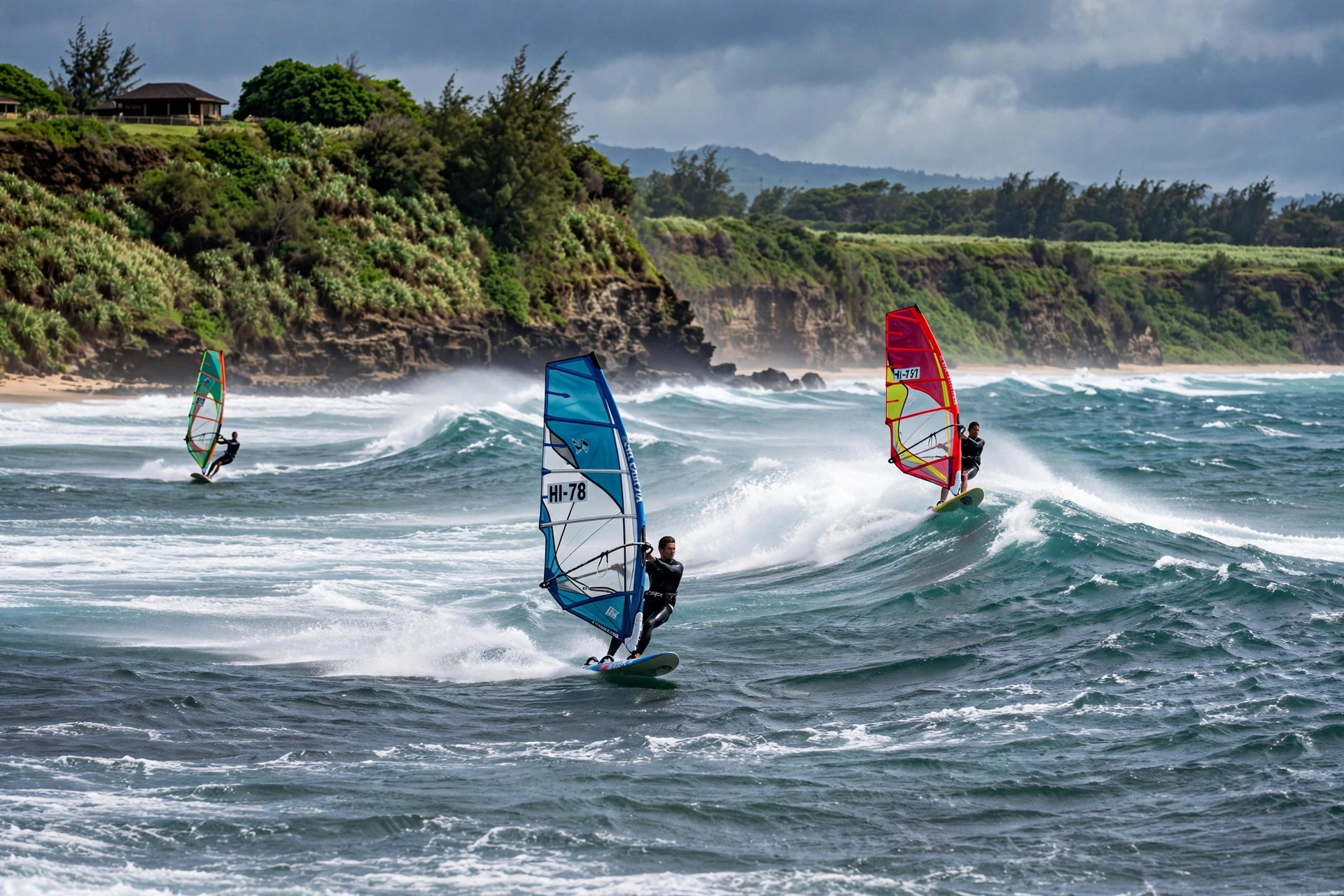
About ten minutes west of Haʻikū, at Mile Marker 9 on Hāna Highway, Hoʻokipa Beach Park is one of the most famous windsurfing sites in the world and a top Maui surf spot. Even if you do not surf, the park is worth visiting to watch windsurfers and surfers ride the waves, and Hawaiian green sea turtles often rest on the sand here. The park has restrooms, outdoor showers, and picnic pavilions. Keep a respectful distance from the turtles and never touch them.
Pāʻia Town
Just west of Haʻikū, Pāʻia is the funky former plantation town that serves as the gateway to the North Shore and the Road to Hāna. Its main street is lined with boutiques, surf shops, galleries, and restaurants. Many visitors combine Pāʻia and Haʻikū in a single morning before continuing toward Hāna.
Peʻahi (Jaws)
Offshore from Haʻikū, the reef break known as Peʻahi, or Jaws, produces some of the largest rideable waves on the planet during big winter swells, with faces reaching 50 to 60 feet. There is no safe public viewing beach at Jaws itself, and the break is strictly for elite big wave surfers with jet ski support. Visitors sometimes view it from distant cliff lookouts along the coast. Do not attempt to paddle out or swim anywhere near the break.
Waterfalls Toward Keʻanae
Continuing east past Haʻikū on Hāna Highway, the waterfalls get bigger. Around Mile Marker 20 and beyond toward Keʻanae, larger cascades and pools appear along the road. Stops like the Keʻanae Arboretum and Puaʻa Kaʻa State Wayside Park make good additions to a Haʻikū based day of waterfall chasing.
Nāʻiliʻili-Haele (Bamboo Forest)
The trailhead for the Nāʻiliʻili-Haele hike, which passes through a striking bamboo forest, lies farther along the Hāna Highway past Haʻikū. It is a popular half day hike for visitors based in or passing through the Haʻikū area. Check current trail conditions and parking rules before going, since access policies for popular Hāna Highway trailheads change from time to time.
Baldwin Beach Park
West of Haʻikū near Pāʻia, Baldwin Beach Park offers a long stretch of white sand that works well for swimming when conditions are calm and for beach walks year round. It is one of the more family friendly ocean stops within easy reach of Haʻikū, with lifeguards, restrooms, and picnic areas. As with every North Shore beach, check the surf and heed lifeguard warnings, since winter swells can make the shore break powerful.
Keʻanae Peninsula and Arboretum
Farther east along the Hāna Highway, the Keʻanae Peninsula juts into the ocean with taro fields, a historic stone church, and some of the most photographed coastal scenery on Maui. The nearby Keʻanae Arboretum displays native and introduced tropical plants along an easy walking path. Together they make a rewarding extension of a Haʻikū based waterfall day, roughly 30 to 40 minutes farther along the highway.
Where to Eat and Stay
Haʻikū’s dining scene is small, local, and casual. The Haiku Marketplace and town center area hold a grocery store for self catering, plus a rotating mix of restaurants, cafes, and food trucks serving everything from Japanese dishes to vegetarian plates to wood fired pizza. Along Hāna Highway, the Jaws Country Store serves breakfast and lunch with an emphasis on fresh local ingredients. Coffee lovers will find local cafes and espresso bars in the town center. For a wider selection, Pāʻia is only minutes away with its well known restaurant row.
Lodging in Haʻikū itself is limited to small inns, bed and breakfasts, and vacation rentals tucked into the countryside. There are no large resorts in town, which is exactly the appeal for travelers seeking a quiet base. Many visitors stay in Haʻikū for its central North Shore location, with easy drives to Hoʻokipa, Pāʻia, the Road to Hāna, and the airport at Kahului. If you prefer full resort amenities, the towns of the South and West Maui coasts are a longer drive away, so weigh the peaceful setting against the commute to beaches and activities elsewhere on the island.
When booking any vacation rental in Haʻikū, use only licensed and reputable listings and confirm that the property complies with Maui County’s short term rental rules, which are strictly enforced.
A practical note on planning your days: Haʻikū’s central North Shore position makes it easy to split time between the Hāna Highway and the island’s west side, but the drives add up. Allow a full day for the Road to Hāna itself, and keep Haʻikū area stops like Twin Falls and Hoʻokipa for a separate, more relaxed morning. Because the town has no nightlife or resort entertainment, evenings here are quiet, which most Haʻikū visitors count as a feature rather than a drawback.
Getting to Haʻikū
Haʻikū is an easy drive from Kahului Airport. Take Hāna Highway (Highway 36) east from Kahului for about 14 miles, passing through Pāʻia and continuing into the countryside. The drive takes roughly 25 to 35 minutes depending on traffic. The Haiku Marketplace and town center sit near the junction of Hāna Highway with Haʻikū Road and Kokomo Road.
A rental car is the practical way to reach and explore Haʻikū. Public bus service on this part of Maui is limited and does not serve the spread out country roads well. Parking at popular stops like Twin Falls fills up early, so plan waterfall visits for the morning. Hāna Highway beyond Haʻikū narrows into the winding coastal road famous for its one lane bridges, so drive with care, pull over to let faster local traffic pass, and never stop in the middle of the road for photos.
Fuel up before you head east. Gas stations thin out past Pāʻia, and the Hāna Highway offers few services once you leave the Haʻikū area. Cell coverage is spotty along parts of the windward coast, so download offline maps and save the addresses of your stops before you go. If you are driving the full Road to Hāna, start from Haʻikū no later than mid morning to reach Hāna town with daylight to spare.
Haʻikū FAQs
Where exactly is Haʻikū in Hawaiʻi?
Haʻikū is on the island of Maui, on the North Shore along Hāna Highway (Highway 36), about 14 miles east of Kahului and just east of Pāʻia. Its ZIP code is 96708.
Is Haʻikū on the Road to Hāna?
Yes. Haʻikū sits at the beginning of the Road to Hāna. Hāna Highway runs through the community, and popular early stops like Twin Falls at Mile Marker 2 are in the Haʻikū area.
What is Haʻikū known for?
Haʻikū is known for its rural farm country, the Twin Falls waterfalls, the Jaws Country Store, the Haiku Marketplace at the old cannery, and its proximity to world famous surf breaks like Hoʻokipa and Peʻahi (Jaws).
How far is Haʻikū from the airport?
Haʻikū is about 14 miles east of Kahului Airport, roughly a 25 to 35 minute drive via Hāna Highway depending on traffic.
Does Haʻikū have beaches?
Haʻikū itself has no developed beach in the town center. The nearest ocean access includes rugged shoreline spots and, a short drive west, Hoʻokipa Beach Park and the beaches near Pāʻia.
Is Haʻikū a good place to stay on Maui?
Haʻikū suits travelers who want a quiet countryside base near the North Shore, the Road to Hāna, and the airport. Lodging is limited to small inns, B&Bs, and vacation rentals. It is less convenient for South and West Maui resort beaches.
What does Haʻikū mean in Hawaiian?
The name Haʻikū is generally translated as a sharp or abrupt break, a reference that fits a landscape shaped by streams and valleys on the windward side.
Can you visit the Jaws surf break?
Peʻahi (Jaws) breaks offshore and is for elite big wave surfers only. There is no safe public beach access at the break. Visitors can stop at the Jaws Country Store on Hāna Highway and view the coastline from signed public lookouts.
Related Hawaiʻi Guides
- Maui Towns: Pāʻia, Makawao, Hāna, and every Maui town.
- Hawaiʻi Towns: notable towns across all the islands.
- Maui Waterfalls: Twin Falls, Waimoku Falls, and more.
- Hawaiʻi Map: where every island and town sits.
- Best Time to Visit Hawaiʻi: seasons, weather, and crowds.
A Final Note
Haʻikū rewards travelers who slow down. It is not a checklist of big attractions but a working country community where farm roads, waterfall trails, and surf lookouts sit side by side. Stop for the waterfalls, linger over lunch at a country store, and give the Road to Hāna the unhurried start it deserves. Respect the neighborhoods you drive through, stay on public paths, and Haʻikū will show you one of Maui’s most genuine faces.