The Complete Guide to Things to Do in Līhuʻe, Kauai

Most visitors to Kauai pass through Līhuʻe without stopping. They land at the airport, grab their rental car, and drive straight to Poʻipū, the north shore, or Waimea Canyon. That is a mistake. Līhuʻe is the county seat and the working heart of the Garden Isle, and it holds some of the most interesting things to do on Kauai. Ancient fishponds, plantation-era museums, a protected surf beach, waterfalls you can see without hiking, and the island’s best saimin all sit within a few miles of downtown.
This guide covers the best things to do in Līhuʻe, from the Kauai Museum and Kilohana Plantation to Kalapaki Beach and the legendary local eateries residents swear by. Use it to plan a full day in town, or to squeeze the highlights into your arrival or departure day.
Getting Your Bearings in Līhuʻe
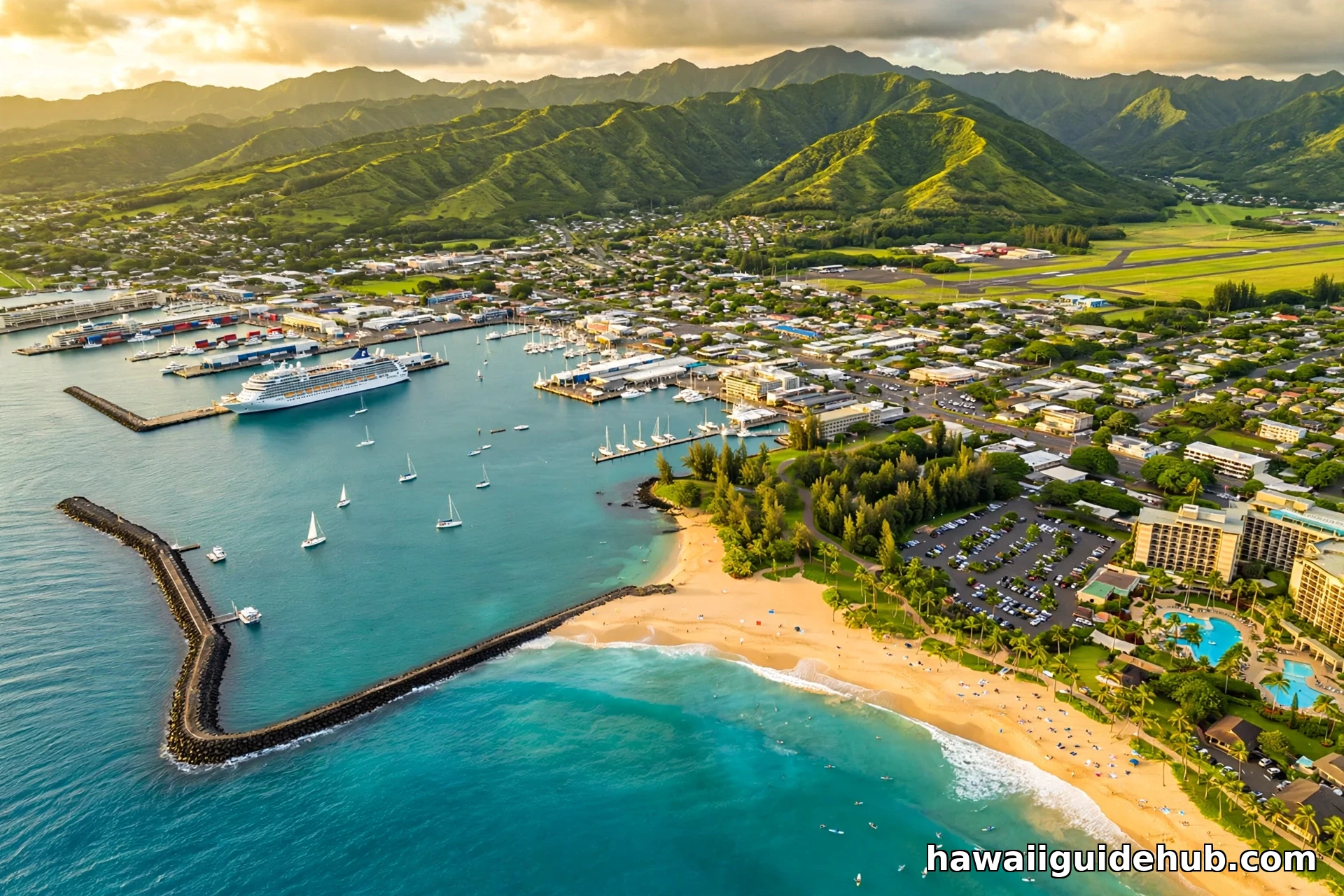
Līhuʻe sits on Kauai’s east side, wrapped around Nawiliwili Harbor. It is the island’s government and business center, which gives it a more local, lived-in feel than the resort towns. You will see state offices, schools, and grocery stores alongside tour boats and cruise ships. Lihue Airport (LIH), Kauai’s only major airport, sits just minutes from town, which makes Līhuʻe the natural first and last stop of almost every Kauai trip.
The town is compact. Rice Street is the main commercial strip, and most of the museums, shops, and restaurants sit within a short drive of it. Kalapaki Beach and the harbor lie just south of downtown, while the Wailua waterfalls and the Wailua River are a few miles north. A rental car makes everything easiest, but TheBus serves the main routes if you are traveling without one.
Līhuʻe grew up around the Lihue Plantation, one of Kauai’s great sugar operations, and you can still read that history in the town’s bones. Old plantation-era buildings line parts of Rice Street, and the surrounding neighborhoods were built as plantation camps for the workers who came from Hawaii, Japan, China, Portugal, the Philippines, and Puerto Rico. That mix of cultures is exactly what you taste in Līhuʻe’s food today.
Museums and Plantation History
Kauai’s sugar plantation era began on this island, and Līhuʻe is the best place to understand it. Two museums and one working plantation estate tell the story.
Kauai Museum
Start at the Kauai Museum on Rice Street. This is the island’s main history museum, with exhibits covering everything from Kauai’s volcanic origins to the Hawaiian monarchy, the arrival of Captain Cook, and the sugar plantation era. The collection includes indigenous artifacts, fine art by local artists, and photographs that document how the island changed over two centuries.
The museum is typically open Monday through Friday from 9 AM to 4 PM and Saturday from 9 AM to 2 PM, closed on Sundays, but it is worth checking the official website before you go since hours can shift around holidays. Allow at least an hour, and browse the gift shop for handcrafted jewelry and books on Hawaiian history.
Grove Farm Homestead Museum
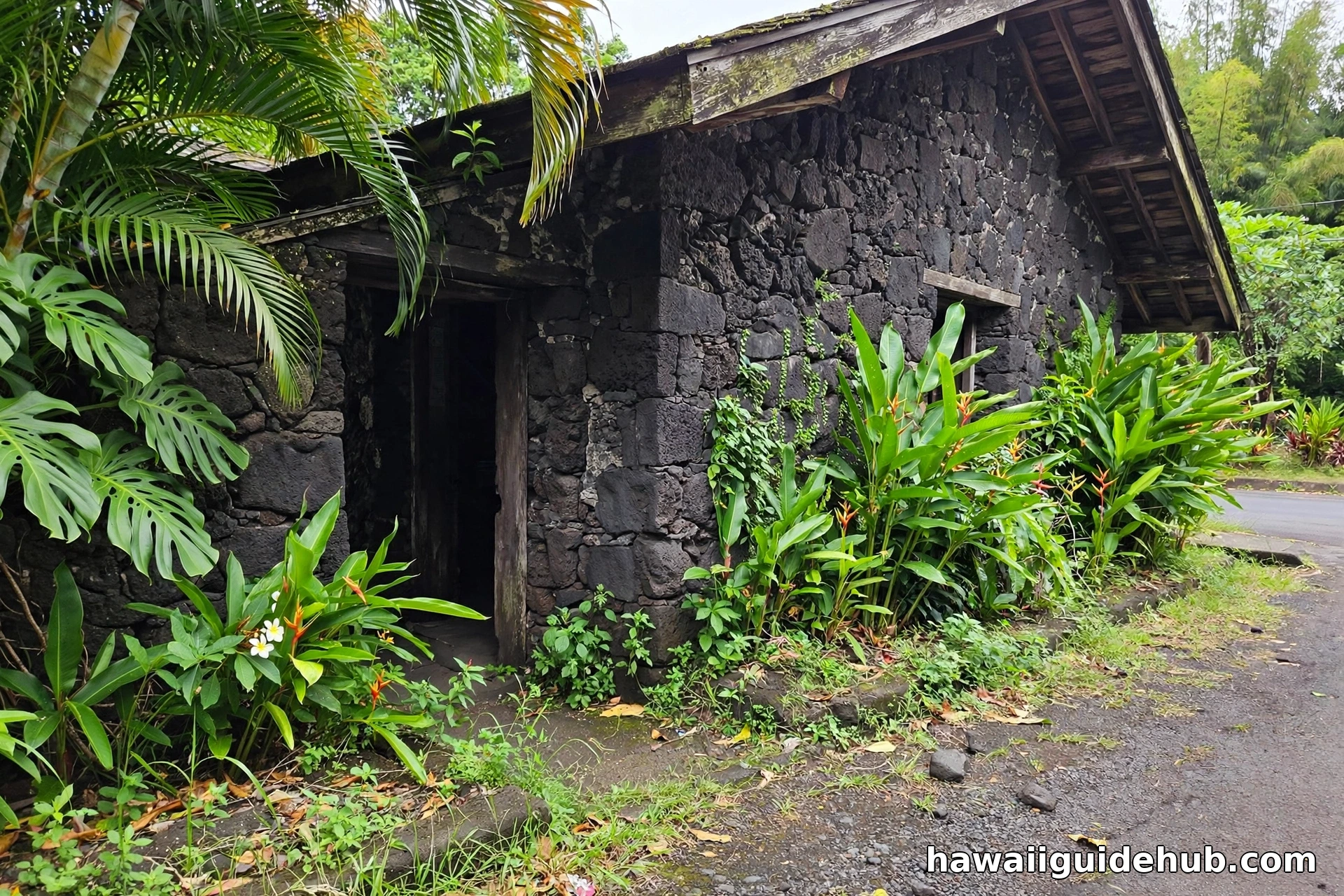
A short drive from downtown, the Grove Farm Homestead Museum preserves one of Kauai’s earliest sugar plantations. Founded in 1864 by George N. Wilcox, the 100-acre site includes the original Wilcox family home, the plantation housekeeper’s cottage, tropical gardens, orchards, and rolling lawns. It is considered one of the finest surviving examples of a complete plantation operation in Hawaii.
Tours run on Monday, Wednesday, and Thursday at 10 AM and 1 PM, and advance reservations are required for the roughly two-hour guided walk. The guides are knowledgeable about plantation life, and the homemade treats served in the original kitchen are a pleasant bonus.
Kilohana Plantation
Kilohana Plantation is Līhuʻe’s biggest single attraction. The 1930s estate, a 16,000 square foot Tudor-style mansion, now houses shops, galleries, Gaylord’s restaurant, and the Kōloa Rum Company tasting room. The Kauai Plantation Railway, a narrow-gauge train, carries visitors through working farms and orchards on a narrated ride past sugar cane, pineapple, banana, papaya, and coffee plantings.
In the evening, Luau Kalamaku stages its theatrical show telling the story of the original Polynesian voyage to the Hawaiian Islands, complete with an imu ceremony, torch lighting, hula, and fire knife dancing. Reservations are strongly recommended for both the train and the luau, especially in peak season.
Ancient Sites and Natural Wonders
Menehune Fishpond (ʻAlekoko)
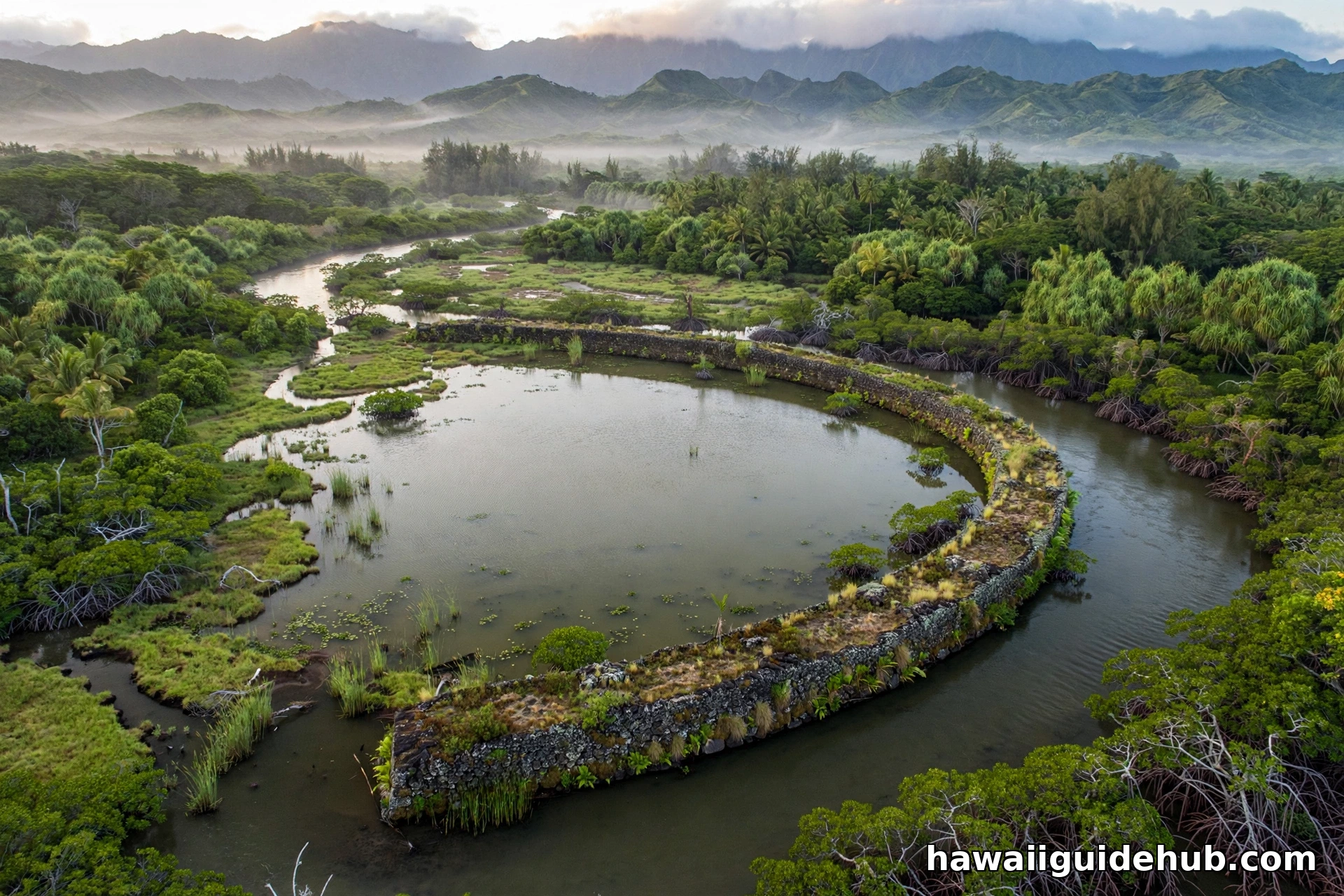
Just south of town on the Hulēʻia River sits the Menehune Fishpond, known in Hawaiian as ʻAlekoko. This 900-foot-long stone wall cuts across a bend in the river to form what is believed to be the largest and oldest fishpond on Kauai, estimated to date to the 15th century. It has been on the National Register of Historic Places since 1973.
According to legend, the pond was built in a single night by the Menehune, the mythical skilled craftsmen of Hawaiian folklore, who formed a human chain to pass stones hand to hand. You can view the pond from the overlook on Hulemalu Road, where interpretive signs explain its history. The surrounding Hulēʻia National Wildlife Refuge protects the river valley, and the Mālama Hulēʻia organization has been restoring the fishpond’s stonework in recent years.
The Wailua River
The Wailua River, a few miles north of Līhuʻe, is the only navigable river in Hawaii. Kayak rentals and guided boat tours run along its calm, jungle-lined waters, passing fern-draped cliffs and leading to spots like the Fern Grotto. If you want a slow morning on the water, this is the place to do it. Several outfitters operate near the river mouth, and the experience pairs well with a waterfall stop afterward.
Wailua Falls and ʻŌpaekaʻa Falls
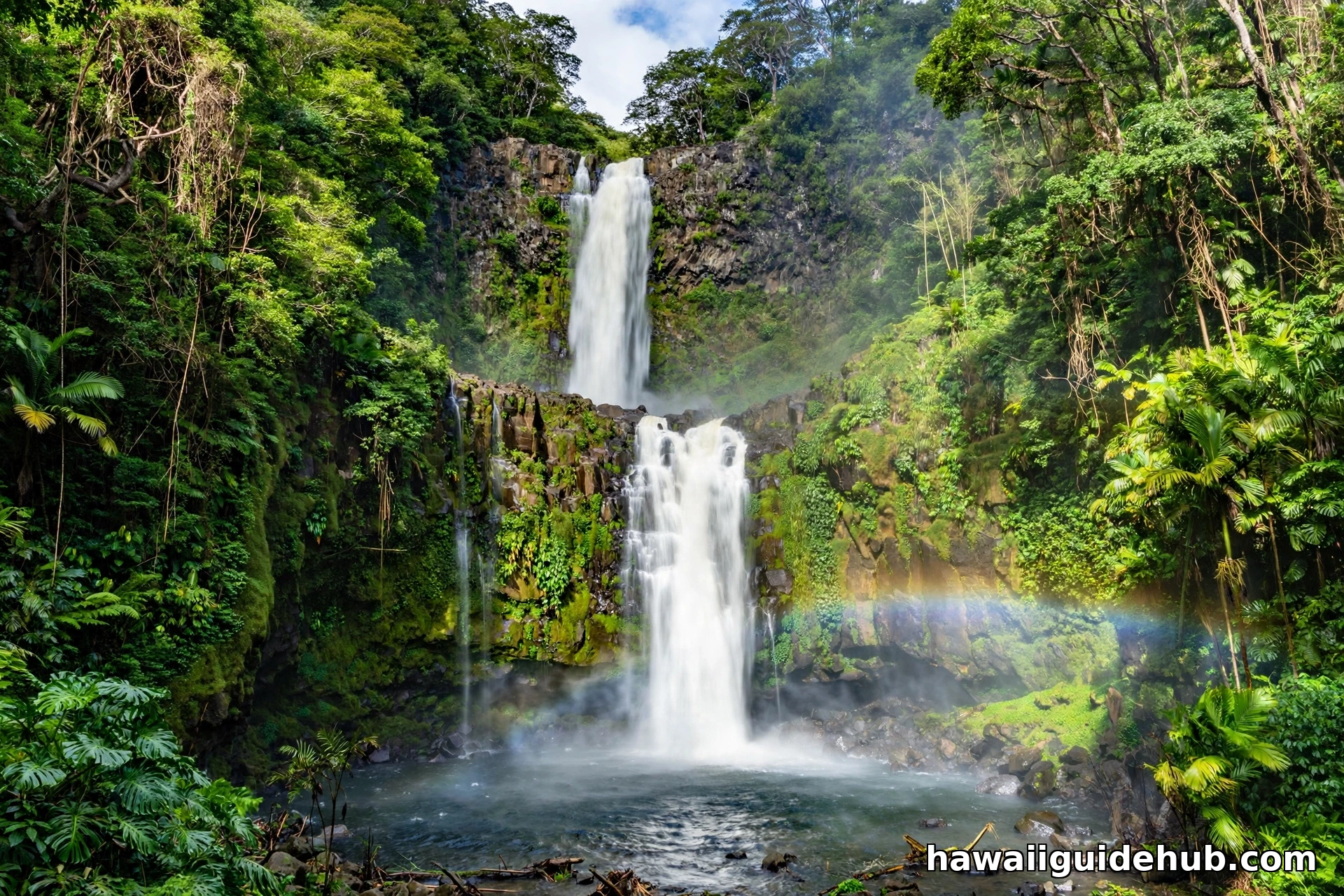
Two of Kauai’s most photographed waterfalls sit within easy reach of Līhuʻe. Wailua Falls is an 80-foot double-tiered cascade set in a lush amphitheater just north of town. Morning light brings out the rainbows in the mist, so go early for the best photos.
ʻŌpaekaʻa Falls, a 151-foot cascade on the ʻŌpaekaʻa Stream in Wailua River State Park, is one of the few major Kauai waterfalls you can see straight from the road. The name means “rolling shrimp,” after the native freshwater shrimp that once tumbled down the falls. The roadside overlook on Kuamoʻo Road also faces the Wailua River valley. There is no safe trail to the base, so enjoy the view from the official viewing area.
Beaches Near Līhuʻe
Kalapaki Beach
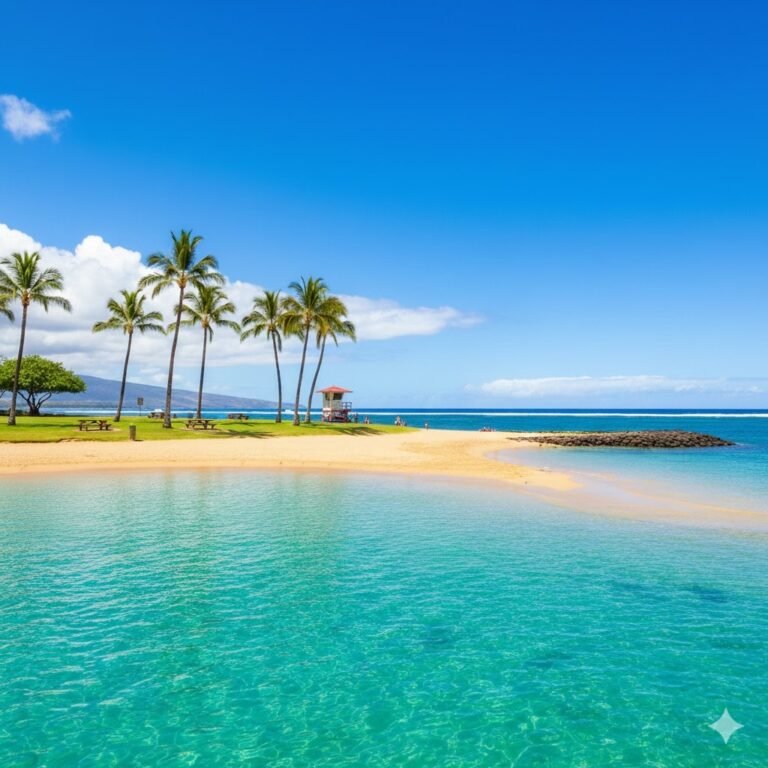
Kalapaki Beach fronts Nawiliwili Bay just south of downtown Līhuʻe, and it is the town’s best all-around beach. The protected bay keeps the water calm enough for swimming, stand-up paddleboarding, and beginner surfing lessons. Surf schools operate right on the sand, and the long crescent of golden sand is a fine place to simply sit with a shave ice. From the beach you can watch cruise ships and working boats come and go at Nawiliwili Harbor, Kauai’s main commercial port.
The beach sits in front of the Marriott resort and a stretch of manicured lawns, but it stays public and welcoming, with easy parking and restrooms nearby. On calm mornings the water turns glassy, and you may spot sea turtles cruising past the breakwater. Because the bay faces southeast and is sheltered by the harbor jetty, Kalapaki is one of the more reliable swimming beaches on the east side when winter swells hit the north shore.
Ninini Point Lighthouse
A short drive past the harbor, the Ninini Point Lighthouse sits on a rocky bluff with sweeping views of the coastline and open ocean. The lighthouse interior is not open to visitors, but the viewpoint around it is worth the trip for sunset photos and whale watching in winter months.
Other Nearby Beaches
Nukoliʻi Beach Park, Hanamāʻulu Beach Park, and Niumalu Beach Park line the coast around Līhuʻe. These are local-style beach parks with picnic tables, shade trees, and calm swimming areas. They get far fewer visitors than the resort beaches, which makes them good picks for a quiet afternoon.
Shopping and Dining in Līhuʻe
Shopping
Kukui Grove Center is Līhuʻe’s main shopping destination, with a mix of national retailers and local shops, plus a food court and regular community events. For souvenirs with more character, browse the artisan shops and galleries at Kilohana Plantation, where you can find locally made crafts, jewelry, and Kauai-grown products. The Kauai Museum gift shop is another good stop for books and handcrafted items.
Take a slow drive down Rice Street itself and you will pass small storefronts that have served the town for decades: plate lunch counters, a bakery or two, and shops selling everything from fishing gear to aloha shirts. It is not a curated shopping district, which is the point. This is where Kauai residents run their errands, and browsing here gives you a truer picture of island life than any resort boutique.
Dining
Līhuʻe’s food scene runs on local favorites rather than resort dining rooms. Hamura Saimin on Kress Street is the town’s most famous eatery, a legendary saimin stand serving the Hawaiian noodle soup with all the fixings, plus its beloved lilikoi chiffon pie. Go hungry and expect a line at lunch.
Tip Top Cafe and Bakery is another Līhuʻe institution, serving plate lunches, loco moco, and fresh-baked goods in a classic small-town setting. For a broader taste of the island’s food culture, seek out poke bowls, shave ice, and fresh fish plates at the casual counters around town. If you want a primer on what to order, our guide to local dishes to try in Hawaii covers the essentials.
Adventures and Tours from Līhuʻe
Līhuʻe is the departure point for some of Kauai’s biggest adventures. Kauai Backcountry Adventures runs zipline tours and its well-known mountain tubing trip, which floats through old sugar plantation irrigation ditches and tunnels. Kipu Ranch, a 3,000-acre working cattle ranch established in 1872, offers off-road ATV tours through movie-famous valleys and past hidden waterfalls.
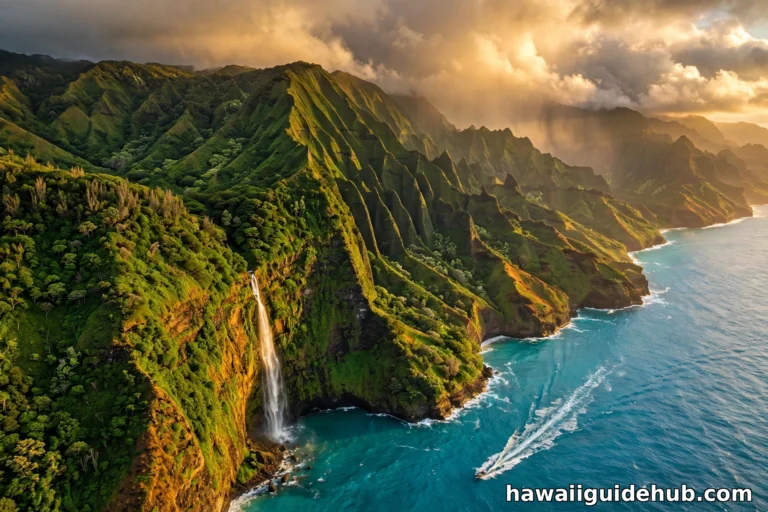
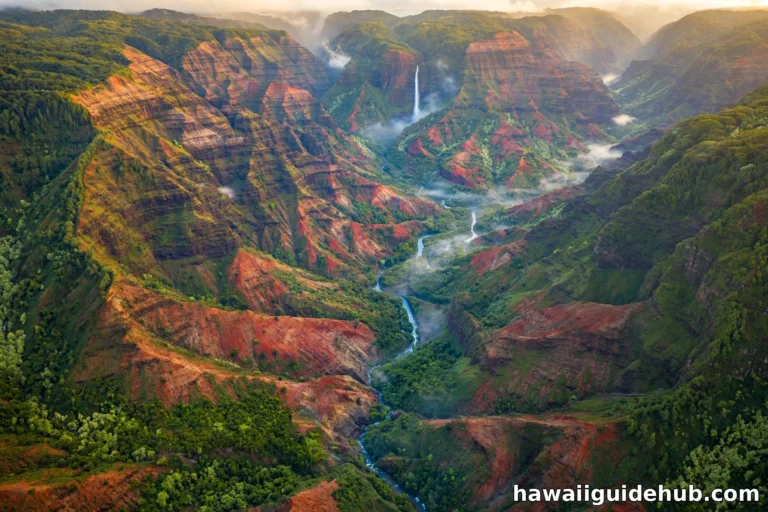
Helicopter tours also depart from Līhuʻe, and seeing the Nā Pali Coast and Waimea Canyon from the air is one of the signature Kauai experiences. Jack Harter Helicopters, based on Ahukini Road near the airport, flies 60 and 90-minute tours with live narration focused on the island’s history and native ecosystems. Book well ahead, since the morning flights fill first.
Golfers have an easy option too. The Puakea Golf Course, a public course in the foothills above town, offers mountain and ocean views at local-friendly rates. It is a relaxed round compared to the resort courses on the south and north shores, and the pro shop staff can usually fit in same-week tee times.
Easy Day Trips from Līhuʻe
One of Līhuʻe’s biggest advantages is its central location. Waimea Canyon is about 45 minutes west, Poʻipū’s sunny beaches are 25 minutes south, and the north shore is 45 to 60 minutes north. Things to do in Hanalei make a natural full-day outing, and Hanalei Bay is worth the drive on any clear day. Before heading north, check current access conditions for the Hāʻena area with the state parks division, since closures have affected the Kalalau Trail in recent seasons.
For a broader look at the island beyond Līhuʻe, see our guide to things to do on Kauai, which covers every region.
Do not overlook the east side itself. The neighboring towns of Wailua and Kapaʻa, ten to twenty minutes north, add bike paths along the coast, the shops of old Kapaʻa town, and more beach parks to the mix. An easy loop up the coast and back makes a pleasant half day when you want to stay close to your Līhuʻe base.
Visiting Tips for Līhuʻe
A few practical notes will help you get the most out of your time in town. Mornings are the best time for the Kauai Museum and for Kalapaki Beach, before the afternoon trade winds pick up. Grove Farm tours only run three days a week and require reservations, so plan that stop first and build the rest of your day around it. Kilohana’s train and luau both benefit from advance booking in high season.
If you are arriving on an early flight or leaving on a late one, Līhuʻe’s sights make a perfect bookend to your trip. Stash your bags, spend a few hours at the museum and the beach, and you will have seen the real working side of Kauai that most visitors drive straight past. For travelers still deciding where the Garden Isle fits in their plans, our first trip to Hawaii guide compares the islands.
Līhuʻe rewards travelers who slow down. It is not a resort town, and that is exactly its charm: a place where plantation history, ancient engineering, and everyday island life sit side by side, all within a few miles of the airport.