Scuba Diving in Hawaii: Best Dive Sites by Island (Mantas, Wrecks, Molokini)

Scuba diving in Hawaii means warm, clear water, volcanic underwater landscapes, manta rays, turtles, and wreck dives you will not find anywhere else in the United States. This guide covers the best dive sites on every island, what each island does best, certification options, costs, safety, and the best time to dive.
Hawaii Dive Sites by Island: What Each Does Best
| Island | Signature dive | Level | Why it stands out |
| Big Island (Kona) | Manta ray night dive | Beginner+ | Mantas feeding in lights; world-famous |
| Maui | Molokini Crater | All levels | 150-ft visibility in a volcanic caldera |
| Oʻahu | Sea Tiger / YO-257 wrecks | Advanced | Big shipwrecks as artificial reefs |
| Kauaʻi | Sheraton Caverns | Intermediate | Lava tubes, turtles, reef sharks |
| Lānaʻi | The Cathedrals | Intermediate | Underwater lava caverns with light beams |
Visibility in Hawaii routinely runs 80-150 feet; water temperatures range from the mid-70s in winter to low-80s in summer. A 3mm wetsuit suffices year-round for most divers.

Big Island: Manta Rays and Blackwater
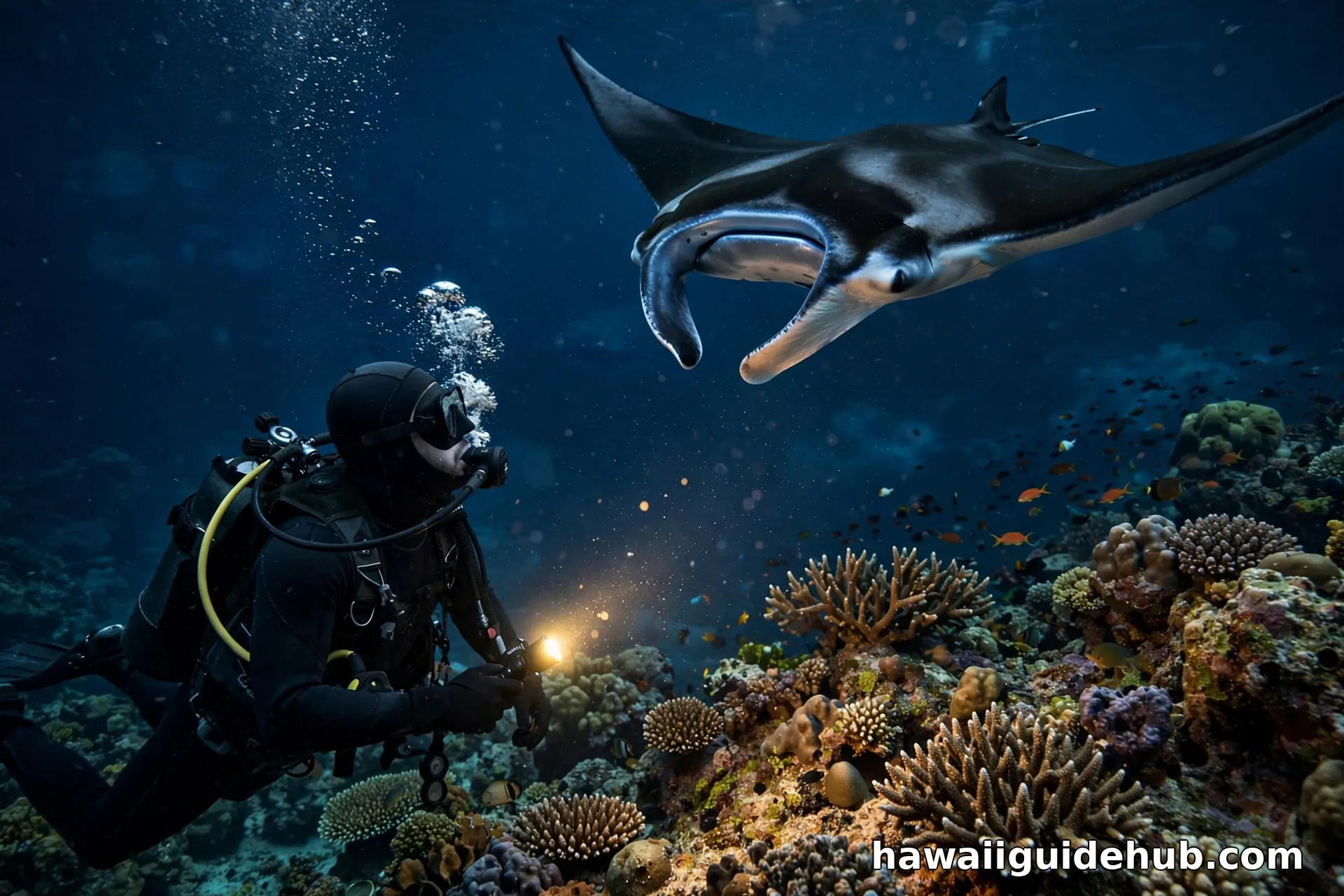
Kona’s manta ray night dive is consistently ranked among the world’s best dives: divers settle on the sandy bottom while lights attract plankton, and mantas with 12-foot wingspans barrel-roll inches overhead. It runs year-round with a near-100% manta sighting rate. For advanced divers, the pelagic blackwater dive drifts over deep water at night to see bioluminescent creatures that rise from the abyss. Kona also offers excellent lava-tube and reef diving by day. For the snorkel version, see the manta ray night snorkel guide.
Maui: Molokini and the Cathedrals
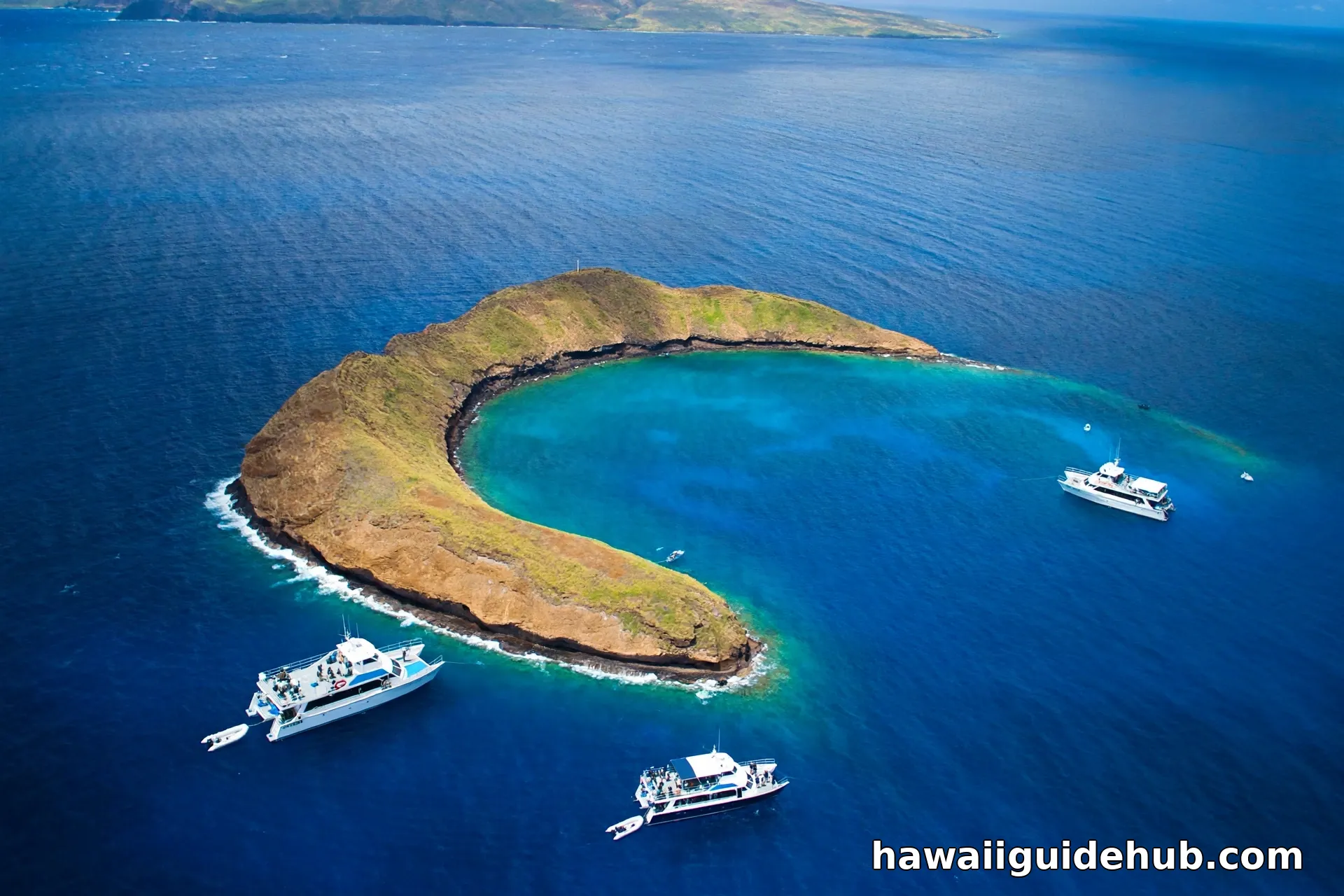
Molokini is a partially submerged volcanic crater with visibility up to 150 feet: a marine reserve with 250+ fish species, reef sharks, and occasional mantas. Trips are two-tank boat dives, about 40 minutes from Maui. The back wall drops to 300 feet: a drift dive for experienced divers. Off Lānaʻi, the Cathedrals are lava caverns where sunbeams pierce through openings like stained glass: otherworldly. Mala Wharf’s collapsed pier is Maui’s best shore-accessible critter dive.
Oʻahu: Wreck Capital
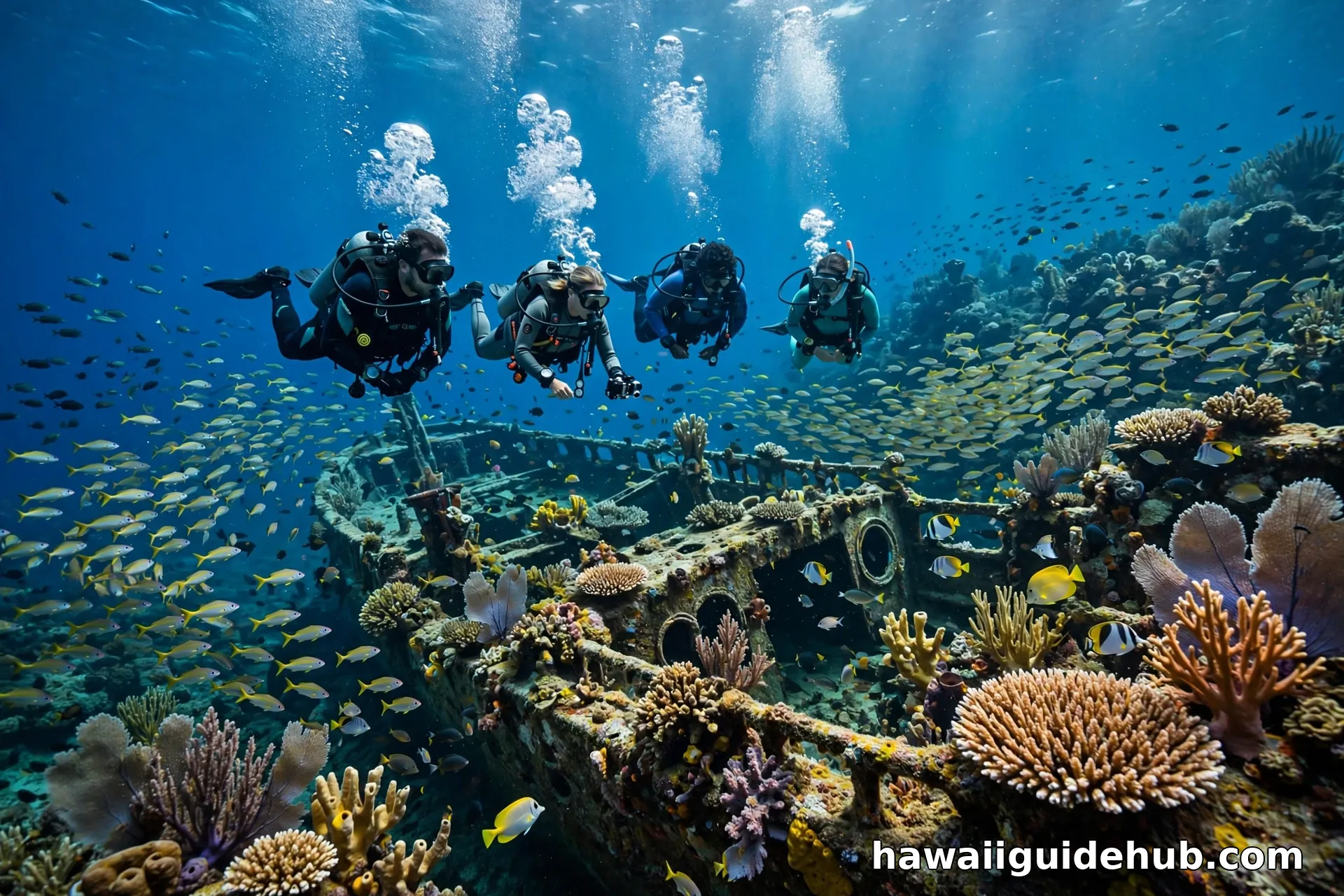
Oʻahu has Hawaii’s best wreck diving: the Sea Tiger (120 feet), YO-257, San Pedro, Corsair plane wreck, and the Mahi are all sunk as artificial reefs, encrusted in coral and patrolled by turtles and eagle rays. Most wrecks sit at 80-130 feet: advanced certification and good air consumption help. Turtle Canyon’s cleaning stations offer guaranteed turtle encounters on shallower dives. Oʻahu is also the best island for getting certified: the most shops, the most class schedules, the most competition on price.
Getting Certified in Hawaii
Hawaii is a fantastic place to learn: warm water, great visibility, and patient instructors. The PADI Open Water course takes 3-4 days and costs $400-600 including gear and materials. Many shops offer a hybrid: do the classroom work online at home, then finish the checkout dives in Hawaii. E-learning saves vacation days. Oʻahu has the most schools and the lowest prices; Maui and Kona have the prettiest training sites. Book the course before you fly: class sizes are small and fill up.
Kauaʻi and Niʻihau: The Wild Cards
Kauaʻi diving centers on the south shore (Sheraton Caverns’ lava tubes, Brennecke’s Ledge) and the legendary Niʻihau day trips: advanced boat dives to the Forbidden Isle’s pristine reefs, with monk seals, massive schools, and vertical walls. Niʻihau trips run only in summer when the channel is calm, cost $300+, and require advanced certification. They are the most ambitious diving in Hawaii: and the most rewarding.
What You’ll See: Marine Life
Green sea turtles (honu) on nearly every dive. Reef sharks (whitetip) resting in caves. Spinner dolphins on early boat rides. Humpback whales singing through the water column in winter: you hear them before you ever see them. Manta rays in Kona. Eagle rays, octopus (especially at night), eels, nudibranchs by the hundred, and the humuhumunukunukuāpuaʻa, Hawaii’s state fish. About 25% of Hawaii’s reef fish are endemic: found nowhere else on Earth. For the full cast, see Hawaii’s iconic marine species guide.
Dive Seasons: Month by Month
May through September: the calm season. Flat leeward water, warmest temperatures, best visibility, easiest boat rides. This is peak diving season and peak prices: book weeks ahead. October-November: shoulder season, still excellent, fewer crowds. December through March: whale season. The diving is still good on leeward coasts, but north swells can close exposed sites, and water dips into the mid-70s. The tradeoff: hearing humpback song on every dive. April: transition month, often excellent. Year-round constant: the manta night dive, which runs in all seasons.
Underwater Photography Tips
Hawaii’s viz rewards cameras. Get close: water eats color and contrast, so fill the frame. Shoot upward for dramatic silhouettes against the surface. A red filter or strobe restores the colors that depth steals. For mantas at night: manual focus, wide angle, and let the animal come to you. For Molokini’s viz: shoot the blue, not just the reef: negative space is the composition. And master buoyancy first: a photographer who crashes into coral is the reef’s worst enemy.
Reef Etiquette: Dive Like a Local
Perfect your buoyancy before touching anything: and then touch nothing. Wear reef-safe sunscreen (Hawaii bans oxybenzone and octinoxate). Do not chase turtles, dolphins, or mantas: let encounters happen. Keep 10+ feet from monk seals: it is federal law. Take only photos. Report coral damage or illegal fishing to DLNR. The reefs you dive are the same reefs Hawaiians have fished and revered for centuries: act like a guest, because you are one.
Liveaboards and Multi-Day Diving
Hawaii has limited liveaboard options compared to the Caribbean: most diving is day-boat based. The exception is Kona’s extended-range trips and the occasional Niʻihau liveaboard week. For most visitors, the better play is a dive package: 4-6 days of two-tank mornings with the same operator, which builds familiarity with the crew and the sites. Many Kona and Maui shops offer 5-day packages at 15-20% off the daily rate. Stay somewhere central to the harbor: Kona for the Big Island, Maʻalaea or Lahaina side for Maui, Honolulu for Oʻahu.
Diving with Kids and Families
Kids 10+ can get Junior Open Water certified; 8-9 year olds can do Bubblemaker pool intros. Hawaii’s calm, warm training sites are ideal for young divers: shallow reefs with turtles keep attention better than any classroom. Family-friendly operators run private or small-group trips: ask specifically. And for mixed groups where only some dive, pick operators whose boats also welcome snorkelers and riders: Molokini and manta trips both work beautifully as combo outings.
Video: Oʻahu’s Legendary Wreck Dives
Corsair plane, Kahala Barge, and Turtle Canyon in 4K.
Frequently Asked Questions About Scuba Diving in Hawaii
Do I need to be certified to scuba dive in Hawaii?
For real dives, yes: Open Water certification. Non-certified divers can do Discover Scuba resort dives (instructor-supervised, shallow) or snorkel instead.
How much does scuba diving cost in Hawaii?
Two-tank boat dives run $150-200; the manta night dive $150-180; certification courses $400-600. Gear rental is usually included.
What is the best island for scuba diving in Hawaii?
Big Island for mantas, Maui for Molokini visibility, Oʻahu for wrecks. There is no bad choice.
When is the best time to scuba dive in Hawaii?
Year-round. Summer (May-September) has the calmest water; winter has whales audible (and sometimes visible) on dives.
Is scuba diving in Hawaii safe for beginners?
Yes, with a reputable operator: Hawaii’s dive industry is well-regulated, and beginner sites are shallow and calm. Never dive beyond your training.
Shore Diving vs. Boat Diving
Boat dives ($150-200 for two tanks) reach the best sites: Molokini, mantas, wrecks, Niʻihau. Shore dives ($100-130 guided, or tank rental ~$25 if certified and experienced) work at spots like Mala Wharf (Maui), Electric Beach (Oʻahu), and Old Airport (Kona). Shore diving demands local knowledge: entries can be tricky and conditions change fast. If you are new to Hawaii diving, start with boats: the guides know where the life is and how the currents run.
Dive Safety in Hawaii
Hawaii diving is safe with standard precautions. Never fly within 18-24 hours of diving: schedule dive days mid-trip, not the last day. Stay hydrated and sun-protected between dives. Currents can be strong at channel and wall sites: follow the divemaster’s briefing exactly. Do not touch coral, turtles, or monk seals: it is illegal and harmful. Dive with reputable, insured operators: check reviews and ask about guide-to-diver ratios. And dive your plan: the viz tempts people deeper than their training.
The Full Cost Picture
Two-tank morning boat dive: $150-200. Manta night dive: $150-180. Blackwater dive: $200-250. Niʻihau expedition: $300+. Discover Scuba (no certification): $150-200. Open Water certification: $400-600. Private guide: $300-500/day. Most prices include all gear, snacks, and hotel pickup in tourist zones. Tips for crew: $10-20 per diver is customary. Multi-day dive packages cut the per-dive cost significantly: if you plan 4+ dives, ask about packages.
Can beginners scuba dive in Hawaii?
Yes: Discover Scuba resort dives let non-certified divers try it with an instructor in shallow water. The manta night dive is also beginner-friendly for certified Open Water divers.
What wetsuit do I need for Hawaii?
A 3mm full wetsuit year-round for most divers; some wear 5mm in winter or for long night dives. Operators provide them.
What If You Don’t Dive? Alternatives
Snorkeling reaches 80% of what divers see at Hawaii’s shallow reefs: Hanauma Bay, Molokini’s inner reef, Kealakekua Bay. SNUBA (surface-supplied diving, no certification) bridges the gap at several resorts. Submarine tours in Waikīkī and Kona take non-divers to 100 feet in air-conditioned comfort. And glass-bottom boats work for the motion-sensitive. But nothing matches breathing underwater while a manta passes overhead: consider the Discover Scuba intro as your trip’s splurge.
Planning Your Dive Trip: Practical Tips
Bring your certification card (or PADI app): shops verify before every dive. Log dives in advance if you are newly certified: some advanced sites require 25+ logged dives. Book the manta dive for early in your trip: if weather cancels it, you can reschedule. Dive Nitrox if certified: longer bottom times at Molokini and the wrecks. Protect your ears on flights over: equalize early and often. And build a rest day between your last dive and your flight home: the islands deserve a slow goodbye anyway. Pair your dives with reasons to visit Maui for a complete trip.
How deep are Hawaii dive sites?
Beginner sites: 20-40 feet. Typical reef dives: 40-80 feet. Wrecks: 80-130 feet. Molokini back wall: 300 feet (technical only).
Are there sharks when diving in Hawaii?
Yes: whitetip reef sharks are common and harmless to divers. Tiger sharks are rare at dive sites. Follow your guide’s briefing.
The Manta Dive in Detail: What Actually Happens
Boats leave Kona harbor at sunset. At the site, divers descend to 30-40 feet and settle into a circle on the sand around a “campfire” of dive lights. The lights draw plankton; the plankton draws mantas. Then the show: mantas with wingspans wider than you are tall loop and barrel-roll inches above your head, mouths open, utterly indifferent to you. The dive lasts 45-60 minutes. Back on the boat, hot showers and the sunset you missed. It is the rare bucket-list item that exceeds the hype: which is why it books out weeks ahead in high season.
Common Beginner Mistakes (and How to Avoid Them)
Skipping the briefing: Hawaii sites have specific hazards (surge at Molokini’s back wall, current at channel dives). Listen. Overweighting: rental shops sometimes overweight nervous divers; ask for a proper weight check. Chasing the perfect photo on dive one: master buoyancy first, camera second. Diving the last day: build in your no-fly interval or risk a ruined flight home. And the big one: booking nothing in advance. The manta dive, Molokini, and Niʻihau all sell out: reserve before you fly, not after you land.
Hawaii diving rewards every level: mantas for beginners, wrecks for veterans, and visibility that ruins other destinations for you. Book the manta dive first: it sells out. For topside plans, see the best of the Big Island.