Puako Beach: Snorkeling, Tide Pools, and Petroglyphs on the Kohala Coast

Most visitors who come to the Kohala Coast chase the famous white sand beaches, the ones with resort umbrellas and polished parking lots. Puako Beach is the opposite of that. There is no big sandy shore here, no beach bar, no lifeguard tower. What there is instead is nearly three and a half miles of raw volcanic shoreline, some of the clearest snorkeling water on the Big Island, tide pools full of small lives, and a trail through the kiawe forest that leads to more than 3,000 ancient stone carvings. It is quiet. It is local. And once you have spent a morning here, you will understand why the people who know the Big Island well keep this place to themselves.
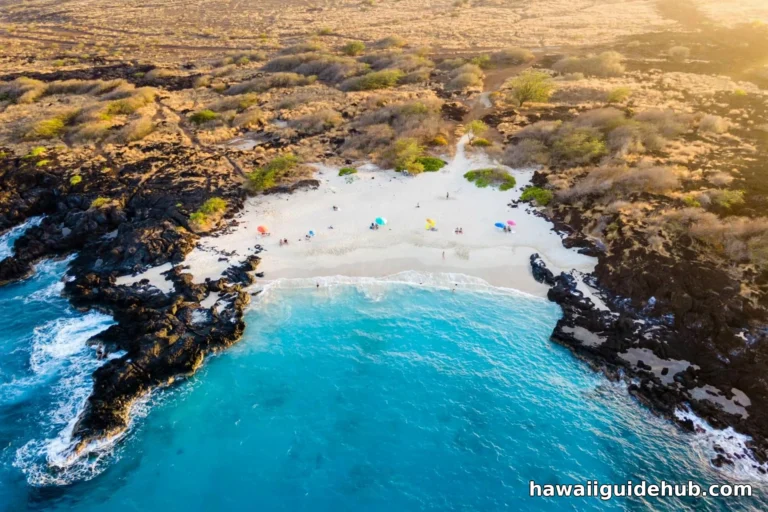
Puako is a small oceanfront community tucked between Mauna Lani and the Mauna Kea resort area, and the “beach” is really a string of rocky access points along Puako Beach Drive. That is the charm and the catch. You do not show up here to lay on a towel. You show up to get in the water, to walk the lava, to watch the sunset, and to feel what the coast of old Hawaiʻi felt like before the resorts arrived. This guide covers everything you need to plan the visit: where to park, where to snorkel, what the tide pools hold, how to walk the petroglyph trail, and how to stay safe on a shoreline that does not forgive carelessness.
Where Is Puako Beach and How Do You Get There
Puako Beach sits on the dry, sunny west side of the Big Island, in the South Kohala district, roughly between the towns of Waimea and Kawaihae. If you are flying in, the route is simple. From Ellison Onizuka Kona International Airport at Keahole, drive north on Queen Kaʻahumanu Highway (Highway 19) for about 22.5 miles, then turn left onto Puako Beach Drive. The shoreline access points begin just past the boat ramp and continue to the end of the road. The drive takes about 30 to 35 minutes from the airport, and the same road is the only way in and out, which is part of why the area stays so calm.
Parking is free, but it is limited to roadside pullouts and small public access lots, so arrive before midmorning on weekends and holidays. Lock your car, roll the windows up, and never leave anything valuable visible inside. This is standard advice anywhere on the island, but it matters more at remote access points where nobody is watching the lot. For the full picture of the island, our guide to the best things to do on the Big Island shows how Puako fits into a wider Kohala Coast itinerary.
What Makes Puako Beach Different
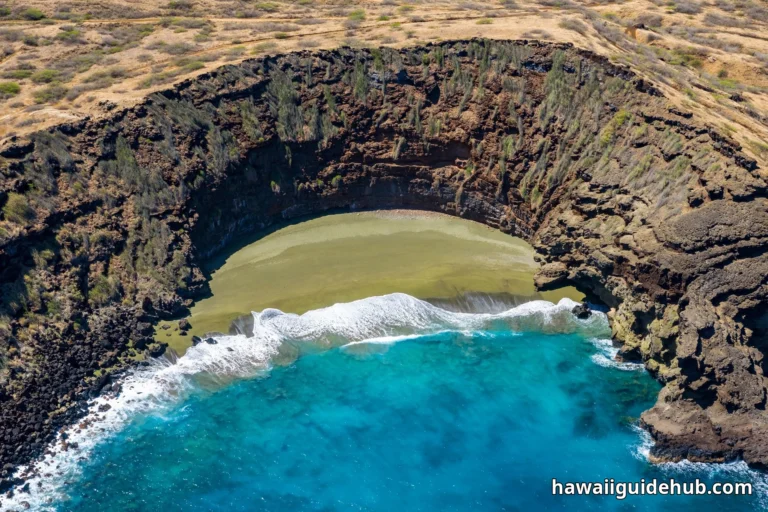
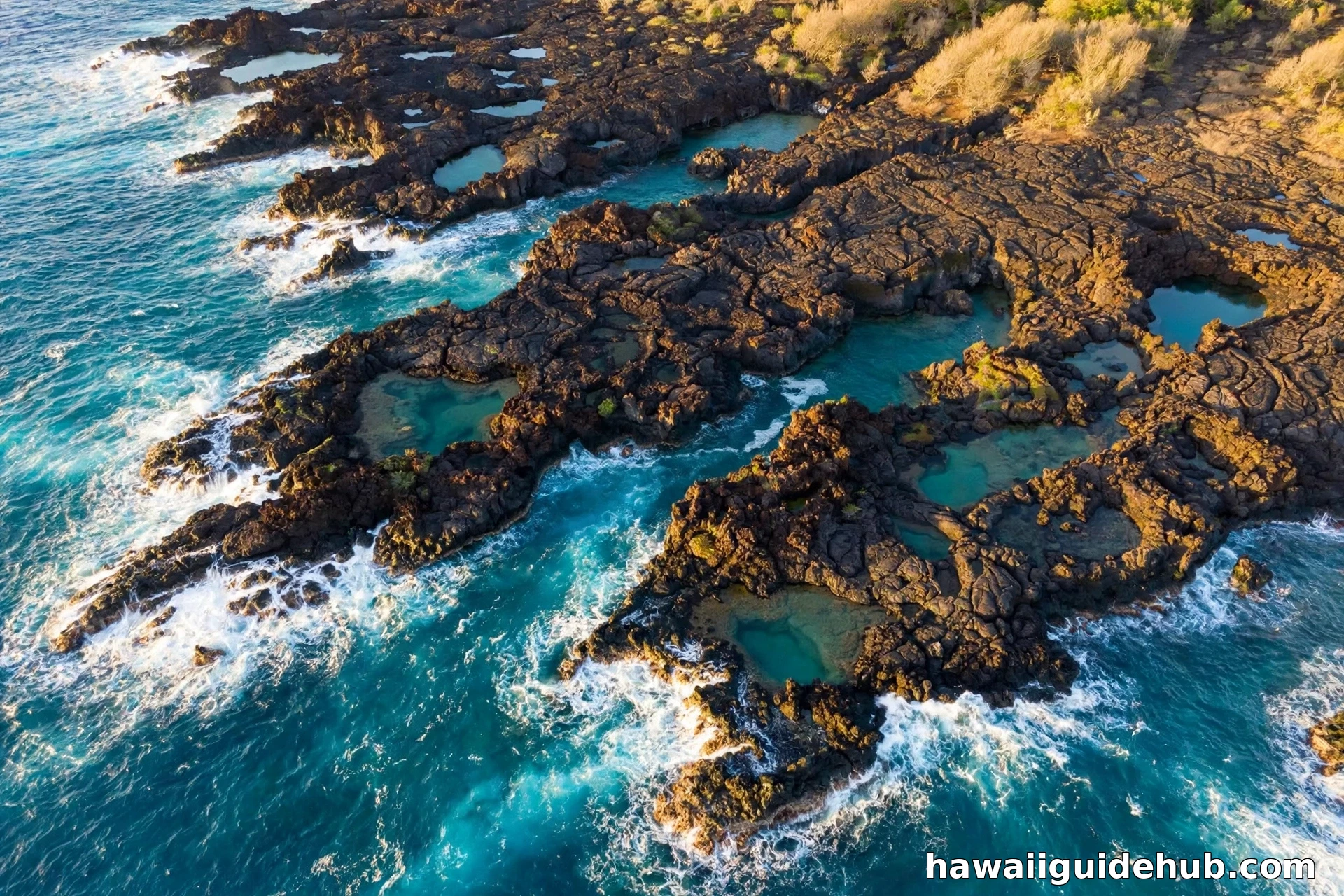
Calling Puako a “beach” in the postcard sense will set the wrong expectation, so let me set the right one. The shoreline here is a mosaic of pāhoehoe lava, rough ʻaʻā flows, coral rubble, and small sandy pockets. Waves break over the outer rock ledges and settle into a long, protected stretch of clear water behind them. Fishermen have worked this shoreline for generations, and you will still see them laying nets and casting from the rocks at dawn, sharing the coast with shore divers and the occasional surfer at the break near the end of the road.
What you get in return for the lack of sand is atmosphere. The water is famously clear because the porous lava filters runoff before it reaches the sea. The coast faces west, which means the sunsets are direct and unobstructed, and on winter evenings you can sometimes watch humpback whales spouting offshore while the sky goes orange. There are no crowds, no music, no commerce. It is just you, the rock, and the ocean, and that simplicity is the whole point.
Snorkeling at Puako Beach
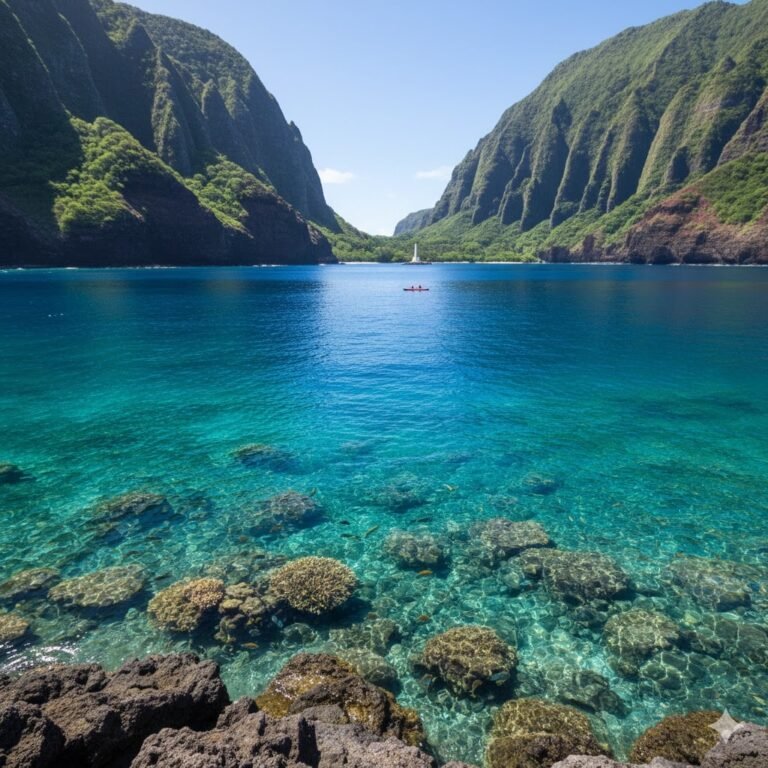
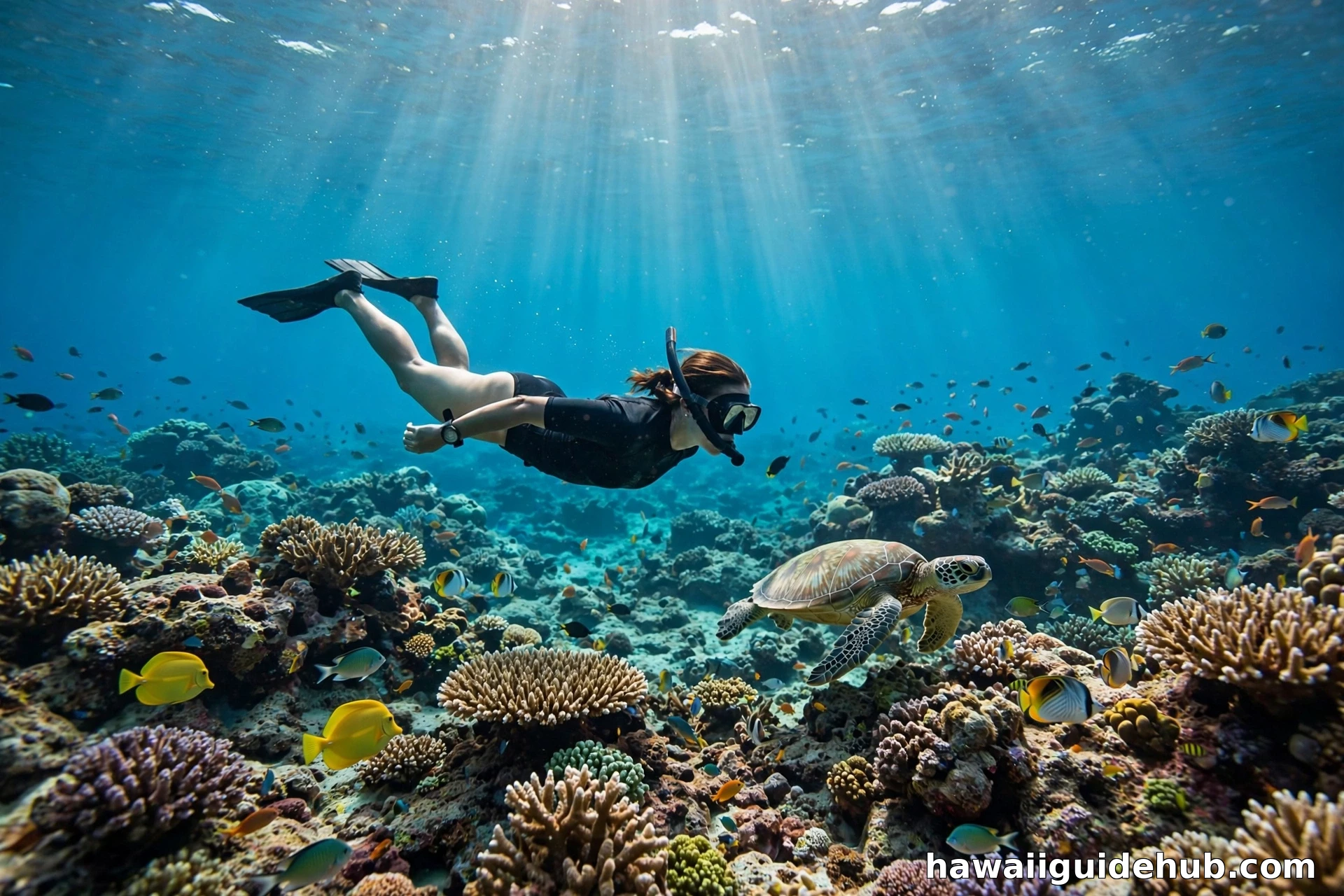
Snorkeling is the main reason most people come to Puako. The nearshore reef is a healthy system of finger coral, cauliflower coral, and lava channels, and the visibility on a calm summer morning is exceptional. Green sea turtles are common residents here. Octopus hide in the lava crevices. Eagle rays cruise the sand channels between reef fingers. Schools of yellow tang, moorish idols, and butterflyfish move through in numbers that rival the famous snorkel spots farther south, without the crowds.
Where to Enter the Water
The single best water entry in Puako is at Paniau, at the quiet end of Puako Beach Drive. Locals sometimes call it the End of the Road. Here there is a small coral and sand beach with the easiest shoreline entry in the area, and just offshore the reef drops into a series of coral heads and sandy channels that are ideal for snorkelers and shore divers. Entry elsewhere along the drive is possible but tricky: the lava rock is sharp, often slippery, and the surf can surge unexpectedly. If you are snorkeling for the first time in Hawaiʻi, read our guide to outdoor adventures in Hawaii, including snorkeling, before you go, and consider your first session a scouting swim close to shore.
A few rules make the difference between a good swim and a bad one. Check the surf forecast before you go and stay out when the swell is up. Enter and exit at the same sandy spot rather than scrambling over rock. Wear reef-safe mineral sunscreen only; chemical sunscreens containing oxybenzone and octinoxate are banned in Hawaiʻi because they damage coral. Never stand on coral or touch the reef. And give every turtle at least ten feet of space. It is not only respectful, it is federal law. You can learn more about why in our piece on Hawaiian green sea turtle conservation and snorkeling etiquette.
What You Will See Beneath the Surface
On a calm day the underwater landscape at Paniau reads like a catalog of the iconic marine species of Hawaii. Green sea turtles, known in Hawaiian as honu, graze on algae along the reef edge and rest in the sandy channels. Day octopus, the heʻe, hunt in the crevices at dawn and dusk and flash startling color changes when startled. Spotted eagle rays glide over the sand in the deeper water beyond the reef. Reef sharks, usually whitetips, patrol the outer ledges and want nothing to do with you. The coral itself is the star though: dense, colorful, and alive, a reminder that this stretch of coast has been protected by its own remoteness for a very long time.
Exploring the Tide Pools
If you would rather stay dry, the tide pools at Puako are a world of their own. At low tide, the lava shelf fills with dozens of clear pools, each one a small aquarium. Look closely and you will find tiny gobies and blennies darting between rocks, hermit crabs changing shells, sea urchins wedged into crevices, and opihi, the prized limpet, clamped to the rock faces. Children love the pools, and they are one of the best free natural attractions on the Kohala Coast.
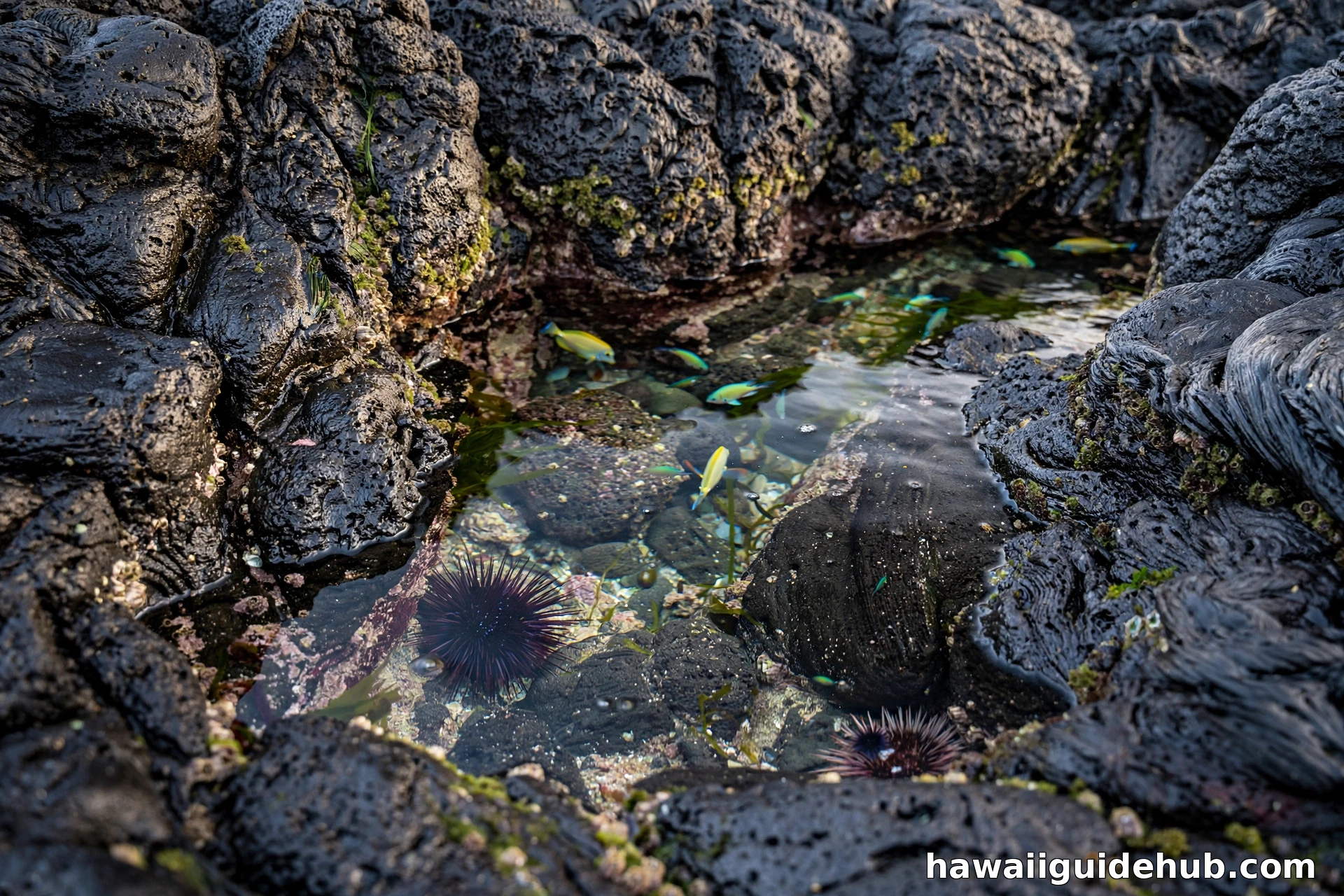
A few guidelines keep the pools and their residents safe. Wear sturdy reef shoes or tabis; the lava is unforgiving on bare feet. Never turn your back on the ocean, since a larger set of waves can wash over the shelf without warning. Look but do not collect. Many of the animals in the pools are protected, and everything you lift from a pool has to survive the rest of the day in the sun. The best time for tide pooling is a calm morning at low tide, which you can check on any tide chart for the Kohala Coast before you head out.
The Puako Petroglyph Trail
One of the most remarkable things about Puako is that a world-class archaeological site sits a short walk from the beach. The Puako Petroglyph Archaeological Preserve, also called the Puakō Petroglyph Park, protects more than 3,000 ancient carvings etched into a pāhoehoe lava field. Human figures, canoes, turtles, dogs, and abstract symbols cover the stone in dense clusters. Nobody knows exactly what every carving meant, but archaeologists believe many marked family lineages, births, and other events, since the figures often appear in family groupings.
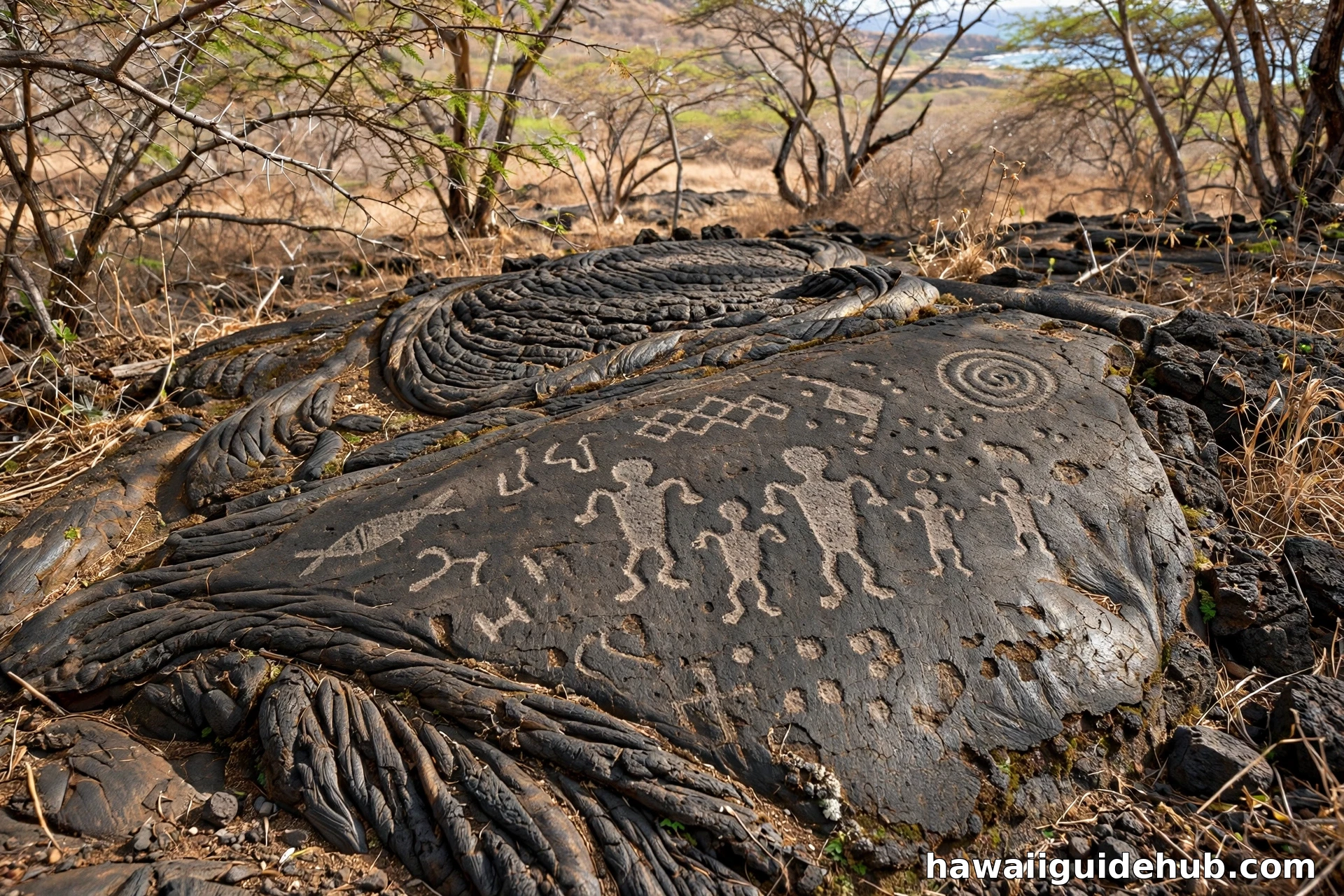
The trail to the petroglyphs begins at Holoholokai Beach Park, inside the Mauna Lani resort area, and runs about 0.8 miles each way through a shady kiawe forest. It is flat and family friendly, though the lava field itself is uneven, so wear closed shoes and carry water. Admission is free. When you reach the carvings, stay on the marked path, look with your eyes, and never touch or trace the carvings; the oils on your hands damage stone that has survived for centuries. Early morning is the best time to go, when the light rakes across the rock and the figures stand out in sharp relief.
Holoholokai Beach Park
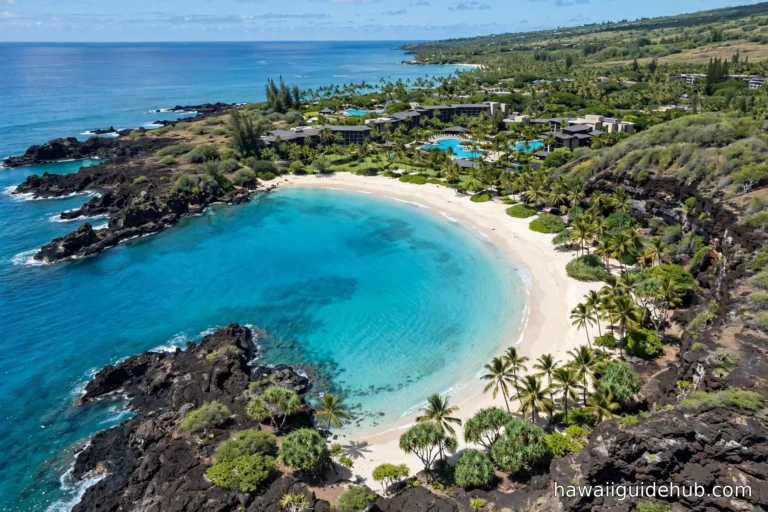
At the southern end of the Puako area, Holoholokai Beach Park offers the most developed facilities you will find nearby. There is a protected swimming cove that is good for families, shaded picnic tables, restrooms, and a striking black and white lava shoreline where the surf puts on a show. The park is open daily from 6:30 in the morning until 6:30 in the evening, and admission is free. It is the natural pairing for a Puako day: swim and picnic here, then walk the petroglyph trail from the same parking area.
When to Visit Puako Beach
The Kohala Coast is one of the driest, sunniest places in Hawaiʻi, and Puako is pleasant in every month. That said, the ocean has seasons. Summer, roughly May through September, brings the calmest water and the best snorkeling conditions, with flat mornings that feel like glass. Winter, from about November through March, brings larger north and west swells that can make the shoreline rough and the water entry dangerous. This is also whale season, and the sunsets with whales spouting offshore are worth the trip even if you do not get in the water.
Time of day matters as much as season. Mornings are almost always calmer and clearer than afternoons, when the trade winds pick up and chop the surface. Arrive by eight or nine, snorkel or explore while the water is glassy, and you will have the place mostly to yourself. By midafternoon the wind fills in and the visibility drops, which is a good signal to move on to the petroglyph trail or find a shady spot for lunch.
Safety at Puako Beach
Puako has no lifeguards, and the ocean here deserves your full respect. The two biggest hazards are the winter surf and the rock itself. Large swells can arrive with little warning and sweep across the lava shelf, so check the surf forecast for the Kohala Coast every time before you go, and stay out of the water entirely when the surf is up. The lava is sharp enough to cut through skin and slippery when wet, so plan your entry and exit carefully and never climb on wet rock near the surf line.
The third hazard is seasonal and easy to forget. Portuguese man-o-war, the stinging jellyfish-like creatures, tend to arrive on the west side of the island about ten days after a full moon, and they drift in with the trade winds. When they are present, the box jellyfish warning signs go up and the smart move is to stay out of the water. Their stings are painful and can be dangerous. A quick check of local beach conditions before you leave your hotel takes thirty seconds and can save your day.
Finally, treat the sun seriously. The Kohala Coast gets intense, direct sun with very little shade at most access points. Bring more water than you think you need, reapply mineral sunscreen, and wear a rash guard in the water. Dehydration sneaks up fast when you are floating in warm water under a tropical sun.
What to Bring
Puako has no shops at the shoreline itself, so pack like you are going somewhere remote, because you are. The essentials are reef-safe mineral sunscreen, plenty of drinking water, snacks or a picnic lunch, a hat and rash guard, reef shoes or sturdy sandals for the lava, and your snorkel gear. The Puako General Store, a few minutes down the road, stocks groceries, drinks, and sundries if you forget something. There are portable toilets at the main access points, but no showers and no drinking water, so bring everything you will need for the day and take all of your trash with you when you leave.
Watch: Snorkeling at Paniau, Puako
Seeing the water entry at Paniau makes planning much easier than reading about it. This short video shows the snorkel and dive entry at the end of Puako Beach Drive and the reef structure just offshore.
The Quiet Side of the Kohala Coast
Puako Beach will never be the most famous beach on the Big Island, and that is exactly its value. It is a place where the shoreline is still wild, where fishermen and turtles share the same reef, where a short walk through the kiawe forest leads to carvings left by hands centuries gone, and where the sunset performs for an audience of a dozen people instead of a thousand. Bring your mask and your curiosity, respect the rock and the reef, check the surf before you swim, and leave the place cleaner than you found it. The quiet side of the Kohala Coast will take care of the rest.