Molokai Without a Car: How to Get Around

Let us be honest from the start: Molokai without a car is a challenge. There is no Uber, no Lyft, no regular public transit built for visitors, and the sights are spread across an island where the airport sits 8 miles from town and the famous beach sits 16 miles the other way. But difficult is not impossible. With the right base, a little planning, taxis booked ahead, and a willingness to travel slowly, you can have a genuinely wonderful car-free Molokai trip. This guide shows you exactly how.
This is the complete guide to Molokai without a car. It covers how to arrive, every realistic way to get around, where to stay so you are not stranded, what a car-free itinerary looks like, and the honest limits. If you have searched for anything about visiting Molokai without a car, Molokai transportation, or getting around Molokai, the answers are all here on this one page. If you are still choosing an island, start with our guide to the best island in Hawaii for first-time visitors.
Molokai Without a Car at a Glance
| GETTING THERE | |
| Arriving | Small commuter flights into Molokai Airport (MKK) |
| Airport to town | 8 miles; taxi or shuttle, pre-arranged |
| GETTING AROUND | |
| Public bus | MEO bus is free but limited; a resident service, not visitor transit |
| Taxis | Exist but few; book ahead and agree the fare before riding |
| Bicycles | Possible for fit riders on flat routes; no road shoulders |
| THE VERDICT | |
| Difficulty | Hard but doable for a slow, short trip |
| Best base | Kaunakakai: walkable town with food, shops, and services |
| Skip without wheels | Hālawa Valley (27.6 miles) and the far west end |
| Ideal trip length | 2 to 3 nights; a week needs wheels |
Arriving: The Airport Is Your First Hurdle
Molokai Airport is a tiny open-air terminal about 8 miles from Kaunakakai, served by small commuter planes from Honolulu. There is no rental counter you can walk up to without a reservation, no bus queue, and no rideshare app with drivers waiting. Your car-free trip succeeds or fails on what you arrange before you land.
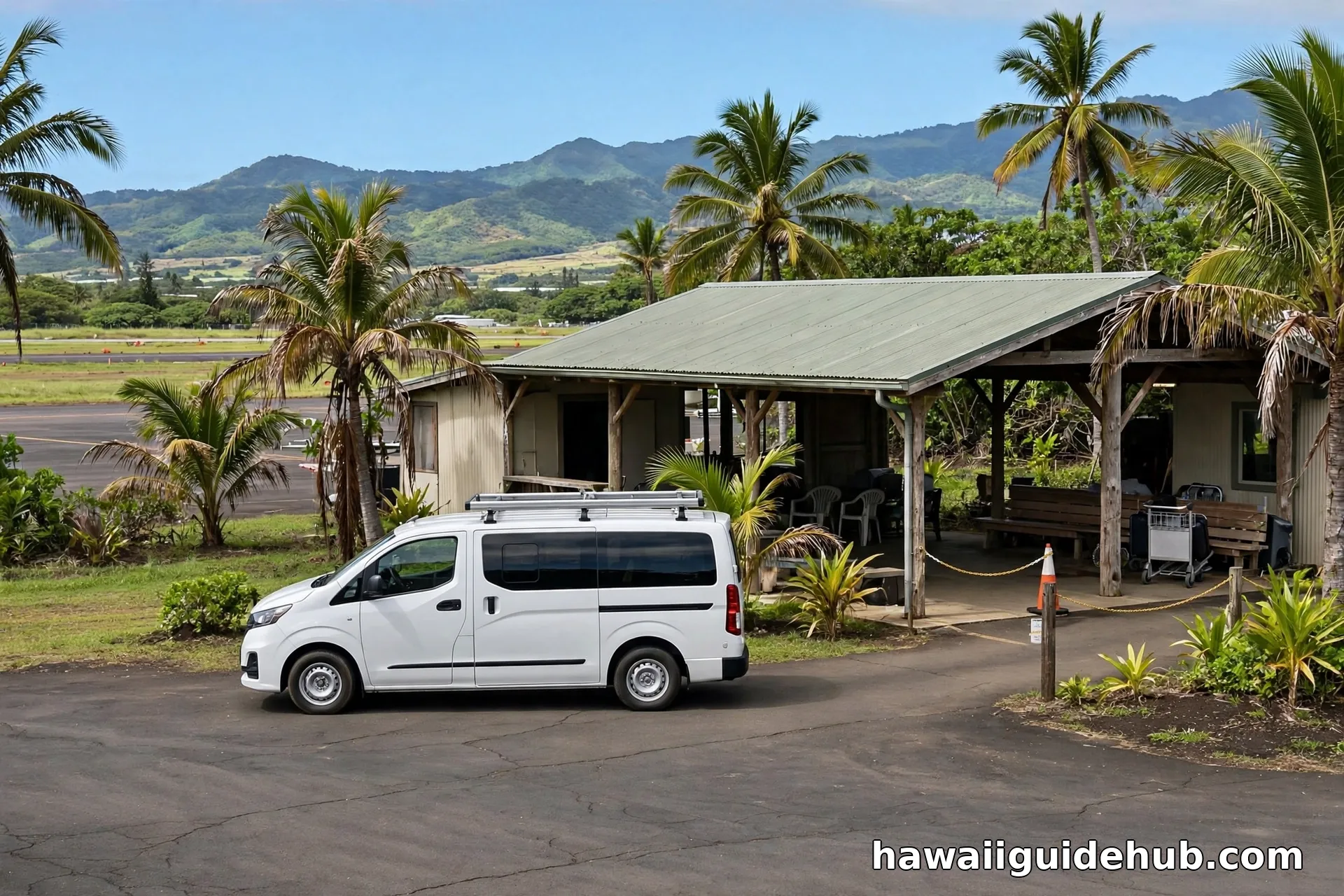
Book a taxi or shuttle to meet your flight, and confirm it the day before. If your accommodation offers airport pickup, take it; many vacation rentals and small inns on Molokai will collect guests if you ask when booking. Walking the 8 miles to town with luggage is not a real option on a road with narrow shoulders and full sun. Set the transfer up first, and the rest of the trip becomes manageable. Our guide to outdoor adventures in Hawaii has more on traveling light between islands.
Your Transport Options, Ranked Honestly
Taxis are your lifeline. Molokai has a small number of taxi drivers. They are reliable when booked in advance and scarce when you need one spontaneously. Get a driver’s number on your first ride and keep it. Always agree the fare before you get in, since meters are not always the norm on long rural runs. A taxi to Papohaku Beach and back, with the driver waiting, is the classic car-free beach day; book it the day before.
The MEO bus is free but limited. Maui Economic Opportunity runs a free bus on Molokai, and visitors can ride. But its routes and schedule serve residents getting to work, school, and appointments, not tourists hopping between sights. Check the schedule at (808) 553-3218 and treat it as a bonus, not a plan. For general trip timing, see our guide to the cheapest time of year to visit Hawaii.
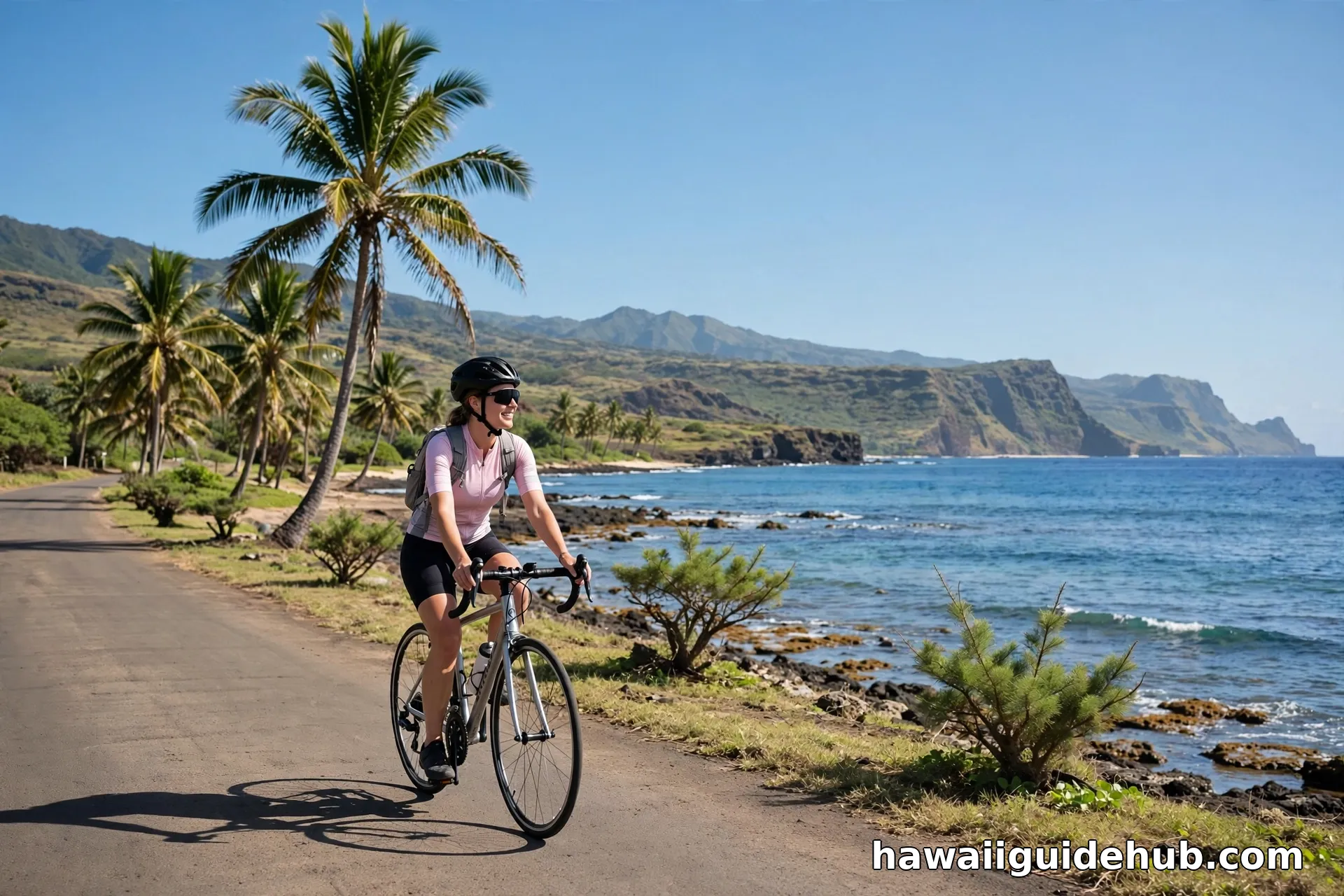
Bicycles work for the fit and careful. The roads around Kaunakakai and the flat west end are rideable, and cycling the empty coastal roads is one of Molokai’s great pleasures. But there are no bike lanes or shoulders, the sun is fierce, and distances are real: 16.5 miles from Kaunakakai to Maunaloa. Rent only if you are a confident rider, stick to daylight, and carry more water than you think you need.
Walking is a lifestyle, not a system. Kaunakakai itself is genuinely walkable: groceries, plate lunch spots, the wharf, and shops sit within a small grid. Choose accommodation in town and half your trip needs no wheels at all. Beyond town, walking is for pleasure on beaches, not for transportation between sights.
Distances from Kaunakakai
Everything on Molokai is measured from Kaunakakai. These official distances explain why a car matters, and which sights are within taxi reach for a car-free visitor.
Where to Stay Without a Car
Your base decides your trip. Stay in Kaunakakai and you can walk to food, groceries, the farmers market, and the wharf; add a taxi or two and you have a full trip. Stay on the west end near Papohaku and you wake up on a spectacular beach but depend on taxis for everything else, including dinner. For a car-free trip, Kaunakakai wins. Pick a vacation rental or small inn in town with a kitchen, so slow mornings and simple meals are easy.
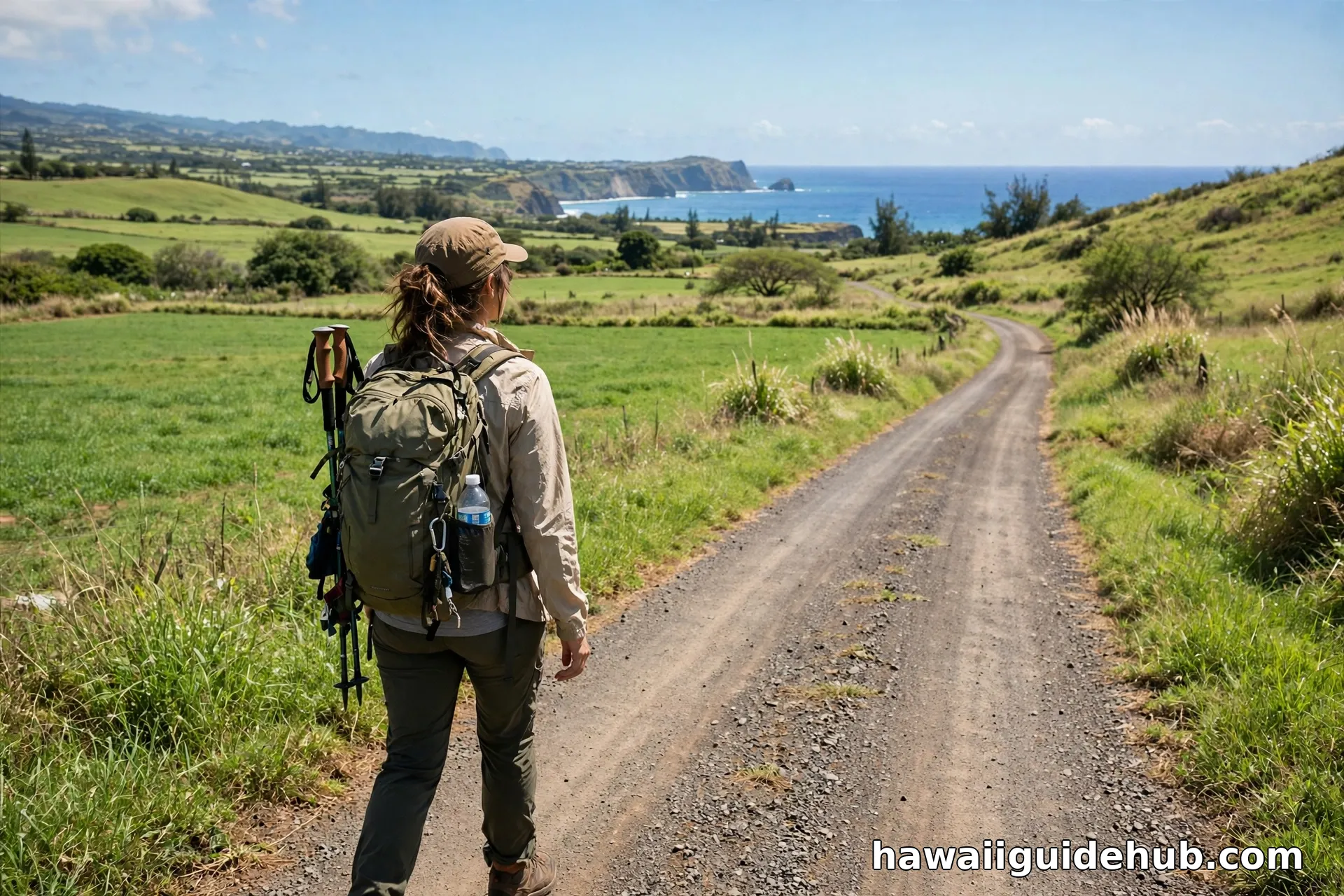
A Car-Free 3-Day Itinerary
Day 1: Land and settle. Pre-booked taxi from the airport to your Kaunakakai rental. Grocery shop on foot, walk the wharf at sunset, eat an early dinner in town.
Day 2: Beach by taxi. Book a taxi the day before for a morning run to Papohaku Beach, with the driver returning at an agreed time. Pack lunch, water, and shade. This is your big outing; the rest of the day is for resting in town.
Day 3: Town and culture. Farmers market, the museum in the old sugar mill, a slow lunch, and the shops, all on foot. Pre-booked taxi back to the airport. The Kalaupapa Lookout, sadly, is not reachable without a car unless you hire a driver for a half-day; ask your taxi driver about a fixed-price lookout run.
Sample Car-Free Day Plan
One realistic day without wheels, timed to how the island actually moves.
Car-Free Budget: What It Really Costs
Here is the uncomfortable truth: going car-free on Molokai usually costs more than renting a car, not less. A rental car spreads one daily rate across unlimited miles. Taxis charge per trip, and on an island where everything is miles apart, the trips add up fast. Two taxi days can exceed a week’s car rental. So do not skip the car to save money; do it because you cannot or do not want to drive, and budget for the freedom you are buying piecemeal.
Keep costs sane with three rules. First, base yourself in Kaunakakai and walk for everything in town. Second, batch your outings: one taxi day for the beach, one for the lookout, rather than daily short hops. Third, ask your accommodation host for driver recommendations; repeat customers often get better fixed rates than one-off calls. For general timing and savings, see our guide to the cheapest time of year to visit Hawaii.
The Kalaupapa Question
Every car-free visitor asks the same thing: can I see the Kalaupapa Lookout without a car? The lookout sits in Palaʻau State Park, roughly a 30-minute drive from Kaunakakai up a winding road, with no bus service. You cannot walk it safely. Your options are hiring a taxi driver for a half-day fixed-price run, or asking your accommodation host to arrange a driver. Many will, because they get asked constantly.
The guided tours down into the Kalaupapa settlement itself are a separate matter. They run Thursdays and Saturdays, are 16 and older, and are booked through Recreation.gov. Tour logistics assume you can reach the meeting arrangements, so confirm transport with your driver when you book the tour. If the lookout trip proves too costly, skip it without guilt; Papohaku Beach and the west end deliver plenty of Molokai magic on their own.
Staying Safe Without a Car
Car-free travel on rural roads demands extra care. The sun is brutal and shade is scarce, so carry a liter of water per person plus sunscreen and a hat on every outing, even short ones. Roads have narrow or no shoulders; walk facing traffic and wear bright colors. Cell coverage is patchy outside town, so download offline maps and tell your host where you are going and when you expect to return. Never start a long walk or ride in the afternoon heat, and always have your taxi driver’s number saved before you need it.
Can you hitchhike on Molokai?
Locals do offer rides to walkers on quiet roads; it is part of the island’s culture of looking out for one another. But as a visitor, do not plan your trip around it. Arrange your transport in advance, accept an offered ride gratefully if one comes, and never put yourself in a position where you must rely on one. Our guide to Hawaii’s hidden gems has more on traveling respectfully on quiet islands.
What to Pack for Car-Free Molokai
Without a trunk to stash things in, your daypack is your car. Pack a reusable water bottle you can refill, reef-safe sunscreen, a wide-brimmed hat, and a light rain layer. Bring a portable phone charger and download offline maps before you leave Wi-Fi. A small dry bag protects your phone and wallet on beach taxi days. Wear proper walking shoes rather than flip-flops for town days; you will log more miles on foot than you expect. And carry snacks: without a car, you cannot just drive to the store when hunger strikes, so the daypack always holds a little extra food.
Is Molokai safe for travelers without a car?
Yes, with normal precautions. Molokai is a safe, friendly island, and the main risks are environmental: sun, heat, dehydration, and narrow roads. Tell your host your plans, carry water and a charged phone, avoid walking rural roads after dark, and keep your taxi driver’s number handy. The island looks out for its visitors.
Video: Top 10 Things to Do on Molokai
See the island’s highlights in 4K, from Papohaku Beach to the Kalaupapa cliffs, and pick which ones fit your car-free plan.
Frequently Asked Questions
Is there Uber or Lyft on Molokai?
No. Rideshare apps do not operate meaningfully on Molokai. Your options are taxis booked by phone, pre-arranged shuttles, the limited free MEO bus, bicycles, and your own two feet.
Can you walk around Molokai?
You can walk around Kaunakakai, which covers food, shopping, and the wharf. You cannot walk between the island’s sights; distances are 8 to 27 miles on roads with narrow shoulders.
How do I get from Molokai Airport to Kaunakakai without a car?
Pre-book a taxi or shuttle to meet your flight, or arrange pickup with your accommodation. The 8-mile trip must be arranged before you land; there is no rideshare queue at the terminal.
Is the MEO bus useful for tourists?
Barely. It is free and visitors may ride, but routes and times serve residents, not sightseeing. Call (808) 553-3218 for the schedule and treat it as a bonus. Our guide to Hawaii’s hidden gems explains why slow islands reward flexible plans.
Should I just rent a car instead?
Honestly, yes, if you can. A rental car transforms Molokai from a 3-day town stay into a full island trip. But if driving is not an option, the plan above still delivers the beach, the town, the food, and the quiet. Winter travelers should also read our humpback whale migration guide, since whales are visible from the west end from December to April, and there is no better place to watch them than an empty west-end beach you reached by taxi.
Molokai without a car is not the easy way to see the island. It is the slow way, and on Molokai, slow is the whole point. Book the taxi the night before, walk the little town in the morning, sit on the empty sand all afternoon, and eat where the locals eat. You will see less of the island and feel more of it than the drivers rushing past. That is not a consolation prize. On Molokai, that is the prize.