Molokai with Kids: The Family Guide

Molokai is the island most families skip, and that is exactly why the families who go love it. No traffic lights, no big resorts, no crowds, just about 7,400 residents living at the pace Hawaii used to move at. For kids, Molokai is a dream: empty beaches where they can run for a mile without seeing another soul, tidepools full of crabs and sea stars, the tallest sea cliffs they will ever see, and night skies so dark the Milky Way looks close enough to touch.
This is the single complete guide to Molokai with kids. It covers the best family beaches and the safety rules that matter, the sights children actually enjoy, the important age limit at Kalaupapa, how to get around with car seats and snacks, and where to stay and eat. If you have searched for anything about molokai with kids, family trips to Molokai, or kid-friendly Molokai activities, the answers are all here on this one page. If you are still choosing an island, start with our guide to the best island in Hawaii for first-time visitors.
Molokai with Kids at a Glance
| The rule | The detail | What it means for your family |
|---|---|---|
| Kalaupapa age rule | Kalaupapa guided tours are 16 and older only | Under-16s sit this one out |
| Car seats | Hawaii law: rear-facing under 2, harness 2 to 4, booster 4 to 10 unless over 4’9″ | Same as home; bring your own |
| Medical | Small hospital in Kaunakakai; bring medications and a first-aid kit | The island’s hospital is small |
| Getting around | Rental car essential; book early, supply is limited | Book the car when you book the flights |
| Best months | April to October for the calmest ocean conditions | Calm water matters most with kids |
| The island | Rural, quiet, deeply Hawaiian; no traffic lights, no large resorts | Set expectations: this is not Waikīkī |
| Top family beach | Papohaku Beach, 3 miles of empty sand for playing | Room to roam |
| Top wow moment | Kalaupapa Lookout over the tallest sea cliffs | The view that justifies the drive |
| Getting there | Short flight to Molokai Airport (MKK), then a rental car | Fly in, then drive |
| Best for kids | Ages 4 and up who love beaches, nature, and simple adventures | The right kids love it here |
| Population | About 7,400 residents | Smaller than most mainland towns |
Why Molokai Is Wonderful for Kids
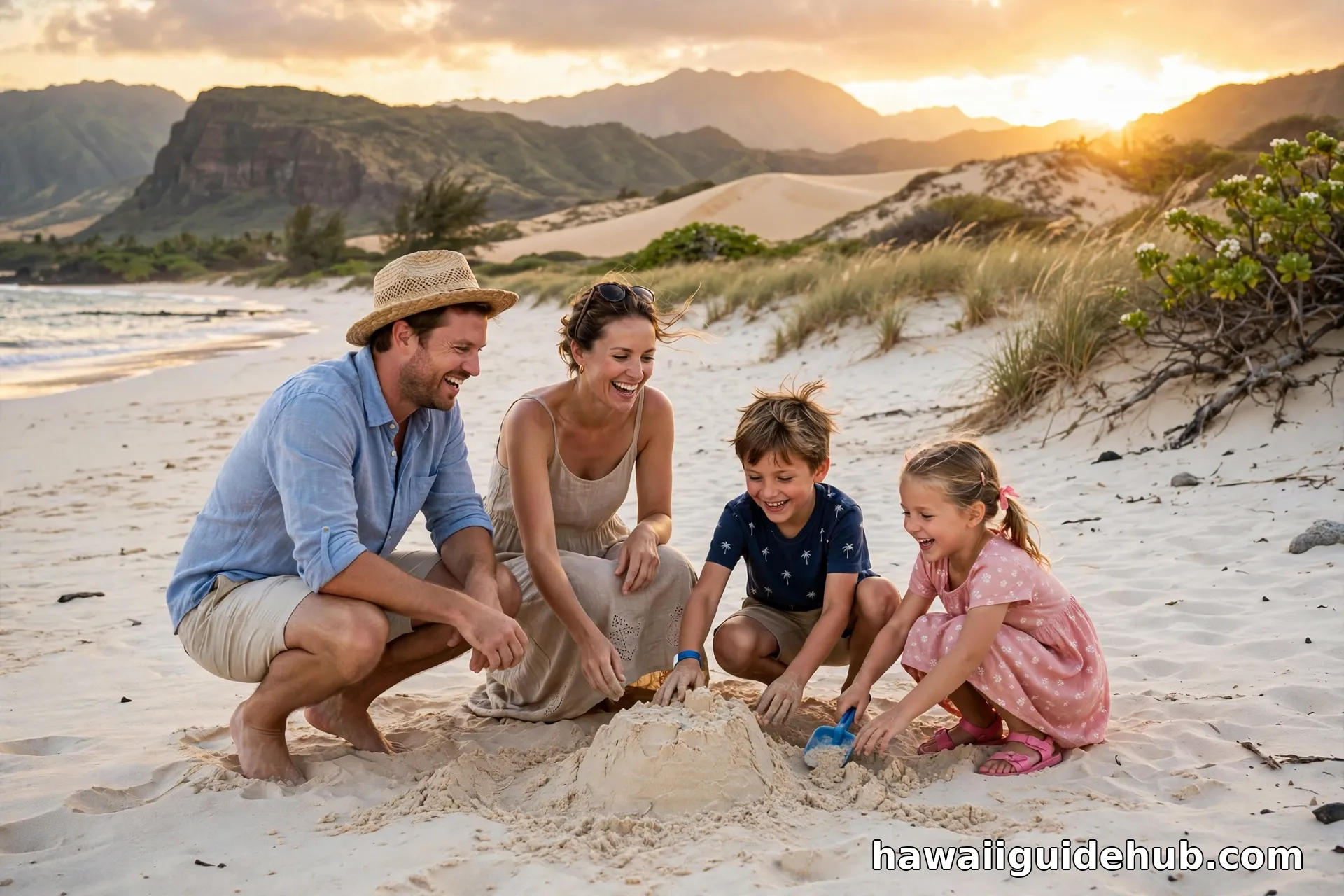
Kids do not need water parks. They need space, and Molokai has more of it than anywhere else in Hawaii. At Papohaku Beach, one of the longest white-sand beaches in the state at about 3 miles, your family may be the only people on it. Children can build sandcastles the size of houses, chase shorebirds, and run themselves happily tired while you actually relax. There is no one to perform for and nothing to buy, which is a kind of freedom modern kids rarely get.
Molokai is also safe in the ways that matter to parents. There is almost no traffic, the towns are tiny, and the island’s whole rhythm is slow. The trade-off is that you must be self-sufficient: groceries, gas, and medical care are limited, so you plan ahead. Families who pack well and slow down find Molokai the easiest Hawaii trip they have ever taken with children. Our guide to Hawaii’s hidden gems captures the spirit of the island perfectly.
Beaches: Where Kids Can Play
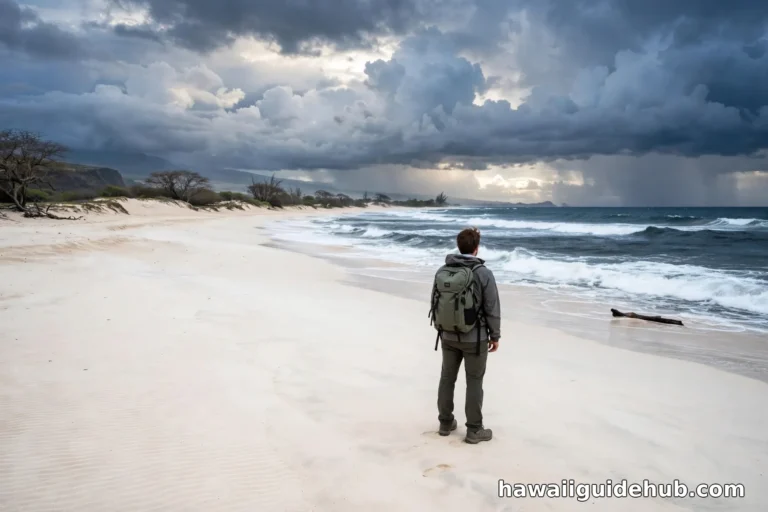
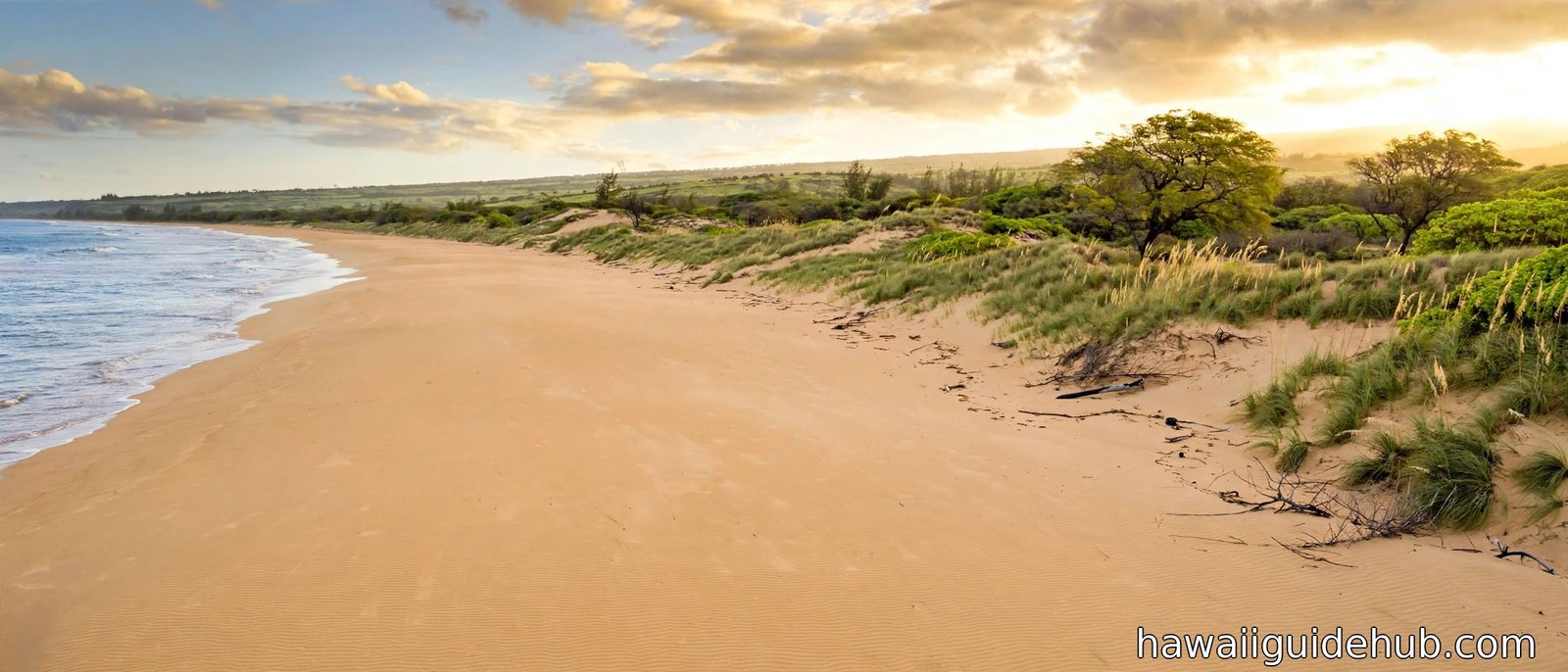
Papohaku Beach Park on the west end is the family headquarters. Three miles of golden sand, dunes to explore, restrooms, showers, picnic areas, and campsites, all with almost nobody around. The important safety note: Papohaku has no lifeguard and no protective reef, and the shore break can be dangerous. Treat it as the world’s greatest sandbox and wading spot, not a swimming beach. Keep kids at the water’s edge, never turn your back on the waves, and save actual swimming for calmer days and calmer spots.
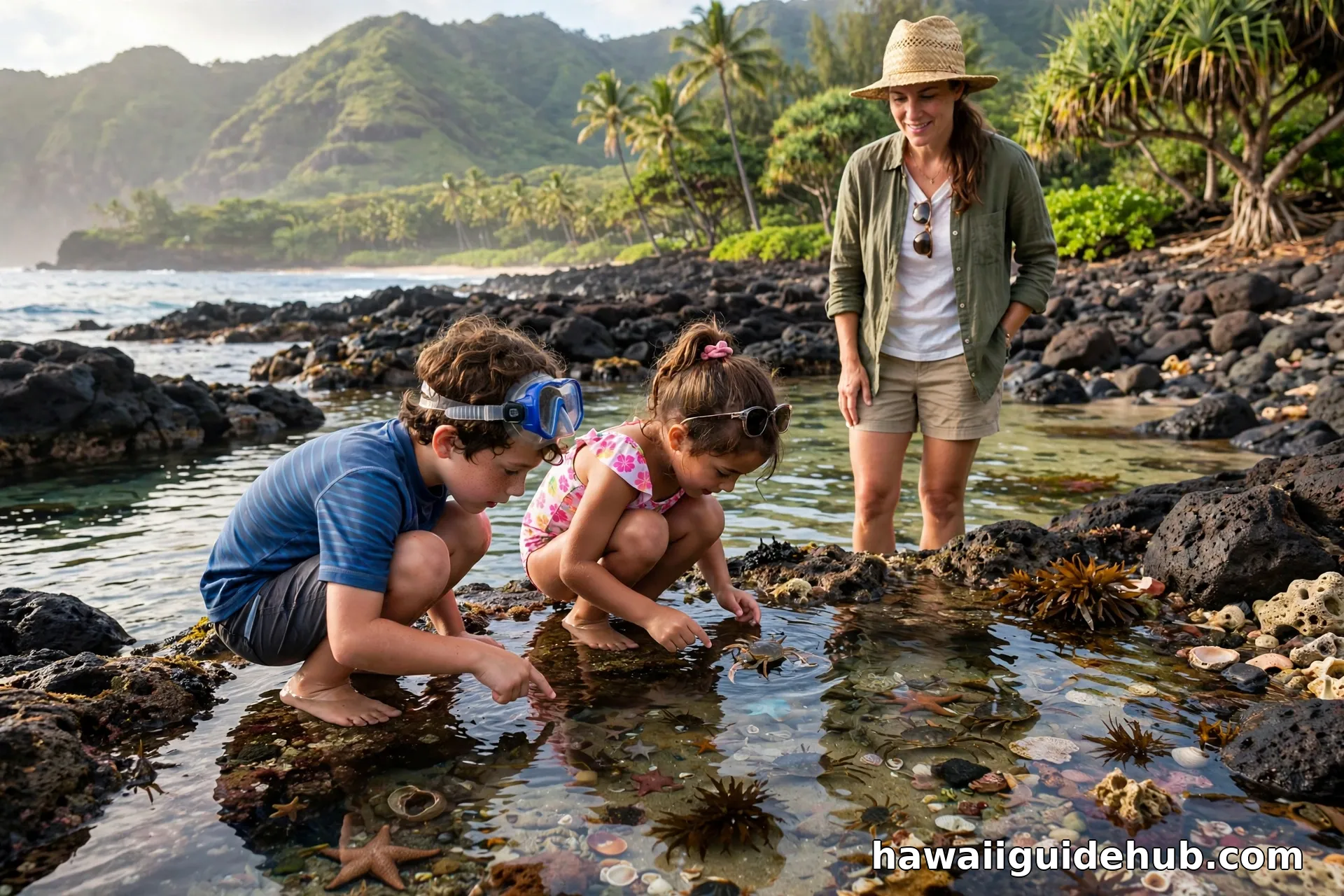
For gentler water, the south-shore beach parks near Kaunakakai are the local choice for families, with shallow reef-protected water that is much calmer than the west side. Conditions change daily, so ask your host or a local shop which spot is calm that morning. The rocky shorelines around the island hide wonderful tidepools at low tide, where kids can spot crabs, sea stars, and small fish. Go at low tide, wear water shoes, watch every step, and teach kids to look without touching.
Kid Beach Safety Rules
Molokai’s beaches are wilder than the groomed resort beaches of other islands, so a few firm family rules keep everyone safe. Swim only where locals swim, never swim alone, and keep children within arm’s reach in the water. Check ocean conditions every morning, because a calm beach yesterday can be rough today. Reef-safe sunscreen, hats, and rash guards protect young skin, and everyone drinks water constantly in the sun and wind.
Things Kids Love on Molokai
The Kalaupapa Lookout in Palaʻau State Park is the island’s great wow moment for children. From 1,600 feet above the ocean, kids stare down at the tallest sea cliffs in the world and the historic Kalaupapa peninsula below, and the scale genuinely silences them. The park itself covers 233 acres of ironwood and eucalyptus forest with picnic areas, and the short walk to the unusual Phallic Rock is an easy adventure for little legs. Bring a picnic and make it a slow morning.
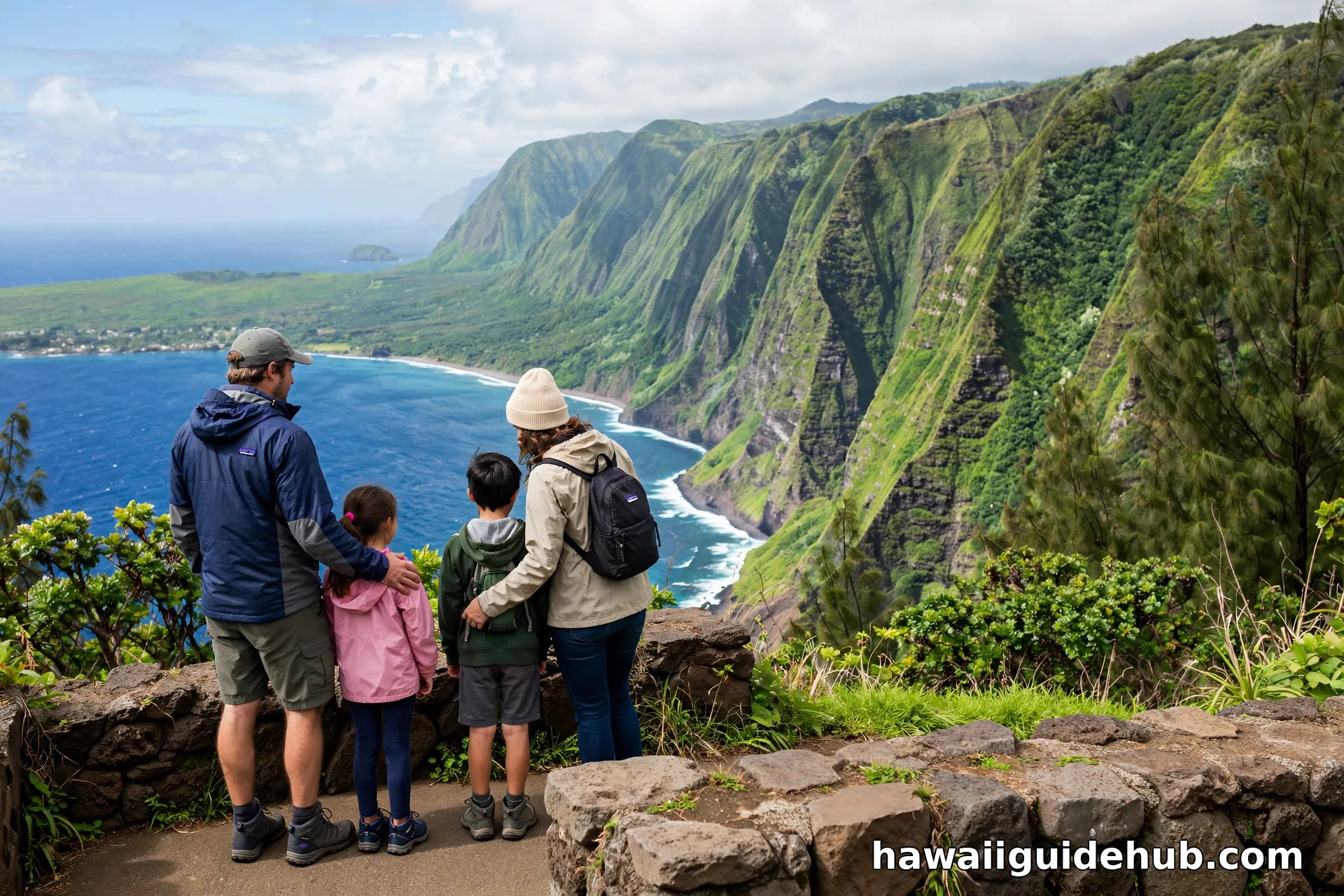
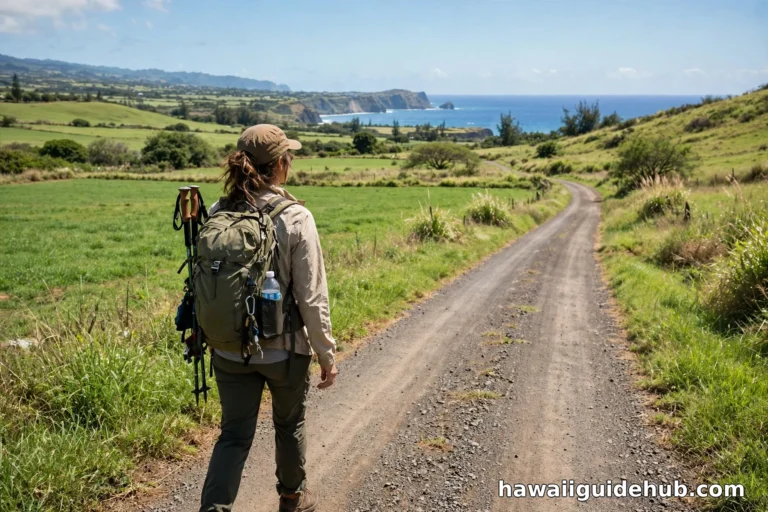
The drive to Halawa Valley at the island’s east end is an adventure in itself: 27.6 miles from Kaunakakai through green valleys and tiny churches, ending at a beautiful bay with a waterfall visible up the valley. The last stretch is narrow and winding, so drive slowly and let the kids spot waterfalls. The island’s museum, housed in a restored 19th-century sugar mill, gives older kids a hands-on look at plantation history. And after dark, step outside: with almost no light pollution, Molokai’s night sky is a planetarium, and spotting constellations together becomes a nightly ritual.
Kalaupapa: The Important Age Rule
Parents should know this before promising anything: guided tours of the Kalaupapa settlement are restricted to visitors 16 and older. The ranger-led tours run on Thursdays and Saturdays, cost $20 plus a $1 fee, and must be booked through Recreation.gov. Kids can absolutely enjoy the Kalaupapa Lookout from Palaʻau State Park, which requires no tour and has no age limit, but they cannot go down into the settlement. Use the lookout visit to tell older children the story of Saint Damien and the settlement’s history at an age-appropriate level.
Getting Around Molokai with Kids
A rental car is essential, full stop. The island’s sights are spread out, the free MEO bus runs limited routes for residents, and taxis are scarce. Book your rental car as early as possible because the small fleet at Molokai Airport sells out. Bring your own car seats from home: Hawaii law requires rear-facing seats for children under 2, harness seats for ages 2 to 4, and boosters for ages 4 to 10 unless the child is over 4 feet 9 inches. Rental agencies stock seats, but supply is as limited as the cars.
Official highway miles from Kaunakakai help you plan kid-tolerant drive days:
Keep drives short and sweet. The Halawa Valley run is the longest at nearly 28 miles each way, so pair it with a beach picnic and no other plans that day. Always carry more water, snacks, and sun protection than you think you need, because there are long stretches with no stores. Fill the gas tank in Kaunakakai before heading out.
Where to Stay and Eat with Kids
Kaunakakai, the island’s main town, is the practical base: vacation rentals with kitchens, the grocery stores, and the hospital are all here. The west end near Maunaloa has condo-style stays close to Papohaku Beach, ideal for families who want to live on the sand. Wherever you stay, choose a place with a kitchen. Dining options are limited and many close early, so cooking breakfast and packing lunches saves both money and meltdowns.
Eat where the locals eat in Kaunakakai: plate lunch shops, the bakery famous for its hot bread, and food trucks. Grocery shop on arrival day and keep the rental stocked with breakfast food, sandwich supplies, fruit, and far more snacks than seems reasonable. Our guide to the cheapest time of year to visit Hawaii can help you time the trip for lower fares. In winter, watch for humpback whales in the channel between Molokai and Maui; our humpback whale migration guide has the season details.
What to Pack for a Molokai Family Trip
Packing right matters more on Molokai than on other islands, because you cannot buy your way out of a forgotten item. Bring reef-safe sunscreen, hats, and rash guards for every child, plus a backup set of each, since the sun and wind are relentless. Water shoes are essential for tidepools and rocky entries. Pack a real first-aid kit with bandages, antiseptic, children’s pain reliever, and any prescriptions, because the small hospital in Kaunakakai handles emergencies but the pharmacy hours are limited.
Food packing is half the battle. Bring a soft cooler, reusable water bottles for everyone, and a stash of non-perishable snacks from home or from a big grocery stop before your inter-island flight. Beach toys, a kite, and a frisbee turn Papohaku’s empty miles into a full day of play. A portable phone charger and downloaded offline maps help in the island’s dead zones. And bring binoculars: kids love scanning the sea cliffs and the whale channel with them in winter.
A Sample 3-Day Family Itinerary
Day 1: West side beaches. Settle into your stay, grocery shop in Kaunakakai, then spend the afternoon at Papohaku Beach building sandcastles and wading at the edge. Sunset picnic on the sand.
Day 2: Palaʻau State Park. Morning drive to the Kalaupapa Lookout, picnic in the park, the short walk to Phallic Rock, and an afternoon tidepool session on the way back. Stargazing after dinner.
Day 3: Halawa Valley. The long scenic drive east with waterfall spotting, a beach picnic at Halawa Bay, gentle wading, and the slow drive home with a shave ice stop in town. An early night after the big drive day.
Video: Molokai, Hawaii’s Less Visited Island
Tour the whole island in this video, from Papohaku Beach and the sea cliffs to the Kalaupapa peninsula and Halawa Valley.
Frequently Asked Questions
Is Molokai good for kids?
Yes, for kids who love nature and simple adventures. Empty beaches, tidepools, the Kalaupapa Lookout, and dark starry skies are magical for children. It is less ideal for kids who need resorts, kids clubs, and constant entertainment.
Can kids visit Kalaupapa?
Kids can visit the Kalaupapa Lookout at Palaʻau State Park, which has no age limit. The guided tours down into the Kalaupapa settlement are restricted to visitors 16 and older.
Are Molokai beaches safe for children?
With the right precautions, yes. Papohaku is wonderful for sand play but has dangerous shore break and no lifeguard, so treat it as a wading beach. The south-shore beach parks near Kaunakakai are calmer. Always check conditions, never swim alone, and keep kids within arm’s reach.
How do you get around Molokai with kids?
By rental car, booked early. Bring car seats from home per Hawaii law. The island is small and drives are short, but carry water, snacks, and sun protection because stores are few and far between.
How many days do families need on Molokai?
Three to four days is ideal: a beach day, a Palaʻau State Park and lookout day, a Halawa Valley drive day, and a slow day for tidepools and town. Our guide to outdoor adventures in Hawaii has more ideas for active families.
Is Molokai safe for families?
Yes. Molokai has very little traffic and almost no crowds, which makes it one of the safest-feeling islands for families. The main cautions are ocean safety at unguarded beaches, sun exposure, and driving carefully on narrow rural roads. The small hospital in Kaunakakai handles emergencies.
Molokai gives kids the rarest gift in modern travel: boredom that turns into wonder. An empty beach, a tidepool, a sky full of stars. Pack the snacks, bring the car seats, leave the schedule behind, and slow down to island time, and let your children discover the Hawaii that existed before the crowds. They will remember this island long after the resort vacations blur together, and so will you.