Molokai for Seniors: A Peaceful Island Guide

Molokai may be the most senior-friendly island in Hawaii, for one simple reason: it asks nothing of you. No crowds to navigate, no traffic to fight, no packed itinerary of must-dos. Just quiet beaches, drive-up viewpoints over the tallest sea cliffs on earth, small-town warmth, and a pace so slow your shoulders drop the day you arrive. For travelers who have earned their rest, Molokai is not a compromise. It is the reward.
This is the single complete guide to Molokai for seniors. It covers the easiest sights on the island, health and medical facts to know before you go, where to stay for comfort, a gentle itinerary, and honest cost guidance. If you have searched for anything about molokai for seniors, accessible Molokai travel, or a relaxed Molokai trip, the answers are all here on this one page. If you are still choosing an island, start with our guide to the best island in Hawaii for first-time visitors.
Molokai for Seniors at a Glance
| What to expect | The Molokaʻi reality |
|---|---|
| The pace | Deeply slow; no traffic lights, no crowds, no rush |
| The vibe | Rest, scenery, and simple pleasures; nightlife is none, gloriously, and evenings are for sunsets and stars |
| Easy sights | Kalaupapa Lookout: a drive-up view of the tallest sea cliffs; Papohaku Beach: 3 flat miles of empty sand |
| Getting around | Rental car essential; book early, avoid rural roads after dark |
| Medical | Small hospital in Kaunakakai; bring all medications and insurance details |
| Dining | Casual and early; many places close by evening |
| Senior savings | $20 annual or $80 lifetime pass for 62+ US citizens and permanent residents |
| When to go | April to October for calm seas; winter for whales |
Why Seniors Love Molokai
Most Hawaiian islands sell you activities. Molokai sells you the absence of them, and after 60, that is a feature. Mornings begin with an empty beach instead of a excursion pickup. Afternoons are for a drive-up viewpoint, a picnic under ironwood trees, and a nap. Evenings end with a sunset over the channel and the darkest stars in Hawaii. There is no pressure to do more, because there is nothing to miss. Our guide to Hawaii’s hidden gems explains the magic of places like this.
Molokai is also genuinely affordable. With no resorts, there are no resort prices. Vacation rentals and small inns cost a fraction of Maui or Oʻahu rates, meals are plate-lunch casual, and the finest experiences cost nothing. The America the Beautiful Senior Pass, $20 a year or $80 for a lifetime for US citizens and permanent residents 62 and older, covers entrance fees at federal sites like Kalaupapa National Historical Park. Note that the guided Kalaupapa settlement tours are booked and paid separately through Recreation.gov.
The Easiest Sights on the Island
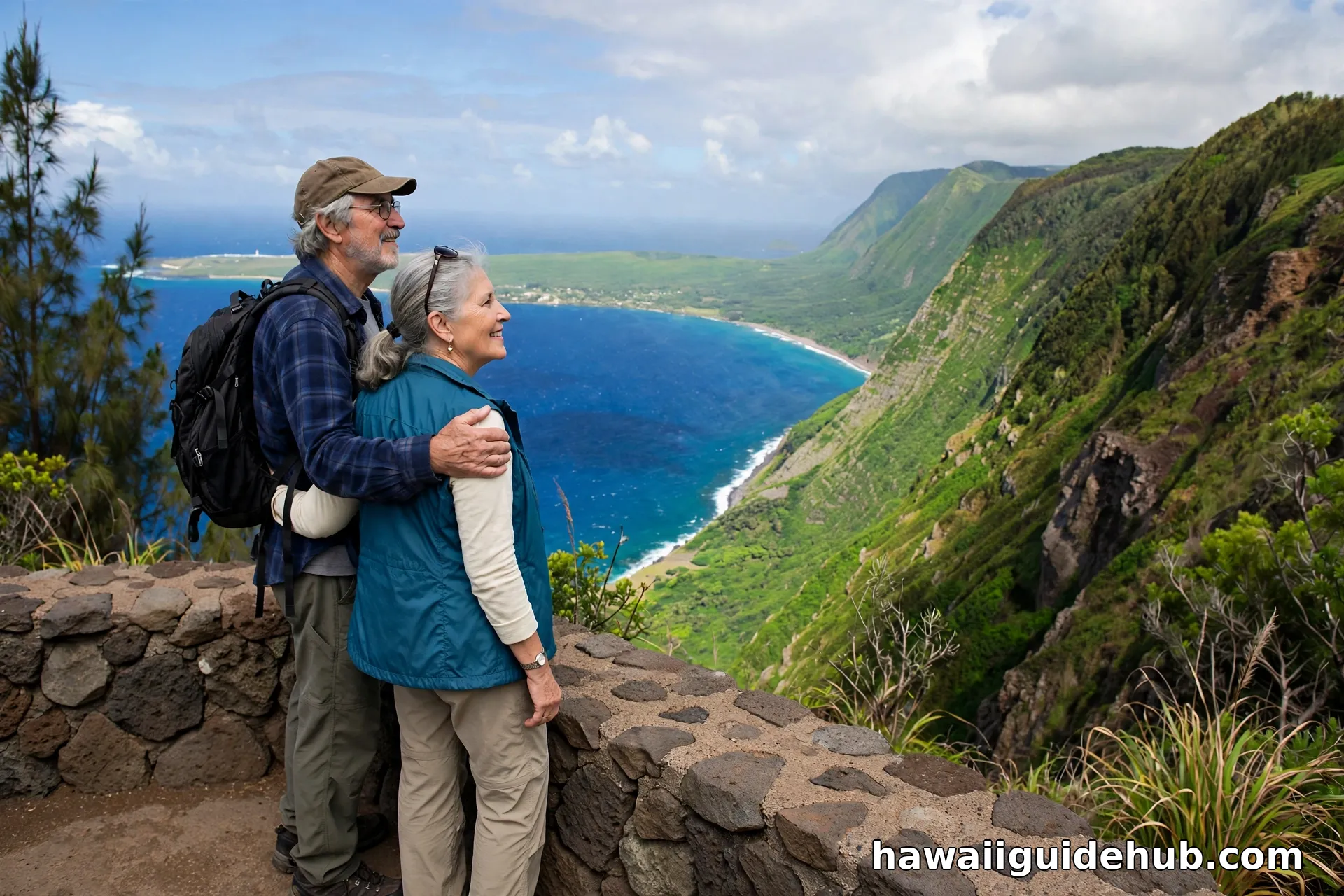
You can see Molokai’s greatest hits without breaking a sweat. The Kalaupapa Lookout in Palaʻau State Park is a short, flat walk from the parking area to one of the most dramatic views in the Pacific: the tallest sea cliffs in the world falling 1,600 feet to the historic peninsula below. The park’s 233 acres of ironwood and eucalyptus forest hold picnic tables and gentle paths, perfect for a slow morning. Guided tours down into the Kalaupapa settlement are 16 and older and run Thursdays and Saturdays, but the lookout itself has no age limit and needs no tour.
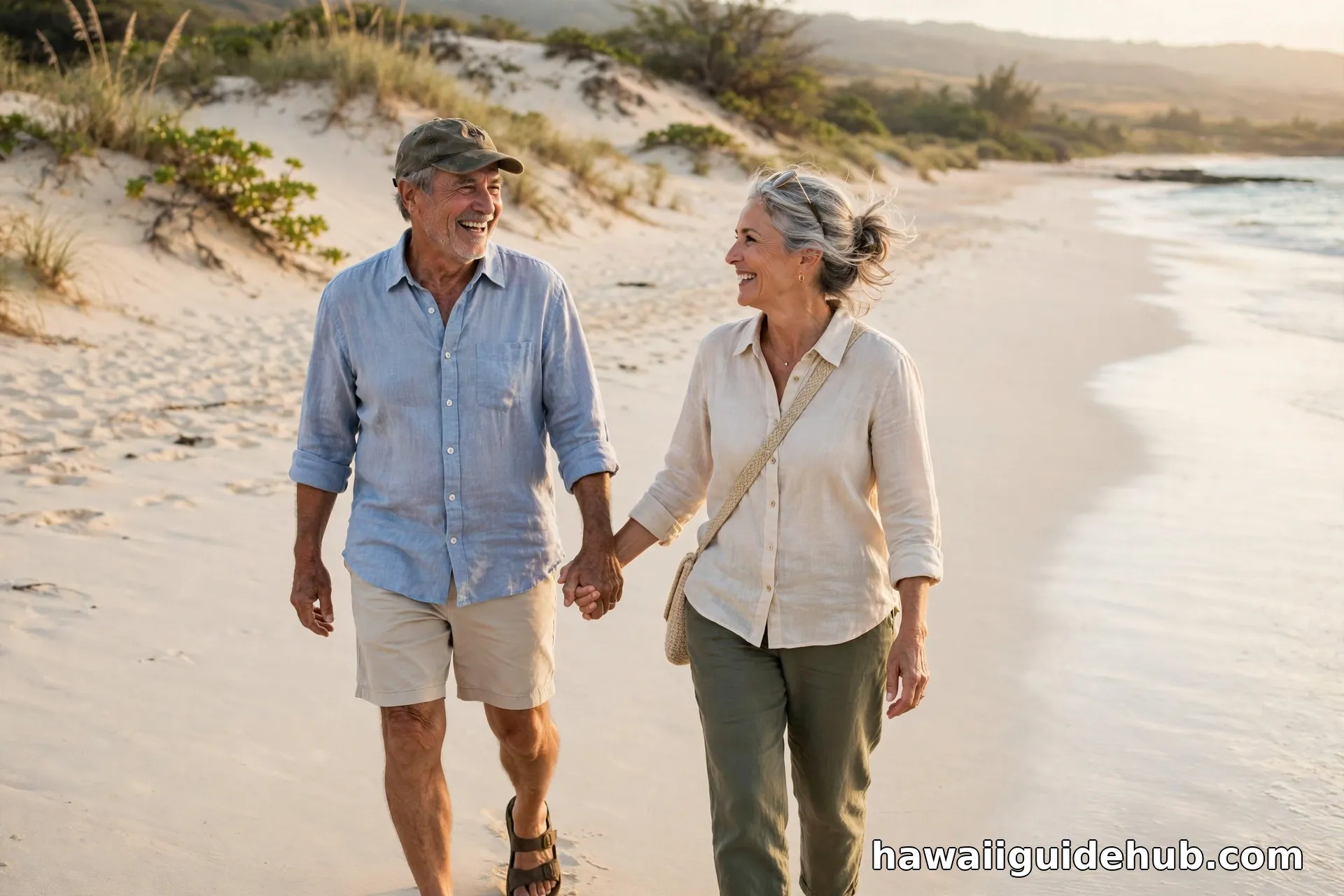
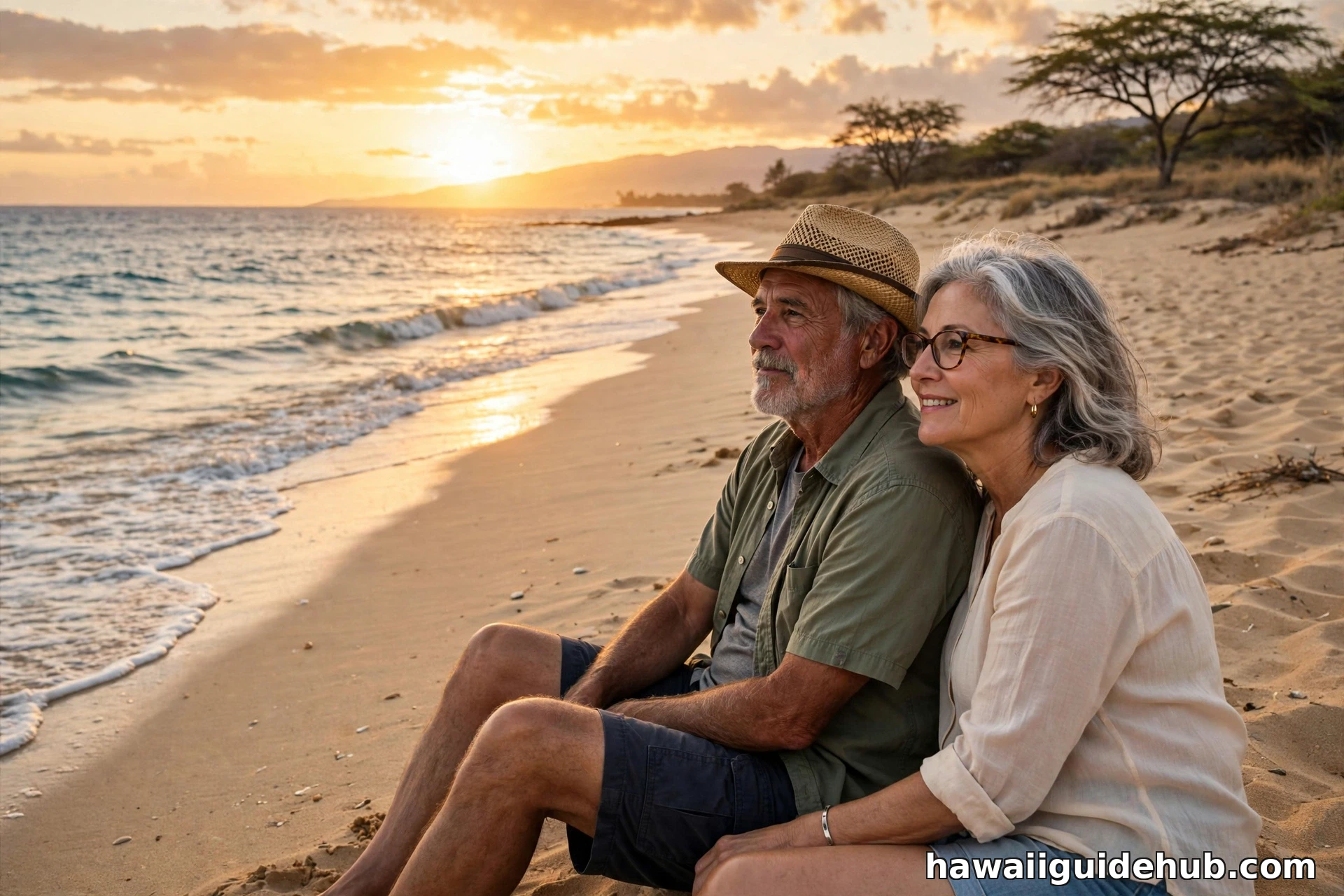
Papohaku Beach on the west end is three miles of flat golden sand with dunes, restrooms, showers, and picnic areas. Walk as far as you like on the firm sand near the waterline, then rest. There is no lifeguard and the shore break can be rough, so enjoy the sand and the view rather than the surf. For a taste of local life, the Saturday farmers market and the small shops of Kaunakakai make a pleasant unhurried outing, and the island’s museum in a restored sugar mill suits a quiet hour.
Effort Scale: Every Activity Ranked
Not every outing asks the same of you. Use this effort scale to build days that match your energy, from drive-up viewpoints to the one long drive worth skipping if you prefer.
Health, Comfort, and Practical Facts
A little preparation makes Molokai effortless. The island has a small hospital in Kaunakakai for emergencies, but specialists and major facilities are a flight away on Oʻahu, so bring all medications in original bottles, a written list, and your insurance details. Travel insurance is wise at any age and especially here. The sun is strong and the trade winds dehydrate quietly, so hats, reef-safe sunscreen, and constant water are non-negotiable. There are long stretches of road with no stores, so the car should always carry water, snacks, and sun protection.
Drive only in daylight on rural roads. The Halawa Valley road is narrow and winding, beautiful but demanding; many seniors happily skip it in favor of a second slow day at Papohaku, and that is a fine trade. The free MEO bus serves residents on limited routes and is not a visitor system, so your rental car is your freedom. Book it early, since the small airport fleet sells out.
Where to Stay and Eat
Kaunakakai is the practical base: vacation rentals with kitchens, grocery stores, the hospital, and the island’s small-town life. The west end near Maunaloa offers condo-style stays minutes from Papohaku Beach for seniors who want to live on the sand. Choose a ground-floor unit or a building with an elevator, and confirm air conditioning if you are heat-sensitive. A kitchen is the single most valuable amenity, because Molokai’s restaurants are few, casual, and early.
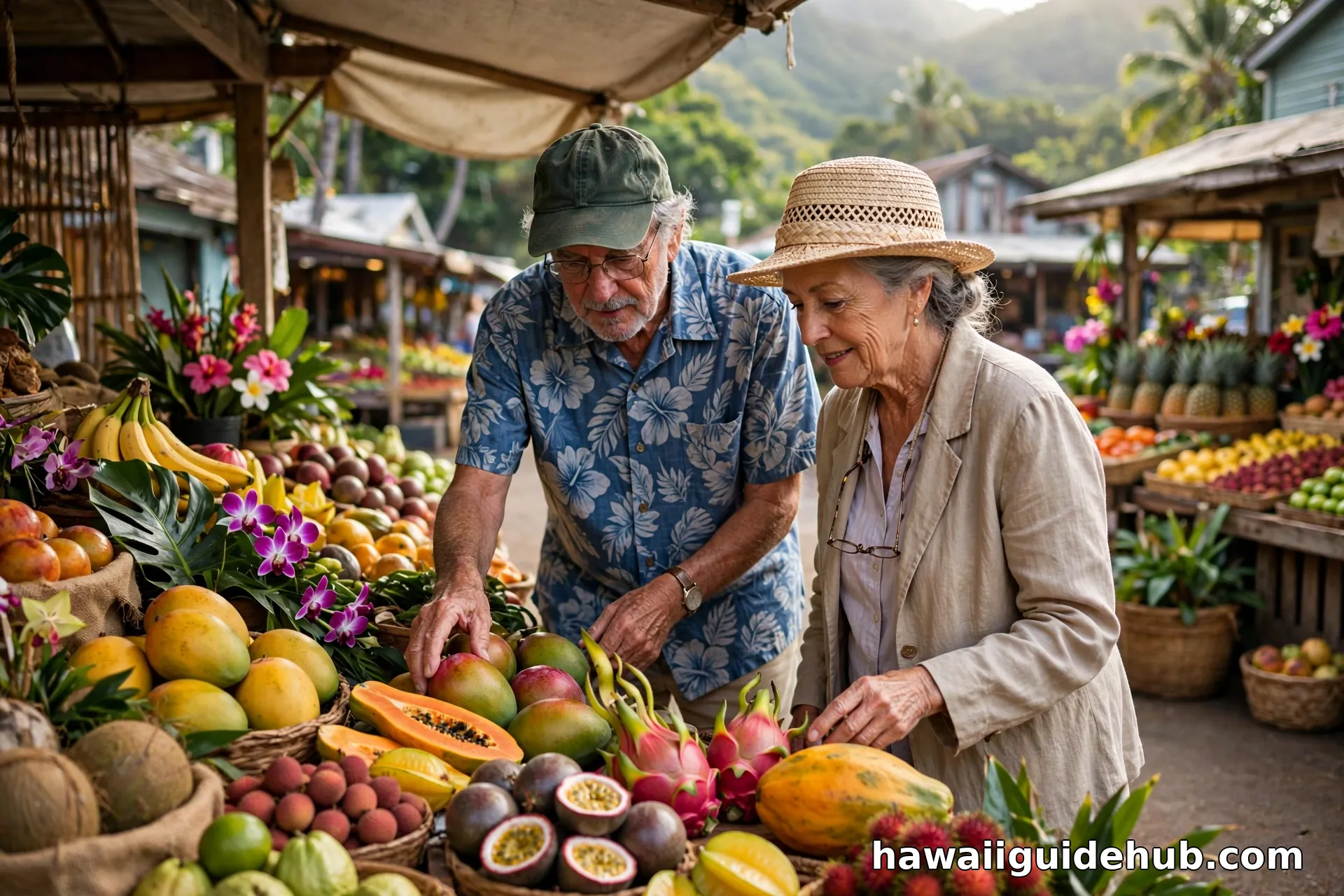
Dining runs on island time. Plate lunch shops, bakeries, and food trucks serve generous food at gentle prices, and the farmers market is a weekly highlight. Plan for early dinners, because many kitchens close in the evening. Grocery shop on arrival day and keep breakfast and lunch supplies on hand. Our guide to the cheapest time of year to visit Hawaii helps with timing, and winter visitors should read our humpback whale migration guide, since the whales parade through the channel from December to April.
A Gentle 4-Day Itinerary
Day 1: Arrive and unwind. Fly in, collect the rental car, grocery shop in Kaunakakai, and settle in. Sunset at the nearest west-facing beach. Nothing else.
Day 2: Lookouts and forest. Morning at Palaʻau State Park: the Kalaupapa Lookout, a picnic under the ironwoods, the gentle paths. Afternoon rest, evening stargazing.
Day 3: Beach day. The whole day at Papohaku. Walk, read, nap, wade, repeat. This is the day you will talk about for years.
Day 4: Town and culture. Farmers market, the museum in the old sugar mill, a slow lunch in Kaunakakai, and a final sunset. Active seniors can find more ideas in our guide to outdoor adventures in Hawaii.
What to Pack for a Senior Molokai Trip
Pack for comfort and self-reliance. Supportive walking shoes for sand and park paths, a wide-brimmed hat, reef-safe sunscreen, and a reusable water bottle for everyone. A small pair of binoculars turns the Kalaupapa Lookout and whale season into a richer experience. Bring a light jacket for cool evenings and the breezy 1,600-foot lookout. Pack a basic first-aid kit, any mobility aids you use at home, and a portable phone charger, because outlets are not always handy on long beach days. And bring a good book: Molokai’s quiet afternoons are made for reading.
Should seniors rent a car on Molokai or join tours?
Rent the car. Organized tours on Molokai are few, and the island’s whole appeal is going where you want, when you want, at your own pace. A rental car booked early is cheaper and more flexible than any combination of alternatives. The free MEO bus is a resident service with limited routes, not a visitor option.
Video: Living on Molokai
Watch a calm 4K portrait of Molokai, from Kalaupapa’s history to the island’s quiet country rhythm.
Frequently Asked Questions
Is Molokai good for seniors?
Yes, it is one of the best Hawaiian islands for older travelers who want rest. Drive-up viewpoints, flat beaches, no crowds, gentle prices, and a deeply slow pace. It is less suited to seniors who want nightlife, shopping, or many organized activities.
Is Molokai accessible for limited mobility?
The headline sights are. The Kalaupapa Lookout is a short flat walk from parking, Papohaku’s sand is flat near the waterline, and Palaʻau State Park has picnic areas and gentle paths. Choose ground-floor accommodation and skip the Halawa Valley road if narrow winding drives bother you.
What medical facilities are on Molokai?
A small hospital in Kaunakakai handles emergencies and basic care. For anything serious, patients are flown to Oʻahu. Bring all medications, a written list, insurance details, and travel insurance.
Can seniors visit Kalaupapa?
Everyone can visit the Kalaupapa Lookout at Palaʻau State Park with no age limit. The guided tours down into the settlement are 16 and older, run Thursdays and Saturdays, and are booked through Recreation.gov.
When is the best time for seniors to visit Molokai?
April to October for calm seas and dry weather. December to April adds humpback whales in the channel, a wonderful bonus if you do not mind shorter days.
Senior Travel Tips for Molokai
Medications first. Pack every prescription in original bottles, plus a written list of names and doses, and keep a day’s supply in your carry-on in case luggage is delayed. The small hospital in Kaunakakai handles emergencies, but refilling a prescription on a quiet island is not quick.
Buy the insurance. At any age, travel insurance is sensible; on Molokai, where serious medical issues mean an airlift to Oʻahu, it is essential. Keep the policy number in your phone and a printed copy in your bag.
Respect the heat. Older bodies dehydrate faster and feel heat more. Schedule outings for the morning, rest through the hot midday, and go out again for sunset. A wide-brimmed hat, lightweight long sleeves, and a liter of water per person per outing are the uniform.
Drive gently. Molokai’s roads are narrow, unlit at night, and shared with the occasional wandering animal. There is no reason to hurry anywhere, so do not. Plan every drive in daylight, and let faster locals pass.
A Note on Island Culture
Molokai is sometimes called the most Hawaiian island, and residents have worked hard to keep it that way. Visitors are welcomed, but the island is not a theme park, and a little cultural awareness goes a long way. Greet people, do not trespass on private land, and ask before photographing residents. Sundays are notably quiet, with many businesses closed; plan around it rather than fighting it.
Support the local economy directly. Shop at the farmers market, eat at the small family restaurants, buy crafts from their makers. Molokai has actively resisted large-scale tourism development, which is exactly why it feels the way it does. Traveling here lightly and respectfully is how you help keep it that way. Many senior visitors say the warmth of the local people, not the scenery, is what they remember most.
Is Molokai too quiet for some seniors?
Honestly, it can be. If your ideal trip includes shows, shopping, varied restaurants, and a buzzing pool scene, Molokai will feel empty. But if your ideal trip is a good book, a long beach walk, a spectacular view, and an early night under the stars, no island in Hawaii does it better. Choose Molokai for what it is, not for what it is not.
Molokai does not try to impress you, and that is why it stays with you. Take the slow road, eat the hot bread, greet your neighbors, watch the sun drop into an empty ocean, count the stars, and fall asleep to nothing but the trade winds. You have spent a lifetime earning your rest. This quiet little island is where you finally collect it. Book the trip, pack lightly, and let Molokai remind you what vacations were always supposed to feel like.