Maui Without a Car: The Complete Guide

Can you do Maui without a car? The honest answer is yes, but with limits you should understand before booking. Maui is not a city with a subway; it is a rural island where the best sights are spread across three coasts. But if you choose the right town as your base, learn the Maui Bus system, and accept that a few headline attractions need a tour or a one-day rental, you can have a genuinely great trip without ever touching a steering wheel.
This is the complete guide to visiting Maui without a car. It covers the Maui Bus in detail, the best walkable towns to stay in, exactly what you can and can’t reach, biking and walking options, what it all costs, and the mistakes that strand car-free travelers. Everything about car-free Maui travel is here on this one page.
Maui Without a Car at a Glance
| The verdict | Yes, with the right base town and realistic expectations |
| The honest split | Fine on the bus: beaches, towns, coastal trails, restaurants, shopping. Needs wheels or a tour: Haleakalā, Road to Hana, ʻĪao Valley, remote beaches. |
| Getting around | Maui Bus: $2 per ride, $4 day pass, $45 monthly |
| Best car-free bases | Kīhei, Kāʻanapali, Pāʻia |
| The workaround | Guided tours and one-day car rentals for the big sights |
| Ideal trip length | 5 to 7 days based in one town |
The Maui Bus: Your Main Way Around
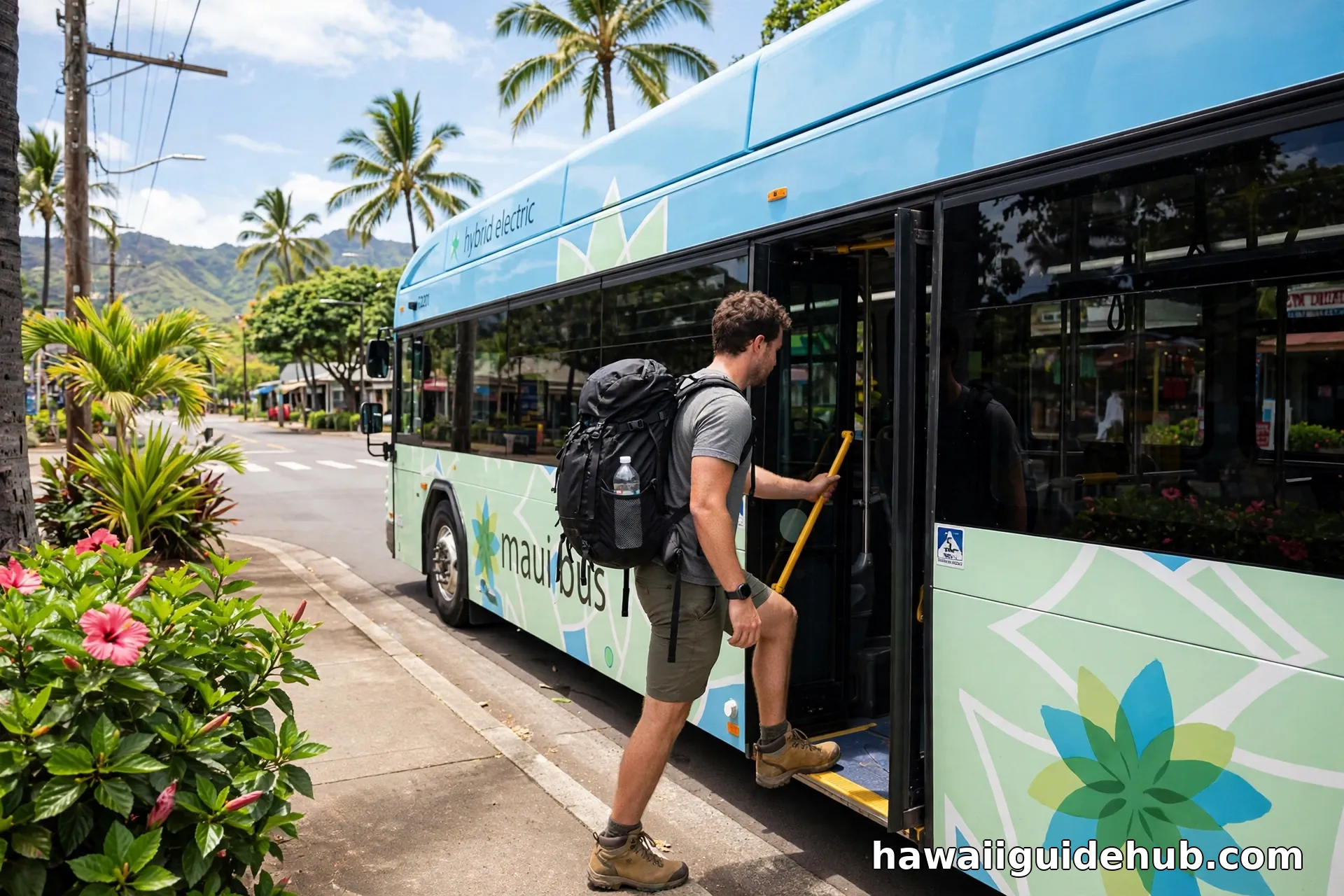
The Maui Bus is the county-run public transit system and the backbone of any car-free Maui trip. According to the County of Maui, fares are $2 per boarding on all fixed routes, a day pass costs $4, and a monthly pass is $45. Riders 55 and older with ID ride free. The system uses a hub-and-spoke layout centered on the Queen Kaahumanu Center transit hub in Kahului, with routes reaching Wailuku, Kihei, Wailea, Maalaea, Lahaina, Kaanapali, Napili, Kapalua, Paia, Makawao, and the airport.
Set your expectations correctly. Buses run roughly hourly on most routes, service is thinner on Sundays and holidays, and crosstown trips can take two to three times longer than driving. The bus is a way to get between towns reliably and cheaply, not a way to sightsee spontaneously. Download the route map before your trip, note the last departure times, and plan each day around the schedule. A $4 day pass makes the bus effectively unlimited, which takes the sting out of transfers.
The Best Towns to Stay in Without a Car
Your base town decides whether car-free Maui works. The rule is simple: stay where you can walk to a beach, restaurants, and a bus stop.
Kihei is the best car-free base overall. It is flat and walkable, lined with calm swimmable beaches, food truck parks, grocery stores, and restaurants along South Kihei Road. The Maui Bus runs through town with connections to Kahului, Wailea, and the airport. Condos are affordable and plentiful. If you only remember one recommendation from this guide, make it Kihei.
Kaanapali works well for resort-style trips. The paved beach walk connects the hotels, Whalers Village has dining and shopping, and the bus reaches Lahaina and Kapalua. It is pricier and you will feel the lack of a car more for day trips, but for a beach-focused week it is easy.
Paia suits independent travelers who want character. The little surf town is compact and walkable, the bus connects to Kahului and the airport, and the vibe is the island’s most interesting. The tradeoff is fewer calm swimming beaches nearby and rainier weather.

What You Can Reach Without a Car
More than you might think. The Maui Bus reaches every major town, and several of the island’s best experiences are walkable from the right base.
Beaches. From Kihei you can walk to a string of calm beaches. From Kaanapali, the beach walk and the bus put a dozen beaches within reach. Kapalua’s coastal trail, one of the prettiest easy walks on Maui, is near a bus stop at the north end of the west Maui route.
Towns and dining. Lahaina’s oceanfront strip, Paia’s shops and restaurants, Makawao’s galleries, and Wailuku’s local food scene are all on bus routes. Grocery runs are easy: Kihei and Kahului have full supermarkets on the bus lines.
Snorkeling. Many of Maui’s best shore snorkeling spots sit in front of the beach towns. From a Kihei or Kaanapali base you can snorkel world-class reefs without any transport at all: just walk in from the beach on a calm morning.
What You Can’t Easily Reach (and the Workarounds)
Be honest about the gaps. Haleakala has no public transit; the summit is 38 winding miles from the nearest bus stop. The workaround is a guided sunrise or sunset tour, which picks you up, or a single-day car rental. Our guide to the Haleakala sunset explains why sunset is the smarter pick.
The Road to Hana is not served by the bus. Take a guided Hana tour from your base town; the drivers know the road, you get the waterfalls, and nobody has to navigate. Iao Valley is reachable by bus to Wailuku plus a short rideshare, which is the cheapest workaround on this list.
The one-day rental strategy deserves emphasis. Rent a car for a single day, hit Haleakala at sunset, and return it the next morning. You get the island’s signature sight for the cost of one rental day instead of a week, and the rest of the trip stays car-free. Many travelers find this the perfect compromise.
Biking and Walking
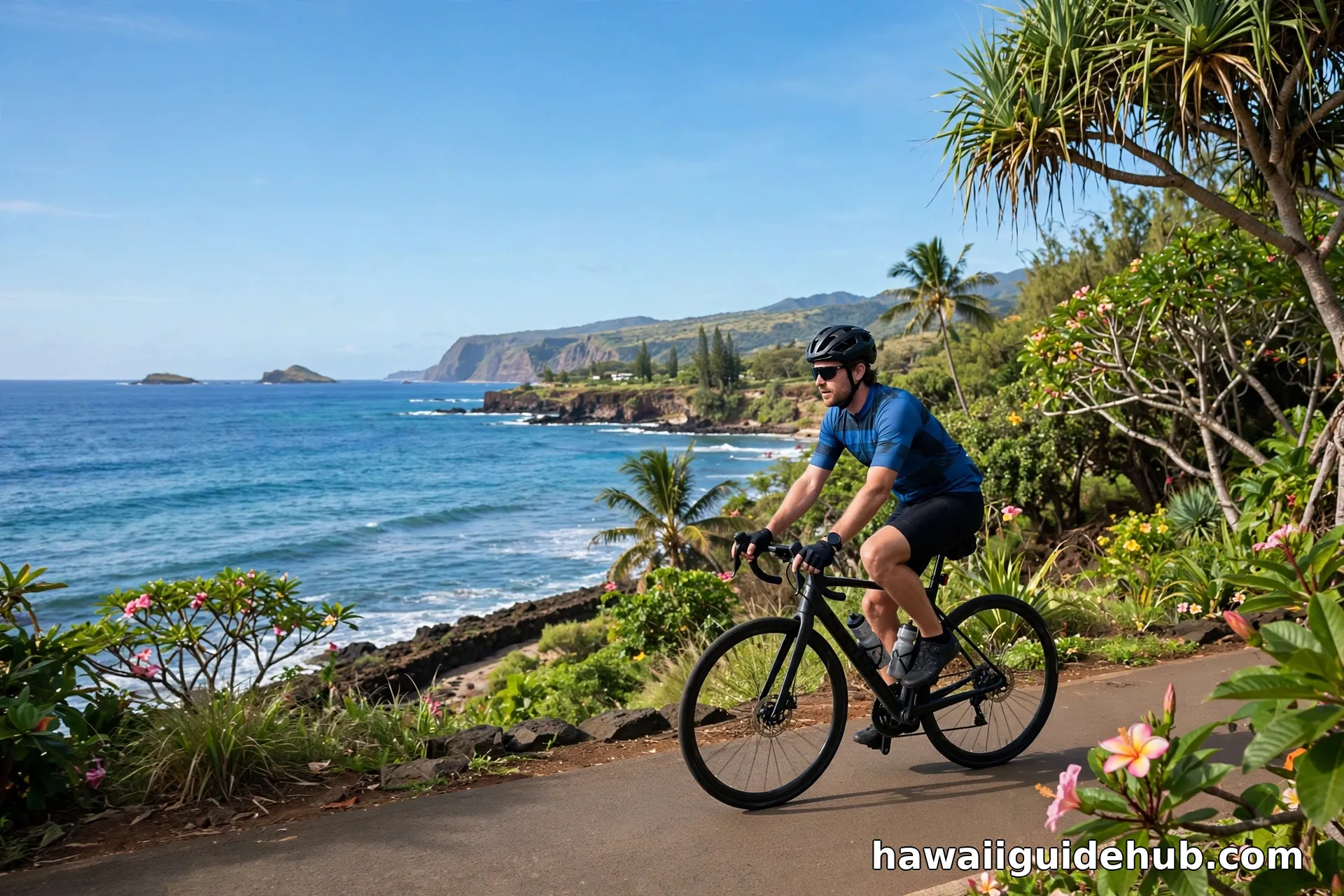
Kihei is flat enough that a rental bike becomes genuine transport, not just recreation. Beach cruisers from local shops cost a fraction of a car rental and handle grocery runs, beach hops, and restaurant trips along the coast. E-bikes extend your range to Wailea and back. West Maui has the coastal trails, and Paia to Ho’okipa is a popular cycling stretch for confident riders.
Walking is underrated as Maui transport. The Kaanapali beach walk, the Kapalua Coastal Trail, Kihei’s beachfront, and Paia town are all genuinely walkable. Plan your days so the walking IS the activity: a coastal trail morning followed by lunch in town needs no vehicle at all.
Arriving at the Airport Without a Car
Kahului Airport is one of the easier Hawaii airports to leave without a rental car. The Maui Bus serves the airport directly, with routes to Kahului town, Wailuku, and connections onward to Kihei and the west side. If your flight lands during bus service hours, a $2 ride gets you to the transit hub at Queen Kaahumanu Center, where you transfer to your base town’s route.
For late arrivals or heavy luggage, pre-book a shared shuttle or take a rideshare to your hotel. Taxis queue outside the terminal around the clock. The one time splurging on door-to-door transport makes sense is arrival day: you are tired, the sun is strong, and starting the trip smoothly is worth twenty or thirty dollars. From day two onward, the bus and your feet take over.
Rideshares and Taxis
Uber and Lyft operate on Maui but with island-scale limitations. In Kihei, Kahului, and Kaanapali you can usually get a ride within 15 minutes. Outside the main towns, waits get long and drivers get scarce, especially at night and in Hana or Upcountry. Prices run higher than mainland equivalents because drivers cover long distances.
Use rideshares strategically: the airport to your hotel on arrival day, the Wailuku bus stop to Iao Valley, a late dinner when the bus has stopped running. Don’t build a daily itinerary on them; the costs add up fast and availability is never guaranteed. For a week-long trip, a few well-chosen rides plus the bus beats relying on rideshares alone.
What Maui Without a Car Costs
Skipping the rental car is the biggest single saving on a Maui trip. These are realistic daily ranges for one person, excluding flights.
| Travel style | Per day | What that buys |
|---|---|---|
| Budget | $120 to $180 per day | Hostel or budget inn, Maui Bus day passes, grocery and food truck meals |
| Mid-range | $200 to $300 per day | Kīhei condo, bus plus a few rideshares, one guided tour, rental car for one day |
| Comfortable | $350 or more per day | Kāʻanapali hotel, rideshares freely, multiple guided tours |
The math is compelling: a week of Maui Bus day passes costs $28, while a rental car plus parking and gas runs $500 to $800 for the same week. Even adding a guided Hana tour and a one-day rental, the car-free trip usually comes out hundreds of dollars ahead. For timing your trip to save even more, see the cheapest time of year to visit Hawaii.

Common Mistakes Car-Free Travelers Make on Maui
Staying in a remote area. A cheap rental in Haiku or Upcountry without a car is a trap. You will spend the savings on rideshares or sit stranded. Stay in Kihei, Kaanapali, or Paia.
Ignoring the bus schedule. Missing the last bus back is the classic car-free mishap. Screenshot the return times before you leave in the morning.
Trying to do Haleakala by rideshare. The summit is far, the ride is expensive, and getting back down is unreliable. Book the tour or the one-day rental instead.
Underestimating distances. Maui looks small on a map. Kihei to Kaanapali is over an hour by bus. Plan one region per day.
Your Car-Free Maui Checklist
- Base in Kihei, Kaanapali, or Paia within walking distance of beach and bus stop
- Download the Maui Bus route map and note last departures
- Budget $4 per day for bus day passes
- Book a guided Hana tour or Haleakala tour in advance
- Consider a one-day car rental for Haleakala sunset
- Pack reef-safe sunscreen, good walking shoes, and a daypack
- Keep rideshare apps ready for gaps, not as your main plan
- Check when it rains in Hawaii before planning outdoor days
Video: Exploring Maui by Bus
Watch travelers use the Maui Bus to explore the island’s beaches from the cruise port, without spending on excursions or a rental car.
Frequently Asked Questions
Can you get around Maui without a car?
Yes, if you base in Kihei, Kaanapali, or Paia and use the Maui Bus ($2 per ride, $4 day pass). You’ll easily reach beaches, towns, restaurants, and coastal trails. Haleakala, the Road to Hana, and remote sights need a guided tour or a one-day rental.
How much is the Maui Bus?
Fares are $2 per boarding on all fixed routes, a day pass is $4, and a monthly pass is $45, according to the County of Maui. Riders 55 and older with ID ride free.
Where does the Maui Bus go?
The bus connects Kahului (including the airport), Wailuku, Kihei, Wailea, Maalaea, Lahaina, Kaanapali, Napili, Kapalua, Paia, and Makawao. It does not go to Haleakala, Hana, or Iao Valley directly.
Is Uber available on Maui?
Yes, Uber and Lyft operate in the main towns, but waits are longer and prices higher than on the mainland, especially outside Kihei, Kahului, and Kaanapali. Use them for gaps, not as your main transport.
Can I get to Haleakala without a car?
Not by public transit. Book a guided sunrise or sunset tour with pickup, or rent a car for a single day. Sunset is the easier option: no 3 AM wake-up and no reservation needed. If you’re visiting in winter, also see the best places to visit in Maui in winter.
Is it cheaper to visit Maui without a car?
Significantly. A week of bus day passes costs $28 versus $500 to $800 for a rental car with parking and gas. Even with tours and a one-day rental added, car-free trips usually save hundreds of dollars.
Maui without a car is not the compromised trip people imagine. It is a different trip: slower, cheaper, and rooted in one town instead of scattered across the island. Pick Kihei, learn the bus, book the one tour that matters to you, and rent a car for exactly one sunset. You’ll see the island’s best and keep the savings.