Makahiki: Hawaiʻi’s Ancient Season of Peace

Every year in ancient Hawaiʻi, war simply stopped. For four full months, chiefs laid down their spears, farmers rested their fields, and the islands turned to feasting, games, and tribute. This was Makahiki, the great season of Lono, the god of rain, agriculture, and peace, and it was the most joyful stretch of the Hawaiian year.
This is the single complete guide to the Makahiki season in Hawaii. It covers what Makahiki was, how the rising of the Makaliʻi stars announced it, the kapu on war and work, the circuit of Lono’s white banner, the tribute given to chiefs, the famous ancient games, the fateful Makahiki that greeted Captain Cook, and how the season is celebrated in Hawaiʻi today.
Makahiki Season at a Glance
| Element | What it was | Why it mattered |
|---|---|---|
| The festival | A four-month religious festival honoring Lono, god of agriculture, rain, fertility, and peace | A season set apart for the gods of sustenance |
| Full name | Makahiki na o Lono, “the time of the coming of Lono” | Named for Lono’s arrival |
| Timing | When the Makaliʻi (Pleiades) rose in the east at sunset, roughly late October to November | The new year began with the stars |
| Duration | Four lunar months, through about January or February | A third of the year belonged to Lono |
| The great rule | War was kapu; fighting stopped across all the islands | Peace was law, not custom |
| The program | Rest, tribute to chiefs and Lono, feasting, hula, and competitive games | Sport replaced warfare |
| The symbol | A white tapa banner on a tall pole, carried in circuit around each island | Lono’s presence, made visible |
| Today | November 20 is Makahiki Commemoration Day in Hawaiʻi; festivals run each winter | The tradition continues |
What Was the Makahiki Season?
Makahiki was the Hawaiian season of harvest, rest, and peace, dedicated to Lono, one of the four great gods of Hawaiʻi. Lono governed agriculture, rainfall, fertility, music, and peace, everything that made life abundant. The full name of the festival, makahiki na o Lono, means the time of the coming of Lono. For four months the war god Kū stepped aside and Lono ruled the calendar.
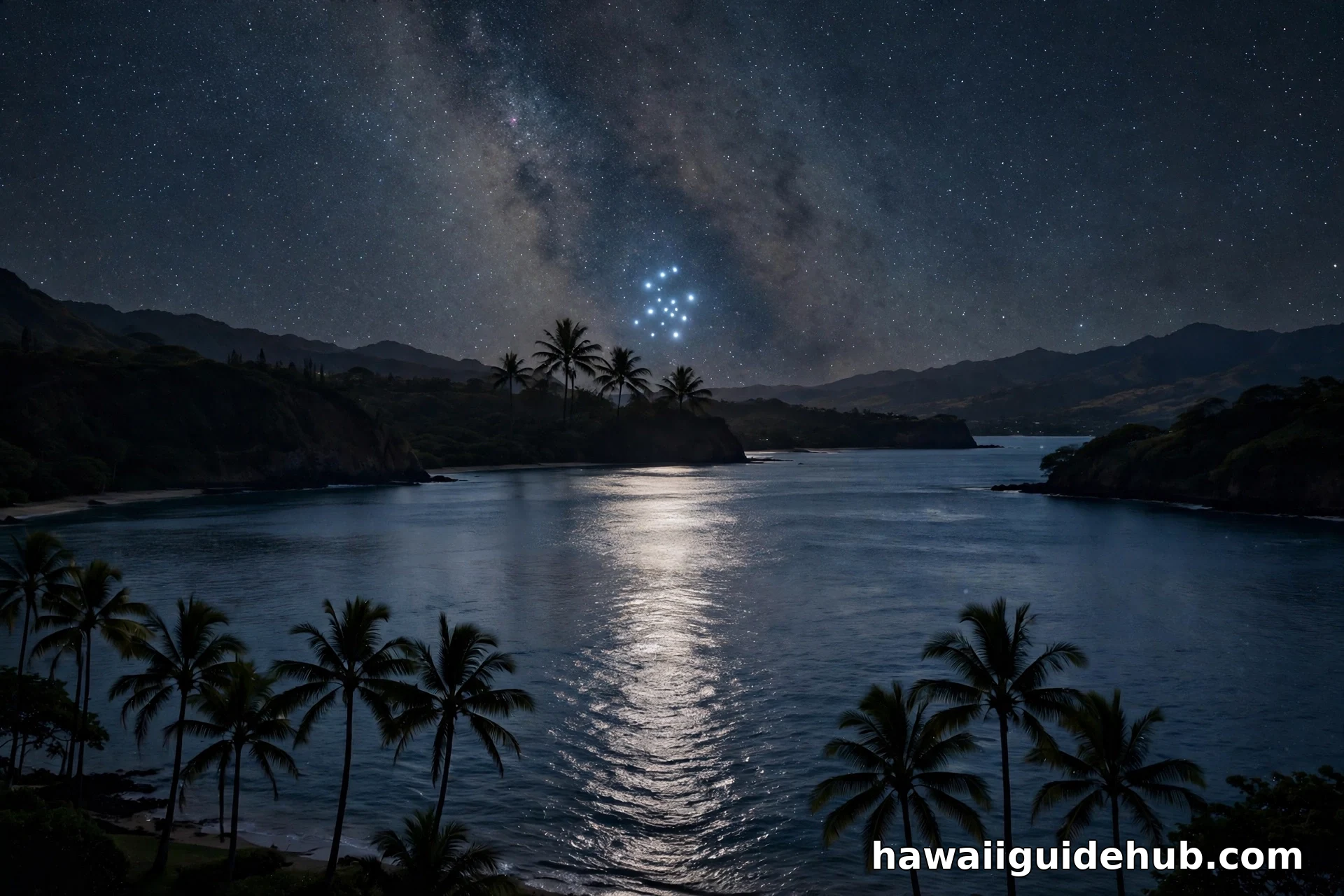
The timing was written in the sky. The season opened when the star cluster Makaliʻi, known in English as the Pleiades, rose in the eastern sky at sunset. Hawaiian priests watched for this signal, which falls around late October or November, and its appearance told the islands that Makahiki had arrived. The season then ran through four lunar months, ending around late January or February, in the heart of Hawaiʻi’s rainy season, exactly when Lono’s rains fed the crops.
Once the season began, ordinary life paused. War was placed under strict kapu, so fighting between chiefs had to stop immediately. People could travel safely between districts and islands to visit family. Work, including farm labor, was set aside, and the land was left to lie fallow after the harvest. The first days of the season were given to complete rest. For an agricultural people, these months of enforced idleness were both a religious duty and a practical recovery period for the land.
The Circuit of Lono and the Tribute
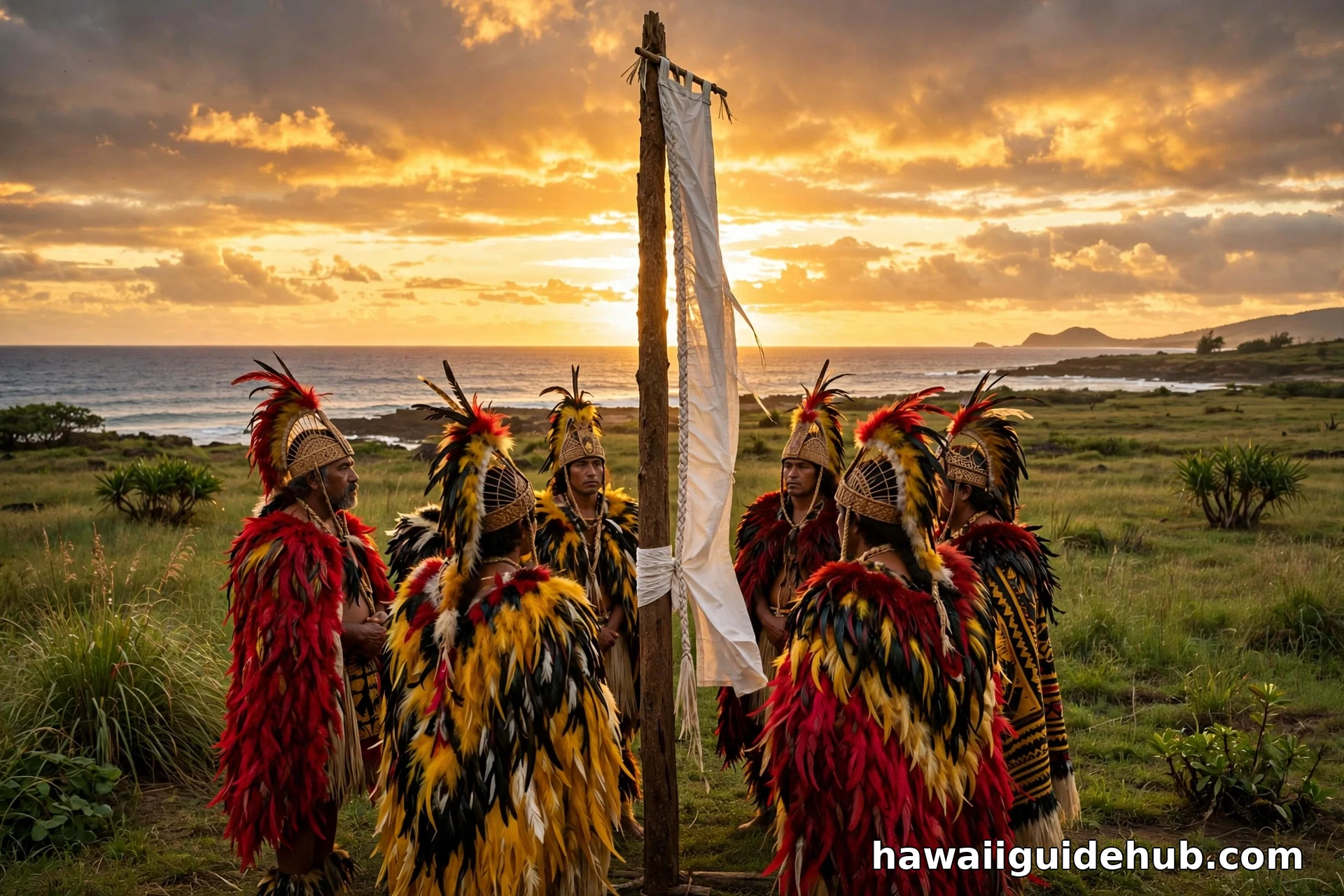
The most striking ritual of Makahiki was the procession of Lono’s image around each island. A tall pole was dressed with a long white tapa banner, the akua loa, the sacred symbol of the god. Carried by priests and attendants, it made a full circuit of the island, moving from district to district. At each stop, the people presented hoʻokupu, offerings of the finest foods, feathers, and finely woven mats, in thanks for the harvest and in recognition of the chiefs’ stewardship of the land.
This was far more than ceremony. The tribute system redistributed food and goods across the islands, and the circuit itself was a census of abundance: a district that could not produce its offerings revealed a struggling harvest. Some of the finest goods went to the chief’s storehouse. The whole ritual tied religion, taxation, and community welfare into a single procession, and it reminded everyone that the land’s plenty depended on wise care, a principle that still shapes Hawaiian cultural traditions around land and community.
The Makahiki Games: Sport as Sacred Play
With war forbidden and work suspended, competitive energy poured into sport. The pāʻani kahiko, the ancient games, were the beloved heart of Makahiki, and they were never just recreation. They kept warriors sharp during the enforced peace, settled rivalries without bloodshed, and gave entire communities something to cheer for together.
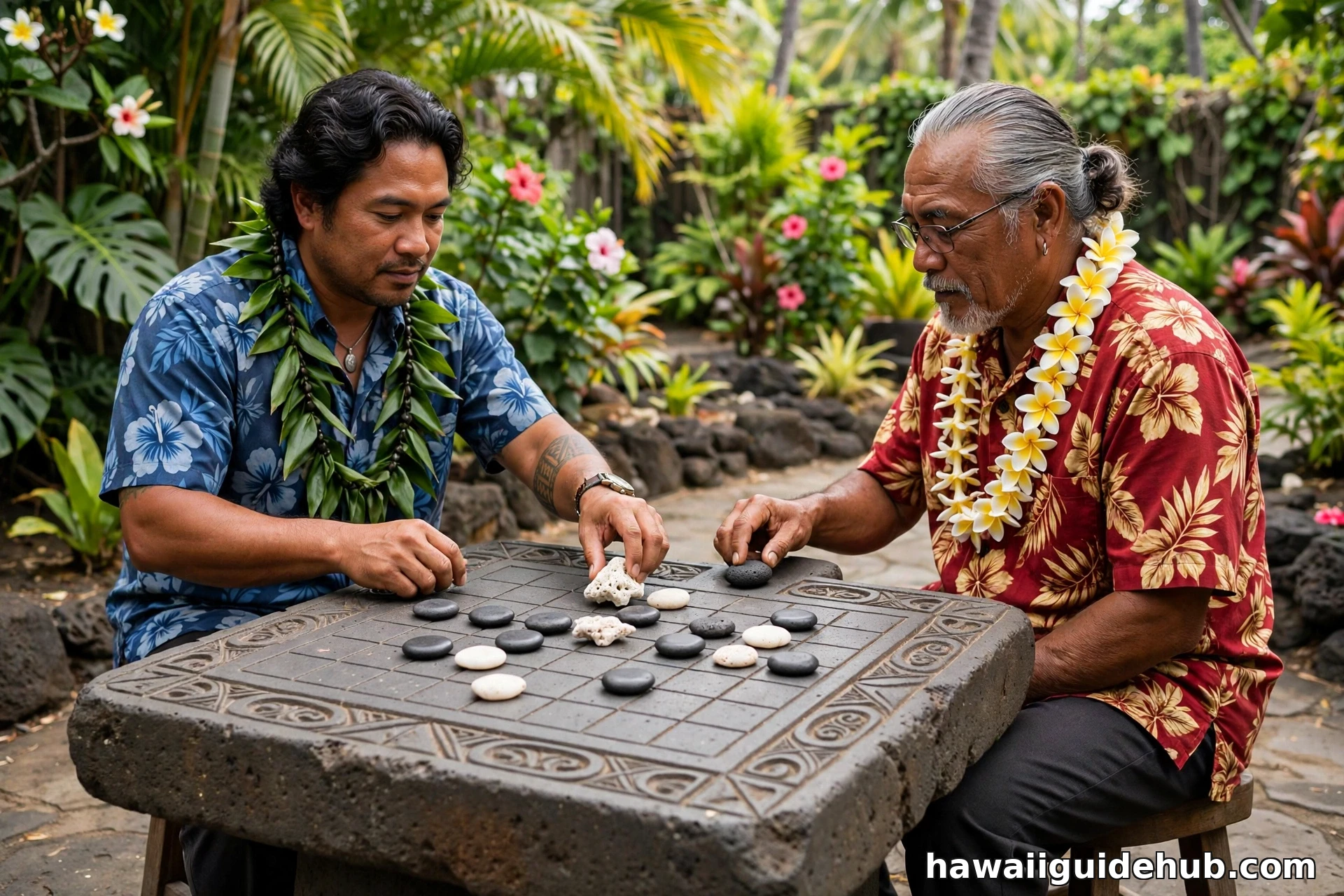
The games tested every kind of skill. ʻUlu maika asked players to roll a stone disc between two narrow stakes set far down a field, a test of aim that mirrored a spearman’s throw. Haka moa, the standing chicken fight, had two players each holding one leg, gripping the opponent’s arm, and trying to wrestle each other to the ground. Konane was a demanding board game of strategy, sometimes called Hawaiian checkers. Moa paheʻe slid darts along the ground for distance. Uma and pa uma were forms of hand wrestling. Kukini foot races and hukihuki tug of war drew whole villages. Surfing and wrestling, the sports of chiefs, crowned the season.
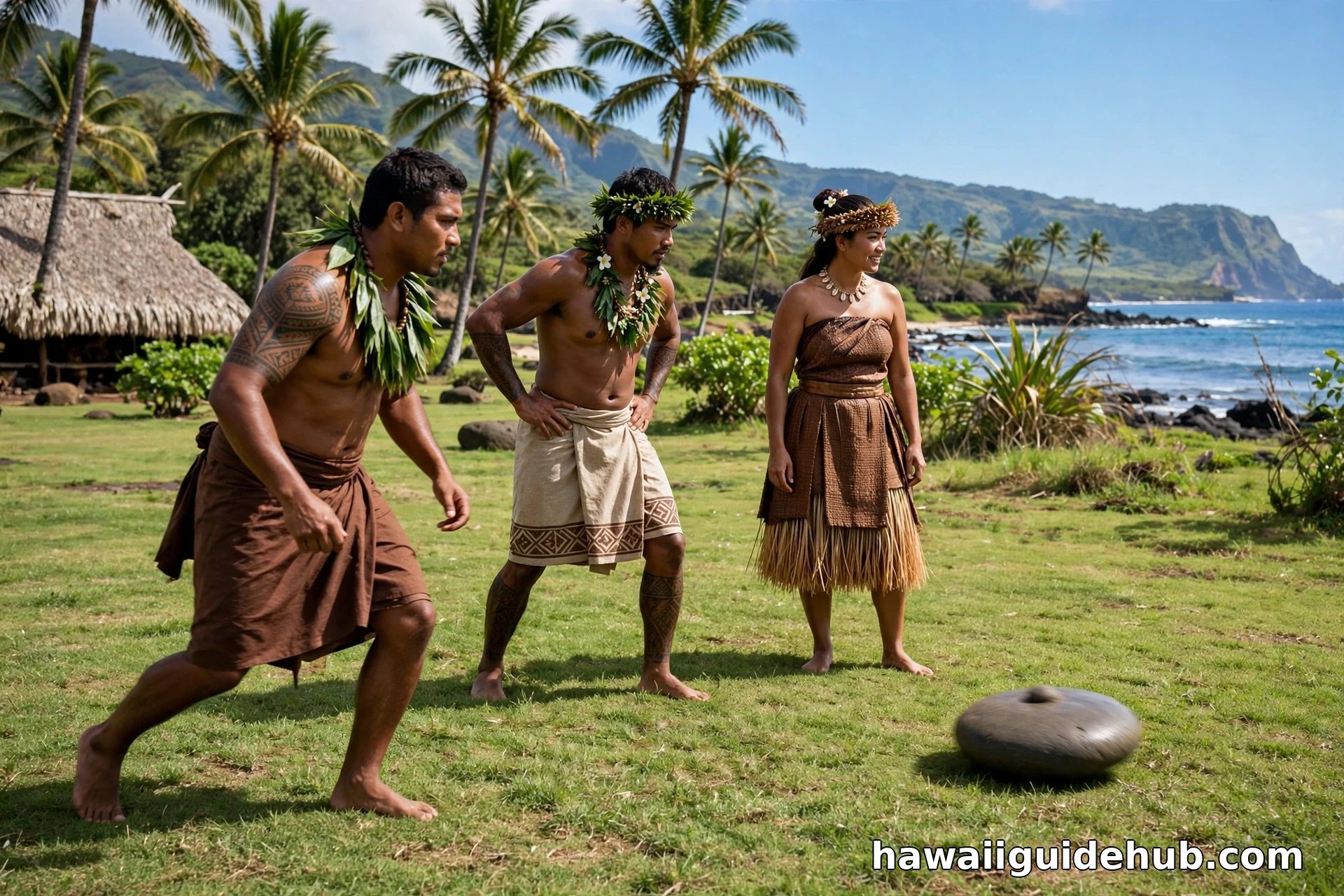
Betting was part of the excitement, with spectators wagering prized possessions on their favorites. But the deeper purpose was social: the games channeled the aggression that war would normally absorb into contests the whole community could celebrate. When you see traditional games demonstrated at cultural festivals today, you are watching a practice that once kept the peace across an entire island chain, a living thread in the tapestry of Hawaiian traditions that visitors can still experience firsthand.
The Four Moons of Makahiki
Makahiki was measured in moons, not weeks. The season spanned four lunar months, each with its own name and character: ʻIkuwā, the first moon, when the season opened; Welehu, the second; Makaliʻi, the third, named for the star cluster itself; and Kāʻelo, the fourth and final moon, when the season wound down. Together they covered roughly October through February, the wettest and greenest stretch of the Hawaiian year.
The old historian David Malo, writing in the 1800s from the traditions he learned as a young man, divided the season slightly differently: one moon of Kau and three moons of Hoʻolio. The two ways of counting reflect different island and family traditions, but every account agrees on the essentials, four moons, beginning with the Pleiades and ending before the dry season returned. The rhythm of work and rest followed the moon, not the sun.
The Makahiki That Changed History: Captain Cook
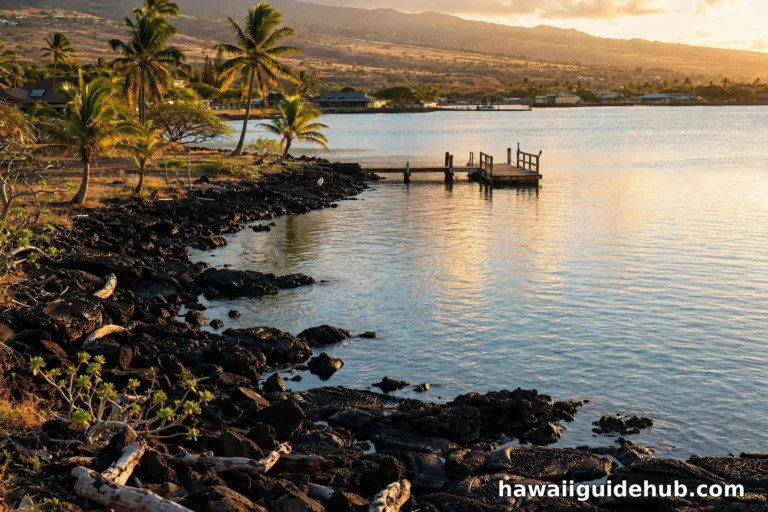
Makahiki plays a starring role in one of the most fateful encounters in Pacific history. In January 1779, Captain James Cook sailed into Kealakekua Bay on the Big Island, right in the middle of the Makahiki observance. The bay’s very name means the pathway of the god. Cook’s tall sails resembled the white tapa banner of Lono, and Hawaiian tradition held that Lono would one day return. The Hawaiians welcomed Cook as the god himself, honoring him with the full protocol of the season.
The story did not end in celebration. After departing, Cook’s ships were damaged in a storm and forced back to the bay, and tensions over stolen boats and supplies exploded. Cook was killed on the shore at Kealakekua in February 1779, just as the Makahiki season was ending. What began as a divine welcome became a tragedy that opened two centuries of upheaval, a turning point explored in our guide to Hawaiʻi’s history before the 50th star.
How Makahiki Is Celebrated Today
Makahiki never fully died. After the kapu system fell in 1819, the old religious observance faded, but its spirit survived in community gatherings, and in recent decades Hawaiians have deliberately revived it. Hawaiʻi state law designates every November 20 as Makahiki Commemoration Day, a day of recognition rather than a state holiday, honoring the season’s values of conservation, abundance, unity, and peace.
Today you can experience Makahiki at public festivals across the islands each winter. Waimea Valley on Oʻahu hosts a well-known Makahiki festival each November with protocol ceremonies, hula, traditional games, and music. Puʻukoholā Heiau on the Big Island holds cultural gatherings with games and protocol, national park sites run Makahiki educational programs, and the University of Hawaiʻi celebrates with student games and Hawaiian language events. Community groups from Hilo to Hanalei organize their own observances, some small and intimate, others drawing hundreds.
If you attend, arrive with the mindset of a guest, not an audience member. Watch the opening protocol with quiet respect, remove hats during prayers and chants, ask before joining games, and never cross barriers at sacred sites. Bring sun protection and water, since most events run outdoors. Many visitors pair these daytime cultural events with an evening celebration, and our guide to traditional luaus and nighttime festivals covers what happens after dark.
Common Misconceptions About Makahiki
Visitors sometimes hear Makahiki described as the Hawaiian Thanksgiving or Hawaiian Christmas. The comparison is understandable, since the season falls in the same months and centers on harvest, gratitude, and gathering, but it misses the point. Makahiki was a religious observance first, governed by kapu and dedicated to a god, not a secular holiday. Its peace was a divine command, not a sentiment.
Another misconception is that Makahiki was only about games. The sports were the visible celebration, but the season’s core was tribute, rest, and spiritual renewal: honoring Lono, letting the land recover, and reaffirming the bonds between chiefs and people. The games were the joyful surface of a deeply serious season.
Video: What Is Makahiki?
Waimea Valley’s Uncle Kimo explains the meaning of Makahiki and its festival traditions in this short video.
Frequently Asked Questions
What was the Makahiki season in Hawaii?
Makahiki was a four-month religious festival in ancient Hawaiʻi honoring Lono, the god of agriculture, rain, fertility, and peace. It began when the Makaliʻi (Pleiades) rose at sunset in late October or November and ran through about February. War was kapu, work was set aside, and the islands devoted themselves to tribute, rest, feasting, and games.
When is Makahiki celebrated?
In ancient times Makahiki began with the sunset rising of the Makaliʻi stars, roughly late October to November, and lasted four lunar months. Today, Hawaiʻi designates November 20 as Makahiki Commemoration Day, and public Makahiki festivals and games take place across the islands through the winter months.
Who was Lono?
Lono was one of the four great gods of Hawaiʻi, associated with agriculture, rainfall, fertility, music, and peace. During Makahiki his symbol, a white tapa banner on a tall pole, was carried in circuit around each island to receive tribute. His season was the counterpoint to the war god Kū’s season of conflict.
What games were played during Makahiki?
The pāʻani kahiko (ancient games) included ʻulu maika (rolling a stone disc), haka moa (standing chicken fight), konane (a strategy board game), moa paheʻe (dart sliding), uma (hand wrestling), kukini (foot races), hukihuki (tug of war), surfing, and wrestling. The games kept warriors skilled during the kapu on war and settled rivalries peacefully.
Why did Hawaiians think Captain Cook was Lono?
Cook sailed into Kealakekua Bay, whose name means the pathway of the god, during the Makahiki of 1778 to 1779. His tall white sails resembled Lono’s sacred white banner, and tradition held that Lono would one day return. The Hawaiians honored him as the god, though the encounter ended tragically with Cook’s death in February 1779.
Can visitors take part in Makahiki today?
Yes. Public Makahiki festivals with protocol ceremonies, hula, music, and traditional games are held each winter at places like Waimea Valley on Oʻahu and various community and park venues. Visitors are welcome at public events. Watch opening protocol respectfully, ask before joining in, and treat the occasion as a living cultural practice.
Makahiki was ancient Hawaiʻi’s boldest idea about peace: not a wish but a law, written in the stars and enforced by kapu, that turned four months of every year into a festival of gratitude, rest, and play. Its white banner no longer circles the islands, but every November the games return, the chants rise, and the season of Lono comes around again.