

How expensive is it to live in Hawaii

It’s clear that Hawaii is a great place to visit. Images of turquoise waters, volcanic landscapes, and lush rainforests fill our social media feeds, painting a picture of paradise on Earth. But how much does it really cost to move from the mainland to the islands? Even though the idea of waking up to the sound of waves is strong, you need to know how much it will cost.
This guide goes into great detail about how much it costs to live in Hawaii. We’ll go over the biggest costs you’ll have to deal with, like housing, food, healthcare, and getting around. You can figure out if moving to the Aloha State fits with your financial goals and way of life by learning about these things. You can also find out how to make your island dream come true.
What Makes Living in Hawaii So Expensive?
The cost of living in Hawaii is much higher than the average in the U.S. Geography is the main reason. Because it is an isolated island chain that is almost 2,500 miles from the mainland, most consumer goods, such as food, building materials, and fuel, have to be shipped in. This dependence on imports makes prices go up all over the place..
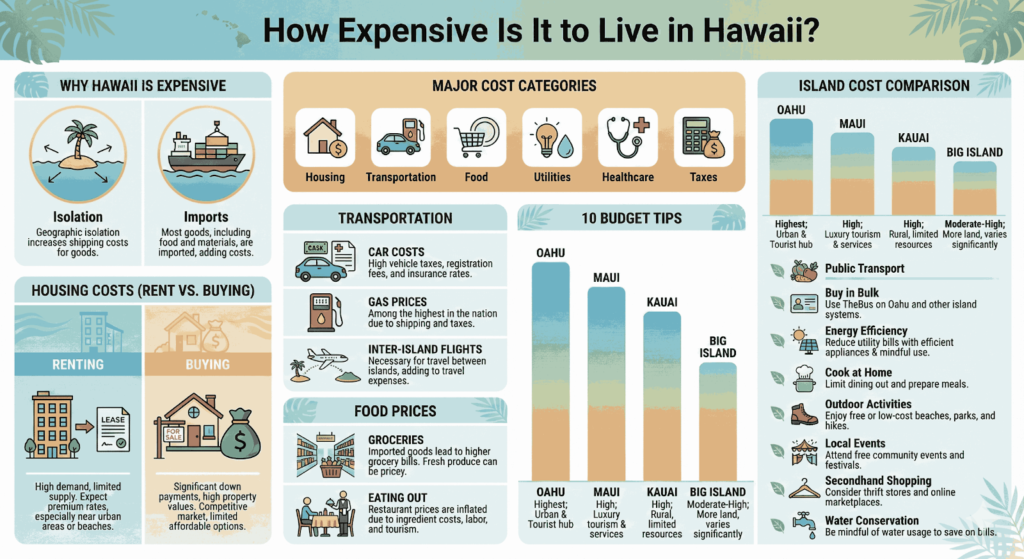
These are the main groups that make living costs so high:
- Housing: This is the largest expense for most residents, with both rental and purchase prices far exceeding national averages.
- Transportation: Owning a car is expensive because of the cost of gas and insurance. Travel between islands also costs money.
- Food & Groceries: Since about 85-90% of Hawaii’s food is imported, grocery bills can be a shock for newcomers.
- Healthcare: While Hawaii has a unique employer-mandated healthcare system, out-of-pocket costs and insurance premiums can still be substantial.
- Utilities: The cost of electricity is the highest in the country because the state relies on imported oil to make power.
- Taxes: Hawaii has a progressive income tax system and a General Excise Tax (GET) that applies to almost all goods and services.
A Closer Look at the Cost of Housing
Finding affordable housing is the hardest part of moving to Hawaii for anyone. Expect to pay more whether you want to rent or buy.
Getting an Apartment for Rent
Prices for rentals vary a lot depending on the island and the location. Honolulu, on the island of Oahu, has the highest rental costs. A one-bedroom apartment in a nice part of Honolulu can cost between $2,200 and $3,000 a month. Prices might be a little lower on nearby islands like Maui or Kauai, but they are still much higher than the national average.
The average rent for a one-bedroom apartment in the state is about $2,000. For a two-bedroom apartment, the price is usually over $2,800.
Getting a House
It costs a lot of money to own a home in paradise. The average price of a home on Oahu is always more than $1 million. Prices on Maui are even higher, sometimes going over $1.2 million. The Big Island and Kauai have a few options that are a little cheaper, but the median prices are still between $600,000 and $900,000.
Beyond the purchase price, homeowners must also budget for:
- Taxes on Property: Hawaii has one of the lowest property tax rates in the country, but because property values are so high, the amount of money paid can still be large.
- Insurance for homeowners: Due to the risk of hurricanes and volcanic activity, insurance premiums are significantly higher than on the mainland.
Figuring out how to pay for transportation
Getting around the islands costs more than your monthly budget. Some people who live in busy cities like Honolulu can get by without a car, but most people need one.
Having a car
It costs a lot of money to bring a car to Hawaii or buy one there. It usually costs $1,500 or more to ship a car from the West Coast. Gas prices are also always among the highest in the country. The cost of owning a car each year can be high when you add in insurance and maintenance.
Public Transportation and Other Options
TheBus is Oahu’s fairly complete bus system. It’s a cheap way to get around Honolulu and other parts of the island. A single ride costs around $3.00, with monthly passes available. Public transportation isn’t as good on other islands, so owning a car is almost necessary. Biking and walking are viable options in smaller towns, but the islands’ hilly terrain and spread-out communities can make them impractical for daily commutes.
Traveling Between Islands
You have to fly if you want to see other islands besides your own. Airlines like Hawaiian Airlines and Southwest offer frequent inter-island flights, but costs can add up. Depending on the time of year and how far in advance you book, a round-trip ticket usually costs between $100 and $250.
The Cost of Food and Groceries
One of the first things that new residents have to deal with is the cost of food. Since most of the groceries are brought in from other countries, you should expect to pay a lot more for everyday things. For instance, a gallon of milk in Hawaii can cost more than $8.00, while the national average is about $4.00.
It costs more to eat out, too. A casual meal for one person can easily cost $20-$30, while a mid-range dinner for two might run $80-$120 before drinks and a tip.
Many people in the area shop at big-box stores like Costco and Sam’s Club, buy fresh produce from farmers’ markets, and take advantage of weekly sales to save money.

Getting a handle on healthcare costs
Hawaii has a unique healthcare system established by the Prepaid Health Care Act of 1974. Most employers must give health insurance to workers who work more than 20 hours a week because of this law. This makes sure that a lot of people are covered, but it doesn’t get rid of costs.
Employees still have to pay part of their premiums, and co-pays, deductibles, and services that aren’t covered can add up to a lot of money. For those who are self-employed or work part-time, purchasing insurance on the open market can be very expensive.
Budgeting for Entertainment and Leisure
If you live in Hawaii, you can see some of the most beautiful natural sights in the world. Hiking, swimming, and spending time on the beach are usually free, but some activities cost money.
- Dining Out: As we said, restaurants are expensive, especially in places where a lot of tourists go..
- Activities: Surfing lessons, scuba diving trips, and boat tours can be expensive, but many businesses give “kama’aina” (local) discounts.
- Cultural Events: Tickets for concerts, festivals, and local performances can range from $30 to over $100.
A key part of budgeting is balancing paid entertainment with the wealth of free natural beauty the islands offer.
Regional Cost Differences: Honolulu vs. Other Islands
Where you live in Hawaii has a big effect on how much money you spend.
- Honolulu (Oahu): Honolulu is the state’s economic and urban center, and it has the highest housing costs and is generally the most expensive place to live. But it also has the most job openings and the best access to public transportation.
- Maui: Known for its high-end resorts, and the cost of living there is similar to that of Honolulu, especially when it comes to housing. Groceries and gas are also very expensive.
- Kauai: “Garden Isle” is slightly less expensive than Oahu and Maui, but housing is still a major expense. The job market is smaller and more focused on tourism.
- The Big Island (Hawaii Island): In general, this is the cheapest island to buy a house on, especially in the Puna and Ka’u districts. However, wages are often lower, and some areas are very remote.
Ten useful tips for living in Hawaii on a budget
So, what can you do to make living in paradise less expensive? It takes a lot of planning and changing how you spend money.
- Shop at Farmers’ Markets: Go to Farmers’ Markets to get fresh, local food instead of expensive imported food.
- Embrace the Kama’aina Discount: Take advantage of the Kama’aina Discount: Always ask if businesses give discounts to locals.
- Take Public Transportation: If you live on Oahu, use TheBus.
- Cook at Home: Eating out less often can save you a lot of money.
- Find a Roommate: If your job lets you, you might want to live on an island that is less expensive, like the Big Island.
- Enjoy Free Activities: Use stores like Costco to stock up on things that won’t go bad.
- Choose Your Island Wisely: If your job lets you, you might want to live on an island that is less expensive, like the Big Island.
- Buy in Bulk: Use stores like Costco to stock up on things that won’t go bad.
- Limit Inter-Island Travel: To save money on airfare, only visit your home island.
- Create a Detailed Budget: Track your spending carefully to identify areas where you can cut back.
Questions that are often asked (FAQs)
How much money do you need to live well in Hawaii?
To live comfortably in Hawaii, a single person would likely need an annual income of $80,000 to $120,000, with the higher end being more realistic for Honolulu or Maui. To pay for housing, childcare, and other costs without worrying about money, a family of four would need to make more than $150,000 a year.ll over $150,000 to cover housing, childcare, and other expenses without financial stress.
Can you live in Hawaii with $3,000 a month?
It is very hard to live in Hawaii on $3,000 a month ($36,000 a year), but it is not impossible. It would require living with multiple roommates, relying on public transportation, cooking all your meals, and having very little disposable income for entertainment or savings.
How much does it cost to live in Hawaii for a year?
For a single person, a realistic annual budget would be between $60,000 and $90,000, depending on lifestyle and location. This includes rent, utilities, food, transportation, health care, and some money set aside. You could live a minimalist life on $50,000, but it would be hard.
Your Way to Heaven
Living in Hawaii is an expensive endeavor, but for many, the unparalleled quality of life, natural beauty, and rich culture are worth the cost. You need to have a realistic budget, be willing to change how you spend money, and know what the trade-offs are. It’s true that the prices are high, but with a good budget, you can make your dream of living in Hawaii come true.Are you ready to take your journey to the next level? Moving to Hawaii can be hard, but the experts at Hawaii Guide Hub can help you figure it all out. Let us help you make your move to paradise as easy as possible.