
How does ocean acidification affect marine life

The oceans are changing. They take in about 25% of the carbon dioxide (CO₂) that people put into the air when they burn fossil fuels. This process does help slow down climate change, but it costs the ocean a lot. Ocean acidification is the process by which the ocean absorbs CO₂, which changes the chemistry of seawater in a big way. What is the problem with ocean acidification, and how does it affect life in the ocean?
This guide will talk about the science behind ocean acidification, how it hurts marine life from the smallest plankton to the biggest fish, and what it means for ecosystems and people as a whole. We’ll also talk about what we can do to fight this threat to the blue heart of our planet.
The Chemistry Behind Ocean Acidification
To see how it affects marine life, we need to first look at the chemical reactions that are going on. So, what causes the ocean to become acidic? It’s a direct result of more carbon dioxide in the air.
CO₂ doesn’t just stay a gas when it dissolves in seawater. When it comes into contact with water (H₂O), it makes carbonic acid (H₂CO₃), which is a weak acid. After that, the carbonic acid breaks down into hydrogen ions (H⁺) and bicarbonate ions (HCO₃⁻). Some of these hydrogen ions may react with carbonate ions (CO₃²⁻) that are already in the water to make more bicarbonate.
This rise in hydrogen ions (H⁺) is what makes the ocean more acidic. The ocean is naturally a little alkaline, with a pH of about 8.1, so it’s important to keep this in mind. Ocean acidification is lowering this pH, bringing it closer to the neutral pH of 7. The pH scale is logarithmic, meaning a small change in number represents a large change in acidity. The average pH of the ocean surface has already dropped by about 0.1 units since the Industrial Revolution. This means that the acidity has gone up by about 30%.
This change in chemical equilibrium has an effect on ocean acidification. This is bad for marine life for two reasons: the increase in acidity and the decrease in the availability of carbonate ions (CO₃²⁻). Many marine organisms need these carbonate ions to make their shells and skeletons.
Effect on organisms that make shells
Ocean acidification mostly hurts marine life by making it harder for organisms that make shells and skeletons to do so. These organisms need a constant supply of carbonate ions from the seawater to make calcium carbonate (CaCO₃), which is the main material for their protective structures.
How does acidification of the ocean affect organisms that make calcium carbonate?
Ocean acidification’s chemical reactions use up carbonate ions, which lowers their concentration in the water. This condition is called “undersaturation.” In conditions that aren’t saturated enough, organisms don’t have enough carbonate ions to make their shells. To make things worse, the more acidic water can actually break down shells and skeletons that are already there.
This has a big impact on some important groups of marine life:
- Shellfish (Mollusks): Oysters, clams, mussels, and scallops are especially at risk. In the Pacific Northwest of the United States, oyster hatcheries have already lost a lot of their larvae because the water was too acidic for them to grow their shells. Adult shellfish also grow more slowly and have weaker shells, which makes them easier for predators and diseases to get to.
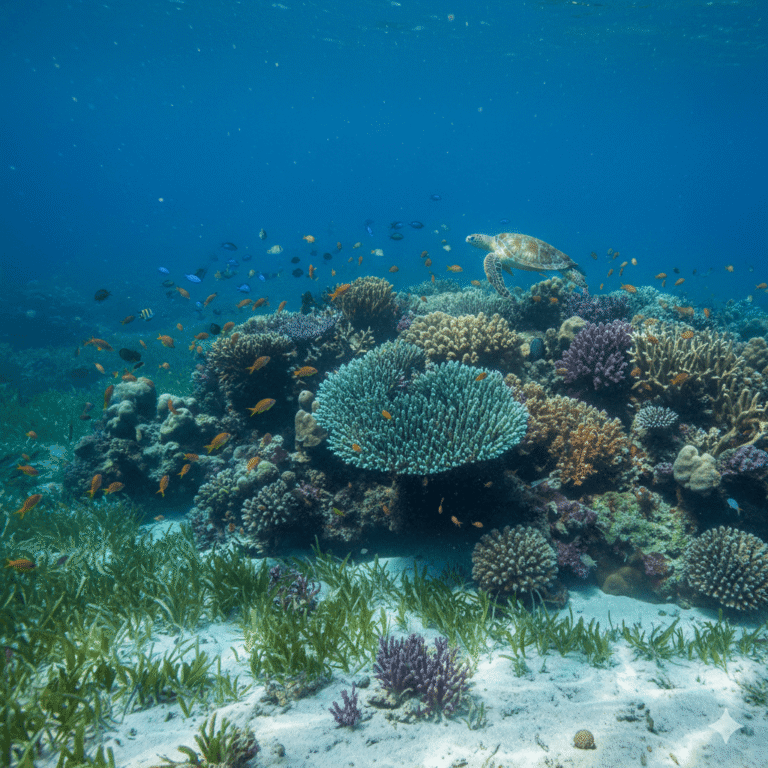
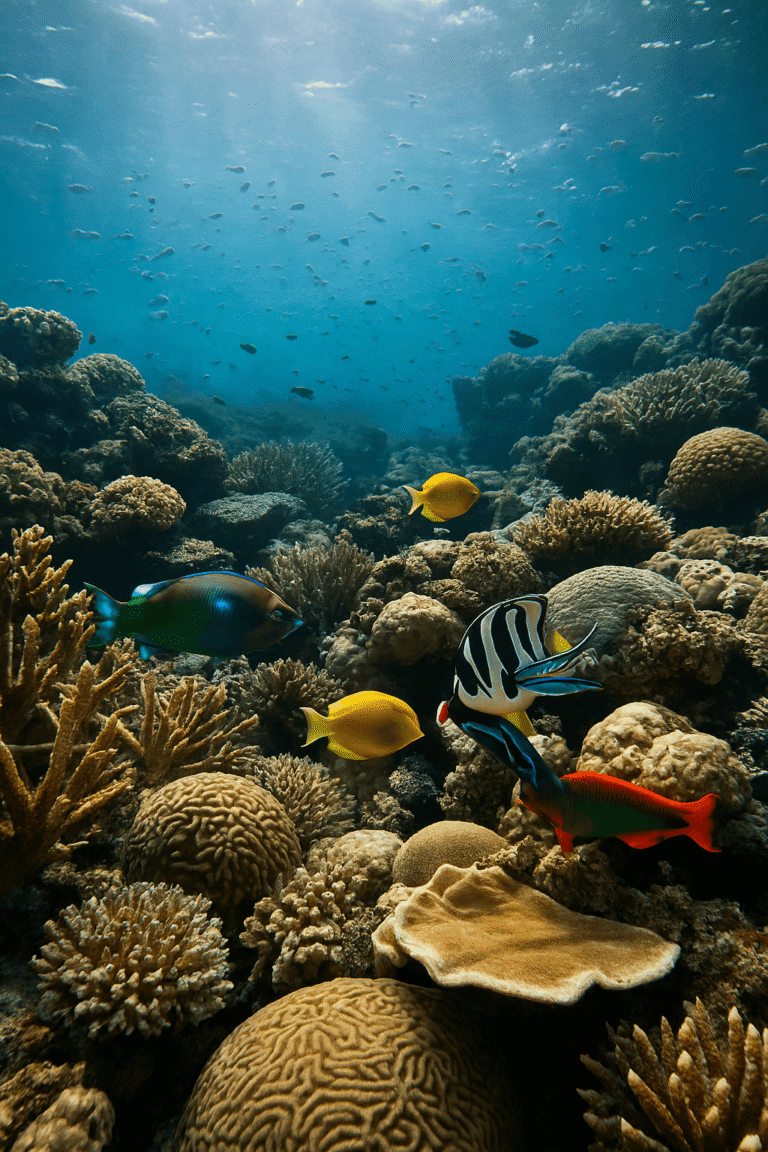
- Corals: Coral reefs, which are often called the “rainforests of the sea,” are places with a lot of different kinds of life. Corals are groups of small animals that make huge skeletons out of calcium carbonate. Ocean acidification slows down their growth, which makes them weaker and less able to compete with other organisms like algae. This makes it harder for reefs to bounce back from other stressors, like bleaching events that happen when the water gets too warm.
- Plankton: Plankton are tiny organisms that float freely in the water. They are the base of most marine food webs. Pteropods and foraminifera are two kinds of plankton that make shells out of calcium carbonate. Pteropods, also known as “sea butterflies,” are a crucial food source for fish like salmon, mackerel, and cod. Researchers have found that the shells of pteropods start to break down within days when they are put in seawater with the pH levels that are expected to be present at the end of this century. The loss of these organisms could set off a chain reaction that would affect the whole marine food web.
Effects on Fish and Marine Ecosystems
Ocean acidification doesn’t just affect animals that make shells. The ocean’s changing chemistry has both direct and indirect effects on fish and the ecosystems they live in.
How Does Ocean Acidification Affect Other Marine Life?
How Fish Act and Work: Even though fish don’t have calcium carbonate skeletons on the outside, the water’s lower pH still affects them. Their bodies have to work harder to keep their internal pH balance, which uses up energy that could be used for growth, reproduction, or getting away from predators.
Studies have shown that changes in pH levels can mess with fish’s sensory systems, which is even more scary. For instance, some reef fish have shown that they can’t smell predators as well in water that is more acidic. Some people have noticed changes in their hearing and vision, and some even find the smell of their predators attractive instead of avoiding them. These behavioral changes make fish more vulnerable and could have serious consequences for their survival and population stability.
Reproduction and Growth: Fish eggs and larvae are often the most sensitive to changes in their environment during their early life stages. Studies show that higher acidity can lower the rates of fertilization, egg development, and larval survival in some types of fish. This puts fish populations at risk of not being able to grow back.
Effects on the Whole Ecosystem: How does acidification of the ocean affect marine life and ecosystems as a whole? The effects spread throughout the whole food web. The decline of shell-building plankton at the base of the food chain means that there is less food for the small fish that eat them. This means that there is less food for larger predators like tuna, sharks, and marine mammals.
Also, the damage to coral reefs has effects that go beyond the reefs themselves. Reefs are important places for thousands of species to live, breed, and stay safe. As reefs break down and get weaker because of acidification and warming, the many species that depend on them lose their homes and food sources, which causes a huge drop in biodiversity.

Wider Ecological and Economic Impacts
The crisis that is happening in our oceans has big effects on people. What effect does ocean acidification have on people? The answer is that we rely on the ocean for food, jobs, and even the air we breathe.
Food Security and Fisheries
A lot of people around the world depend on seafood for most of their protein. Ocean acidification is a direct threat to the shellfish industry, which includes oysters, clams, and mussels. Declining harvests due to larval failure and slower growth are already impacting coastal economies that depend on aquaculture and fishing.
Commercial fisheries that catch fish like salmon and pollock are also in danger. These animals eat things like pteropods, which are very sensitive to acidification. If these basic food sources were to fail, fish stocks could drop sharply, putting a multi-billion dollar industry and the food security of many countries at risk.
Coastal Protection and Tourism
Coral reefs are a big reason why people visit, and diving, snorkeling, and recreational fishing help the local economy. The tourism industry in these areas could be ruined if famous reefs like the Great Barrier Reef or the colorful reefs of Hawaii are damaged.
Reefs are also an important natural barrier for coastlines. They work like breakwaters under the water, soaking up wave energy and keeping storms and erosion from hitting coastal communities. As the ocean gets more acidic and warmer, these natural barriers get weaker. This makes coastal areas more likely to flood and get damaged, especially as sea levels rise.

What Can We Do? Ways to Stop the Ocean from Getting Acidic
Everyone in society needs to work together to stop ocean acidification. The problem is worldwide, but people, groups, and countries can all do something about it.
Actions on a global and national level
The root cause of ocean acidification is the immense amount of carbon dioxide we are releasing into the atmosphere. So, the best long-term solution is to cut global CO₂ emissions by a lot. This means:
- Transitioning to Renewable Energy: Switching from fossil fuels (coal, oil, and gas) to renewable energy sources like solar, wind, and geothermal power is important for the transition to renewable energy.
- Making Energy Use More Efficient: Using less energy in our homes, cars, and businesses lowers the total need for power.
- Protecting and Restoring Forests: Protecting and Restoring Forests: Forests are major carbon sinks. Preventing deforestation and planting new trees can help absorb CO₂ from the atmosphere.
- International Agreements: It is very important for countries to work together to cut emissions around the world, like they did when they signed the Paris Agreement.
Individual and Local Actions
Individual choices are important, but big changes in policy are also important. You can help by taking the following steps:
- Lower Your Carbon Footprint: Make choices that will help you use less energy. Instead of driving, you could walk, bike, or take public transportation. You could also choose appliances that use less energy and reduce, reuse, and recycle.
- Choose seafood that is good for the environment: Support fishing businesses that use eco-friendly methods. Check for certifications from organizations such as the Marine Stewardship Council (MSC)..
- Help with conservation efforts: Get involved with or donate to organizations working to protect marine ecosystems and advocate for climate action.
- Stay informed and tell others: Learn about ocean acidification and teach others about it. The more people who know about the problem, the more pressure there will be to fix it.
What You Can Do to Help Keep Our Oceans Safe
Ocean acidification is a quiet but serious danger to the health of our planet and marine life. The changes in our oceans are a clear sign that all of Earth’s systems are connected. Every living thing, from the tiniest shelled creature to the biggest whale, is part of a complicated web that is being strained by what people do.
The science is clear: we need to cut down on our carbon emissions right away so that the oceans can heal. We can help protect the amazing variety of life in our oceans for future generations by making smart choices and holding our leaders accountable.
If you really want to see the beauty of marine ecosystems up close, think about going to a place where conservation is important. We can help you plan an amazing trip to Hawaii that will let you see the beautiful coral reefs and marine life in a responsible way. Get in touch with us to find out how you can see the ocean’s wonders while helping to protect them.