
Honolulu at a Glance
Honolulu is the capital and largest city of the U.S. state of Hawaiʻi, sitting on the southeast shore of the island of Oʻahu. Its name means “sheltered harbor” in Hawaiian, a reference to the calm natural anchorage that first drew ships to these shores. It has served as the capital of the islands since 1845, first of the independent Hawaiian Kingdom, then of the U.S. territory, and of the state since statehood in 1959.
Honolulu is the westernmost and southernmost major U.S. city, roughly 2,400 miles from the California coast. The city proper had about 351,000 residents in the 2020 census, while the greater urban Honolulu area topped 850,000 and the metropolitan area surpassed one million. About seven in ten Hawaiʻi residents live on Oʻahu, and most of them live within the Honolulu urban footprint, which stretches from Pearl Harbor in the west to Hawaiʻi Kai in the east.
The City and County of Honolulu is a consolidated city-county government that covers all of Oʻahu plus the Northwestern Hawaiian Islands. That means “Honolulu” as a legal entity extends far beyond the city streets most visitors walk. The downtown core, Waikīkī, Ala Moana, Kakaʻako, Chinatown, Mānoa, and the Pearl Harbor area are the pieces most travelers experience.
Honolulu is Hawaiʻi’s political, economic, and transportation center. The state government, the judiciary, the University of Hawaiʻi flagship campus, the busiest commercial harbor, and the state’s main international airport all sit within its boundaries. The port handles the container ships that bring in most of the islands’ goods, a reminder that behind the visitor economy, Honolulu is a working Pacific city. Tourism is the city’s principal private industry, followed by federal defense spending, which anchors the economy through the Pearl Harbor naval installation.
For visitors, Honolulu is usually the first stop in Hawaiʻi and often the only city they see. It works as an excellent base for the whole island of Oʻahu, and many travelers combine a few days in the city with day trips to the North Shore or the windward coast. Our Waikīkī guide covers the beach neighborhood in depth, and our Oʻahu travel guide maps out the wider island.
The Districts of Honolulu
Honolulu is not a single downtown grid but a chain of neighborhoods, each with its own character. Here is how the main pieces fit together from west to east.
Downtown and the Capitol District
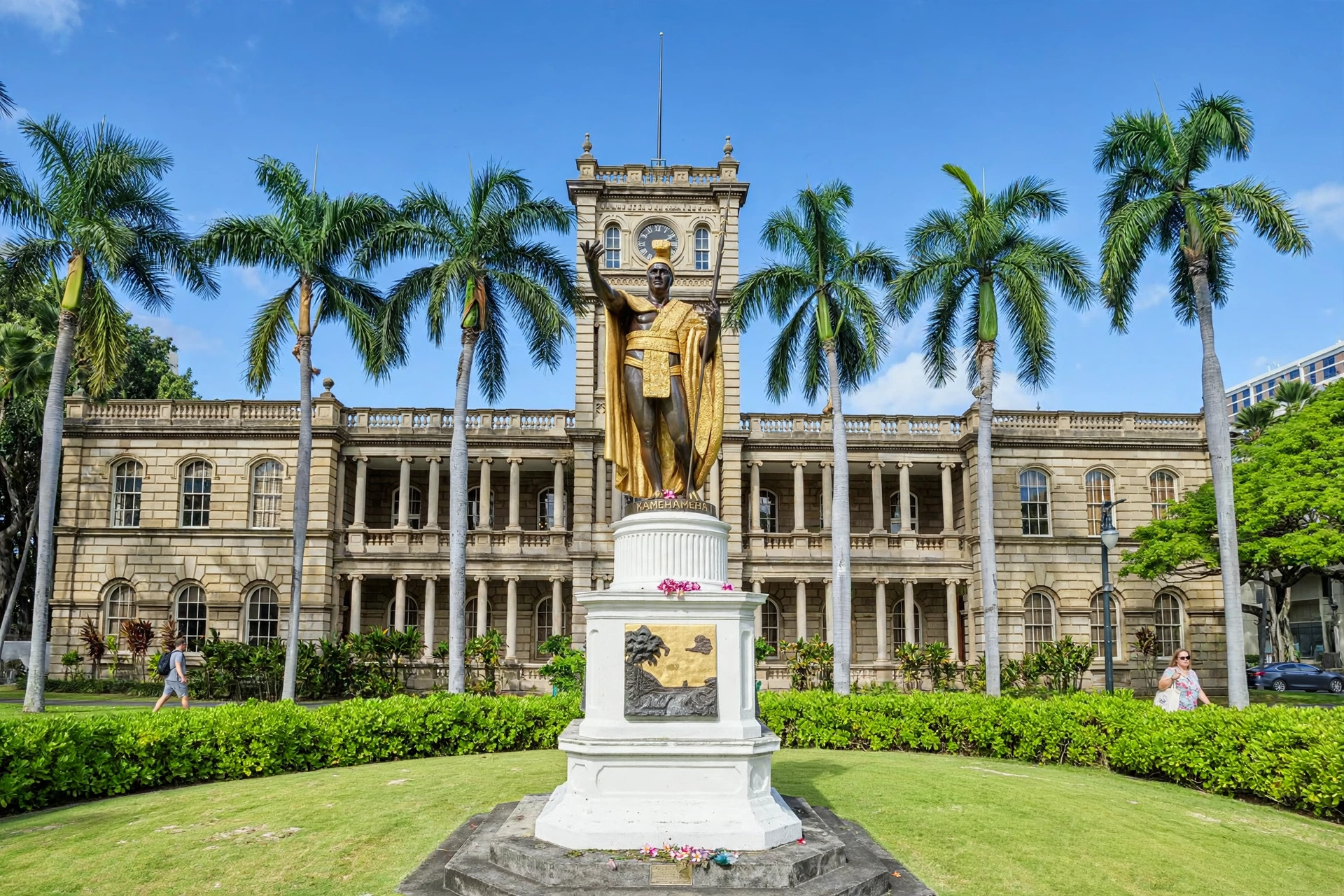
Downtown Honolulu is the historic and business heart of the city, about a mile wide and very walkable. The Capital Historic District holds the densest concentration of landmark buildings: ʻIolani Palace, the Hawaiʻi State Capitol, Honolulu Hale (city hall), Washington Place (the governor’s residence), and Aliʻiōlani Hale with the King Kamehameha I statue in front. Kawaiahaʻo Church, completed in 1842, stands nearby as one of the oldest Christian churches in Hawaiʻi.
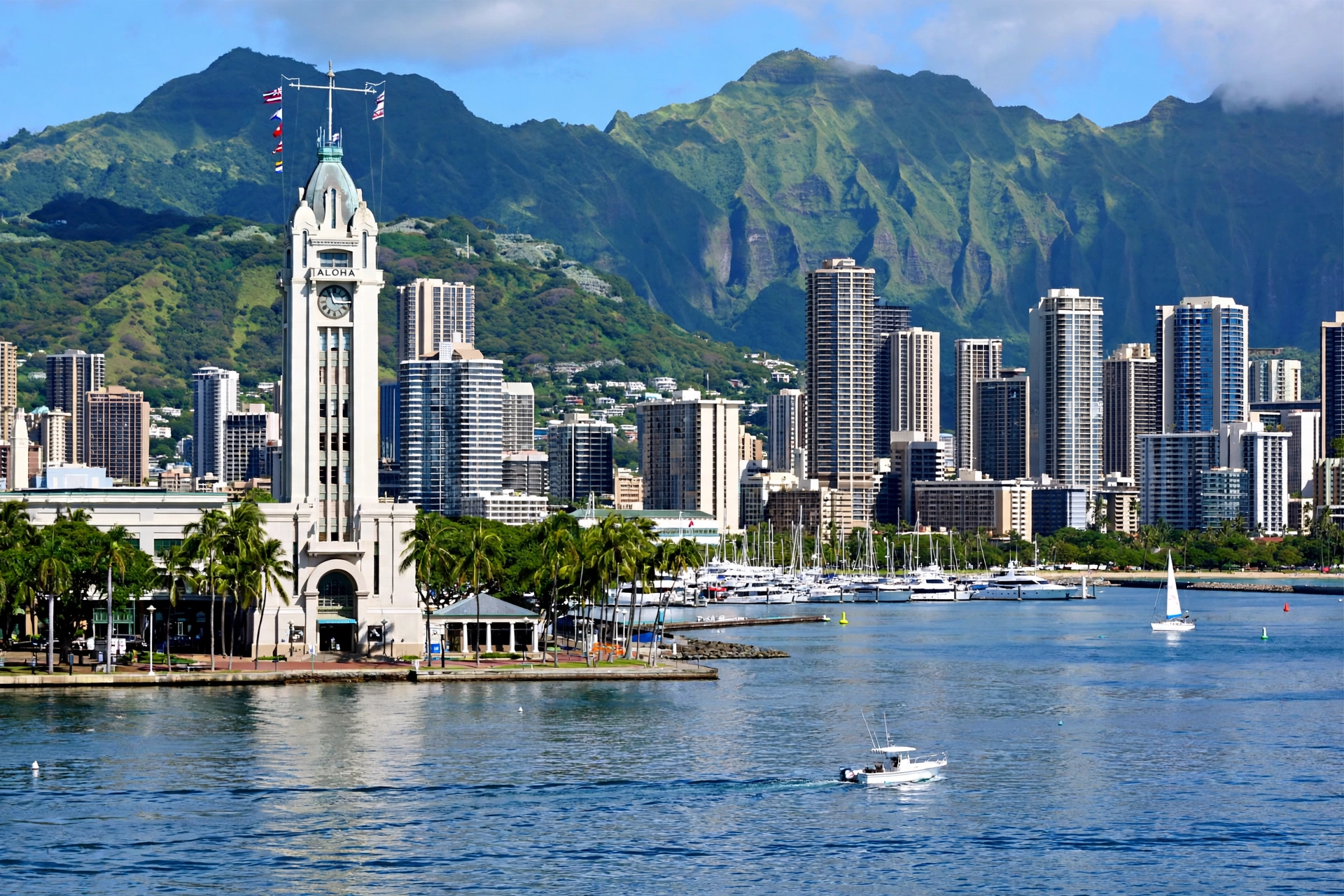
The downtown waterfront centers on Aloha Tower, the harbor landmark built in 1921 that once welcomed ocean liners. The tower’s observation deck looks out over the harbor, the city, and the Koʻolau mountains, and the surrounding waterfront has been redeveloped with shops and restaurants. Chinatown, just northwest of downtown, is the city’s oldest commercial neighborhood, full of markets, galleries, and restaurants. The area blends historic buildings with modern office towers, and on weekdays it is the working center of state government.
Waikīkī
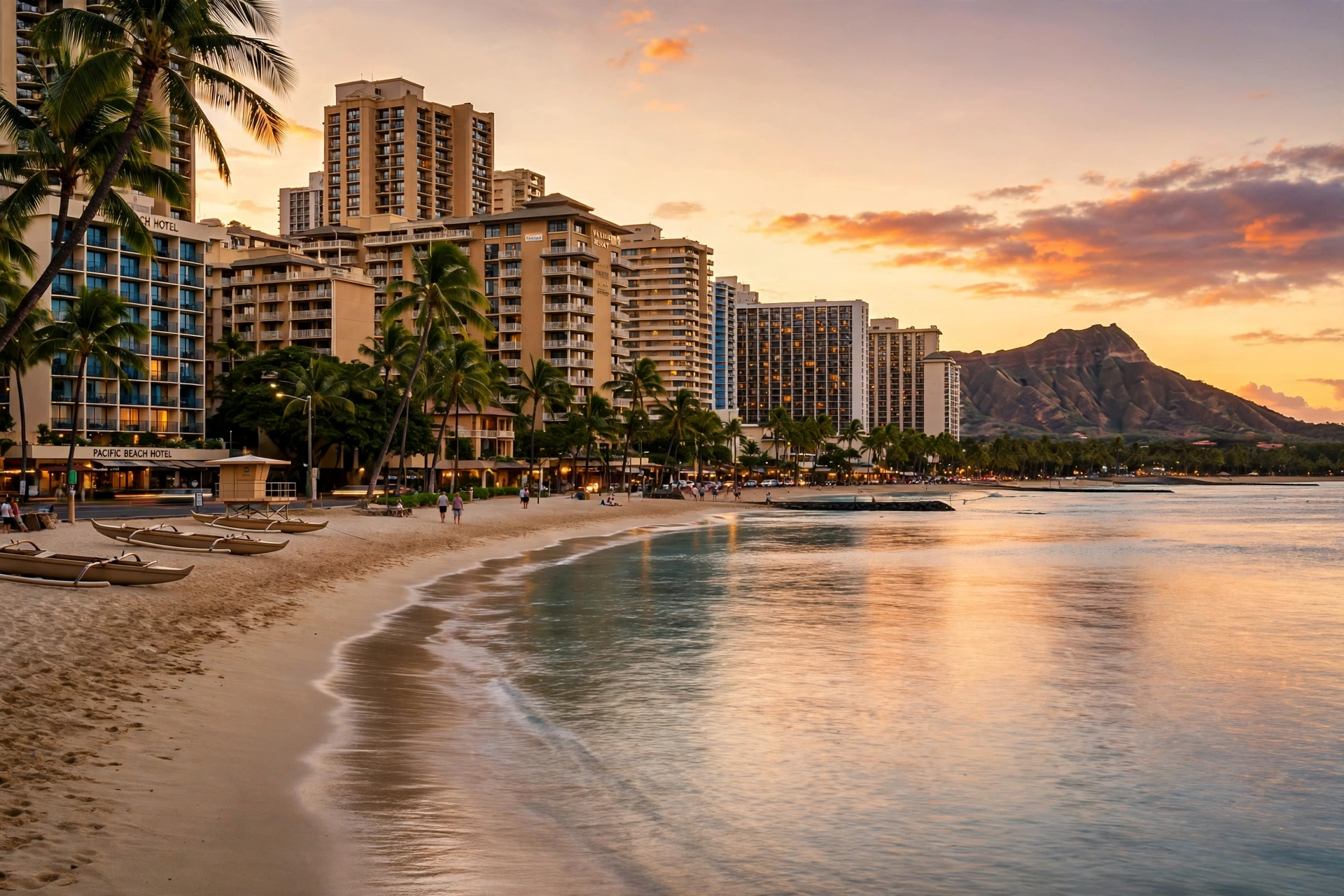
Waikīkī is the famous beachfront neighborhood east of downtown, about two miles of shoreline backed by hotels, shops, and restaurants along Kalākaua Avenue. It was once a royal retreat and is now the birthplace of modern surfing, home to the Duke Kahanamoku statue and the gentle Canoes and Queens surf breaks. This guide keeps Waikīkī brief on purpose: our dedicated Waikīkī guide covers the beach sections, history, and visitor essentials in full detail.
Ala Moana and Kakaʻako
Between downtown and Waikīkī sits Ala Moana, named for the Ala Moana Center, one of the largest open-air shopping centers in the world, and Ala Moana Beach Park, the long local-favorite beach fronting a reef-protected lagoon. Southeast of downtown, Kakaʻako is a former industrial district that has become the city’s arts and food neighborhood, known for warehouse murals and a growing residential skyline along the waterfront.
Mānoa
Mānoa is the lush valley neighborhood inland of the city, home to the University of Hawaiʻi at Mānoa, the Mānoa Falls trailhead, and Lyon Arboretum. It is a residential area with a cooler, rainier microclimate than the coast. Our Mānoa guide explains the valley, the falls, and the arboretum in depth.
Chinatown
Just northwest of downtown, Chinatown is Honolulu’s oldest commercial neighborhood and one of its most atmospheric. Chinese merchants settled here in the 19th century, and the district still holds open markets, herbal shops, lei stands, and restaurants serving Cantonese, Vietnamese, and other Asian cuisines. The Hawaiʻi Theatre, a restored 1922 movie palace, anchors the arts side of the neighborhood with concerts and performances. By day the streets are busy with shoppers; by night the restaurants and galleries draw a local crowd.
Nuʻuanu and Punchbowl
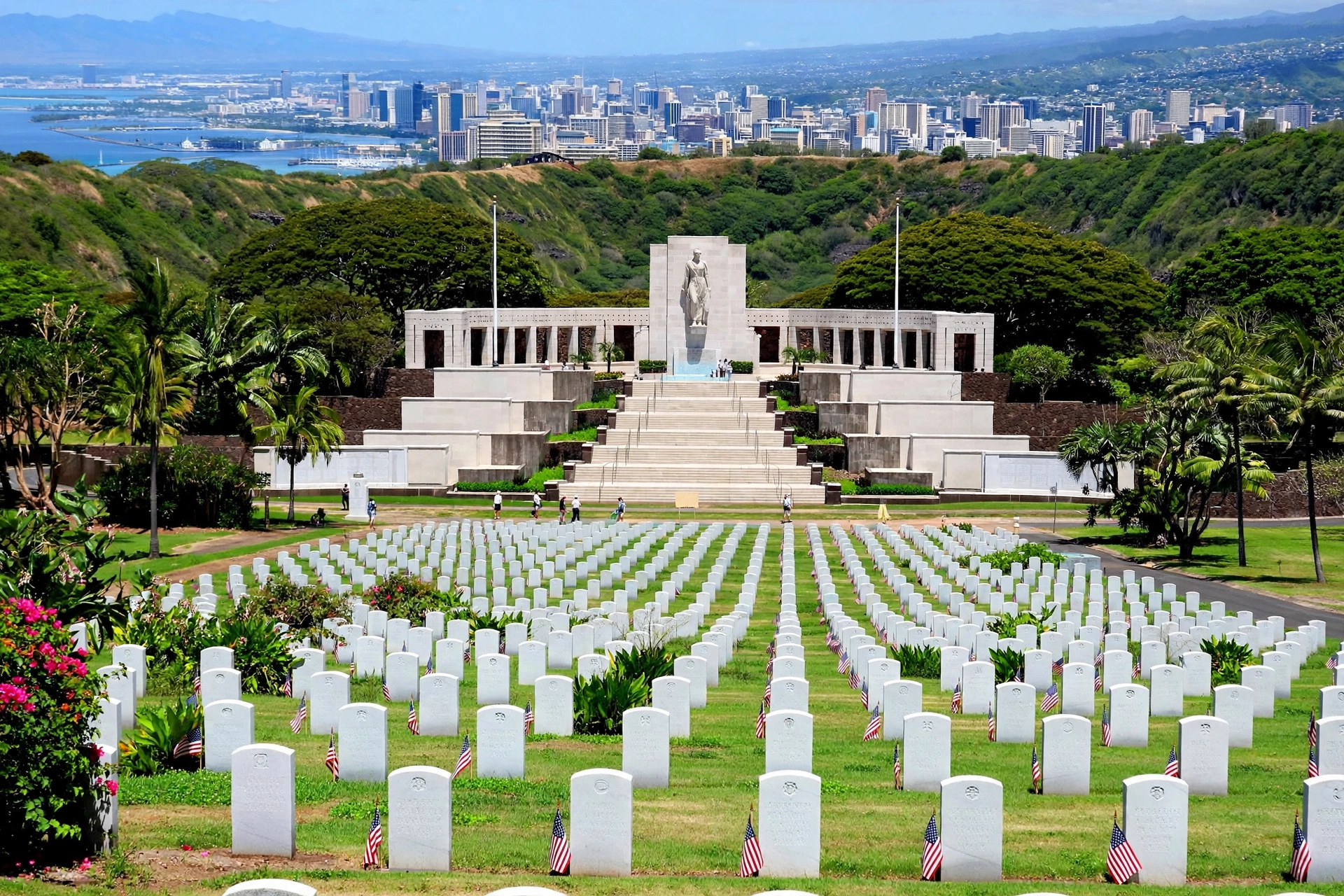
North of downtown, Nuʻuanu Avenue climbs toward the Koʻolau mountains through one of the city’s oldest residential areas, with historic homes, temples, and the Royal Mausoleum where Hawaiian royalty are entombed. Punchbowl, the extinct volcanic crater behind downtown, holds the National Memorial Cemetery of the Pacific, where thousands of American service members are buried. The crater rim also offers one of the best free viewpoints over the city and harbor.
The Pearl Harbor Area
West of downtown, the Pearl Harbor area holds the Pearl Harbor National Memorial, the active naval base, and the communities of ʻAiea and Pearl City. The memorial draws visitors from around the world to the USS Arizona Memorial and the nearby battleship and aviation museums. The area is primarily military and residential, with the memorial as its centerpiece.
Diamond Head and East Honolulu
At the city’s eastern edge rises Lēʻahi, Diamond Head, the volcanic crater whose profile defines the Honolulu skyline. The neighborhoods of Kaimukī, Kahala, and Hawaiʻi Kai stretch east toward the island’s southeastern tip, ending near Hanauma Bay. These are largely residential areas with local beaches and the start of the Kaʻiwi coastline.
History: From Sheltered Harbor to Capital
Honolulu’s harbor made its history. The calm anchorage drew the first foreign ships in the late 18th century, and by the early 19th century the port had become the commercial center of the islands. Whalers, sandalwood traders, and missionaries built the early town, and in 1845 King Kamehameha III moved the capital of the Hawaiian Kingdom to Honolulu, a status the city has kept ever since.
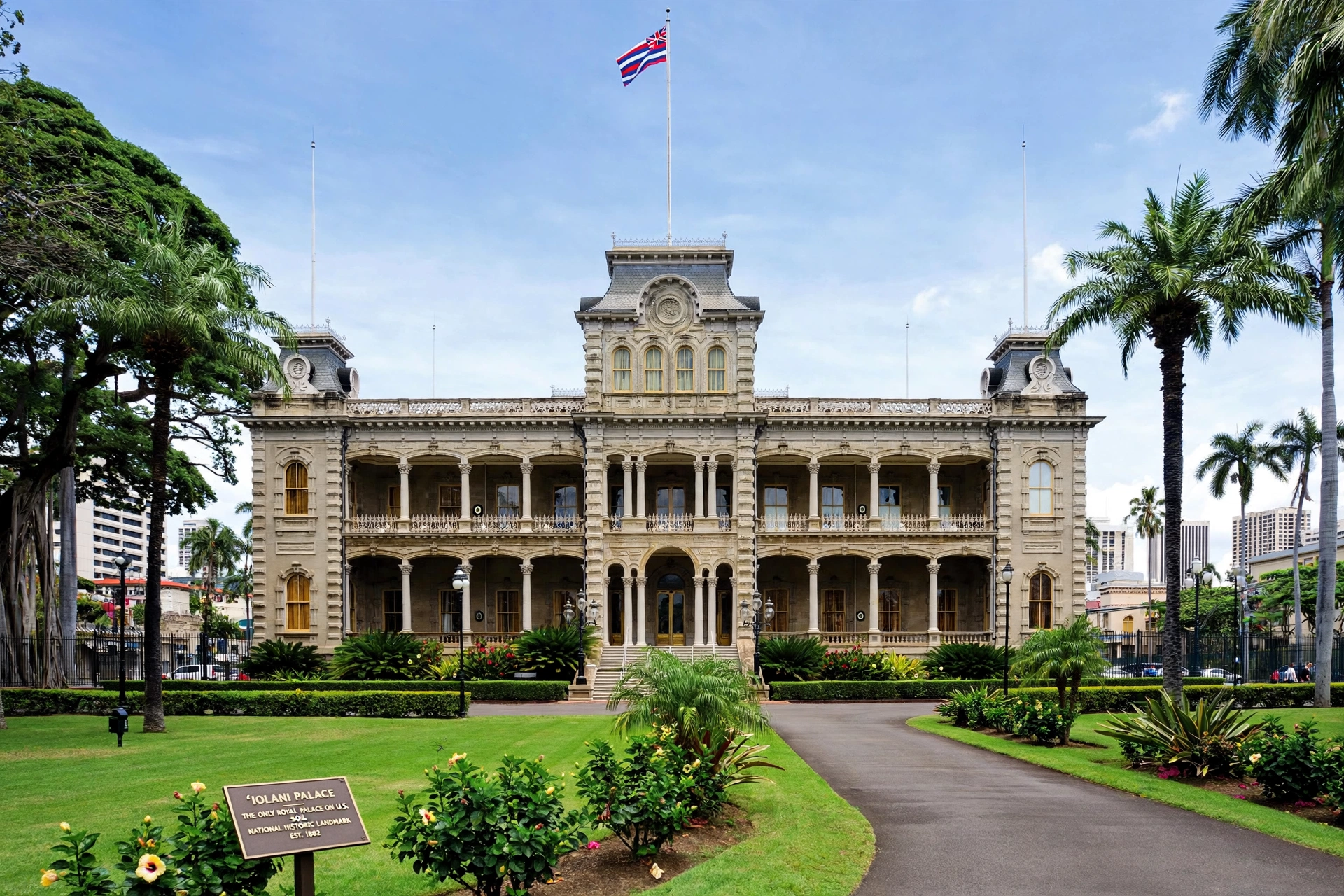
The 19th century built the Honolulu visitors see today. ʻIolani Palace, completed in 1882, served as the official residence of the Hawaiian monarchs and was a marvel of its time, with electric lighting and telephones installed before the White House had them. Kawaiahaʻo Church, the palace, the judiciary building, and the downtown street grid all date to the Kingdom era.
The overthrow of the Hawaiian monarchy in 1893 and annexation by the United States in 1898 changed the city’s trajectory. Honolulu was incorporated as a city in 1907. The early 20th century brought the military buildup that still shapes the west side of the city, and on December 7, 1941, the Japanese attack on Pearl Harbor pulled the United States into World War II and made Honolulu’s name known around the world.
Statehood in 1959 and the jet age turned Honolulu into a Pacific tourism capital. Waikīkī’s high-rises rose in the 1960s and 1970s, the visitor industry became the dominant private employer, and the city grew east and west along the coast. Today’s Honolulu balances its roles: seat of state government, headquarters of the U.S. Pacific Fleet, home to the islands’ largest university, and the main gateway through which most Hawaiʻi visitors arrive.
The name Honolulu itself comes from “hono,” meaning bay, and “lulu,” meaning sheltered or calm. Before it was Honolulu, the downtown area was known as Kou, roughly the blocks between today’s Nuʻuanu Avenue and Queen Street.
What to See in Honolulu
Honolulu packs an unusual range of major sights into a compact area. These are the headline attractions, summarized here with links to deeper coverage.
ʻIolani Palace
The only royal palace on U.S. soil, ʻIolani Palace was the official residence of Hawaiʻi’s last monarchs from 1882 until the overthrow in 1893. Guided and self-guided tours walk through the throne room, state dining room, and royal bedrooms. It sits in the heart of the Capitol District, an easy walk from downtown hotels. Check current tour schedules and ticket requirements before visiting, since access is by tour only.
Pearl Harbor National Memorial
The memorial at Pearl Harbor commemorates the December 7, 1941 attack. The USS Arizona Memorial, reached by boat, is the centerpiece, with the visitor center’s museums and the nearby battleship and aviation museums completing the experience. Allow at least half a day. The memorial is free to enter, though boat programs to the Arizona Memorial are reserved in advance and fill quickly.
Bishop Museum
The Bernice Pauahi Bishop Museum in the Kalihi district holds the world’s largest collection of Hawaiian and Polynesian cultural artifacts and natural history specimens. The Hawaiian Hall’s three-story koa-wood interior is worth the visit on its own. It is the islands’ premier museum of Native Hawaiian culture.
Diamond Head (Lēʻahi)
The Diamond Head State Monument trail climbs the crater for panoramic views over Waikīkī, downtown, and the south shore. The hike is short but steep, with stairs and a tunnel near the top. Reservations are required for non-residents, and parking is limited, so plan ahead.
Honolulu Museum of Art and Culture
The Honolulu Museum of Art holds one of the country’s finest collections of Asian and Pacific art, and the downtown arts scene extends through Chinatown galleries and Kakaʻako’s street murals. The Hawaiʻi Theatre in Chinatown hosts performances in a restored 1922 building.
Hanauma Bay
Just east of the city, Hanauma Bay Nature Preserve is the island’s most famous snorkeling spot, set in a flooded volcanic crater. All visitors need advance reservations, and the preserve closes on set days each week for reef recovery. Entry fees apply for non-residents.
Beaches in the City
Beyond Waikīkī, city beaches include Ala Moana Beach Park’s calm lagoon, the family-friendly shores near the harbor, and the surf spots toward Diamond Head. Each has its own conditions, so check surf reports and lifeguard guidance before swimming anywhere on the south shore.
Honolulu Zoo and Waikīkī Aquarium
At the eastern end of Waikīkī, Kapiʻolani Park holds the Honolulu Zoo, a 42-acre city zoo with a focus on tropical animals, and the Waikīkī Aquarium, which showcases Hawaiian reef life and marine research. Both are easy half-day stops that work well for families, and the surrounding park is the city’s largest green space, with banyan trees, tennis courts, and views of Diamond Head.
Punchbowl: National Memorial Cemetery of the Pacific
Inside the Punchbowl crater sits the National Memorial Cemetery of the Pacific, the resting place of tens of thousands of U.S. service members from World War II onward. The memorial staircase, the Courts of the Missing, and the Lady Columbia statue make it one of the most moving stops in the city. The overlook near the entrance frames downtown, the harbor, and the airport in a single view.
Foster Botanical Garden
Near downtown, Foster Botanical Garden preserves a collection of rare tropical plants on land that dates to the Kingdom era. The garden’s Exceptional Trees, some planted in the 19th century, include massive banyans and palms. It is a quiet contrast to the business district a few blocks away and a good stop combined with the Capitol District sights.
Getting Around the City
Honolulu is the easiest city in Hawaiʻi to navigate without a car, though a car still helps for day trips.
TheBus is the island’s public transit system, with about 115 routes and 4,200 stops across Oʻahu. It runs seven days a week and reaches most visitor areas, including Waikīkī, downtown, Ala Moana, Pearl Harbor, and the airport. Fares are paid per ride or by day pass, and the system is one of the most heavily used per capita in the United States.
Downtown Honolulu itself is very walkable, roughly a mile across, and Waikīkī’s main strip is built for strolling. Biki, the city’s bikeshare system, covers the urban core with stations in Waikīkī, downtown, Ala Moana, and Kakaʻako. Taxis and rideshares are plentiful in the tourist areas.
Traffic is the honest caveat. Honolulu’s rush hours are real, and the H-1 freeway and surface arterials clog in the mornings and late afternoons. If you are driving, plan around peak times. Parking in Waikīkī and downtown is expensive and scarce, which is one more reason many visitors use the bus or walk within the city and rent a car only for island day trips.
Daniel K. Inouye International Airport sits just west of downtown, about 10 to 20 minutes from Waikīkī depending on traffic. Airport shuttles, taxis, rideshares, and TheBus all connect the airport to the city.
The city is also building Skyline, an elevated rail line running from East Kapolei through Pearl Harbor and the airport toward downtown and Ala Moana. The first segments opened in 2023, with extensions under construction. When complete, it will give visitors a traffic-free ride from the airport and the west side into the urban core. Check current operating segments before planning a trip around it, since construction continues in phases.
Practical Information
A few practical notes help the city make sense. Honolulu runs on Hawaiʻi Standard Time, which does not observe daylight saving. The area code for the entire state is 808. The city’s ZIP codes run from 96801 to 96850, with Waikīkī in the 96815 range and downtown in 96813.
Weather in the city is warm and dry by island standards. Downtown and Waikīkī sit in the rain shadow of the Koʻolau mountains, with daytime highs in the low to mid 80s Fahrenheit most of the year and cooler nights in winter. Mānoa and the valley neighborhoods run noticeably wetter and cooler.
Honolulu is a working city, not just a resort. State offices, courts, and the legislature operate on weekday schedules, and many government buildings in the Capitol District are open to the public during business hours. Respectful behavior at memorials, churches, and cultural sites matters; the Pearl Harbor memorials and ʻIolani Palace are places of genuine significance to residents.
Safety follows big-city common sense. The tourist areas are generally safe, but petty theft happens, especially around beaches and parked cars. Lock vehicles, keep valuables out of sight, and avoid leaving belongings unattended on the sand.
Honolulu is also the natural starting point for the rest of Oʻahu. The North Shore’s surf towns sit about 45 minutes to an hour north by car, the windward coast’s beaches are 30 to 45 minutes east, and the leeward resorts of Ko ʻOlina are about 30 minutes west. Many visitors split their stay between a few nights in the city and nights elsewhere on the island, or simply day-trip from a Honolulu base. Either approach works because the island’s road network radiates from the city.
Honolulu FAQ
Is Honolulu the capital of Hawaiʻi?
Yes. Honolulu has been the capital of the Hawaiian Islands since 1845, when King Kamehameha III moved the seat of government there. It remained the capital through the territorial period and became the state capital at statehood in 1959.
Is Waikīkī part of Honolulu?
Yes. Waikīkī is a neighborhood within the city of Honolulu, not a separate city. It sits about two miles east of downtown along Oʻahu’s south shore. Our Waikīkī guide covers it in full.
What does Honolulu mean?
Honolulu means “sheltered harbor” or “calm port” in Hawaiian, from “hono” (bay) and “lulu” (sheltered). The name refers to the calm natural anchorage that made the port valuable to early traders.
How far is Honolulu from the airport?
Daniel K. Inouye International Airport is just west of downtown Honolulu. The drive to Waikīkī takes about 10 to 20 minutes depending on traffic, and downtown is even closer.
Can you visit ʻIolani Palace?
Yes, by guided or self-guided tour. The palace is in the Capitol District downtown. Tours are ticketed and schedules change, so check the palace’s official site before visiting.
Do you need a car in Honolulu?
Not necessarily within the city. TheBus covers the urban core well, downtown and Waikīkī are walkable, and bikeshare fills the gaps. A rental car becomes useful for North Shore and windward-coast day trips.
What is the best area to stay in Honolulu?
Most visitors stay in Waikīkī for the beach and hotel concentration, downtown and Ala Moana for a more local feel, or near the airport for short layovers. Each area suits a different trip style.
Is Pearl Harbor in Honolulu?
Pearl Harbor sits just west of downtown Honolulu within the City and County of Honolulu. The Pearl Harbor National Memorial is about a 20 to 30 minute drive from Waikīkī.
Related Guides
- Waikīkī, Hawaiʻi: the beach neighborhood in full detail
- Where Is Mānoa in Hawaiʻi: the valley, falls, and arboretum
- Where Is Hawaii Five-0 Filmed: filming locations across Oʻahu
- Oʻahu Travel Guide: the full island beyond the city
- Where Is Oʻahu Located in Hawaiʻi: the island’s position and geography
Honolulu rewards visitors who look past the postcard. The same city that holds Waikīkī’s famous shoreline also holds a royal palace, a working harbor, a world-class museum of Polynesian culture, and the memorials of Pearl Harbor, all within a few miles of each other. Understanding the city’s districts, its history as the islands’ capital, and its practical rhythms turns a beach stopover into a real visit to Hawaiʻi’s main city. Few American cities pack a royal palace, a world-famous beach, a major naval memorial, and a volcanic crater into one compact and walkable urban area, and that density is what makes Honolulu worth exploring beyond the sand.