Hibiscus in Hawaii: The Real State Flower and Its Impostors

The flower in the tourist’s hair is almost never the state flower. The hibiscus tucked behind ears in Waikiki is usually the Chinese red hibiscus, a showy import, while Hawaii’s actual state flower, the maʻo hau hele, is a yellow native that opens its blooms in the afternoon, grows in dry forests, and is endangered in the wild. It took the legislature 65 years to sort out which hibiscus was official: the 1923 territorial designation never named a species, and only in 1988 did lawmakers declare the native yellow hibiscus the true state flower.
This is the single complete guide to hibiscus in Hawaii. It covers the 65-year confusion over the state flower, the maʻo hau hele itself and why it is endangered, how to tell the native hibiscuses from the tourist flower, the fragrant white species found nowhere else on Earth, the great hybridization craze of the early 1900s, hibiscus in Hawaiian culture, and where to see the real natives. If you have been searching for anything about hibiscus in Hawaii, the answers are all here on this one page.
The State Flower Almost Wasn’t
In 1923, Hawaii’s territorial legislature named “the hibiscus” the official flower without specifying which one. For 65 years, the honor floated ambiguously: many assumed the native red kokiʻo, and many more simply pictured the ubiquitous Chinese red hibiscus of gardens and postcards. In 1988, the state legislature settled it, declaring the native yellow hibiscus, maʻo hau hele (Hibiscus brackenridgei), the official flower of the State of Hawaii. The date matters, because anything published before June 6, 1988, may still carry the old confusion.
Maʻo Hau Hele: The Flower Itself
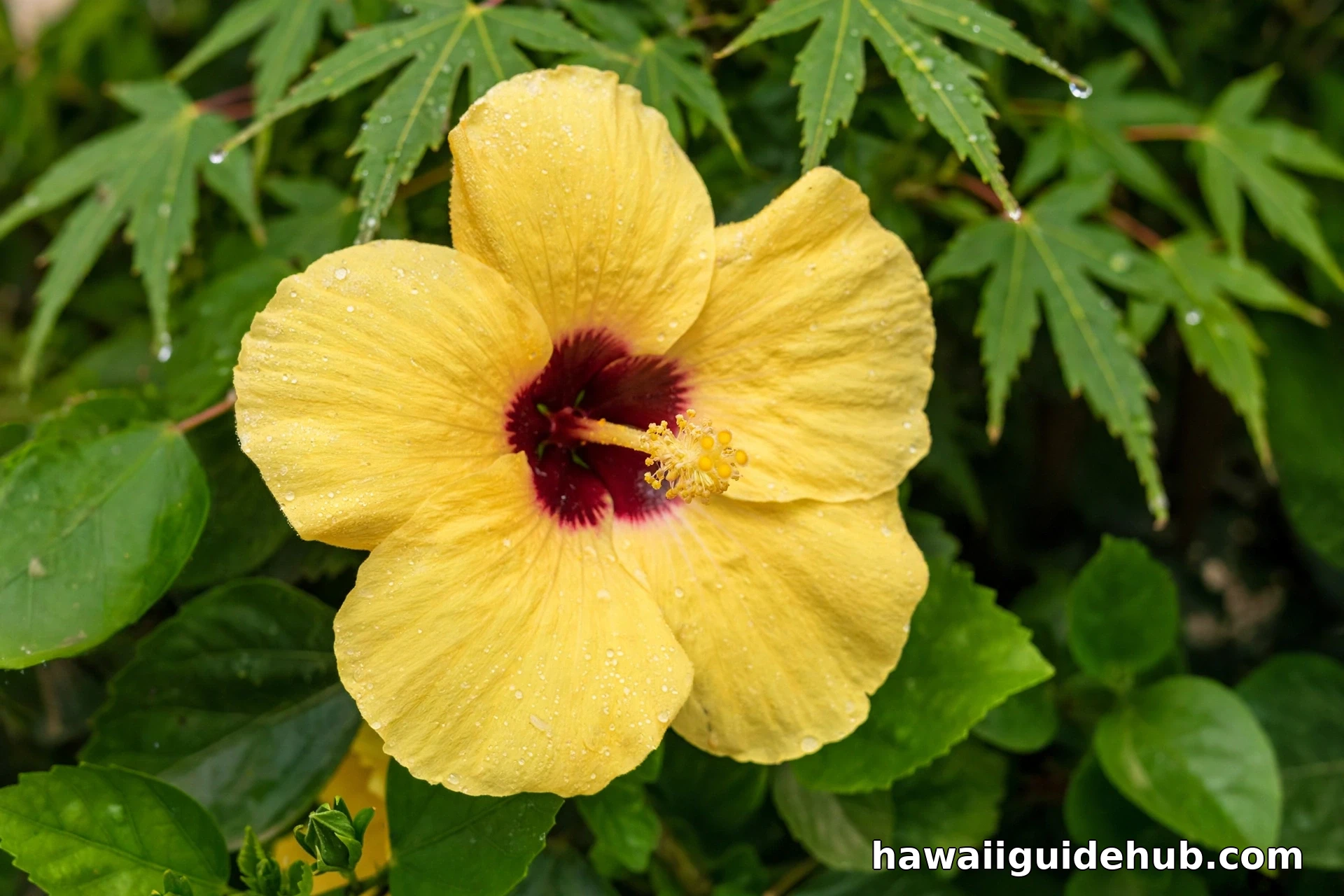
The state flower is nothing like the tourist hibiscus. Maʻo hau hele is an upright shrub or small tree, up to 30 feet, with fuzzy, maple-like lobed leaves and large flowers, 4 to 6 inches across, in bright yellow, usually with a maroon center. It keeps odd hours: the flowers open between 2 and 4 in the afternoon and close by late morning the next day, with spring through early summer the main season. It grows in dry forests and shrublands at 400 to 2,600 feet, on all the main islands except Niʻihau and Kahoʻolawe, though it is not common anywhere.
It is also in trouble. The U.S. Fish and Wildlife Service lists it as endangered, and the IUCN rates it Critically Endangered: wild populations are tiny, pressed by feral pigs, goats, and deer, invasive weeds, fire, and development. Three subspecies are recognized, and one, molokaianus, is extinct. The nursery plants sold across Hawaii are mostly the Big Island subspecies, so the flower is common in gardens and rare in the wild, a paradox the state flower shares with several Hawaiian species.
Which Hibiscus Are You Looking At?
Hawaii grows dozens of hibiscus, but they sort into four groups that matter. The table below is the field guide.
| Group | Flower | Status | Where you’ll see it |
| Maʻo hau hele (state flower) | Yellow, maroon center; opens afternoons (per UH CTAHR) | Native, endemic, federally endangered | Botanical gardens, native plant sales; rarely wild |
| White kokiʻo (kokiʻo keʻokeʻo) | White, fragrant; the only scented hibiscus species on Earth (per botanical sources) | Native, endemic; some subspecies endangered | Oahu ranges, Kauai valleys, native gardens |
| Red kokiʻo (kokiʻo ʻula) | Bright red native blooms | Native, endemic; Kauai species endangered | Native plantings; the “native red” of old assumptions |
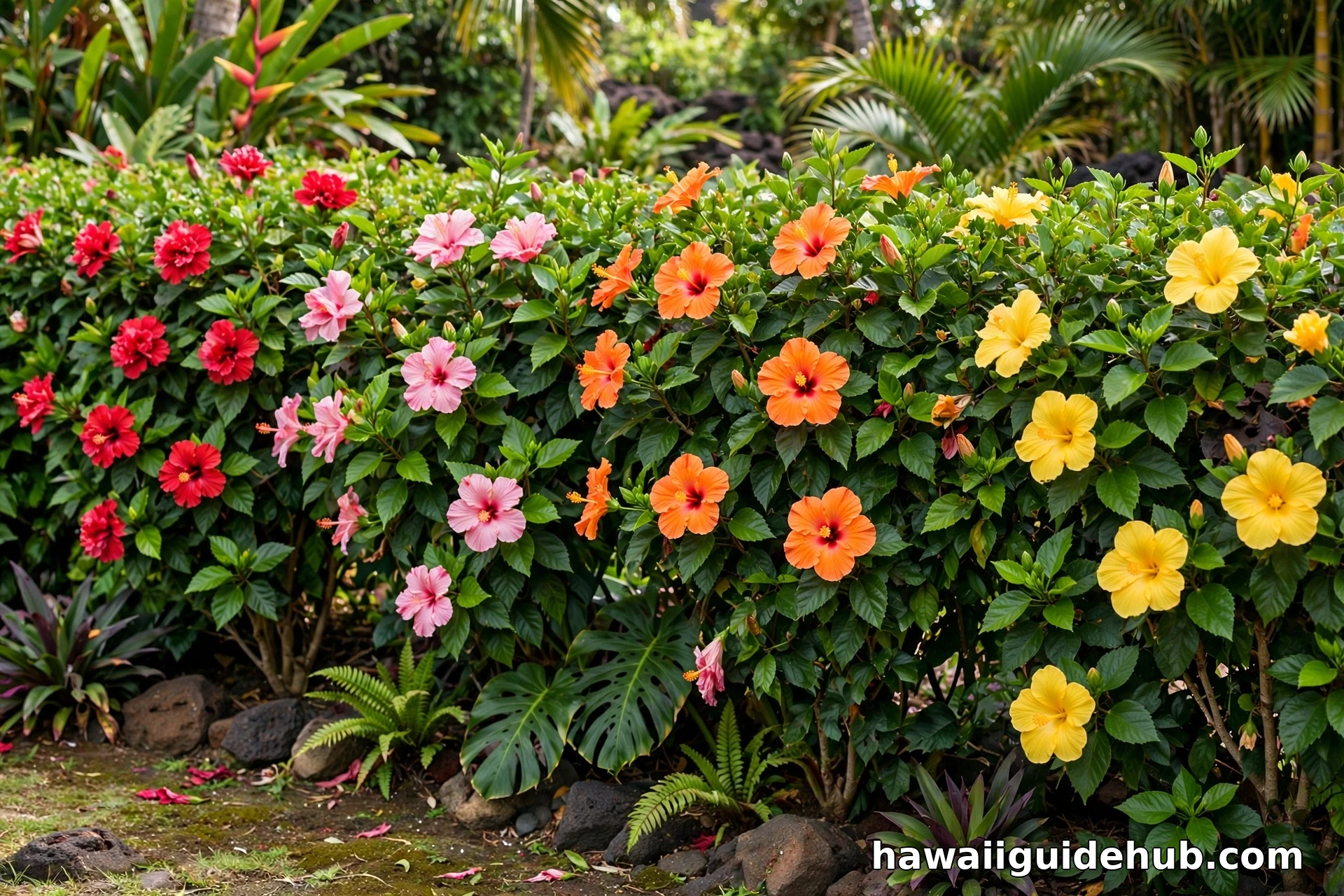
| Chinese hibiscus & hybrids | Every color, doubles, dinner-plate sizes | Introduced ornamental; thousands of hybrids | Every hotel, garden, and postcard in Hawaii |
The Fragrant Whites
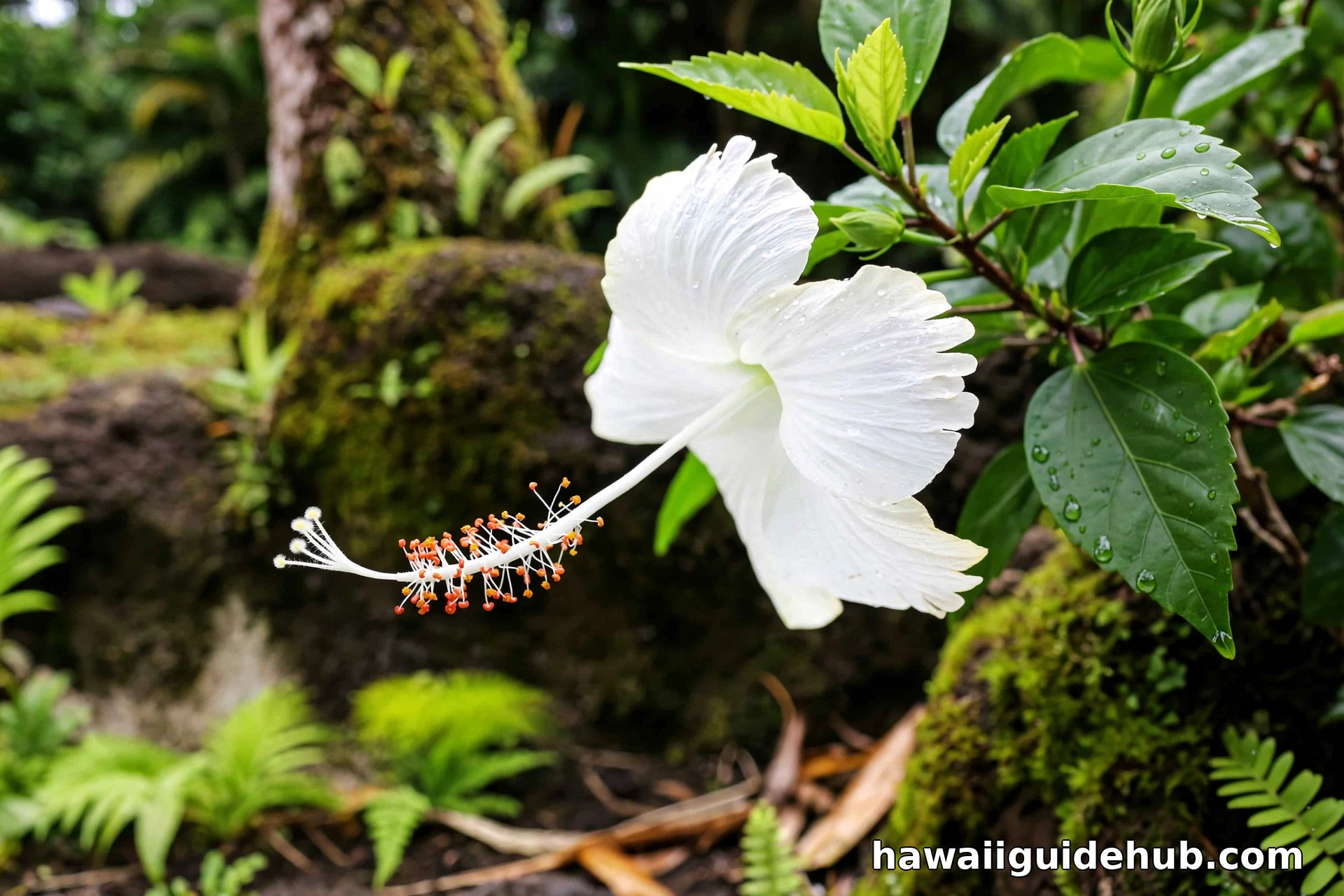
The white hibiscuses deserve special mention. Kokiʻo keʻokeʻo, “the kokiʻo white like the shine of silver,” comprises two species, Hibiscus arnottianus and H. waimeae, and they are among the only hibiscus species in the entire world with fragrant flowers. Some clones are mildly scented, others strongly so, and hybridizers prize the trait: many modern hybrids carry native white ancestry, and the fragrance sometimes passes to the offspring. In Hawaiian the white hibiscus is the pua aloalo. One Molokai subspecies may number only a dozen wild plants, yet the best clones are easy to grow and widely available, another garden-versus-wild paradox.
Smell is the white hibiscus’s secret weapon. While the big colored hybrids shout visually, kokiʻo keʻokeʻo whispers: lean into a bloom on a still morning and the fragrance, light, sweet, unmistakably hibiscus yet like no other hibiscus, rewards the effort. Hybridizers chase this trait the way perfume houses chase rare oils, because a dinner-plate bloom that also smells like heaven is the holy grail of the craft.
The Great Hybrid Craze
Hawaii’s modern hibiscus rainbow was manufactured. Archibald Cleghorn, father of Princess Kaʻiulani, reportedly returned from his honeymoon with hibiscus collected across the South Pacific, and those introductions, crossed with native Hawaiian species, ignited a hybridizing craze in the early 1900s. In 1909 the Hawaii Agricultural Experiment Station began propagating hybrid hibiscus, distributing some 100,000 plants by 1913. The Hawaiian Hibiscus Society, founded in 1911, displayed 250 hybrids at its first exhibition; by 1917, the show featured 2,000 varieties.
The tradition continues in backyards. Hybridizers like the North Shore’s Jill Coryell, “the hibiscus lady,” create new crosses by hand-pollinating chosen parents, each seed a unique potential bloom, some taking up to four years to flower. The dinner-plate doubles and sunset swirls of modern gardens are the great-grandchildren of Cleghorn’s honeymoon souvenirs crossed with endangered natives.
Hibiscus in Hawaiian Life
Long before hybridization, Hawaiians used the natives. The maʻo hau hele’s yellow flowers yielded a blue-gray dye for kapa cloth, a transformation, yellow petals to slate-blue dye, that still surprises. Hibiscus fiber served for cordage. The flowers adorned hair and lei, and the plant’s association with royalty, the bloom as an emblem of power and respect, predates the tourist era by centuries. When you wear a hibiscus today, you are wearing a symbol that once signaled rank.
A Day in the Life of a Maʻo Hau Hele Bloom
Most flowers open at dawn. The state flower keeps its own schedule. Maʻo hau hele buds swell through the morning, then open between 2 and 4 in the afternoon, unfurling bright yellow petals around the maroon heart, and hold through the night until late the following morning. Botanists who documented the rhythm found it remarkably consistent, a daily performance timed to the pollinators of the dry forest. Visit a garden at 3 p.m. in blooming season and the shrubs glow; visit at 8 a.m. and you will find yesterday’s flowers closing like curtains.
The afternoon opening is one more way the state flower defies the tourist stereotype. The hibiscus of postcards is always open, always red, always available. The real one has appointments to keep.
The Kapa Dye: Yellow Petals, Blue-Gray Cloth
One of the strangest facts in Hawaiian material culture: the yellow flowers of maʻo hau hele produce a blue-gray dye for kapa, barkcloth. The chemistry of the transformation, yellow petals steeped and processed into slate-blue pigment, was mastered by Hawaiian dyers long before European color theory arrived. Kapa dyed with hibiscus carried the plant’s prestige into cloth, and the blue-gray it produced was distinctive among the earth reds and blacks of other dyes.
The dye tradition connects the state flower to the broader story of Hawaiian textile arts, where color came from plants with the patience to yield it: ʻōlena for yellow, kukui for black, noni for red, and maʻo hau hele for its improbable blue-gray. A flower that blooms yellow and dyes blue is the kind of paradox Hawaiian artisans specialized in.
Hibiscus as Royal Emblem
Before it was a state flower, the hibiscus was a royal one. In Hawaiian tradition the bloom signified royalty, power, and respect, worn and displayed as an emblem of rank. Princess Kaʻiulani’s father collecting hibiscus across the Pacific was not mere gardening; it was a prince gathering emblems. When the 1988 legislature finally fixed the yellow native as the official flower, it was recognizing a royal association centuries older than the state itself.
The royal connection also explains the flower’s modern ubiquity as a symbol of Hawaii. Long after the monarchy’s overthrow, the hibiscus remained the visual shorthand for the islands, on stamps, uniforms, hotel logos, and the hair of every visitor who has ever wanted to look, for an afternoon, like they belonged.
The Conservation Fight
The state flower’s wild future hangs on fences and volunteers. On Maui, the Native Hawaiian Plant Society fenced a remnant maʻo hau hele population in the 1980s, a quarter-acre exclosure where, by 2001, counters found over 200 seedlings but only 3 mature plants. The work since has been weeding invasive grasses, repairing fences against pigs, goats, and deer, and tagging individual plants to learn their life history. Fourteen native species share the exclosure, a dry-forest community reassembling itself one fence at a time.
The lesson is double-edged. Ex-situ conservation works: nursery maʻo hau hele is easy to grow and widely planted, so the species will not vanish from gardens. But a state flower that exists only in cultivation is a symbol with its roots cut. The fences on Haleakalā’s slopes are trying to keep the wild version of the story alive.
Growing Hibiscus and Where to See the Natives
For the garden, maʻo hau hele is drought-tolerant, sun-loving, and adaptable to varied soils, a 3-to-15-foot shrub that asks little and gives spectacular afternoons. Buy nursery-propagated plants, never wild-collected, and give the Oahu subspecies mokuleianus its space: its flower buds wear sharp, cactus-like prickles that sting the enthusiastic picker. White kokiʻo prefers more water and rewards with fragrance.
To see the natives, visit botanical gardens: Maui Nui Botanical Gardens maintains maʻo hau hele in its native collection, and Oahu’s gardens hold the white species. The Native Hawaiian Plant Society’s exclosures on Maui protect wild maʻo hau hele behind fences, where hundreds of seedlings now compete with the weeds. For more on Hawaii’s native flora, the guide to Hawaiian cultural traditions adds context, while responsible travel practices and the guide to Hawaii’s natural environments cover visiting fragile native habitats with care.
Watch: Hawaii’s State Flower, the Yellow Hibiscus
Frequently Asked Questions
What is Hawaii’s state flower?
The maʻo hau hele, or native yellow hibiscus (Hibiscus brackenridgei), designated the official state flower on June 6, 1988.
Is the state flower endangered?
Yes. It is federally listed as endangered and rated Critically Endangered by the IUCN, though nursery-grown plants are common in gardens.
What is the difference between maʻo hau hele and Chinese hibiscus?
Maʻo hau hele is a native yellow-flowered shrub with lobed, sandpapery leaves that opens its blooms in the afternoon. Chinese hibiscus (H. rosa-sinensis) is the introduced ornamental with non-lobed leaves, blooming in every color.
Are any hibiscus fragrant?
Hawaii’s native white hibiscuses, kokiʻo keʻokeʻo, are among the only fragrant hibiscus species in the world.
When was the yellow hibiscus named Hawaii’s state flower?
On June 6, 1988. The territorial legislature had named “the hibiscus” the flower back in 1923 without specifying a species, creating 65 years of ambiguity.
What does maʻo hau hele mean?
“Hau most similar to maʻo”: the Hawaiians saw its kinship with the hau tree (also in the mallow family) and named it accordingly.
Where can I see native hibiscus in Hawaii?
Maui Nui Botanical Gardens, Oahu’s botanical gardens, native plant nurseries, and protected exclosures on Maui.
The hibiscus behind the tourist’s ear is a lovely import, but the real story is yellow, opens at 2 p.m., dyes kapa blue-gray, and is fighting for its life in the dry forests. Learn the maʻo hau hele, and you will never see a hibiscus the same way again. Next time someone hands you a red bloom for your hair, wear it happily, then tell them about the yellow one. That is how a state flower finally gets the recognition it has always deserved, one garden at a time.