Pineapple Fields in Hawaii: Where They Grow, the Industry Story & Visiting Dole Plantation

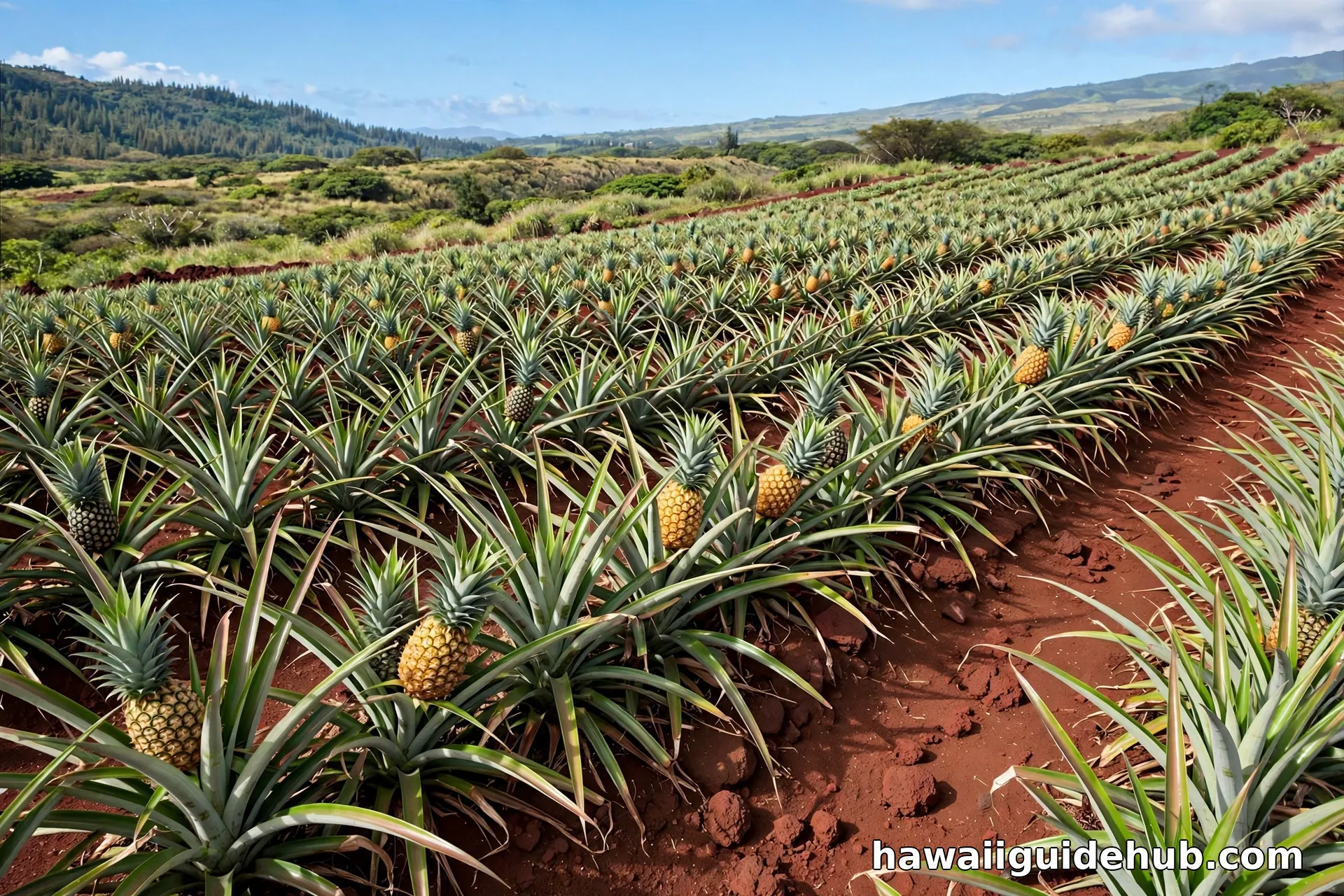
Yes, pineapples grow in Hawaii, and at one time Hawaii grew more pineapple than anywhere else on earth. The spiky fields of red dirt lined with green crowns are one of the classic images of the islands. But the story behind pineapple fields in Hawaii is more surprising than most visitors expect: the pineapple is not native to Hawaii at all, the giant industry that once defined the islands has mostly vanished, and the famous Dole Whip was born at Disneyland, not on a plantation. This is the complete guide: do pineapples grow in Hawaii, the rise and fall of the industry, where to see fields today, and how to visit the Dole Plantation.
Do Pineapples Grow in Hawaii?
Pineapples do grow in Hawaii, and they grow well. The islands’ warm climate, volcanic soil, and steady sunshine suit the plant, which fruits year-round with peaks in spring and summer. Commercial fields still operate on Oʻahu and Maui, and you can see working pineapple fields most easily at the Dole Plantation in Wahiawā on Oʻahu. But the scale is a shadow of what it was: the plantations that once covered tens of thousands of acres have shrunk to a handful of small operations serving mostly the local market.
Are Pineapples Native to Hawaii?
No. This is the single most common misconception about pineapples in Hawaii. The pineapple is native to South America, and it arrived in the islands only in the 1790s, when Don Francisco de Paula Marin, a Spanish advisor to Kamehameha I, introduced it, according to the Honolulu Star-Bulletin. For the first century it was a minor garden crop. The transformation into an industry came much later, with one man: James Dole.
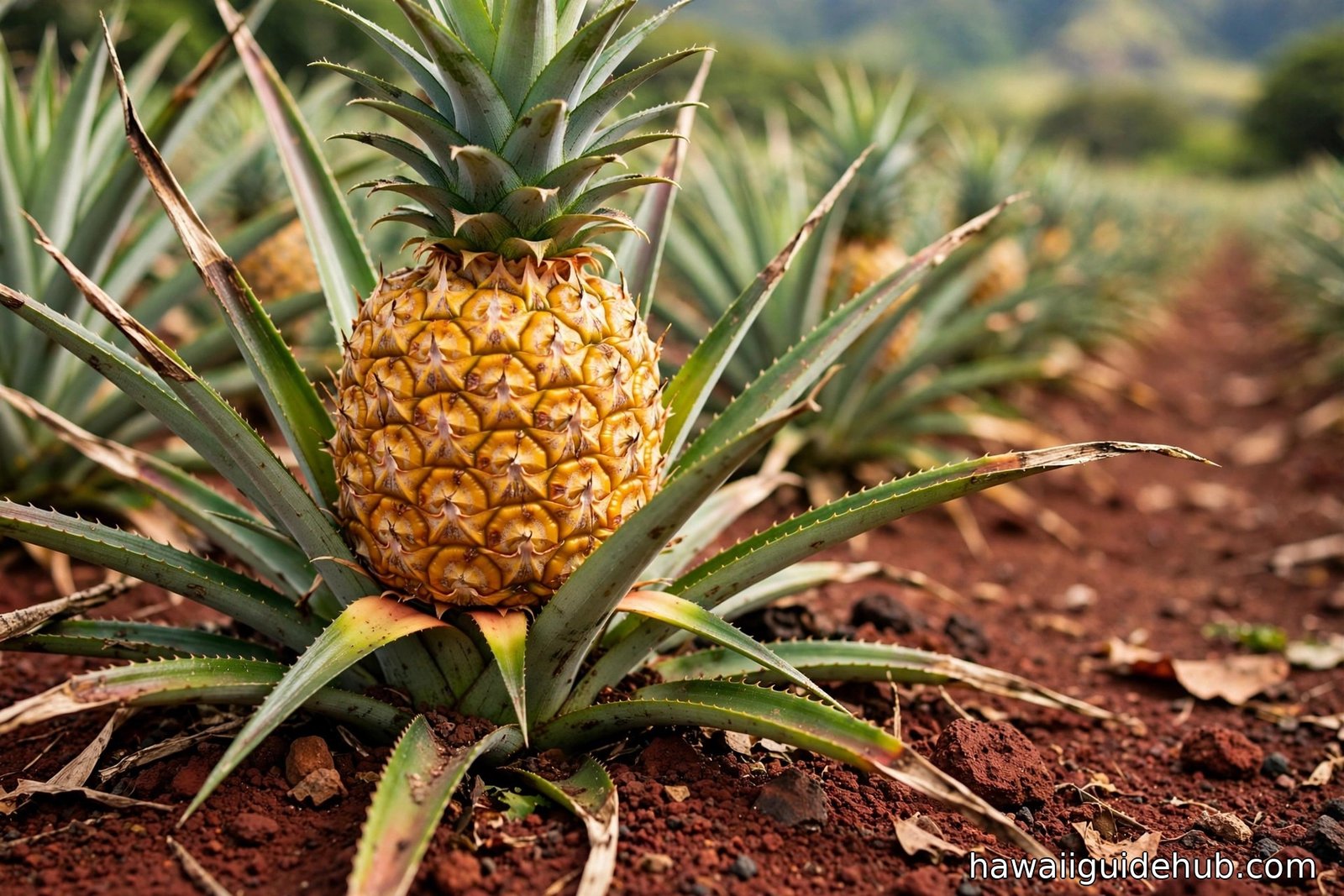
A related myth worth killing: pineapples do not grow on trees. Each pineapple grows from the center of a low, spiky plant about three feet tall, and a single plant takes roughly 18 to 24 months to produce one fruit. The neat rows you see in photos are individual plants, each yielding essentially one pineapple per cycle.
The Rise: How Hawaii Became the Pineapple Capital
James Drummond Dole arrived in Hawaii in 1899 and began growing pineapple on Oʻahu, founding the Hawaiian Pineapple Company. His timing was perfect: new canning technology and fast steamships let canned pineapple reach the American mainland, and aggressive advertising made the fruit a symbol of the tropics. In 1922, Dole bought the entire island of Lānaʻi and turned it into the largest pineapple plantation in the world, with 20,000 farmed acres and a plantation village housing more than a thousand workers and their families.
At its height, the scale was staggering. Nearly 77,000 acres of Hawaii were covered in pineapple, and the islands supplied about 80 percent of the world’s canned pineapple, per a 2006 Honolulu Star-Bulletin editorial. The industry shaped whole communities: plantation villages, multiethnic workforces drawn from Japan, the Philippines, Portugal, and China, and towns like Wahiawā and Lānaʻi City built around the crop. Hawaii earned the nickname the Pineapple Islands.
The Fall: What Happened to the Pineapple Industry
The collapse began in the 1960s, driven by simple economics. Hawaiian labor cost $2.64 to $3.69 per hour while Filipino workers earned 8 to 24 cents, per Smithsonian Magazine, and labor was about half the cost of production. Cheaper land and labor in the Philippines, Thailand, and later Costa Rica pulled production overseas. Dole’s Honolulu cannery closed in 1991. Del Monte, the other giant, announced its departure in 2006 and phased out Hawaii operations by 2008. Maui Pineapple harvested its final commercial crop in 2009, ending a century of large-scale growing on Maui.
Today the industry exists mainly to satisfy local demand, much as it did before James Dole arrived, as Smithsonian Magazine puts it. Dole still farms roughly 2,700 acres around Wahiawā on Oʻahu, per the Star-Bulletin, focused on fresh fruit. On Maui, the Haliimaile Pineapple Company grows the prized Maui Gold variety. Small growers sell at farmers markets across the islands. The canned pineapple in your supermarket almost certainly comes from the Philippines, Thailand, or Costa Rica, not Hawaii.
Lānaʻi: The Island Pineapple Built
No place tells the pineapple story like Lānaʻi. When James Dole bought the island in 1922, he converted it into the largest pineapple plantation on earth: 20,000 acres under cultivation, a planned village to house more than a thousand workers and their families, and eventually the company town of Lānaʻi City. For most of the 20th century, Lānaʻi was quite literally the Pineapple Island, its economy, housing, schools, and daily rhythms all set by the harvest.
The end came in the early 1990s, when Dole phased out pineapple on Lānaʻi. The island had to reinvent itself almost overnight, pivoting to luxury resorts, which is why today’s Lānaʻi is known for high-end hotels and empty beaches rather than fields. Drive the island’s red dirt roads and you can still see the grid of old plantation fields and the company-town bones of Lānaʻi City. It is the most complete ghost of the plantation era left in Hawaii.
How Pineapples Are Grown: From Crown to Harvest
Growing a pineapple is an exercise in patience. New plants start from crowns, the leafy tops twisted off harvested fruit, or from slips and suckers taken from the mother plant. Workers plant them by hand in long rows, and each plant spends its first year or more just growing leaves. Flowering is induced, often with ethylene, so whole fields bloom and ripen on schedule, and harvest is also by hand: workers walk the rows selecting fruit at exactly the right color.
After the first harvest, the plant can produce a second, smaller crop called a ratoon before it is replanted. The classic Hawaiian variety was Smooth Cayenne, the industry standard since the 1880s, but most supermarket pineapple today is the MD-2, a sweeter, low-acid hybrid developed for shipping durability. Connoisseurs insist the older varieties, and especially fresh Maui Gold eaten the day it is picked, taste better than anything bred for a container ship. That is the real reason to eat pineapple in Hawaii: not the romance of the fields, but fruit picked ripe instead of picked green.
Peak vs Today: The Industry in One Table
An expert summary of how far the industry has come down from its height:
| Measure | At the peak | Today |
| Planted acreage | Nearly 77,000 acres statewide (per 2006 Star-Bulletin editorial) | About 2,700 acres for Dole at Wahiawā (per 2009 Star-Bulletin); small growers elsewhere |
| Share of world canned pineapple | About 80 percent (per 2006 Star-Bulletin editorial) | Negligible; canning left Hawaii entirely |
| Major companies | Dole, Del Monte, Maui Pineapple, Libby | Dole (fresh only), Haliimaile Pineapple Co. on Maui, small independents |
| Canneries | Multiple, including Dole’s Honolulu cannery | None; Dole’s closed 1991, Del Monte exited 2008 (per Smithsonian Magazine) |
| Main product | Canned pineapple for export | Fresh fruit for the local market (per Smithsonian Magazine) |
| Signature growing region | Lānaʻi, 20,000 acres, the world’s largest plantation | Wahiawā, Oʻahu; Haliimaile, Maui |
Where to See Pineapple Fields Today: Dole Plantation
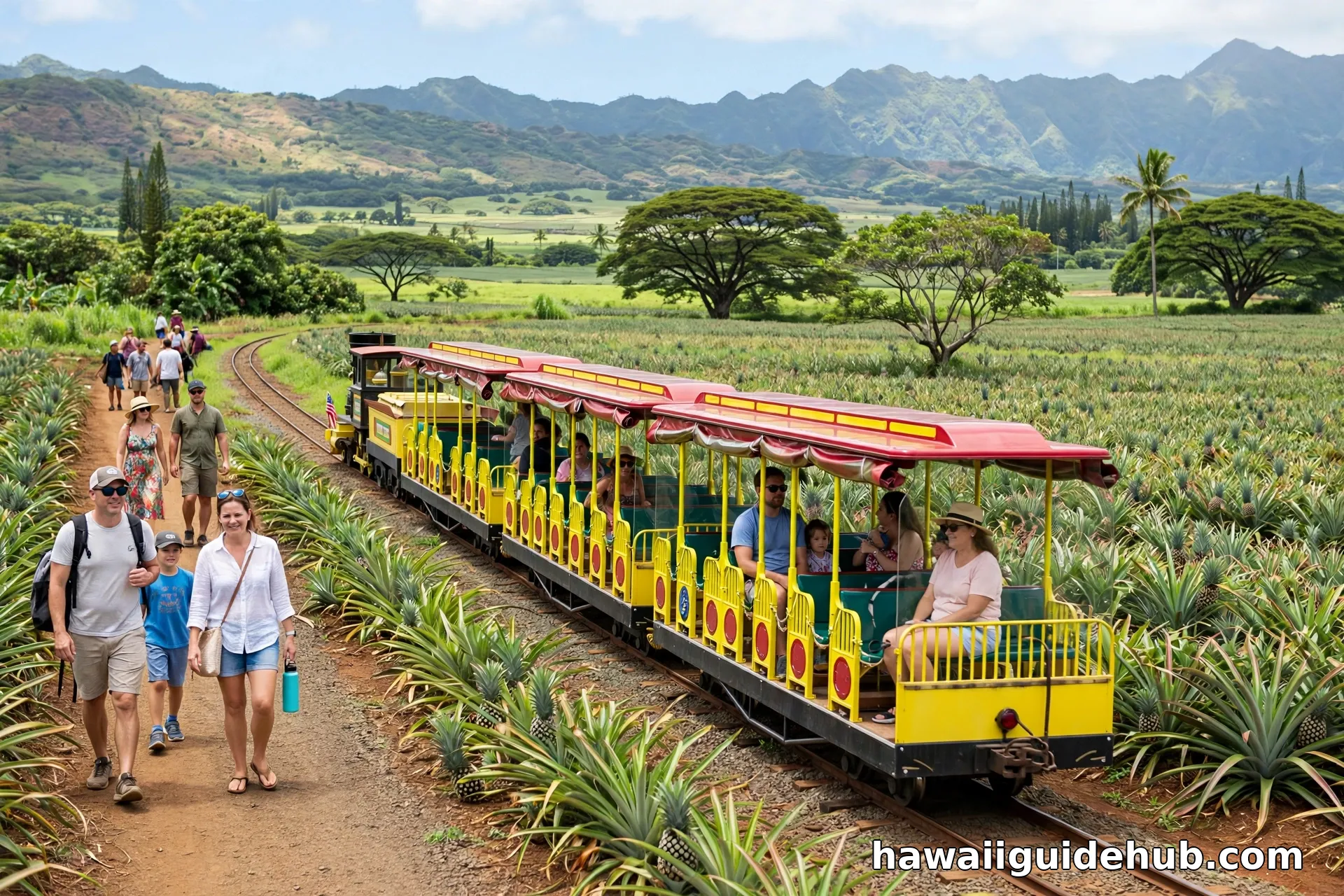
The easiest and most rewarding place to see pineapple fields in Hawaii is the Dole Plantation at 64-1550 Kamehameha Highway in Wahiawā, Oʻahu, about a 40-minute drive from Waikīkī. It began as a fruit stand in 1950 and opened to the public as a visitor attraction in 1989, and it now welcomes more than a million visitors a year. Entry to the grounds is free; the activities are ticketed.
The Pineapple Express is the heart of the visit: a 20-minute train ride through working pineapple fields with narration on the history of the fruit in Hawaii. The Plantation Garden Tour walks you past pineapples and other tropical crops up close, and the Pineapple Garden Maze, once the world’s largest, is a genuine challenge with eight secret stations. Do not miss the pineapple cutting demonstration, which teaches you how to pick a ripe fruit and cut it to reduce acidity.
Practical tips: go early in the day, since tour tickets can sell out and the central Oʻahu sun is strong by midday. Budget at least half a day if you want the train, the maze, and the gardens; the train and maze each take about an hour with waiting. Wear a hat and bring water, because most of the experience is outdoors in open fields. Check the plantation’s official site for current ticket prices and hours before you go, since both change seasonally. Pair the stop with Oʻahu’s North Shore, since you will drive right past on the way; see what to do on Oʻahu’s North Shore.
Dole Whip: Hawaii’s Most Famous Pineapple Treat
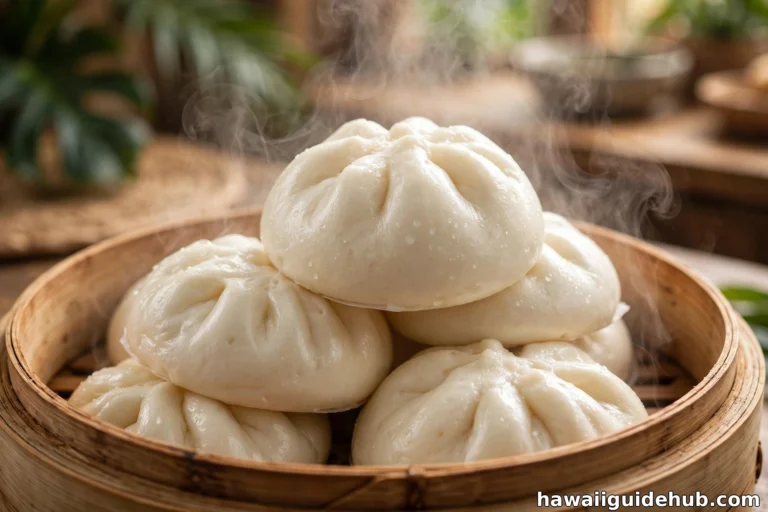
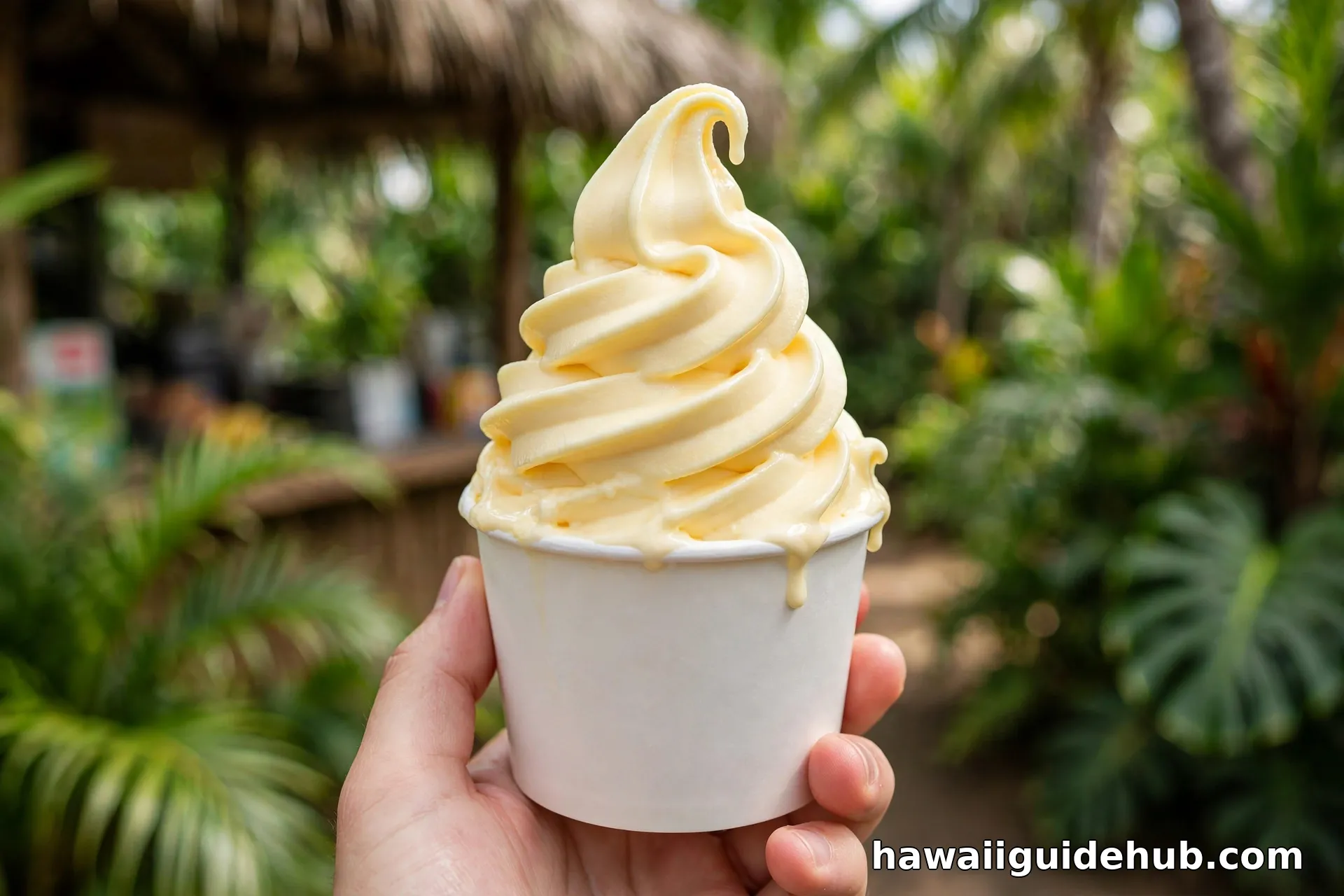
The Dole Whip is the pineapple soft serve that visitors line up for, and its origin surprises people: it was created by the Dole Food Company for Disneyland’s Enchanted Tiki Room, introduced at the park in 1986, before becoming a phenomenon at Disney parks and then in Hawaii. The classic is a swirl of pineapple soft serve, dairy-free and intensely tropical, often served as a float over fresh pineapple juice.
The Dole Plantation is the most famous place to get one on Oʻahu, but you will find versions at stands and shops across the islands. It is worth trying at least once where the pineapples actually grow. For more of the island’s food scene, see the best restaurants on Oʻahu and Hawaii’s food and wine festivals.
Video: Visiting Dole Plantation
A tour of Dole Plantation: the maze, the Pineapple Express, Dole Whip, and the fields.
Frequently Asked Questions About Pineapples in Hawaii
Do pineapples grow in Hawaii?
Yes. Commercial fields still operate on Oʻahu (Dole at Wahiawā) and Maui (Maui Gold), and small growers sell statewide. But production is a fraction of its peak and serves mainly the local market.
Is pineapple native to Hawaii?
No. The pineapple is native to South America and was introduced to Hawaii in the 1790s by Don Francisco de Paula Marin, an advisor to Kamehameha I.
Do pineapples grow on trees in Hawaii?
No, a common myth. Each pineapple grows from the center of a low spiky plant, and one plant produces roughly one fruit every 18 to 24 months.
Is pineapple still grown commercially in Hawaii?
Yes, but on a small scale. Dole farms about 2,700 acres on Oʻahu for fresh fruit, and Maui’s Haliimaile Pineapple Company grows the Maui Gold variety. All canning left the islands by 2008.
What happened to the pineapple industry in Hawaii?
High labor and land costs drove production to the Philippines, Thailand, and Costa Rica starting in the 1960s. Dole’s Honolulu cannery closed in 1991, Del Monte left in 2008, and Maui Pineapple’s final harvest was in 2009.
Where can I see pineapple fields in Hawaii?
The Dole Plantation in Wahiawā, Oʻahu, is the best bet: working fields, the Pineapple Express train, the garden maze, and Dole Whip. For a full Oʻahu plan, see what not to miss on Oʻahu.
What is Dole Whip?
A pineapple soft-serve dessert created by the Dole Food Company for Disneyland in 1986. It became a cult favorite at Disney parks and is now sold widely in Hawaii, most famously at the Dole Plantation.
Pineapple fields in Hawaii are a window into the islands’ plantation past and its agricultural present. The industry that once covered 77,000 acres is gone, but the red dirt rows at Wahiawā, the Maui Gold harvests, and the swirl of a Dole Whip keep the story alive. Visit the fields, ride the train, taste the fruit where it grows, and you will understand why the pineapple became Hawaii’s most famous symbol, even though it was never Hawaiian at all. Few crops anywhere in the world have shaped an island chain so completely and then vanished so fast, which is exactly why the remaining fields are worth your time.