Mākua Cave Legend: the Shark-Man Story of Oʻahu’s Wild West Side

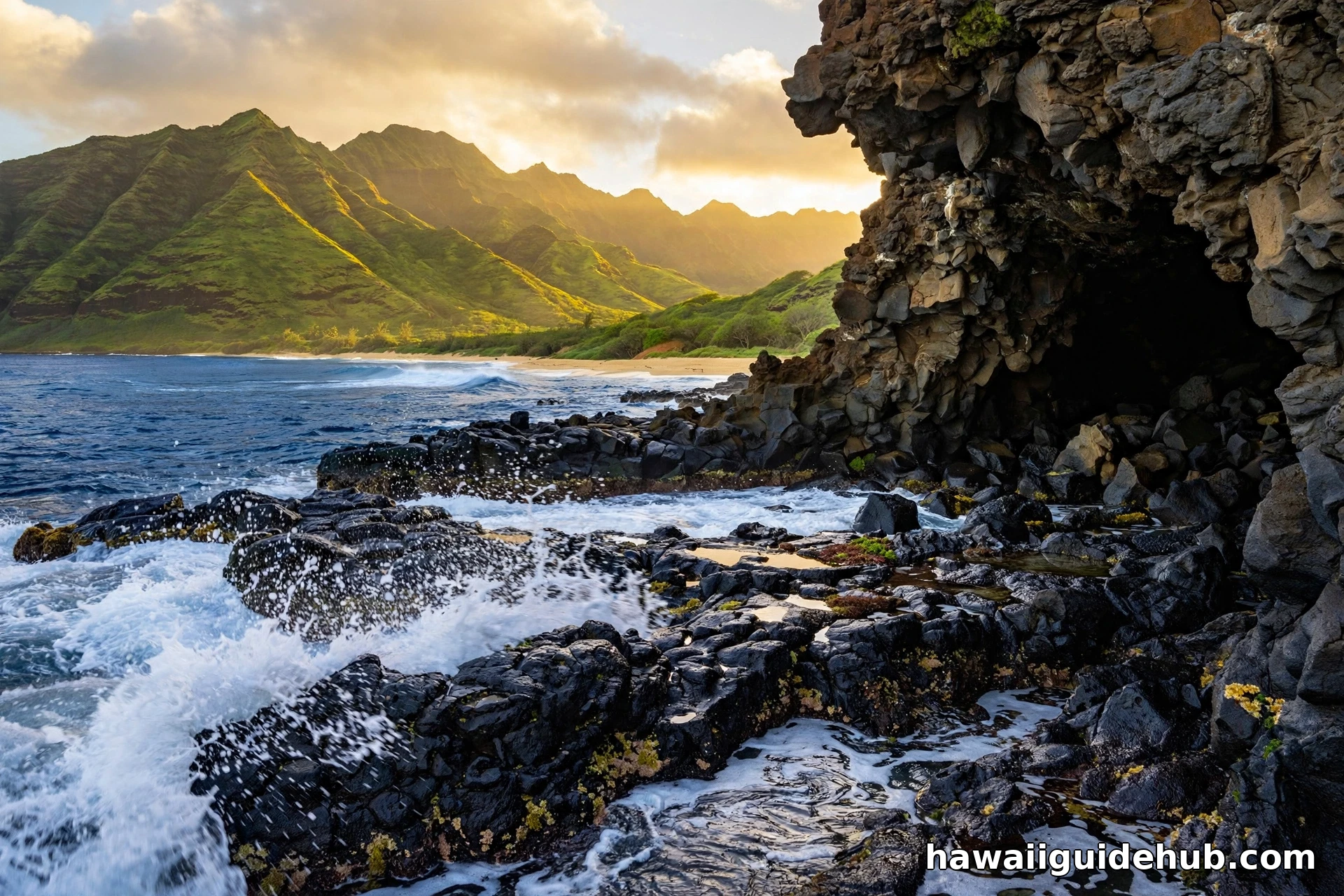
On Oʻahu’s remote west coast, past Mākaha where Farrington Highway runs out of towns, a black cliff face hides a cave mouth roughly 100 feet tall. Locals call it Mākua Cave, after the valley it sits in, though its older name is Kaneana, the Cave of Kāne. Hawaiians have told stories about this cave for centuries: that mankind was born here, that a shape shifting shark-man dragged his victims into its darkness, and that the spirits of the dead still haunt its passages. This is the Mākua Cave legend, one of the eeriest and most layered stories on Oʻahu, and the story behind a place you can still visit today.
Mākua Cave at a Glance
| Detail | The takeaway | |
|---|---|---|
| Names | Mākua Cave and Kaneana Cave, after Kāne, the god of creation | The legend lives in the name |
| Location | Farrington Highway, about 3 miles past Mākaha, near Mākua Beach | An easy roadside stop on the Waiʻanae Coast |
| Size | About 100 feet high and 450 feet deep | Cathedral scale; bring the wide angle |
| Age | Estimated 150,000 years, carved by the sea when it was underwater | You are walking an ancient shoreline |
| Drive time | About 1 hour from Honolulu | Pair it with Mākua Beach next door |
| Cost | Free, no tickets or permits | Just show up prepared |
| What to bring | Flashlight, sturdy shoes, respect | Dark, uneven, and storied ground |
Kāmohoaliʻi, Brother of Pele
To understand the shark-man legend, it helps to know who Kāmohoaliʻi was in Hawaiian belief. He was not a monster from the start but a god: the king of sharks and the revered elder brother of Pele, the fire goddess. Sharks held a complex place in Hawaiian culture, feared as predators and honored as ʻaumakua, family guardians, by those whose ancestors took shark form. Kāmohoaliʻi embodied both sides of that relationship, a sacred being whose human disguise let him move through the world of people. His son Nanaue represents what happens when the sacred order breaks: the guardian’s power curdled into hunger, and the community had to restore balance by destroying him. The legend is as much about cultural values as it is about a haunted cave.
The Legend of the Shark-Man
The most famous story attached to Kaneana Cave is the legend of the shark-man, and it begins with Kāmohoaliʻi, the king of all sharks. Kāmohoaliʻi was a shapeshifter who could move between the form of a shark and the form of a man. In human form he won the love of a human woman named Kalei, who fell for him without ever knowing his dual nature. Kalei gave birth to a son, Nanaue, who inherited his father’s ability to change shape.
As Nanaue grew, something in his shark heritage woke up. Once he tasted meat, he developed an insatiable appetite for human flesh, just like the man eating sharks he descended from. Nanaue learned to disguise himself as an ordinary man to trick unsuspecting victims, then dragged them into Kaneana Cave to feed. Fear of the shark-man spread through the district, and entering the cave became kapu, forbidden, for anyone who valued their life.
The legend ends the way many Hawaiian legends do, with the community fighting back. Nanaue’s true identity was exposed when someone glimpsed the fin on his back. He fled into the ocean, but the people captured him and killed him, ending the reign of the shark-man of Mākua. Storytellers add a chilling coda: on dark nights, weary travelers at the cave are sometimes invited by an old, wrinkled Hawaiian man to join him at a fire where meat sizzles. Once the traveler grows drowsy from eating, the old man transforms into a shark. It is Nanaue, still hunting.
The Birthplace of Mankind
An older and gentler tradition holds that Kaneana Cave is where mankind was born, emerging from the womb of the earth goddess. This is why the cave carries the name Kaneana, the Cave of Kāne, after Kāne, the Hawaiian god of creation. In this telling the cave is not just a crime scene from the shark-man legend but a sacred origin place, a piko where the Hawaiian people began.
That sacredness shaped how the area was treated. Kāneana Point above the cave was a place of ritual, and in the old days the cliffs were a site of human sacrifice. A later legend grew from this history: the shark living in the sea cave below the point, nicknamed Makua Charley, developed a taste for human flesh because he fed on the sacrifices, and some say a giant underwater lava tube passage is still his residence. The cave’s chambered darkness, once underwater and carved by the sea, only deepened its reputation as a place where the physical world and the spirit world touch.
Hauntings and Spirits
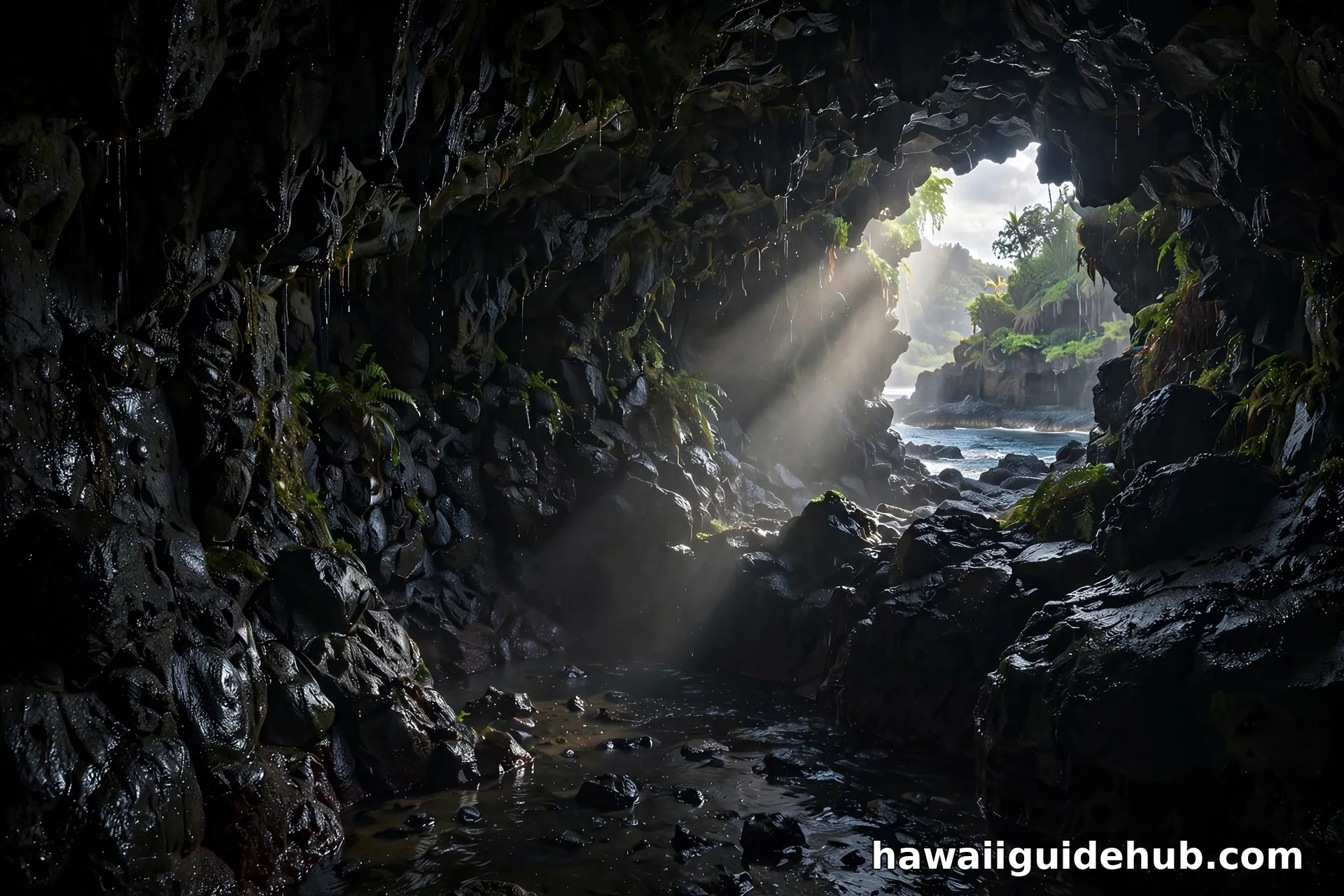
Mākua Cave is considered one of the most haunted places on Oʻahu, and not only because of the shark-man. The souls of those who died at Kaneana Cave are said to haunt the area to this day. Visitors and locals have reported a bone chilling creature with glowing red eyes emerging from the lava tubes at the back of the cave, and some believe the deepest passages open toward the underworld itself. Whether or not you believe in such things, the cave’s atmosphere does the heavy lifting: absolute darkness, dripping water, and silence so complete it feels like pressure on your ears.
Storyteller Lopaka Kapanui has described the cave as a repository for psychic energy, an active hotspot for the spirits of Waiʻanae’s past. It is worth remembering that these are not campfire stories invented for tourists. They are living traditions, and the local community around Waiʻanae treats the cave and its legends with genuine seriousness.
The Makua Charley stories tie the hauntings to the point above the cave. In the days when sacrifices were offered at Kāneana Point, a shark lived in the sea cave directly below, and locals said he grew fat on what the cliffs gave him. Fishermen and surfers passed the story down for generations: a shark with a taste for people, waiting in the undertow below the point. Modern storytellers gave him the almost friendly nickname Makua Charley, which only makes the legend stranger. A blood hungry shark with a neighborly name feels more unsettling, not less.
What the Cave Is Like Today
The cave you can visit is a genuine geological wonder: a sea cave about 100 feet tall and 450 feet deep, estimated to be around 150,000 years old, carved by ocean waves back when the coastline sat higher. The main chamber is dark, damp, and slippery, with water dripping from the walls. Narrower tunnels branch off the main cavern into the back of the cave. Stay out of them. They are unmapped, unstable, and genuinely dangerous, and rescue from a lava tube is nobody’s idea of a vacation memory.
You will notice graffiti on the walls, the sad signature of decades of vandalism. It is a reminder of why respectful visitors matter: every spray painted tag chips away at a place Hawaiians consider sacred. The cave has no lifeguards, no lights, and no staff. What it has is silence, scale, and story, and that is exactly what makes it worth the drive.
How to Visit Mākua Cave Respectfully
Drive west from Honolulu on the H1, which becomes Farrington Highway, past Waiʻanae and Mākaha. About a mile past Keaʻau Beach Park, look for the cave on the right side of the road, just across from roadside parking. The drive takes about an hour with no turns to speak of: just keep heading toward the end of the island.
A few rules make the visit safe and respectful. Bring a real flashlight, because the interior is pitch dark, and wear shoes with grip since the wet rock is slippery. Go in daylight and during dry weather, and check the surf, since the cave sits close to the ocean. Do not carve, paint, or leave anything on the walls. Pack out everything you bring in. Lock your car and leave valuables out of sight, as break-ins are a known problem along this stretch of road. And treat the cave the way the community treats it: as a sacred place, not a photo prop. Keep your voice low, stay in the main chamber, and leave the deep tunnels alone.
Learn more about Hawaiian storytelling traditions to understand how legends like this one are kept alive, and read about the cultural meaning of sharks and marine life in Hawaiʻi for context on figures like Kāmohoaliʻi.
Pair It with Mākua Beach
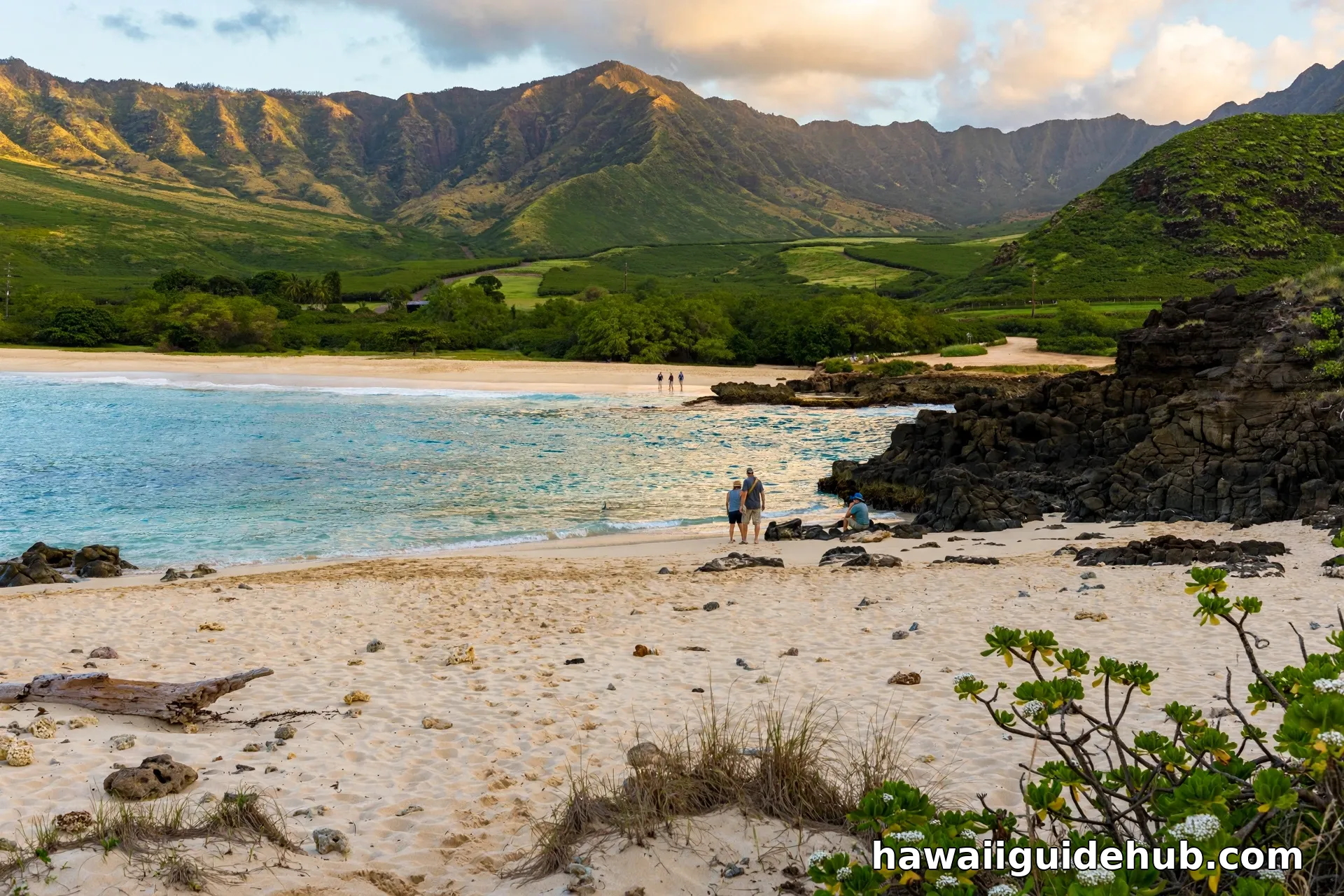
Right next to the cave, Mākua Beach is one of the prettiest stretches of sand on the leeward coast, backed by the steep green walls of Mākua Valley. The beach is known for dolphin sightings in the calm morning water, though the surf can be rough and there are no lifeguards, so swim with caution. Time your visit for late afternoon: tour the cave, then watch the sunset over the ocean from the beach as the cliffs turn gold. It is one of the finest free evenings on Oʻahu.
The drive itself is part of the experience. The leeward coast past Mākaha is the wildest, least developed shoreline on the island, and the road hugs cliffs and coves all the way to the end at Kaʻena Point State Park, where legend says the souls of the dead leap into the spirit world. That makes a fitting bookend to a day that began at the cave where mankind was born: birth and departure, two of Hawaiʻi’s oldest stories, in a single drive. See our complete Oʻahu adventure guide for more stops on this side of the island.
Frequently Asked Questions
Is Mākua Cave the same as Kaneana Cave?
Yes. Kaneana, meaning the Cave of Kāne, is the older Hawaiian name. Mākua Cave is the name most visitors use today, after the valley and beach nearby.
What is the legend of Mākua Cave?
The best known legend is the story of Nanaue the shark-man, son of the shark king Kāmohoaliʻi, who lured victims into the cave and was eventually killed by the people. An older tradition says mankind was born in the cave from the earth goddess.
Is Mākua Cave haunted?
Local tradition says the spirits of those who died there haunt the area, and the cave is widely considered one of Oʻahu’s most haunted places. Whether you believe the stories or not, the cave’s atmosphere is genuinely eerie.
Is it safe to go inside?
The main chamber is safe to enter in daylight with a flashlight and good shoes, but the interior is dark and slippery, and the back tunnels are dangerous and should be avoided. There are no lifeguards or staff.
How long does a visit take?
Most visitors spend 30 to 45 minutes at the cave itself. Combined with Mākua Beach and the coastal drive, it makes a half day trip from Honolulu.
Is there an entrance fee?
No. The cave is free to visit, with free roadside parking across the highway.
Can you swim at Mākua Beach nearby?
Yes, but with caution. Mākua Beach is beautiful and dolphins are often spotted in the morning, yet there are no lifeguards and the surf can be strong. Check conditions before swimming and never swim alone.
Can you explore the tunnels at the back of the cave?
You should not. The narrow passages branching off the main chamber are unmapped and unstable, and people have gotten stuck or injured in lava tubes across the islands. There is no cell signal deep inside and no staff to help you. Enjoy the main cavern, take your photos from the mouth where the light is best, and leave the tunnels to the legends.
How far is the cave from Honolulu?
About an hour’s drive each way along the H1 and Farrington Highway. Combine it with Mākua Beach and the leeward coast drive to make a half day trip.
Watch: The Legend of Kāneana Cave
Here is a video telling the legend of Kāneana Cave and showing the site itself.
Why the Story Matters
The Mākua Cave legend endures because it is more than a ghost story. It carries the Hawaiian worldview in miniature: the gods walking the land in human form, the ocean’s dangers given a name and a face, the community’s duty to confront what threatens it, and a sacred landscape that still commands respect. Visit for the story, stay for the sunset, and leave the cave exactly as the legends found it. Kaneana has watched over this coast for centuries, through gods and shark-men, sacrifices and storytellers. A quiet visit, a little respect, and an open ear for the stories are all it asks in return.