Heiau in Hawaiʻi: The Sacred Temples Explained

Across the Hawaiian Islands, on hilltops above the surf and deep in green valleys, stand the stone platforms of the heiau, the temples of ancient Hawaiʻi. Some are small and half hidden by forest. Others are enormous, like the 50-foot terraced walls of Piʻilanihale on Maui, the largest ancient stone temple in Polynesia. Every one of them was a place where Hawaiians spoke with their gods.
This is the single complete guide to heiau in Hawaii. It covers what a heiau is, the different types of temples and what each was for, how they were built without mortar, the most famous heiau you can visit on each island, the respectful way to behave at these sacred sites, and the myths and facts every visitor should know.
Heiau at a Glance
| Heiau essentials for respectful visitors | The details | For your visit |
|---|---|---|
| What it is | A Hawaiian temple, a sacred stone structure for worship and communication with the gods | Treat it like a church, not a ruin |
| Pronunciation | HAY-ow | Say it right; it matters here |
| How many | Thousands before European contact; more than 800 recorded by early researchers | Most are gone; the survivors are precious |
| Main types | Luakini (war temples), agricultural heiau, healing heiau, fishing heiau, family shrines | Different temples, different purposes |
| Construction | Dry-stack stone masonry, no mortar, built by specialist temple architects | No mortar and still standing: respect the engineering |
| Most famous | Puʻukoholā Heiau (Big Island), Piʻilanihale (Maui), Moʻokini (Big Island), Puʻu o Mahuka (Oʻahu) | Start with these four |
| Status today | Many still sacred; some open to visitors, some closed; all protected by law | Sacred does not mean abandoned |
| Visitor rule | Stay on paths, never climb or move stones, keep quiet, obey every kapu sign | When in doubt, do not touch |
What Is a Heiau?
A heiau is a Hawaiian temple, a sacred structure where Hawaiians worshipped and communicated with their gods. The word may come from “hai,” meaning to sacrifice or to make an offering, which was the heart of what happened there. Heiau were places where supernatural power was concentrated and transferred through prayer, chant, and offerings.
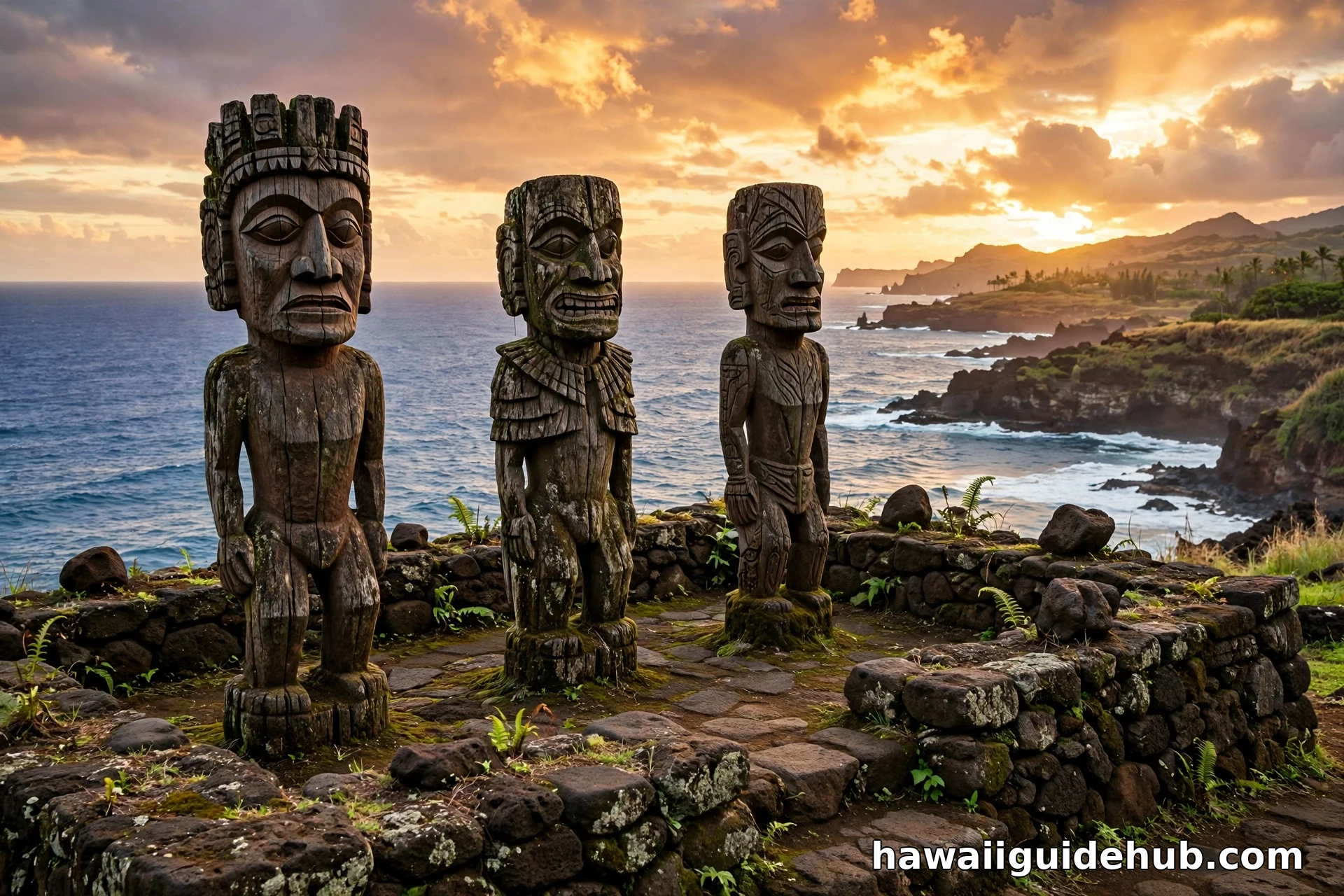
Heiau came in many sizes. The smallest were simple stone terraces or even single upright stones that were worshipped. The largest were massive complexes of walled enclosures, terraces, platforms, altars, and carved wooden images, covering acres. Before European contact in 1778 there were thousands of functioning heiau across the islands. Early researchers recorded more than 800 of them, and 88 were documented on Maui alone, but development has destroyed a great many over the last two centuries.
Placement was deliberate. Heiau often occupy prominent points in the landscape, hilltops, bluffs, and headlands with commanding views of the surrounding land and sea. The location itself was part of the temple’s power, connecting the gods, the chiefs, and the land they watched over.
Types of Heiau: Not All Temples Were Alike
Ancient Hawaiians built different heiau for different purposes, and knowing the types unlocks their meaning. The most famous, and most feared, was the luakini, the state temple dedicated to Kū, the god of war. Luakini were massive government temples where ruling chiefs offered sacrifices, including human sacrifices, before wars of conquest. Only the luakini involved human sacrifice. The legendary priest Paʻao is credited with establishing the luakini rites that defined the high chiefdoms of old Hawaiʻi.
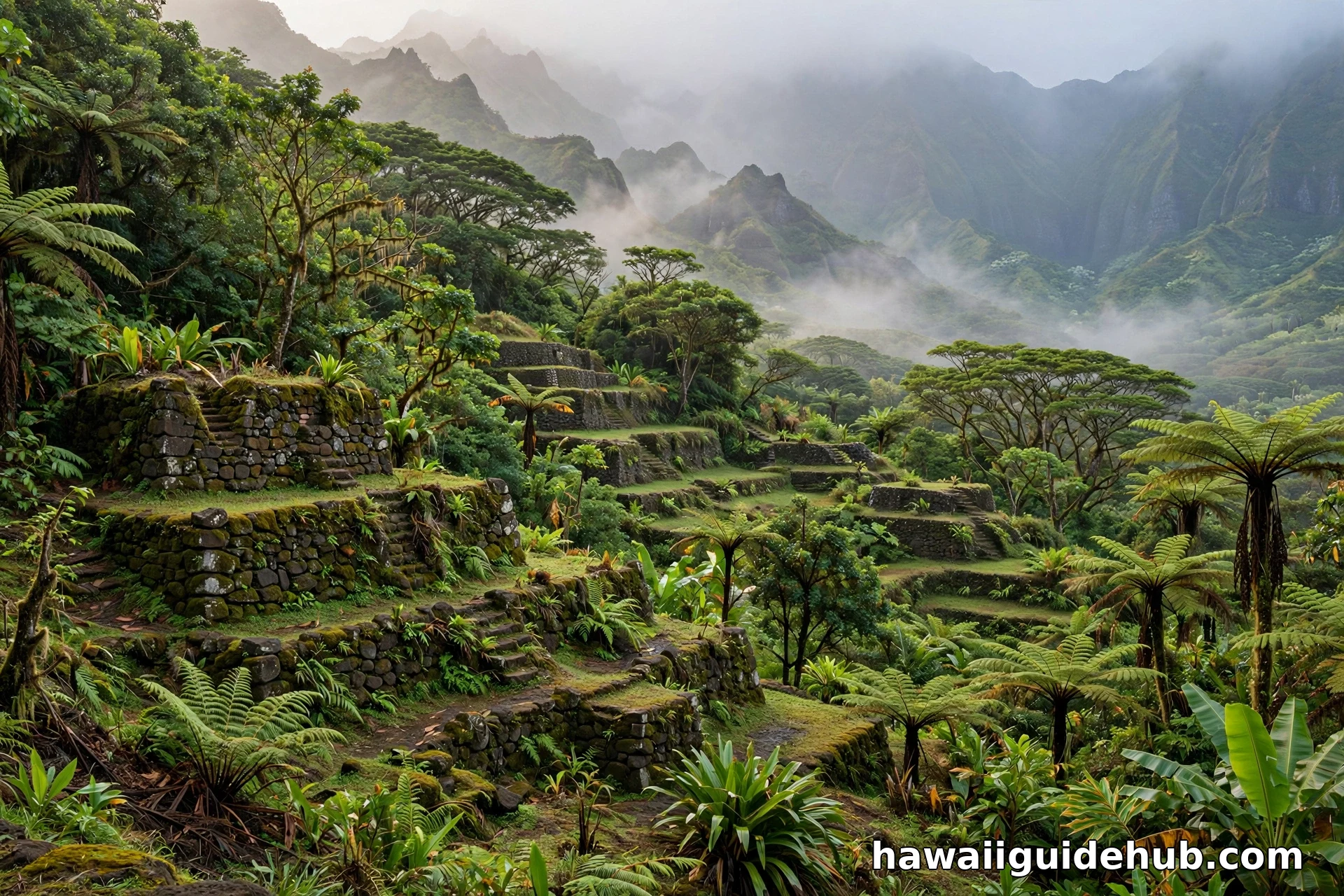
Most heiau were peaceful places. Agricultural heiau honored Lono to bring rain and fertile harvests. Farmers and their priests chanted and offered pigs, vegetables, and sweet potatoes at temples like Kūkaʻōʻō in Mānoa Valley, which stood above the great taro fields. Healing heiau, called heiau hoʻola, treated the sick. Fishing heiau blessed the catch and the canoes. There were heiau for starting rain and stopping rain, for increasing the population, for safe voyaging, and for reaching peace. Small family shrines dotted the countryside beside the great state temples.
How Heiau Were Built
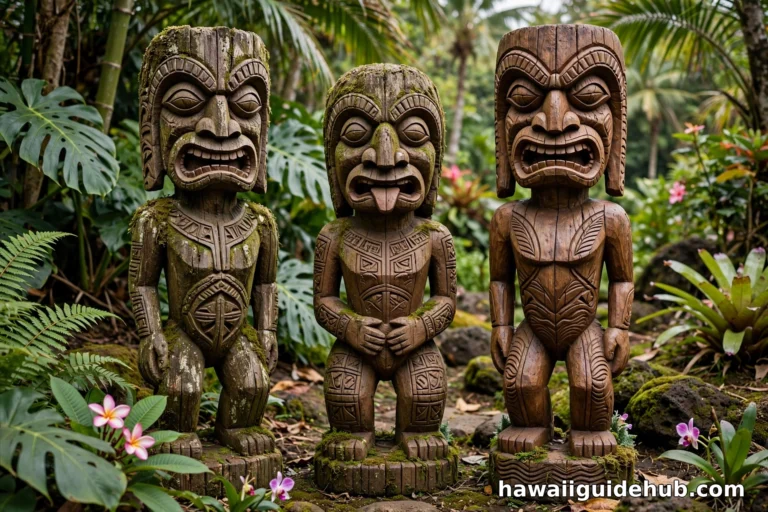
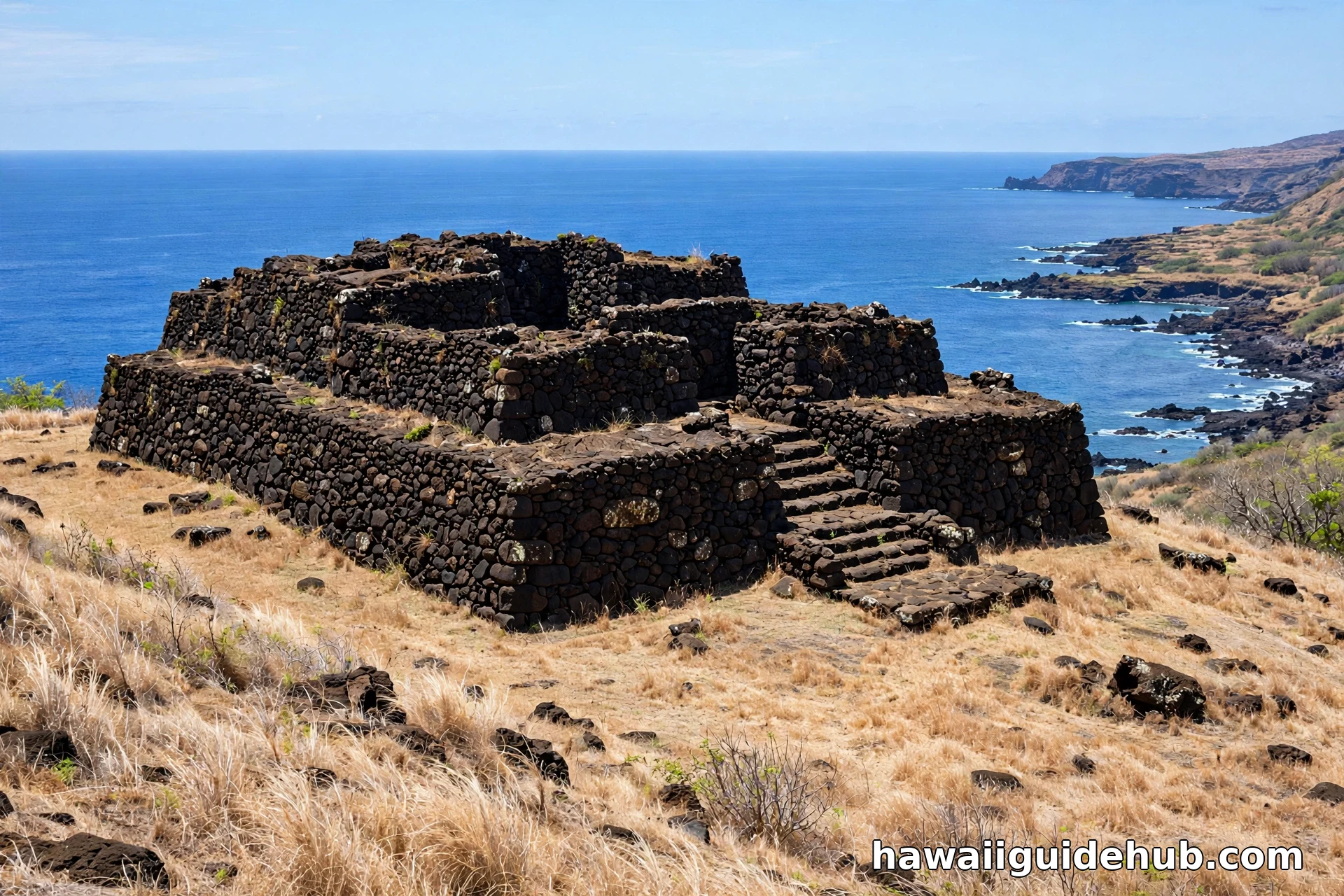
Heiau were built with extraordinary skill and no mortar at all. Masons laid volcanic rocks in careful dry-stack courses, fitting each stone by eye and weight so the walls stood for centuries. Rocks were never cut or shaped. The craft was so respected that temple building supported a profession of specialist architects, the kahuna kuhikuhi puʻuone, who drew their proposed plans in sand for the chief’s approval. Professional pride pushed each architect to design something different from every temple before.
Building a great heiau was a staggering communal effort. For Puʻukoholā Heiau, thousands of laborers formed a human chain some 20 miles long, passing water-worn stones hand to hand from Pololū Valley to the building site. Chiefs themselves joined the labor. Legend tells that Moʻokini Heiau rose in a single night, raised by as many as 15,000 to 20,000 men passing stones along a 14-mile chain. Whether or not the legends are exact, they capture the truth: a heiau was the work of a whole society, and its stones still carry that collective effort.
The Most Famous Heiau in Hawaii
Puʻukoholā Heiau, Big Island
Puʻukoholā Heiau National Historic Site on the Kohala coast is the heiau most visitors should see first. Kamehameha I built this luakini war temple in 1790 and 1791, dedicating it to his war god Kūkāʻilimoku after a prophet promised that completing it would bring him rule over all the islands. The platform measures 224 by 100 feet with walls 16 to 20 feet high, all without mortar. At the 1791 dedication, Kamehameha’s rival cousin Keōua Kūahuʻula was killed and offered as the principal sacrifice, and the prophecy began to come true: by 1810 Kamehameha ruled a united kingdom. The site is free, open daily, and holds a Hawaiian cultural festival each August. The temple platform itself is sacred and closed, but the trails and visitor center tell the full story.
Piʻilanihale Heiau, Maui
Just past Hāna, inside Kahanu Garden, stands Piʻilanihale, the largest heiau in the Hawaiian Islands and widely called the largest ancient stone temple in Polynesia. The platform measures about 341 by 415 feet, nearly three acres, and its seaward wall rises about 50 feet in five stepped terraces. Construction began as early as the late 1200s or 1300s, with later wings added and the site rededicated in the 1500s, around the time the high chief Piʻilani united Maui. A National Historic Landmark since 1964, it was carefully restored by Hāna stonemasons and reopened as a living cultural site. You enter through the garden, and the rules are simple: stay on the paths, do not climb the walls, and do not move stones.
Moʻokini Heiau, Big Island
At the remote northern tip of the Big Island, inside Lapakahi State Historical Park, Moʻokini is the oldest and most austere of the great luakini. Tradition credits the Tahitian priest Paʻao with building it in the 11th or 12th century, making it the first temple of human sacrifice in Hawaiʻi. The platform is an imposing 270 by 140 feet and up to 30 feet high. Kamehameha the Great, born nearby, was brought here for his birth rituals. Reaching it takes effort, an unpaved road past Upolu Airport, then a walk from the gate, but its stark power rewards the journey. It remains an active heiau, so if religious observances are underway, keep your distance.
Puʻu o Mahuka Heiau, Oʻahu
Above Waimea Bay on Oʻahu’s North Shore, Puʻu o Mahuka, the hill of escape, is the island’s largest heiau and a former luakini. Its bluff-top position commands sweeping views of the ocean and the bay below, exactly the kind of prominent landscape position the temple builders favored. It is an easy stop for North Shore visitors and a powerful introduction to heiau for anyone short on time.
Other heiau worth knowing include Hikiau Heiau at Kealakekua Bay, where Makahiki ceremonies were once held; the Wailua River heiau complex on Kauaʻi, including Poliʻahu Heiau above the river; and Ulupō Heiau in Kailua, Oʻahu. Each island guards its own temples, and Hawaiʻi’s living cultural traditions still honor them all.
Visiting Heiau: Etiquette Every Traveler Must Know
Heiau are not ruins in the ordinary sense. They are still sacred to many Native Hawaiians, and some are still used for religious practice. Treat every heiau the way you would treat an active place of worship, because that is what it is.
The rules are simple and absolute. Stay on marked paths and behind every barrier and rope. Never climb on walls, terraces, or platforms. Never move, stack, or remove stones, not even a pebble. Keep your voice low. Do not fly drones over sacred sites. Obey every kapu sign without question, and understand that some heiau are not open to the public at all. If you encounter a ceremony, leave quietly and give it complete privacy. These courtesies are part of the deeper Native Hawaiian spirituality that still shapes the islands, and observing them is one of the most respectful things a visitor can do.
What Happened to the Heiau
After the kapu system fell in the ʻAi Noa of 1819, Kamehameha II ordered the heiau destroyed, and high priest Hewahewa himself burned wooden idols. Many temples were deliberately dismantled. When Christian missionaries arrived in 1820, the pressure to abandon the old religion intensified. Some heiau were quarried for building stone. Others simply melted back into the landscape, their walls tumbled by cattle, storms, and time.
What survived did so through care or remoteness. A few heiau were maintained as royal mausoleums. Others stood forgotten in valleys and on headlands until archaeologists and cultural practitioners began restoring them in the 20th century. Today, places like Puʻukoholā and Piʻilanihale are protected as national historic sites and landmarks, and Native Hawaiian masons still practice the dry-stack craft, a continuity that runs from ancient architects to the present day. The story of the temples is inseparable from the larger story told in our guide to Hawaiʻi’s history before the 50th star.
Common Misconceptions About Heiau
The biggest misconception is that all heiau were places of human sacrifice. Only the luakini, the state war temples, involved human sacrifice. The great majority of heiau were peaceful places of farming prayers, healing, fishing blessings, and family worship. Judging every temple by the luakini is like judging every church by a battlefield.
Another is the charming legend that the menehune, the legendary small people of Hawaiʻi, built the heiau overnight. The stories are beloved, and a few heiau do carry menehune traditions, but the temples were raised by organized human labor on a massive scale, as the stone chains of Puʻukoholā and Moʻokini attest.
A third misconception treats heiau as photo backdrops. They are not. They are sacred sites, some still in religious use, and the respectful visitor experiences them with quiet attention rather than a selfie stick. If you want festive photos, save them for the luaus and nighttime festivals that welcome cameras.
Video: Puʻukoholā Heiau Up Close
This video tour walks the grounds of Puʻukoholā Heiau National Historic Site, the great war temple of Kamehameha I.
Frequently Asked Questions
What is a heiau in Hawaii?
A heiau (pronounced HAY-ow) is a Hawaiian temple, a sacred stone structure used for religious worship and communication with the gods. Heiau ranged from simple stone terraces to massive walled complexes with altars, platforms, and carved images, built with dry-stack masonry and no mortar.
What were heiau used for?
Different heiau served different purposes. Luakini were state war temples dedicated to Kū, the only type involving human sacrifice. Others honored Lono for farming and rain, healed the sick, blessed fishing and voyaging, or served as family shrines. Most heiau were peaceful places of prayer and offering.
Can you visit heiau in Hawaii?
Yes. Puʻukoholā Heiau National Historic Site on the Big Island is free and open daily. Piʻilanihale on Maui is visited through Kahanu Garden. Puʻu o Mahuka on Oʻahu and Moʻokini at Lapakahi State Historical Park on the Big Island are also accessible. Always follow the etiquette: stay on paths, never climb or move stones, and obey all kapu signs.
Why are some heiau closed to the public?
Heiau are still sacred to many Native Hawaiians, and some remain in active religious use. Closed heiau are protected for cultural and spiritual reasons and by law. Never enter a closed site, cross barriers, or ignore kapu signs.
What is the largest heiau in Hawaii?
Piʻilanihale Heiau near Hāna, Maui, is the largest heiau in the Hawaiian Islands and is widely called the largest ancient stone temple in Polynesia. Its platform measures about 341 by 415 feet, nearly three acres, with a seaward wall rising about 50 feet in five terraces.
Who built the heiau?
Heiau were built by organized Hawaiian labor under specialist temple architects, the kahuna kuhikuhi puʻuone. Thousands of workers raised the great temples, sometimes forming human chains miles long to pass stones hand to hand. Legends credit the menehune with a few temples, but the work was human, communal, and immense.
To stand before a heiau is to stand before the faith of a civilization expressed in stone. No mortar holds these walls, only the skill of the masons and the devotion of the thousands who carried each rock. Visit them quietly, walk their paths with respect, and you will feel why Hawaiians still call these places sacred.