Hawaii’s Annexation: How a Kingdom Became a U.S. Territory

In 1898, the independent Kingdom of Hawaiʻi ceased to exist as a sovereign nation and became a territory of the United States. The process was called annexation, and it closed one of the most contested chapters in American history: the 1893 overthrow of Queen Liliʻuokalani, a failed annexation treaty, five years of diplomatic limbo, and finally a joint resolution of Congress pushed through during the Spanish-American War.
This is the single complete guide to Hawaii annexation history. It explains what annexation actually meant in legal terms, why the United States wanted the islands, who fought against it, and the exact timeline from the Bayonet Constitution of 1887 to the flag-lowering ceremony on the steps of ʻIolani Palace. It also covers how these events are understood and remembered in Hawaiʻi today, and how visitors can engage with this history respectfully.
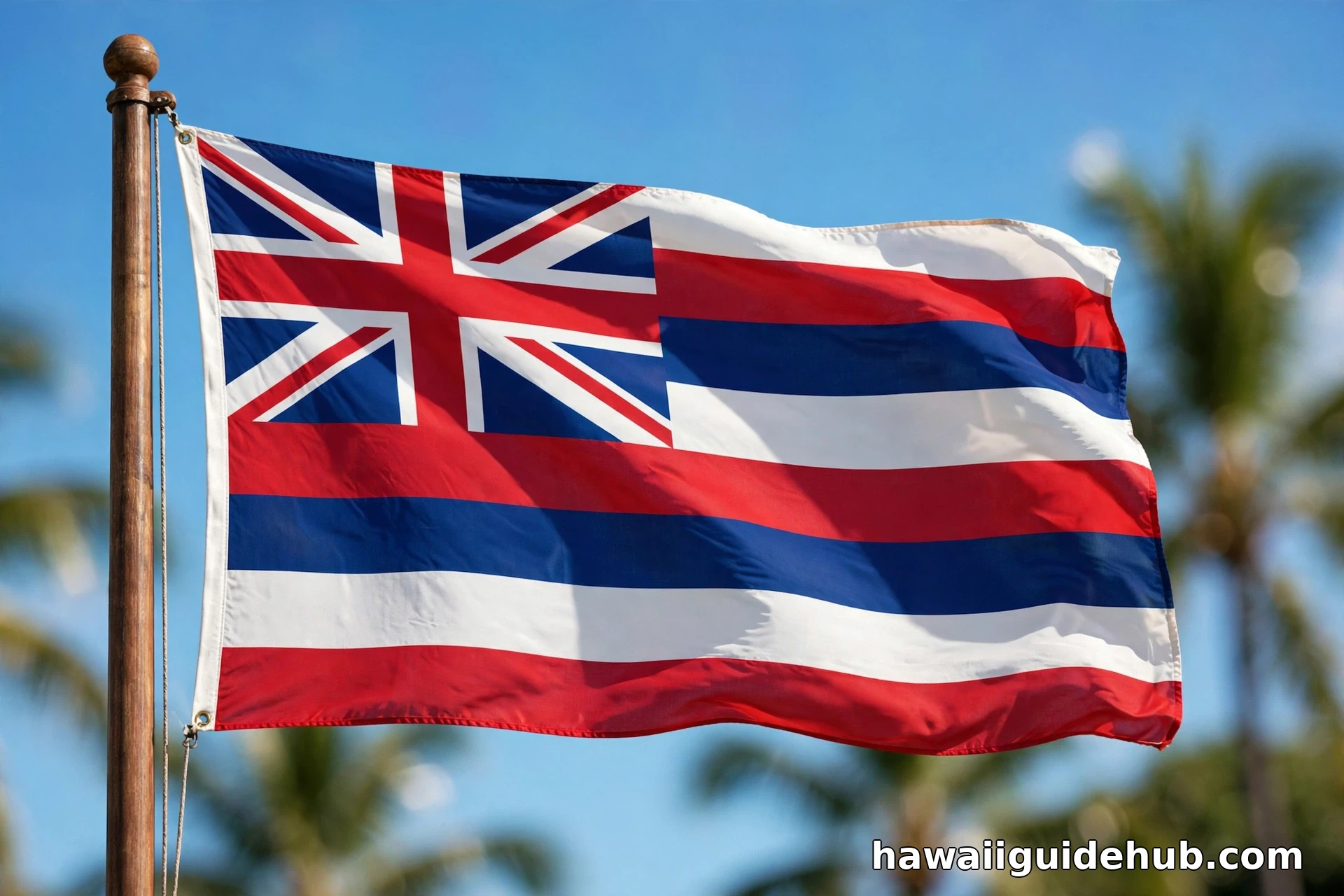
Hawaii Annexation at a Glance
| Date | Event | Why it matters |
|---|---|---|
| 1893 | Queen Liliʻuokalani, overthrown January 17, 1893 | The monarchy falls |
| 1898 | The Newlands Resolution, a joint resolution of Congress (not a treaty); signed July 7 by President William McKinley | Annexation without a treaty |
| August 12, 1898 | August 12, 1898, ceremony at ʻIolani Palace, Honolulu | The handover, made official |
| 1900 | The Territory of Hawaii, created by the Organic Act of 1900 | |
| The controversy | No treaty was ever ratified; Native Hawaiians overwhelmingly opposed annexation | Annexation without consent |
| What it ended | The United States annexed the Hawaiian Islands, ending the independent Kingdom of Hawaiʻi |
What “Annexation” Meant for Hawaiʻi
Annexation is the formal act by which one country absorbs the territory of another. In Hawaiʻi’s case, the Newlands Resolution declared that the Hawaiian Islands and their dependencies were “annexed as a part of the territory of the United States and are subject to the sovereign dominion thereof.” The Republic of Hawaiʻi, the short-lived government that had replaced the monarchy, ceded all rights of sovereignty plus the crown, government, and public lands to the United States.
One detail matters more than any other for understanding the controversy. A normal annexation of this era would have gone through the treaty process, which requires a two-thirds vote in the U.S. Senate. The annexationists could not get those votes, so Congress used a joint resolution instead, which needed only a simple majority in each chamber. Critics then and now argue that this sidestepped the constitutional treaty process and that the Republic of Hawaiʻi, a government most Native Hawaiians never chose, had no legitimate authority to cede the islands in the first place.
The Kingdom Before Annexation
Before 1898, Hawaiʻi was not a colony or a possession. It was a recognized independent kingdom with treaties and diplomatic relations around the world, including formal recognition by the United States, Britain, and France dating back decades. American missionaries had arrived in 1820, and their descendants had become powerful sugar planters and businessmen with deep economic ties to the United States.
The kingdom’s economy revolved around sugar. The Reciprocity Treaty of 1875 gave Hawaiian sugar duty-free access to the American market, making plantation owners wealthy and the islands economically dependent on the United States. When the treaty was renewed in 1887, the United States gained exclusive rights to Pearl Harbor as a coaling and repair station, a first formal foothold for American naval power in the islands.
That same year, 1887, a group of American and European businessmen forced King Kalākaua to sign a new constitution at gunpoint, an event remembered as the Bayonet Constitution. It stripped the monarchy of most of its power, restricted voting to wealthy property owners, and effectively handed control of the kingdom’s government to the foreign business elite. When Kalākaua died in 1891, his sister Liliʻuokalani took the throne and tried to restore royal authority with a new constitution. That attempt gave her opponents the opening they had been waiting for.
The Overthrow of January 17, 1893
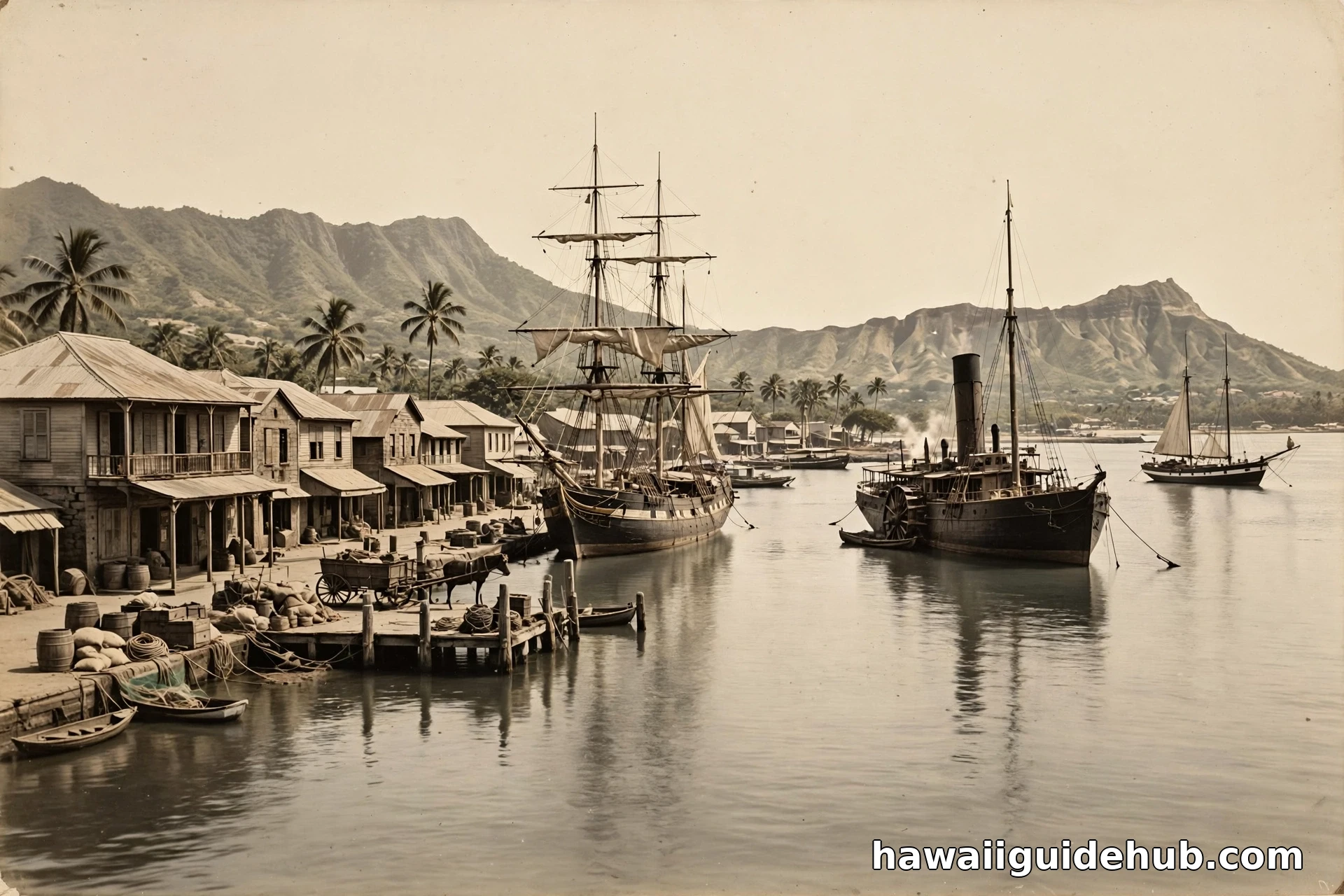
On January 17, 1893, a group of thirteen businessmen and sugar planters calling themselves the Committee of Safety deposed Queen Liliʻuokalani and proclaimed a provisional government. The United States minister to Hawaiʻi, John L. Stevens, had ordered 162 U.S. Marines and sailors ashore from the USS Boston the day before, and their presence in Honolulu gave the coup the appearance of American backing. The Queen, hoping to avoid bloodshed, yielded her authority under written protest, appealing to the government of the United States to right the wrong.
President Grover Cleveland, who took office weeks later, investigated the affair. His envoy James Blount reported that the overthrow had been carried out with improper American involvement, and Cleveland refused to send an annexation treaty to the Senate, even asking the provisional government to restore the Queen. Its leader, Sanford B. Dole, refused. Congress then investigated as well, and its Morgan Report took the opposite view, concluding the United States had played no significant role. The matter stalled, and the provisional government dug in.
The Republic of Hawaiʻi (1894 to 1898)
On July 4, 1894, the provisional government proclaimed the Republic of Hawaiʻi, with Sanford B. Dole as its first president. The republic’s constitution limited voting and office-holding in ways that kept power in the hands of the same small elite. In January 1895, royalists attempted a counter-revolution to restore the Queen. It failed, and Liliʻuokalani was arrested, tried by a military tribunal, and imprisoned in an upstairs bedroom of ʻIolani Palace. She was forced to abdicate in exchange for the release of her supporters, then pardoned in 1896. She would spend the rest of her life in Honolulu, writing her memoir, “Hawaii’s Story by Hawaii’s Queen,” and composing music including the beloved song “Aloha ʻOe.”
Throughout this period, the republic lobbied Washington for annexation while Native Hawaiians organized against it. In 1897, when President McKinley submitted a new annexation treaty to the Senate, Hawaiian nationalist groups gathered the Kūʻē Petitions, signed by more than 21,000 Native Hawaiians, a majority of the adult Native Hawaiian population at the time, protesting annexation and asking that the monarchy be restored. The treaty fell short of the two-thirds Senate majority it needed and died.
Why Annexation Happened in 1898
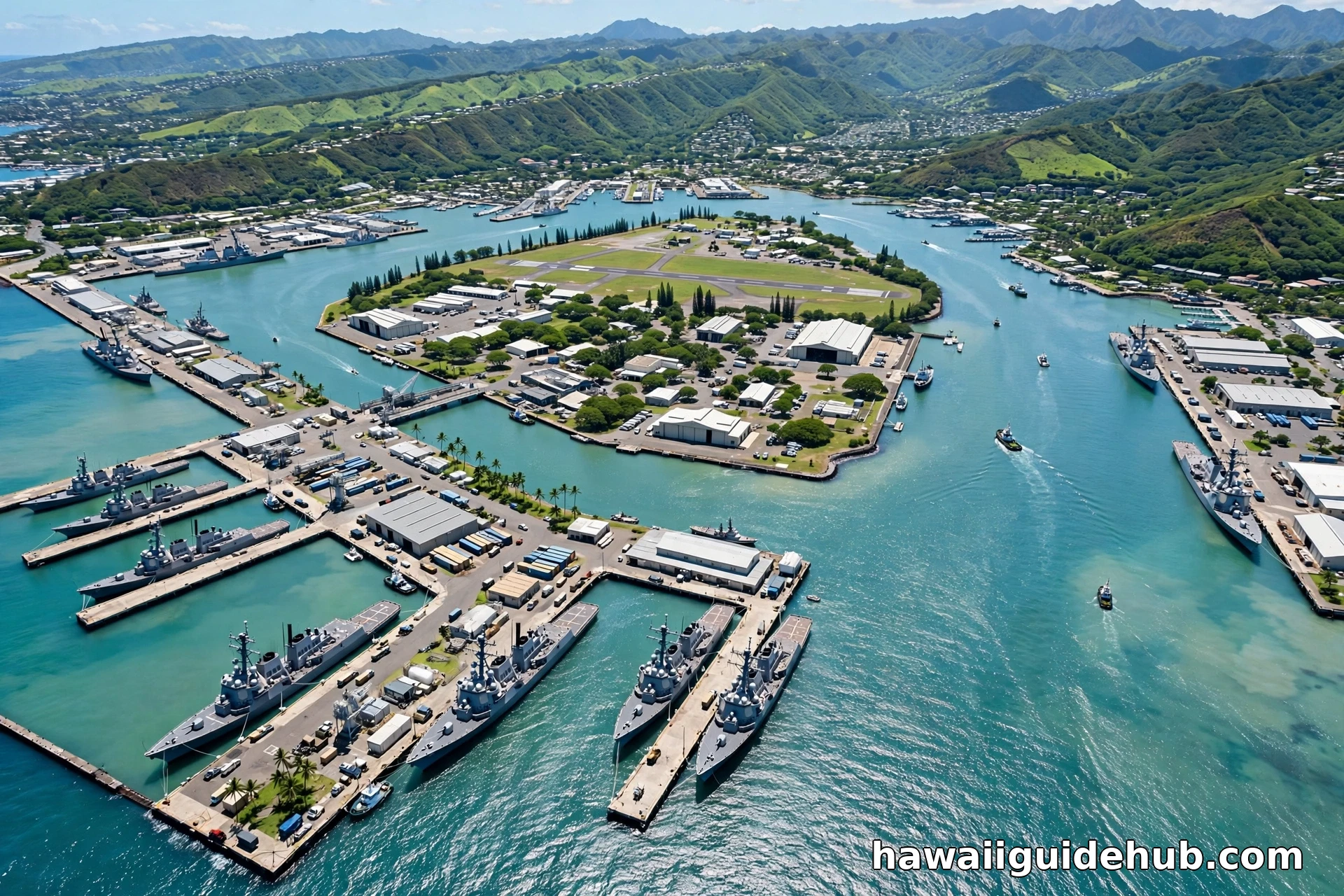
Three forces converged in 1898 to break the deadlock. First, the sugar planters still wanted the tariff advantages that full annexation would bring. Second, the annexationists in Congress had a legislative workaround ready: a joint resolution, which needed only a simple majority rather than the two-thirds a treaty required. Third, and decisively, the United States went to war with Spain in April 1898.
The Spanish-American War transformed Hawaiʻi from a distant sugar colony in the American imagination into a strategic necessity. Troop ships bound for the Philippines needed a mid-Pacific refueling stop, and Honolulu filled that role. Pearl Harbor’s value as a naval station, already recognized in 1887, suddenly looked essential rather than optional. War fever swept aside the anti-imperialist opposition in Congress that had blocked annexation for years. The Republic of Hawaiʻi, sensing its moment, threw its support behind the American war effort and Honolulu became a bustling stopover for soldiers heading across the Pacific.
The Newlands Resolution
The joint resolution, introduced by Nevada Representative Francis Newlands, passed the House of Representatives 209 to 91 and the Senate 42 to 21, a simple majority in both chambers rather than the two-thirds a treaty would have required. It was approved by Congress on July 6, 1898, and President McKinley signed it on July 7. Queen Liliʻuokalani sent a formal letter of protest to the House of Representatives, arguing that her throne had been taken illegally and that annexation lacked the consent of the Hawaiian people. The protest was entered into the record and the annexation proceeded anyway.
The resolution accepted the Republic of Hawaiʻi’s cession of sovereignty and of the crown, government, and public lands, and placed the islands under the sovereign dominion of the United States. It also directed that revenue from those lands be used solely for the benefit of the inhabitants of the Hawaiian Islands for educational and other public purposes, a provision whose interpretation is still debated in Hawaiʻi today.
The Transfer Ceremony: August 12, 1898
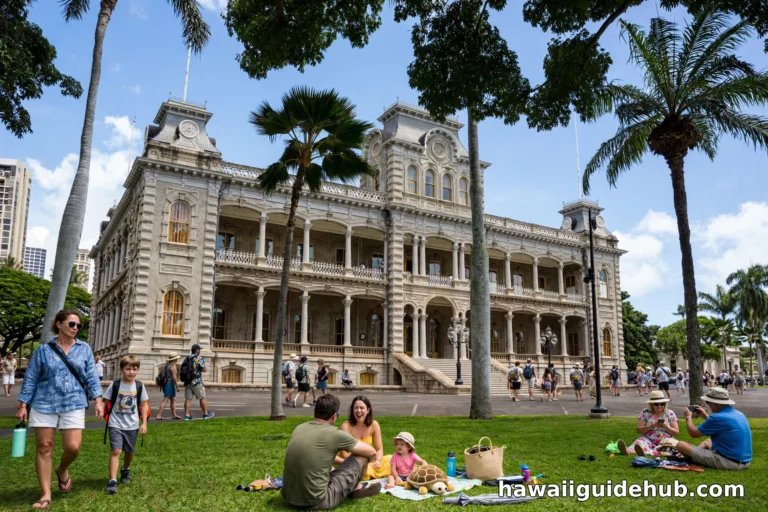
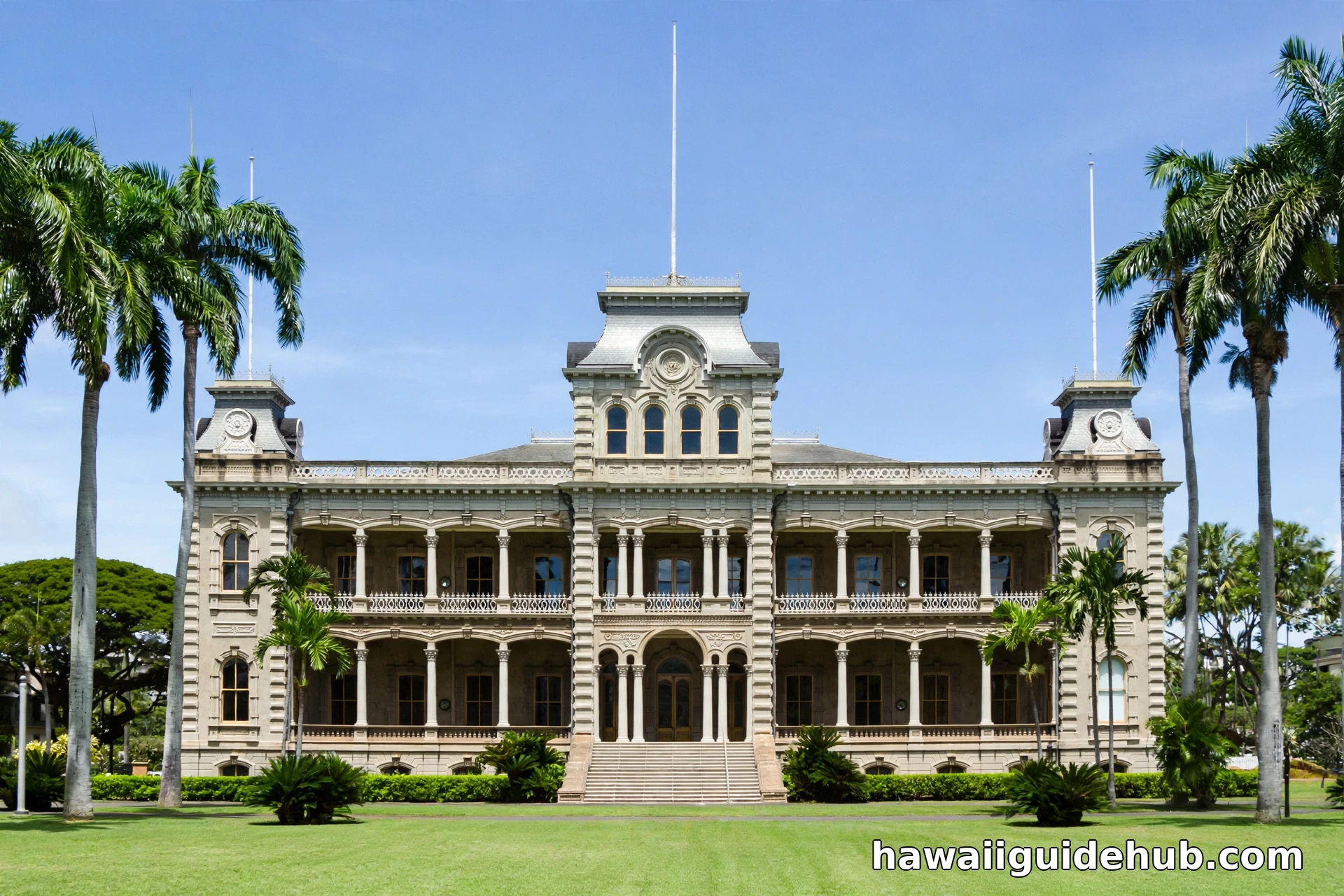
The formal transfer of sovereignty took place on the steps of ʻIolani Palace on August 12, 1898. The Hawaiian flag was lowered for the last time while the Royal Hawaiian Band played the Hawaiian national anthem, “Hawaiʻi Ponoʻī,” and the American flag was raised in its place. Almost no Native Hawaiians attended. Those who were on the streets wore royalist ʻilima blossoms in their hats or hair, and many wore Hawaiian flags emblazoned with the motto “Kuu Hae Aloha,” meaning “my beloved flag.” Princess Kaʻiulani, the Queen’s niece, later told the San Francisco Chronicle that the news of annexation was “bitterer than death” to her.
The United States assumed roughly four million dollars of the republic’s debt as part of the transfer. The islands, together with distant Palmyra Island, became the Territory of Hawaii, an organized incorporated territory of the United States. A formal territorial government was established under the Organic Act, signed April 30, 1900, and Sanford B. Dole, the man who had led the overthrow and the republic, was appointed the territory’s first governor.
Key Dates in the Annexation Timeline
The story runs from the first American foothold to the final flag lowering in just over a decade. The six turning points came in order: the 1887 Bayonet Constitution, Liliʻuokalani’s accession in 1891, the overthrow of 1893, the Republic of 1894, annexation in 1898, and the Organic Act of 1900.
How Hawaiʻi Remembers Annexation Today
Annexation is not ancient history in Hawaiʻi. It shapes the islands’ politics, culture, and identity. In 1993, on the overthrow’s one hundredth anniversary, Congress passed the Apology Resolution, signed by President Bill Clinton on November 23, 1993. It acknowledged that the overthrow occurred with the active participation of U.S. agents and citizens, and apologized to Native Hawaiians. The resolution changed no laws, but the sovereignty movement frequently cites it, arguing the Kingdom of Hawaiʻi was never lawfully extinguished.
Visitors will encounter this history everywhere once they know to look for it. The Hawaiian flag flies below the American flag at ʻIolani Palace, a deliberate statement about the building’s true history, and visitors can deepen their understanding through cultural experiences in Hawaii that honor this heritage. about the building’s true history. January 17 is observed by many Native Hawaiians as a day of remembrance for the overthrow. The Kūʻē Petitions, once thought lost, were rediscovered in the U.S. National Archives and are now studied as one of the most powerful documents of Native Hawaiian political voice.
Visiting Annexation-Era Sites With Respect
If you want to understand this history firsthand, start at ʻIolani Palace in downtown Honolulu, the only royal palace on American soil. The palace offers guided tours that tell the story of the monarchy, the overthrow, and the imprisonment of Queen Liliʻuokalani in the room where she was held. Book tickets in advance, follow the tour rules, and remember that for many Native Hawaiians this is not a museum of a distant past but a memorial to a living wound. The grounds also include the coronation pavilion and the sacred mound where the palace stands.
A few blocks away, the Hawaiʻi State Archives and the Hawaiʻi State Library hold original documents from the kingdom era, including the Kūʻē Petitions. The Royal Mausoleum at Mauna ʻAla in Nuʻuanu is the resting place of the Kamehameha and Kalākaua dynasties. When visiting any of these places, keep voices low, do not treat sacred or memorial spaces as photo backdrops, and listen to Native Hawaiian guides and docents with an open mind. In short, annexation was driven by American business interests, strategic military value, and expansionist politics, and opposed by the vast majority of Native Hawaiians, whose petitions and protests are part of the historical record.
Common Misconceptions About the Annexation
Several myths surround this history. The first is that Hawaiʻi was annexed by treaty. It was not; the 1897 treaty failed in the Senate, and annexation went through by joint resolution. The second is that Native Hawaiians supported annexation. The Kūʻē Petitions show the opposite. The third is that the transfer was a peaceful formality. The ceremony was orderly, but the armed overthrow behind it remains deeply disputed. The fourth is that the 1993 Apology Resolution changed Hawaiʻi’s legal status. It did not; it was an acknowledgment, not a restoration of sovereignty.
Watch: How Hawaii Became an American Territory
Frequently Asked Questions
When was Hawaii annexed by the United States?
President William McKinley signed the Newlands Resolution on July 7, 1898, and the formal transfer ceremony at ʻIolani Palace took place on August 12, 1898. Congress had approved the resolution on July 6, 1898.
Why was Hawaii annexed instead of staying independent?
The driving forces were the American sugar planters who wanted tariff-free access to the U.S. market, the strategic value of Pearl Harbor and Honolulu as a mid-Pacific naval and refueling station (made urgent by the Spanish-American War), and the political power of the annexationist elite who controlled the Republic of Hawaiʻi. Native Hawaiians overwhelmingly opposed it.
Was the annexation of Hawaii legal?
This is still debated. Supporters point to the joint resolution passed by Congress and signed by the president, a method also used for Texas in 1845. Critics argue that a joint resolution cannot substitute for a treaty, that the Republic of Hawaiʻi did not legitimately represent the Hawaiian people, and that the overthrow itself involved improper American military force. The U.S. Apology Resolution of 1993 acknowledged American participation in the overthrow.
Who was the last monarch of Hawaii?
Queen Liliʻuokalani, who reigned from 1891 until her overthrow on January 17, 1893. She was imprisoned in ʻIolani Palace after the failed 1895 counter-revolution, forced to abdicate, and lived in Honolulu until her death in 1917.
What happened to Hawaii after annexation?
Hawaiʻi became the Territory of Hawaii under the Organic Act of 1900, with Sanford B. Dole as its first governor. It remained a territory for 61 years until statehood on August 21, 1959, when it became the 50th state.
Did Native Hawaiians get to vote on annexation?
No. There was no referendum or popular vote on annexation among Native Hawaiians or the general population of the islands. The Kūʻē Petitions of 1897, signed by more than 21,000 Native Hawaiians against annexation, reached the U.S. Senate but did not stop the joint resolution.
The annexation of Hawaiʻi in 1898 ended the independent Hawaiian Kingdom and began six decades of territorial status before statehood. The overthrow, the Newlands Resolution, and the opposition of the Hawaiian people remain essential context, and the sites where this history happened, from ʻIolani Palace to the Royal Mausoleum, welcome visitors who approach them with knowledge and respect.