The Kapu System: Ancient Hawaiʻi’s Sacred Laws

Before there were written laws in Hawaiʻi, there was kapu. For centuries this sacred system of rules governed who could eat what, who could enter which places, how commoners behaved around chiefs, and even when fishing was allowed. Breaking kapu could cost a person their life. Then, in a single dramatic year, the whole system was swept away by a shared meal.
This is the single complete guide to the kapu system of Hawaii. It covers what kapu meant, how the system worked in daily life, the famous ʻai kapu eating rules, the ʻAi Noa feast that ended it all in 1819, the sacred places where you can still feel its presence today, and the respectful way to behave around kapu sites as a visitor.
Kapu System at a Glance
| The piece | The fact | Why it matters |
|---|---|---|
| What it was | A sacred system of prohibitions, or taboos, governing religion, society, and daily life | Law, religion, and social order in a single system |
| The word | Kapu means sacred, forbidden, set apart; the opposite of noa (free of taboo) | The whole worldview in two words: kapu and noa |
| Who enforced it | Aliʻi (chiefs) and kahuna (priests), backed by the spiritual power of mana | Breaking kapu was a spiritual crisis, not a ticket |
| The most famous rule | The ʻai kapu: men and women could not eat together, and some foods were forbidden to women | Daily life was regulated down to the dinner table |
| The penalty | Often death, unless the offender reached a puʻuhonua (place of refuge) | The places of refuge were the system’s mercy valve |
| How it ended | 1819, in the ʻAi Noa (free eating) led by King Kamehameha II | Ended by a royal feast, not a rebellion |
| The word’s journey | The English word “taboo” comes from kapu, recorded by Captain Cook’s crew in 1778 | Hawaiian is the source of a word every English speaker knows |
| Kapu today | Signs marked “Kapu” in Hawaiʻi mean keep out | The word still means sacred or forbidden; obey the sign |
What Does Kapu Mean?
Kapu is usually translated as forbidden, sacred, holy, or set apart. It described anything reserved, restricted, or consecrated, from a temple ground to a chief’s belongings to certain foods. Its opposite was noa, meaning free of taboo or ordinary. Together, kapu and noa formed a pair of opposites that organized the Hawaiian worldview, much like sacred and common.
The system rested on mana, the spiritual power that flowed through gods, chiefs, and sacred things. A high chief carried great mana, and kapu rules protected that power from being drained or polluted by contact with lesser things. From the chief’s point of view, kapu protected his sanctity. From the commoner’s point of view, kapu protected ordinary people from the dangerous power of the sacred. It was as much a safety system as a control system.
Kapu places were marked so everyone could see them. The most recognizable marker was the pahu kapu: two crossed staffs, each topped with a white ball. If you travel around Hawaiʻi today and see a modern sign reading “Kapu,” it carries the same basic message, keep out, do not enter. The word never really left the islands.
English speakers already know this word without realizing it. When Captain James Cook’s crew encountered the concept in the Pacific in 1778, they wrote it down as “taboo,” and it entered the English language from there. Every time you call something taboo, you are using a Hawaiian word.
How the Kapu System Worked
Ancient Hawaiian society was organized into four classes. At the top stood the aliʻi, the chiefs whose rank came from sacred bloodlines. Below them were the kahuna, the priests and experts who advised the chiefs and performed the rituals. The great majority were the makaʻāinana, the common people who farmed, fished, and built. At the bottom were the kauā, outcasts with almost no rights. Kapu defined the distance between each level.
For commoners, kapu shaped ordinary days in ways that would feel startling today. A commoner could not let his shadow fall across a high chief. He could not walk in the chief’s footsteps or touch the chief’s belongings. Certain fishing grounds were kapu during spawning seasons, and certain crops could not be harvested before the proper ceremonies. These resource rules worked as conservation law, protecting fish stocks and young plants long before anyone used the word ecology.
The penalty for breaking kapu was severe. Many violations carried a death sentence, and the sentence could be carried out on the spot. But the system had a remarkable safety valve: the puʻuhonua, or place of refuge. A person who broke kapu could run to a puʻuhonua, and once inside its boundaries and absolved by the resident priests, the death sentence was lifted. The most famous of these, Puʻuhonua o Hōnaunau on the Kona coast of the Big Island, is now a National Historical Park you can visit.
It is worth remembering that the kapu system was not only about restriction. It was the constitution, the religion, and the resource management plan of ancient Hawaiʻi all in one. It told people when to plant and when to rest the land, who made decisions, and how the gods were honored. Understanding it is the key to understanding everything else about old Hawaiʻi, which is why our guide to Hawaiʻi’s history before the 50th star starts with the world the kapu system built.
The ʻAi Kapu: The Sacred Eating Rules
The most famous part of the kapu system was the ʻai kapu, the sacred eating laws. ʻAi means to eat, so the phrase translates as “sacred eating.” Under these rules, men and women could not eat meals together. They cooked in separate ovens, ate from separate calabashes, and took their meals apart. For a society where the family meal is central, this was an enormous daily division.
On top of the separation, certain foods were entirely kapu to women because they were the body forms of male gods. Pork, the body form of the god Lono, was forbidden. Bananas, the body form of the god Kanaloa, were forbidden, and the ban was thorough: 67 of the 70 known banana varieties were kapu to women. Coconuts, the body form of the god Kū, were forbidden, and women could not even handle them to make coconut rope. Taro, the body form of the god Kāne, was kapu for women to cook and prepare. Some large fish were also off limits to women.
These were not casual suggestions. The ʻai kapu was the religious and political foundation of chiefly power. High chiefs drew their authority from the system, then gave thanks to the gods, especially Kū, for that authority. Because rank flowed through the kapu, challenging the eating rules meant challenging the entire order of society. That is exactly what happened in 1819.
The End of the Kapu System: The ʻAi Noa of 1819
In May 1819, Kamehameha I, the chief who had united the islands, died at Kailua on the Big Island. His son Liholiho succeeded him and would become known as Kamehameha II. During the traditional mourning period, the strict kapu rules were relaxed, as was customary: women ate pork and bananas, and everyday life was overturned. Normally a new ruler would then reimpose the kapu. This time, powerful voices said no.
Liholiho faced determined opposition from the most powerful people in the kingdom: his mother Keōpūolani, his father’s formidable widow Kaʻahumanu, and Hewahewa, the kahuna nui (high priest) of the kingdom. Kaʻahumanu declared that she and her people intended to be free: husbands’ and wives’ food would be cooked in the same oven, eaten from the same calabash, and they would eat pork, bananas, and coconuts. Then Keōpūolani, whose sacred rank gave the act enormous weight, sat down and ate with her young son, consecrating the taboo breaking.
In November 1819, about six months after taking the throne, Liholiho made his decision. Near Ahuʻena Heiau in Kailua, a great feast was prepared with two tables, one for the men and one for the women. The young king circled the tables, then sat down abruptly with the women and began to eat the forbidden foods. The onlookers cried out, “ʻAi noa, ʻai noa!” Free eating, free eating. Liholiho then pronounced the end of the kapu and ordered the heiau destroyed. Hewahewa himself set the example, burning a hundred wooden idols, and messengers carried the news across the islands as far as Kauaʻi.
Not everyone accepted the change. A faction led by Kekuaokalani, a nephew of Kamehameha I and a former student of Hewahewa, rose in revolt to defend the old religion. The rebellion was crushed at the Battle of Kuamoʻo in December 1819, ending organized resistance. A few months later, in 1820, the first Christian missionaries arrived to find a kingdom whose ancient religion had already fallen. The monarchy that emerged from the ʻAi Noa, centralized under the Kamehameha line, would rule Hawaiʻi through the rest of the century, a story continued in our guide to visiting ʻIolani Palace.
Kapu Places You Can Still Visit Today
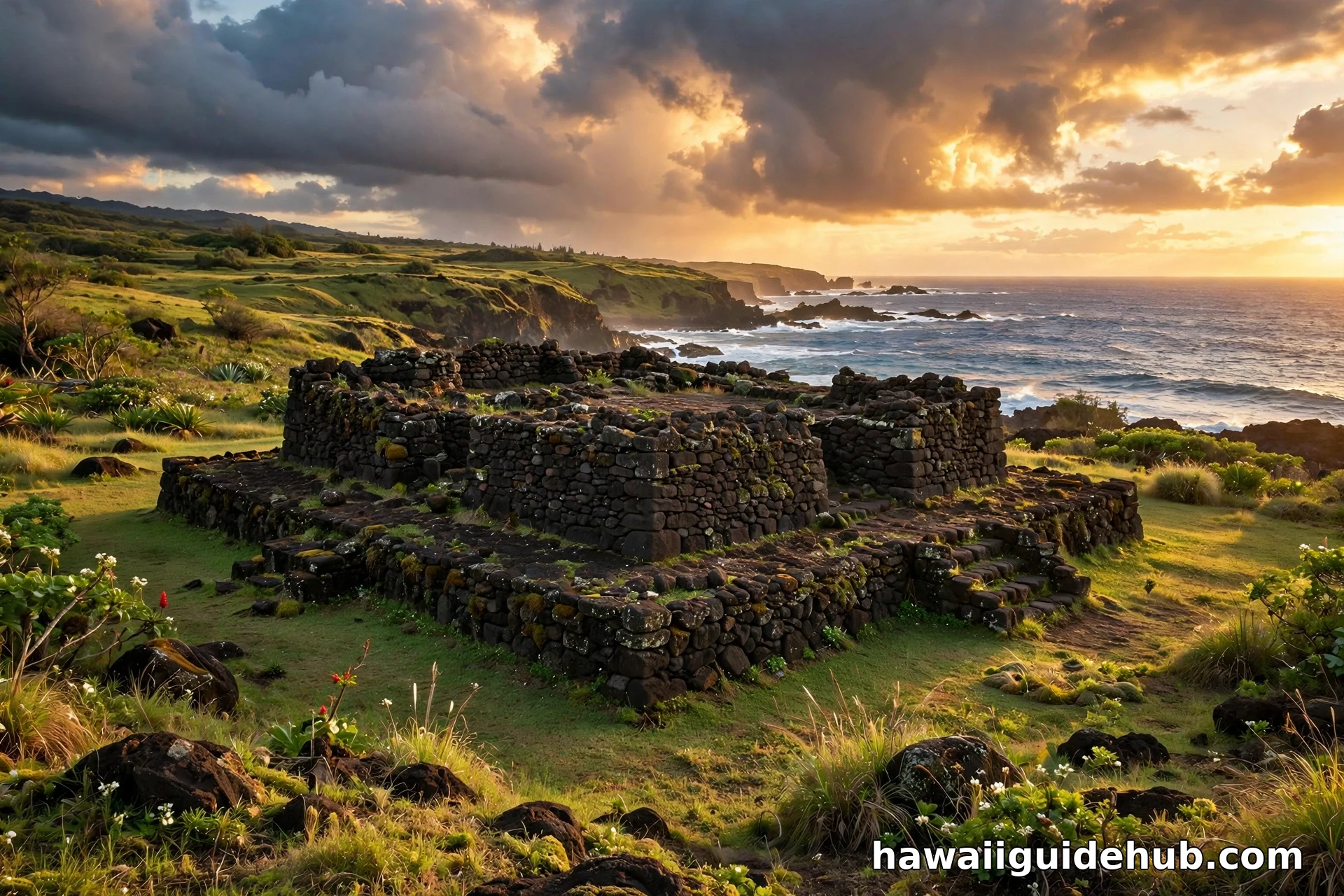
The kapu system ended more than two centuries ago, but its physical traces are everywhere in the islands, and many remain deeply sacred to Native Hawaiians. Visiting them with respect is one of the most meaningful things a traveler can do in Hawaiʻi.
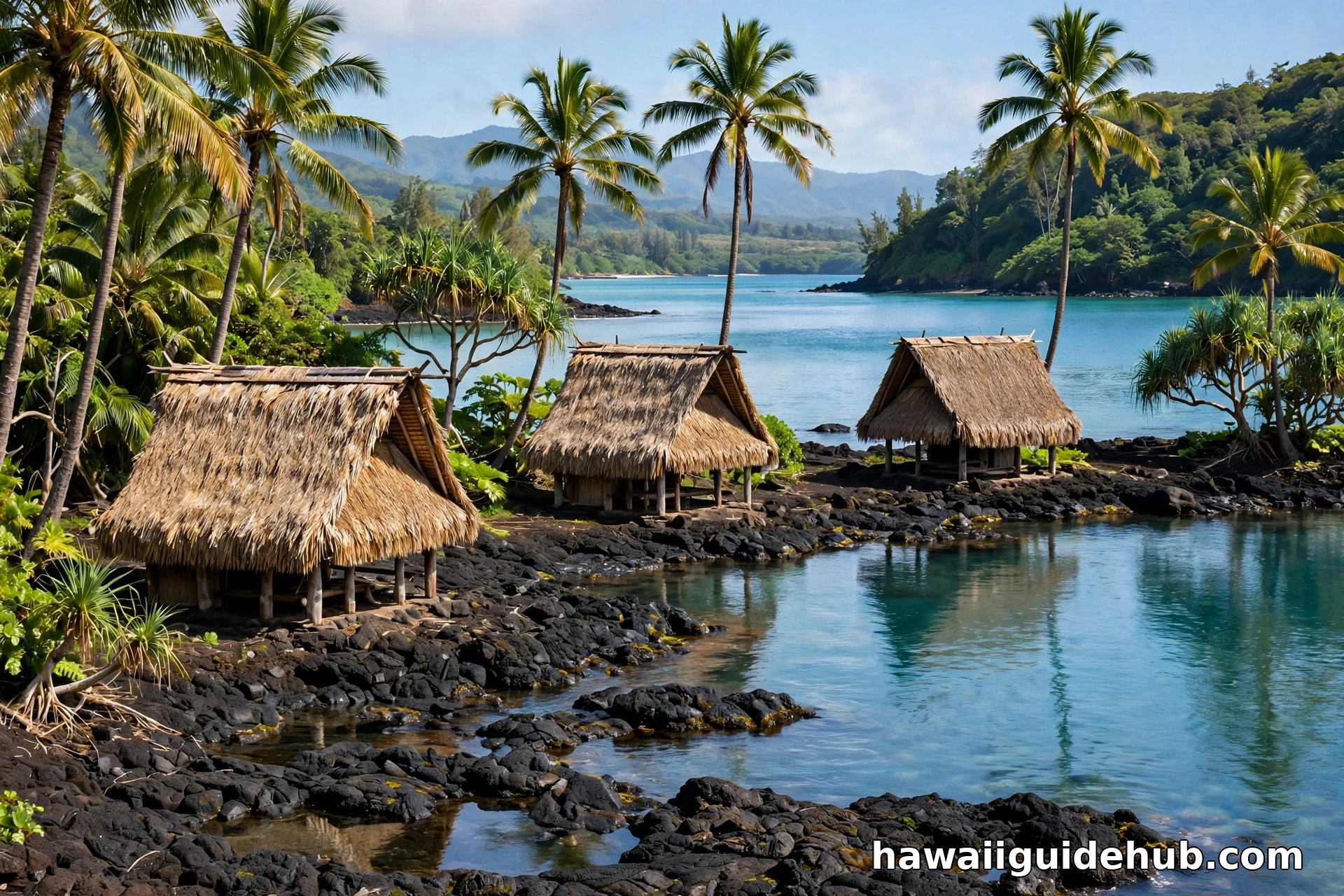
Puʻuhonua o Hōnaunau National Historical Park on the Big Island’s Kona coast is the essential stop. This great place of refuge gave kapu breakers absolution, and its massive stone wall, wooden kiʻi images, and royal fishponds give the clearest picture of the kapu world. On the Kohala coast, Puʻukoholā Heiau preserves the last great temple built under the kapu system, the luakini war temple where Kamehameha I fulfilled the prophecy of his rise. On Oʻahu, Puʻu o Mahuka Heiau above Waimea Bay is the island’s largest, and on Kauaʻi the Wailua River valley holds a whole complex of ancient heiau.
When you visit any heiau or sacred site, the etiquette is simple and nonnegotiable. Stay on marked paths and behind barriers. Never climb on stone walls, never move or stack rocks, and never remove anything, not even a pebble. Keep your voice low, and do not treat the site as a photo backdrop for posed shots. Some heiau are not open to the public at all; honor every kapu sign and fence without question. These courtesies are part of the living culture described in our guide to the role of aloha in Hawaiian culture, where respect is more than a greeting.
Common Misconceptions About the Kapu System
One common misunderstanding is that kapu was only a list of superstitions. In reality it was a complete system of government, religion, and resource management. The fishing bans that look like ritual to modern eyes were conservation law that kept reefs productive. The eating separations that look like mere custom were the load-bearing walls of chiefly authority.
Another is the idea that the kapu system simply vanished in 1819. The formal religious kapu fell, but the word and its instincts survived. Hawaiʻi’s modern love of protocol, the deep respect for sacred places, and the instinct to mark certain ground as off limits all carry the echo of kapu. When you see a hand-painted “Kapu” sign on a trail or a beach access path, you are seeing a direct descendant of the pahu kapu staffs.
A third misconception is that ancient Hawaiians resented the system and welcomed its end. The truth is more complicated. The ʻAi Noa was a revolution from the top, driven by the highest chiefs and the high priest himself. Many common people were bewildered, and some, like Kekuaokalani’s followers, fought and died to preserve the old ways. The end of kapu was liberation for some and loss for others, which is why historians still debate the motives behind that famous shared meal.
Video: The Kapu System Explained
This short video walks through the kapu system and the world of Hawaiian royalty, a useful visual companion to the history above.
Frequently Asked Questions
What was the kapu system in Hawaii?
The kapu system was the sacred set of laws, prohibitions, and taboos that governed ancient Hawaiian religion, society, and daily life. It regulated what people could eat, where they could go, how they behaved around chiefs, and when natural resources could be used. It was enforced by chiefs and priests and backed by the spiritual power of mana.
What does kapu mean in Hawaiian?
Kapu means sacred, forbidden, holy, or set apart. Its opposite is noa, meaning free of taboo or ordinary. The English word “taboo” comes from kapu, recorded by Captain Cook’s crew in 1778. In modern Hawaiʻi, a sign reading “Kapu” means keep out.
What was the ʻai kapu?
The ʻai kapu, or sacred eating, was the part of the kapu system governing food and meals. Men and women could not eat together, and women were forbidden to eat pork, bananas, and coconuts, which were the body forms of male gods. Taro was kapu for women to cook. These rules formed the religious foundation of chiefly power.
How did the kapu system end?
The kapu system ended in 1819 in an event called the ʻAi Noa (free eating). After the death of Kamehameha I, his son Liholiho (Kamehameha II), pressed by his mother Keōpūolani, Kaʻahumanu, and the high priest Hewahewa, publicly shared a meal of forbidden foods with the women of his court at Kailua. He then declared the kapu over and ordered the heiau destroyed.
What happened to people who broke kapu?
Breaking kapu often meant death, and the sentence could be immediate. However, a person who reached a puʻuhonua, a place of refuge, and was absolved by its priests had the sentence lifted. Puʻuhonua o Hōnaunau on the Big Island is the most famous of these sanctuaries and is now a National Historical Park.
Can you visit kapu sites in Hawaii today?
Yes. Puʻuhonua o Hōnaunau and Puʻukoholā Heiau on the Big Island, Puʻu o Mahuka Heiau on Oʻahu, and the Wailua heiau complex on Kauaʻi are all visitable. Treat them with deep respect: stay on paths, never climb or move stones, keep voices low, and obey every kapu sign. Some heiau are closed to the public and must not be entered.
The kapu system shaped every part of life in ancient Hawaiʻi, from the dinner table to the temple wall to the fishing grounds. Its sudden end in 1819 remains one of the most remarkable moments in Pacific history: a civilization’s entire sacred order set aside over a single shared meal. When you walk the grounds of a heiau or read a small hand-painted kapu sign on a country road, you are looking at the living edge of that story.