Mojo Loco Recipe: A Citrus-Garlic Twist on Hawaiʻi’s Loco Moco

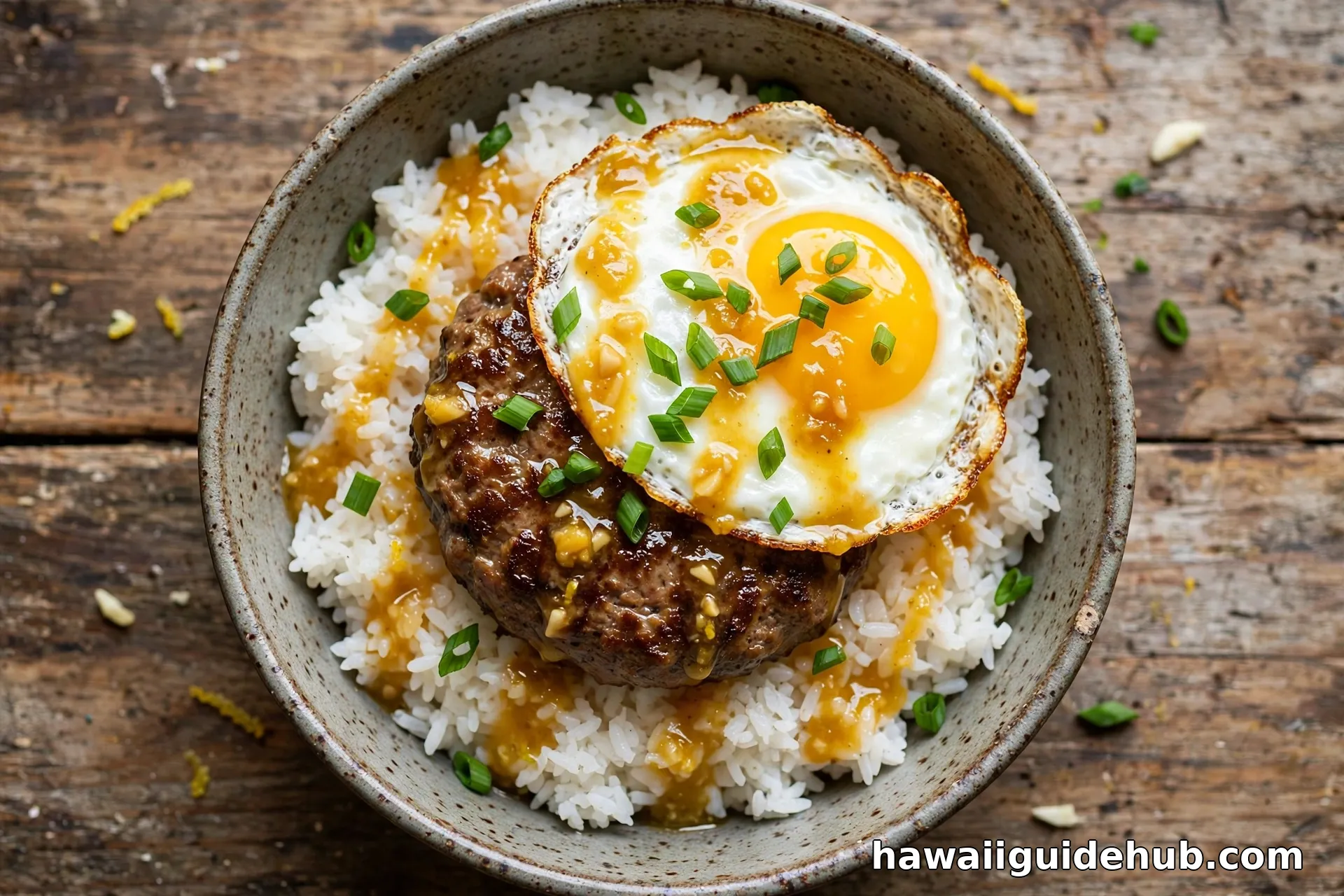
Mojo loco is a bright, modern twist on Hawaiʻi’s beloved loco moco: the classic stack of rice, beef patty, and fried egg, finished with a punchy garlic-citrus mojo sauce instead of brown gravy. If you love loco moco but want something lighter and zestier, this is your recipe.
A quick honest note before we cook: mojo loco is not a traditional Hawaiian dish you will find in old cookbooks. It is a fusion idea, built on the real loco moco and the Cuban-style mojo sauce, and this page gives you our tested recipe for making it at home. The classic underneath it is 100 percent authentic Hawaiʻi.
What Is Mojo Loco?
Think of mojo loco as loco moco’s sunny cousin. It keeps the holy trinity of the original: steamed white rice, a juicy beef patty, and a fried egg with a runny yolk. The change is the sauce. Instead of the traditional brown gravy, you drizzle over mojo: olive oil warmed with lots of garlic, sharpened with lime and orange juice, and seasoned with cumin and oregano.
The result eats lighter than the original but just as satisfying. The citrus cuts through the richness of the beef and egg, the garlic gives it backbone, and the rice soaks up every drop. It takes about 30 minutes, uses one skillet plus a small pan for the sauce, and feeds four hungry people.
The Loco Moco Roots
You cannot understand mojo loco without the original. Loco moco was born in 1949 at the Lincoln Grill in Hilo, on the Big Island. A group of teenagers from the Lincoln Wreckers sports club wanted something cheap, filling, and fast. The owners, Richard and Nancy Inouye, put a hamburger patty over rice, covered it with brown gravy, and added the fried egg later. The kids named it after a teammate nicknamed “Crazy,” or loco, with “moco” tacked on because it rhymed.
From that Hilo diner counter, loco moco became Hawaiʻi’s defining comfort food: rice, patty, egg, gravy. It shows up on plate lunch menus, in diners, and at family tables across the islands. Rainbow Drive-In in Honolulu has been serving its version since 1961, and its gravy recipe remains a closely guarded family secret. Our mojo version honors that structure and simply swaps the gravy for something brighter. For the full story of Hawaiʻi’s local dishes, see our culinary journey through Hawaii’s must-try local dishes.
Where Mojo Sauce Comes From
Mojo is one of Cuba’s great contributions to world cooking: a raw sauce of olive oil, bitter orange, and a heroic amount of garlic. Cuban immigrants carried it to Florida, where mojo-marinated roast pork became a cornerstone of the Cuban sandwich. The flavor logic is universal, which is why it works so well here: acid and garlic cut richness, and there is nothing richer than a beef patty under a fried egg.
Hawaiʻi’s food has always been fusion. Plantation-era workers from Portugal, Japan, China, the Philippines, and Korea layered their flavors over Native Hawaiian staples, and the plate lunch was the result. A Cuban-inspired sauce on a Hilo-born dish is exactly in that spirit: another culture’s bright idea folded into the islands’ favorite comfort food. That is why mojo loco feels right even though no grandmother in Hilo ever made it.
Mojo Loco Ingredients
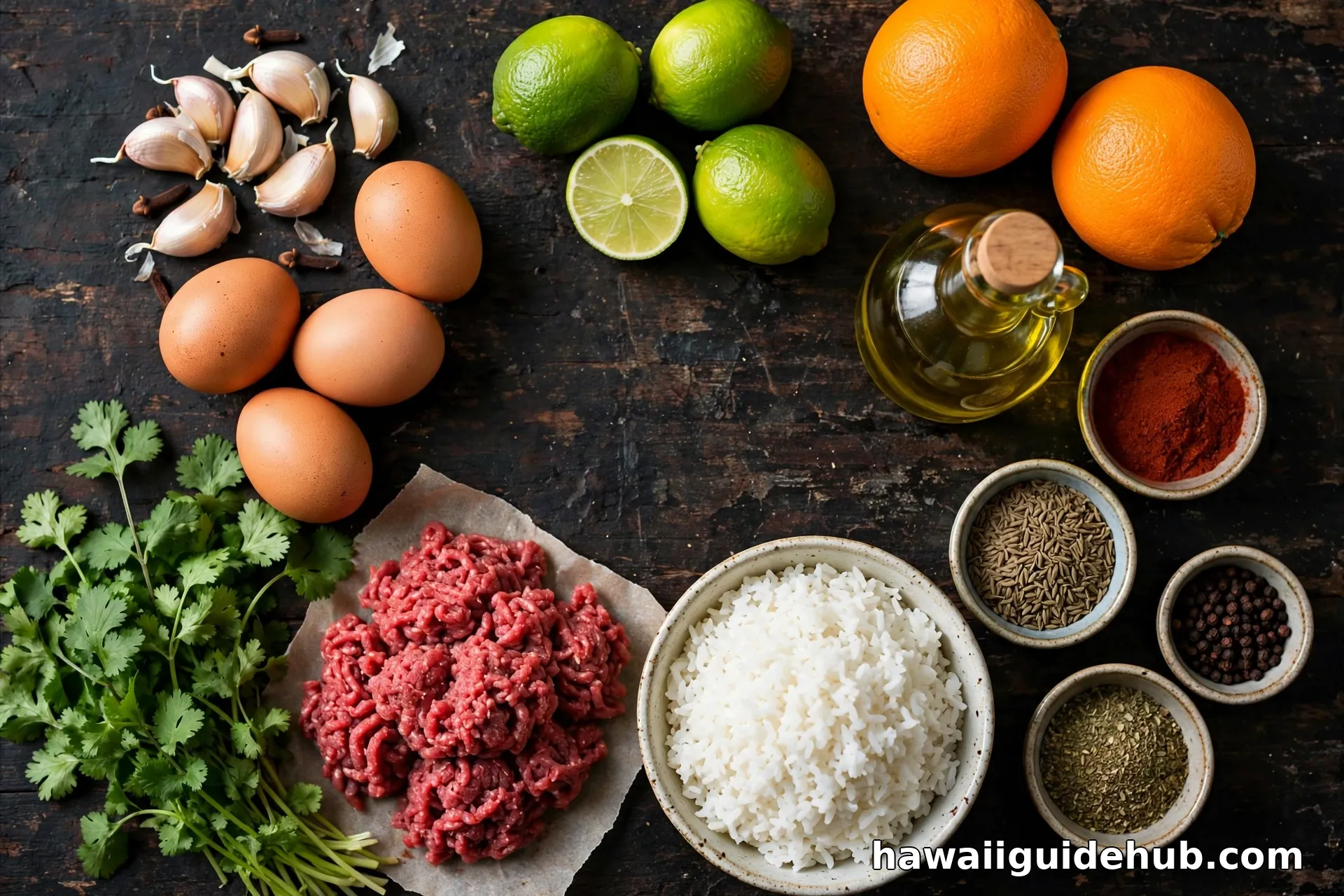
This recipe serves four. Everything is available at a regular grocery store.
| For the patties | |
| Ground beef (80/20) | 1 1/2 pounds |
| Sweet onion, minced | 1/2 cup |
| Panko breadcrumbs | 1/3 cup |
| Egg, beaten | 1 |
| Worcestershire sauce | 1 teaspoon |
| Salt and black pepper | 1 teaspoon each |
| For the mojo sauce | |
| Olive oil | 1/2 cup |
| Garlic, thinly sliced | 8 cloves |
| Fresh lime juice | 1/3 cup |
| Fresh orange juice | 1/4 cup |
| Ground cumin | 1 teaspoon |
| Dried oregano | 1/2 teaspoon |
| Salt | 1 teaspoon |
| For assembly | |
| Cooked white rice, hot | 4 cups |
| Eggs | 4 |
| Green onions, sliced | 1/4 cup |
| Fresh cilantro (optional) | 2 tablespoons |
The Recipe, Step by Step
Step 1: Make the mojo sauce. Warm the olive oil in a small saucepan over medium-low heat. Add the sliced garlic and cook gently, stirring, until it turns pale gold and fragrant, about 3 minutes. Do not let it brown or it turns bitter. Remove from the heat, stir in the lime juice, orange juice, cumin, oregano, and salt. It will sizzle. Set aside. The sauce keeps for a week in the fridge and gets better as the garlic mellows.
Step 2: Form the patties. In a large bowl, combine the ground beef, minced onion, panko, beaten egg, Worcestershire sauce, salt, and pepper. Mix with your hands just until combined; overworking makes tough patties. Divide into four equal portions and shape into patties slightly wider than your rice mound, pressing a shallow dimple in the center of each so they cook flat.
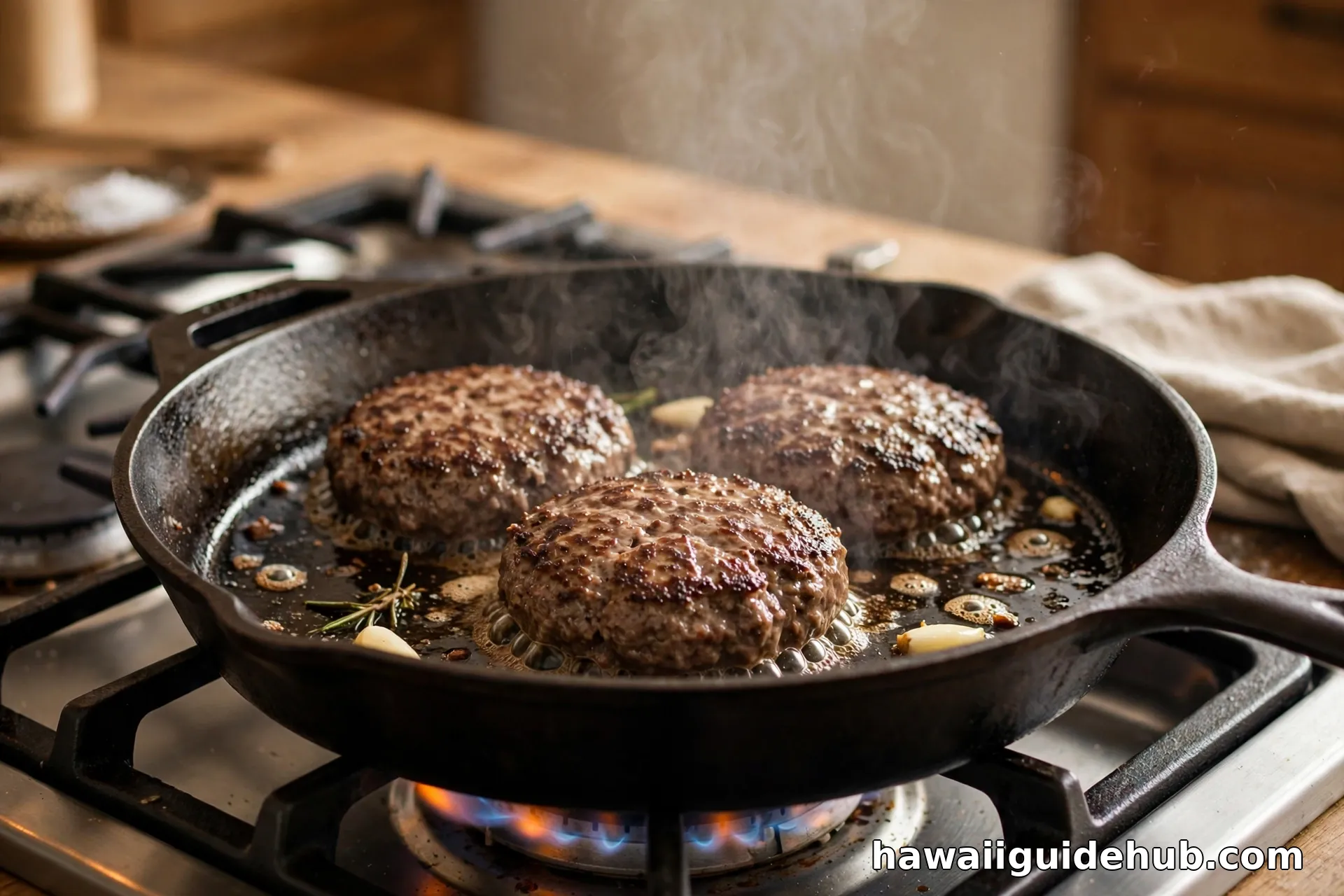
Step 3: Sear the patties. Heat a large cast iron skillet over medium-high heat with a slick of oil. Sear the patties 4 to 5 minutes per side, until deeply browned and cooked through. A good crust is the whole point: those browned bits are flavor. Transfer to a warm plate and rest for 5 minutes.
Step 4: Fry the eggs. In the same skillet, fry the four eggs sunny-side up in the residual beef fat, until the whites are just set and the yolks are still runny. Season with a pinch of salt.
Step 5: Assemble. Mound a cup of hot rice in each bowl. Set a patty on the rice, top with a fried egg, and spoon the warm mojo sauce generously over everything. Scatter with green onions and cilantro. Serve immediately, while the yolk is still runny.
The Mojo Sauce: The Star of the Show
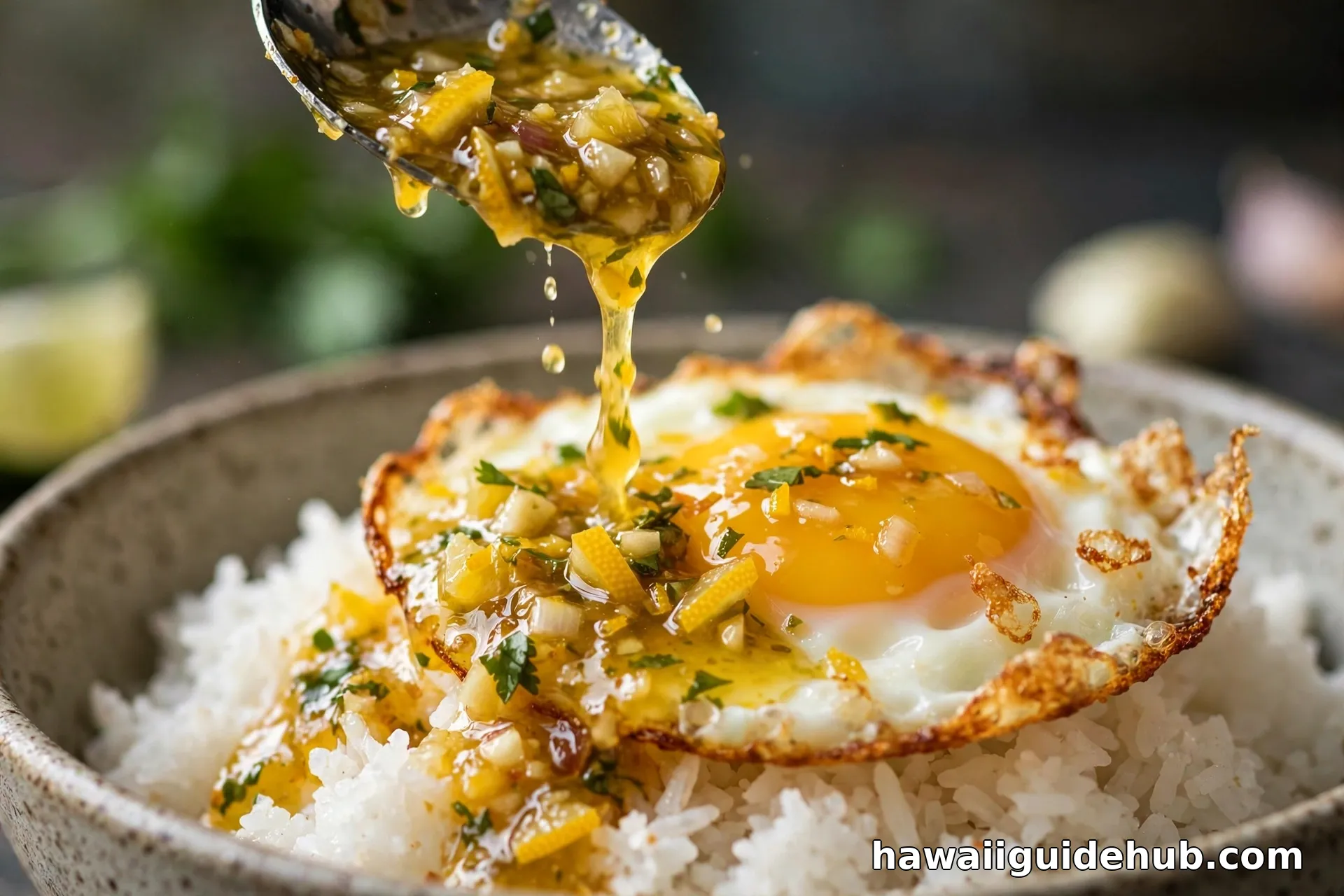
Mojo, pronounced mo-ho, is a Cuban garlic-citrus sauce traditionally made with sour orange. Since sour oranges are hard to find, the lime-plus-orange combination is the standard home substitute, and it works beautifully. The technique matters more than the exact fruit: gentle heat to bloom the garlic in oil, acid added off the heat so it stays bright.
Make the sauce first and let it sit while you cook the rest; even 20 minutes of resting rounds out the raw garlic edge. Taste before serving and adjust: more lime for brightness, more salt to make everything pop, a pinch of sugar if your oranges were tart. This sauce is also excellent on grilled chicken, roast pork, and fried plantains, so make extra on purpose.
Variations Worth Trying
Spam mojo loco: Swap the beef patty for two seared slices of Spam. It is the most Hawaiian variation there is, and the salty Spam loves the citrus sauce.
Chicken mojo loco: Use a pounded chicken thigh instead of beef, seasoned the same way. Lighter, and the mojo was born for poultry.
Vegetarian: A thick slice of roasted portobello or a plant-based patty works well. Use vegetable oil confidence: the mojo carries the dish.
Extra heat: Add a minced Hawaiian chili pepper or a teaspoon of chili flakes to the mojo. Start small; those little peppers are serious.
Classic gravy side-by-side: Make a small batch of traditional brown gravy too, and let everyone choose. It is a fun way to taste the old and the new on one plate. Late-night cravings covered in our best late-night eats in Hawaii guide.
What to Serve With It
In Hawaiʻi, loco moco is plate lunch food, and plate lunch means macaroni salad on the side. A scoop of creamy mac salad balances the bright mojo perfectly. A simple green salad with a light vinaigrette works too, or pickled vegetables for crunch. Keep the sides simple: the bowl is the main event.
To drink, keep it cold and simple: iced tea, a lager, or sparkling water with lime. Save the elaborate cocktails for after dinner. If you are planning a Hawaiʻi food trip around dishes like this, our Hawaii food and wine festival guide and things to do in Kona will help you eat your way across the islands.
Make It a Full Hawaiian Dinner
Turn mojo loco night into a proper Hawaiian spread. Start with poke: cubes of raw ahi tuna tossed with soy sauce, sesame oil, and green onions, served over a little rice or on its own. It takes ten minutes and sets the island tone before the main event.
Alongside the bowls, put out the mac salad, a platter of sliced pineapple, and maybe some pickled cucumbers for crunch. For dessert, haupia, the coconut pudding that shows up at every lūʻau, is the classic finish; it is just coconut milk, sugar, and cornstarch, chilled until set. End with Kona coffee, and you have cooked a tour of the islands without leaving your kitchen.
Tips for Success
Do not brown the garlic. Pale gold is the target. Brown garlic turns the whole sauce bitter, and there is no fixing it.
Use 80/20 beef. Leaner beef makes dry patties. The fat is flavor and keeps the patty juicy under the sauce.
Hot rice, warm sauce. The dish comes together in the bowl, so have the rice steaming and the sauce warmed through when the eggs come out of the pan.
Rest the patties. Five minutes of resting keeps the juices in the meat instead of on the plate.
Season at every layer. Salt the patty mix, salt the eggs, salt the sauce. Bland rice plus bold sauce works; bland everything does not.
Warm the bowls. A cold bowl steals heat from the rice and the sauce. A quick rinse with hot water before plating keeps everything steaming to the table.
Do not skip the dimple. Pressing a shallow indent in the center of each raw patty stops it from puffing into a meatball as it cooks. Flat patties sit better on the rice and cook evenly.
Double the mojo. You will want it. The sauce keeps for a week refrigerated and improves every day, and you will find excuses: drizzle it on roast chicken, stir it into mayonnaise for sandwiches, or spoon it over grilled fish.
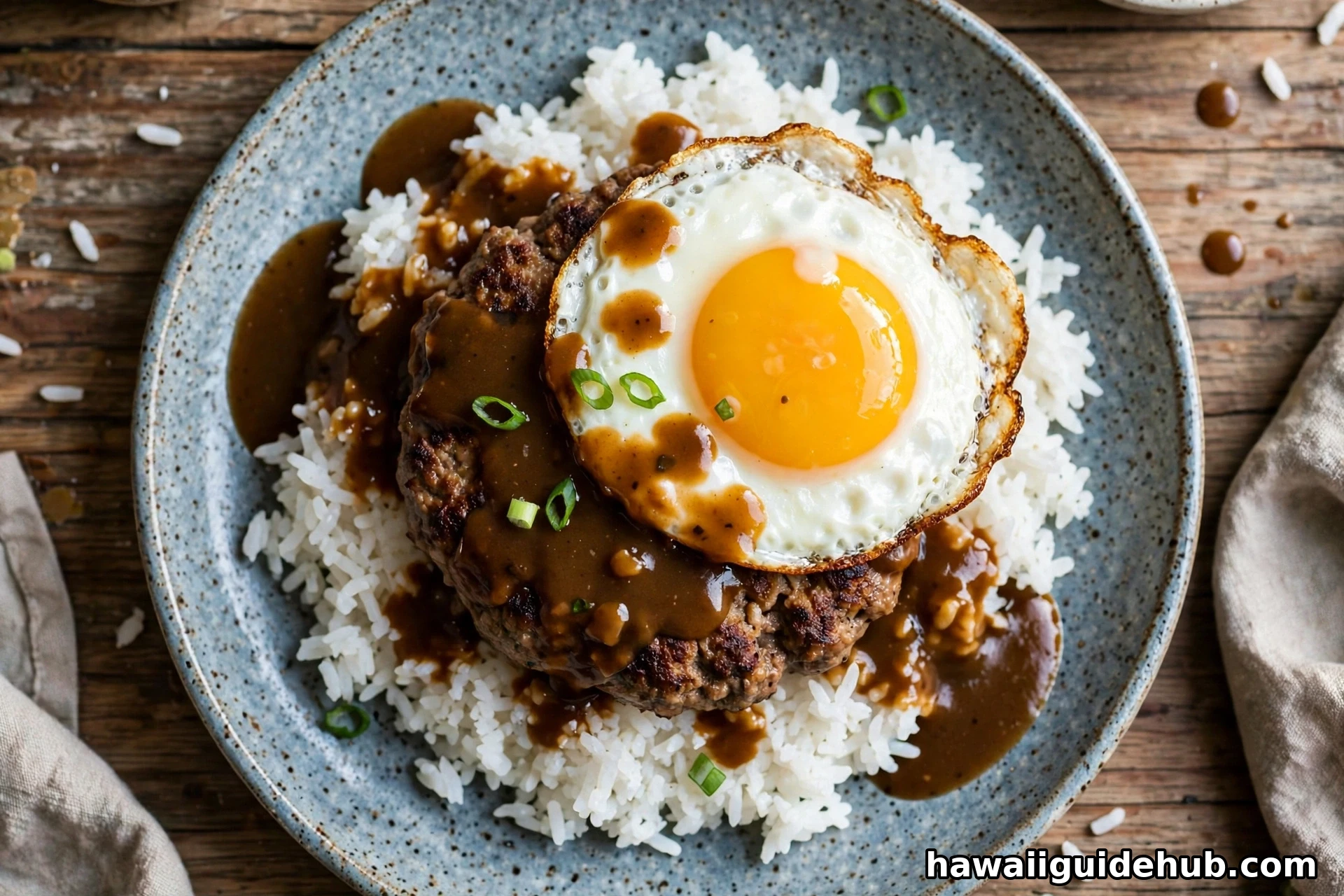
Video: Classic Loco Moco Recipe
The classic this recipe riffs on: loco moco history, technique, and a full recipe walkthrough.
Frequently Asked Questions
What is mojo loco?
Mojo loco is a modern twist on Hawaiʻi’s loco moco: rice, beef patty, and fried egg topped with a garlic-citrus mojo sauce instead of brown gravy. It is a fusion recipe, not a traditional Hawaiian dish.
What is mojo sauce made of?
Classic mojo is olive oil, lots of garlic, sour orange juice, cumin, oregano, and salt. This recipe uses lime and orange juice as the accessible substitute for sour orange.
Can I make mojo loco ahead of time?
The mojo sauce keeps for a week in the fridge and improves with time. Cook the patties and rice fresh; fry the eggs to order. Assembled bowls do not reheat well because of the egg.
Is mojo loco spicy?
Not as written. It is garlicky and citrusy. Add Hawaiian chili peppers or chili flakes to the mojo if you want heat.
What is the difference between loco moco and mojo loco?
Loco moco is the 1949 Hilo original: rice, hamburger patty, fried egg, brown gravy. Mojo loco keeps the rice, patty, and egg but swaps the gravy for a bright garlic-citrus mojo sauce.
Can I use bottled mojo sauce?
You can, and it will still be tasty, but the homemade version takes five minutes and tastes dramatically fresher. Bottled mojo works in a pinch for the marinade-style uses; for drizzling over the finished bowl, fresh is worth it.
What rice is best for loco moco?
Short or medium grain white rice, cooked fresh and served hot. It should be sticky enough to hold a mound shape and soak up the sauce. Day-old rice works if you steam it back to life.
Mojo loco will not replace the original, and it should not try. The classic brown-gravy loco moco earned its place in 1949 and it is not going anywhere. But on a weeknight when you want those Hawaiʻi flavors with a brighter, lighter finish, this citrus-garlic twist delivers. Make the sauce, sear the patties, fry the eggs, and taste what happens when Hilo meets Havana.