Molokai for Solo Travelers: The Quiet Island Guide

If you want to be alone in Hawaii, truly alone, Molokai is the answer. This is an island of about 7,400 people with no traffic lights, no big resorts, and beaches where you can walk for an hour without seeing another footprint. Solo travelers come here for the rarest thing in modern travel: unbroken solitude. Empty sand, silent sea cliffs, night skies without a single light on the horizon, and days that unfold entirely at your own pace.
This is the single complete guide to Molokai for solo travelers. It covers safety on a quiet island, how to get around alone, the best solo experiences, what eating and staying alone is really like here, daylight hours to plan around, and honest costs. If you have searched for anything about molokai solo travel, traveling alone on Molokai, or a solo trip to Hawaiʻi’s quietest island, the answers are all here on this one page. If you are still choosing an island, see our guide to the best island in Hawaii for first-time visitors.
Molokai Solo Travel at a Glance
| Molokaʻi solo: the quiet-island briefing | Details | The solo reality |
|---|---|---|
| Solitude level | Maximum; the quietest island in Hawaii | This is the point; do not expect nightlife |
| Safety | Very good; tiny population, almost no traffic, low crime | One of the safest solo bets in the state |
| Getting around | Rental car essential; book early, the fleet is small | Book the car with the flight; walk-ups lose |
| Best solo base | Kaunakakai for food and supplies, west end for beach solitude | Split your stay if you can |
| Must-do alone | Papohaku Beach walks, Kalaupapa Lookout, Halawa Valley, stargazing | All better with no one to rush you |
| Daylight | 10.9 hours in December, 13.4 in June; plan hikes to end before dark | Winter days are short; start early |
| Social life | Quiet; this is a solitude trip, not a party trip | Bring a book, not expectations |
| Cell coverage | Good in towns, patchy on remote coasts and in Halawa Valley | Download maps before you leave town |
| Emergency | 911 island-wide; small hospital in Kaunakakai | Know where Kaunakakai is before you need it |
| Best months | April to October for calm oceans and long days | Summer is the sweet spot |
Is Molokai Safe for Solo Travelers?
Yes. Molokai is one of the safest-feeling places in Hawaii for a solo traveler. The population is tiny, violent crime against visitors is extremely rare, and the island’s whole culture runs on quiet respect. The precautions are the standard ones: tell someone your plans before a hike or a remote beach day, do not leave valuables visible in your rental car, and lock up. The ocean is the real risk here, not people. Swim only where locals swim, never alone, and respect shore break at beaches like Papohaku.
Solo women travel Molokai comfortably and routinely report feeling at ease. The one adjustment is the quiet itself: on a truly empty beach or trail, there is no one around if you twist an ankle. Carry a charged phone, download offline maps, bring more water than you need, and let your accommodation host know your rough plans for the day. That is the whole safety system, and it works.
Getting Around Alone: Rent the Car Early
There is no way around this one: you need a rental car on Molokai. The free MEO bus serves residents on limited routes, and taxis are scarce. The rental fleet at Molokai Airport is small, so book the moment your flights are set. As a solo traveler you can take the smallest, cheapest car available, which keeps costs down. Official highway miles from Kaunakakai: 8 to the airport, 16.5 to Maunaloa on the Papohaku side, and 27.6 to Halawa Valley. Fill the tank in Kaunakakai before any long drive, and avoid the narrow Halawa road after dark.
The Best Solo Experiences on Molokai
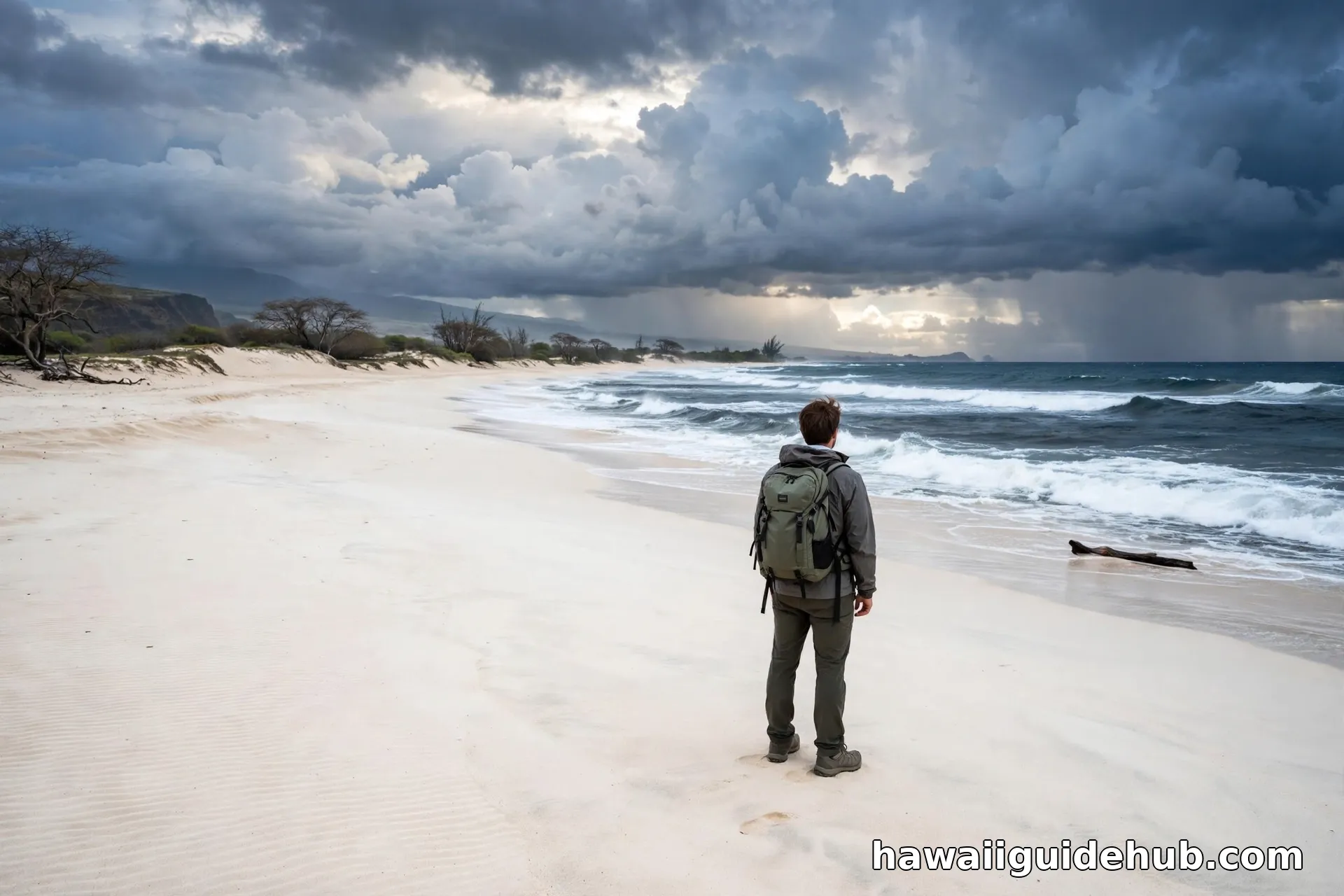
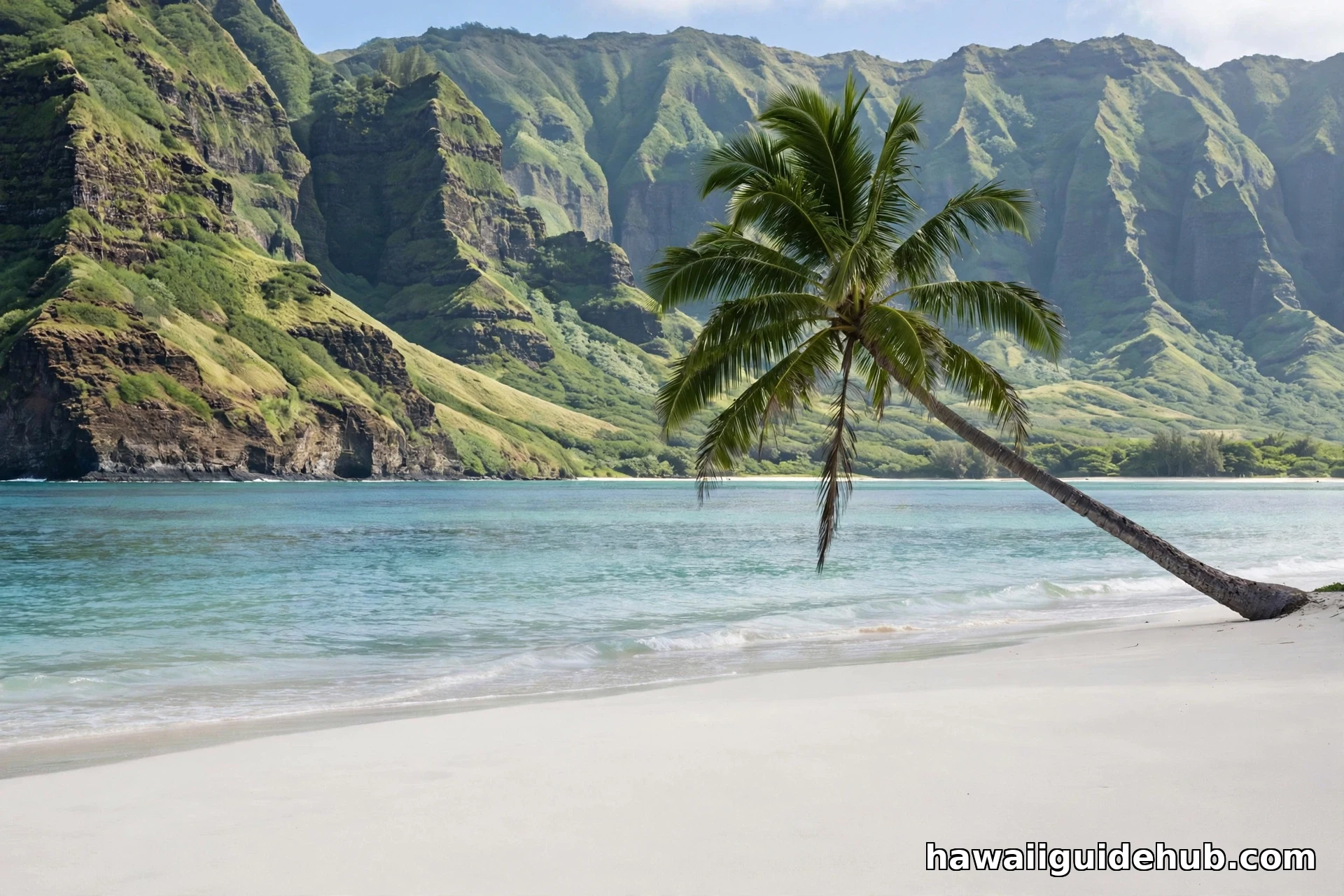
Walk Papohaku Beach end to end. Three miles of golden sand, dunes, and surf, quite possibly with no one else on it. Go at low tide, walk the waterline, and let the scale of the empty Pacific reset your brain. The Kalaupapa Lookout in Palaʻau State Park is the island’s great contemplative stop: from 1,600 feet, you gaze down at the tallest sea cliffs in the world and the historic peninsula below. Note that guided tours of the Kalaupapa settlement itself are 16 and older, run Thursdays and Saturdays, and must be booked through Recreation.gov.
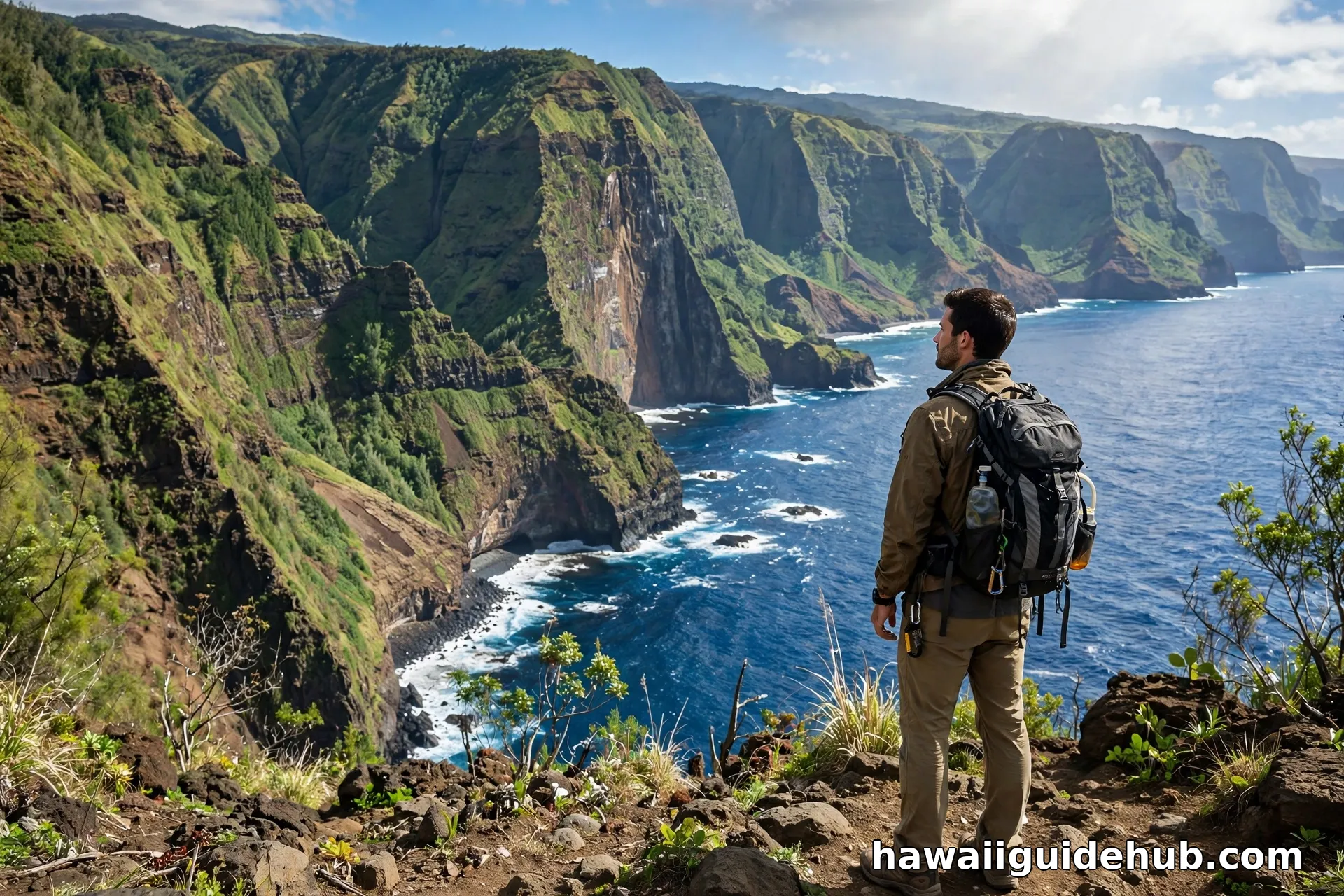
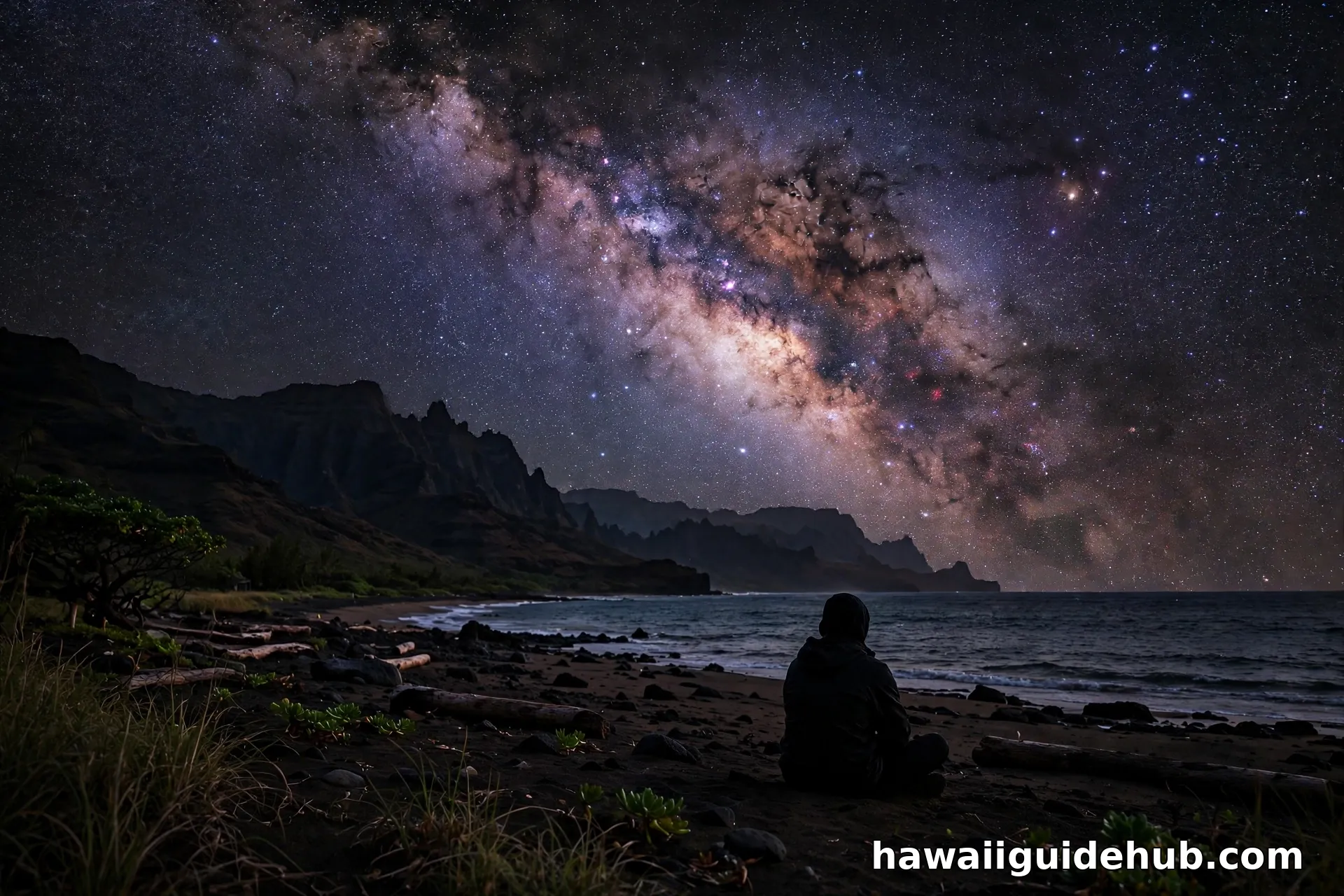
Drive to Halawa Valley for the island’s lush counterpoint: a winding 27.6-mile road through green valleys ending at a bay with waterfalls visible up the valley. Guided cultural hikes into the valley are available and worth it for the history alone. After dark, Molokai delivers its finest solo hour. With almost no light pollution, the night sky is overwhelming; spread a blanket on the beach and watch the Milky Way rise. Our guide to Hawaii’s hidden gems captures why places like this matter.
Eating and Staying Alone on Molokai
Solo dining on Molokai is effortless because nearly everything is casual. Plate lunch shops, food trucks, and the famous hot bread from the Kaunakakai bakery are made for eating wherever you happen to be. Grocery shop on arrival and keep your rental stocked; a vacation rental with a kitchen in Kaunakakai or a west-end condo near Papohaku makes the best solo base. There is no nightlife to miss and no scene to join, which is precisely the point. Evenings are for sunsets, stargazing, and a book.
Daylight Hours: Plan Around the Sun
On a quiet island with no one to hike out with you, daylight planning is safety planning. Molokai’s days run from 10.9 hours of daylight in December to 13.4 hours in June. The earliest sunrise of the year is 5:45 AM in early June and the latest is 7:08 AM in mid-January; sunsets run from 5:45 PM in late November to 7:14 PM in early July. In winter, start any remote walk early and be back at the car a full hour before sunset. The chart below shows average daylight hours by month.
Molokai Solo Travel Scores
What Solo Travel Costs on Molokai
Molokai is one of Hawaii’s most affordable solo trips. There are no resort prices because there are no resorts. Vacation rentals and small hotels cost far less than elsewhere in Hawaii, food is plate-lunch cheap if you cook some meals, and the best experiences, beaches, lookouts, stargazing, are free. The two unavoidable costs are the inter-island flight and the rental car, and since the car cannot be split, budget for it fully. Our guide to the cheapest time of year to visit Hawaii helps with timing. A comfortable solo budget runs well under $200 a day outside peak season.
A Solo Traveler’s Perfect Day on Molokai
Wake before sunrise and drive to Papohaku in the blue pre-dawn light. Walk the waterline as the sky turns pink behind the dunes, completely alone. By 9 AM you are back in Kaunakakai for hot bread and coffee at the bakery, eaten on a bench while the town wakes up. Mid-morning, drive up to Palaʻau State Park: the Kalaupapa Lookout, a picnic under the ironwoods, the short walk to Phallic Rock.
Spend the hot afternoon in the shade with a book, or exploring the tidepools on the south shore at low tide. Late afternoon, take the slow drive toward Halawa as far as your energy allows, stopping at every waterfall viewpoint. End the day back at Papohaku for sunset, then lie on the warm sand and watch the stars come out one by one. Dinner is whatever you feel like, eaten whenever you feel like it. That is the whole itinerary, and it is perfect.
Solo Safety Checklist
Before every outing: text your accommodation host or a friend your plan and expected return. On the road: keep the tank above half, and do not attempt the Halawa Valley road or remote tracks after dark. At the beach: never swim alone at unguarded beaches, and treat Papohaku as a wading beach. On trails: carry twice the water you expect to need, wear sun protection, and download offline maps before leaving town. At night: enjoy the stars, but stay near your car or accommodation on truly remote stretches. Always: trust the quiet. If a place feels wrong, leave. Your instincts are your best companion.
When to Go Solo: Molokai Seasons
Molokai’s weather is gentle year-round, but the details matter for a solo trip. The drier season runs roughly May through October: June averages just half an inch of rain in Kaunakakai, the ocean is calmest, and daylight stretches past 13 hours. January is the wettest month at about 2.4 inches, still modest, but north-shore surf is rough and some roads get muddy. Winter brings the humpback whales to the channel between Molokai and Maui, visible from the west-end beaches, which is worth the shorter days.
For the classic solo trip, aim for April, May, September, or October: warm water, calm mornings, long evenings, and the thinnest crowds on an already empty island. Summer is driest but hotter and windier. Whenever you go, Molokai’s small size means weather changes fast; a rainy morning in Kaunakakai can be a sunny afternoon at Papohaku, so keep plans flexible and chase the blue sky.
Video: Exploring Molokai Solo
Watch a solo traveler explore Molokai on day one, the perfect preview of your own quiet adventure.
Frequently Asked Questions
Is Molokai good for solo travelers?
Yes, if you want solitude. Molokai is Hawaii’s quietest island: empty beaches, silent cliffs, dark skies, and almost no crowds. It is not the island for nightlife or meeting lots of fellow travelers.
Is it safe to travel alone on Molokai?
Yes. The tiny population, minimal traffic, and respectful local culture make Molokai feel very safe. Take standard precautions: share your plans, keep valuables out of sight, and respect the ocean above all.
Do I need a car as a solo traveler on Molokai?
Yes. A rental car is essential, and the small airport fleet means booking early. The free MEO bus runs limited resident routes and is not a visitor transport system.
Can I meet people traveling solo on Molokai?
It is possible but not easy. Molokai has no hostel scene or nightlife. You will meet people through guided hikes, at the Kalaupapa tours, and in casual conversation around Kaunakakai. Come for solitude, and treat any new friend as a bonus.
How many days should I spend solo on Molokai?
Three to four days. That covers Papohaku, the Kalaupapa Lookout, Halawa Valley, and slow beach time. More than five days suits only true solitude seekers. In winter, add whale watching to the plan with our humpback whale migration guide.
What to Pack for Solo Molokai
Pack for self-sufficiency. A headlamp for stargazing and early starts, a portable charger, and downloaded offline maps cover the island’s dead zones. Bring reef-safe sunscreen, a wide hat, and twice the water capacity you think you need. A paperback, a journal, and binoculars will get more use here than anywhere else in Hawaii. Pack snacks and a soft cooler from the start, because Kaunakakai’s stores close early and the west end has almost nothing. And bring a light jacket: winter evenings and the 1,600-foot lookout get surprisingly cool.
What is there to do alone at night on Molokai?
Stargazing is the main event, and it is spectacular. Beyond that: sunset walks on Papohaku, night drives to dark-sky pullouts, journaling on your lanai, and early sleep. There is no nightlife, no bars worth seeking out, and that absence is the luxury. Plan your evenings around the sky, not a schedule.
Is Molokai too quiet for a solo trip?
For some travelers, honestly, yes. If you recharge through nightlife, group tours, and meeting new people every night, Molokai will feel empty rather than peaceful. But if you recharge through nature, long walks, and unscheduled time, it is the best solo destination in Hawaii. Know which traveler you are before you book the inter-island flight.
Molokai is where you go to hear yourself think. Walk the empty beach, stand at the edge of the tallest sea cliffs on earth, sleep under more stars than you knew existed. The island asks nothing of you except presence, and it gives back more than the busy islands ever could. Go alone, take the long way everywhere, talk to the locals you meet, and come back quieter.