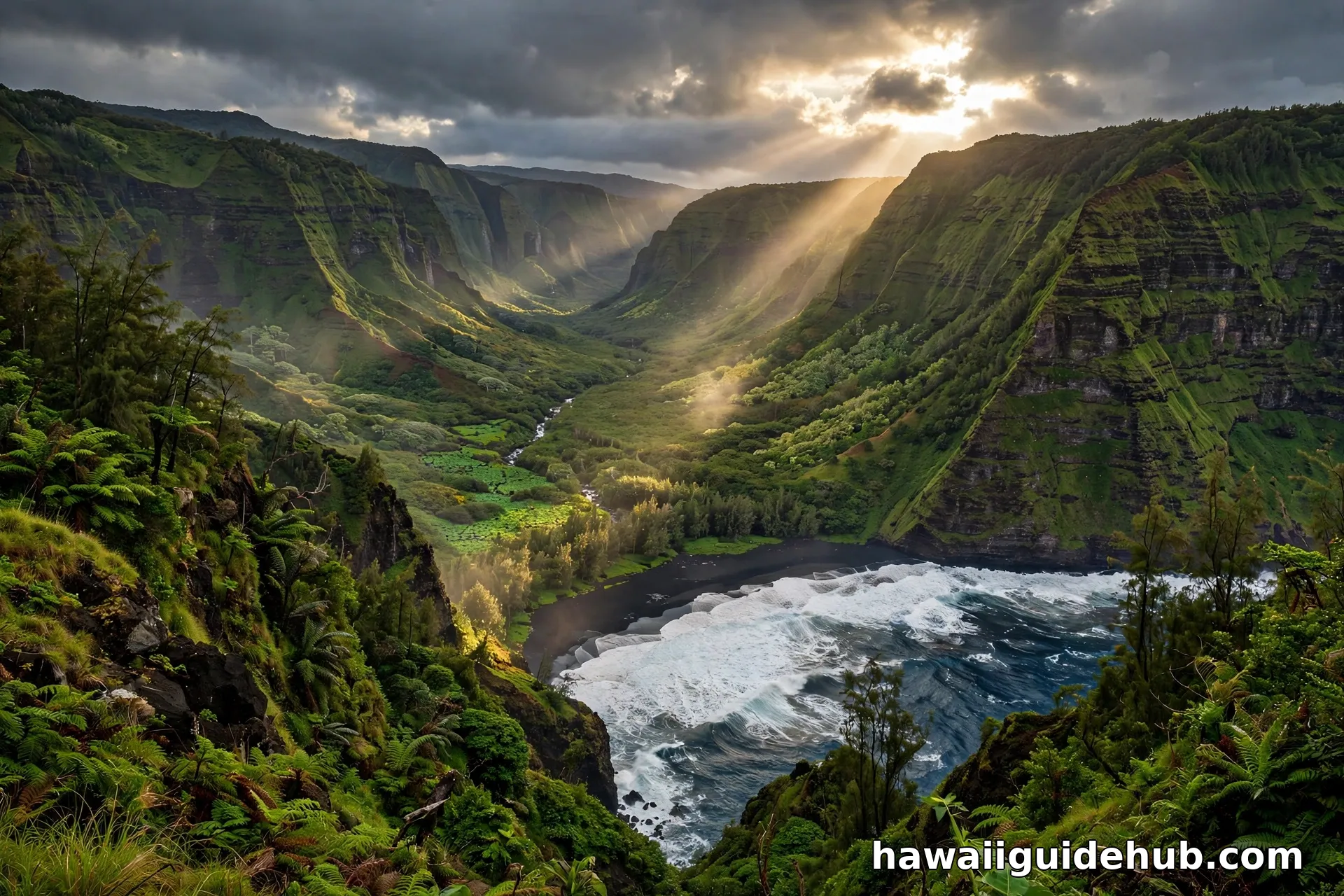
Pololu Valley Weather

Pololū Valley sits on the wet, windward edge of North Kohala, and its weather is the single biggest factor in your visit. Mornings often start clear and calm, trade wind showers roll through by afternoon, and winter storms can turn the famous trail into a mud slide. This guide covers Pololū Valley weather in full: average temperatures, rainfall by month, the best time of day and year to visit, and exactly how rain changes the hike.
This is the single complete guide to Pololū Valley weather. It covers what the weather is like year round, monthly rainfall and temperature patterns, the best time to visit, how weather affects the trail and the beach, what to wear and pack, how to check the forecast before you go, and answers to the most common questions. Everything about Pololū Valley weather is on this one page.
Pololū Valley Weather at a Glance
| Pololū Valley weather | What to expect | Hike around it |
|---|---|---|
| Climate | Windward tropical, warm and humid with frequent showers | Pack rain gear no matter the forecast |
| Daytime highs | Upper 70s to mid 80s Fahrenheit year round | Heat plus humidity: carry extra water |
| Nighttime lows | Mid 60s to low 70s Fahrenheit | Only matters if you camp; day hikers can ignore it |
| Rain pattern | Brief trade wind showers possible any day, wetter October through March | A sunny morning can still end wet |
| Driest months | June and July in the nearby Hāwī area | Your best odds, not a guarantee |
| Wettest months | August through October in the nearby Hāwī area | Hurricane season overlaps; watch forecasts |
| Best time of day | Early morning, before afternoon showers build | Start at sunrise; be back by lunch |
What Is the Weather Like at Pololū Valley?
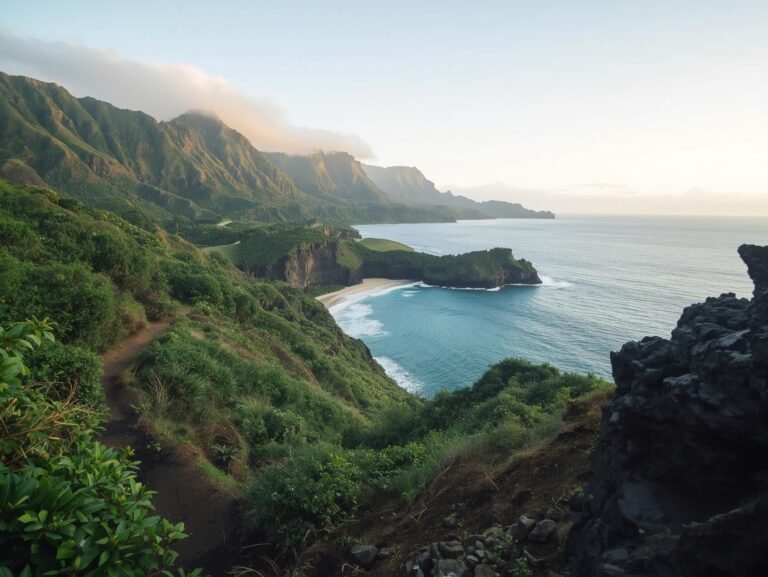
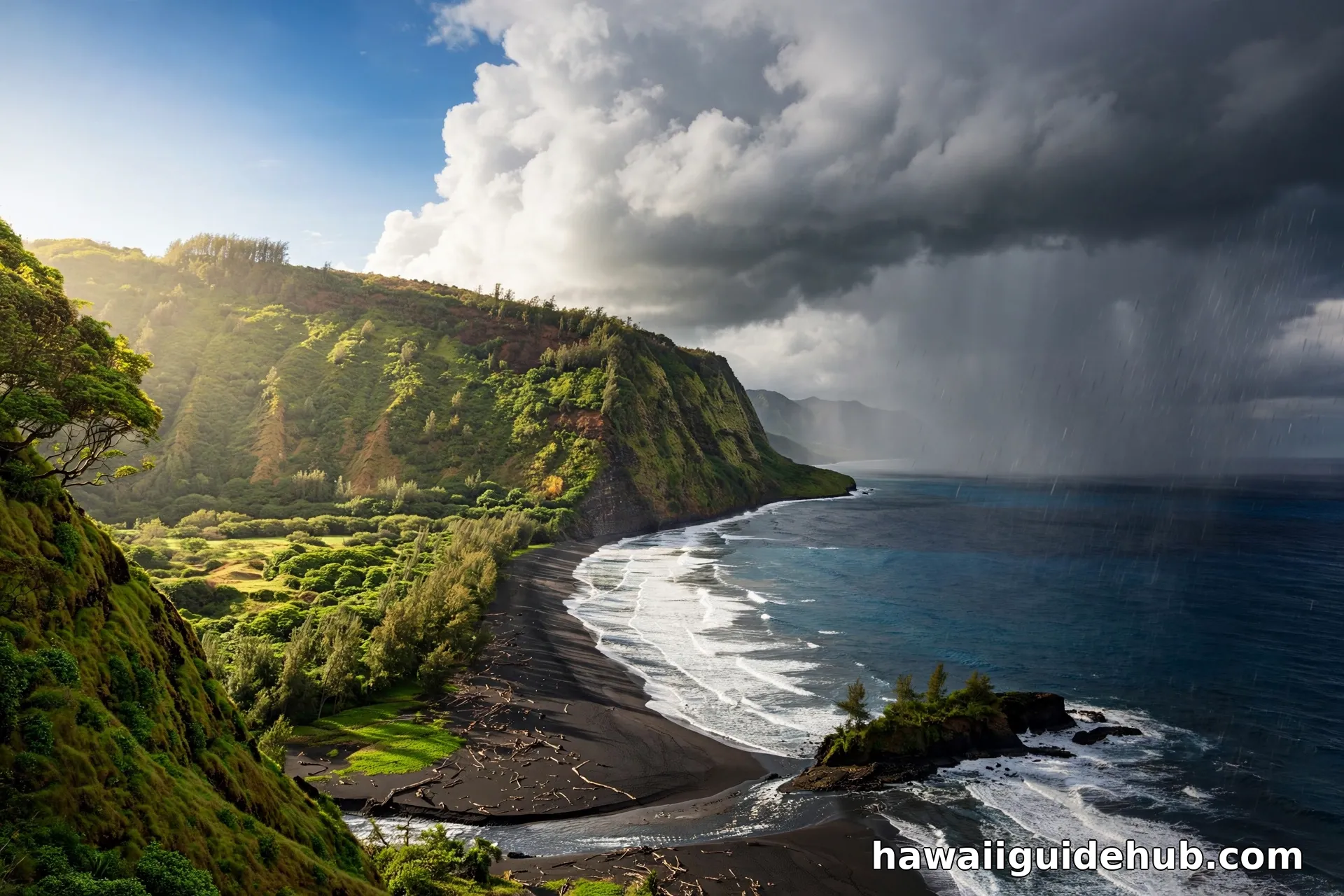
Pololū Valley faces the northeast trade winds, which means it catches moisture straight off the ocean. Expect warm, humid air, daytime highs in the upper 70s to mid 80s, and rain that arrives fast and leaves fast. Locals describe it as weather that can flip from blue sky to sideways drizzle in ten minutes and back again before you find your rain jacket. The valley itself runs wetter than the nearby town of Hāwī, because the steep valley walls squeeze extra rain from the clouds. Mornings are typically the calmest and clearest part of the day, while afternoons bring building clouds and the highest chance of showers. Humidity stays high year round, so the air feels warmer than the thermometer reads. This is why everything here is so green, and why you should never trust a clear morning sky to last all day.
Pololū Valley Rainfall by Month
Rain falls at Pololū in every month, but there is a clear rhythm. Summer and early fall tend to be drier with firmer trail footing, while late fall through winter brings heavier rain and bigger surf. The chart below shows average monthly rainfall for the nearby Hāwī area in inches. Treat these as a baseline: the valley floor and cliffs catch noticeably more rain than town, especially when the trades are strong.
Pololū Valley Weather by Season
Spring (March to May)
Spring brings renewal to the valley: wildflowers, moderate temperatures, and vividly green cliffs. Showers are unpredictable, and the trail can be muddy after storms, but the mornings are often gorgeous. This is a lovely time for photography, with dramatic light and fewer crowds than summer.
Summer (June to August)
Summer is the most reliable season for the hike. Trails are driest, the beach is warmest, and the long daylight gives you flexibility. The trade off is heat: the unshaded climb out is toughest now, so start early and carry extra water. Occasional high surf events can still close off beach access.
Fall (September to November)
Fall brings fewer crowds, crisp air, and spectacular afternoon light on the cliffs. Early fall is still relatively dry, while late fall turns wetter as winter storms begin to arrive. Whale season starts building offshore in late fall, adding a bonus to lookout visits.
Winter (December to February)
Winter is the most dramatic and the most demanding season. Heavy rains make the trail slick, surf runs big and dangerous, and beach swimming is off the table most days. But the valley is at its lushest, waterfalls stream down the cliffs, and humpback whales cruise offshore. Visit for the lookout and the drama; attempt the hike only in a dry spell. For more on island wide patterns, see our guide to when it rains in Hawaii.
Best Time of Day to Visit Pololū Valley
Early morning wins on almost every count. The lookout parking lot still has space, the air is cool for the climb back up, and the valley is most likely to be clear before the day’s clouds build. By mid afternoon, showers are common and the light flattens. Late afternoon can be beautiful when a clearing storm lights up the cliffs, but it is also when you are most likely to get wet. If you only remember one weather rule for Pololū, make it this: go in the morning.
Best Time of Year to Visit Pololū Valley
Summer and early fall offer the most reliable weather: drier trails, warmer beach conditions, and longer daylight for photography. Winter brings dramatic surf, lush valley walls at their greenest, and the chance of whale sightings offshore, but also the muddiest trails and the highest chance your hike gets rained out. Spring sits in between, with wildflowers, moderate temperatures, and unpredictable showers. There is no bad month for the lookout itself, which takes twenty minutes and is worth it in any weather. For the hike down, aim for the drier months.
How Weather Affects the Pololū Valley Hike
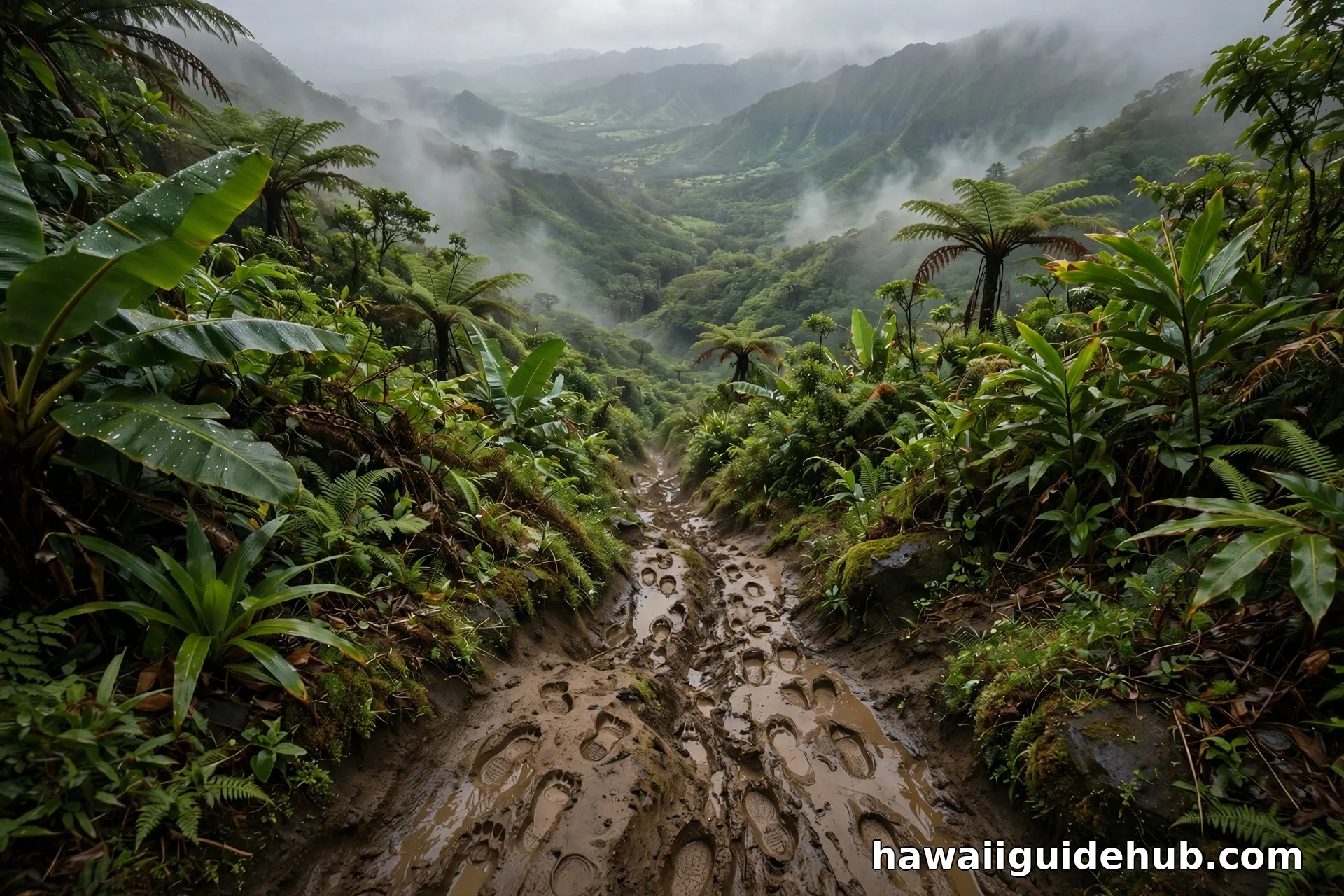
The trail from the lookout drops about 400 feet to the black sand beach in under a mile, and rain transforms it. When dry, it is a steep but straightforward walk taking 20 to 30 minutes down and longer back up, and one of the island’s great short hikes. For more wild corners of the island, see our guide to off the beaten path outdoor activities in Hawaii. When wet, the clay sections turn slick as ice, and the hike becomes genuinely treacherous. Skip the hike after a night of heavy rain; the lookout alone is still worth the drive. Heavy rain also swells the streams and roughens the surf at the beach, where there are no lifeguards. Swimming is not recommended when the surf is up, which is most of winter. Even in the dry season, a single passing shower can make the steepest pitches slippery, so test your footing before committing to the descent.
Heat matters too. The trail has almost no shade, and the climb out in midday sun is brutal. Start early, carry more water than you think you need, and wear shoes with real grip. Slippers will betray you on this trail. Give your shoes a scrub before and after the hike: a fungal disease called Rapid ʻŌhiʻa Death spreads through mud on footwear, and cleaning up protects the native forest.
What to Wear and Pack for Pololū Valley
Dress for two weathers at once. Wear quick dry hiking clothes, sturdy closed toe shoes with grip, and a hat. Pack a light rain jacket or poncho even on a sunny morning, plus sunscreen, at least a full bottle of water per person, and a snack. There are no restrooms at the lookout or on the trail, no trash cans, and no cell service at the valley floor, so bring everything out with you and tell someone your plans. A dry bag protects your phone and camera when the showers arrive. If you are hiking, trekking poles help on the slippery descent, and a change of socks in the car is a small luxury after a muddy climb.
Pololū Valley Weather vs. Nearby Towns
Pololū’s weather surprises visitors who base on the dry west side. Kona, an hour south, is sunny and arid most days, while Pololū can be dripping in the same hour. Hāwī, 20 minutes away, is drier than the valley but wetter than Kona. Hilo, on the east side, is famously the rainiest town in the islands and makes Pololū look dry by comparison. The lesson: never judge Pololū’s weather by the sky over your Kona hotel. The Kohala mountains wring moisture from the trades, so the north tip of the island plays by its own rules. Check a North Kohala specific forecast, not an island wide one.
How to Check the Pololū Valley Forecast
Check the National Weather Service Honolulu forecast the morning you go, searching for Hāwī or North Kohala. Look at both the rain chances and the surf forecast: high surf advisories mean stay off the beach and rocks entirely. Webcams and recent hiker reports can confirm whether the trail is muddy. If heavy rain is falling or forecast, save the hike for another day and enjoy the lookout instead. The valley will still be there.
Getting to Pololū Valley
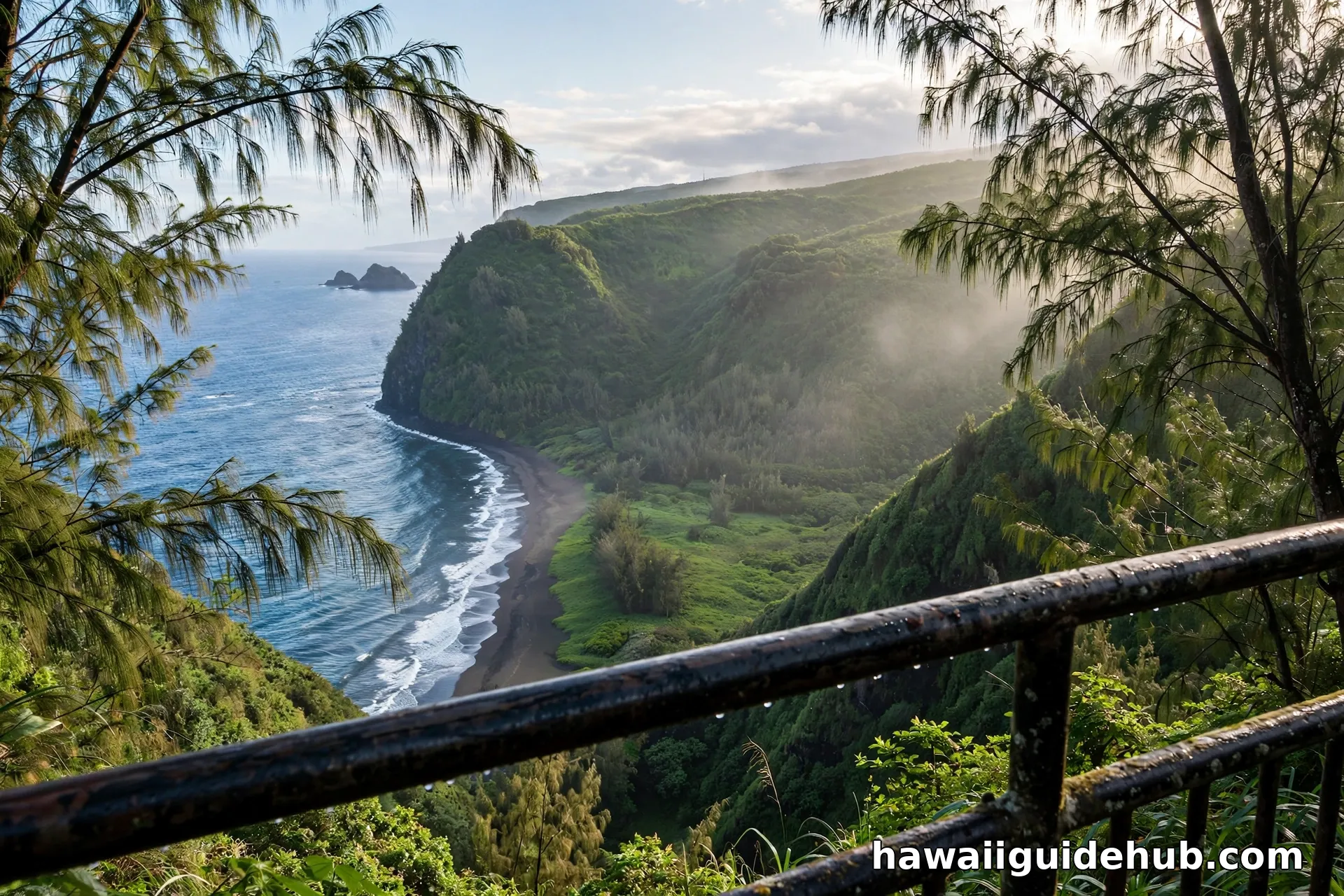
Pololū Valley sits at the end of Highway 270 in North Kohala, about 20 minutes past the town of Hāwī and roughly 1 hour 15 minutes from Kona. The road dead ends at the lookout parking lot, which is small and fills by late morning. Parking at the immediate overlook is limited to short stays; hikers park along the roadside. There is no entrance fee and no reservation system. Combine it with Hāwī’s shops and galleries for a full North Kohala day, and use our Big Island things to do guide to plan the rest of your island time.
Video: Hiking Pololū Valley
Watch the Pololū Valley hike from the lookout down to the black sand beach.
Frequently Asked Questions
What is the weather like at Pololū Valley?
Warm, humid, and changeable. Daytime highs run from the upper 70s to mid 80s year round, with brief trade wind showers possible any day. The valley is wetter than nearby Hāwī town, and conditions can shift from sun to rain in minutes.
What is the best month to visit Pololū Valley?
For hiking, the drier summer months offer the firmest trails. Winter has the most dramatic surf and the greenest valley but the muddiest trails. The lookout is worth visiting in any month.
Can you hike Pololū Valley in the rain?
You can, but you should not after heavy rain. The clay trail becomes extremely slippery when wet. A light passing shower is manageable with good shoes; a soaked trail is not.
Is Pololū Valley ever closed for weather?
There is no gate or official closure system, but severe storms, flash flood warnings, and high surf advisories mean you should stay at the lookout or skip the trip. Use your judgment and check the National Weather Service forecast.
What should I wear to Pololū Valley?
Quick dry clothes, hiking shoes with grip, a hat, and a packed rain jacket. Bring sunscreen and more water than you expect to need; there is no shade on the trail and no water at the bottom.
Is there cell service at Pololū Valley?
Very little. Coverage is spotty at the lookout and essentially nonexistent on the valley floor. Download offline maps and tell someone your plans before you go.
Does it rain every day at Pololū Valley?
Not every day, but brief showers are possible on any day of the year. The pattern is usually a quick passing shower rather than all day rain. Mornings are driest; afternoons are wettest.
Can you swim at Pololū Valley beach?
Sometimes, but often not safely. The beach has no lifeguards and the surf is frequently rough, especially in winter. Only enter the water on calm days, stay close to shore, and never turn your back on the waves.
Pololū Valley’s weather is not an obstacle; it is the reason the place looks the way it does. Go early, pack for rain even when the sky is blue, respect a muddy trail by staying up top, and you will get the valley at its best.