Punaluʻu Beach: Black Sand, Sea Turtles and Visitor Guide

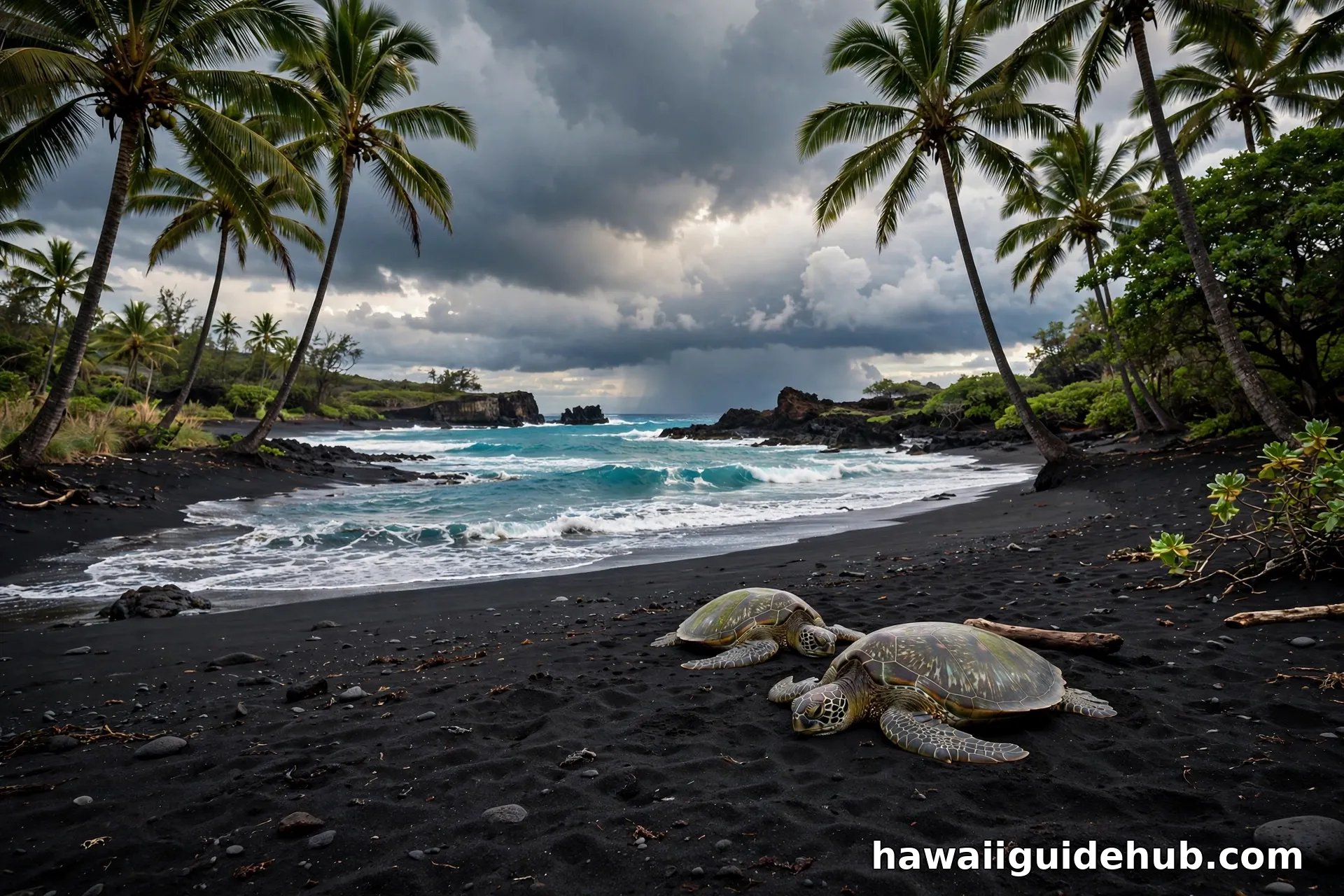
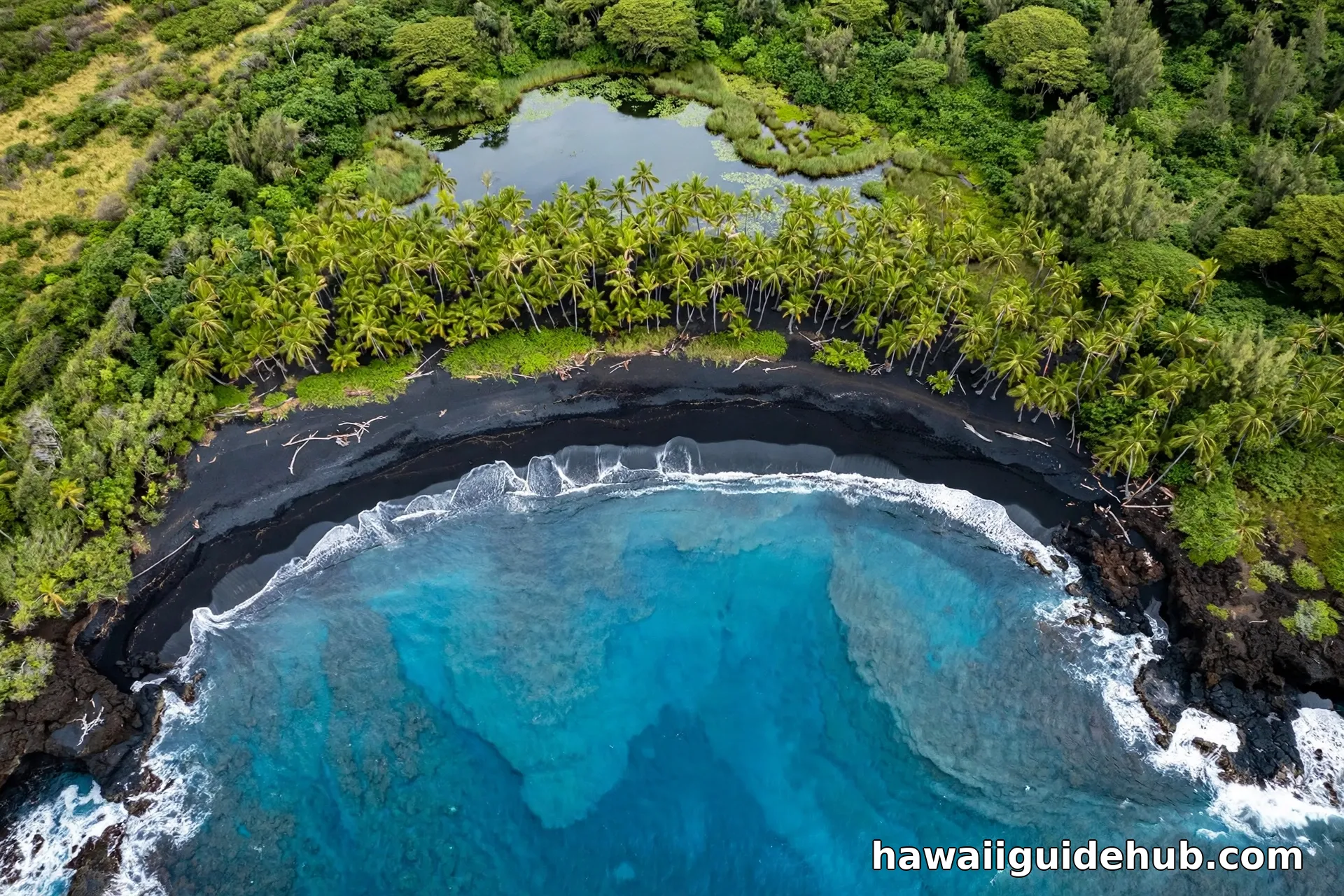
Few beaches in Hawaiʻi stop first-time visitors in their tracks the way Punaluʻu does. The sand is jet black, the palm trees lean green against it, and scattered across the dark shore like living stones are Hawaiian green sea turtles, hauled out to bask in the sun. This is the Big Island’s most famous black sand beach, a place where geology, wildlife, and Hawaiian history meet on one dramatic curve of the Kaʻū coast.
This is the complete guide to Punaluʻu Beach. It covers what the beach is and how the black sand formed, the sea turtles and the rules for watching them, swimming and snorkeling conditions, the freshwater springs behind the name, facilities and lifeguard coverage, how to get there, the best time to visit, nearby stops, and answers to the questions visitors ask most. Everything about Punaluʻu Beach lives here on this one page.
Punaluʻu Beach at a Glance
| Why come | Black sand beach and basking green sea turtles; the name means “spring dived for,” for the freshwater springs feeding the bay |
| Where | Hawai’i Island (the Big Island), Kaʻū district; southeast coast off Highway 11 between Pāhala and Nāʻālehu |
| What’s here | Restrooms, showers, picnic tables, pavilions, parking, snack stand |
| What’s not | Reliable lifeguard coverage (limited and intermittent); safe swimming most days (strong currents, rocky bottom) |
| The sand | Black basalt sand, from lava shattered by the ocean |
| Wildlife | Green sea turtles (honu), hawksbill turtles, nēnē, monk seals; best for turtle watching, photography, picnics, and a Kaʻū coast road trip stop |
What Makes Punaluʻu Famous
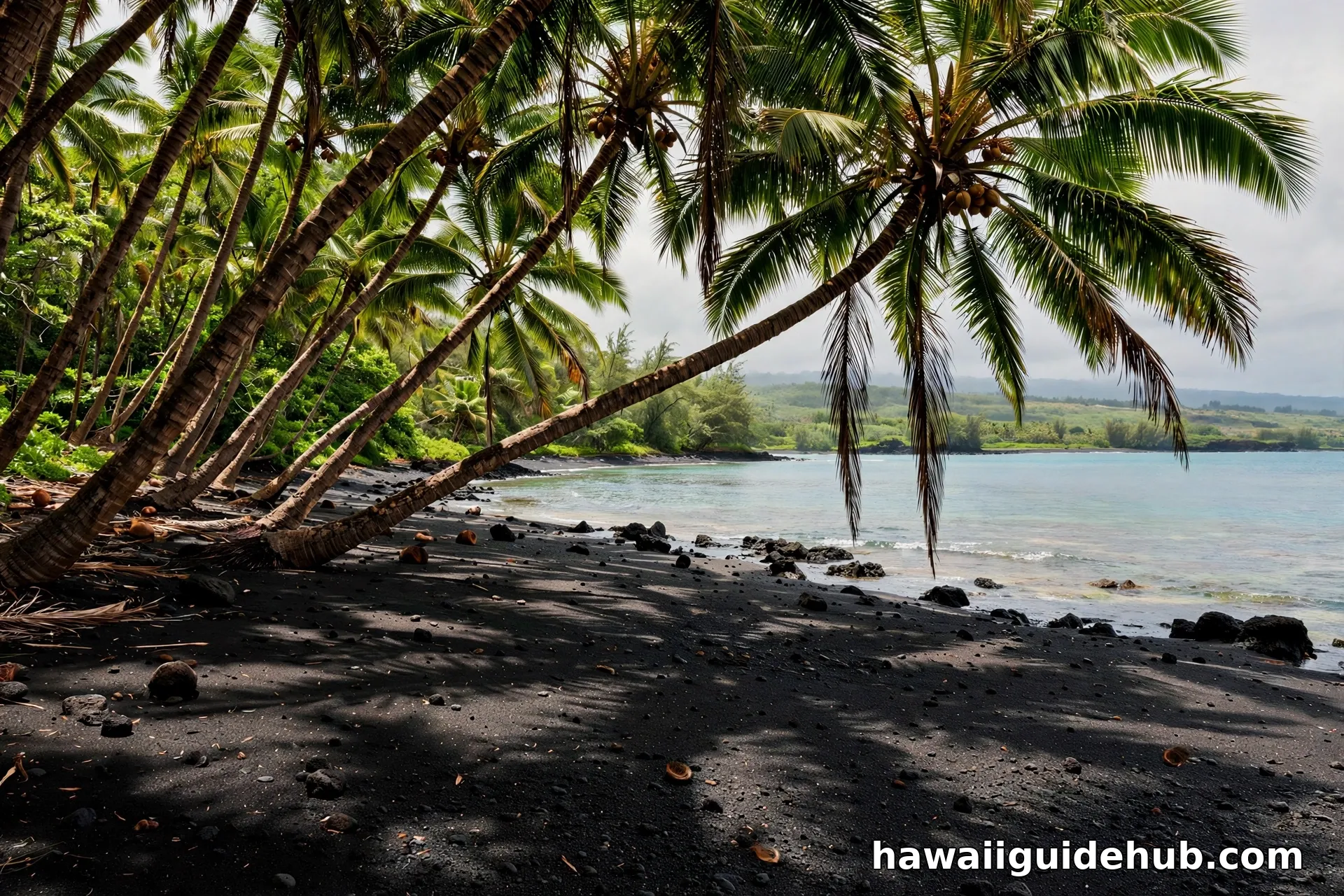
Punaluʻu is the Big Island’s signature black sand beach, and its fame rests on three things: the sand itself, the turtles, and the sheer drama of the setting. The beach sits in a crescent bay on the remote Kaʻū coast, framed by a grove of coconut palms that lean over sand so dark it looks like crushed velvet. On most days, Hawaiian green sea turtles rest on that sand in plain sight, sometimes a dozen at a time, warming themselves in the sun while waves break white against the lava rocks at either end of the bay. It is one of the most photographed shorelines in the state, and it earns every photo.
How the Black Sand Formed
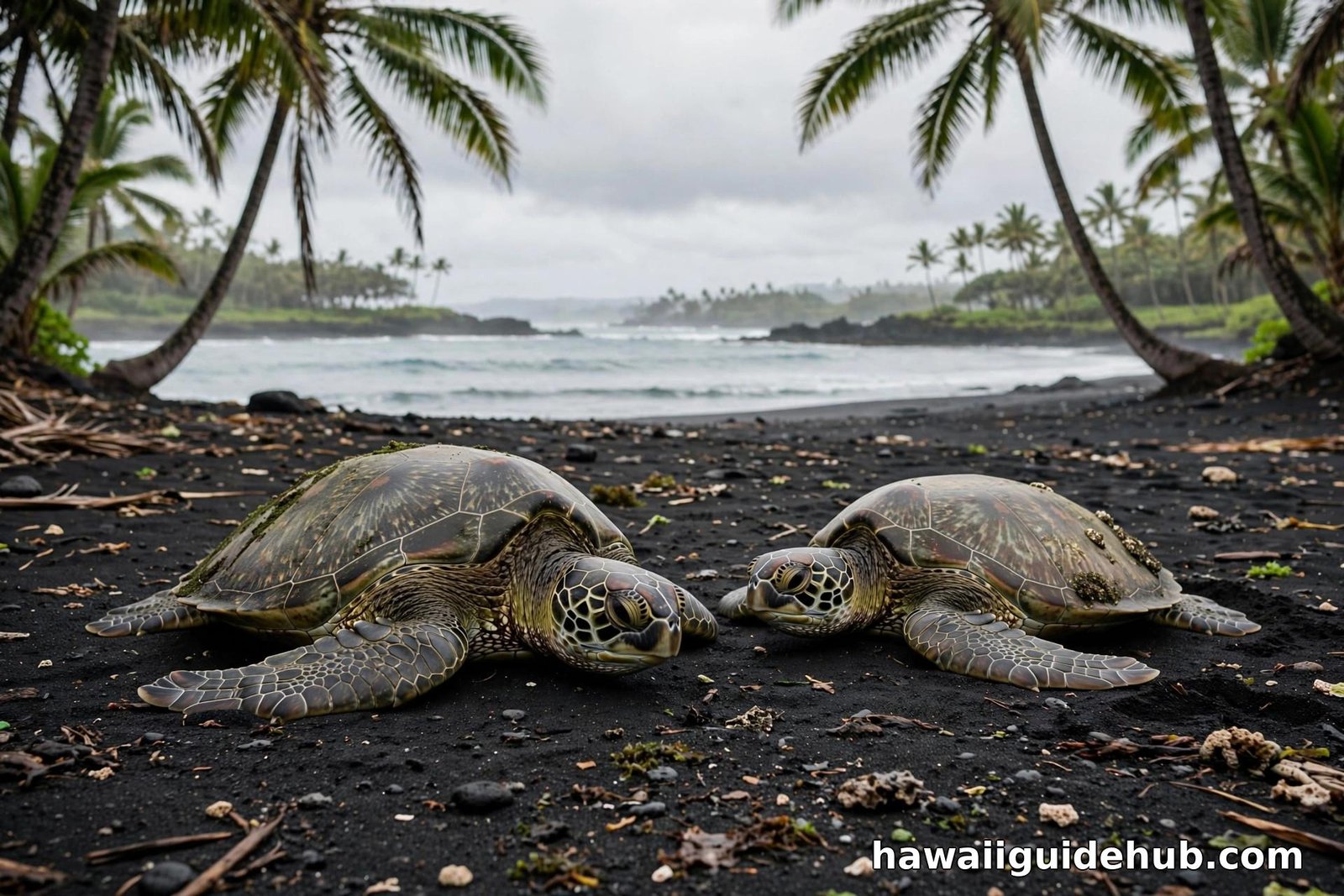
Black sand beaches are born from violence. When molten lava flows into the ocean, the sudden cooling shatters the rock explosively, and the surf grinds the fragments into sand. At Punaluʻu, the sand is basalt, the dark volcanic rock that built the Hawaiian Islands, and the grains are tiny, glassy, and heavy. Underfoot it feels different from white coral sand: denser, smoother, and dramatically hotter in the midday sun. The black surface absorbs heat, so by early afternoon the sand can be scorching. Wear sandals or reef shoes, and lay your towel in the palm shade if you plan to linger.
The sand is also protected. Removing black sand or rocks from the beach is prohibited, and beyond the law there is the well-known island belief that taking volcanic rock brings bad luck. Admire it, photograph it, and leave it where it lies.
The Sea Turtles of Punaluʻu
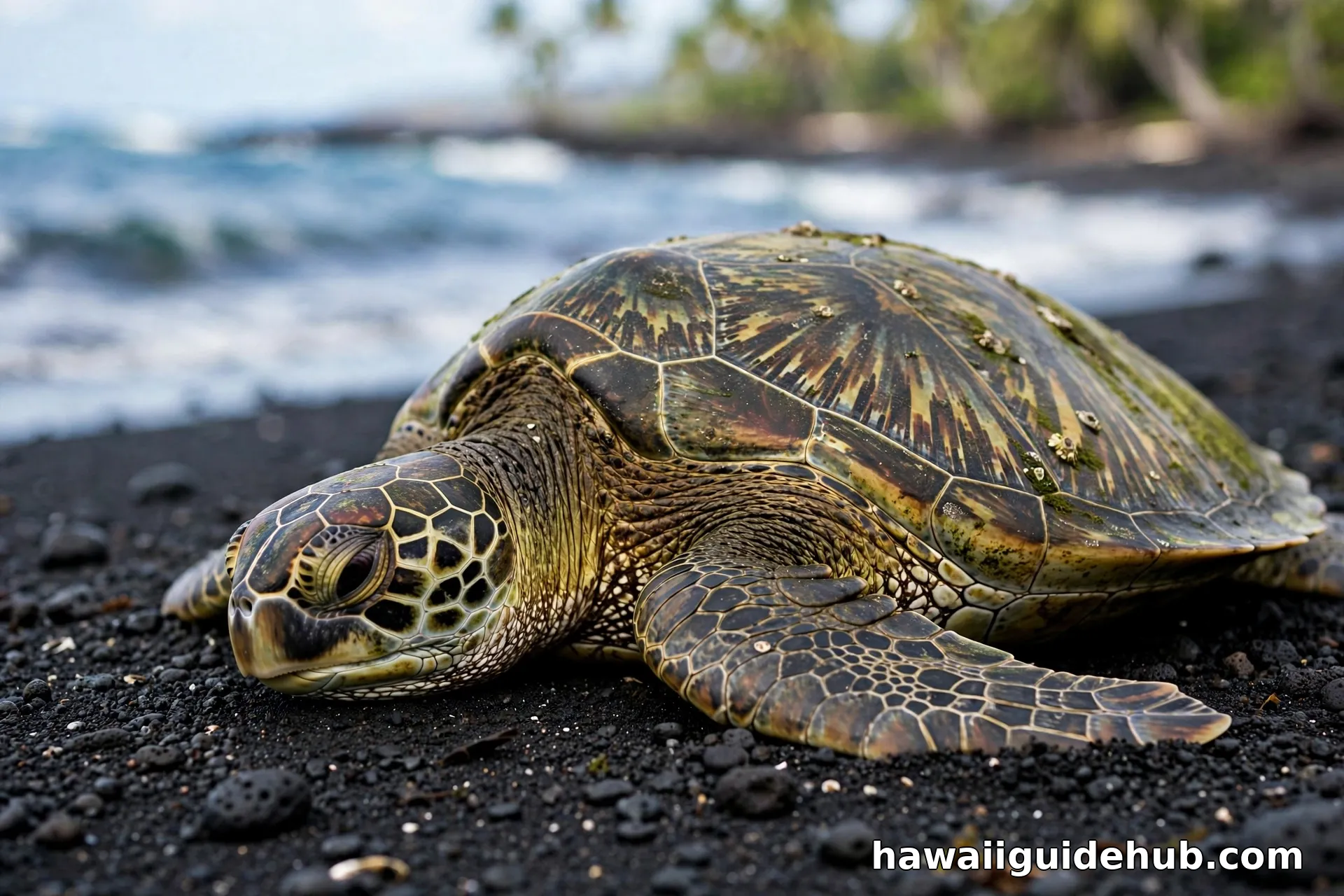
The turtles are the main event for most visitors. Hawaiian green sea turtles, honu, haul out onto the black sand to bask, warming their bodies in the sun to aid digestion. Because the dark sand holds heat, Punaluʻu is one of the most reliable places in Hawaiʻi to see them on land. Hawksbill turtles, honuʻea, also visit; they are among the rarest sea turtles in the Pacific, with fewer than a hundred estimated in Hawaiian waters. You may also spot nēnē, the Hawaiian goose, in the grassy areas, and occasionally a Hawaiian monk seal rests on the shore.
The rules for watching turtles are simple and strict. Never touch, feed, chase, or ride a sea turtle; they are protected under state and federal law, and touching one can harm the animal and bring serious fines. Keep at least 10 to 15 feet of distance, stay quiet, and never block a turtle’s path to the water. If a turtle is on the sand, it is resting: let it rest. The best viewing is patient viewing, from a respectful distance, with a zoom lens doing the close-up work. Note that the turtles share the beach with everyone: give basking honu a wide berth when you walk the shoreline, keep dogs leashed and away from wildlife, and teach children to watch quietly rather than chase. A calm beach is a beach the turtles keep coming back to.
The Freshwater Springs
The name Punaluʻu means “spring dived for,” and it refers to something you can feel but not see: large amounts of fresh groundwater flow beneath the beach and into the bay. Swimmers notice sudden cold patches in the shallows where spring water mixes with the sea. Behind the beach, a freshwater pond with water lilies sits in the vegetation, a quiet spot for photos. According to local legend, in times of drought, ancient Hawaiians would free-dive in the bay with gourd vessels to collect fresh water from these underwater springs. The springs are part of what makes the bay’s ecology unusual, and the cold spots are a good reminder of how much is happening beneath the surface here.
Punaluʻu’s Plantation Past
Punaluʻu has not always been a quiet beach park. In the 19th and early 20th centuries, this coast was plantation country: sugarcane fields stretched across Kaʻū, and the shoreline saw industry and shipping. The Sea Mountain golf course lands near the Ninole Loop Road entrance are a reminder of later resort ambitions. Hokuloa Church, a small stone chapel and cemetery founded by missionaries in 1833, still stands in the area, one of the oldest churches on the island. Knowing this history changes the visit: the palms and the black sand are timeless, but the pavilions and parking lots sit on ground where plantation workers once lived and labored. The beach’s remote feel today is partly because the industry left and the wild came back.
Swimming and Snorkeling
Be honest with yourself about the ocean before getting in. Punaluʻu faces the open Pacific on an exposed coast, and conditions are often rough: strong currents, a rocky bottom, and a rip current that can run out through the boat channel. Swimming is best treated as a calm-days-only activity, and even then, water shoes are strongly recommended for the rocky entry. The northeastern end of the beach has fewer lava rocks at the waterline and is the usual entry point. Snorkeling is possible in calm conditions, and the freshwater springs create strange, shimmering visual effects underwater that snorkelers remember.
Lifeguard coverage at Punaluʻu is limited and intermittent, reported on some weekends and holidays but not guaranteed. Treat the beach as unguarded: check the surf before entering, never swim alone, and stay out entirely when the surf is up. Winter months bring higher surf and stronger currents. For a dedicated swimming day, the Big Island has calmer options elsewhere; Punaluʻu’s strength is scenery and wildlife, and it is worth the stop even if you never get wet.
Facilities and Practical Details
Punaluʻu is a county beach park with solid facilities: restrooms, showers, picnic tables, pavilions, drinking water, and parking. A snack and gift stand operates near the park. There are two access points from Highway 11: Ninole Loop Road leads to the main paved lot by the bluff, and Punaluʻu Road leads to a smaller unpaved area. Camping is available at the park for those who want a night on the black sand. As at any remote beach, do not leave valuables visible in your car.
How to Get There
Punaluʻu sits on Highway 11 (the Hawaiʻi Belt Road) on the Kaʻū coast, between Pāhala and Nāʻālehu. From Kailua-Kona it is roughly 70 miles, about a two-hour drive; from Hilo about 58 miles; from Volcano Village about 31 miles. Most visitors fold it into a southern-route day: Kona to Punaluʻu to Hawaiʻi Volcanoes National Park, or the reverse. The turnoffs are well signed. Go all the way to the official park lot rather than stopping at the roadside pullouts; the facilities and the best beach access are inside the park.
Best Time to Visit
Punaluʻu works year-round, but timing shapes the experience. Early morning brings the softest light for photography, the coolest sand, and the easiest parking; the smaller lot fills early. Midday is hottest, with the black sand at its most scorching, so plan shade and footwear. Late afternoon light on the palms and turtles is superb. Spring and fall tend to bring the most pleasant balance of calm seas and smaller crowds, while winter can bring rougher surf. Turtles bask throughout the day, so any hour can deliver the wildlife moment; patience matters more than the clock.
Nearby Stops Worth Adding
Punaluʻu anchors a rewarding stretch of the Kaʻū coast. A few minutes south, the Punaluʻu Bake Shop, which bills itself as the southernmost bakery in the United States, is the classic stop for sweet bread and malasadas. Continue south to Ka Lae, South Point, the southernmost point in the United States, a windswept cliff landscape that feels like the edge of the world. To the north, Hawaiʻi Volcanoes National Park is the natural next chapter after the black sand: the park’s lava landscapes explain exactly how beaches like Punaluʻu are born. Pairing the beach with the volcanoes makes one of the great Big Island day trips, and our guides to things to do in Kona, the Big Island’s best experiences, and off-the-beaten-path adventures can help you build the rest of the itinerary.
Video: Punaluʻu from the Air
Drone and GoPro footage touring Punaluʻu’s black sand, turquoise water, and basking honu.
Frequently Asked Questions
Why is the sand at Punaluʻu black?
The sand is basalt, formed when molten lava flowed into the ocean and shattered on contact with the water. The surf then ground the fragments into fine black sand. It is denser and hotter underfoot than white coral sand.
Will I see turtles at Punaluʻu?
Very likely. Hawaiian green sea turtles bask on the black sand here almost daily, sometimes in large numbers. Hawksbill turtles, nēnē geese, and the occasional monk seal also appear. Early morning and calm, sunny days are best, but sightings happen throughout the day.
Can you swim at Punaluʻu Beach?
Only in calm conditions and with caution. The beach often has strong currents, a rocky bottom, and a rip current near the boat channel, and lifeguard coverage is limited. Check the surf first, wear water shoes, and stay out when the surf is up.
Is there a lifeguard at Punaluʻu?
Coverage is intermittent, reported on some weekends and holidays but not guaranteed. Always treat Punaluʻu as an unguarded beach: assess conditions yourself, never swim alone, and keep children close.
Can I take black sand from Punaluʻu?
No. Removing sand or rocks from the beach is prohibited, and island tradition holds that taking volcanic rock brings bad luck. Take photos instead.
How far is Punaluʻu from Kona and Hilo?
About 70 miles (roughly two hours) from Kailua-Kona, about 58 miles from Hilo, and about 31 miles from Volcano Village, all via Highway 11. It fits naturally into a southern-route day between Kona and Hawaiʻi Volcanoes National Park.
Punaluʻu is the kind of place that recalibrates what a beach can be: black instead of white, wild instead of manicured, and shared with some of the ocean’s most ancient residents. Come for the turtles, stay for the light on the palms, and give the ocean the respect this exposed coast demands. Bring reef shoes, bring water, bring patience for the wildlife, and leave only footprints on the black sand. It is one of the Big Island’s essential stops, and it never looks the same twice.