Is Maui a City?

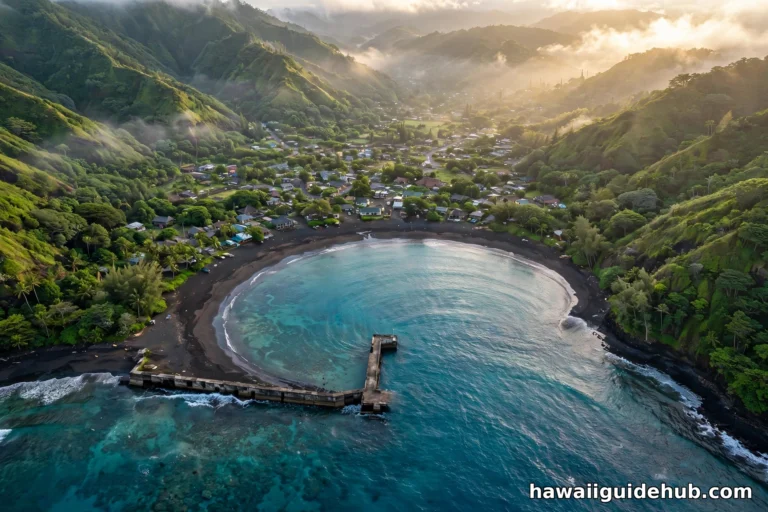
No, Maui is not a city. Maui is an island, the second largest of the eight main Hawaiian islands. It has towns and communities spread across its shores and upcountry slopes, but no single place called “Maui City” exists, and the island has no city government of its own. Maui has a population larger than many American cities, which is why the question comes up so often.
This is the single complete guide to what Maui actually is. It covers the island versus city confusion, the county structure, the towns and communities, the geography behind the nickname, how to get there, weather, beaches and outdoors, food, practical visitor logistics, safety, nearby islands, and the most common follow up questions.
Maui at a Glance
| So, is Maui a city? | No. Maui is an island, nicknamed the Valley Isle, and the second largest Hawaiian island at 727.2 square miles (48 miles long, 26 miles wide). |
| Then what are Kahului and Wailuku? | Communities on the island. Kahului is the largest community and commercial hub, home to the main airport (OGG); Wailuku is the county seat, home of the county government. |
| How many people live there? | About 168,000 (2020 census) |
| What is the high point, literally? | Haleakalā summit, 10,023 feet |
| What is Maui County? | The county, which also includes Lānaʻi, Molokaʻi, and Kahoʻolawe |
Why People Ask Whether Maui Is a City
The confusion is completely understandable. Maui behaves like a city in several ways. It has roughly 168,000 residents, a busy airport, shopping centers, traffic, and a hospital. Travel sites talk about “visiting Maui” the way they talk about visiting San Diego or Honolulu. When you type an address on Maui, the mailing city reads “Kahului,” “Kīhei,” or “Lahaina,” and shipping forms accept “Maui, HI” as though it were a city name.
The reality is simpler. Maui is governed as part of Maui County, one of the four counties of the state of Hawaiʻi. When people say they are “going to Maui,” they mean they are flying to an island of towns, beaches, farms, and volcanoes, not checking into a single urban place. Understanding this changes how you plan a trip, because getting around an island is nothing like getting around a city.
Maui Is an Island: The Basic Geography
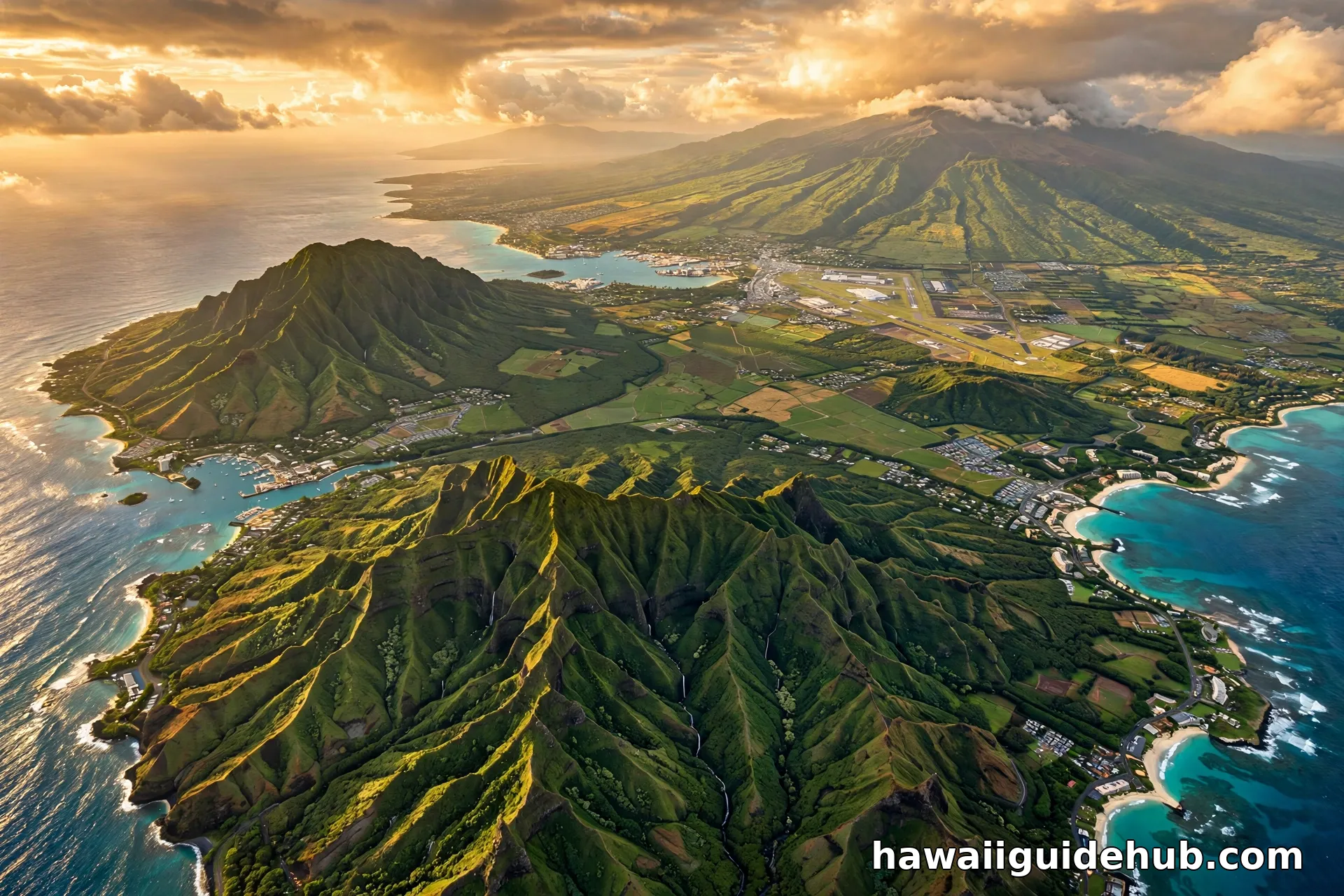
Maui is the second largest island in the Hawaiian archipelago at 727.2 square miles, and the 17th largest island in the United States. It is about 48 miles long and 26 miles wide. Two volcanoes joined by a low, flat isthmus about six miles wide form the island. That isthmus is the reason Maui is called the Valley Isle, because the low land between the two volcanic masses reads as a valley floor from the peaks above.
The southeastern volcano is Haleakalā, rising 10,023 feet above the sea and holding Haleakalā National Park. The northwestern volcano is the older, more eroded West Maui Mountains, topping out at 5,788 feet at Puʻu Kukui. The two masses give the island two personalities: East Maui with the great shield volcano and the remote Hāna coast, and West Maui with resort areas like Kāʻanapali and Kapalua. The central isthmus between them holds most of the island’s commerce, in Kahului and Wailuku.
Maui County: The Government That Runs the Island
Here is where the city question gets its real answer. Hawaiʻi does not have incorporated cities or towns the way other states do. There is no municipal government layer between you and the county. Instead, the island of Maui is governed by the County of Maui, and the county seat, the town where the county government sits, is Wailuku. The county elects a mayor and a county council, and county government handles roads, parks, police, fire departments, and land use rules for the whole island.
The County of Maui actually covers four islands, not just one. Besides Maui, it includes Molokaʻi, Lānaʻi, and the uninhabited island of Kahoʻolawe, plus the tiny islet of Molokini off Maui’s south coast. Molokaʻi’s Kalaupapa peninsula belongs to tiny Kalawao County, but the rest of Molokaʻi is in Maui County. So when officials say “Maui County,” they mean a four island government, and the island of Maui is simply its largest and most populous piece.
Maui’s Towns and Communities
Since Maui has no cities, what do people mean by its towns? The island’s communities are unincorporated census-designated places, a census term for populated areas that are not legally incorporated. In everyday speech, everyone calls them towns. Here are the ones you will hear about most, organized by region.
Central Maui: Kahului and Wailuku
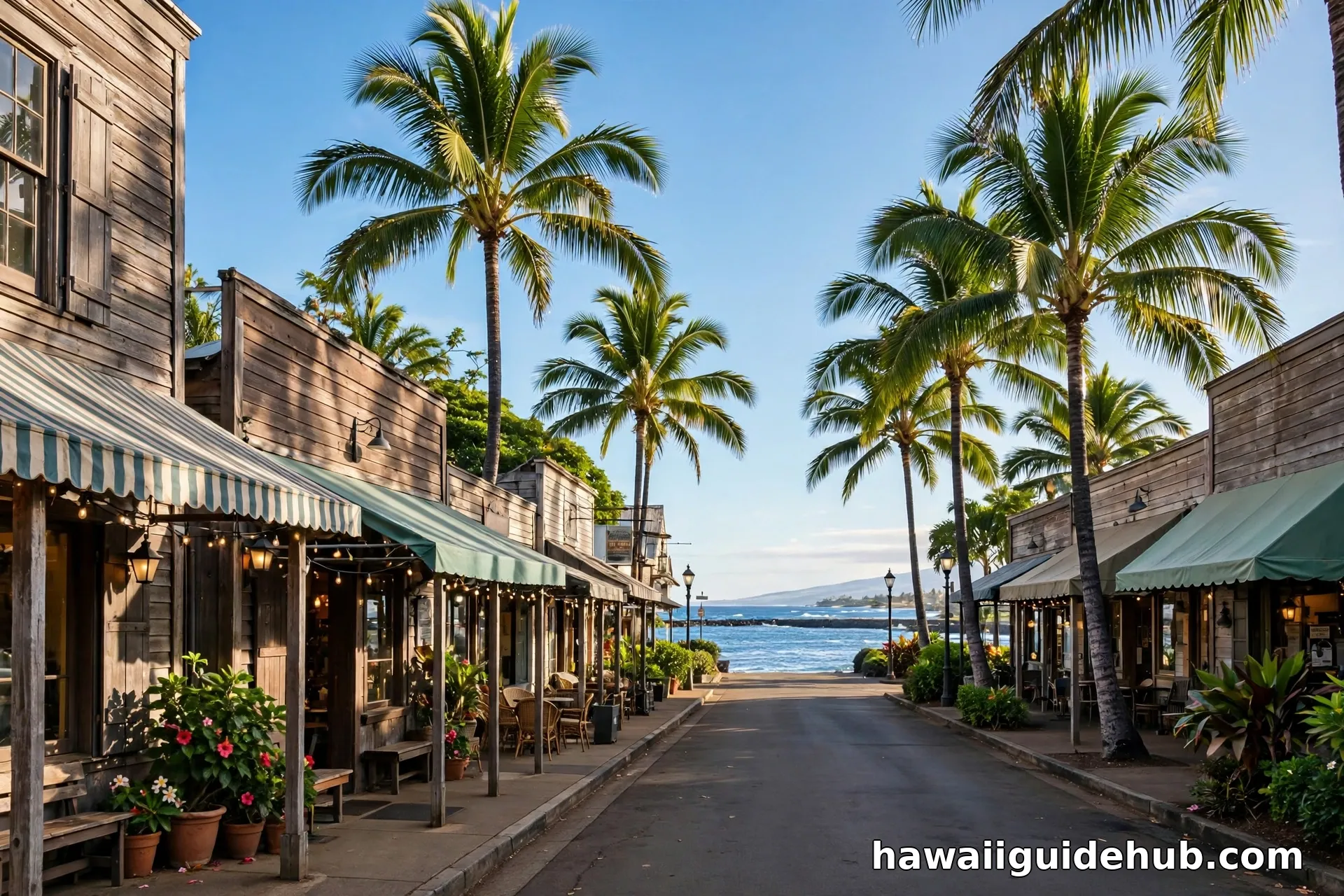
Kahului, population 28,219 in the 2020 census, is the island’s commercial and financial hub. Kahului Airport, the big box stores, and the island’s main shopping centers are all here. Next door, Wailuku is the county seat, home to the county building, the historic ʻĪao Theater, and some of the island’s oldest neighborhoods. Many visitors pass through both on arrival without realizing they are the island’s two main population centers.
South Maui: Kīhei, Wailea, and Mākena
Kīhei is Maui’s most popular beach town for vacation rentals, a long strip of condos, restaurants, and swimmable beaches along the sunny leeward coast, with 21,423 residents counted in the 2020 census. Just south, Wailea is an upscale resort district, and Mākena continues the coastline toward wilder, more rugged beaches. South Maui is where many first time visitors base themselves. Charley Young Beach is one of the town’s prettiest swims; see our guide to Charley Young Beach in Kīhei. For the resort coast just south, see things to do in Wailea.
West Maui: Lahaina, Kāʻanapali, and Kapalua
Lahaina was once the capital of the Hawaiian Kingdom and Maui’s most famous historic town, known for its whaling history, Front Street, and the great banyan tree. The devastating fire of August 2023 destroyed most of the town, and Lahaina is now in a long rebuilding process. Nearby Kāʻanapali and Kapalua are planned resort communities with beaches, golf, and hotels that remain open and welcoming to visitors.
Upcountry Maui: Makawao, Pukalani, and Kula
Upcountry Maui is the island’s rural, ranching side on the slopes of Haleakalā. Makawao is a paniolo (Hawaiian cowboy) town with art galleries and boutiques. Pukalani is a residential community with schools and shopping. Kula is farm country, known for onions, flowers, lavender, and cool mountain air.
North Shore and East Maui: Pāʻia, Haʻikū, and Hāna
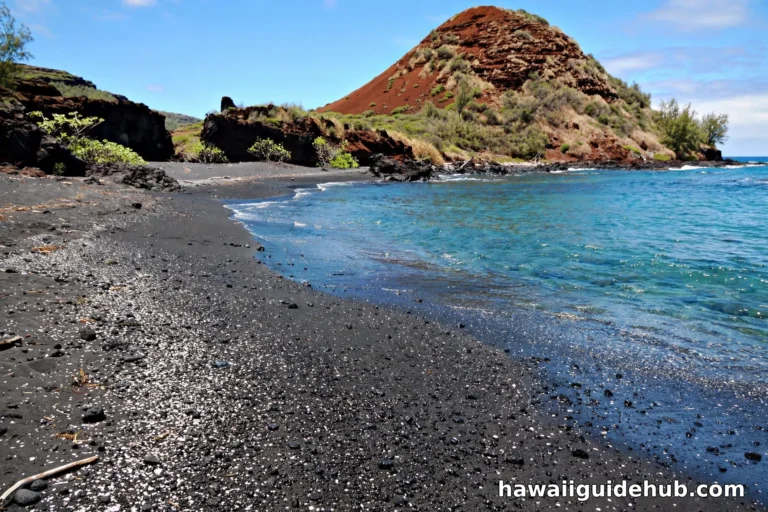
Pāʻia is a small former plantation town turned windsurf and surf hub, and the last real town before the Road to Hāna begins. Haʻikū is a lush residential area of farms and rainbows. Hāna, at the far eastern end of the famous winding highway, is one of the most remote communities in Hawaiʻi, a small town surrounded by waterfalls, taro fields, and black sand beaches.
Getting to Maui
Because Maui is an island, you arrive by air. Kahului Airport (OGG) is the main airport and the second busiest in Hawaiʻi, with nonstop flights from the US mainland, Canada, and other Hawaiian islands. It sits on the edge of Kahului town in central Maui, which is why so many visitors meet the island’s largest community within minutes of landing. A smaller commuter airport at Kapalua (JHM) serves West Maui with inter-island flights. There is no bridge to any other island, so the plane is the way in.
Once you land, you need a rental car for almost any Maui trip. The island’s towns are spread out, the bus system is limited, and the best sights are far apart. Driving from Kahului to Hāna takes about two to two and a half hours each way on the winding Hāna Highway. Kahului to Kāʻanapali takes roughly 45 minutes to an hour. Plan your base around your priorities, because crossing the island can mean an hour in the car.
Maui Weather
Maui’s weather is shaped by the northeast trade winds and by the island’s own mountains. The windward northeast side, including Pāʻia, Haʻikū, and Hāna, is lush and rainy. The leeward south and west side, including Kīhei, Wailea, and Lahaina, sits in the rain shadow and is famously sunny and dry. Daytime temperatures at sea level run from the mid 70s to the high 80s Fahrenheit year round.
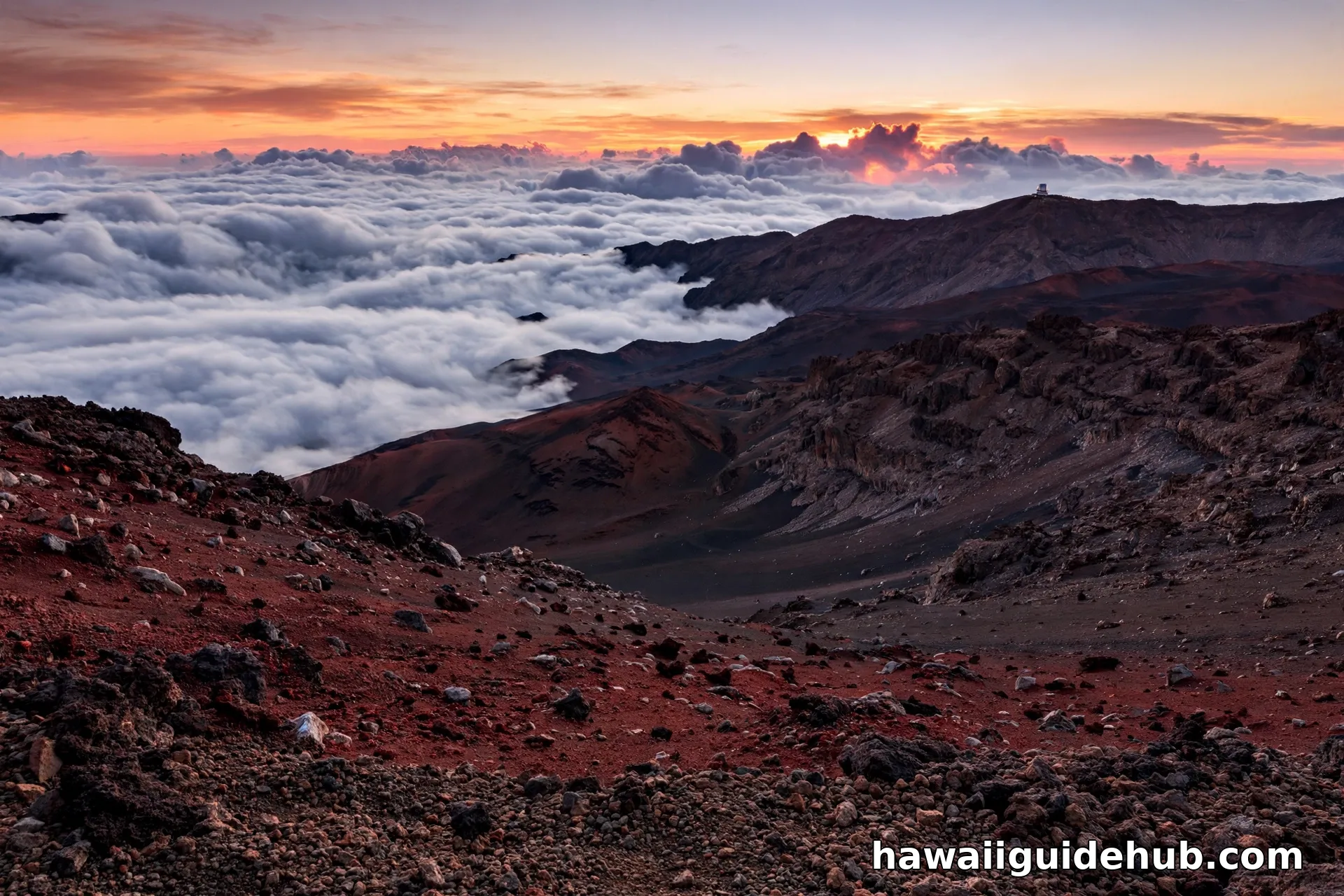
The summit of Haleakalā is a different world. At 10,023 feet, temperatures up top can dip into the 30s and 40s Fahrenheit, so bring a jacket for sunrise no matter the season. Upcountry towns like Kula and Makawao are also noticeably cooler than the beach towns. For seasonal trip ideas, see our guide to the best places to visit in Maui this winter.
Beaches and Outdoors on Maui
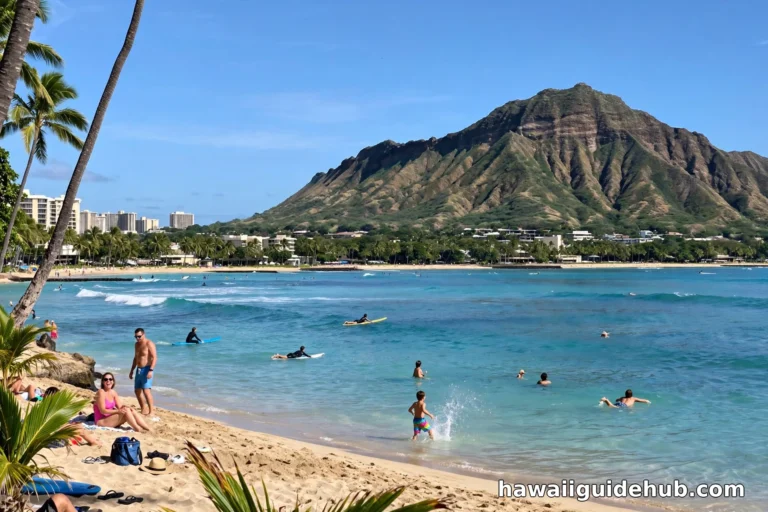
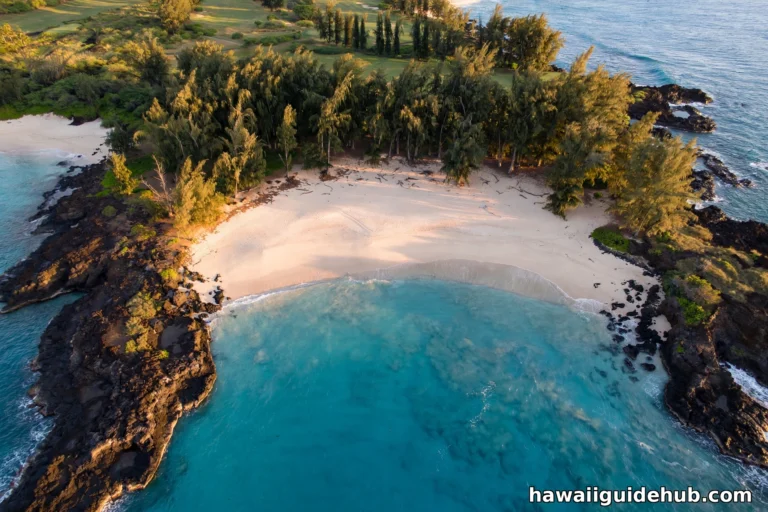
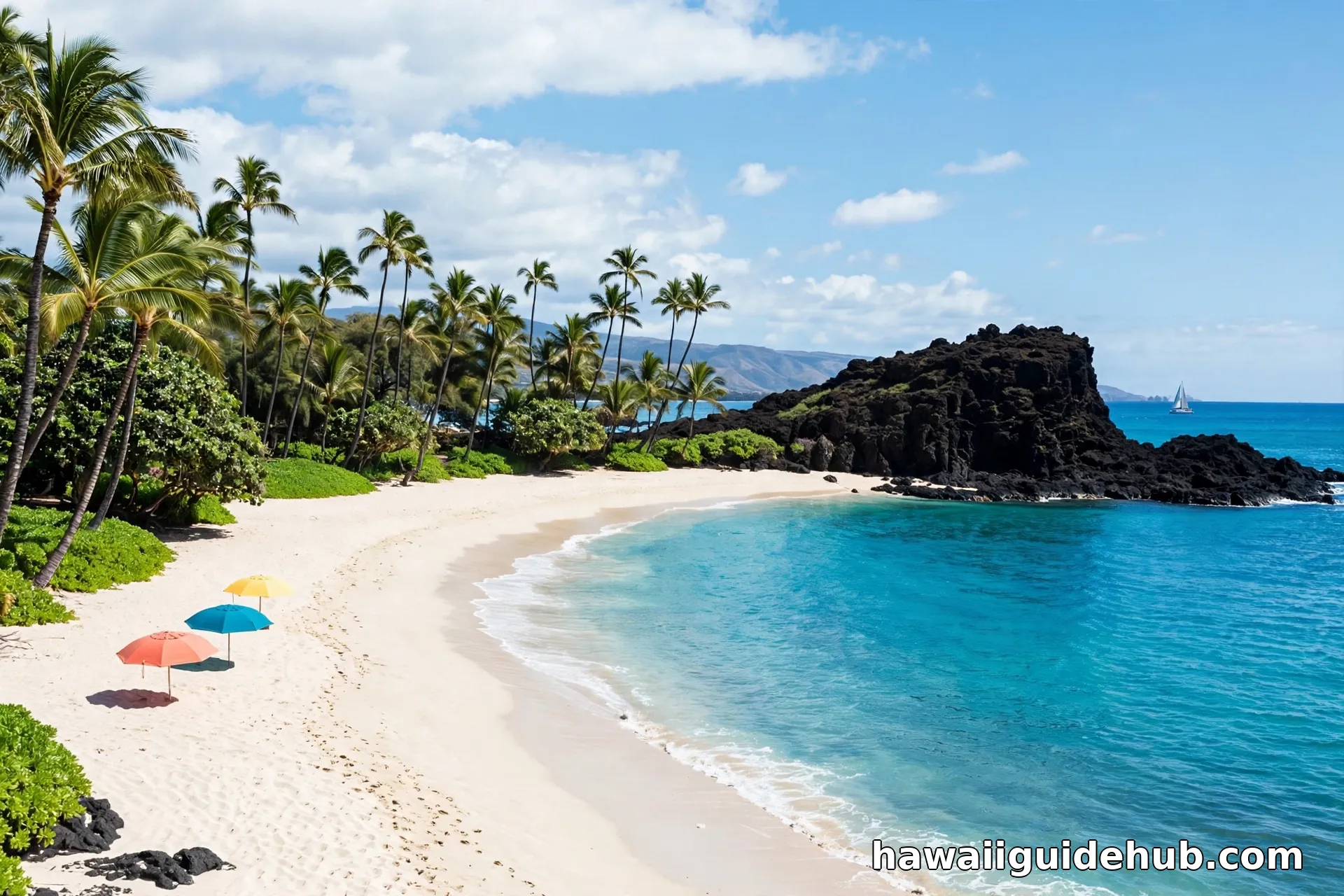
Maui’s beaches are the reason most visitors come. Kāʻanapali Beach on the west side is the island’s most famous stretch of sand, with clear water, a beach path, and the daily cliff diving ceremony at Black Rock. Wailea’s beaches on the south shore are calmer and more manicured. Big Beach at Mākena State Park is a local favorite for bodyboarding, though its powerful shore break demands respect.
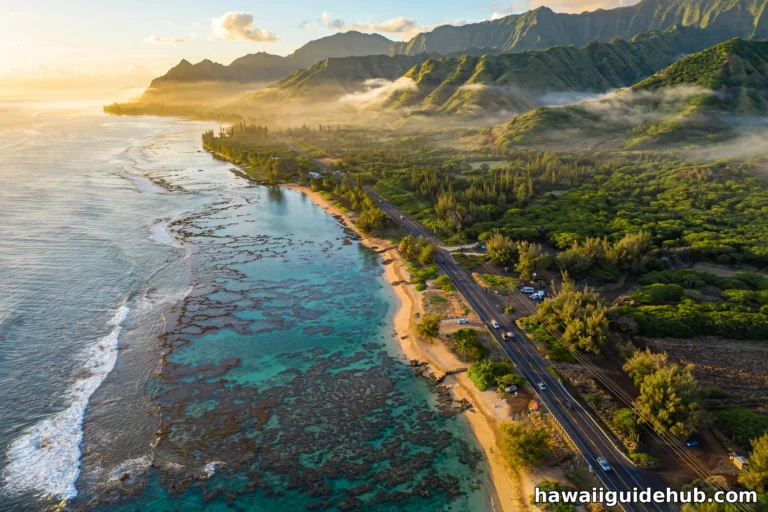
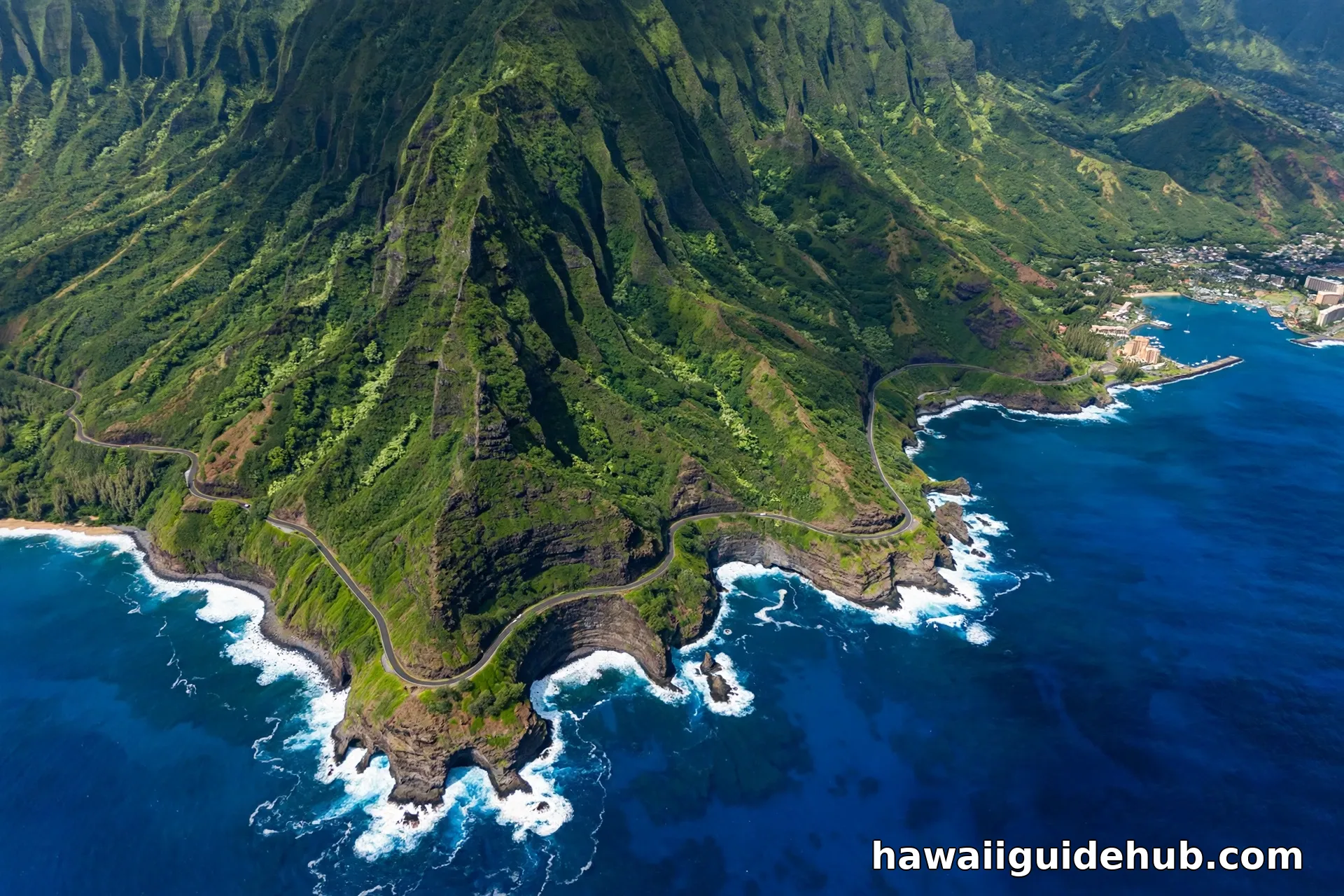
Beyond the sand, Maui’s outdoors are built around three giants. Haleakalā National Park protects the summit crater and the lush Kīpahulu valley, and the Haleakalā sunset is one of the island’s great shows. The Road to Hāna winds 64 miles through rainforest, waterfalls, and coastal cliffs. ʻĪao Valley State Monument in central Maui holds the 1,200 foot ʻĪao Needle and deep cultural history.
Food on Maui
Maui’s food scene reflects its plantation history and its modern farm culture. Upcountry farms supply restaurants across the island with Kula onions, Maui Gold pineapples, and fresh produce, and the island helped pioneer the Hawaiʻi Regional Cuisine movement in the 1990s. Plate lunch spots in Kahului and Wailuku serve locals, food trucks line the road to Hāna, and resort towns like Wailea and Kāʻanapali hold the fine dining. Shave ice, poke, and loco moco are everywhere.
Practical Visitor Logistics
A few practical notes make a Maui trip much smoother. Book your rental car early, because Maui’s fleet sells out in busy seasons and prices spike. Reserve Haleakalā sunrise entry in advance through the National Park Service, since sunrise slots are limited and sell out. Make dinner reservations for popular restaurants, especially in Wailea and Kāʻanapali. Grocery costs on Maui run noticeably higher than on the mainland, so many visitors stock up at the big stores in Kahului on arrival day.
Time your drives around the island’s geography. The Hāna Highway is slow by design, with one lane bridges and hundreds of curves, so it is a full day commitment. And remember that Maui runs on Hawaiʻi time, which is three hours behind the US West Coast in winter and does not observe daylight saving time.
Staying Safe on Maui
Maui is generally a safe destination, but the ocean demands respect. Drowning is the leading cause of visitor deaths in Hawaiʻi, and Maui’s beaches are no exception. Swim at lifeguarded beaches, check the surf forecast, never turn your back on the ocean, and stay out of the water when surf is high. Flash floods are a real hazard on the Road to Hāna and in valleys like ʻĪao, so never cross flooded streams and heed warning signs.
On land, lock your rental car and keep valuables out of sight, since break ins at trailheads and beaches happen. Stay on marked trails, because cliff edges and waterfall pools can be unstable. And be a respectful visitor in Lahaina, where the community is still grieving and rebuilding after the 2023 fire. Visitors are welcome in the open businesses, but the burn zone itself is not a sightseeing stop.
Nearby Islands and Places
Maui sits in the middle of its own island group. Lānaʻi lies about nine miles off Maui’s west coast, a quiet island of one small town and empty beaches, reached by air from Kahului. Molokaʻi is to the northwest, the least developed of the main islands, known for its rural character and the dramatic sea cliffs of the north shore. Kahoʻolawe, off the southwest coast, is uninhabited and closed to the public as a cultural reserve.
Across the channels, Oʻahu with Honolulu lies to the northwest and the Big Island of Hawaiʻi to the southeast. Many visitors combine Maui with one other island, and the inter-island flight from Kahului takes under an hour. If you are still choosing, our guide to the best island in Hawaiʻi for first time visitors compares all the islands side by side.
Video: Maui, the Valley Isle
A visual tour of Maui’s towns, beaches, and volcanic landscapes, from Haleakalā to the Road to Hāna.
Frequently Asked Questions
Is Maui a city or an island?
Maui is an island, not a city: the second largest Hawaiian island, home to many towns and governed by the County of Maui. No city called Maui exists.
What is the main town on Maui?
Kahului is the largest community on Maui and its commercial hub, home to the main airport and shopping centers. Wailuku, right next door, is the county seat where the county government sits.
Does Maui have a capital?
No. Maui is an island, not a state or country, so it has no capital. The county seat of Maui County is Wailuku. Lahaina was once the capital of the Hawaiian Kingdom in the 1800s.
Does Maui have a mayor?
Yes, in a county sense. Maui County elects a mayor who leads the county government for Maui, Molokaʻi, Lānaʻi, and Kahoʻolawe. There are no city mayors because Hawaiʻi has no incorporated cities.
Is Honolulu on Maui?
No. Honolulu is on the island of Oʻahu, northwest of Maui across the channel. It is the state capital and Hawaiʻi’s largest city. Many visitors fly into Honolulu first and then take a short inter-island flight to Kahului on Maui.
What does Maui mean?
The island is named for Māui, the demigod of Polynesian mythology. The island’s nickname is the Valley Isle, after the low isthmus between its two volcanoes.
Is Maui bigger than Oʻahu?
Yes, in land area: 727.2 square miles versus Oʻahu’s roughly 597. But Oʻahu has far more people, about a million residents compared to Maui’s roughly 168,000. Maui feels much less urban than Oʻahu.
So no, Maui is not a city. It is an island of many towns, two great volcanoes, and one county government, with a personality that shifts from beach resort to ranch country to rainforest within a single day’s drive. Knowing that Maui is an island rather than a city is the first step to planning a trip that actually fits the place, because the island rewards travelers who get in a car and explore it end to end.