Makapuʻu Point: Oʻahu’s Sunrise Lookout and Lighthouse Trail

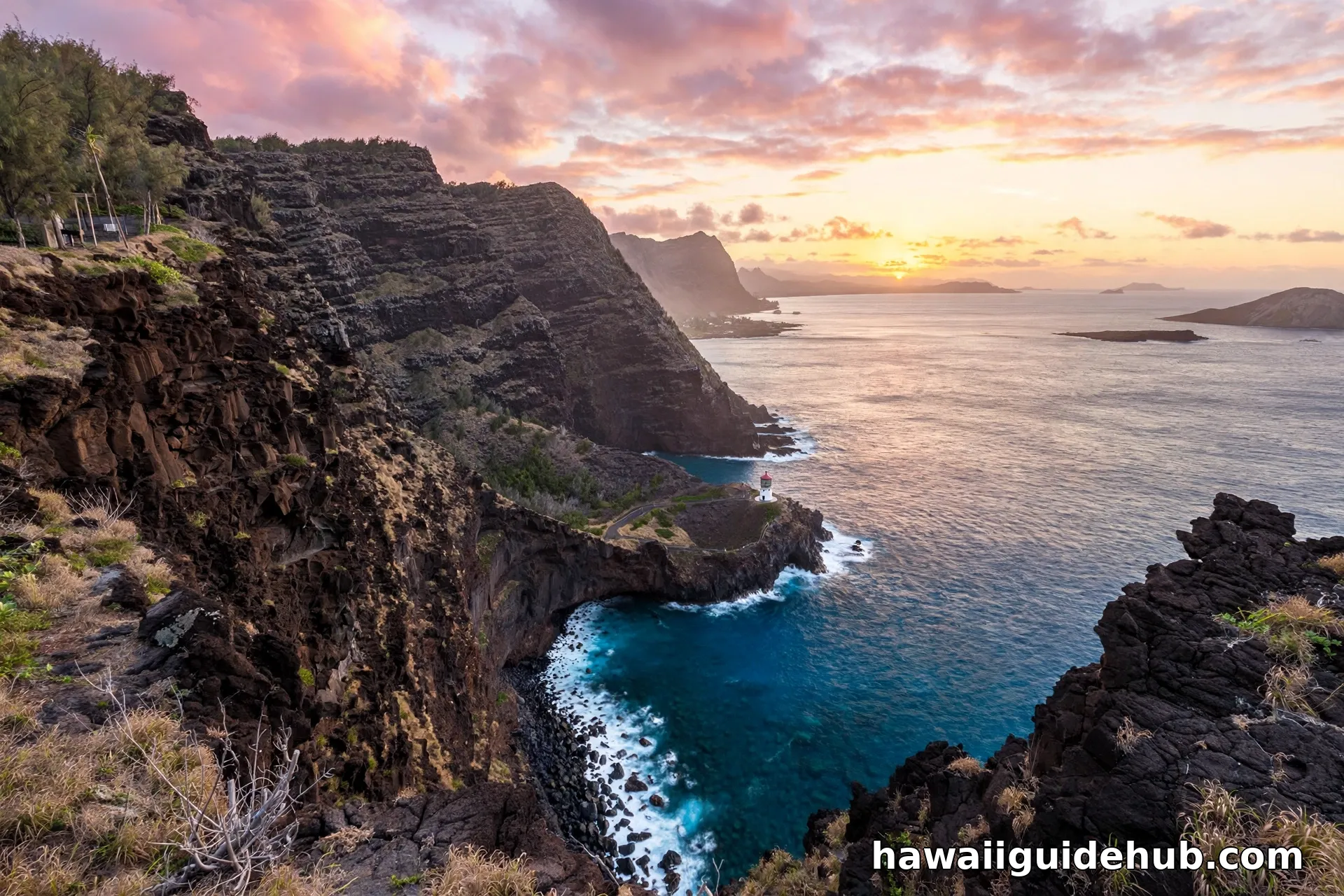
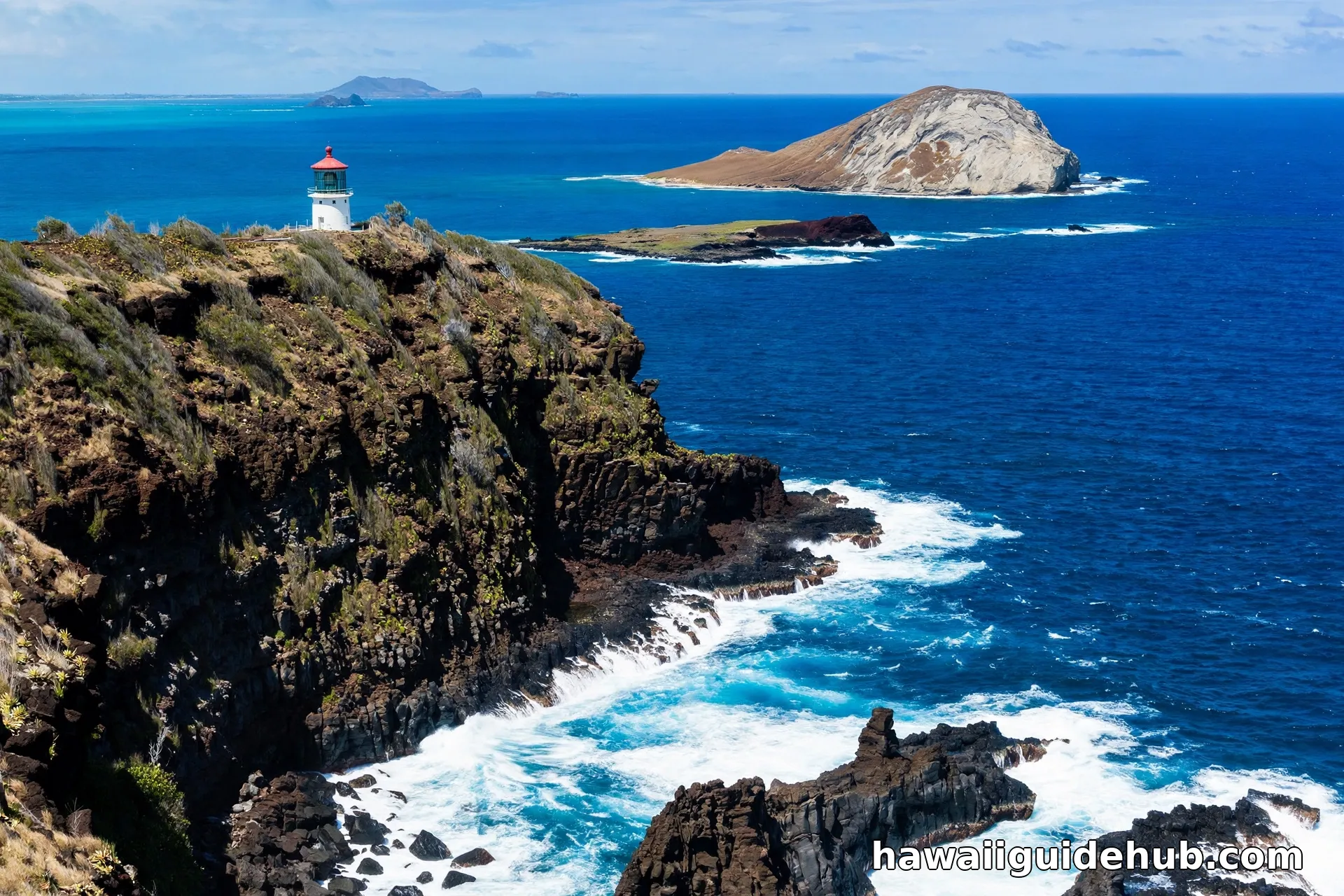
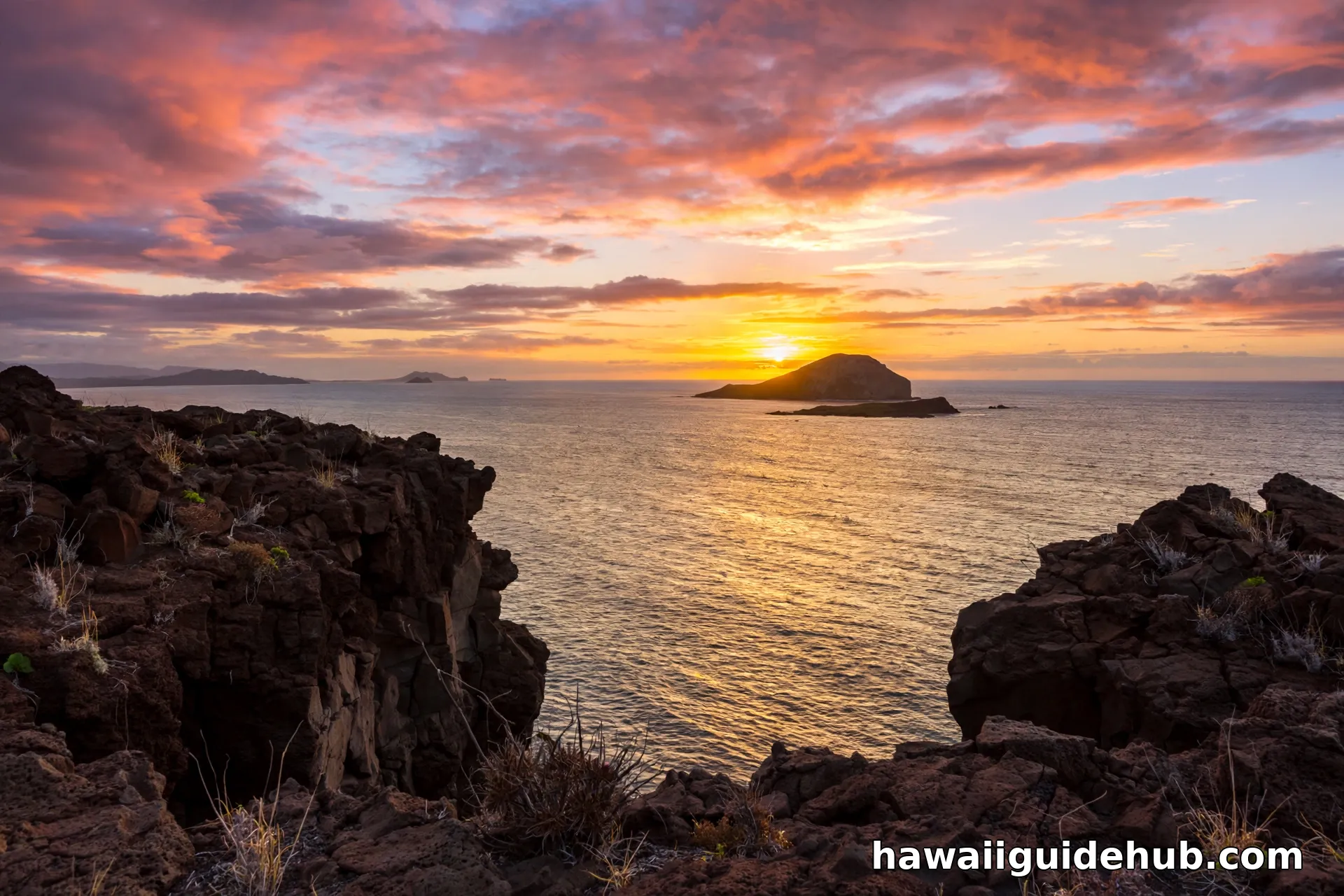
Makapuʻu Point Lookout sits at the southeastern tip of Oʻahu, where the island drops into the Pacific in a wall of black lava cliffs. On a clear morning you can stand at the lookout and watch the sun rise straight out of the ocean, see the red roof of the 1909 Makapuʻu Lighthouse far below, and count the silhouettes of Mānana and Kāohikaipu islets floating offshore. It is one of the most photographed corners of the island, and it asks almost nothing of you in return.
This guide is the single complete resource for Makapuʻu Point Lookout and the trail that leads to it: where it is, how the paved lighthouse trail works, what it costs (nothing), when whales pass offshore, the best time of day to visit, safety warnings for the cliffs and tide pools, and answers to the questions visitors ask most.
Makapuʻu Point Lookout at a Glance
| The question | The answer | So what |
|---|---|---|
| Where is it | Southeastern tip of Oʻahu, off Kalanianaʻole Highway (Hwy 72); Kaʻiwi State Scenic Shoreline | Hawaiʻi State Parks land; it is a protected shoreline, not a city park |
| The trail | Makapuʻu Point Lighthouse Trail, 2.0 miles round trip, about 500 feet of gain | Paved the whole way; stroller- and sneaker-friendly |
| Difficulty and time | Moderate, out and back; 1 to 1.5 hours, about 2 hours with stops | A morning hike, not a day expedition |
| Cost | Free, no reservation needed | Just show up; the only thing to beat is the parking lot |
| Parking | Free lot at the trailhead, fills early | Early arrival is the whole strategy |
| Best time | Sunrise or early morning; whale season November through May | Winter mornings are the jackpot: whales plus sunrise |
| The lighthouse | Built 1909, still active, closed to the public | Admire it from the overlook; the trail ends at the gate |
Where Makapuʻu Point Lookout Is
Makapuʻu Point is the southeasternmost point of Oʻahu. The lookout and trailhead sit inside Kaʻiwi State Scenic Shoreline, a protected stretch of coastline along Kalanianaʻole Highway (Highway 72) between Sandy Beach and Waimānalo. From Honolulu you take the H1 east until it becomes Highway 72, then follow the road past Hawaiʻi Kai, Hanauma Bay and Sandy Beach. The trailhead parking area appears on the left side of the highway just as the road climbs toward Makapuʻu Head. From the windward side, you drive southeast on Highway 72 past Kailua and Waimānalo until the road climbs the same headland.
The name belongs to a dramatic landscape. Makapuʻu Head is a steep volcanic ridge that drops directly into deep water, and from the lookouts you face two directions at once: southeast toward the open Pacific and Molokaʻi and Lānaʻi across the Kaiwi Channel, and north along the windward coast toward Waimānalo and Kailua. The offshore islets, Mānana (Rabbit Island) and Kāohikaipu, are state seabird sanctuaries, protected nesting ground for the ʻiwa (frigatebird), tropicbirds and other seabirds. Landing on them is illegal without permission from the Hawaiʻi Department of Land and Natural Resources.
A roadside pullout called Makapuʻu Lookout sits on the highway below the trailhead with a quick view of the windward coast. The summit lookout at the end of the trail is far better, raised above the water with the lighthouse in the foreground, so head straight up if you can walk it.
The Makapuʻu Point Lighthouse Trail
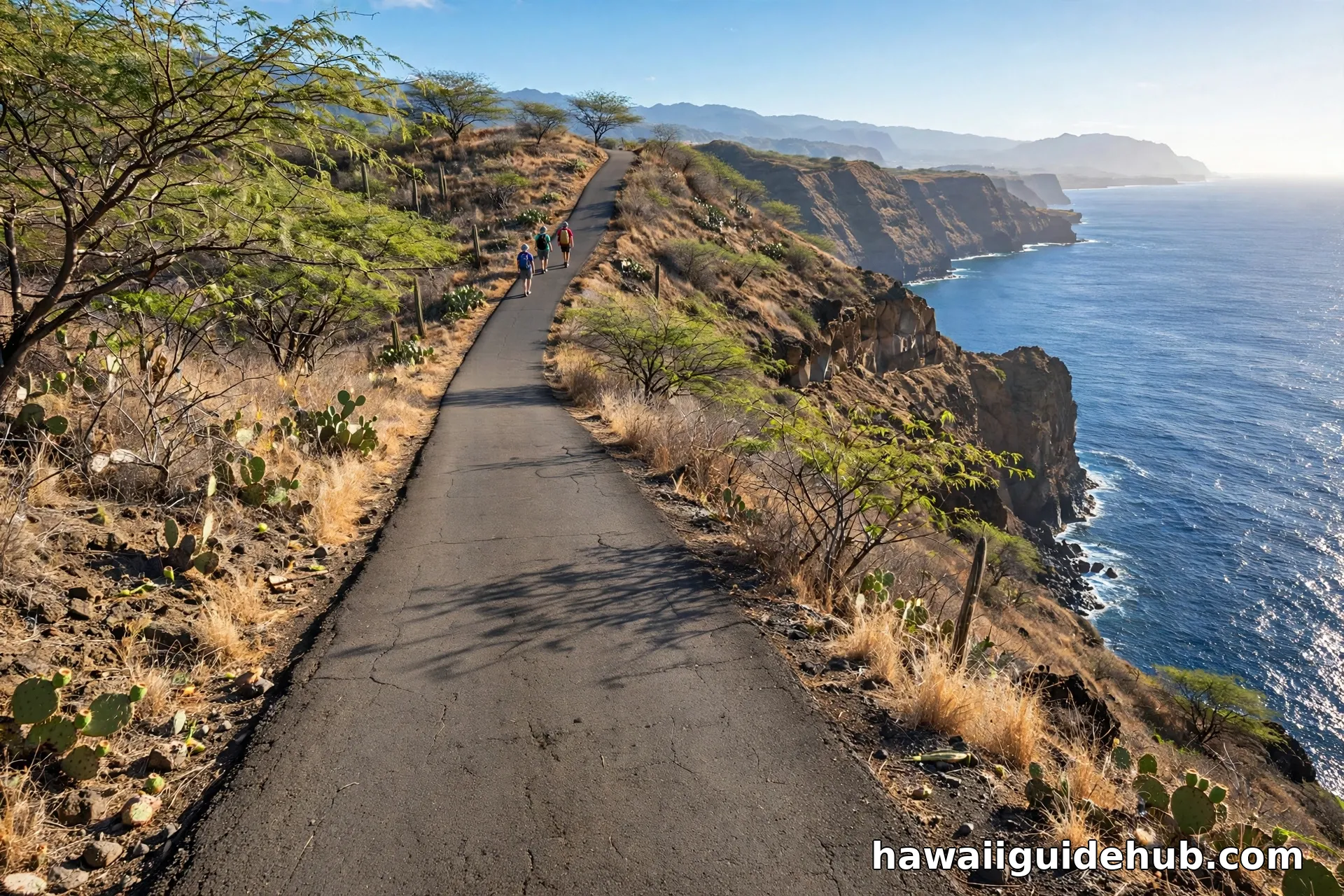
The trail to the lookout is one of the most accessible hikes on Oʻahu. The Hawaiʻi Division of State Parks lists it at 2.0 miles round trip with about 500 feet of elevation gain, rated moderate because of the steady uphill grade rather than any technical difficulty. The surface is paved asphalt the entire way, at least eight feet wide, and the route follows a former service road that once served the lighthouse. You walk out the same way you came in, and the whole thing takes most people between one and two hours including time spent at the lookouts.
Distance, Elevation and Difficulty
The climb is honest but not punishing. From the parking area the trail climbs the western side of the ridge for about half a mile, switchbacks near the top of the ridge, then traverses the eastern side and levels out somewhat as it approaches the summit. There is no scrambling, no mud, and no stream crossings. Children, seniors and reasonably fit beginners all complete this hike regularly, and parents push strollers up it every day. The difficulty comes from the sun and the grade together: there is almost no shade, the asphalt radiates heat, and the wind at the summit can be strong enough to snatch a loose hat.
The Route and the Two Lookouts
About halfway up, the trail passes a signed spur where an unmaintained path drops steeply toward the Makapuʻu tide pools (more on those below). The main paved route continues to the summit, where a pair of guard-railed lookouts offer the payoff. The first looks southeast over the lighthouse itself, perched on the cliff below with its distinctive red roof against deep blue water. The second faces north up the windward coast, with Mānana and Kāohikaipu islets in the middle distance and the Koʻolau cliffs fading toward Kailua. A public viewing scope and interpretive signs at the summit help you pick out whales and seabirds in season.
Getting There, Parking and Hours
There is no fee to park or hike, and no reservation is required. The trailhead lot is free but small, and on weekends it fills early. For a sunrise hike, arriving 45 to 60 minutes before sunrise is the reliable way to get a spot. After about 8:00 AM on weekends, expect the lot to be full, with cars lining the highway shoulder. If you park on the shoulder, pull completely off the road and watch for fast traffic when getting out.
The main parking lot is gated, and the gates typically open around 7:00 AM and close in the early evening, around 6:45 PM. Sunrise visitors who arrive before the gates open park along the highway shoulder and walk in. There are no restrooms or drinking water at the trailhead or anywhere on the trail, so use the facilities at nearby Makapuʻu Beach Park or Sandy Beach before you start, and carry all the water you will need.
Public transit reaches the area, with TheBus routes running along Kalanianaʻole Highway past the trailhead. It is a workable option, though you will want an early start to keep ahead of the heat.
The Best Time to Visit
Early morning is the best time to hike to Makapuʻu Point Lookout, for three reasons. The heat is the first: this is one of the driest, sunniest corners of Oʻahu, and by midday the exposed asphalt becomes genuinely punishing. The crowds are the second: the small lot fills fast, and the trail is far more pleasant before the tour vans arrive. The light is the third, and it is the real prize. Makapuʻu faces east and southeast, so the sun rises directly out of the ocean in front of you. On a clear morning the sky goes pink over Mānana islet, the lighthouse catches the first light, and the water below shifts through shades of turquoise and deep blue.
Winter, from December through March, adds the whales. Humpback whales migrate past Oʻahu between November and May, and Makapuʻu is one of the best land-based whale watching spots on the island. From the summit lookouts you can spot blows, breaches and tail slaps on calm days, and the viewing scope at the top helps. Bring binoculars if you have them. Winter also brings bigger surf, which makes the cliffs and blowholes below more dramatic to watch from a safe distance, and it is worth checking the December weather patterns before planning a winter visit.
Sunset is beautiful here too, with warm light on the cliffs and fewer people, but the trail faces away from the setting sun and the gated lot closes in the early evening, so plan to be back at your car well before dark. If golden-hour light is your priority, an east-facing sunrise here pairs well with a west-facing sunset elsewhere, such as the famous Haleakalā sunset on Maui on a different evening of your trip.
What You Will See Along the Way
The lighthouse is the centerpiece. The Makapuʻu Point Lighthouse was built in 1909 and still operates as an active aid to navigation, now automated. It is closed to the public and protected by locked gates, but the summit lookouts give you a clear view down to it, and its red roof against the blue sea is the classic Makapuʻu photograph.
The offshore islets steal the rest of the show. Mānana, universally known as Rabbit Island, is a 63-acre tuff cone that rises from the sea like a giant rabbit head. Rabbits were introduced there by a rancher decades ago, and the island is now a protected bird sanctuary. Kāohikaipu, the smaller islet off Makapuʻu Beach Park, is a state bird sanctuary as well. Both are off limits to landing, but from the lookouts you can watch seabirds, including ʻiwa and white-tailed tropicbirds, riding the updrafts along the cliffs.
Look down for the blowholes along the rocky shore below Makapuʻu Head, which spout on big swells, and look across the water on the clearest days for Molokaʻi, Lānaʻi and sometimes Maui along the horizon. Behind you, Koko Head and Koko Crater anchor the view toward Hawaiʻi Kai.
The Makapuʻu Tide Pools: Read This First
About halfway up the paved trail, an unmarked, unmaintained side path drops steeply down the cliff face to the Makapuʻu tide pools, a series of natural pools in the lava rock at the waterline. They photograph beautifully, and they are dangerous. The descent is steep, loose and exposed, the pools sit at the edge of open ocean, and large waves can sweep across the rocks without warning. People have been seriously injured and killed at Hawaiʻi tide pools in high surf, and Makapuʻu is no exception.
Go only in calm summer conditions, only at low tide, only with proper footwear, and never turn your back on the ocean. If the surf is up, if the rocks are wet beyond the pool rims, or if you are unsure about your footing, stay on the paved trail and enjoy the pools from above. The lookout views lose nothing, and the state parks guidance to stay on the trail exists for a reason.
Accessibility
Makapuʻu is one of the more accessible summit hikes in Hawaiʻi. The trail surface is smooth paved asphalt, typically at least eight feet wide, and the trailhead lot includes designated accessible parking spaces. Visitors using wheelchairs, mobility devices or strollers can use the trail, though the steady grade means some may need all-terrain tires or motorized assistance, and help on the steeper sections. There are benches and lookout points along the way for rest stops.
What to Bring
Pack for a hot, exposed, windy walk with no services. The list is short but non-negotiable:
- At least one liter of water per person, more on hot days. There is no drinking water on the trail.
- Sun protection: hat, sunglasses and reef-safe sunscreen. There is almost no shade.
- Sturdy walking shoes or grippy sandals. The pavement is smooth but the grade is steady.
- A light wind layer. The summit is often much windier than the parking lot.
- Binoculars in whale season (November to May) for humpback spotting.
- Your phone or camera, fully charged. The light changes fast at sunrise.
Heat and wind safety: this trail has sent unprepared hikers back early more than any other hazard on it. Start before 8:00 AM, drink water before you feel thirsty, and turn around if anyone in your group feels dizzy or nauseated. The wind at the summit can gust hard enough to knock over a tripod, so secure hats, keep a grip on phones near cliff edges, and stay behind the guardrails at the lookouts.
Nearby: Makapuʻu Beach, Sea Life Park and Waimānalo
The area makes an easy half-day loop. Directly below the trailhead, Makapuʻu Beach Park is a popular bodysurfing beach with a powerful shore break for confident swimmers, and it has the restrooms and lifeguards the trailhead lacks. Just down the highway toward Waimānalo sits Sea Life Park and the town of Waimānalo itself, with local food stops for a post-hike lunch. The drive along this coast is a highlight of the windward side of Oʻahu.
If Makapuʻu leaves you wanting more Oʻahu hiking, Mānoa Falls offers the opposite experience: a lush rainforest walk to a waterfall, shaded and muddy where Makapuʻu is sunny and paved. Together they show both faces of the island in a single trip. For wider trip planning, the best winter places on Oʻahu help you fit the point into a broader itinerary.
Frequently Asked Questions
Is Makapuʻu Point Lookout free?
Yes. Parking and the trail are both free, and no reservation or permit is required. It is one of the best free sunrise spots on Oʻahu.
How long is the Makapuʻu Point Lighthouse Trail?
The trail is 2.0 miles round trip, out and back, with about 500 feet of elevation gain. Most hikers finish in one to one and a half hours, or about two hours with generous stops at the lookouts.
Can you go inside the Makapuʻu Lighthouse?
No. The lighthouse was built in 1909, is still an active aid to navigation, and is closed to the public behind locked gates. The summit lookouts give you excellent views of it from above.
Can you see whales from Makapuʻu Point?
Yes, in season. Humpback whales pass offshore between November and May, and the summit lookouts are among the best land-based whale watching spots on Oʻahu. Bring binoculars and use the public viewing scope at the top.
Is the trail good for kids and strollers?
Yes, it is one of the most family-friendly hikes on the island. The trail is fully paved and wide, with benches and lookouts for rests. Go early to beat the heat, bring plenty of water, and keep children behind the guardrails at the summit.
Are the Makapuʻu tide pools safe?
They can be dangerous. The side trail down is steep and unmaintained, and waves can sweep the rocks without warning. Visit only in calm conditions at low tide, wear proper footwear, and never turn your back on the ocean. When in doubt, enjoy the view from the paved trail.
Makapuʻu Point Lookout earns its reputation honestly. Few places in Hawaiʻi deliver this much scenery for a paved two-mile walk: a 1909 lighthouse on the cliffs, seabird islets offshore, whales in winter, and a sunrise that rises straight out of the Pacific. Go early, bring water and sun protection, respect the cliffs and the ocean, and you will understand why locals walk this ridge at dawn as a matter of routine.