Canoe and Surf: Riding Waves the Hawaiian Way

There is surfing, and then there is canoe surfing. Riding a wave in an outrigger canoe, with five other paddlers digging in around you and a steersman calling the stroke, is one of the oldest and most Hawaiian experiences in the islands. It predates the surfboard, it was once reserved for royalty, and you can still do it today off Waikīkī Beach for about the price of a nice lunch.
This guide covers canoe and surf in Hawaii: what outrigger canoe surfing is, its history from ancient Hawaiʻi through Duke Kahanamoku and the Beach Boys, what a ride feels like, how much it costs, where to ride, who can join, and practical tips. If you searched for canoe and surf or outrigger canoe surfing Waikiki, this page has everything in one place.
Canoe Surfing at a Glance
| What is it, exactly? | Riding ocean waves in a Hawaiian outrigger canoe |
| Where? | Waikīkī Beach, O’ahu, the historic home of it |
| Do I need to swim? | No; non-swimmers welcome, kids 5 and up |
| Do I need experience? | None at all |
| Will I have to work? | Easy to moderate; you will paddle |
| How long is a ride? | 20 to 60 minutes, usually 2 to 3 waves |
| What does it cost? | $40 to $75 per person walk-up; $350 to $420 private charter |
| Who loves it most? | Families, groups, first-timers, history lovers |
What Is Canoe Surfing?
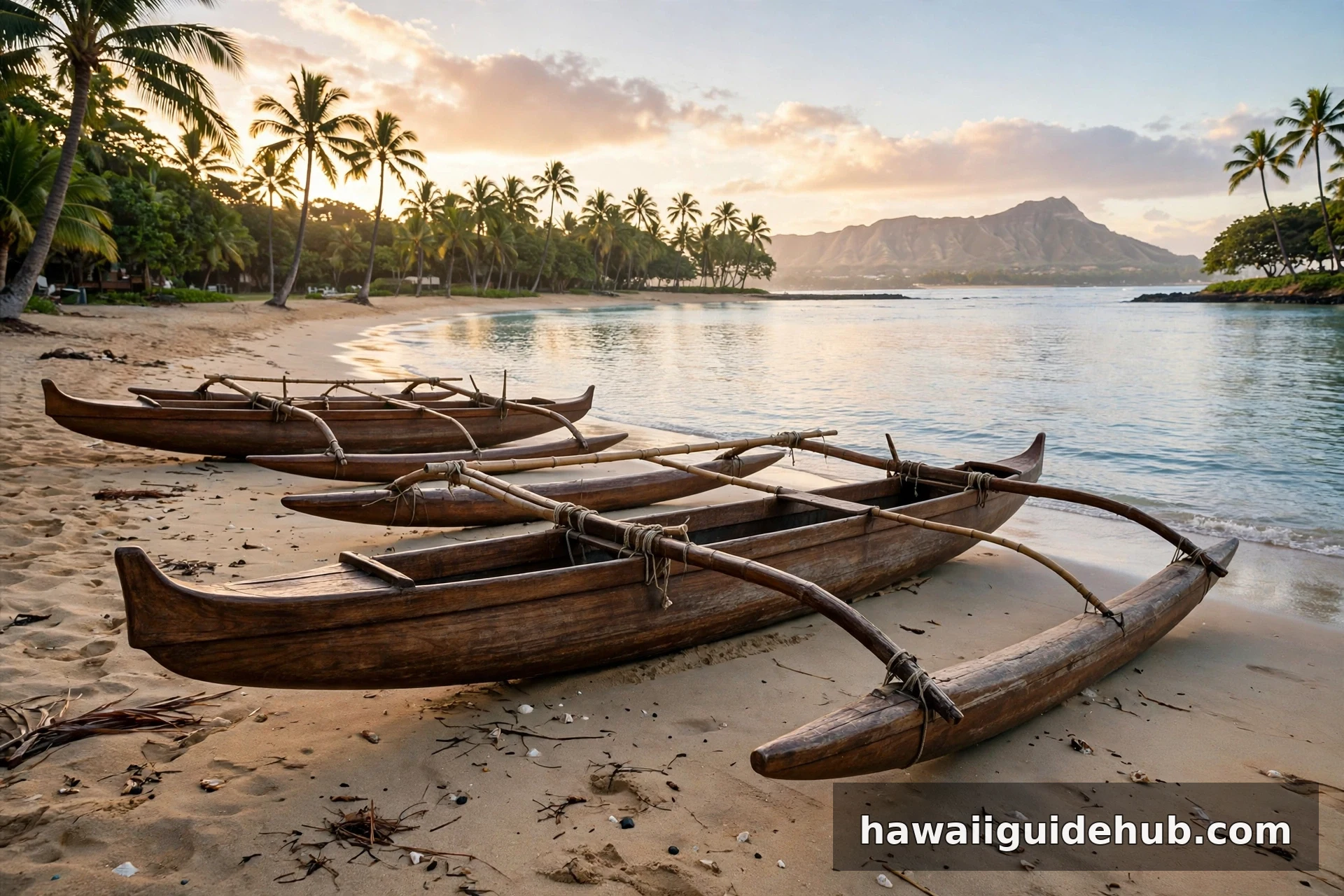
An outrigger canoe, or waʻa, is a long narrow hull with a lateral support float, the ama, connected by wooden arms called ʻiako. The design is ancient Polynesian engineering: the ama keeps the narrow hull stable in open ocean, which is how Polynesians voyaged across the Pacific centuries before Europeans arrived. Ancient Hawaiian canoes were carved from koa wood, with hulls ranging from 20 to 80 feet, the outrigger made of wiliwili wood, all lashed together with braided coconut sennit.
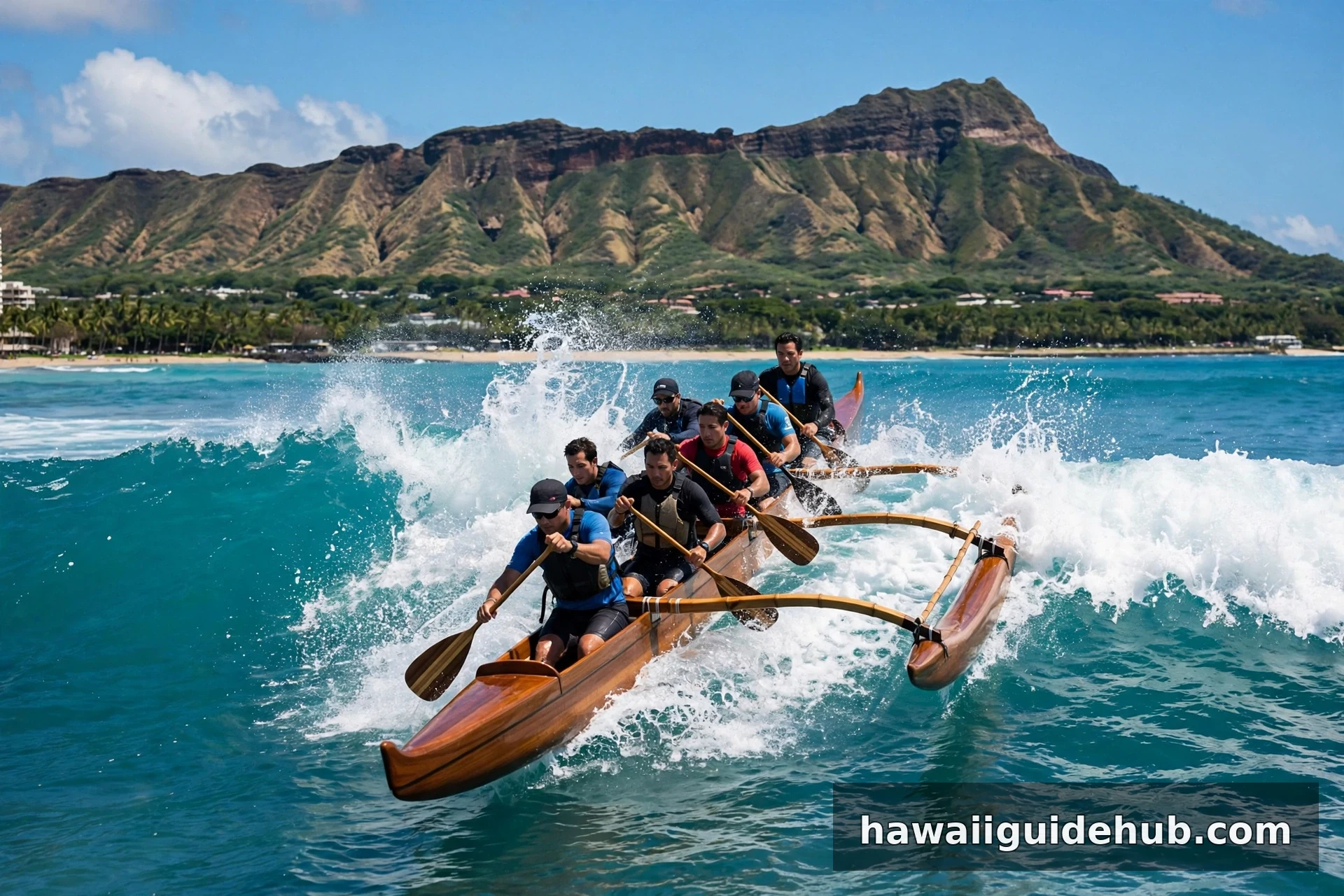
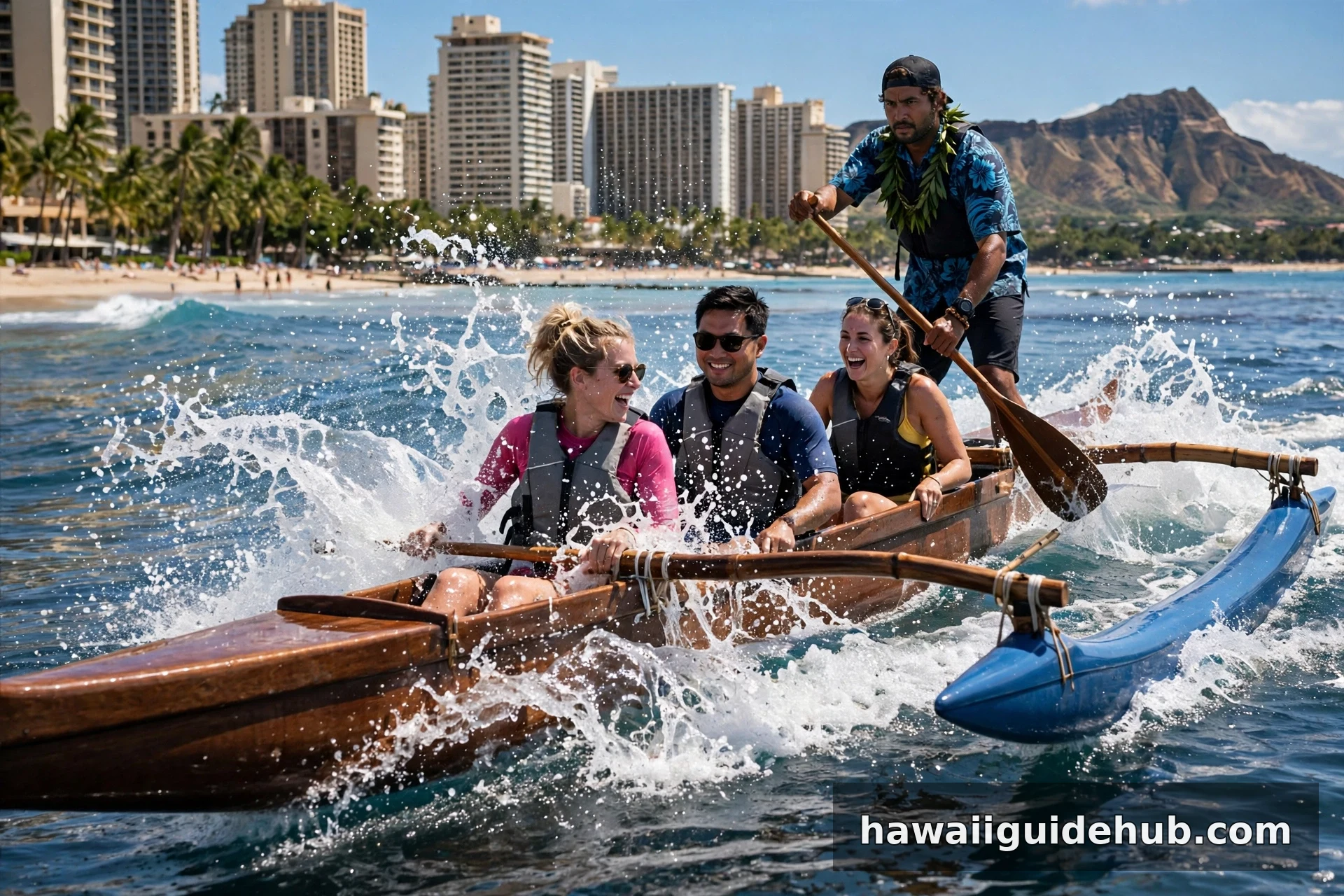
Canoe surfing is exactly what it sounds like. The crew paddles the canoe out past the break, the steersman positions it on an incoming wave, and when he calls the stroke, everyone digs in. The wave picks up the canoe and you ride it, all together, a few hundred yards toward the beach. It is surfing as a team sport, and the feeling of a whole canoe dropping into a wave in unison is unlike anything else in the ocean.
A Short History: From Royalty to the Beach Boys
In old Hawaiʻi, Waikīkī was the playground of the aliʻi, the chiefs and royalty, and canoe surfing was a privilege reserved for them. The common people surfed too, but the great royal canoes riding the long Waikīkī rollers were a chiefly spectacle. When the kapu system was overthrown in 1819, surfing opened to everyone, but the arrival of missionaries soon after nearly killed the sport. They considered it hedonistic and did everything they could to suppress it. By the end of the 19th century, surfing had nearly vanished.
Then came the renaissance. Duke Kahanamoku, the Olympic champion swimmer and Native Hawaiian waterman, formed the Hui Nalu surf club in 1905 with his friends. Another group founded the Outrigger Canoe Club in 1908. Duke and his circle, who became known as the Beach Boys of Waikīkī, brought surfing back to the world stage. They gave lessons to tourists, took visitors for outrigger canoe rides for a dollar a person, taught them to eat poi, and played ukulele on the pier at sunset. By 1920, surfing was the main tourist attraction in Waikīkī, and the canoe ride tradition they started has never stopped.
The Beach Boys were more than instructors. They were watermen in the fullest sense: they read the waves, the wind, and the reef the way others read books. They kept visitors safe, fed them, entertained them, and sent them home with stories. Duke himself became the most famous surfer in the world, credited in local lore with riding a wave more than a mile at Waikīkī during a giant south swell in 1917. When you climb into a canoe at Waikīkī today, you are stepping into a lineage that runs straight back to those men under the hau tree by the Moana Hotel.
Today, Waikīkī is one of the only places in the world where you can race down a wave on an outrigger canoe. The beach concessions operating there now are the direct descendants of the Beach Boys, working the same stretch of sand, paddling the same breaks, more than a century later.
What a Canoe Surf Ride Is Like
You meet your crew at their canoe on the sand. After a quick briefing on how to paddle, how to sit, and what to do when the wave comes, you push off and paddle out past the Moana Surfrider pier toward the Waikīkī break. The paddle out is the workout: everyone pulls together while the steersman, standing at the back with a long steering paddle, guides the canoe into position.
Then you wait. The steersman watches the sets roll in, and when he picks your wave, he calls it. The whole crew digs in hard, the canoe surges forward, the wave lifts the stern, and suddenly you are flying. A canoe wave ride lasts far longer than a surfboard ride: the canoe carries its speed and you glide for hundreds of yards, with Diamond Head on your left and Waikīkī Beach rushing toward you. Most rides include two or three waves over 20 to 45 minutes, depending on the operator and conditions.
Between waves, look down. The reef below is like a huge aquarium, and it is common to see turtles, reef fish, and sometimes dolphins. Non-paddlers can simply ride and watch. You will get wet: waves splash over the sides, and the paddle out can be choppy. That is part of it.
The best moment comes on the second or third wave, when the crew finds its rhythm. The first wave is excitement and nerves. By the second, everyone is paddling in sync, the steersman is calling less because the crew anticipates, and the canoe feels like it is flying on its own. Strangers high-five across the hull. That shared rhythm, six paddles hitting the water as one, is the thing people remember years later, more than the wave itself.
How Much Does It Cost?
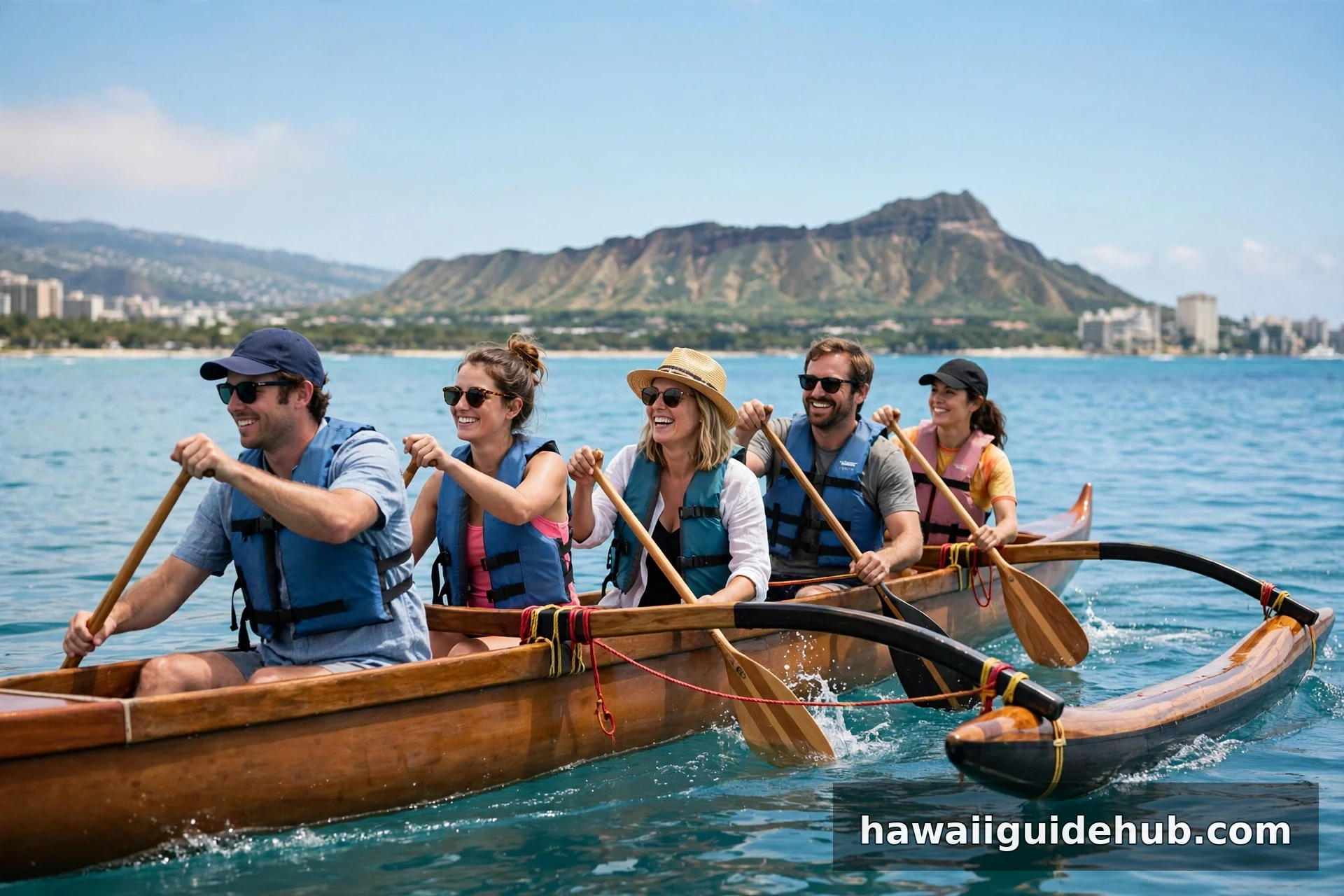
Walk-up canoe surfing in Waikīkī runs about $40 to $75 per person, making it one of the most affordable guided ocean activities on Oʻahu. Big Wave Dave lists canoe rides at $45 per person. Waikiki Beachboys runs around $52 per traveler. These are shared rides: you join a crew with other visitors, paddle out together, and catch two to three waves.
Private charters cost more but give you the canoe to yourselves. A private Waikiki Beachboys charter for up to 6 people runs about $420, which works out to roughly $70 per person with a full group. Kapua Waʻa Experiences offers a private one-hour tour for three guests at $350, about $117 per person. Private rides are ideal for families, couples, or anyone who wants the crew’s full attention and a longer session.
Where to Ride in Waikīkī
Three operators cover the main Waikīkī stretch. Waikiki Beach Services operates on Kūhiō Beach and traces its lineage back to 1955; it is the default walk-up option, and you can usually just show up. Star Beach Boys runs a concession in the Royal Hawaiian and Moana Surfrider stretch; they keep a minimal online presence, so call or walk up at the beach. Big Wave Dave offers canoe rides with a personal touch and lists clear pricing online.
For a private experience, Kapua Waʻa Experiences launches from Kaimana Beach on the Diamond Head end of Waikīkī, paddling toward storied breaks like Tongs and Old Man’s. Their hour-long format gives you more waves and more water time than the standard shared ride.
Canoe Surfing Beyond Waikīkī
Waikīkī is the historic home of canoe surfing and the easiest place to try it, but the tradition lives across the islands. Outrigger canoe clubs paddle and race on every island, and the annual racing season is a major part of local sports culture. Some Maui and Big Island operators offer canoe sailing and paddling tours, though true canoe surfing rides for visitors are concentrated at Waikīkī, where the gentle, rolling breaks are ideal for it. If your trip centers on another island, a day trip to Oʻahu for a morning canoe ride is a reasonable addition to the itinerary.
Who Can Ride?
- Non-swimmers: welcome on most rides. You wear a life vest and stay in the canoe.
- Kids: most operators take children 5 and up; small children ride rather than paddle.
- Fitness: easy to moderate. You will paddle, and the paddle out is real exercise, but the crew sets the pace and nobody expects athleticism.
- Mobility: not wheelchair accessible. If you have limited mobility, check with the operator first.
- Minimums: shared rides typically need a minimum number of paddlers (often 3 to 4) to go out. If you are short, operators may combine groups or supply crew.
Tips for Your First Canoe Surf
- Go in the morning. Winds are calmer, the water is smoother, and the light on Diamond Head is unbeatable.
- Wear swim gear and reef-safe sunscreen. You will get splashed. Leave valuables on shore; there is no dry storage in a canoe.
- Listen to the steersman. When he calls the stroke, paddle hard. Timing is everything.
- Sit where they put you. Seat assignments balance the canoe. Do not switch seats mid-ride.
- Expect to get wet, not to fall in. Outrigger canoes are remarkably stable. Huli, flipping, is rare on guided rides.
- Bring a waterproof camera or leave the phone. The wave ride is the photo; a GoPro on a float strap works, a phone does not.
- Tip your crew. The steersman and crew work hard to give you a great ride. A tip of 15 to 20 percent is customary and appreciated.
Canoe surfing pairs well with a full Waikīkī day. For more ways to fill your time on Oʻahu, see our guide to outdoor adventures in Hawaii and the best island in Hawaii for first time visitors.
Video: Canoe Surfing Off Waikīkī
Watch a two-minute canoe surfing ride off Waikīkī, one of the longest ever captured.
Frequently Asked Questions
What is outrigger canoe surfing?
It is riding ocean waves in a Hawaiian outrigger canoe. The crew paddles out to the break, the steersman positions the canoe on a wave, and everyone paddles together to catch it, riding the wave toward shore as a team.
How much does canoe surfing cost in Waikiki?
Walk-up shared rides cost $40 to $75 per person. Private charters run $350 to $420 for the group, which works out to roughly $70 to $117 per person depending on group size.
Do you need experience to go canoe surfing?
No. The crew teaches you everything in a short briefing. Non-swimmers are welcome, and children as young as 5 can ride.
How long is a canoe surf ride?
Most rides last 20 to 45 minutes with two to three waves. Private hour-long tours are available from some operators.
Is canoe surfing safe?
Yes, on guided rides with experienced steersmen. Outrigger canoes are very stable, life vests are available, and the Waikīkī breaks used for rides are gentle, rolling waves. Listen to your steersman and stay seated.
Where did canoe surfing start?
In ancient Hawaiʻi, where it was practiced by the aliʻi, the chiefs, at Waikīkī. The modern tradition descends from Duke Kahanamoku and the Beach Boys of Waikīkī in the early 1900s, who took tourists on canoe rides for a dollar.
Canoe surfing is the rare activity that is thrilling, affordable, and deeply Hawaiian all at once. You do not need to know how to surf. You do not even need to know how to swim. You just need to show up at Waikīkī Beach, climb into a waʻa, and paddle when the steersman calls. A century of Beach Boys did exactly that, and the wave has been waiting for you ever since. For more ideas on the water, explore our guide to Hawaii’s hidden gems.