Hiʻilawe Falls

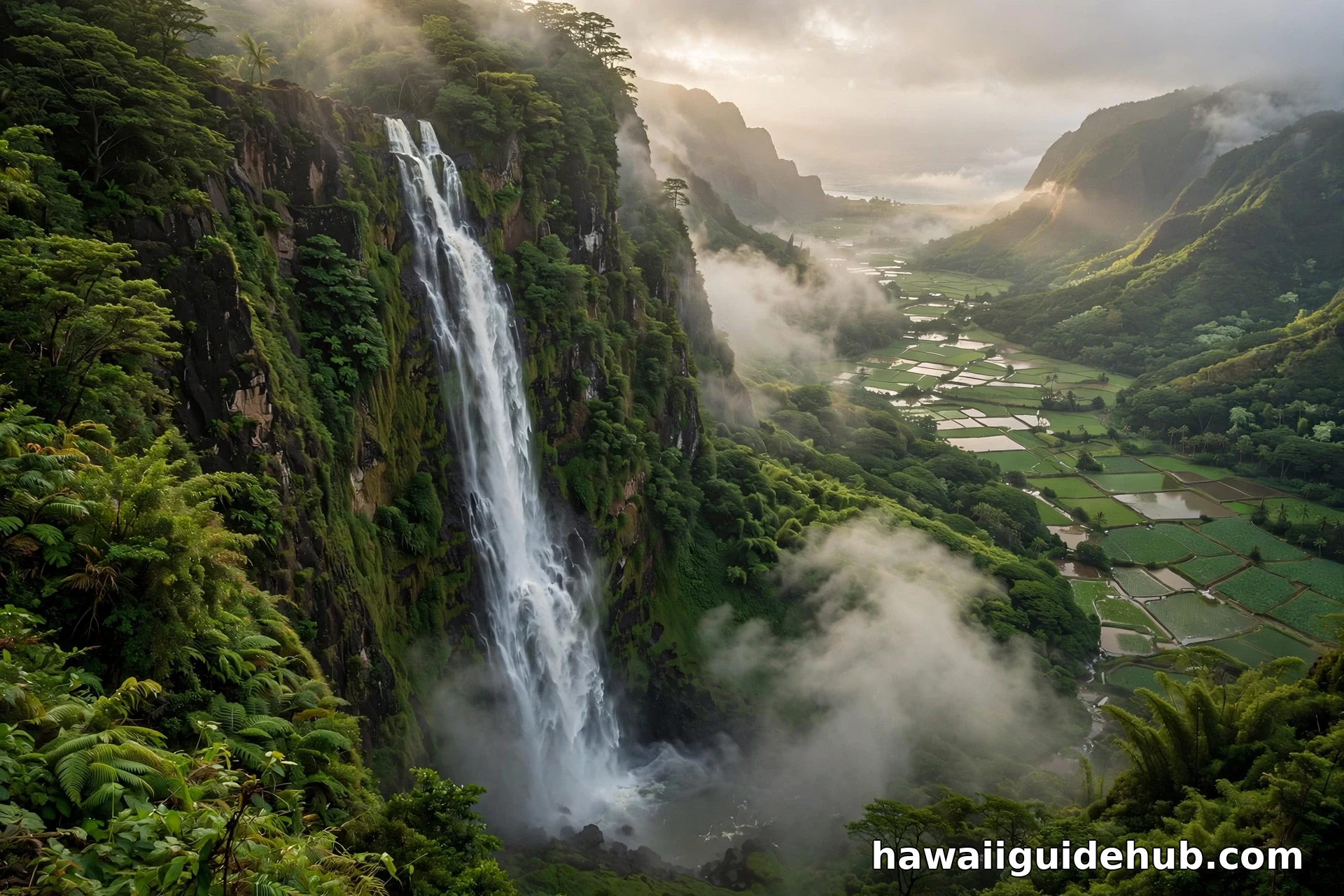
Few sights in Hawaii match Hiʻilawe Falls at full flow. A ribbon of white water drops some 1,450 feet down the sheer back wall of Waipiʻo Valley, making it one of the tallest waterfalls in the state. On a clear morning after heavy rain, you can see it from the Waipiʻo Valley Lookout, threading the green cliffs like a silver needle.
But seeing Hiʻilawe Falls takes planning, because the valley that holds it has strict access rules. This guide covers what the falls are, how tall they really are, the current rules for getting into Waipiʻo Valley, the legal ways to see the falls, and the best time to catch them at their strongest.
Hiʻilawe Falls at a Glance
| The falls | About 1,450 feet total, main drop roughly 1,200 feet; horsetail waterfall on Lalakea Stream, back wall of Waipiʻo Valley, Big Island | The catch |
| See it from the lookout | Full view of the falls from Waipiʻo Valley Lookout, open to everyone | Distance; bring binoculars for the full 1,450 feet |
| See it on a valley tour | Closer views from inside Waipiʻo Valley | Valley road is closed to visitors; permitted tours only |
| See it on your own | Not an option | Road closed, and the base sits on private land with flash flood risk |
| Time it right | Wet season, November through March, for the strongest flow | Winter also means wetter valley conditions; check before you go |
| Swim under it | Not advised | Flash floods and private land at the base |
What Is Hiʻilawe Falls?
Hiʻilawe Falls is a horsetail waterfall pouring over the cliffs at the back of Waipiʻo Valley on the Big Island’s Hamakua Coast. Its total height is about 1,450 feet, with the main free-falling drop measuring roughly 1,200 feet, which places it among the tallest waterfalls in Hawaii. The falls run on Lalakea Stream, and their flow changes dramatically with the weather: after days of heavy rain they thunder, while in dry spells they can shrink to a thin thread.
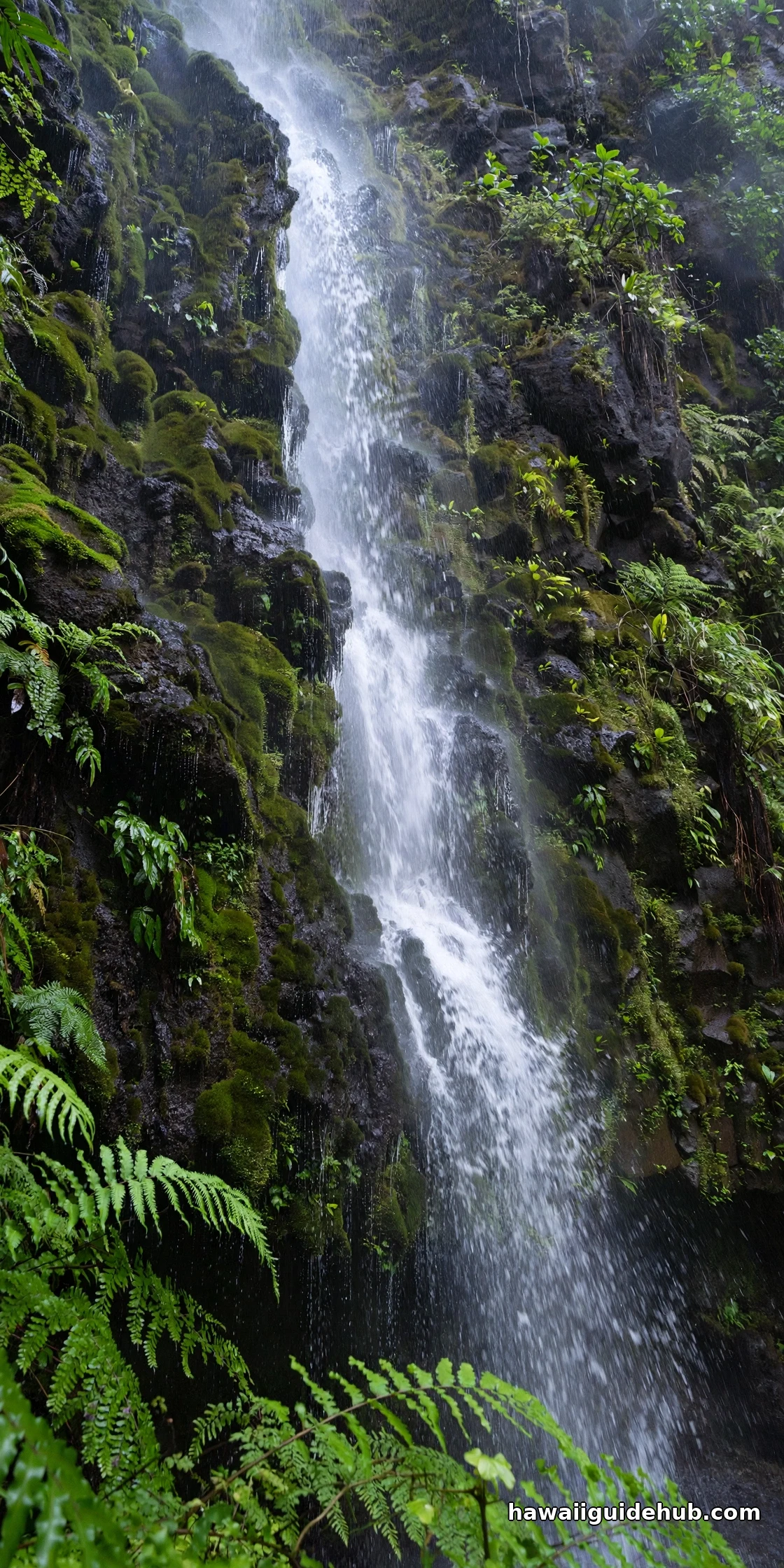
Sharing the same cliff wall is a smaller twin, Hakalaoa Falls, which only appears during or right after rainfall. Seeing both falls running side by side is a rare treat that locals consider a sign of a truly wet week. The cliffs themselves were formed by ancient lava flows from Mauna Kea, and the whole amphitheater of Waipiʻo Valley, with its near-2,000-foot walls, frames the falls like a natural cathedral.
One honest note: the flow is no longer what it once was. Lalakea Stream above the falls was partially diverted years ago for irrigation, which reduced the falls to a smaller cascade than in their prime. They can even run nearly dry at times. This makes timing your visit for the wet season all the more worthwhile.
The Access Rules: Read This First
Here is the single most important thing to know about Hiʻilawe Falls: you cannot simply drive or hike into Waipiʻo Valley. Since February 2022, Hawaii County has kept Waipiʻo Valley Road closed to the general public under emergency rules, renewed repeatedly since, because of rockfall, unstable slopes, and erosion on the extremely steep road. The closure remains in effect, with the underlying emergency declaration running into 2027.
Under the rules, the road is closed to all pedestrians, and vehicle access is limited to Hawaii County residents, licensed and insured tour operators holding county permits, and Native Hawaiians exercising traditional and customary rights. Only low-range four-wheel-drive vehicles may make the descent, which drops about 800 feet in just over half a mile at grades around 25 percent. Rental cars are not permitted on the road, and most rental agreements void coverage there.
Do not try to walk in. Pedestrian access is prohibited, and much of the valley floor is private land worked by taro farmers who deserve their privacy and quiet. The era of the independent valley hike is over for now, and respecting the closure is part of respecting the place.
Waipiʻo Valley: The Valley of the Kings
Hiʻilawe Falls makes more sense once you know the valley it falls into. Waipiʻo is known as the Valley of the Kings, a place of deep sacredness in Hawaiian history. It was the childhood home of Kamehameha the Great, and the bones of ancient chiefs are said to rest in its cliffs. For centuries it supported a large population fed by extensive taro terraces, though tsunamis in 1946 and 1960 devastated the valley and its population never fully recovered.
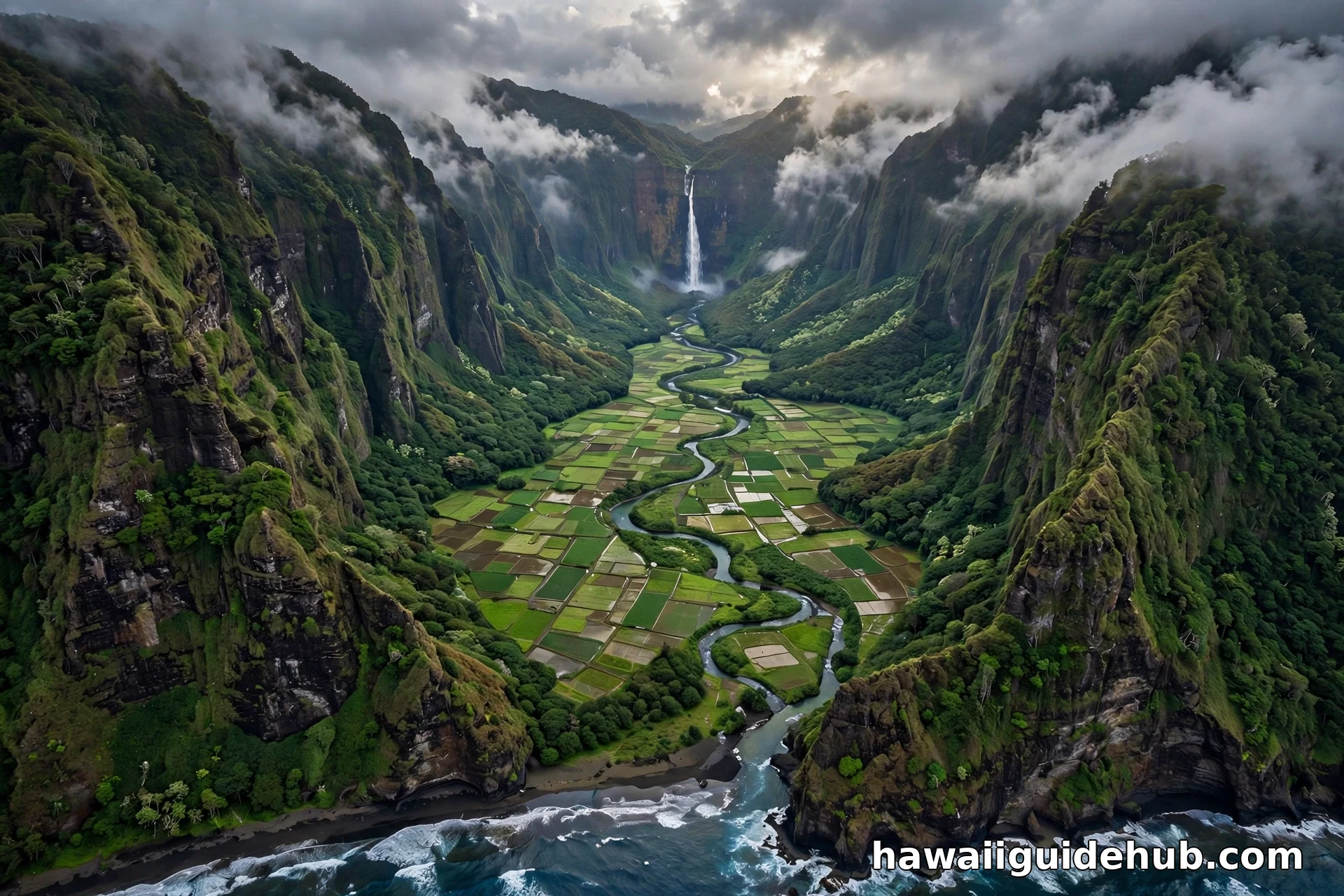
Today only about a hundred people live in the valley, many of them taro farmers carrying on cultivation methods passed down through generations. The valley floor remains a working agricultural landscape and a living cultural site, not a park. That is the deeper reason behind the access rules: the closure protects both visitors from a dangerous road and residents from the pressures of crowds. When you stand at the lookout, you are looking at someone’s home, farm, and ancestral land.
This context should shape how you visit. Keep voices low at the overlook, never fly drones over the valley without understanding the rules and the residents’ wishes, and buy from local vendors when you can. The taro grown in Waipiʻo’s paddies connects directly to the poi on Hawaiian tables, a living thread between the valley and the culture.
How to See Hiʻilawe Falls Legally
The good news: you have real options. The Waipiʻo Valley Lookout, at the end of Highway 240 near Honokaʻa, is open to all visitors and free. From the overlook you get a sweeping view across the valley to the back wall where Hiʻilawe Falls drops. Bring binoculars or a zoom lens, go in the morning before clouds build over the valley, and give yourself time. The falls are distant but unmistakable, especially after rain.
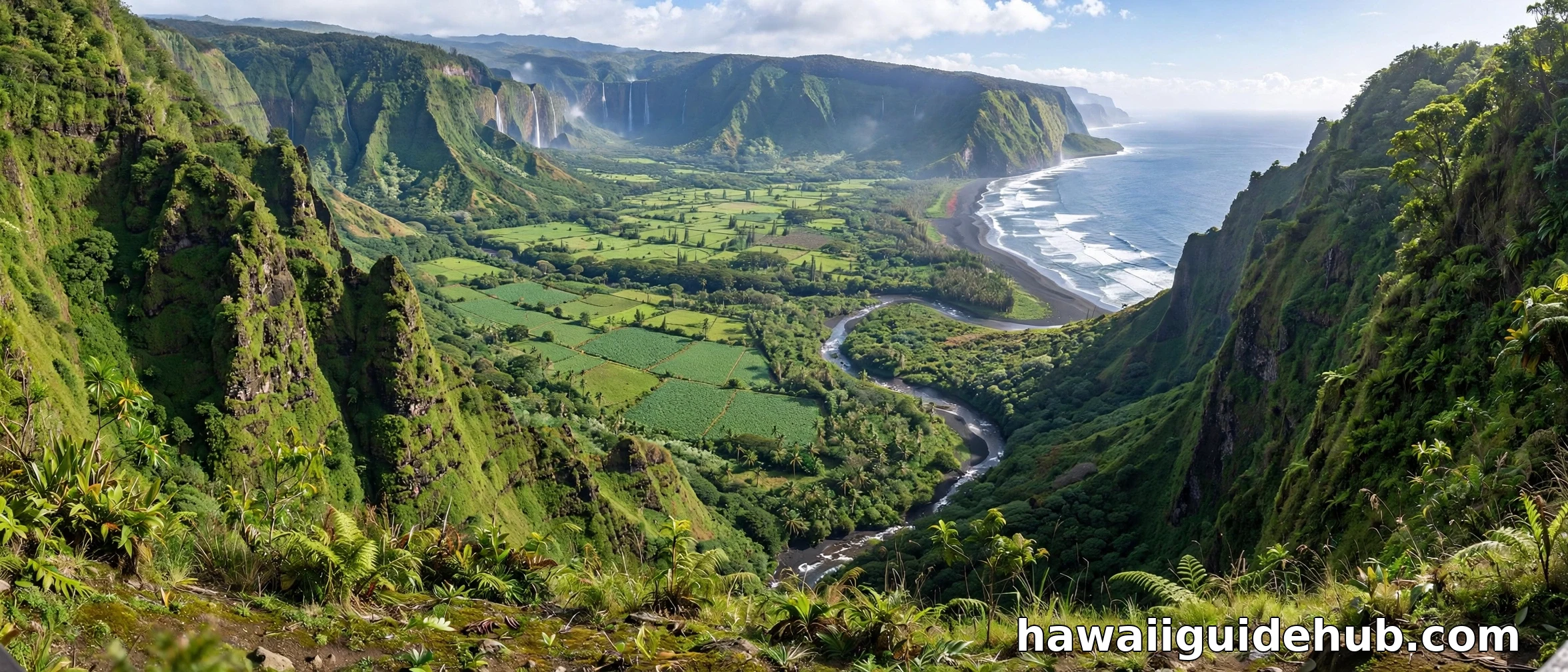
For a closer look, book with a county-permitted tour operator. Licensed shuttle and wagon tours are the only lawful way for visitors to reach the valley floor, and some routes pass within view of the falls. Book ahead, since permitted operators are limited and seats go fast in the busy season. A tour also solves the cultural question: local guides know where visitors are welcome and where they are not.
Scenic air tours are the third option and arguably the most spectacular. From a helicopter or small plane, Hiʻilawe Falls reveals its full 1,450-foot drop in a single view, something no ground viewpoint can offer. If a waterfall is the centerpiece of your Big Island plans, this is the splurge that delivers it.
Best Time to See Hiʻilawe Falls
Hiʻilawe Falls is a rain-fed waterfall, so it follows the island’s wet and dry seasons. The wet season runs roughly November through March, and this is when the falls run strongest and most reliably. A visit in January or February after a week of Hamakua rain gives you the best odds of seeing the full curtain.
From May through September, the falls often shrink to a trickle, and in dry years they can nearly disappear. That does not make a summer visit pointless: the valley itself is magnificent year-round, and a thin Hiʻilawe is still a 1,450-foot waterfall. But if the falls are your priority, plan for winter. For a deeper look at island weather patterns, see our guide to when it rains in Hawaii.
Time of day matters too. Mornings are clearest; by afternoon, clouds frequently cap the valley and hide the back wall entirely. Photographers should aim for the first hours after sunrise, when the light rakes across the cliffs and the falls catch it.
What to Bring to the Lookout
The Waipiʻo Valley Lookout is an easy stop, but a little preparation goes a long way. Bring binoculars or a camera with a strong zoom; Hiʻilawe Falls sits far across the valley. Pack a light rain jacket even on sunny mornings, since Hamakua weather turns fast. Wear shoes with grip if you plan to walk the short paths near the overlook, and bring water and sun protection. There are restrooms and picnic tables at the lookout, so it works well as a slow morning stop paired with the town of Honokaʻa, a short drive away.
Honokaʻa: The Gateway Town
Twenty minutes from the lookout sits Honokaʻa, a plantation-era town that makes the perfect base for a Waipiʻo morning. Its main street holds bakeries, plate lunch spots, and small shops in historic storefronts, with a strong paniolo (Hawaiian cowboy) heritage from the surrounding ranch country. Grab breakfast here before heading to the lookout, and you will be at the overlook as the morning light hits the falls. It is a genuinely pleasant town, not just a pit stop, and it deserves an unhurried hour.
Photography Tips for Hiʻilawe Falls
Hiʻilawe Falls is a challenging subject: far away, often backlit, and frequently half-hidden by mist. A telephoto lens or a phone with strong optical zoom is almost essential; without it, the falls become a white thread in a wide valley shot. A polarizing filter cuts haze and deepens the greens, while a tripod helps in the low light of early morning.
Compose with the valley, not just the falls. The classic shot places Hiʻilawe in the upper third with the layered cliffs and taro fields leading the eye toward it. After heavy rain, look for the twin Hakalaoa Falls to the side; catching both running is the shot local photographers wait all winter for. And check your exposure: white water against dark cliffs fools meters into underexposure, so dial in a little positive compensation.
Big Island Waterfalls Compared
Hiʻilawe is the giant, but it is far from the only waterfall worth your time on the Big Island. ʻAkaka Falls, at 442 feet in ʻAkaka Falls State Park, is the easiest great waterfall in Hawaii: a short paved loop through rainforest to a viewpoint anyone can reach. Rainbow Falls in Hilo drops 80 feet over an old lava cave and earns its name on sunny mornings when mist throws rainbows across the gorge. Each has its own character, and together they make a fine waterfall itinerary. Start with our roundup of the best things to do on the Big Island to plan the route.
The Song of Hiʻilawe
Ask a Hawaii musician about Hiʻilawe and they will likely start humming. The falls inspired one of the most beloved Hawaiian songs, a mele that generations of musicians have recorded and every hula dancer knows. The song’s gentle, swaying melody mirrors the falls themselves, and hearing it performed is, for many, their first introduction to the valley. It is one more reason the falls live larger in Hawaii’s imagination than their remote location might suggest.
Watch: Hiʻilawe Falls in Waipiʻo Valley
This video captures the falls and the valley that holds them better than words can:
Hiʻilawe Falls FAQs
How tall is Hiʻilawe Falls?
Hiʻilawe Falls drops about 1,450 feet in total, with a main free-falling drop of roughly 1,200 feet, making it one of the tallest waterfalls in Hawaii. It runs on Lalakea Stream at the back of Waipiʻo Valley on the Big Island.
Can you hike to Hiʻilawe Falls?
Not currently. Waipiʻo Valley Road has been closed to the general public, including pedestrians, since February 2022 under Hawaii County emergency rules. Visitors can only reach the valley floor with a county-permitted tour operator. The Waipiʻo Valley Lookout remains open to everyone.
Can you drive into Waipiʻo Valley?
Only Hawaii County residents, permitted tour operators, and Native Hawaiians exercising traditional rights may drive the road, and only in low-range four-wheel-drive vehicles. Rental cars are prohibited, and most rental agreements void coverage on this road.
When is Hiʻilawe Falls at its best?
During the wet season, November through March, when heavy Hamakua rains feed Lalakea Stream. Go in the morning for the clearest views before clouds build over the valley.
Can you swim at Hiʻilawe Falls?
Swimming is not advised. The base of the falls sits on private land, flash floods can arrive with little warning, and there is no lawful public access to the valley floor without a permitted tour. Enjoy the falls from the lookout or the air.
Is the Waipiʻo Valley Lookout free?
Yes. The lookout at the end of Highway 240 is open to all visitors at no charge, with parking, restrooms, and picnic tables. It is the easiest and most reliable way to see Hiʻilawe Falls.
Hiʻilawe Falls rewards the visitors who plan around it: a winter morning, a clearing sky, and the patience to watch the valley reveal itself. Respect the closure, support the permitted local operators, and you will see one of Hawaii’s great waterfalls the right way. For more ideas around the island, browse the best things to do in Kona and keep exploring.