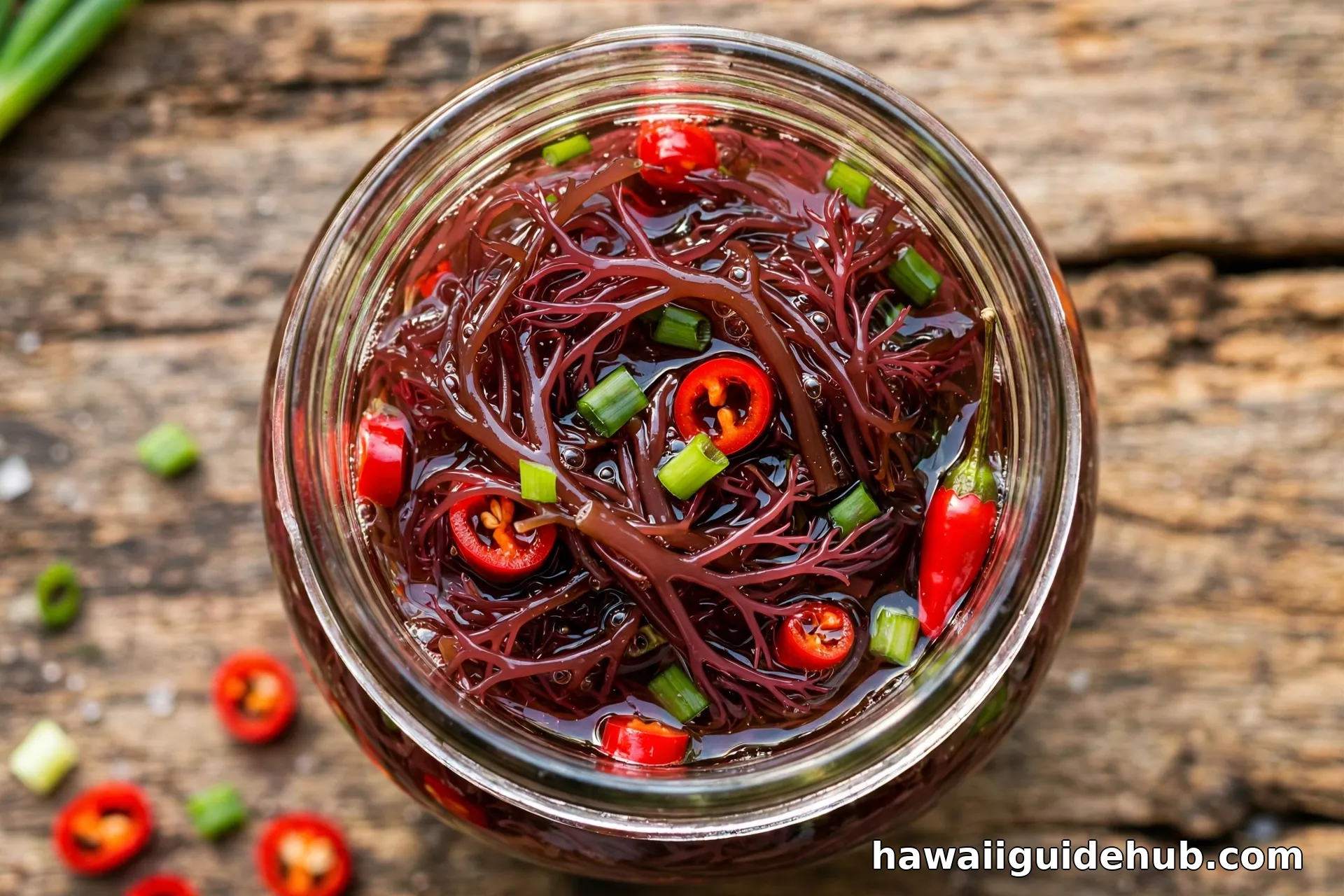
Pickled Ogo Recipe: How to Make Hawaii’s Tangy Seaweed Pickle

Pickled ogo is one of those Hawaii foods that visitors rarely hear about before they arrive, then find themselves craving long after they leave. Ogo is an edible seaweed with a crisp, snappy bite, and when it is pickled in vinegar, shoyu, and chili, it turns into a bright, tangy condiment that cuts through rich island food like nothing else. It shows up next to poke, piled on plate lunches, and sold in small tubs at farmers markets and poke shops across the islands.
This is the complete guide to pickled ogo. It covers what ogo actually is, where the pickling tradition came from, the authentic method for making it at home, the ingredients that matter, the regional variations you will find in Hawaii, and how to serve it. Everything about ogo in Hawaii, from the raw seaweed to the finished pickle, lives on this one page.
Pickled Ogo at a Glance
| Before you pickle | The essentials | Get this right |
|---|---|---|
| What it is | Pickled edible seaweed (limu), usually Gracilaria species | Start with truly fresh ogo; it makes or breaks the batch |
| Hawaiian name | Ogo (also called limu; “ogo” is widely used in local speech) | Ask for ogo at the market; everyone knows it |
| Flavor | Tangy, salty, lightly sweet, with chili heat if you want it | Taste and adjust; the balance is personal |
| Texture | Crisp and snappy, never mushy when made right | Mushy means it sat too long or the brine was weak |
| Main ingredients | Fresh ogo, rice vinegar, shoyu, sugar, sesame oil, garlic, chili | Prep everything before the ogo hits the brine |
| Prep time | About 20 minutes of active work | Fast; the waiting is the real work |
| Pickling time | At least 4 hours; overnight is better; 3 to 4 days for the classic kim chee style | Do not shortcut this; time is the ingredient |
| Storage | Refrigerated in a sealed jar, keeps about 2 weeks | Keep it sealed and cold |
| Where to find it | Poke shops, plate lunch counters, farmers markets, and some grocery delis in Hawaii | Taste a shop version first to set your target |
What Ogo Is
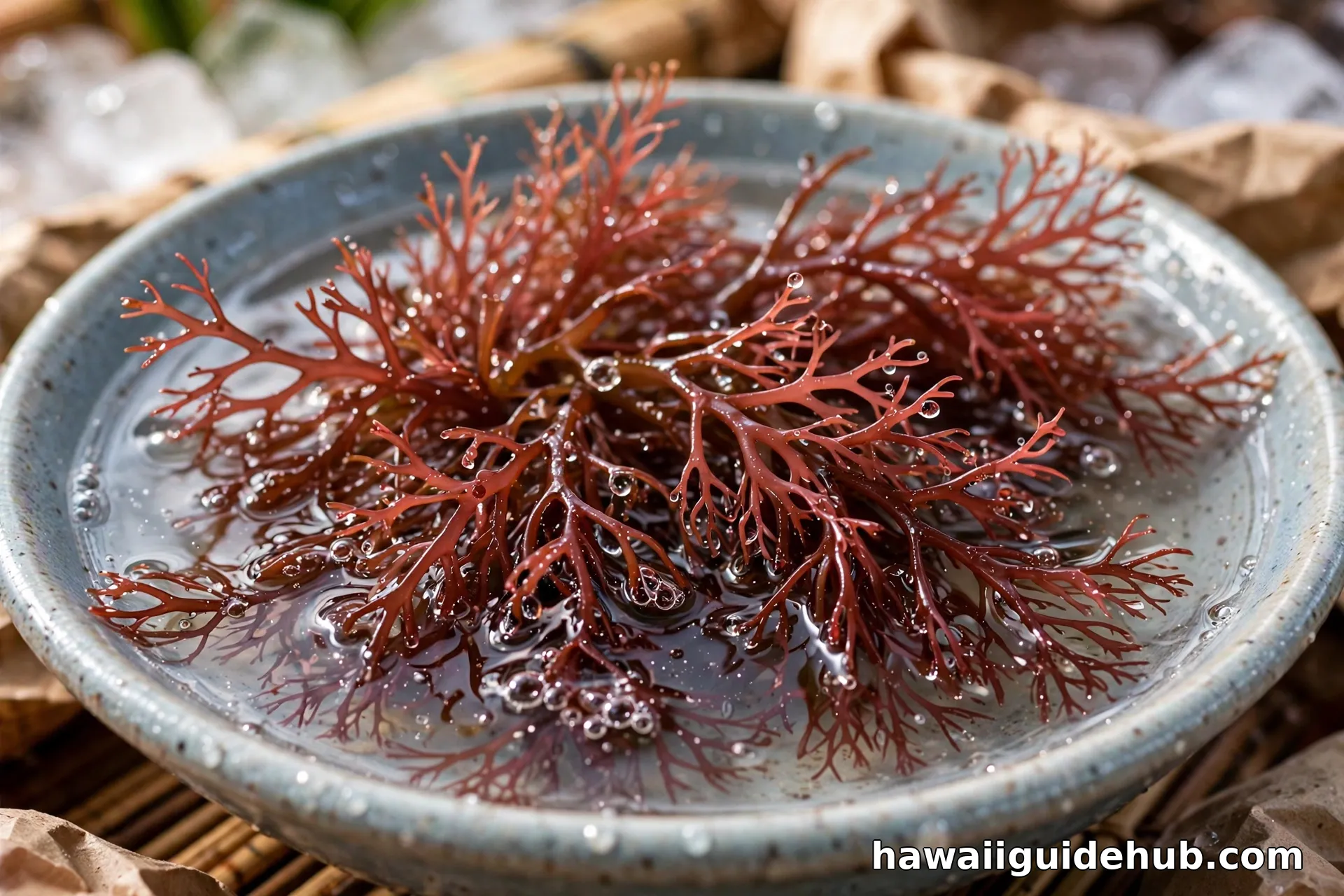
Ogo is the local name for an edible red seaweed, most commonly species of Gracilaria. In Hawaiian it belongs to the broad family of limu, the word for seaweeds and algae that were an important part of the traditional Hawaiian diet. Fresh ogo grows in feathery, branching strands that range from reddish brown to deep red, and it has a distinctive crisp texture that holds up in salads and pickles where softer seaweeds would turn to mush.
Most of the ogo sold in Hawaii today is farmed, not gathered wild. Aquaculture operations in the islands grow Gracilaria in controlled tanks and ponds, which means a steady, clean supply for poke shops and home cooks. You will find it in the seafood section of larger Hawaii grocery stores, at farmers markets, and occasionally at fish markets. Outside Hawaii, fresh ogo is hard to find, though some Asian grocery stores and online seafood sellers carry it frozen.
Do not confuse ogo with the dried seaweed snacks sold in most mainland stores. Those are usually nori or roasted laver. Ogo is a fresh, crunchy seaweed meant to be eaten raw, blanched, or pickled, and its texture is the whole point. When someone in Hawaii says “ogo,” they mean this specific crisp red seaweed, and it has no real substitute if you want the authentic bite.
Where Pickled Ogo Comes From
Pickled ogo sits at the crossroads of the cultures that built modern Hawaii food. Seaweed has been eaten in the islands since long before contact, with Hawaiians gathering many species of limu from the reefs. The pickling style, though, owes the most to the Korean and Japanese immigrants who came to work the sugar plantations starting in the late 1800s. Korean families brought the tradition of pickled vegetable relishes, and in Hawaii that technique was adapted to local seaweed, producing what many locals call ogo kim chee.
The Filipino community added its own version too, seasoning blanched ogo with vinegar, shoyu, tomato, onion, and dried shrimp. Japanese home cooks folded ogo into sunomono-style vinegar salads. What all of these share is the same idea: take the crisp seaweed, brighten it with vinegar, and season it boldly. The result is less a single recipe than a family of recipes, and asking a local cook how they make their pickled ogo will start a friendly argument.
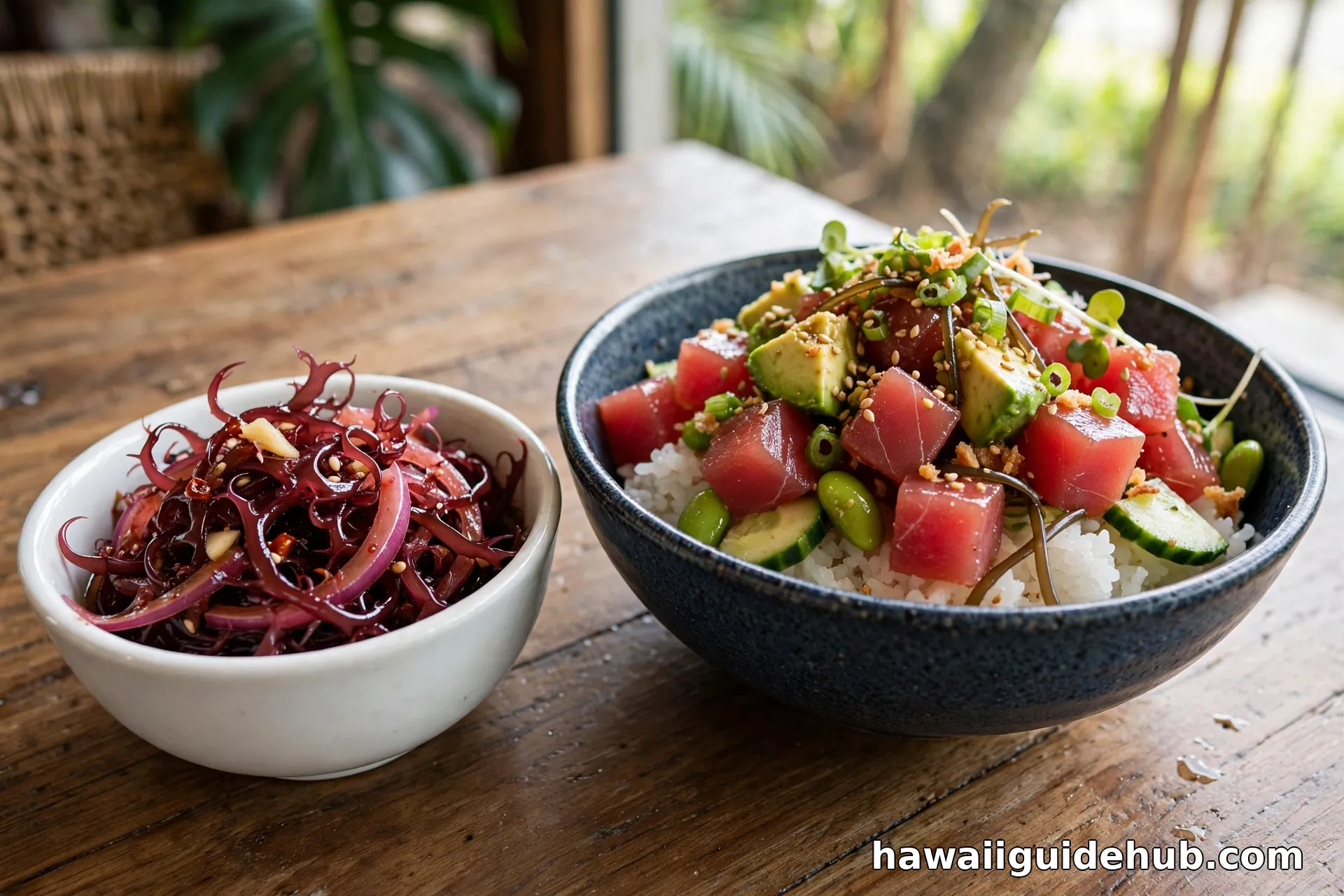
Today pickled ogo is a staple of the poke shop. Many poke counters in Hawaii sell small sides of seasoned or pickled ogo, and it is the classic crunchy counterpoint to cubes of raw ahi. It also appears on plate lunches, in bento boxes, and as a pupu (appetizer) at gatherings. For visitors, it is one of the most genuinely local flavors you can try, and it costs almost nothing.
The Authentic Pickled Ogo Recipe
This method follows the classic Hawaii approach: blanch the ogo briefly, then marinate it in a vinegar and shoyu pickling liquid. It is adapted from long-running local recipes, including a well-known version published in the Honolulu Star-Bulletin, and it produces the crisp, tangy pickle you find in island poke shops. The whole active process takes about 20 minutes, plus marinating time.
Ingredients
- 1 pound fresh ogo (about 4 packed cups)
- 1/2 cup rice vinegar (unseasoned)
- 1/2 cup shoyu (Aloha Shoyu if you can find it)
- 1/4 cup sugar
- 1 tablespoon toasted sesame oil
- 3 tablespoons chopped green onions
- 1 Hawaiian red chili pepper or 1/2 teaspoon red pepper flakes, seeded and minced (adjust to taste)
- 1 small clove garlic, minced (optional but traditional in many families)
- 1/4 cup water
- 1/2 teaspoon Hawaiian salt, plus more to taste
Step by Step Method
- Rinse the ogo well. Put it in a large bowl of cold water and swish it around to release any sand or debris. Lift it out, drain, and repeat once more. Pick through it and pull off any tough stems or bits of shell.
- Cut it into pieces. Use kitchen scissors or a knife to cut the ogo into 1 to 2 inch pieces. Short pieces pickle more evenly and are easier to eat.
- Blanch briefly. Bring a large pot of water to a rolling boil and salt it lightly. Drop in the ogo and blanch for exactly 1 minute. This sets the bright color and tenderizes it slightly while keeping the crunch.
- Shock it cold. Immediately transfer the blanched ogo to a bowl of ice water. Let it cool completely, then drain it very well. Squeeze gently in a clean towel to remove excess water. Wet ogo dilutes the pickle, so do not skip this.
- Make the pickling liquid. In a saucepan, combine the rice vinegar, shoyu, sugar, water, sesame oil, garlic, and chili. Warm over medium heat, stirring, just until the sugar dissolves. Do not boil it hard. Let it cool to room temperature.
- Combine and marinate. Put the drained ogo in a clean glass jar or bowl. Pour the cooled pickling liquid over it, add the green onions, and toss so every piece is coated. The ogo should be mostly submerged.
- Refrigerate. Cover and refrigerate for at least 4 hours. Overnight is better. The classic kim chee style rests 3 to 4 days, which deepens the flavor considerably. Stir or flip the jar once a day.
- Taste and adjust. Before serving, taste a piece. Add a pinch more sugar if it is too sharp, a splash more shoyu if it needs salt, or more chili if you like heat. Serve cold.
Stored in a sealed jar in the refrigerator, pickled ogo keeps well for about two weeks. The texture stays crisp for the first week and softens gradually after that. Always use a clean utensil to serve it, and discard the batch if the liquid turns cloudy with an off smell.
Three Local Variations Worth Knowing
Once you know the base method, you can branch into the styles that different Hawaii communities favor. Each one starts with the same blanched ogo.
Ogo Kim Chee (Korean Style)
This is the punchiest version. Increase the garlic to a full tablespoon, use two or more Hawaiian chili peppers, and add a teaspoon of grated fresh ginger. Some families add a splash of fish sauce for extra depth. Marinate a full 3 to 4 days before serving. The result is fiery, garlicky, and intensely savory, and it is the version most likely to clear your sinuses at a potluck.
Filipino Style Ogo Salad
This version is closer to a fresh salad than a long pickle. Toss the blanched ogo with diced tomato, thinly sliced round onion that has been salted and squeezed dry, and soaked dried shrimp, then dress it with vinegar and shoyu to taste. It is served within a few hours of making and eaten as a side dish rather than a condiment.
Quick Sunomono Style (Japanese Style)
For the mildest version, dress blanched ogo with rice vinegar, a pinch of sugar, a dash of shoyu, and toasted sesame seeds, and serve it within an hour. This is the cleanest expression of the seaweed itself, and it pairs beautifully with grilled fish.
What Pickled Ogo Tastes Like
The first thing you notice is the crunch. Good pickled ogo snaps between your teeth with a clean, oceanic bite that is closer to a fresh vegetable than to the chewy seaweed most people expect. The vinegar brings brightness, the shoyu brings savory depth, the sugar rounds off the sharp edges, and the sesame oil adds a nutty finish. Chili heat sits on top of all of it, warming but rarely overwhelming in the standard version.
It is not fishy. That surprises most first timers. Because the ogo is blanched and the pickling liquid is assertive, the flavor reads as fresh and tangy, like a cross between a cucumber pickle and a seaweed salad. If you like kimchi, sunomono, or pickled ginger, you will like pickled ogo.
How to Serve Pickled Ogo
In Hawaii, pickled ogo is a supporting player, and that is its strength. A small mound of it next to poke adds crunch and acidity that balance the rich raw fish. It does the same job on a plate lunch, cutting through kalua pork, teriyaki beef, or fried chicken. At home, serve it as a pupu with drinks, pile it on rice bowls, or chop it into a green salad for texture.
It also works in less traditional ways. Try it on top of grilled salmon, folded into a tuna salad sandwich, or as a garnish for miso soup. Because it is already seasoned, a little goes a long way. Start with a few tablespoons per person and let people take more.
Where Visitors Encounter Ogo in Hawaii
You do not need to make pickled ogo to taste it. Most poke shops in Hawaii sell seasoned ogo as a side, and many will add it to your bowl if you ask. Plate lunch counters and okazuya (Japanese delis) often carry it in the cold case. Farmers markets, especially on Oahu and the Big Island, sometimes have vendors selling jars of homemade pickled ogo or ogo kim chee. If you want the raw seaweed to make your own, check the seafood section of larger grocery stores like Foodland or Times, or ask at a fish market.
A note on gathering: do not harvest wild limu from Hawaii reefs unless you know exactly what you are doing and where it is legal. Some areas are protected, some species are regulated, and reef etiquette matters. Buy farmed ogo and leave the wild beds alone.
Substitutions
There is no perfect substitute for fresh ogo, but if you cannot find it, you have options. Sea asparagus (also called samphire) pickles in a similar way and has a comparable salty crunch. Wakame stems, sold dried or salted in Asian markets, can be rehydrated and pickled, though the texture is softer. Hijiki is too different in texture to stand in. If you use a substitute, keep the same pickling liquid and timing, and expect a different but still tasty result.
Video: Pickled Ogo With Crispy Roast Pork
Watch a Hawaii local cook prepare pickled ogo seaweed alongside crispy roast pork, with the full ingredient list and method.
Frequently Asked Questions
Is ogo the same as limu?
Limu is the general Hawaiian word for edible seaweeds and algae, covering many species. Ogo is one specific type, usually Gracilaria species. So all ogo is limu, but not all limu is ogo. When a recipe says ogo, it means this particular crisp red seaweed.
Do I have to blanch ogo before pickling it?
Blanching for about a minute is the standard Hawaii method. It brightens the color, cleans the seaweed, and softens it just enough to absorb the pickling liquid while keeping the crunch. You can pickle it raw, but the texture will be tougher and the color duller.
How long does pickled ogo last?
About two weeks in the refrigerator in a sealed jar. The flavor actually improves over the first few days as the seasonings penetrate. Always use clean utensils and keep it cold.
Is pickled ogo spicy?
Only as spicy as you make it. The base recipe has a gentle warmth from a single chili. The kim chee style is genuinely hot. When you make it yourself, you control the heat completely.
Where can I buy fresh ogo outside Hawaii?
Fresh ogo is difficult to find outside Hawaii. Some Asian grocery stores on the West Coast carry it frozen, and a few online seafood sellers ship it. If you cannot find it, sea asparagus makes the closest substitute for pickling.
Pickled ogo is a small dish with a big personality, and it captures something essential about Hawaii food: immigrant techniques, local ingredients, and bold seasoning, all in one crunchy bite. Make a jar, let it sit overnight, and serve it next to something rich. You will understand immediately why island cooks keep it in the refrigerator at all times.