Pali Ke Kua Beach: Kauai’s Hidden Hideaways Beach, Trail & Snorkel Guide

Kauai’s north shore hides its best beaches in plain sight. Drive the main road through Princeville, past the manicured golf courses and resort towers, and you would never guess that a pair of golden coves sits 150 feet below the bluff, reachable only by a steep trail that most visitors walk right past. This is Pali Ke Kua Beach, better known as Hideaways Beach, and it rewards the effort of the climb down with some of the finest snorkeling and the quietest sand on the island.
This guide covers everything in one place: what the beach is actually like, how to get to Hideaways Beach on the public trail, where to park, what the water does through the seasons, the real hazards, and the nearby beaches to pair it with. One page, the full picture.
Pali Ke Kua Beach at a Glance
| The payoff | The price of admission |
|---|---|
| Two small golden-sand coves, about 300 feet total, below the Princeville bluff | A steep public trail, about 10 minutes down (condo guests get a private paved path) |
| Snorkeling on calm days, quiet beach time, sea turtle sightings | No lifeguard on duty, and no facilities, so bring everything you need |
| Calmest late spring through early fall, when north shore surf is calm | Very limited public parking near the trailhead |
What Pali Ke Kua Beach Is Really Like
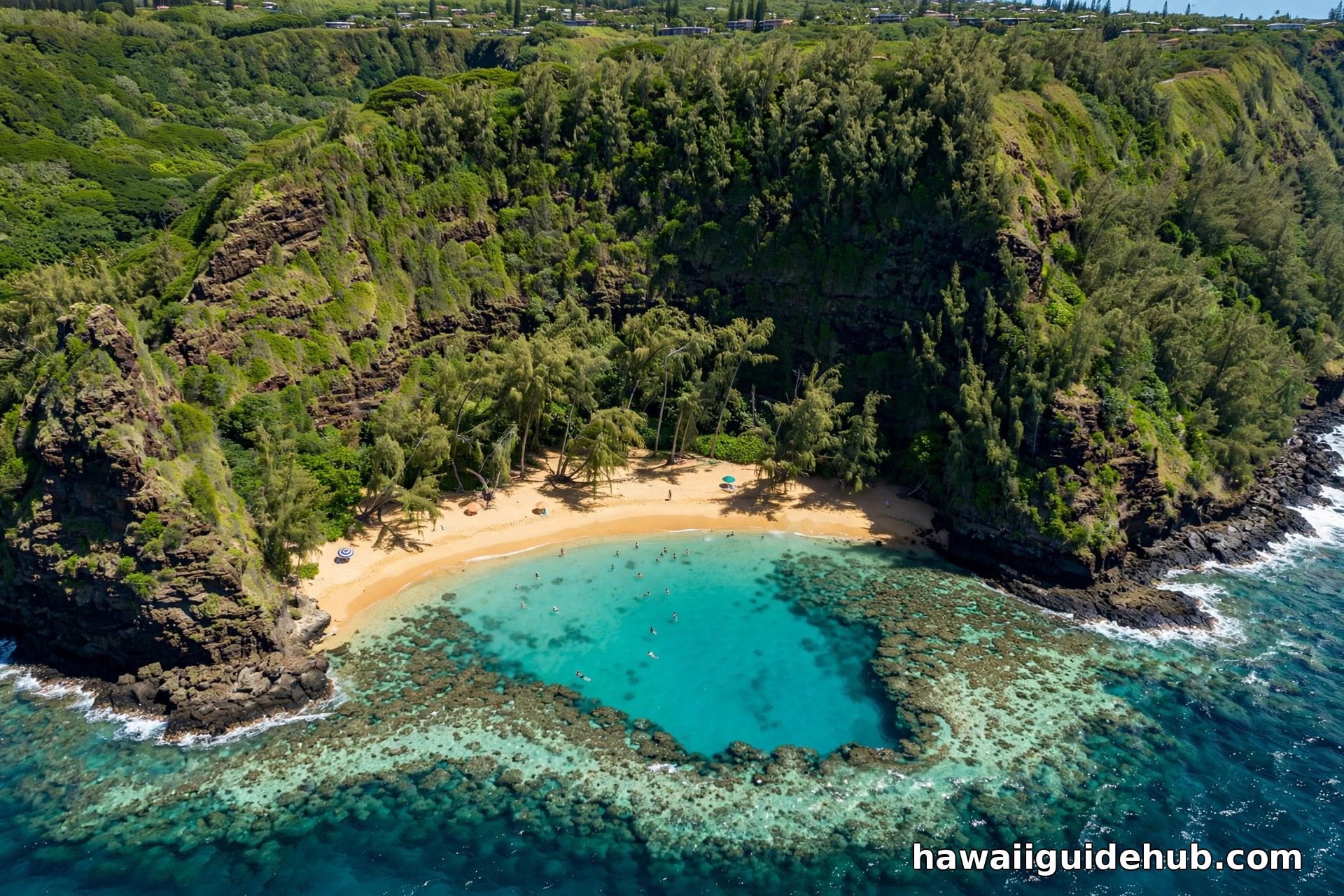
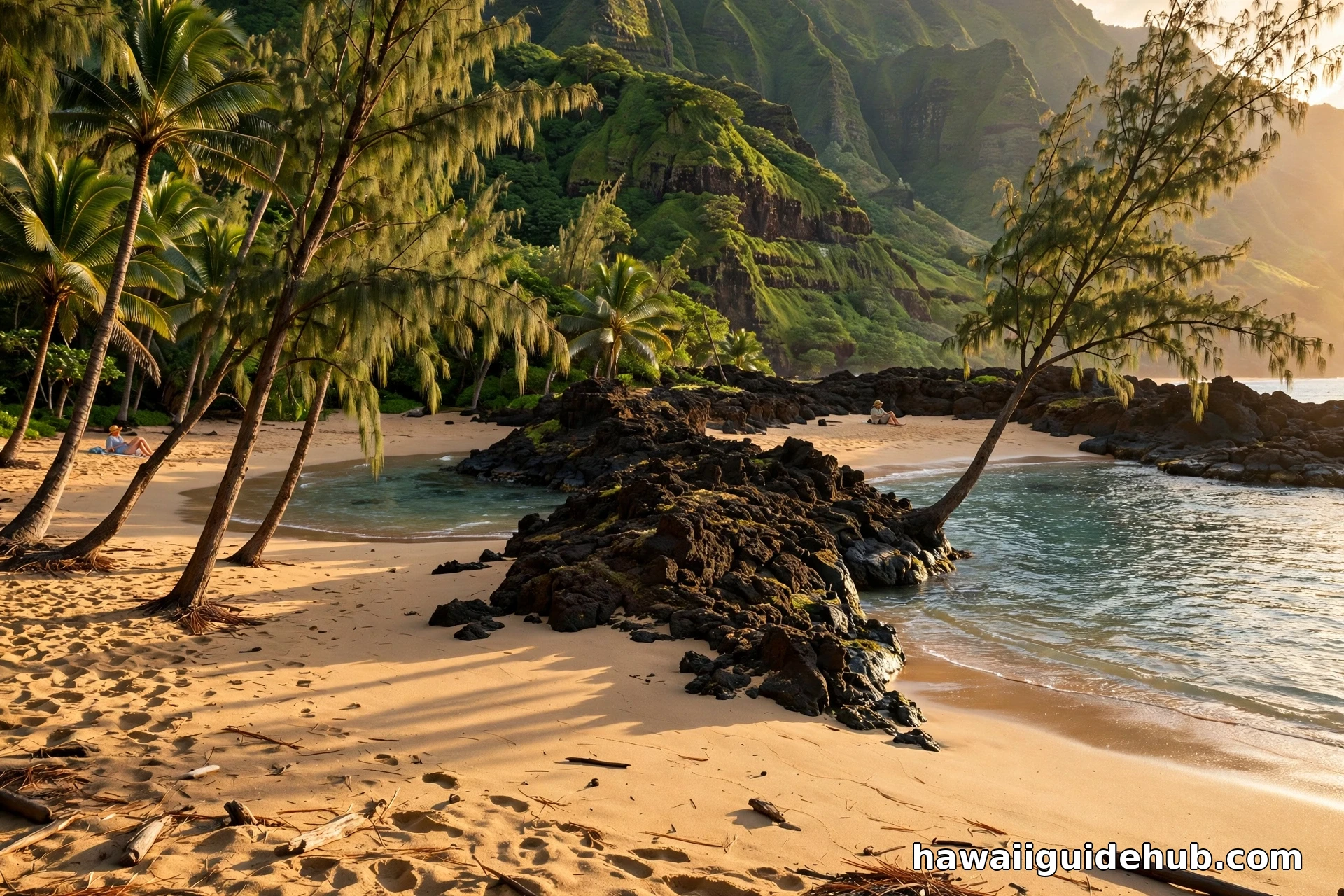
Pali Ke Kua is not one beach but two. A lava rock outcropping splits the shoreline into two small coves tucked at the foot of the Princeville bluff, with Pali Ke Kua condominiums on the east side and Puu Poa condominiums on the west. Because no stream runs into the ocean here, the sand stays remarkably clean: a coarse, golden grain that feels different underfoot from the powdery white sand of the south shore.
The beach is small, roughly 300 feet of sand stretched across both coves, and a protecting reef keeps the water calmer than the open ocean beyond. Ironwood and palm trees lean over the sand and provide natural shade, which is welcome because there is nowhere else to escape the midday sun. On a calm summer morning you might share the whole place with a dozen people. In winter, when the north Pacific sends its big swells, the narrow shoreline can nearly disappear under the surf.
Do not come here expecting a resort beach. There are no restrooms, no showers, no food, and no rentals. What you get instead is quiet, clear water, and one of the prettiest small coves on Kauai. Sea turtles, or honu, cruise the reef here regularly, and the snorkeling on a calm day rivals busier spots with a fraction of the crowd.
How to Get to Hideaways Beach: The Public Trail
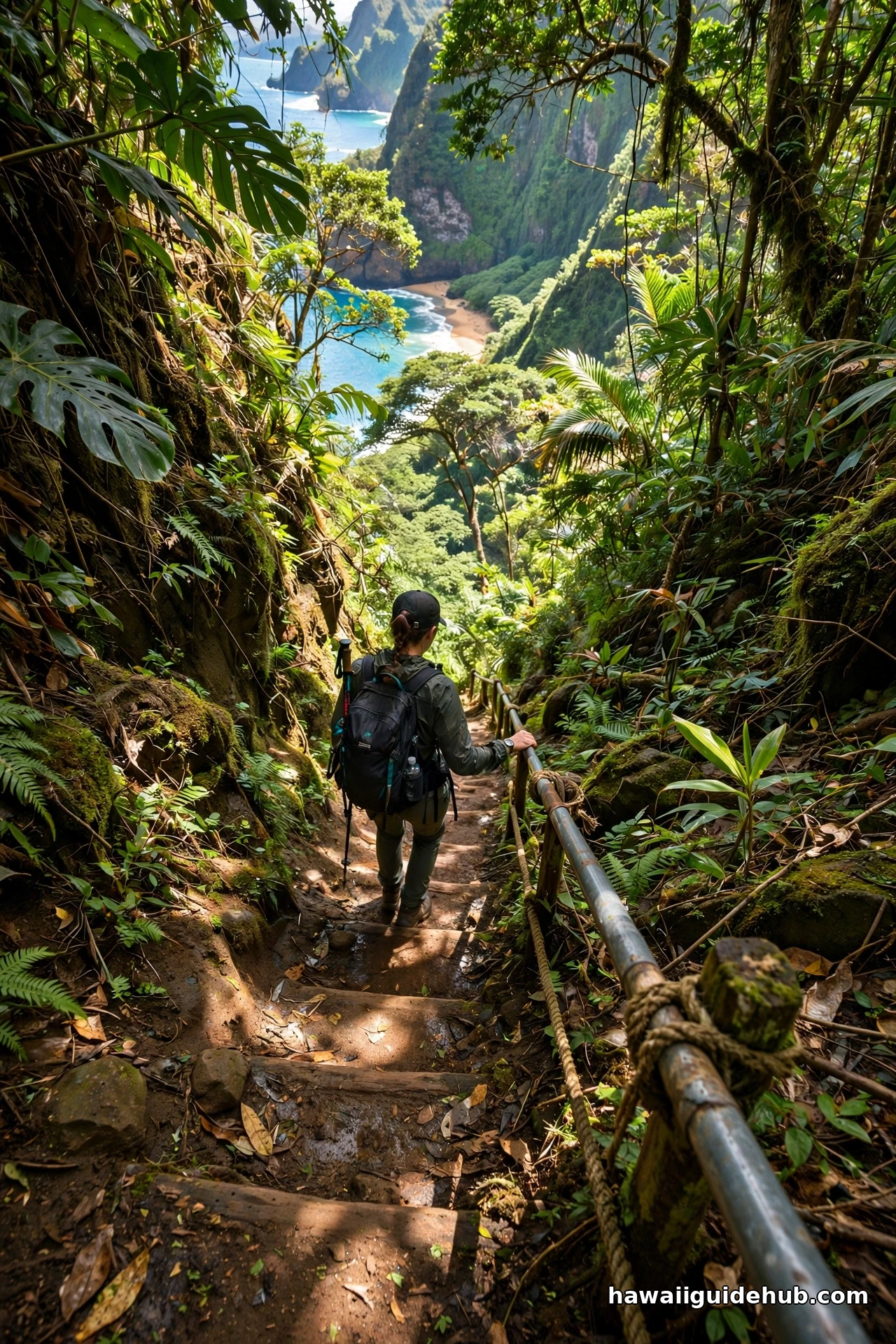
Getting to Hideaways Beach is the adventure, and it is worth understanding before you go. The public right-of-way trail starts on the west property line of the Puu Poa condominiums, between the condo property and the neighboring hotel grounds. Follow the path along the fence to the edge of the bluff, where steep stairs drop over the edge toward the beach.
The descent takes about 10 minutes and it is genuinely steep. The upper section has stairs with pipe and rope handrails to hold onto, which you will want, because the cliff drops away sharply beside the trail. Past the stairs the path becomes a dirt trail that can be slippery and treacherous after rain. Wear shoes with real grip, not flip-flops, and take your time both ways. The climb back up after a day in the sun is the harder half, so budget your energy and your water accordingly.
A few practical notes for the trail. Mosquitoes are common along the shaded path, so repellent earns its place in your bag. Pack light: everything you carry down must be carried back up. And if it has rained recently or the ground looks slick, consider skipping the beach that day. A sprained ankle at the bottom of a cliff trail is a bad way to spend a Kauai vacation.
The Private Path for Condo Guests
There is a second way down: a paved concrete pathway that starts between the buildings of the Pali Ke Kua condominium complex and leads to the east section of the beach. This path is private, reserved for guests of the condominiums. If you are staying at Pali Ke Kua, you have the easiest access of anyone. If you are not a guest, use the public trail and respect the private property boundary.
Parking at Pali Ke Kua Beach
Parking is the tightest part of the logistics. Public parking near the trailhead is very limited, just a small area beside the much larger hotel lot nearby. Arrive early in the morning for the best chance at a spot, especially in summer when the beach is at its best. If the small public area is full, do not improvise: parking in the hotel or condo lots without permission risks a tow, and parking on the roadside where it is prohibited risks a ticket. Have a backup beach in mind, such as nearby Anini or Hanalei Bay, so a full lot does not ruin your morning.
Swimming and Snorkeling
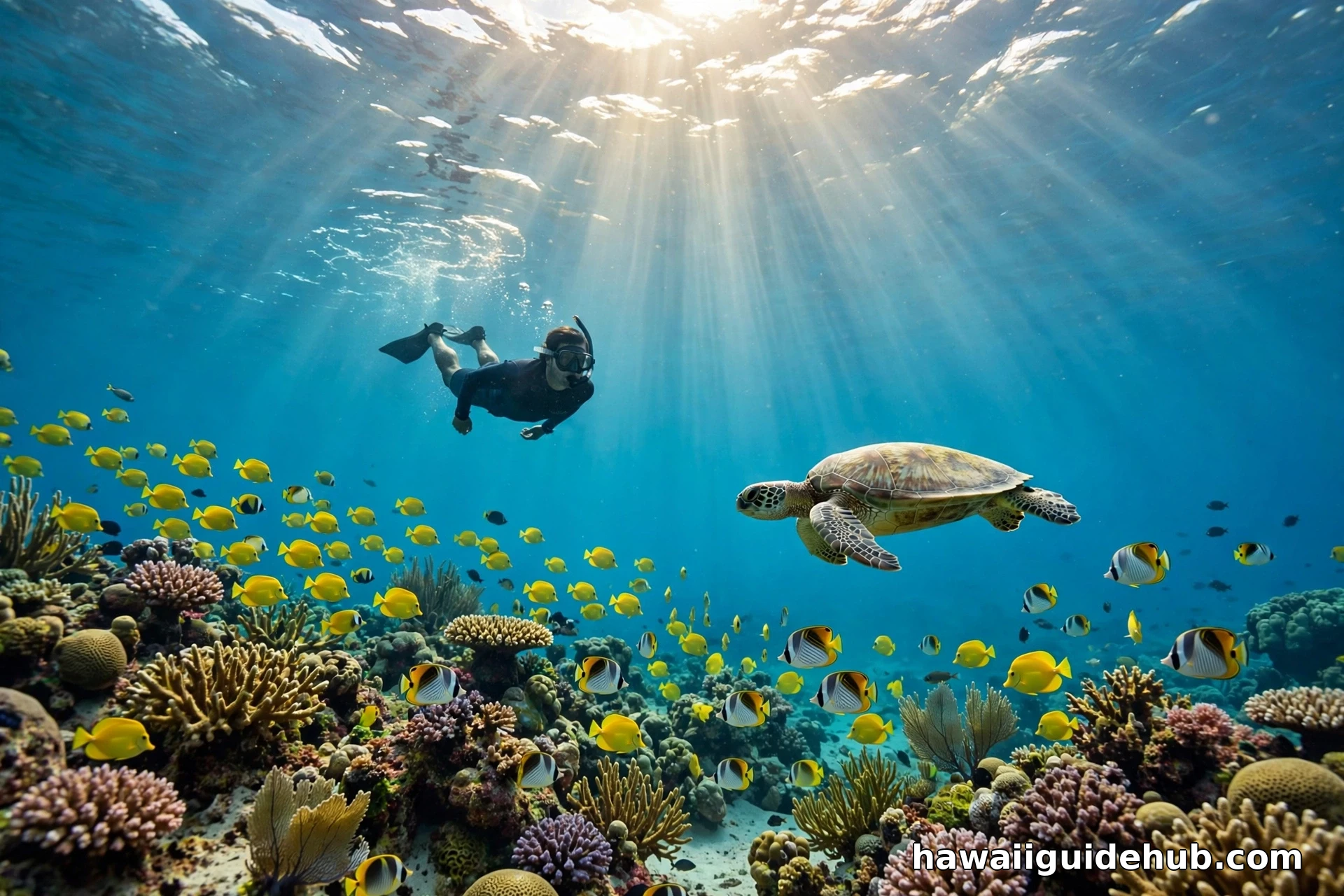
Swimming at Pali Ke Kua is secondary to snorkeling. The ocean bottom is rocky in places, and the entry is not the gentle sandy slope you find at Hanalei Bay. When the water is calm, though, the snorkeling is excellent. The offshore reef shelters a pocket of clear water where you can see schools of reef fish, and honu glide through regularly. Bring your own mask, snorkel, and fins, because there are no rentals anywhere near the beach.
Conditions decide everything here. Enter the water only when the surf is low and the water is clear. If the surface looks murky, if waves are breaking hard on the reef, or if you see strong current lines moving along the shore, stay on the sand. Rip currents can form when the surf comes up, and there is no lifeguard to help if you get into trouble. Snorkel with a buddy, stay inside the protected area, and keep an eye on the surf the whole time you are in.
Reef etiquette matters at a small, fragile spot like this. Use reef-safe sunscreen, applied well before you arrive so it does not wash straight off. Do not stand on the coral, do not touch the turtles (Hawaiian law protects them, and the respectful distance is at least 10 feet), and take every scrap of what you brought back up the trail with you.
Seasonal Ocean Conditions
Kauai’s north shore has two personalities, and Pali Ke Kua shows both. From late spring through early fall, typically May through September, the north Pacific is quiet and the water here is at its calmest and clearest. This is the window for snorkeling, for easy water entry, and for the beach at its widest.
From roughly October through April, winter swells roll in and everything changes. Surf rises, the water turns murky, currents strengthen, and the narrow beach can shrink or vanish under the waves. Winter is the wrong season for this beach. If you visit Kauai in winter, enjoy Hideaways from the overlook above and swim at a lifeguarded south shore beach instead. For more on how the seasons shape an island trip, see our guide to what time of year it rains in Hawaii.
Hazards and Safety: Read This Before You Go
Pali Ke Kua is beautiful and it is also unforgiving of carelessness. The honest list: there is no lifeguard, so you are on your own in the water. The trail is steep with a sharp drop beside it, and the dirt sections turn slick when wet. Rip currents can develop when surf rises. The sun is intense with limited shade at midday. And the winter surf that makes the north shore famous for surfing makes this little cove dangerous.
The safe way to enjoy it is simple. Go in the calm season, go in the morning before the wind picks up, check the surf forecast before you leave your hotel, wear proper shoes on the trail, bring more water than you think you need, and never turn your back on the ocean. If anything about the water looks wrong, the beach is still a lovely place to sit in the shade and watch the turtles. Not every beach day needs to include swimming.
Facilities: What Is (and Is Not) There
There are no facilities at Pali Ke Kua Beach. No restrooms, no showers, no drinking water, no trash cans, no lifeguard, no food, no rentals. Plan like you are going somewhere genuinely wild: water, snacks, reef-safe sunscreen, a towel, snorkel gear, a dry bag for valuables, and a bag for your trash. Everything you bring down the trail comes back up with you, including every wrapper and bottle.
Rules and Etiquette
The rules here are mostly common sense, but they matter more at a small beach with no staff. Stay on the public trail and off private landscaping. Keep noise low; the condos above are people’s homes. Do not feed the wildlife, including the turtles. Pack out all trash. If you smoke, do not leave butts in the sand. And give other beachgoers space: the whole point of Hideaways is that it feels hidden, so help keep it that way for everyone.
Best Time to Visit
Morning is the best time of day. The trail is cooler, the parking situation is better, the water is usually calmest, and the light on the cove is at its prettiest. Summer months bring the calmest ocean. Weekdays are quieter than weekends. And the golden rule for the north shore applies here more than most places: check the surf report the morning you plan to go, and have a backup plan if the ocean says no.
Nearby Alternatives Worth Knowing
If the trail looks too steep, the lot is full, or the surf is up, the north shore has excellent backups within a short drive. Anini Beach has a huge protecting reef and some of the calmest swimming on the island. Hanalei Bay offers two miles of sand with lifeguards and facilities. Tunnels Beach has world-class snorkeling when calm, with easier access than Hideaways. Each has its own character; our roundup of the best Kauai beaches for swimming and relaxation compares them in detail, and our guide to things to do on Kauai helps you build the rest of the day around whichever beach you choose.
For the drive over, the town of Hanalei makes a natural stop for food before or after the beach, and the complete guide to Poipu covers the south shore if you want to compare both coasts. If sea turtles are the highlight of your trip, read up on sea turtle etiquette and conservation before you snorkel anywhere in Hawaii.
See the Trail and Cove on Video
Frequently Asked Questions
Is Pali Ke Kua Beach the same as Hideaways Beach?
Mostly, yes. The names are used interchangeably for the pair of coves below the Princeville bluff. Strictly speaking, some locals distinguish the two coves: the east section reached by the private condo path and the west section reached by the public trail. For visitors, one page and one name pair covers it.
How do you get to Hideaways Beach?
Use the public trail on the west property line of the Puu Poa condominiums, next to the neighboring hotel grounds. Follow the fence line to the bluff edge, then take the steep stairs with pipe and rope handrails down to the beach. It takes about 10 minutes down and longer coming back up. The paved path from the Pali Ke Kua condos is private and for guests only.
Is there a lifeguard at Hideaways Beach?
No. There is no lifeguard on duty at Pali Ke Kua Beach, and there are no facilities of any kind. Swim and snorkel only in calm conditions, stay with a buddy, and be honest about your abilities.
Can you snorkel at Pali Ke Kua Beach?
Yes, and on calm days it is very good. The protecting reef holds clear water with reef fish and frequent sea turtle sightings. Go in summer, go in the morning, enter only when the surf is low and the water is clear, and stay out when the surf is up. Bring your own gear.
Is the trail to Hideaways Beach hard?
It is short but steep, with stairs, handrails, and dirt sections that get slippery when wet. It is not suitable for small children, anyone afraid of heights, or anyone with mobility limitations. Wear grippy shoes and pack light.
When is the best time to visit Hideaways Beach?
Late spring through early fall, in the morning, on a weekday, when the north shore surf forecast is low. Winter swells make the beach unsafe for swimming and can shrink the sand to almost nothing.
Pali Ke Kua Beach is the north shore at its most honest: no facilities, no lifeguard, no easy road, just a steep trail, a quiet cove, and water that rewards good judgment. Go prepared, go in the calm season, respect the trail and the reef, and you will understand why the people who know this beach guard its secrets.