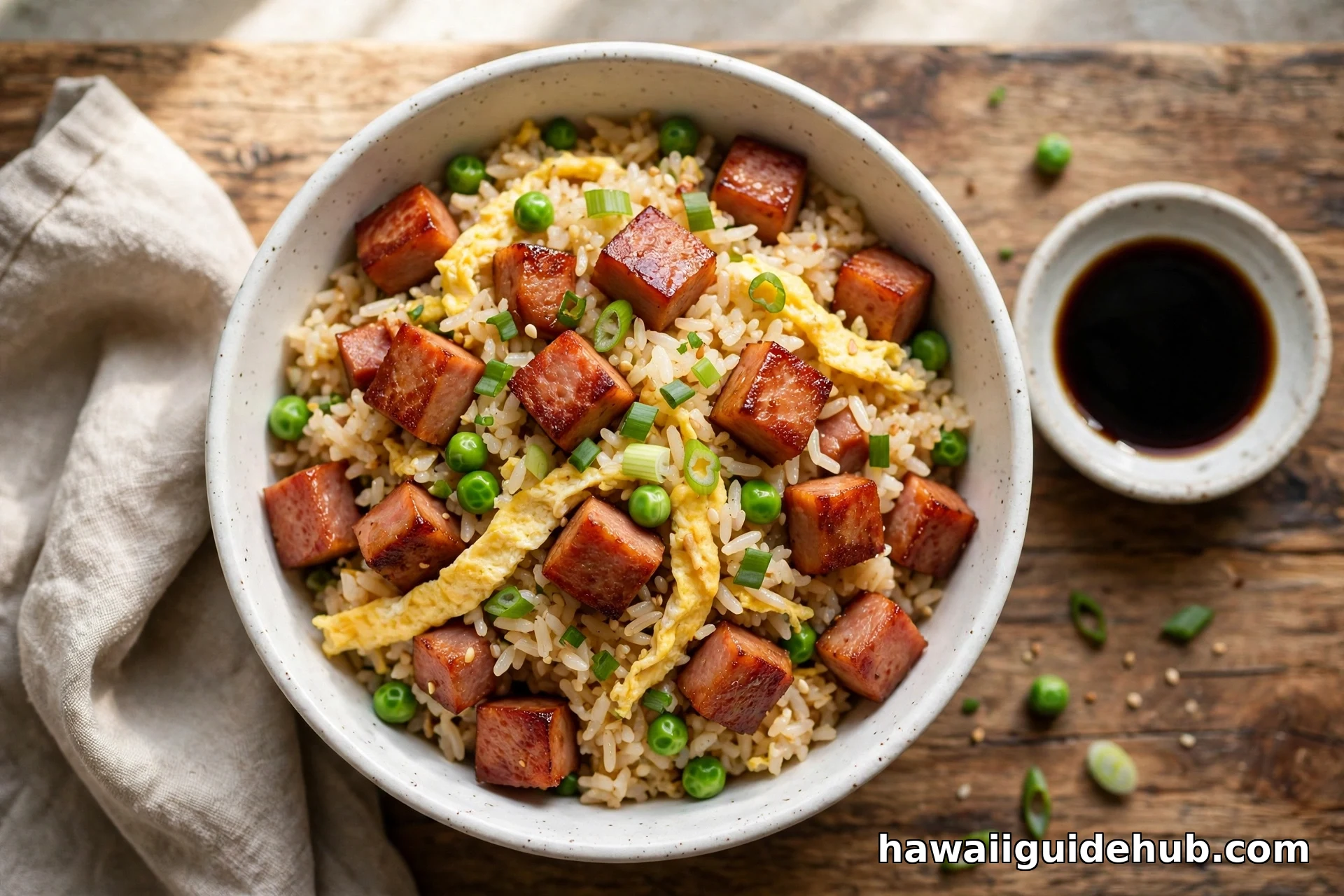
Hawaiian Spam Fried Rice: The Classic Island Recipe and Pro Tips

There are some dishes that taste like a place. In Hawaii, one of them comes straight out of a can. Hawaiian spam fried rice is crispy cubes of caramelized SPAM tossed through hot, smoky rice with eggs, green onions, and shoyu. It is humble, fast, and completely addictive, the kind of meal that shows up at family parties, in plate lunch boxes, and on breakfast tables across the islands.
If you have never tried it, this guide will walk you through everything. You will learn why Spam became Hawaii’s comfort food, what goes into an authentic island style pan, the step by step recipe, the pro tips that separate good fried rice from great fried rice, fun variations, and where to taste the real thing on your trip. For a broader tour of island flavors, our must-try local dishes in Hawaii guide is a great companion.
Why Spam Became Hawaii’s Comfort Food
To understand spam fried rice, you have to understand Hawaii’s relationship with SPAM. The canned pork product was created by Hormel Foods in Minnesota in 1937, and it arrived in the islands during World War II with American GIs. Fresh meat was scarce and hard to ship, but SPAM needed no refrigeration and lasted indefinitely, which made it a lifeline for both troops and local families.
After the war, it never left. Hawaii now consumes more SPAM per capita than any other state in the US, an estimated 7 million cans a year. Locals eat it fried with eggs and rice for breakfast, pressed into musubi for lunch, and baked into all kinds of comfort food. Every year, Waikiki hosts the SPAM JAM festival, where restaurants compete with creative dishes built around the pink can. What started as wartime necessity became genuine cultural pride, and nowhere is that more delicious than in a hot pan of fried rice.
What Makes Hawaiian Spam Fried Rice Different
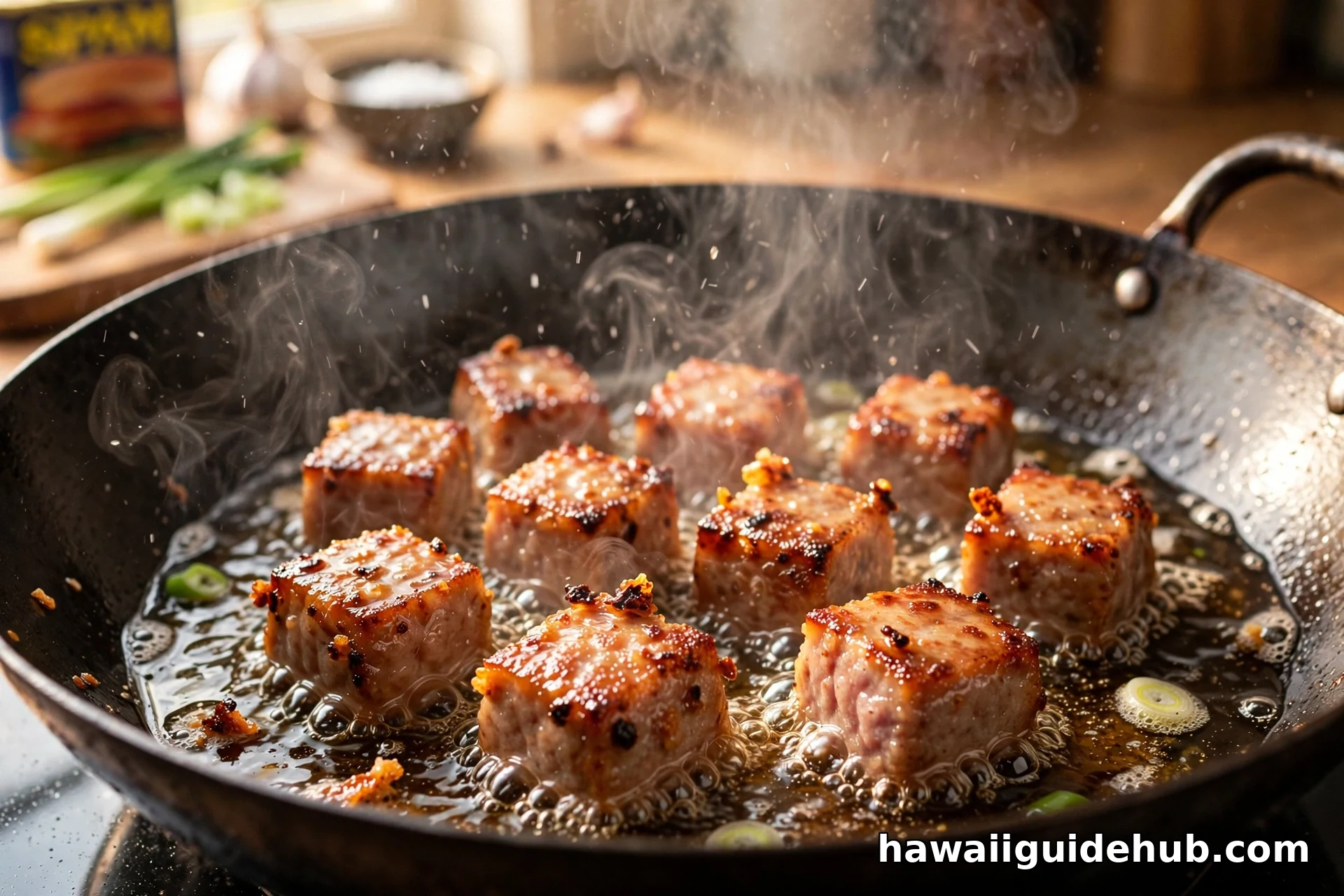
Fried rice exists all over the world, but the Hawaiian version has its own personality. The base is simple: cold leftover rice, SPAM, eggs, green onions, and shoyu. The SPAM is fried first until the cubes are deep golden and crisp at the edges, and the rendered fat flavors everything that touches the pan afterward. A spoonful of shoyu, a drizzle of sesame oil, and a crack of white pepper finish it off.
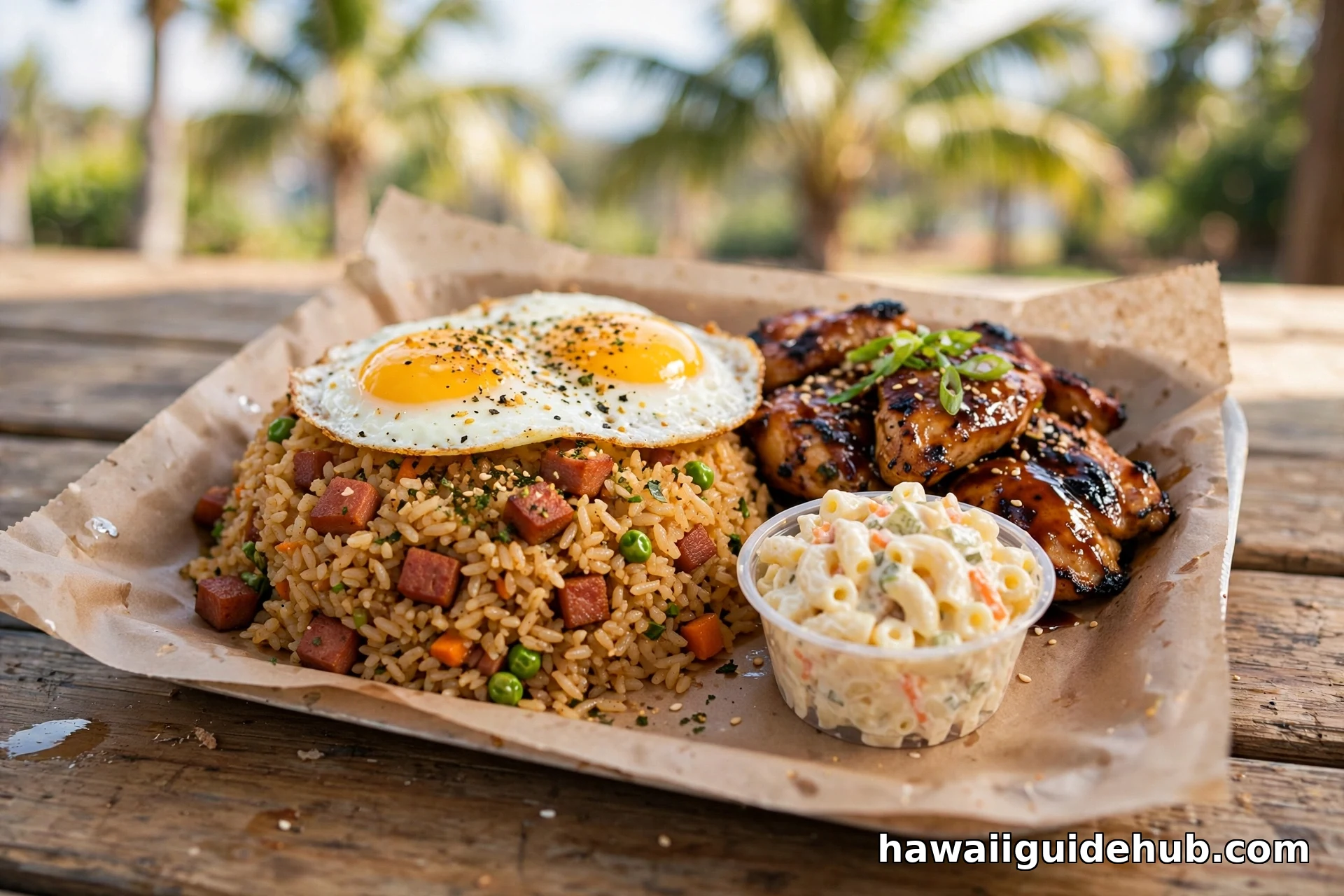
Local cooks often add frozen peas and carrots, minced garlic, and fresh ginger, a nod to the Chinese and Japanese roots of the dish. Some versions lean breakfast with a fried egg on top. Others lean plate lunch, served next to teriyaki chicken and mac salad. The rice should be dry and a little toasty, never mushy, with each grain separate and lightly coated. When it is done right, you get sweet, salty, smoky, and savory in every bite.
The Ingredients
One of the best things about this dish is that the ingredient list is short and forgiving. You probably have most of it in your kitchen already. Here is what you need for four generous servings.
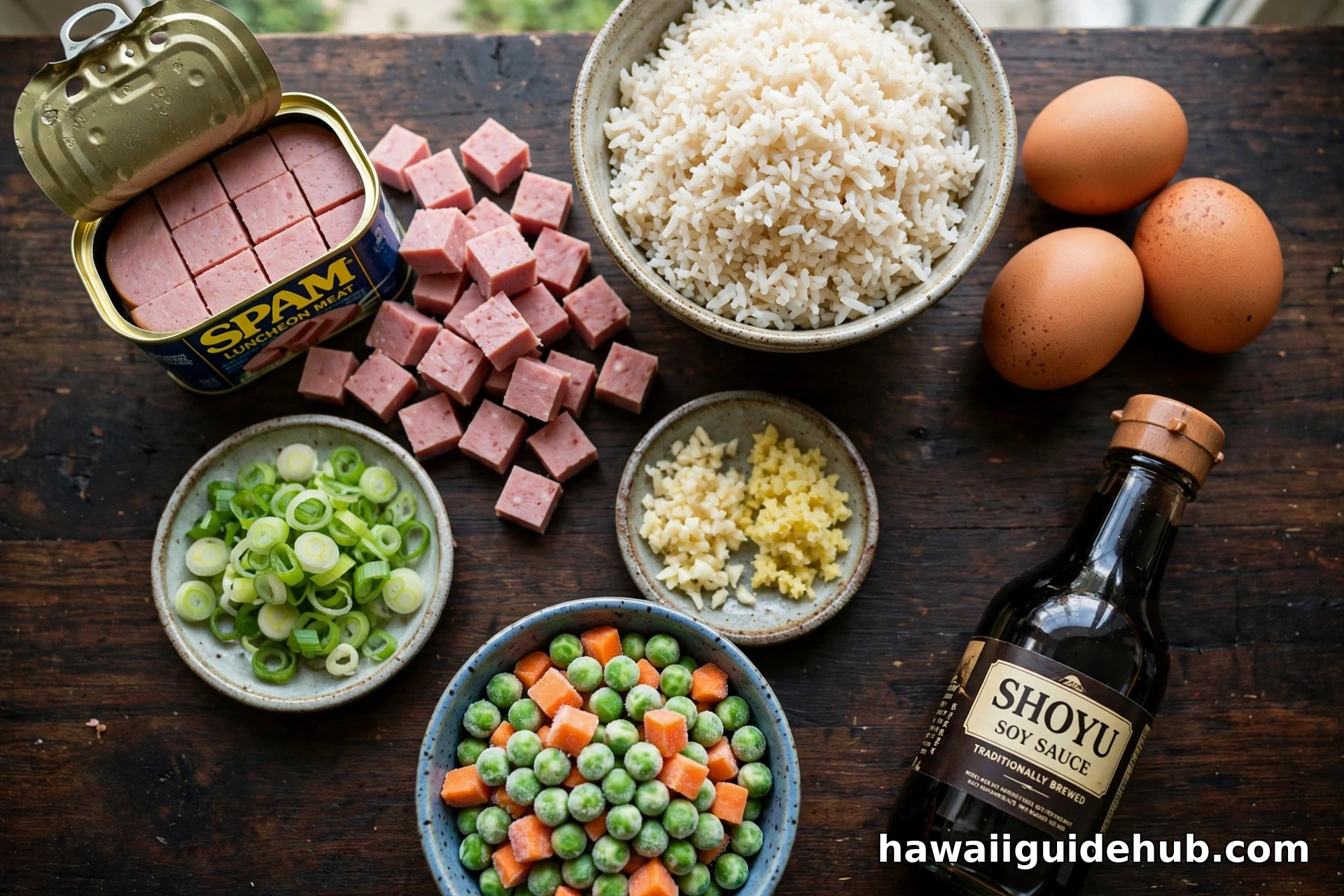
What you will need
Rice: 3 cups of cooked white rice, made the day before and chilled overnight. Medium or long grain both work. Cold rice is the single most important ingredient choice you will make, so do not skip this step.
SPAM: 1 can (12 oz) of classic SPAM, cut into half inch cubes. Classic has the best flavor for this dish, but low sodium works too if you want to control the salt. Some cooks like teriyaki or tocino SPAM for a twist.
Eggs: 2 large eggs, beaten with a pinch of salt. They become soft ribbons woven through the rice.
Seasoning: 2 tablespoons of shoyu (soy sauce), 1 teaspoon of sesame oil, and half a teaspoon of white pepper. In Hawaii, shoyu is the everyday word for soy sauce, and it gives the rice its signature savory depth.
Aromatics and vegetables: 3 cloves of garlic (minced), 1 teaspoon of fresh grated ginger, 4 green onions (sliced, whites and greens separated), and 1 cup of frozen peas and carrots. These add freshness, color, and crunch.
Cooking fat: 1 tablespoon of neutral oil for the pan. The SPAM renders its own fat as it crisps, so you do not need much.
The Recipe: Step by Step
This whole dish comes together in about 20 minutes once your ingredients are prepped. Have everything chopped and measured before you turn on the heat, because fried rice moves fast.
Step 1: Crisp the SPAM
Heat a large wok or skillet over medium high heat and add the oil. Add the SPAM cubes in a single layer and let them cook undisturbed for 2 to 3 minutes per side, until the edges are deep golden brown and crisp. This should take 5 to 7 minutes total. Remove the SPAM to a plate and leave the rendered fat in the pan.
Step 2: Scramble the eggs
In the same hot pan, pour in the beaten eggs. Let them set for about 20 seconds, then gently scramble into soft ribbons. Do not overcook them. Remove the eggs to the plate with the SPAM.
Step 3: Wake up the aromatics
Add the garlic, ginger, and the white parts of the green onions to the pan. Stir for 30 seconds until fragrant. If using frozen peas and carrots, add them now and cook for a minute until heated through.
Step 4: Fry the rice
Add the cold rice to the pan, breaking up any clumps with your spatula or hands as it goes in. Spread it in an even layer and let it sit undisturbed for 30 seconds so the bottom gets toasty, then stir and repeat. Cook for 3 to 4 minutes total until the grains are hot and a little crisp.
Step 5: Season and combine
Drizzle the shoyu around the edges of the pan so it sizzles, then toss the rice to coat every grain. Add the white pepper and sesame oil. Return the SPAM and eggs to the pan, toss everything together for a final minute, and finish with the green parts of the green onions. Taste and adjust the shoyu if needed, then serve immediately.
Pro Tips for the Best Pan
Anyone can stir rice in a pan, but a few habits make the difference between soggy and spectacular. These are the tips local cooks swear by.
Use cold, day-old rice
Fresh rice is too wet and turns gummy in the pan. Rice that has chilled uncovered in the fridge overnight dries out on the surface, so the grains fry up separate and chewy instead of steaming into a clump. If you are in a hurry, spread fresh rice on a sheet pan and freeze it for 30 minutes.
Get the pan screaming hot
High heat is what creates the smoky, toasty flavor that great fried rice is known for. Let the rice sit still for stretches so it can pick up color and crunch on the bottom before you stir. If your pan is not hot enough, the rice just warms up instead of frying.
Do not crowd the pan
Too much rice at once traps steam and kills the crisp. If you are doubling the recipe, cook it in two batches. It takes a few extra minutes and the results are dramatically better.
Season with restraint
SPAM is already salty, so start with 2 tablespoons of shoyu and taste before adding more. The same goes for salt in general. A balanced pan of fried rice should taste savory and rich, never harsh.
Fun Variations to Try
Once you have the classic down, spam fried rice is a playground. Here are the variations you will see most often in Hawaii.
Kimchi spam fried rice: Add a cup of chopped kimchi and a spoonful of its juice for a tangy, spicy kick. This Korean inspired version is hugely popular on the islands.
Pineapple spam fried rice: Toss in chunks of fresh pineapple for a sweet and savory combo. The caramelized fruit pairs beautifully with the salty SPAM.
Breakfast fried rice: This is the local diner classic. Serve the fried rice with two fried eggs on top and a side of Portuguese sausage. Add a little ketchup on the side if you grew up eating it that way.
Teriyaki SPAM: Swap classic SPAM for the teriyaki variety, or glaze your fried cubes with a quick mix of shoyu, brown sugar, and a splash of pineapple juice before adding the rice.
Vegetable loaded: Double the peas and carrots and add diced bell pepper, corn, or edamame. It will not be traditional, but it will be colorful and delicious.
Where to Eat Spam Fried Rice in Hawaii
You do not have to cook to taste the real thing. Spam fried rice is everywhere in Hawaii, from breakfast counters to lunch wagons. Plate lunch spots and local drive-ins across the islands serve it as a breakfast staple, often with eggs and your choice of meat. Zippy’s, the beloved local chain, has fed generations of islanders their fried rice fix. You will also find it at farmers markets, food trucks, and beachside lunch wagons, where it is usually made to order in a screaming hot pan.
If you want to build a full island meal around it, pair your fried rice with huli huli chicken or malasadas for dessert. And if fresh island produce sounds good on the side, our guide to native Hawaiian fruits will help you pick the perfect tropical pairing.
Serving Ideas
Spam fried rice is a complete meal on its own, but it also plays well with others. Serve it as the main dish with a simple green salad, or as a side next to grilled fish or teriyaki meat. For a proper plate lunch, add a scoop of mac salad and a piece of fried chicken. At breakfast, top it with a sunny side up egg and a drizzle of sriracha. For parties, keep a big batch warm in a slow cooker and let guests build their own bowls with toppings like extra green onions, furikake, and chili crisp.
Storing and Reheating Leftovers
Store leftover fried rice in an airtight container in the fridge for up to 4 days. To reheat, warm it in a hot skillet with a tiny splash of water and a drizzle of oil, stirring until steaming. The microwave works in a pinch, but the skillet brings back the texture. You can also freeze it for up to 3 months; thaw overnight in the fridge before reheating. One note of caution: cooked rice should be cooled quickly and refrigerated within an hour, so do not leave the pan sitting out on the counter all afternoon.
See It Made on Video
Frequently Asked Questions
Is spam fried rice actually Hawaiian?
Yes. While fried rice has Chinese roots, the SPAM version is a distinctly Hawaiian creation. SPAM arrived with the military in World War II, became the islands’ favorite comfort food, and local cooks folded it into fried rice the way they fold it into everything else. Today it is as Hawaiian as the plate lunch.
Can I use fresh rice instead of day-old rice?
You can, but the texture will suffer. Fresh rice holds too much moisture and turns mushy in the pan. If you only have fresh rice, spread it on a sheet pan and freeze it for 30 minutes to dry the surface before frying.
What is the best SPAM variety for fried rice?
Classic SPAM is the standard and gives the most authentic flavor. Low sodium is a good choice if you are watching salt. Teriyaki, tocino, and hot and spicy varieties all work and add their own twist.
Is spam fried rice healthy?
It is comfort food, not health food. SPAM is high in sodium and fat, so this is a sometimes dish for most people. You can lighten it up with extra vegetables, brown rice, and the low sodium variety, but it will always be an indulgence first.
Can I make it vegetarian?
You can make a vegetarian fried rice with the same technique, but without SPAM it is no longer spam fried rice. For a meatless version with a similar savory punch, try smoked tofu or mushrooms with a little extra shoyu and sesame oil.
How long does spam fried rice last in the fridge?
Up to 4 days in an airtight container. Reheat it in a hot skillet for the best texture, and always refrigerate leftovers within an hour of cooking.
Hawaiian spam fried rice is proof that the best food does not need to be fancy. A can of SPAM, yesterday’s rice, and a hot pan are all it takes to make something that has fed island families for generations. Crisp the SPAM well, keep the rice cold and the pan hot, and do not be shy with the green onions. Once you taste that first forkful of golden, smoky, savory rice, you will understand why Hawaii never gave up the pink can.