Kamaole Beach: Your Guide to Kam I, Kam II, and Kam III in Kihei, Maui

If you ask a Maui local where they actually spend their beach days, chances are the answer starts with “Kam.” Short for the Kamaole Beach Parks, this trio of beaches in Kīhei is the backbone of South Maui beach life. Kam I, Kam II, and Kam III sit one after another along South Kīhei Road, each with its own personality: one for swimmers, one for quiet mornings, and one for family picnics that stretch into sunset.
This guide covers all three. You will learn which Kamaole Beach Park fits your plans, how the parking and fees work, where the snorkeling is best, and what to know about swimming safely here. Whether you are staying in Kīhei or driving down from Wailea, the Kamaole Beach Parks are the easiest, friendliest beaches you will find on Maui.
Where the Three Kamaole Beach Parks Are
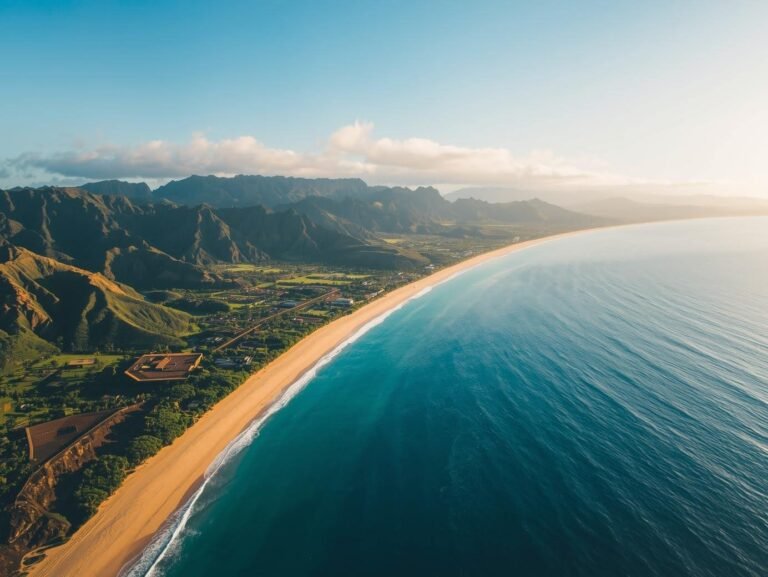
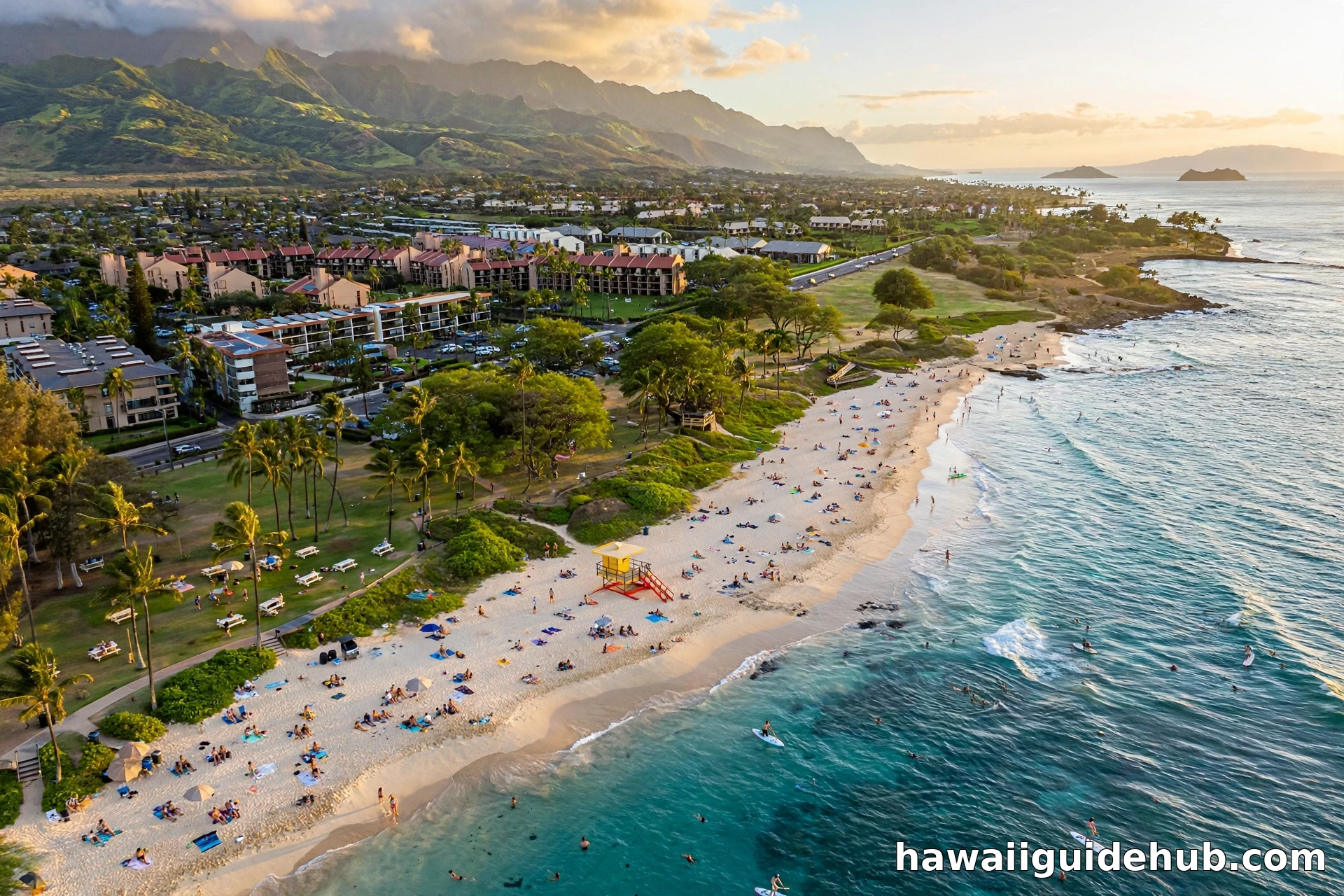
The Kamaole Beach Parks sit right on South Kīhei Road in the heart of Kīhei, South Maui. Kam I is at the north end, Kam II in the middle, and Kam III at 2800 South Kīhei Road at the south end. They run north to south in order, between the Azeka shopping centers and Wailea, so you can walk or drive between all three in minutes.
What makes them so beloved is how easy everything is. These are county beach parks, run by the County of Maui Department of Parks and Recreation, with free entry, restrooms, showers, picnic tables, and lifeguard towers. There is no resort between you and the ocean. You park, you walk a few steps, and you are on the sand. That simplicity is rare on Maui, and it is why the Kam beaches stay popular with locals year after year.
Kam I: The Largest Beach and Best Swimming
Kam I is the biggest of the three beaches and the best one for swimming. The sand stretches long and wide, the bottom is sandy, and the waves are usually gentle, especially in the morning. On a calm day, this is one of the most pleasant swimming beaches in all of Kīhei.
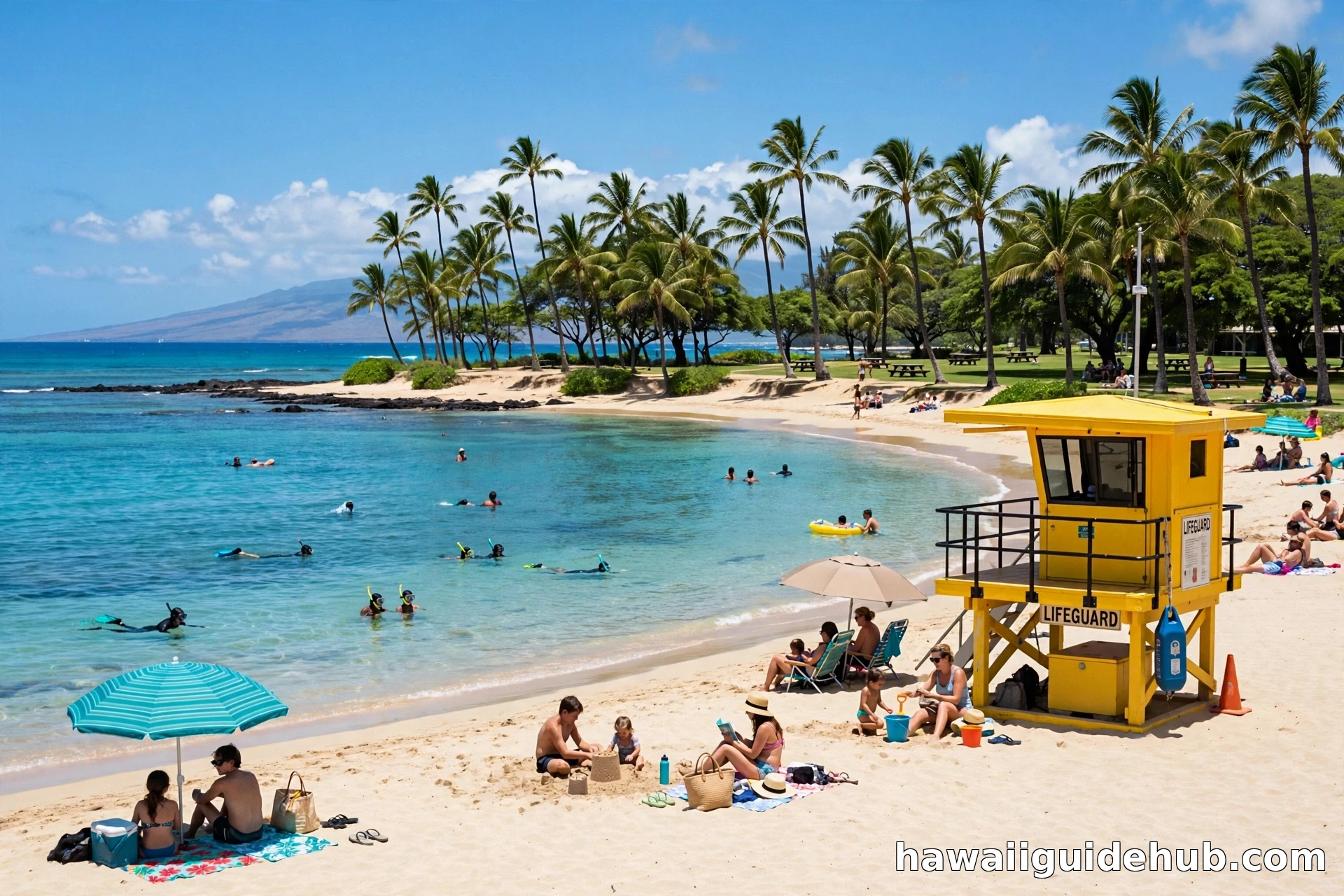
The main parking lot sits by the lifeguard tower at the corner of South Kīhei Road and Alanui Ke’ali’i Road, and there is a gravel overflow lot across the street when the main lot fills. Come early on weekends, because it does fill. There is a convenience store just across the street, which makes Kam I the most convenient of the three for grabbing drinks and snacks.
The north end of Kam I has its own name: Charley Young Beach. This quieter stretch at 2400 South Kīhei Road feels more sheltered, with ironwood trees lining the sand and giving some rare Kīhei beach shade. There is no lifeguard stand on the Charley Young end itself, but the lifeguard at Kam I covers the beach nearby. The sand here is fine and soft, and the long beach is a favorite for morning walks and jogs.
Kam II: The Quiet Middle Child
Between the two bigger names sits Kam II, a narrower, more intimate beach of about a third of a mile. Rocky outcrops at either end separate it from Kam I and Kam III at high tide, which gives it a tucked-away feel even though it sits right off the road.
Kam II has a white sandy bottom that makes it good for swimming, paddleboarding, and snorkeling. The best snorkeling is at the rocky ends, where fish gather around the rocks. The park has a lifeguard station, restrooms, showers, and barbecue stations. A refurbished ADA-accessible ramp makes this one of the easier beaches to reach for everyone.
This is the beach to choose when you want a calmer scene. It never feels as busy as Kam I or as festive as Kam III. Bring a book, arrive early before the wind picks up in the afternoon, and enjoy one of the most relaxed beaches in Kīhei.
Kam III: The Family Picnic Park
Kam III is the most popular of the three with locals, and after one visit you will understand why. The beach itself is smaller, framed by rocky points at both ends, but the park behind it is the largest of the three: 10 acres of grassy lawn with 22 picnic tables, 8 barbecue grills, 3 outdoor showers, and a playground swing set for the kids.
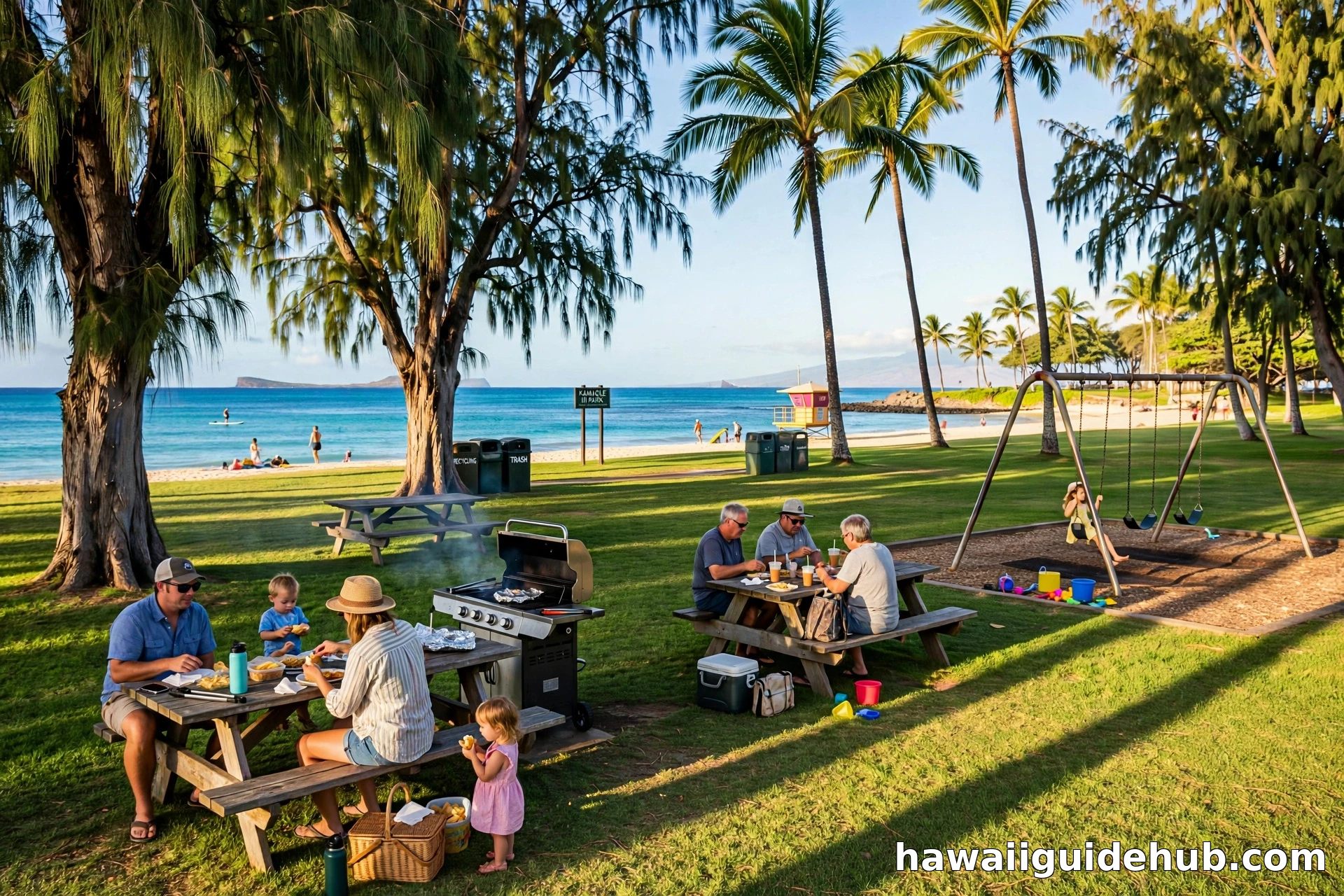
This is where Kīhei holds birthday parties, group picnics, and weekend cookouts. The elevated grassy area on the south end sits above the beach, which makes it a natural whale watching spot in winter and a lovely perch for sunset. The beach at Kam III is about a hundred yards of soft sand, and the clean water off the right side is some of the best swimming water in Kīhei.
Kam III also gets the most consistent little waves of the three, so it draws the most boogie boarders, especially during south swells. In the mid morning to early afternoon, you will see the “spongers” out riding. When the wind picks up later in the afternoon, the beach crowd thins and the sunset crowd takes over.
Which Kamaole Beach Park Is Right for You
Swimming and Ocean Safety
The Kam beaches are generally safe for swimming, and the lifeguard towers make them some of the safest ocean swimming on Maui. Still, the ocean here deserves respect. The water drops to overhead depths fairly close to shore, and during Kona storms and south swells the surf can rise quickly, rip currents can form, and swimming can become dangerous.
A few rules keep every beach day fun. Swim near the lifeguard towers and inside your limits. Check with the lifeguard before going out if the waves look bigger than usual. Never turn your back on the ocean, and keep children within arm’s reach at the water’s edge. The safest swimming is in the morning, when the water is calmest and the wind has not yet picked up.
If you are new to ocean swimming in Hawaii, start at Kam I on a calm morning. The sandy bottom, the lifeguard, and the gentle slope make it the most forgiving entry of the three. For more ways to get in the water safely across the islands, see our guide to outdoor adventures in Hawaii.
Snorkeling at Kamaole Beach
All three parks offer good snorkeling, with one rule: head for the rocky ends. The middle of each beach is sandy and clear but quiet on marine life. The rocks at either end of Kam II and Kam III hold the reef fish, and the south end of Kam III is one of the best shore snorkeling spots in Kīhei.
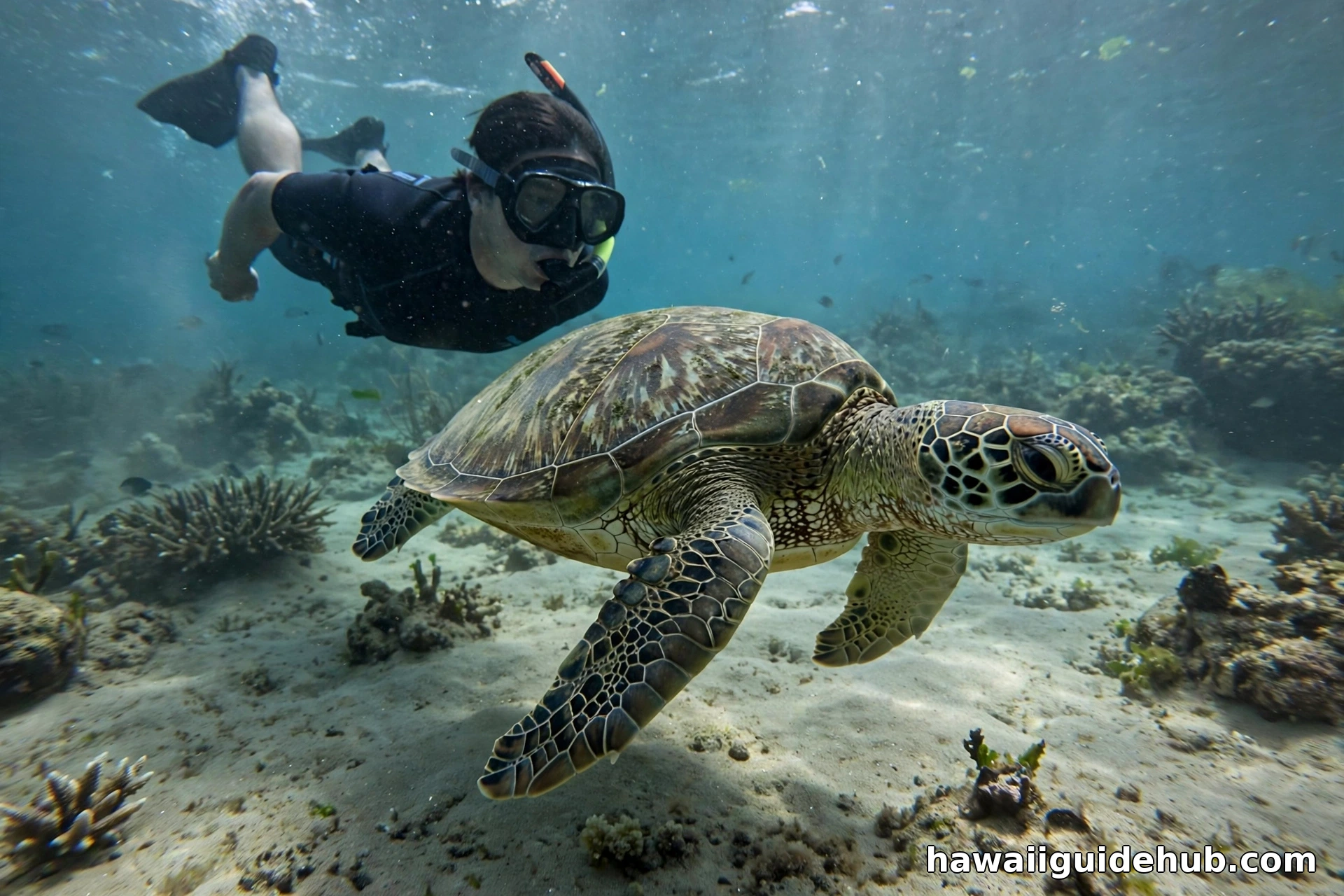
Common sightings include triggerfish, parrotfish, goatfish, damselfish, sea urchins, sea cucumbers, and green sea turtles. Go early in the morning for the clearest water and the calmest entry. Wear reef-safe sunscreen, and give sea turtles at least 10 feet of space. Our sea turtle and snorkeling etiquette guide covers the rules in detail.
Hours, Parking, and Fees
Kam III is open 7 AM to 8 PM daily. Parking is the one part of the Kam beaches that has changed recently, so here is what to know. Kam I has its main lot by the lifeguard tower at South Kīhei Road and Alanui Ke’ali’i Road, plus a gravel overflow lot across the street. Kam III has a large paved lot with 84 spaces. All three lots fill up on weekends and holidays, so arrive before 10 AM on busy days.
Since July 2026, non-residents pay for parking at the Kam beaches through the Park Maui mobile app or an on-site pay station. The standard rates are $10 for daily parking, $50 for a weekly pass, and $150 for a monthly pass. Hawaii residents park free. On weekends and county holidays, the paved lots at Kam I and III are reserved for residents only before 10 AM, so visitors should plan to arrive after that window.
Facilities and What to Bring
All three parks have restrooms, outdoor showers, picnic tables, and barbecue grills, and everything is free. Kam III adds the playground and the most tables and grills. There are no food stands inside the parks, but you are in the middle of Kīhei, so food is never far: the Azeka shopping centers, food trucks at South Maui Gardens, and the convenience store across from Kam I are all within minutes.
Bring reef-safe sunscreen, a hat, and a beach umbrella, because shade is limited on the sand itself. Bring drinking water and whatever food you want for the day. If you plan to picnic at Kam III on a weekend, the grills go early, so claim your spot in the morning. And if you are staying in Wailea, the Kam beaches make an easy day trip north. See our guide to things to do in Wailea to plan the rest of your South Maui day.
Sunsets and Whale Watching
All three Kamaole beaches face west, which makes them some of the best sunset beaches on Maui. The islands of Molokini, Kahoʻolawe, and Lānaʻi sit on the horizon, and the sun drops right into the channel on clear evenings. Evening is when the local crowd comes out: families finishing picnics, couples on the sand, and kids playing in the last of the light.
From December to March, the elevated grassy area at Kam III becomes a whale watching spot. Humpback whales migrate to Maui’s warm waters to breed and give birth, and you can often see them breaching offshore without ever leaving the park. Bring binoculars if you have them. If you are weighing all the reasons to visit Maui, a winter sunset with whales at Kam III is a strong one.
Best Time to Visit Kamaole Beach
Morning is the best time for swimming and snorkeling at any of the three parks. The water is calmest, the wind is down, and the parking lots are emptiest. By afternoon, the trade winds often pick up, which chops up the water and blows sand around, though the afternoon is prime time for boogie boarding at Kam III.
Seasonally, summer brings the calmest swimming conditions and the warmest water. Winter brings bigger south swells at times, plus the whale watching season from December through March. There is no bad month for a beach day here, but always check the ocean conditions before you swim, and let the lifeguard be your guide.
See Kamaole Beach on Video
Kamaole Beach FAQs
Is Kamaole Beach good for swimming?
Yes, Kam I is one of the best swimming beaches in Kīhei, with a sandy bottom, gentle waves on calm days, and a lifeguard on duty. Swim near the lifeguard tower and check conditions before going in.
Which Kamaole Beach Park is best for snorkeling?
The rocky ends of Kam II and Kam III. The south end of Kam III is one of the best shore snorkeling spots in Kīhei, with reef fish and frequent sea turtle sightings.
Is there a lifeguard at Kamaole Beach?
Yes, lifeguard towers are stationed at Kam I, Kam II, and Kam III. Note that the Charley Young Beach end of Kam I does not have its own stand, but the Kam I lifeguard covers the beach nearby.
How much does it cost to visit Kamaole Beach?
Entry is free. Parking is free for Hawaii residents. Since July 2026, non-residents pay for parking via the Park Maui app or on-site pay station: $10 daily, $50 weekly, or $150 monthly.
What is the difference between Kam I, Kam II, and Kam III?
Kam I has the largest beach and the best swimming. Kam II is narrower and quieter, good for relaxing and paddleboarding. Kam III has the largest park with picnic tables, grills, and a playground, making it the best choice for families.
Can you see whales from Kamaole Beach?
Yes. From December through March, humpback whales can often be spotted offshore. The elevated grassy area at Kam III is the best viewing spot of the three parks.
The Kamaole Beach Parks are the rare beaches that work for everyone: morning swimmers at Kam I, quiet readers at Kam II, and birthday parties at Kam III. They are free, they are easy, and they sit in the middle of one of Maui’s sunniest towns. Pick the park that fits your day, arrive early, and stay for the sunset. You will understand why the locals just call them Kam.