Coco Puffs: Hawaii’s Beloved Chocolate Cream Puffs from Liliha Bakery

What Are Coco Puffs?
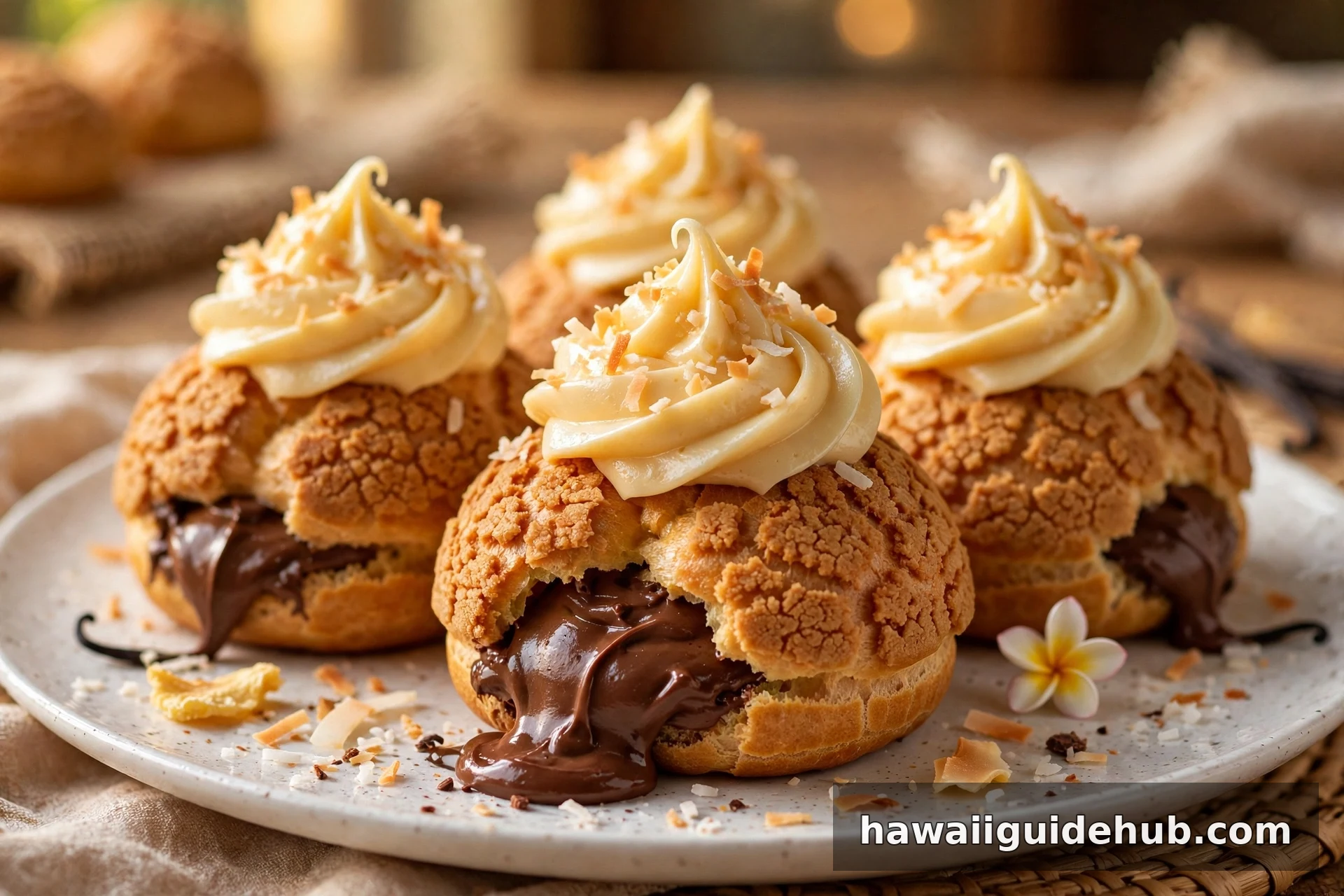
If you ask a local in Hawaii to name the one pastry that captures the islands’ bakery culture in a single bite, there is a good chance the answer will be the coco puff. These golden little rounds look like ordinary cream puffs at first glance, but one bite tells a different story. A crisp choux shell gives way to cool, silky chocolate cream, and the whole thing is crowned with a thick layer of chantilly frosting that is buttery, sweet, and unmistakably Hawaiian.
Coco puffs are not the chocolate cereal from the breakfast aisle, and they are not quite a French eclair either. They belong to a category of their own, one that was shaped in Honolulu bakery cases over decades and has since become a rite of passage for anyone visiting Oahu. Locals buy them by the dozen for office parties, family gatherings, and holidays. Visitors hunt them down on day one and often go back for a second box before their flight home.
This guide covers everything worth knowing: what a coco puff is made of, how Hawaii’s most famous version came to be, how to make them at home with a full recipe, and where to find the real thing across the islands.
What Makes a Coco Puff a Coco Puff
At its core, a coco puff has three parts, and each one matters. Take away any of them and you have a different dessert entirely.
The Choux Shell
The base is pate a choux, the same airy dough used for cream puffs and eclairs. Water and butter are brought to a boil, flour is stirred in to form a thick paste, and eggs are beaten in one at a time. Piped into small mounds and baked hot, the dough puffs up into hollow golden shells with crisp walls. For coco puffs, the shells are kept small, about one and a half to two inches across, so each one is a two-bite treat.
The Chocolate Filling
Inside goes a chocolate pastry cream, rich, smooth, and cool. Traditional versions use a cooked custard made with egg yolks, sugar, cornstarch, milk, and real chocolate, chilled until it sets into a spoonable cream. Some home recipes take a shortcut with instant chocolate pudding folded into whipped topping, which gets you close in a fraction of the time. Either way, the filling should be generous. A properly filled coco puff feels pleasantly heavy for its size.
The Chantilly Frosting
This is the signature. Hawaii’s chantilly is not the lightly sweetened whipped cream that the French call chantilly. It is a cooked frosting made from evaporated milk, sugar, butter, and egg yolks, heated until thick and glossy, then chilled. The result is a dense, buttery, pale-gold frosting with a faint caramel note. On a coco puff it is spread thickly over the top, sometimes with a sprinkle of toasted macadamia nuts. It is the flavor that makes people close their eyes on the first bite.
The Story Behind Hawaii’s Most Famous Coco Puff
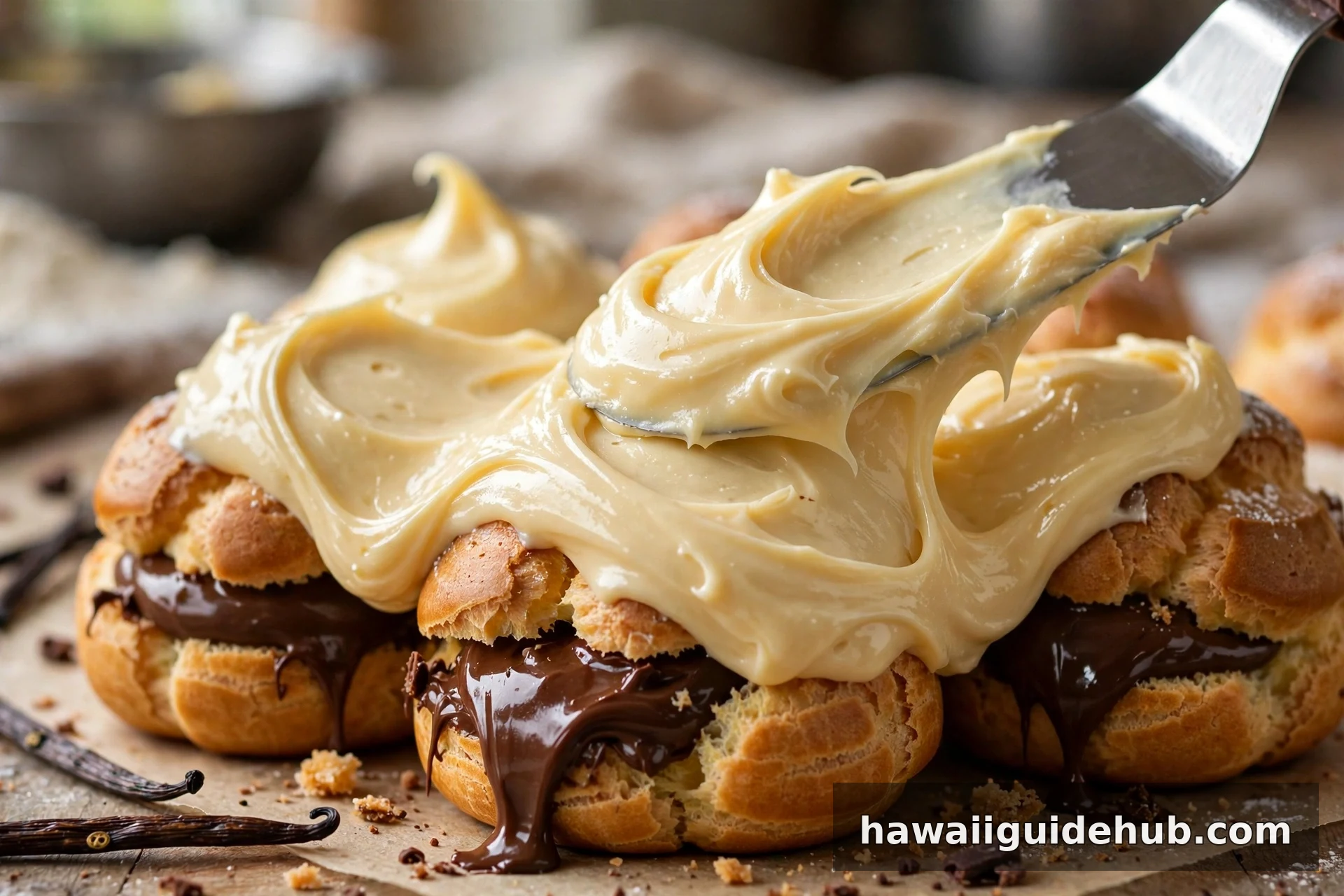
The coco puff as Hawaii knows it today is inseparable from Liliha Bakery, the Honolulu institution that turned a humble cream puff into a local legend.
Liliha Bakery opened in 1950 in the Liliha neighborhood of Honolulu, and for decades it served as a classic neighborhood bakeshop. The coco puff itself debuted in 1970, the creation of the bakery’s chief baker, but the first version did not catch fire right away. It took two more decades for the pastry to find its true form. In 1990, chantilly frosting was added to the top, and that combination of crisp shell, cool chocolate cream, and buttery chantilly turned the coco puff into the sensation locals know today.
The bakery changed hands in 2008, when the founding family sold it to restaurateur Peter Kim, but the coco puff recipe and its reputation carried on uninterrupted. Today the bakery is reported to sell thousands of coco puffs every single day, and the pastry case rarely sits full for long. New locations have opened over the years, including a shop at Waikiki’s International Market Place, bringing the coco puff within easy reach of visitors staying in the tourist district. What started as one baker’s experiment in 1970 is now arguably the most famous single pastry in the state.
Coco Puffs vs. Cream Puffs: What Is the Difference?
Newcomers often wonder whether a coco puff is just a chocolate cream puff by another name. The answer is that the chocolate filling is only part of the story. A standard cream puff is filled with plain vanilla pastry cream or whipped cream and usually dusted with powdered sugar or glazed. A coco puff is specifically a chocolate-filled puff finished with Hawaii’s cooked chantilly frosting, a topping you will not find on a Parisian patisserie shelf. That frosting, with its buttery density and gentle sweetness, is what makes the coco puff distinctly Hawaiian. Think of it this way: the cream puff is the French ancestor, and the coco puff is its island-born descendant.
How to Make Coco Puffs at Home
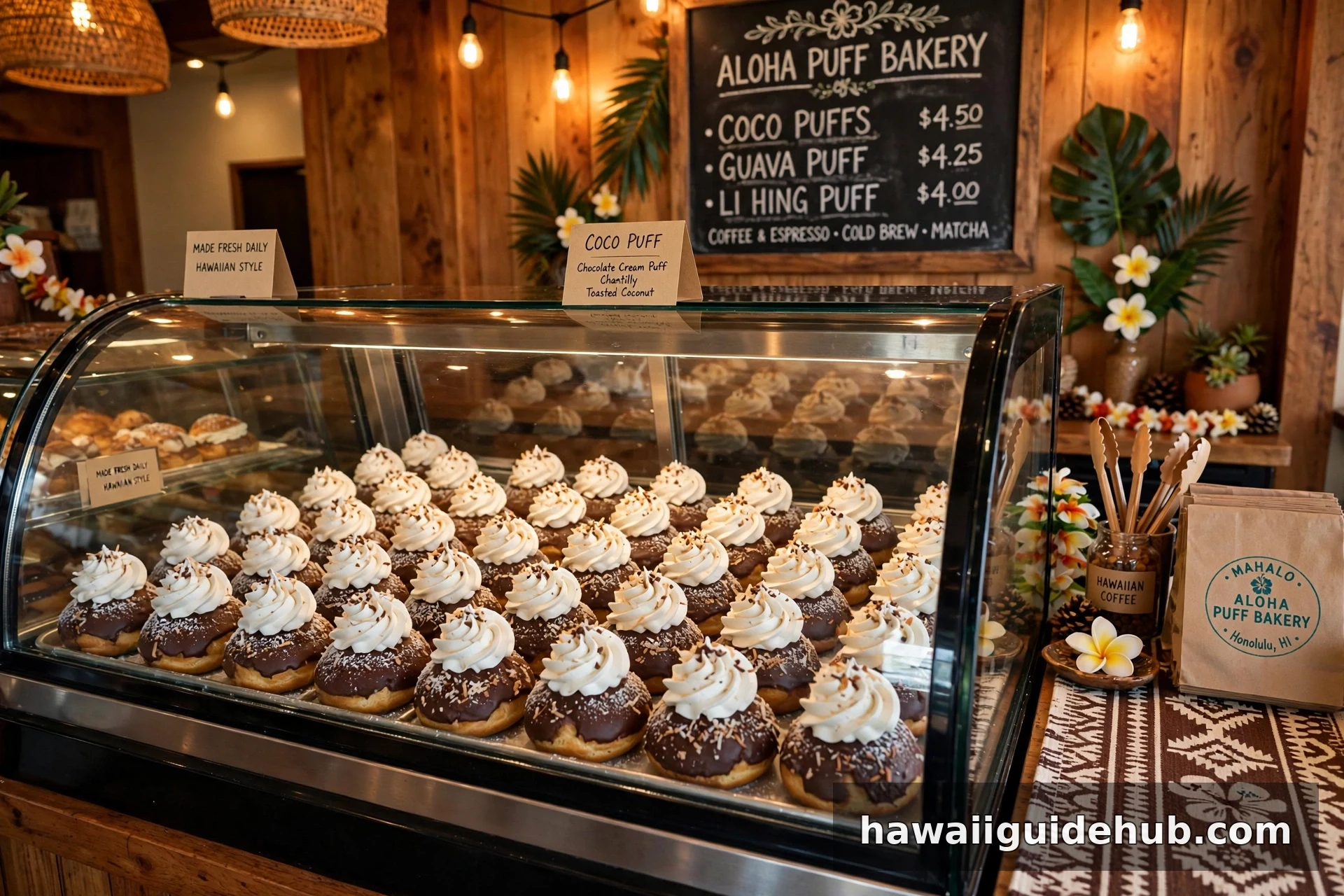
Making coco puffs at home is a project, but it is a joyful one, and the three components can each be made ahead. The shells bake in under an hour, the chocolate cream needs a few hours to chill, and the chantilly frosting actually improves after an overnight rest in the refrigerator. Plan for an afternoon of baking and you will be rewarded with about two dozen puffs.
Choux Pastry Shells
Ingredients: 1 cup water, 1 stick (1/2 cup) unsalted butter, 1 cup all-purpose flour, 4 large eggs, 1 teaspoon sugar, 1/2 teaspoon salt.
Heat the oven to 400 degrees F and line two baking sheets with parchment paper. In a medium saucepan, bring the water and butter to a rolling boil. Add the sugar and salt, then dump in all the flour at once and stir vigorously with a wooden spoon until the mixture forms a smooth ball that pulls away from the sides of the pan, about one to two minutes. Transfer the dough to a mixing bowl and let it cool for five minutes so it does not scramble the eggs.
Beat in the eggs one at a time, making sure each is fully absorbed before adding the next. The finished dough should be smooth, glossy, and thick enough to hold soft peaks. Transfer it to a piping bag fitted with a wide round tip and pipe mounds about one and a half inches across, spacing them two inches apart. Smooth any peaks with a damp fingertip.
Bake at 400 degrees for 15 minutes, then reduce the heat to 325 degrees without opening the oven door and bake 25 to 30 minutes more, until the puffs are deep golden and feel dry and hollow. Turn off the oven, crack the door, and let them cool inside for 15 minutes. This step keeps the shells crisp instead of soggy.
Chocolate Pastry Cream Filling
Ingredients: 4 large egg yolks, 1/3 cup sugar, 1/3 cup cornstarch, 2 cups whole milk, 2/3 cup chopped semisweet chocolate, 1 tablespoon unsalted butter, 1 teaspoon vanilla extract.
In a saucepan, whisk the egg yolks, sugar, and cornstarch until smooth. In a separate saucepan, heat the milk until steaming but not boiling. Pour the hot milk into the yolk mixture in a slow stream, whisking constantly, then return everything to the saucepan. Cook over medium-low heat, whisking without stopping, until the cream thickens and begins to bubble. Cook one minute more, then remove from the heat and stir in the chocolate, butter, and vanilla until smooth. Press plastic wrap directly onto the surface and refrigerate at least three hours, until fully chilled and set.
Chantilly Frosting
Ingredients: 1 can (12 ounces) evaporated milk, 1 and 1/4 cups sugar, 2 sticks (1 cup) unsalted butter, 6 large egg yolks, 1 and 1/2 teaspoons vanilla extract, 1/4 cup chopped toasted macadamia nuts (optional).
Combine the evaporated milk, sugar, butter, and egg yolks in a saucepan. Cook over medium heat, stirring constantly, until the mixture comes to a gentle boil and thickens enough to coat the back of a spoon. Remove from the heat, stir in the vanilla, and pour into a bowl. Cover with plastic wrap pressed on the surface and chill at least two hours, or overnight. The frosting will firm up into a thick, spreadable consistency. Fold in the macadamia nuts if you like a little crunch.
Assembly
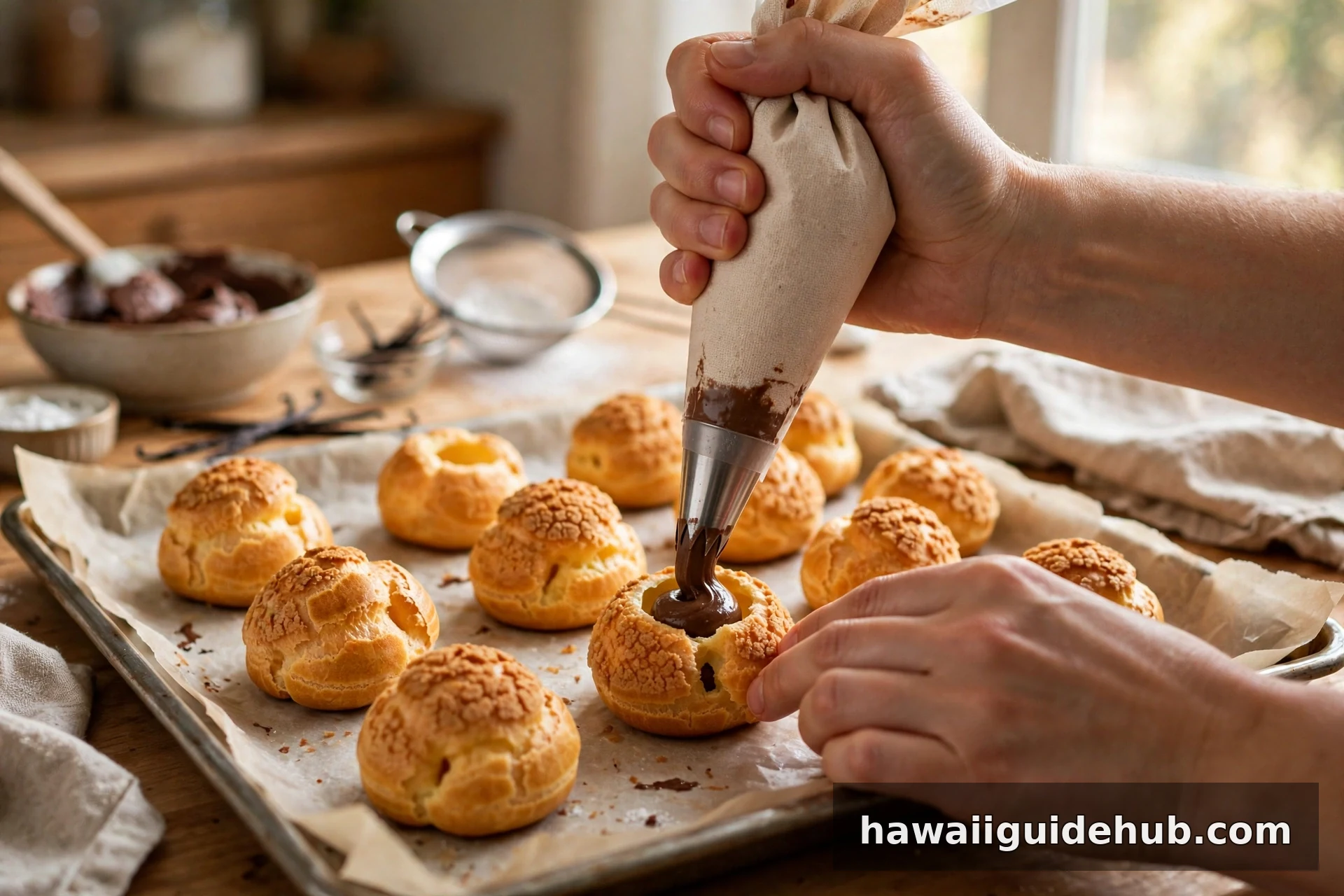
Use a small knife to cut a slit in the side or bottom of each cooled shell. Fill a piping bag with the chilled chocolate cream and pipe generously into each puff. Then spread or pipe a thick cap of chantilly frosting over the top of each one. Serve chilled. Coco puffs are best the day they are assembled, when the shell still has a whisper of crispness against the cool cream.
Tips for Bakery-Worthy Results
A few details separate good coco puffs from great ones. First, do not open the oven while the shells bake. The blast of cool air can deflate them before their structure sets. Second, let the choux dough cool before adding the eggs, or you will end up with scrambled bits in the batter. Third, chill every component thoroughly. Warm filling will melt the frosting and turn the shells soggy. Fourth, fill the puffs generously. A skimpy coco puff is a sad thing. Finally, if you want the true bakery look, pipe the chantilly in a swirl with a star tip rather than spreading it flat.
Fun Variations to Try
Once you have the classic down, the format invites creativity. A haupia version swaps the chocolate cream for coconut pudding, nodding to another island favorite. Matcha pastry cream gives the puffs a gentle green-tea bitterness that plays beautifully against the sweet chantilly. Some bakers fill them with lilikoi curd for a bright tropical tang. For a party trick, make mini puffs and serve them as bite-size petit fours. And if you love the malasadas sold around the islands, you will find the same joy here: simple dough, honest filling, no pretense.
Where to Find Coco Puffs in Hawaii
For the original experience, head to Liliha Bakery on Oahu. The flagship shop sits in the Liliha neighborhood of Honolulu, and additional locations, including the Waikiki shop, make it easy to grab a box no matter where you are staying. Go early in the day for the best selection, and expect a line on weekends. The puffs are sold individually and by the dozen, and a dozen rarely survives the car ride back to the hotel.
Beyond Liliha, coco puffs have spread across the islands. On Maui, Stillwell’s Bakery and Cafe is a local favorite for its own take on the treat. Many neighborhood bakeries on Oahu and the other islands sell their own versions, each slightly different in the ratio of shell to cream to frosting. Trying several and picking a favorite is one of the tastiest small quests a visitor can undertake. If you are building a food itinerary, pair your bakery run with a broader tour of must-try local dishes in Hawaii, from huli huli chicken to lomi lomi salmon.
How to Order Like a Local
Regulars know a few things. Coco puffs are kept refrigerated, so they are served cold. If you are taking a box to go, ask for it packed carefully and keep it cool. They travel best in an air-conditioned car, not a hot trunk. And while it is tempting to eat one immediately in the parking lot, the full experience improves after the frosting has had a moment to soften slightly at cool room temperature.
Coco Puffs FAQs
How long do coco puffs stay fresh?
Coco puffs are best eaten the day they are made or purchased. Stored in an airtight container in the refrigerator, they keep for two to three days, though the shells will gradually soften. They are still delicious, just less crisp.
Can you freeze coco puffs?
You can freeze the unfilled choux shells for up to a month and fill them after thawing. Freezing fully assembled puffs is not recommended, since the cream and frosting can weep and turn the shells soggy when thawed.
How many calories are in a coco puff?
Estimates vary by recipe, but a bakery coco puff generally lands in the range of 200 to 300 calories, thanks to the butter-rich shell, custard filling, and frosting. It is a treat, not a health food, and worth every calorie.
What is the difference between chantilly frosting and whipped cream?
Hawaii’s chantilly is a cooked frosting made with evaporated milk, sugar, butter, and egg yolks, giving it a dense, buttery texture and a pale golden color. Whipped cream is simply cream beaten with sugar. They share a name with the French version but are entirely different things.
Do coco puffs need to be refrigerated?
Yes. Because of the custard filling and butter-based frosting, coco puffs must be kept refrigerated. Do not leave them at room temperature for more than a couple of hours.
See Them Made
The Bottom Line on Coco Puffs
The coco puff endures because it delivers exactly what it promises: a crisp shell, cool chocolate cream, and that unmistakable chantilly cap. It is a pastry with a genuine origin story, rooted in a Honolulu neighborhood bakery since 1970 and perfected over the decades into something no visitor should miss. Whether you buy a box from Liliha Bakery or spend an afternoon making your own, you are taking part in one of Hawaii’s sweetest traditions. Few desserts earn this kind of devotion. The coco puff has earned every bit of it.