Chicken Long Rice: Hawaii’s Coziest Bowl of Comfort Food

There is a bowl of soup in Hawaii that shows up at almost every family gathering, and it has a way of making strangers feel like they belong. At lūʻau you will see it steaming in a chafing dish next to the kalua pig. At potlucks it is the first pan to empty. At home it is the thing aunties make when someone is sick, tired, or just having a rough week. That bowl is chicken long rice, and once you taste it, you will understand why Hawaii has loved it for generations.
If you are new to the dish, the name is a little confusing. There is no rice in chicken long rice. What you get instead is tender shredded chicken and slippery glass noodles in a clear, gingery broth that tastes like a warm hug. This guide covers everything: what chicken long rice is, where it came from, the ingredients that matter, a full recipe you can make at home, smart variations, and where to find a bowl when you are in the islands.
What Is Chicken Long Rice, Exactly?
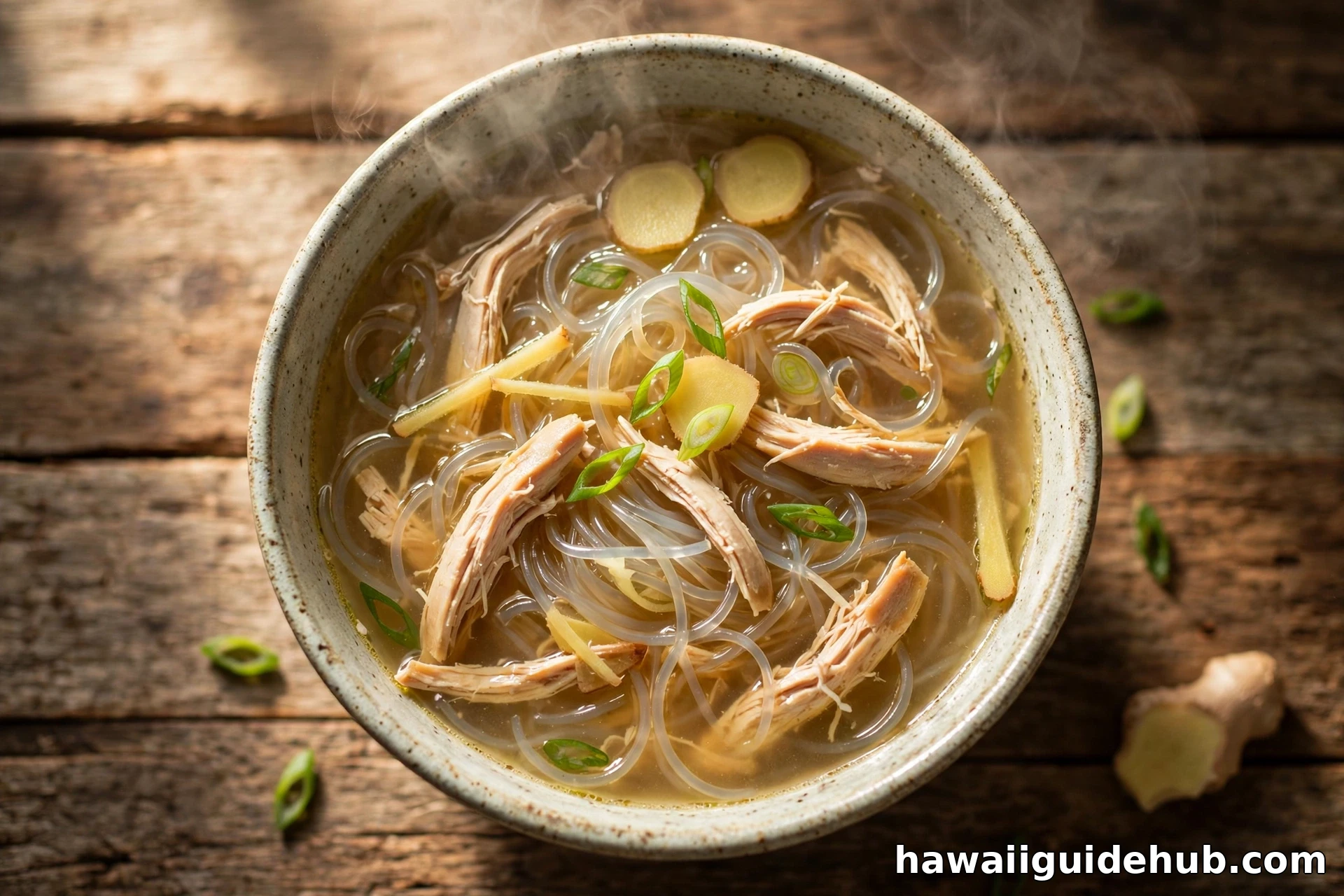
Chicken long rice is a Hawaiian soup built from just a handful of ingredients: chicken, ginger, garlic, green onions, shoyu, and long rice noodles. The broth is light and clear, never heavy or creamy. The flavor is gentle and savory, with the warmth of fresh ginger leading the way and a clean finish that keeps you going back for another spoonful.
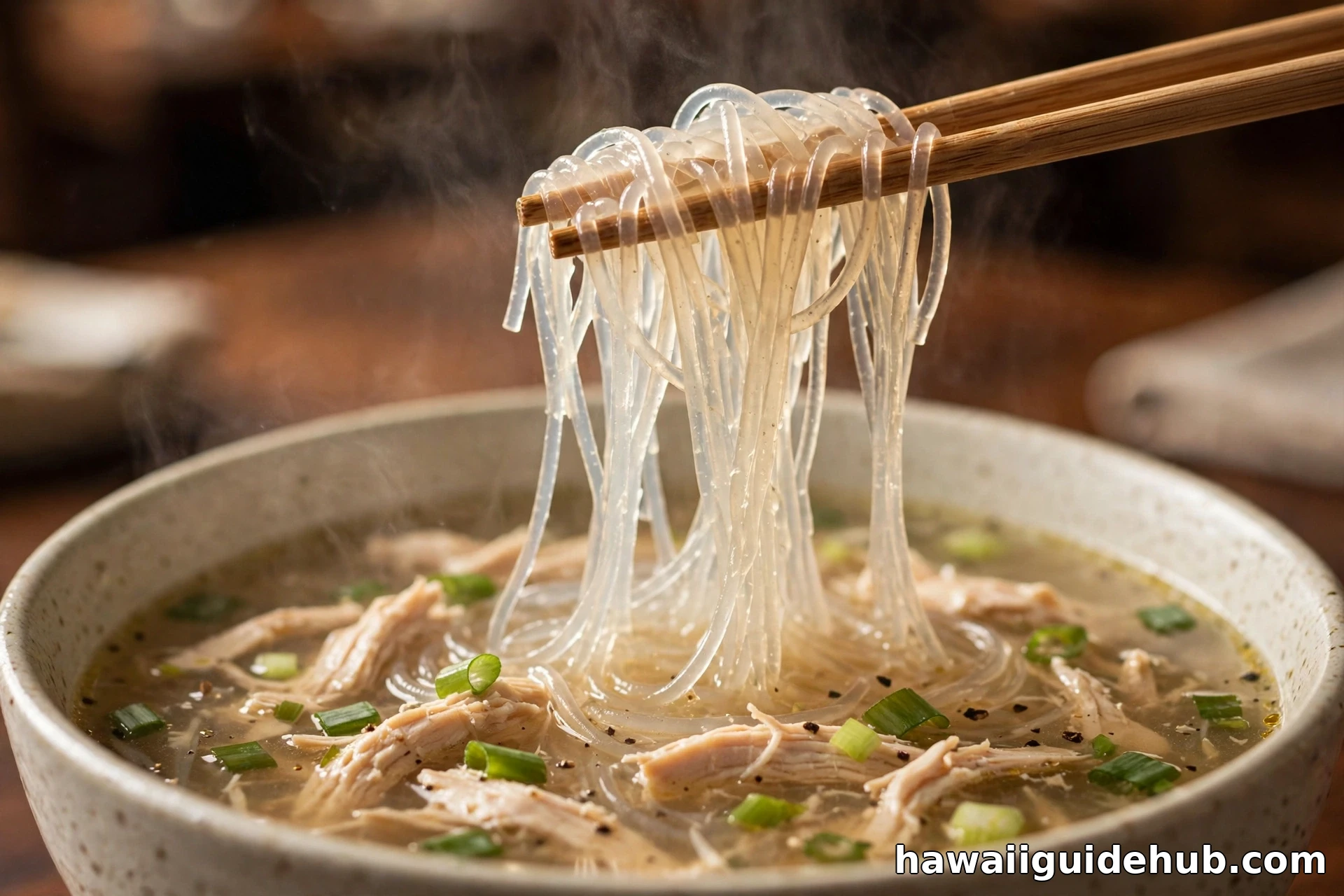
The star of the bowl is the long rice itself. Long rice is not rice at all. It is a thin Chinese noodle made from mung bean starch, better known on the mainland as bean thread noodles, glass noodles, or cellophane noodles. Dry, the noodles look white and brittle, like little bundles of twine. Once soaked and simmered, they turn translucent and slippery, with a soft, springy bite that is completely different from wheat noodles or rice vermicelli. Somewhere along the way, Hawaii started calling these noodles long rice, and the name stuck to the whole dish.
The chicken is usually thighs, simmered until the meat practically falls apart, then shredded right into the pot. A good bowl has chicken in every bite, noodles that still have a little chew, and a broth seasoned simply with salt and a splash of shoyu. Green onions go on top at the very end for color and a fresh bite. That is the whole dish. Nothing fancy, nothing fussy, and somehow better than the sum of its parts.
A Short History of a Long Noodle
Chicken long rice is a perfect example of how Hawaii cooks: take the food traditions that immigrants brought across the Pacific, let local families make them their own, and watch a new classic appear. The dish traces back to Chinese immigrants who came to Hawaii in the 1800s to work on the sugar plantations. They brought bean thread noodles with them, and local cooks paired those noodles with chicken, ginger, and the simple seasonings available in plantation camps.
Over time the dish moved from camp kitchens into everyday Hawaii life. It became a fixture at lūʻau, where it is still served as a comforting side dish alongside richer foods like kalua pig and lomi-lomi salmon. It became the soup Hawaii reaches for when someone is under the weather, the same way other families reach for chicken noodle soup. Ask anyone who grew up in the islands about chicken long rice and you will probably get a story about a grandmother, an auntie, or a neighbor who made the best version.
What makes it endure is how practical it is. The ingredients are cheap and easy to find. One pot feeds a crowd. It reheats well. And it is mild enough that kids love it while still being interesting enough for adults. It is comfort food in the truest sense: simple, generous, and tied to memory.
What Goes Into Chicken Long Rice
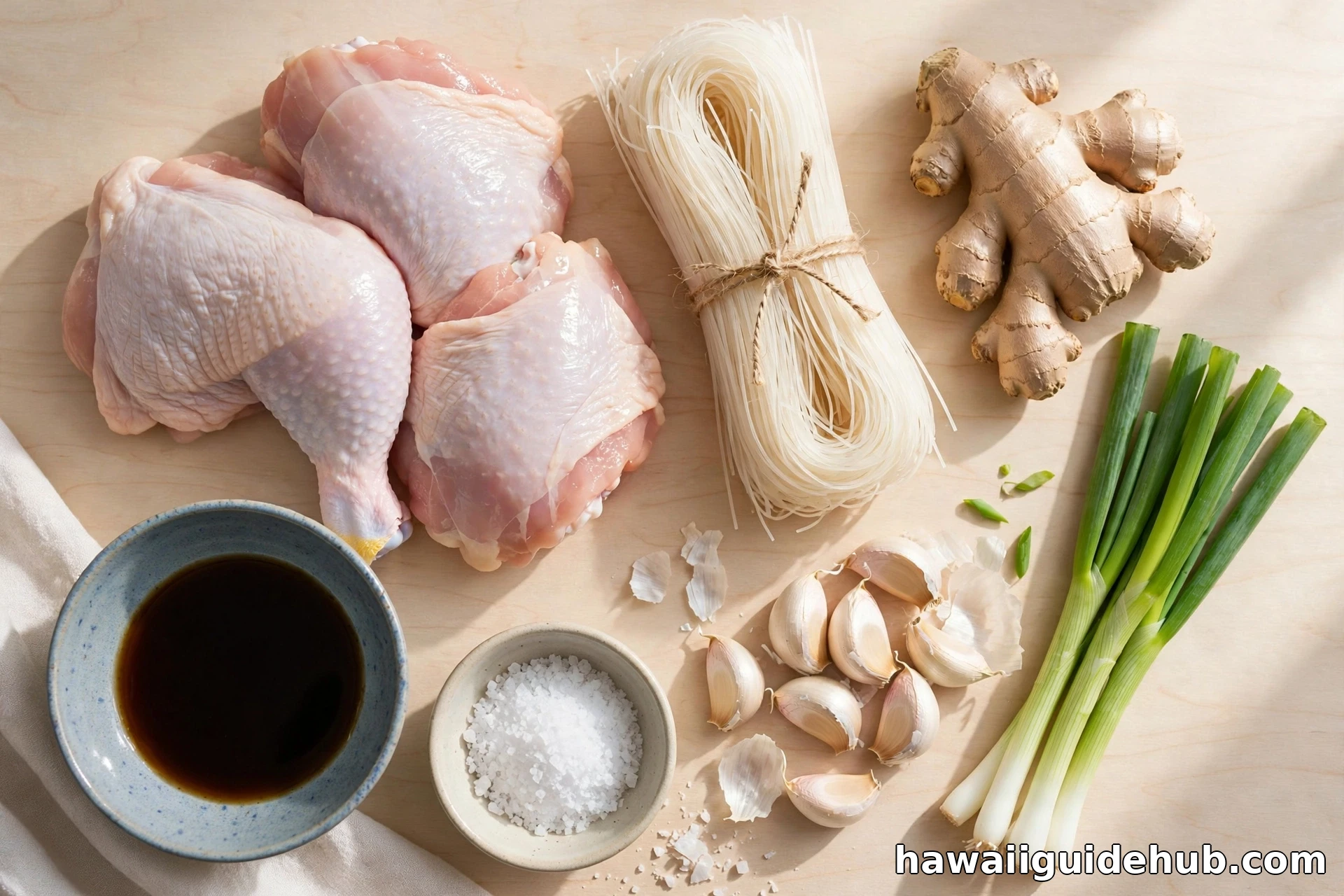
One of the best things about this dish is the short ingredient list. You do not need specialty equipment or hard-to-find items. Here is what matters and why.
The Chicken
Boneless, skinless chicken thighs are the best choice. Thighs stay moist through a long simmer and shred into silky strands that melt into the soup. Chicken breasts work in a pinch, but they can turn dry and chalky if you simmer them too long, so watch the clock if you use them. Some cooks start with a whole chicken and use the carcass to build a richer broth, which is wonderful if you have the time. For a weeknight version, thighs and good store-bought chicken broth get you there with almost no fuss.
The Long Rice Noodles
Look for packages labeled bean thread noodles, glass noodles, mung bean noodles, or cellophane noodles in the Asian foods aisle or at any Asian market. Check the ingredients: you want noodles made from mung bean starch, which turn clear and slippery when cooked. Avoid confusing them with rice vermicelli, which is made from rice flour and behaves differently in the pot. A quick soak in warm water for about ten minutes softens the noodles before they go into the broth, which helps them cook evenly.
The Ginger-Garlic Broth
Fresh ginger is the soul of this dish, so do not skip it and do not swap in the powdered kind. A thumb-sized piece, sliced and lightly smashed, gives the broth its signature warmth. Garlic adds depth, shoyu adds savory color and salt, and plain salt lets you fine-tune the seasoning at the end. Green onions do double duty: the white parts can simmer in the broth for flavor, and the green tops get sliced fresh over each bowl. That is the entire flavor base. Restraint is the point.
How to Make Chicken Long Rice at Home
This recipe makes about four generous servings as a main dish, or six to eight smaller servings as a lūʻau-style side. Total time is around 40 minutes, and most of that is hands-off simmering.
Ingredients
- 1 1/2 pounds boneless, skinless chicken thighs
- 8 cups water or chicken broth
- 1 thumb-sized piece fresh ginger, peeled and sliced
- 4 cloves garlic, smashed
- 2 tablespoons shoyu, plus more to taste
- 1 teaspoon salt, plus more to taste
- 4 ounces dried bean thread noodles (long rice)
- 4 green onions, thinly sliced
Instructions
- Soak the noodles. Place the dried bean thread noodles in a large bowl, cover with warm water, and let them soak for about 10 minutes while you start the soup. Drain before using.
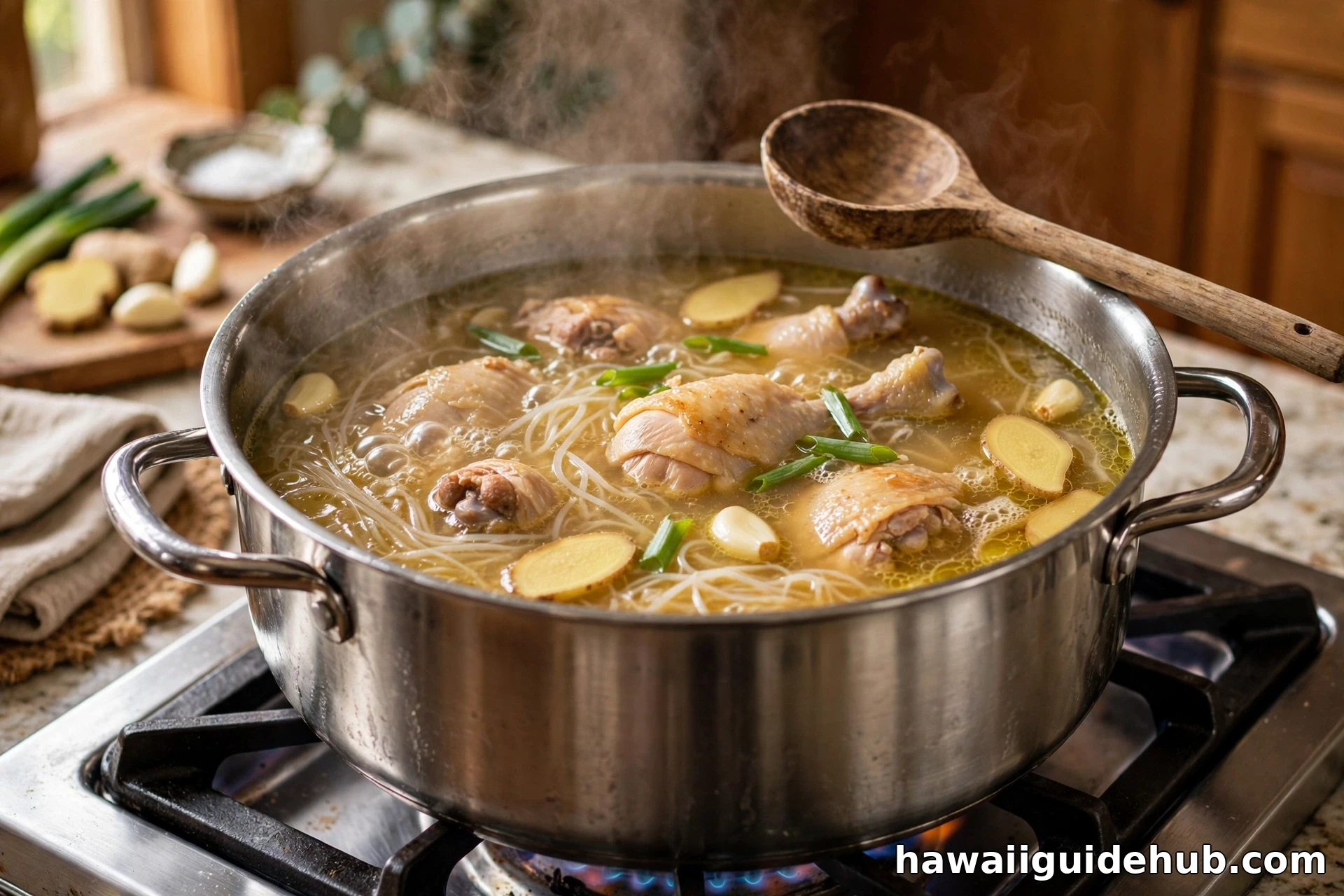
- Build the broth. Put the chicken thighs in a large pot and cover with the water or chicken broth. Add the sliced ginger, smashed garlic, shoyu, and salt. Bring to a boil over medium-high heat, skimming off any foam that rises to the surface.
- Simmer the chicken. Lower the heat to a gentle simmer and cook for 20 to 25 minutes, until the chicken is tender and shreds easily with a fork. Keep the lid slightly ajar so the broth reduces just a little and concentrates in flavor.
- Shred and return. Lift the chicken out onto a cutting board. Using two forks, shred the meat into bite-sized strands, then stir it back into the pot. Fish out the larger pieces of ginger if you like a cleaner broth, or leave them in for extra warmth.
- Add the noodles. Stir the drained noodles into the simmering soup. Cook for 5 to 7 minutes, until the noodles turn soft and fully translucent. Do not walk away at this stage: bean thread noodles go from perfect to mushy quickly.
- Finish and serve. Stir in the sliced green onions. Taste the broth and adjust with more salt or another splash of shoyu. Ladle into deep bowls, top with extra green onions, and serve hot.
Soupy or Dry: Pick Your Style
Ask five Hawaii families how they make chicken long rice and you will get at least two different answers about the broth. Some serve it as a true soup, with plenty of gingery broth to sip. Others make a drier version where the noodles absorb most of the liquid and the dish eats more like a noodle side. Both are authentic. It simply comes down to how much liquid you use and how long you let the noodles sit in the pot.
For a soupy bowl, keep the full 8 cups of liquid in the recipe above and serve the dish right away. For the drier style, cut the liquid to 5 or 6 cups and give the noodles an extra few minutes to drink it up. If you go the dry route, add the noodles a little earlier and stir gently so they absorb the broth evenly. Either way, have extra broth or hot water on hand when reheating leftovers, because the noodles will keep absorbing liquid in the fridge overnight.
Easy Variations to Try Next
Once you have the classic version down, chicken long rice is a forgiving canvas. Here are the variations Hawaii cooks reach for most.
Add Mushrooms
Dried shiitake mushrooms are the most traditional addition. Soak them in warm water until soft, squeeze them dry, slice off the tough stems, and simmer the caps with the chicken. They add a deep, savory note that makes the broth taste like it cooked twice as long. Fresh mushrooms work too, added in the last 10 minutes of simmering.
Add Greens
A handful of chopped bok choy, napa cabbage, or baby spinach stirred in during the last few minutes turns the soup into a fuller meal. Watercress is another local favorite that wilts beautifully into the hot broth. Add delicate greens at the very end so they stay bright.
Make It in the Instant Pot
Combine the chicken, water or broth, ginger, garlic, shoyu, and salt in the pot and pressure cook on high for 10 to 12 minutes, then quick release. Shred the chicken, switch to sauté mode, stir in the soaked noodles, and simmer until translucent. It is the same dish in about half the time, which makes it a strong weeknight option.
Make It Your Own
A drizzle of sesame oil at the end adds richness. A pinch of white pepper gives gentle heat without changing the character of the soup. For a gluten-free version, swap the shoyu for tamari and double-check that your noodles are pure mung bean starch. If you like spice, sliced chili peppers or a spoonful of chili crisp on top works, though purists will tell you the classic needs nothing at all.
One thing worth knowing: chicken hekka is a different dish, even though it also uses long rice noodles. Hekka is a heartier plantation-era stew with chicken, vegetables, and a sweet shoyu-based sauce, closer to sukiyaki than to soup. If a recipe has you browning chicken with sugar and lots of vegetables, you have wandered into hekka territory. Delicious, but not chicken long rice.
Where to Find Chicken Long Rice in Hawaii
The most memorable bowl of chicken long rice you will ever have in Hawaii probably will not come from a restaurant. It will come from a lūʻau, a family potluck, a church fundraiser, or a neighbor who heard you were feeling under the weather. That is where this dish lives: in community cooking, made in enormous pots and served with love.
That said, visitors can absolutely find it. Many lūʻau across the islands include chicken long rice on the buffet, sitting right alongside the kalua pig and poke. It also turns up at plate lunch counters, okazuya delis, and local-style restaurants, especially as a rotating special or soup of the day. If you are building a food itinerary, pair your search with other must-try local dishes so you taste the full spread of Hawaii comfort food in one trip. And if you fall in love with the island’s chicken dishes the way most visitors do, huli-huli chicken is the smoky grilled counterpart worth seeking out next.
For dessert after all that savory comfort, few things beat malasadas, the Portuguese-style fried doughnuts Hawaii adopted as its own. Sweet, soup, and sunshine: that is a solid day of eating in the islands.
Chicken Long Rice FAQ
Is chicken long rice gluten free?
Almost. The bean thread noodles are naturally gluten free since they are made from mung bean starch. The catch is shoyu, which usually contains wheat. Swap in tamari or a certified gluten-free soy sauce and the whole dish is gluten free.
Can I make it in a slow cooker?
Yes. Add everything except the noodles and green onions to the slow cooker and cook on low for 6 to 7 hours or on high for 3 to 4 hours. Shred the chicken, stir in the soaked noodles, and cook on high for another 20 to 30 minutes until the noodles are translucent. Add the green onions just before serving.
How long do leftovers keep?
Refrigerated in a covered container, chicken long rice keeps for 3 to 4 days. Cool it within two hours of cooking. The noodles will absorb a lot of the broth overnight, so add a splash of water or chicken broth when reheating. Reheat the soup to a full boil before serving.
Where do I buy long rice noodles?
Check the Asian foods aisle of a well-stocked supermarket or any Asian grocery store, where they are sold as bean thread, glass, cellophane, or mung bean noodles. In Hawaii you will find them in practically every grocery store. Choose noodles made from mung bean starch for the classic slippery texture.
What do you serve with chicken long rice?
At a lūʻau it is a side dish, so it shares the table with kalua pig, lomi-lomi salmon, poi, and rice. At home it works as a light main dish with a simple green salad or a bowl of steamed rice on the side. Honestly, a big bowl on its own is a complete and satisfying meal.
A Bowl Worth Learning
Chicken long rice endures because it asks so little and gives so much. A few humble ingredients, one pot, and under an hour turn into a soup that has comforted Hawaii families for well over a century. Whether you make it soupy or dry, classic or with your own twist, you are cooking a genuine piece of the islands. And once it becomes part of your own kitchen routine, you will understand why no lūʻau table in Hawaii is complete without it.