Somen Salad: Hawaii’s Beloved Cold Noodle Potluck Classic

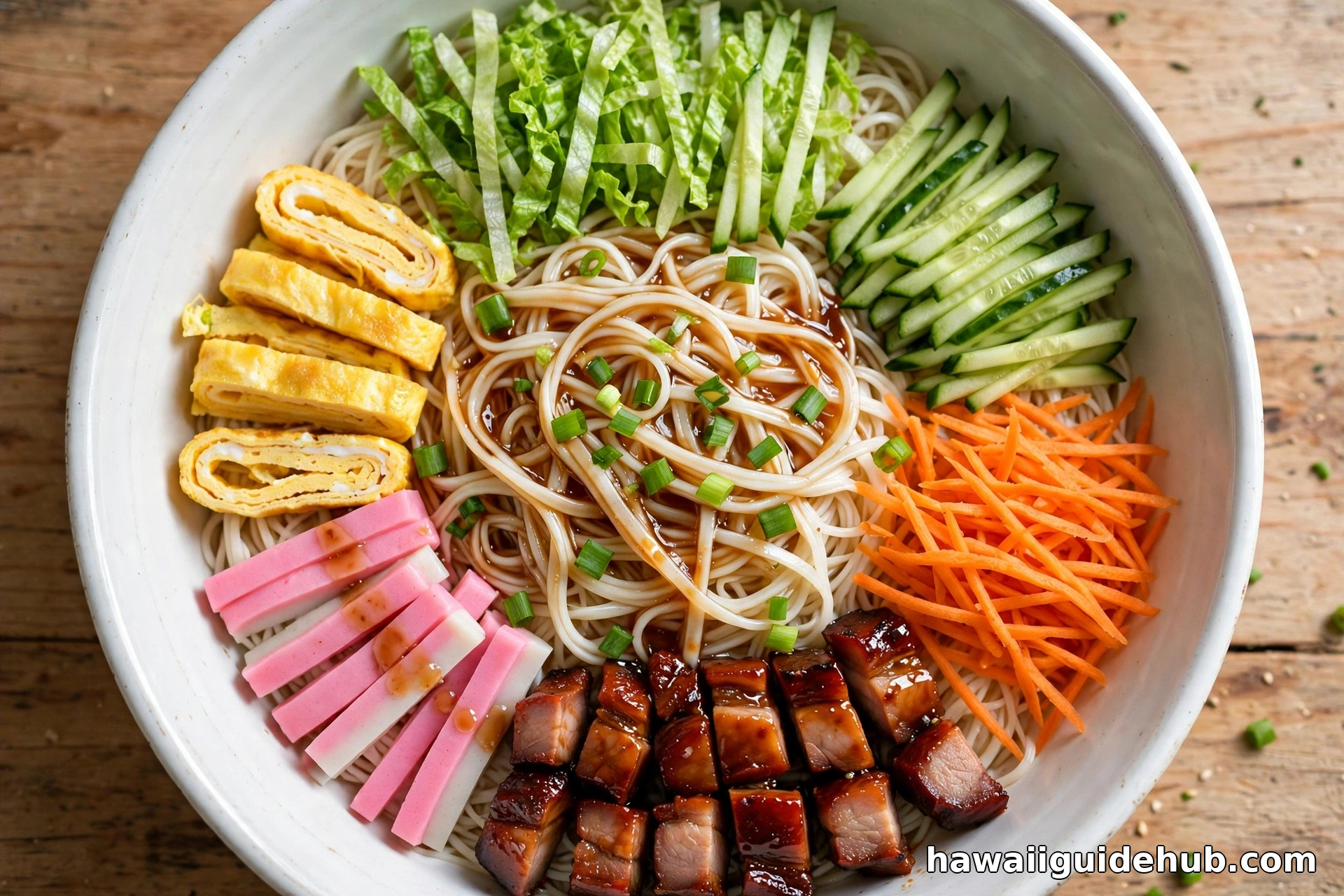
Walk up to almost any potluck table in Hawaiʻi, from a graduation party in Kapolei to a New Year gathering in Hilo, and you will find it: a wide bowl of pale noodles buried under neat rows of color. Pink kamaboko, golden egg ribbons, green cucumber, orange carrot. That is somen salad, and in the islands it is not just a side dish. It is a fixture, the cool and crunchy counterpoint to a table full of heavy local grinds.
If you grew up in Hawaiʻi, you probably have strong opinions about whose somen salad reigns supreme. Every aunty has her version, every family guards its dressing ratio, and no two bowls ever taste exactly alike. If you did not grow up with it, you are in for something wonderful. This guide covers what somen salad is, where it came from, how to make it the local way, and how to carry the tradition to your own kitchen.
What Is Somen Salad?
Somen salad is a chilled noodle dish built on thin Japanese wheat noodles called somen. The cooked noodles are rinsed cold, spread in a serving bowl, and layered with an assortment of toppings: shredded lettuce, julienned cucumber and carrot, strips of egg omelet, sliced kamaboko (Japanese fish cake), diced char siu or ham, and a shower of chopped green onions. A sweet and tangy shoyu-based dressing ties it all together.
Think of it as the noodle equivalent of a composed salad. Unlike a tossed pasta salad, the classic local presentation keeps the toppings in distinct rows over the noodles, so the bowl looks like a painter’s palette until the moment it gets tossed at the table. It is served cold, straight from the fridge, which makes it one of the few potluck dishes that actually improves as it sits and chills.
Where Somen Salad Comes From
Somen salad is a child of Hawaiʻi’s plantation era, born from the same multicultural mixing that gave the islands plate lunch, saimin, and manapua. Japanese immigrants brought somen, the delicate wheat noodle of summer in Japan, where it is traditionally served cold with a dipping sauce. Chinese immigrants contributed char siu. Portuguese, Filipino, and Native Hawaiian cooks added their own pantry staples. Somewhere along the way, in plantation camp kitchens and neighborhood gatherings, those threads braided into a distinctly local dish.
It is hard to pin the invention on one person or one decade, and honestly that misses the point. Somen salad is community cooking. It emerged the way most local food did: from mixed groups of friends and coworkers pooling what they had. A bundle of somen from the Japanese store, leftover char siu from the Chinese neighbor, eggs from the yard chickens, green onions from the garden. The dressing, shoyu stretched with vinegar, sugar, and oil, is pantry cooking at its smartest.
What is certain is that by the late twentieth century, somen salad had become a non-negotiable part of local celebrations. Ask anyone who grew up in the islands and they will tell you the same thing: no potluck felt complete without somebody assigned to bring the somen salad. High school cafeterias served it. Church fundraisers sold it. It crossed from Japanese American kitchens into every kitchen, the way the best local food always does.
What Somen Salad Tastes Like
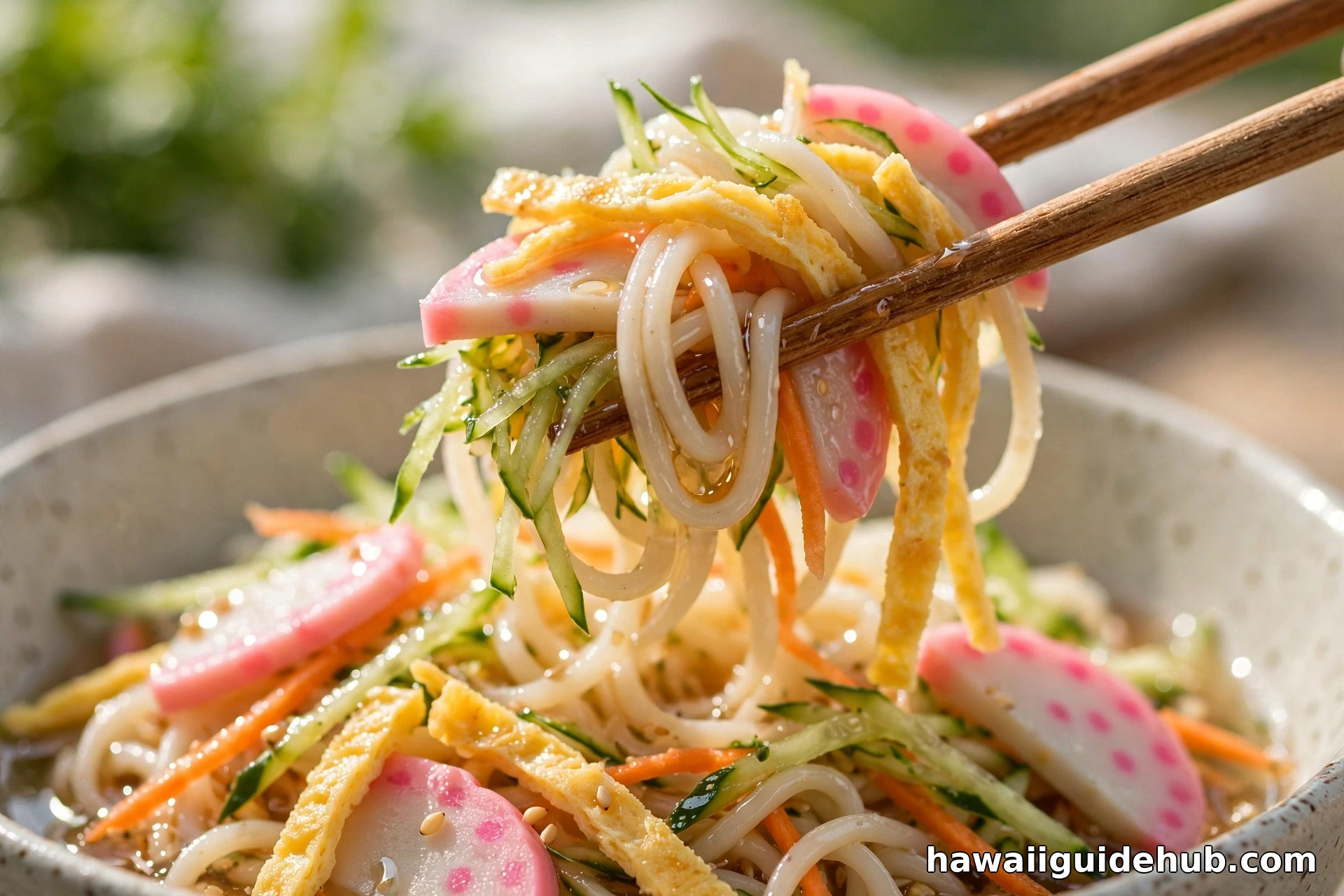
The first thing you notice is the temperature and the texture. The noodles are cool, slippery, and delicate, a soft bed for everything crunchy layered on top. Then the dressing hits: sweet first, then the salty depth of shoyu, then a bright tang from rice vinegar and the nutty warmth of sesame oil. It is refreshing in the way only cold noodles can be, light enough to eat a big scoop of even when the rest of the table is rich and heavy.
Each topping adds its own note. Kamaboko brings a mild sweetness and a bouncy chew. Char siu adds smoky, caramelized pork. Egg ribbons are soft and rich. Cucumber and carrot stay crisp and clean against the soft noodles. Green onions give a sharp little bite, and toasted sesame seeds add nuttiness throughout. No single flavor dominates, which is exactly why the dish works for a crowd: there is something in every bite for every palate.
The Classic Ingredients
Every family tweaks the lineup, but the classic Hawaiʻi somen salad rests on three pillars: noodles, dressing, and toppings. Here is what goes into the traditional bowl.
The noodles
Somen are thin Japanese wheat noodles, sold dried in bundles, usually tied with a paper band. They cook astonishingly fast, two to three minutes in boiling water, and must be rinsed under cold running water the moment they are done. That rinse is non-negotiable: it stops the cooking and washes away surface starch so the noodles stay separate and slippery instead of fusing into a solid mass.
The dressing
The standard dressing is a simple vinaigrette: shoyu, rice vinegar, sugar, sesame oil, and a neutral cooking oil, whisked until the sugar dissolves, with toasted sesame seeds stirred in. The balance runs sweet and tangy rather than salty. Some families add a pinch of dashinomoto or a dash of Tabasco for background complexity, and a few swear by a spoonful of chicken broth for savoriness. The exact ratio is where family rivalries are born.
The toppings
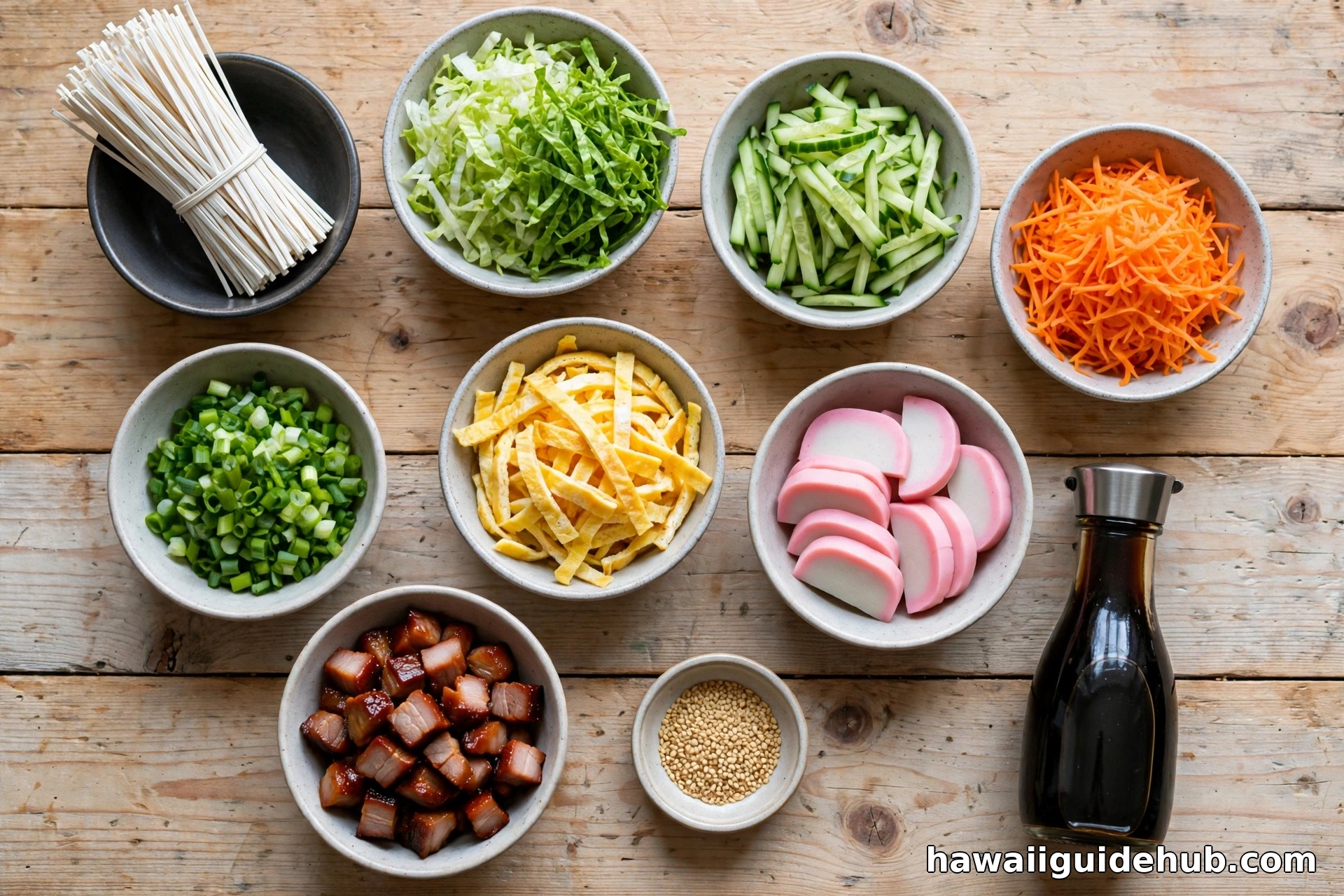
The traditional topping spread includes shredded lettuce or napa cabbage, julienned cucumber, shredded carrot, thin strips of egg omelet, sliced kamaboko, diced char siu or ham, and chopped green onions. The visual arrangement matters in the classic presentation: each topping laid in its own neat row across the noodles, a rainbow you toss together at serving time.
How to Make Somen Salad
This recipe makes a generous bowl that serves six to eight as a potluck side. The whole thing comes together in about thirty minutes, plus chilling time.
Step 1: Cook and chill the noodles
Bring a large pot of water to a rolling boil. Add three to four bundles of dried somen (about 10 to 12 ounces) and cook for two to three minutes, until just tender. Drain immediately and rinse under cold running water, tossing gently with your hands, until the noodles are completely cool. Drain very well. Excess water is the enemy of a good somen salad, so let the noodles sit in the colander for a few minutes and give them a shake.
Step 2: Make the dressing
While the noodles drain, whisk together 1/4 cup shoyu, 1/4 cup rice vinegar, 2 tablespoons sugar, 2 tablespoons toasted sesame oil, and 2 tablespoons neutral oil until the sugar dissolves. Toast 2 tablespoons of sesame seeds in a dry skillet until golden and fragrant, then stir them in. Taste and adjust: more sugar if you like it sweeter, a splash more vinegar if you want it brighter.
Step 3: Prep the toppings
Beat two or three eggs with a pinch of salt and cook into a thin omelet in a lightly oiled pan. Slide it out, let it cool, and slice into thin ribbons. Julienne half a cucumber and one carrot into matchsticks. Shred a couple of handfuls of lettuce. Slice kamaboko into thin strips. Dice about a cup of char siu or ham into small cubes. Slice three green onions thin.
Step 4: Assemble
Spread the cold noodles in a wide, shallow serving bowl. Arrange the toppings in neat rows across the top: lettuce, cucumber, carrot, egg, kamaboko, char siu, green onions. Cover and refrigerate until serving time. Pour the dressing over everything and toss just before it hits the table, so the noodles drink it up fresh and the colors stay bright.
The Dressing Everyone Argues About
If you want to start a friendly argument at a Hawaiʻi gathering, ask whose somen salad dressing is best. The base is nearly universal, shoyu, vinegar, sugar, oil, sesame, but the proportions and the secret additions vary wildly. Some aunties insist on a heavier hand with sugar for that distinctly local sweet-savory balance. Others lean into vinegar for brightness. A few add grated ginger. One well-known family recipe published in the Hawaiʻi plantation cookbook tradition calls for shoyu, sugar, vinegar, sesame oil, and a touch of dashinomoto with a dash of Tabasco, a combination that sounds odd on paper and tastes perfect in the bowl.
The lesson for home cooks: start with the classic ratio, then make it yours. The dressing should taste bold on its own, a little sweeter and tangier than you think it should, because the plain noodles will mellow it. Write down what you did when you land on your version. In a few years, it might be the family recipe somebody else is trying to replicate.
Somen Salad and Hawaiʻi Potluck Culture
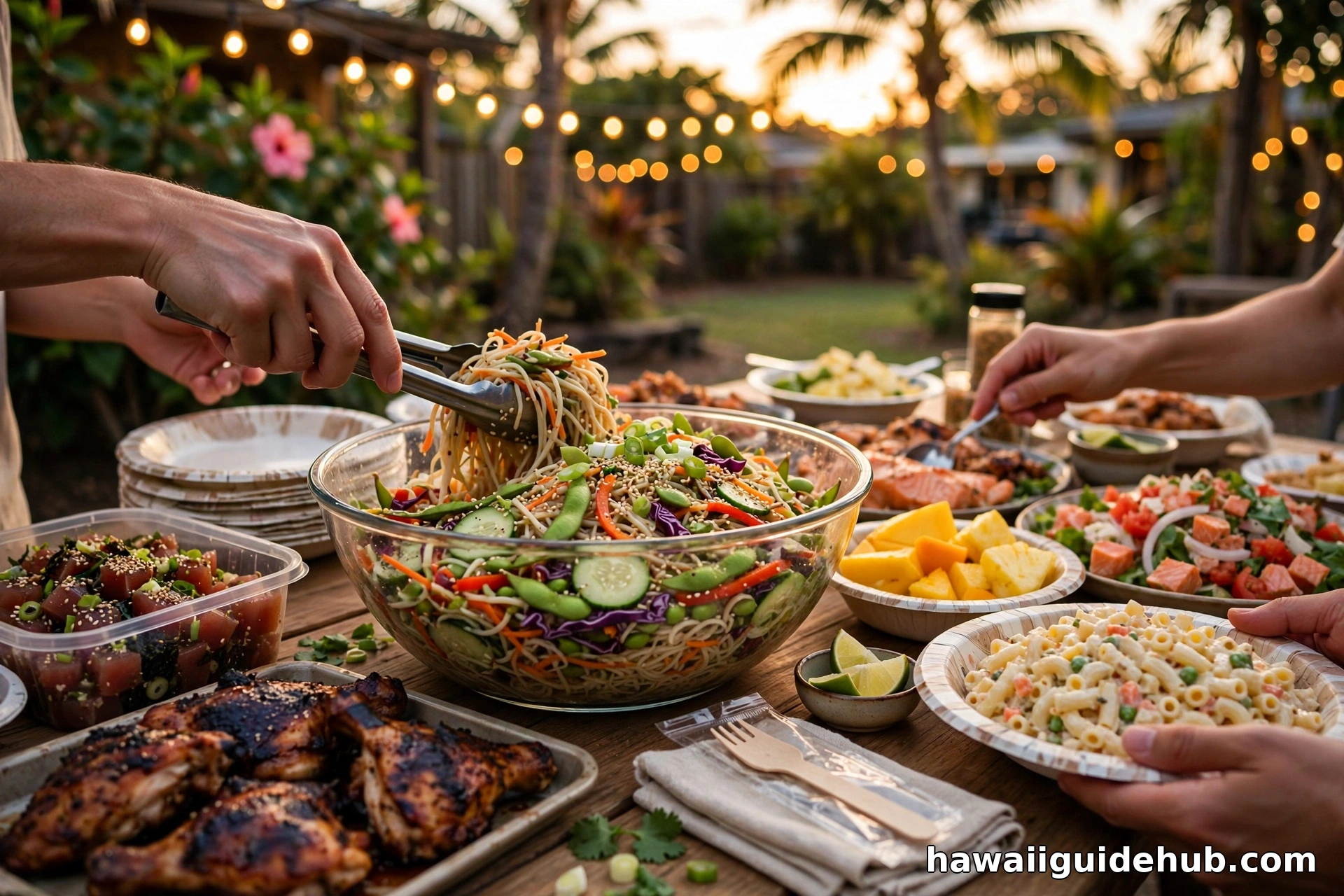
To understand somen salad, you have to understand the Hawaiʻi potluck. Food is the center of gravity at every local gathering, and the spread follows an unspoken logic. Somebody brings the rice. Somebody brings the huli huli chicken or the ribs. Somebody’s aunty brings the lomi lomi salmon. And somebody, reliable and organized, is assigned the somen salad, because it can be made the day before, transported cold, and served to fifty people without breaking a sweat.
It fills a specific role on that table. Against a lineup of rich, salty, smoky, and sweet dishes, somen salad is the cool, crisp, refreshing bite that resets your palate. It is the dish people go back to between heavier plates, and the bowl is almost always scraped clean. At graduations, baby luaus, New Year parties, and office gatherings, its presence is so expected that its absence gets noticed.
Easy Variations Worth Trying
The classic is classic for a reason, but somen salad is famously flexible. There are no real rules, just top it with what you like. A few variations that show up across the islands:
SPAM somen salad. Swap the char siu for diced SPAM, pan-fried until the edges crisp. It is a natural fit, and plenty of local cooks prefer it to the original.
Shrimp somen salad. Poached shrimp or imitation crab in place of the pork makes a lighter, slightly fancier bowl that still reads as potluck.
Vegetarian somen salad. Skip the meat and fish cake entirely and lean into the vegetables, adding extras like bean sprouts, shredded red cabbage, or edamame. Use a vegetarian-friendly shoyu dressing.
Gluten-free somen salad. True somen is wheat-based, but rice vermicelli makes an excellent stand-in, and tamari replaces shoyu in the dressing without missing a beat.
Somen salad in tofu pockets. A party trick from Japanese American community cookbooks: stuff the dressed noodles into aburaage, the sweet fried tofu pouches used for inari sushi, for adorable hand-held bites.
Where to Find Somen Salad in Hawaiʻi
Visitors do not have to wait for a potluck invitation to try it. Somen salad is one of those local dishes that has crossed fully into everyday food. High school cafeterias still serve it, a core memory for anyone who grew up in the islands. You can buy ready-made tubs at Costco Hawaiʻi locations, and even 7-Eleven Hawaiʻi stocks it in the prepared foods case, which tells you everything about how deeply it has settled into daily life.
Okazuya and bento shops often carry it as a side, and it shows up on catering menus for everything from office lunches to wedding receptions. If you are exploring the islands’ food beyond the tourist trail, our guide to must-try local dishes is a good map for what to hunt down next, and no sweet finish beats malasadas from a local bakery.
Make-Ahead and Storage Tips
Somen salad is genuinely better when you plan ahead, which is half the reason it conquered the potluck circuit. Cook the noodles, prep all the toppings, and whisk the dressing up to a day in advance, storing each separately in the refrigerator. Assemble the bowl a few hours before serving, but hold the dressing until the last moment so the noodles absorb it fresh and the vegetables stay crisp.
Leftovers keep for two to three days refrigerated in an airtight container, though the noodles will continue to drink up dressing and soften. If you know you will have leftovers, reserve a little extra dressing to refresh the bowl the next day. Do not freeze it; the delicate noodles and fresh vegetables do not survive the thaw.
Somen Salad FAQs
Is somen salad served hot or cold?
Always cold. The noodles are rinsed in cold water after boiling, the toppings are prepped cool, and the assembled bowl is refrigerated until serving. It is a refreshing dish built for warm weather and crowded tables.
Can I use something other than somen noodles?
Yes. Thin capellini or angel hair pasta works in a pinch, and rice vermicelli is the go-to for a gluten-free version. Somen’s delicate texture is ideal, but the dish is forgiving.
What is kamaboko, and where do I buy it?
Kamaboko is Japanese steamed fish cake, usually sold in a pink-and-white log. Find it in the refrigerated section of Asian grocery stores or the Asian foods aisle of well-stocked supermarkets. Slice it thin for the salad.
How far ahead can I make it for a party?
Prep all components up to a day ahead and refrigerate separately. Assemble the bowl the morning of the party, but pour on the dressing right before serving for the freshest texture and brightest colors.
Watch: Hawaii Style Somen Salad
See the classic local version come together, toppings, dressing, and all:
The Bowl That Belongs to Everyone
Somen salad endures because it asks so little and gives so much. A few bundles of noodles, whatever the fridge offers, a dressing whisked from pantry staples, and you have a dish that feeds a crowd, travels well, and tastes like celebration. It carries the whole story of Hawaiʻi’s food in one bowl: Japanese noodles, Chinese pork, plantation ingenuity, and the unshakable local belief that the best food is the food you share. Make a bowl, bring it somewhere, and watch it disappear.