Oahu Luau Guide: The Best Luaus, What to Expect and How to Choose

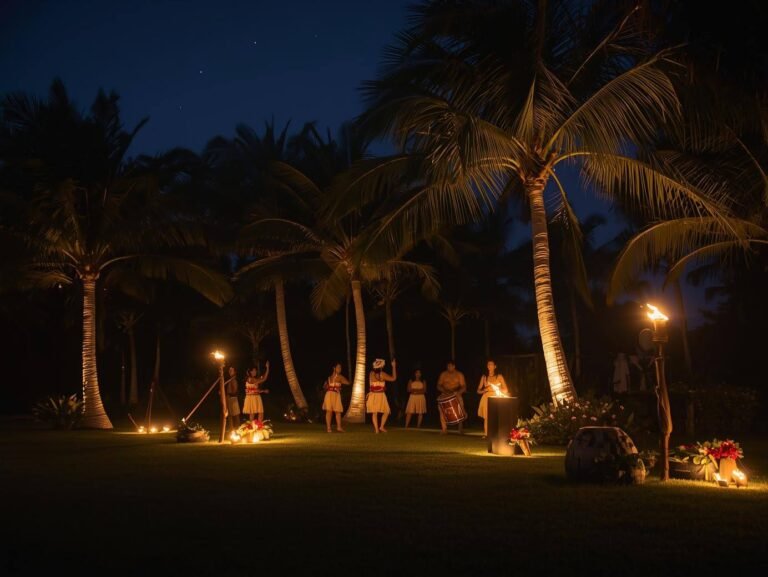
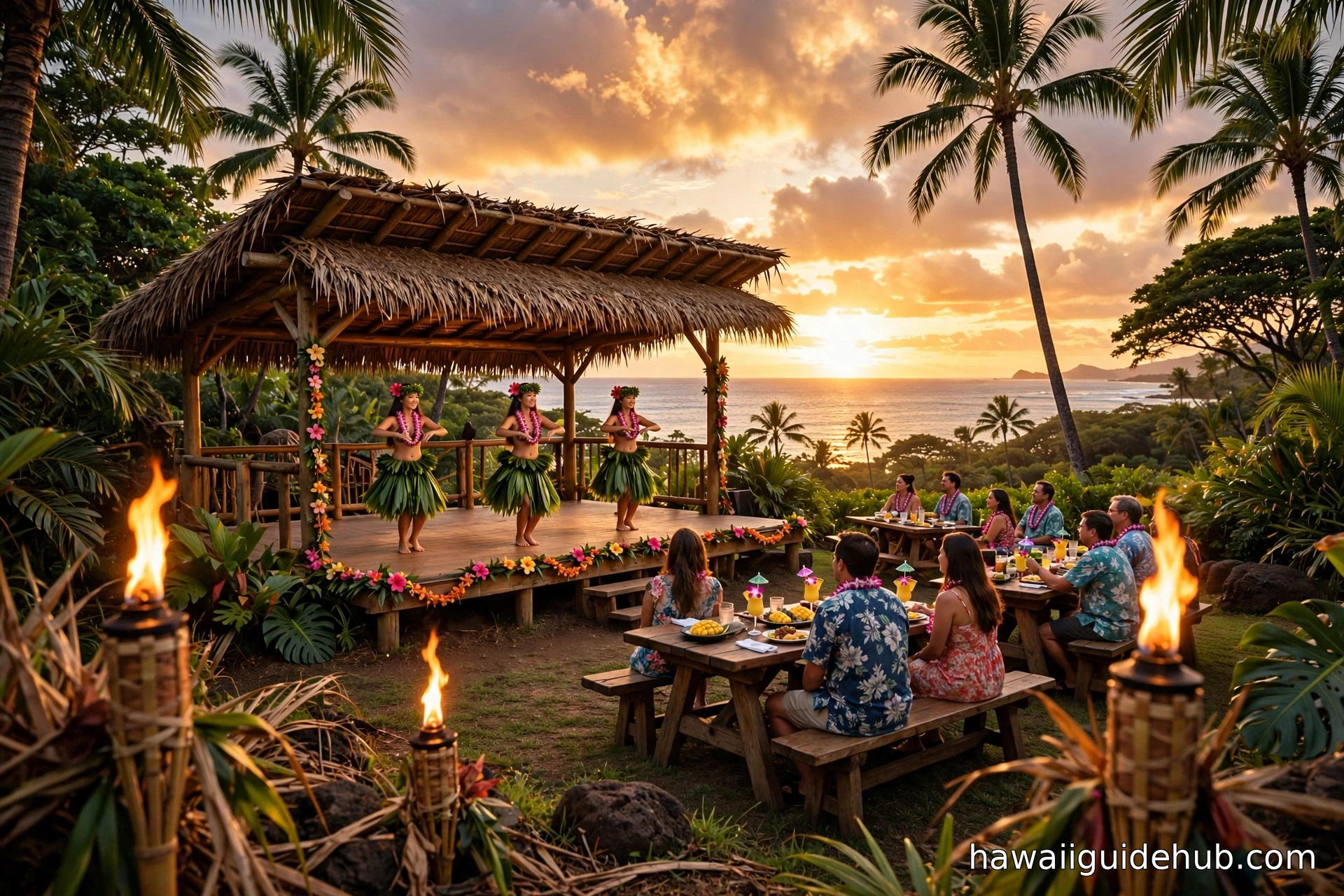
The sun is dropping into the Pacific, the tiki torches are lit, and somewhere behind the stage a conch shell sounds. You have a shell lei around your neck, a mai tai in your hand, and for the next four hours you are going to eat, watch, learn, and probably get pulled on stage to attempt hula in front of two hundred strangers. That is a luau on Oahu, and if you pick the right one, it becomes the night your whole trip is measured against.
But here is the thing nobody tells you at the hotel front desk: not all luaus are the same. Oahu has more than fifteen of them, spread from Waikiki to the North Shore, and they differ wildly in size, setting, food quality, and price. A backyard-style gathering in Kapolei and a polished oceanfront production in Ko Olina are both called luaus, but they deliver completely different evenings. This guide walks you through what a luau actually is, what the night looks like hour by hour, and which Oahu luau fits your trip.
What a Luau Really Is
Long before it was a dinner show, the luau was simply how Hawaiians celebrated. The traditional name for the feast is ʻahaʻaina, which means a gathering for a meal. In old Hawaii, these feasts marked births, victories, harvests, and the launch of a new canoe. Everyone ate with their hands, seated on lauhala mats, and the food came from the imu, the underground oven that is still the heart of every luau today.
The word luau itself originally referred to a dish, young taro leaves cooked with coconut milk, that was always served at these feasts. Over time the name of the dish became the name of the gathering. The modern luau as visitors know it traces back to 1819, when Kamehameha II ended the ʻai kapu, the strict eating taboos that had separated men and women at meals. He sat down and ate with women in public, and the communal feast as a celebration open to all was born. That spirit of shared food and shared company is what every good luau on Oahu is still trying to capture, and it connects directly to the aloha spirit that shapes life across the islands.
One honest note: the commercial luau is a 20th-century creation, shaped for visitors. It is not a reenactment of an ancient ceremony. But the dances are real, the music is real, and the food comes from genuine Hawaiian cooking traditions. The best luaus treat the culture with respect rather than as costume, and that difference is exactly what you should be shopping for.
What Happens at a Luau: The Evening, Hour by Hour
Almost every Oahu luau follows the same rhythm, and knowing it helps you plan your night. Gates typically open around 5:00 in the afternoon. You are greeted with a shell lei and often a welcome drink, then given time to wander the grounds before the main events begin.
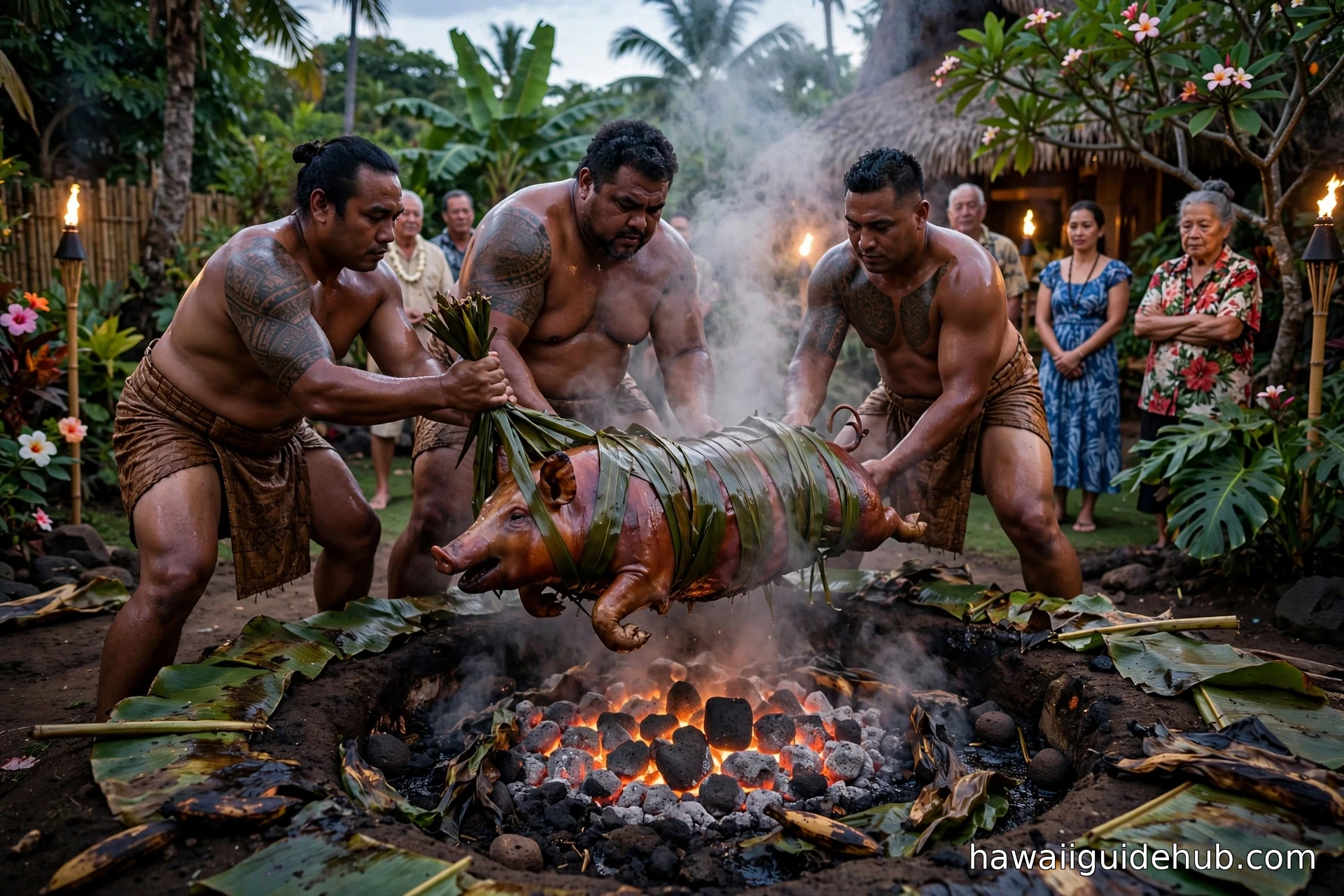
The imu ceremony usually comes first. This is the unearthing of the kalua pig, which has been slow-roasting in the underground oven all day wrapped in ti leaves. Strong attendants lift the steaming pig from the pit while a narrator explains what the imu means. It is part cooking demonstration, part ritual, and it is worth being on time for.
Before dinner, most luaus offer hands-on cultural activities. Expect hula lessons, coconut husking demonstrations, lei making, and Hawaiian lawn games. These are genuinely fun, especially for kids, and they fill the golden hour between the imu ceremony and sunset beautifully.
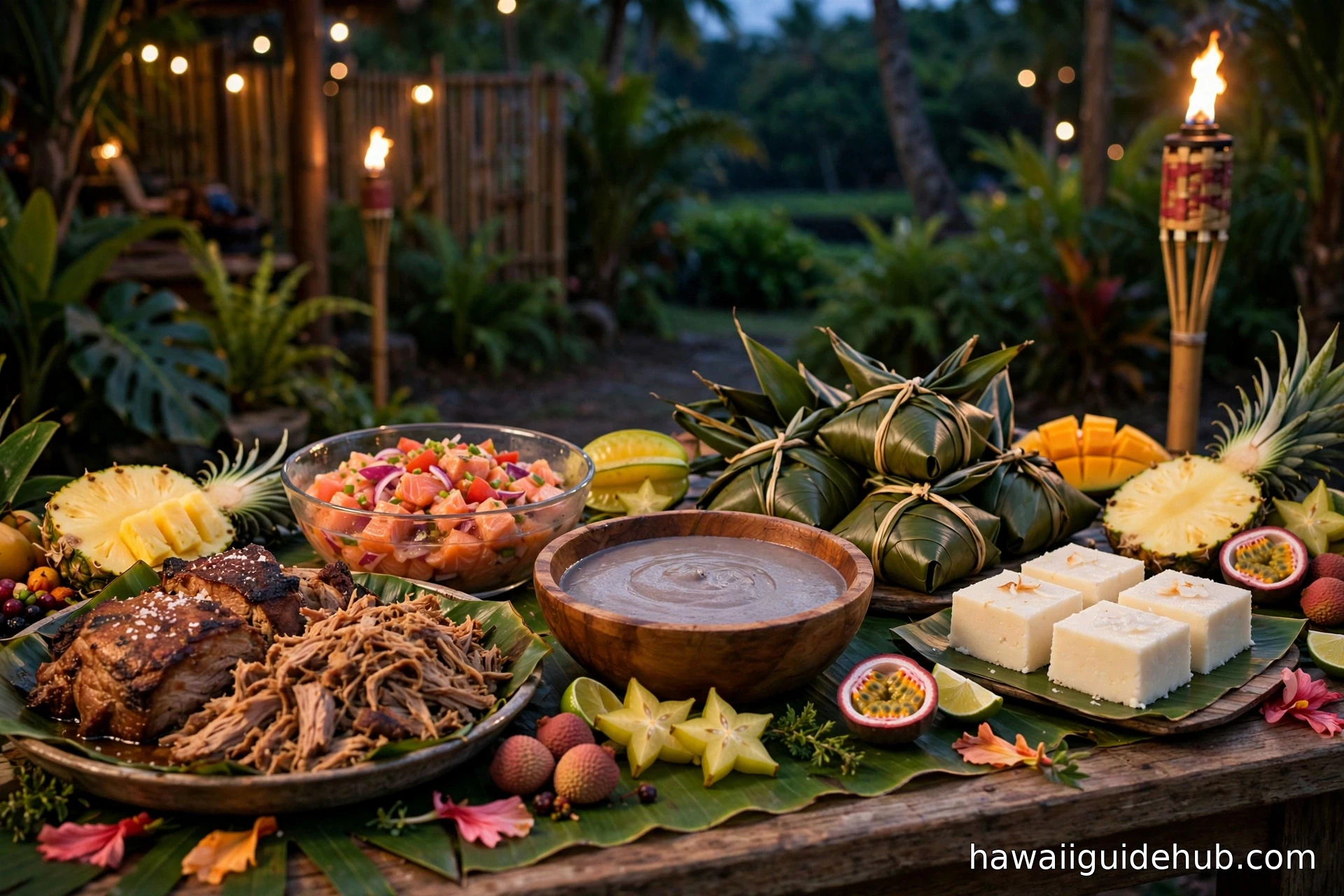
Dinner is a buffet at nearly every Oahu luau, and the spread is the point. The centerpiece is kalua pig, shredded and smoky. Around it you will find poi, lomi lomi salmon, laulau, poke, teriyaki chicken, fresh pineapple, taro rolls, and haupia, the coconut pudding that ends every proper Hawaiian meal. Eat adventurously. The poi tastes better than it looks, and the laulau is the sleeper hit of the table.
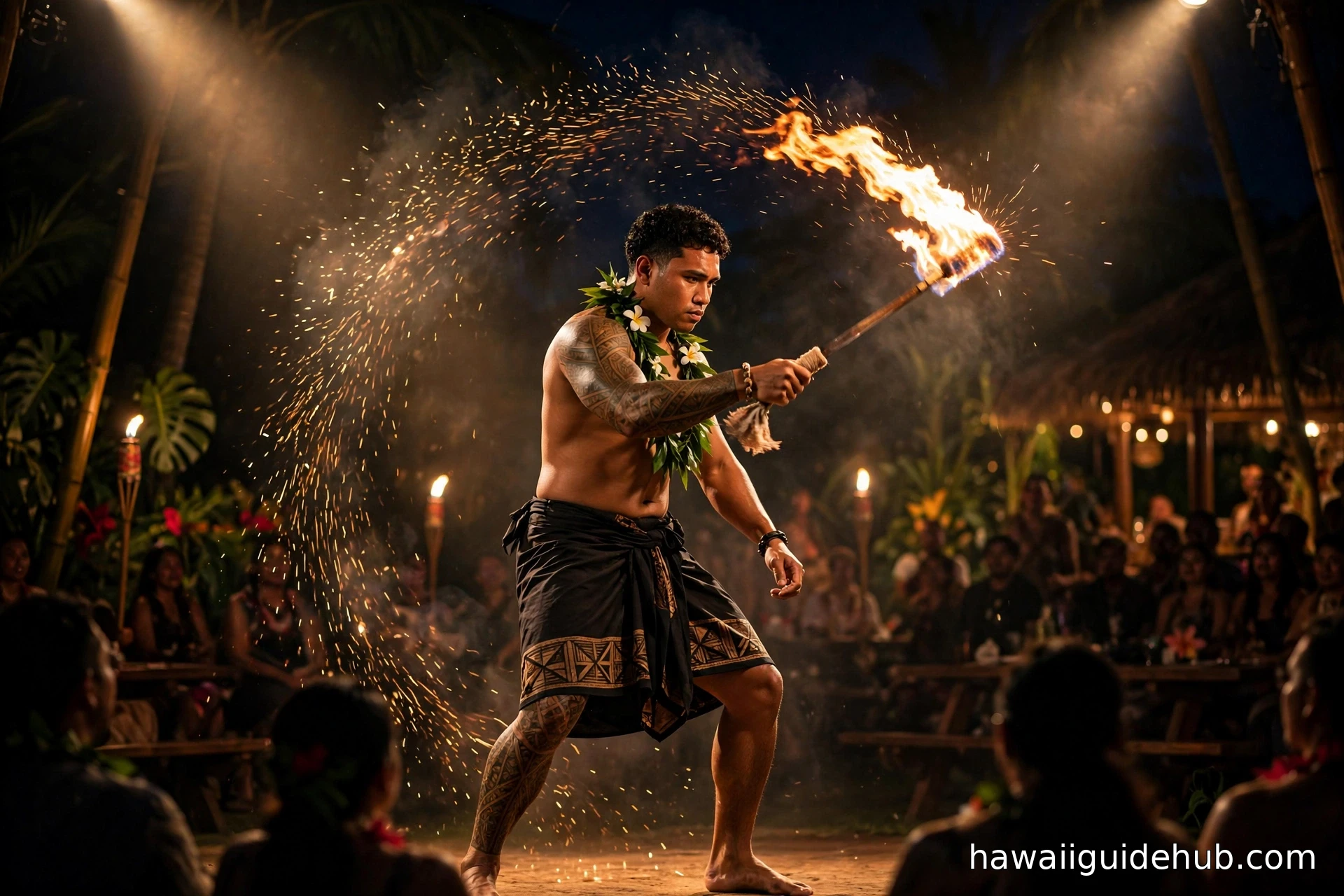
After dinner comes the show, and this is where luaus earn their reputation. The performance typically journeys through Polynesia: Hawaiian hula and chant, Tahitian dance with its famous fast hip movements, and often Maori, Fijian, or Tongan segments. The night almost always closes with the Samoan fire knife dance, where performers spin blazing knives in the dark. It is spectacular, and no photo quite prepares you for the heat you feel from the front rows.
The Best Luaus on Oahu, by Area
Where the luau sits matters as much as what happens on stage. A Waikiki luau means no driving and a short walk back to your hotel. A North Shore luau means a scenic drive and a more intimate setting. Here is how the island breaks down.
Waikiki: No Driving Required
If you are staying in Waikiki and do not want to rent a car for the evening, the in-town luaus are the easy choice. Queens Waikiki offers one of the island’s most affordable luau nights, while Nā Lei Aloha and Pāʻina Waikīkī run fuller productions within walking distance of the hotels. At the top end, the ʻAhaʻaina luau at the Royal Hawaiian pairs a multi-course dinner with the show on the oceanfront lawn of the historic Pink Palace. Waikiki luaus trade the big natural settings for pure convenience, and for many visitors that is exactly the right trade.
Ko Olina and Kapolei: The West Side Productions
The west side hosts Oahu’s biggest luau operations. Paradise Cove sits right on the beach at Ko Olina with room for hundreds of guests, sunset views over the water, and a full village of pre-show activities. Germaine’s Luau in Kapolei has been running for decades and keeps a backyard-party atmosphere that families love, with some of the island’s more reasonable prices. Chief’s Luau, also on the west side, is built around its host, a world-champion fire knife dancer whose comedy and crowd work make the night feel personal even in a large venue. If you want the classic big-stage luau experience, this is where to find it.
North Shore: Small, Scenic, and Worth the Drive
The North Shore luaus are smaller and the settings do half the work. Toa Luau takes place in Waimea Valley, with the show staged near a waterfall in a botanical garden, and the audience is a fraction of the size of the west side productions. The Polynesian Cultural Center in Laie is in a category of its own: it is a full-day cultural theme park with villages representing six Pacific island nations, and the Aliʻi Luau in the evening caps the day. If your Oahu itinerary already includes the North Shore, pairing it with a luau up there makes for a perfect full day.
Elsewhere: Hilltops and Oceanfront
A few luaus sit outside the main clusters. Experience Nutridge is up on Tantalus overlooking Honolulu, with small groups and sweeping city views at sunset. Sea Life Park in Waimanalo hosts an oceanfront luau on the windward side, a good pick if you are staying out that way. Ka Moana near Aloha Tower serves the downtown Honolulu crowd. Each of these trades the big-resort polish for a distinctive setting.
How to Choose the Right Luau
Start with location and work backward. If you are not renting a car, a Waikiki luau eliminates the logistics entirely. If you have wheels, the North Shore and west side options open up, and the drive is part of the experience.
Next, think about size. Big luaus seat many hundreds of guests, which means more energy, bigger productions, and more fellow travelers. Small luaus feel personal: the performers learn your name, the crowd is intimate, and the setting usually involves nature rather than a resort lawn. Neither is better in the abstract. A honeymoon couple and a family reunion of twenty want different nights.
Price is the third filter. Adult tickets on Oahu generally start a little above one hundred dollars and climb past two hundred for premium seating and multi-course dinners. That spread mostly reflects seating priority, drink packages, and venue polish rather than the quality of the dancing. A mid-priced luau with great performers beats a premium one with a tired show. Read recent reviews, not just the star rating, and look specifically for comments about the food and the energy of the cast.
Finally, consider what matters to you culturally. If learning about Hawaiian cultural traditions is a priority, the Polynesian Cultural Center’s full-day experience is unmatched. If you mainly want a fun night with great food and a spectacular finale, the west side productions deliver exactly that. Being honest about which traveler you are leads to the right choice.
What to Eat: A Luau Food Primer
You do not need to know the menu in advance, but knowing it makes the buffet line more fun. Kalua pig is the headliner, pork slow-cooked in the imu until it shreds with a fork, smoky and rich. Poi is the pounded taro root staple, mild and slightly tangy, traditionally eaten with the fingers. Lomi lomi salmon is diced raw salmon massaged with tomatoes and onions, cool and refreshing against the heavier dishes. Laulau is pork and fish wrapped in ti leaves and steamed, and poke needs no introduction.
Save room for haupia, the coconut milk pudding cut into cool white squares. It is the traditional ending to the meal and the thing people talk about on the shuttle back. Most luaus also serve familiar items like teriyaki chicken, salads, rice, and tropical fruit, so picky eaters and kids will not go hungry. If you have dietary restrictions, contact the venue ahead of time; most Oahu luaus handle vegetarian, vegan, and gluten-free requests when they know in advance.
Practical Tips for Luau Night
Book ahead, especially in summer and around the holidays. The popular luaus sell out days in advance, and the best seating tiers go first. Arrive when the gates open rather than right before dinner. The pre-show hour, with the lei greeting, the imu ceremony, and the activities, is a genuine part of the experience, not filler.
Dress is resort casual. You will see everything from sundresses to shorts, and nobody will judge either. Bring a light layer; the trade winds pick up after sunset even in summer. Wear shoes you can walk on grass or sand in, since most venues are outdoors. And put the phone down during the show at least for a while. The fire knife finale is better experienced than filmed.
Kids are welcome at virtually every Oahu luau, and most offer reduced child pricing. The activities before dinner are built for young attention spans, and children are usually the first ones dragged on stage for hula lessons, which they love. If you are traveling with grandparents, check the seating arrangements; some venues involve sitting on mats or low benches, while others use standard chairs and tables.
Watch: A Luau Night on Oahu
Words only go so far. This walkthrough of an evening at Germaine’s Luau captures the lei greeting, the imu ceremony, the hula, and the fire dancing in a few minutes, and it gives a real sense of the atmosphere before you book.
The Night You Will Talk About
A luau is not the most authentic thing you will do in Hawaii, and it is not trying to be. It is a celebration engineered for joy: good food, live music, remarkable dancing, and a few hundred people all deciding to have a wonderful evening at the same time. Pick the venue that fits your style, arrive hungry and on time, and let the night do what it has done for generations of visitors. Years from now, when someone mentions Oahu, the first image in your head may well be firelight on water and the sound of drums under the stars.